Tag: traditional

Solent Potter

With warm sunny weather but strong winds forecast, Niki and I decided to enjoy a few lazy days aboard and visit some of our favourite anchorages. Our first stop was in Chichester harbour.

We beat up from Gosport against a lively North Easterly. We had some trouble tacking against the wind and noticed that we did much better on one tack than the other – it was then Niki realised that one of the shrouds had worked loose. I recalled that when I had re-stepped the mast, I had not had time to properly adjust the rig tension and so had not secured the turnbuckles!

There are several popular encourages in Chichester, which offer great protection from the prevailing south westerly wind direction, but there are fewer options when that direction is reversed. East Head looked far from pleasant and conditions at our customary spot under Pilsea Island were not to our liking either.

The chart indicates that there is anchorage in the Bosham channel, so we poked our nose up there. However this was no good for dropping the pin either, as the moorings extend the whole way down the channel. At this point, we admitted defeat and picked up a mooring.

Peaceful mooring in the Bosham channel

The harbour master arrived later in the evening to collect the dues and pointed out that the mooring we had picked up was not for visitors, but told us we could stay out as the resident was away. I was glad of this, as this location was much more sheltered than the visitor moorings near the main Itchenor channel.

We passed a comfortable evening aboard, cooking a delicious steak dinner and slept soundly, after carefully securing halyards to prevent rattling in the strong wind. In the morning I spend some time checking all the shrouds and adjusting them to equal tension and then securing the turnbuckles – a job I should not have left home without doing.

We had decided to stay on for another day, as the strong wind remained steadily in the eastern quadrant. After a leisurely morning, we rowed ashore for a walk. I had noticed that there is a footpath which follows the whole peninsula of Chidham. Niki got rather muddy disembarking the dinghy, but we found a tap at the nearby sailing club and she was able to wash her legs.

Bosham Quay

We were rewarded with a spectacular walk with salt marsh and fields to one side and Bosham Creek on the other. We had beautiful views of the very picturesque Bosham Quay and then turned inland to follow the footpath through lovely farmland to the village of Chidham and its most welcome pub, “The Old House at Home”. This is quite an unusual name and I had thought it a Black Country term, as that is the only other time I had heard it. According to Google, the name comes from the words of an early Victorian song popular with soldiers far from home.

A welcome pint of excellent beer at the halfway point of our walk

The circumnavigation was completed with a walk along the more open western perimeter of Chidham and the last part along a footpath on the flinty foreshore itself, complete with stern warnings about the dangers of the tide. We passed around Cobnor Point to the welcome sight of Molly on her mooring.

Cobnor Point

Having spotted a slipway at the sailing club, I saved Niki more mud and rowed the tender from its muddy landing place to collect her and return aboard. We were a little low on provisions but wanted to spend another night at anchor and decided on Newtown Creek, after some food shopping in Emsworth, for the following day.

We were started awake just after first light by a call of “you’re on my mooring, please move”. I stumbled groggily into the cockpit to find a bright yellow Dragonfly with its solo skipper circling us a little impatiently. It was the work of moments to start the engine and cast off mooring, whilst Niki charmed him with her explanation that we had been given permission.

We thought of setting off then and there, but that was before we looked at our watches and discovered it was but 5am! A (visitor) mooring was picked up and we returned to bed for some more sleep.
Short stay pontoon at Emsworth

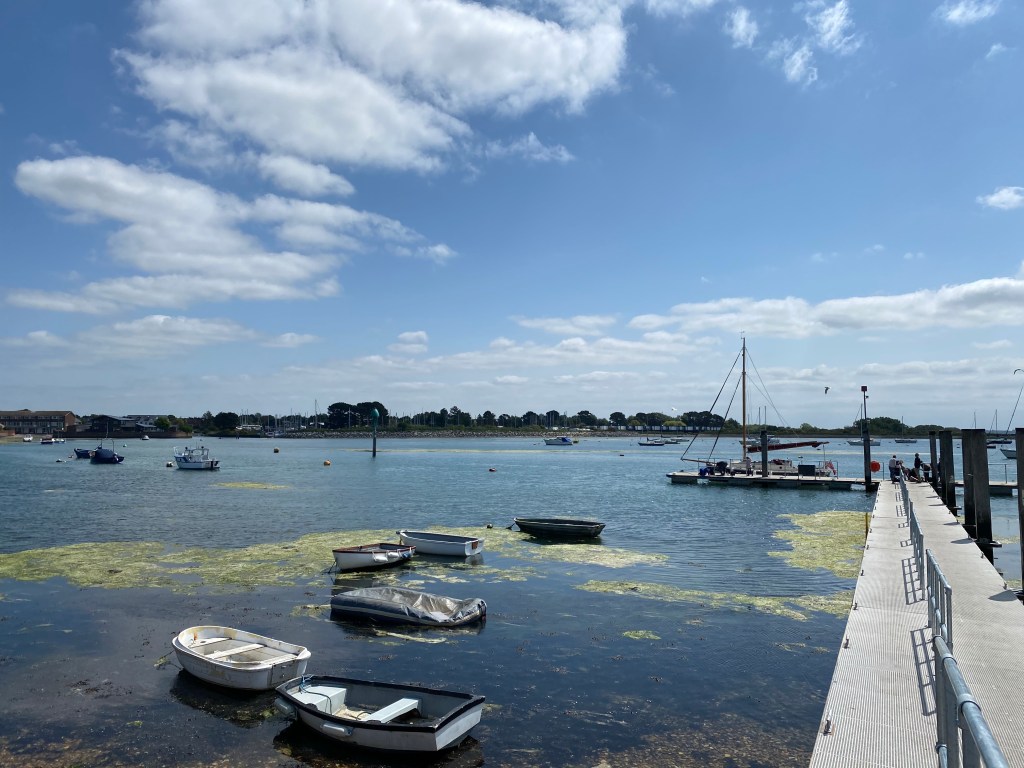
At a rather more civilised hour, we cast off the mooring and sailed into the Emsworth channel, where there is a short stay pontoon. The pontoon was thick with small children and their parents, who seemed oblivious to our shouts but nevertheless moved reluctantly out of our way as we arrived. A prominent sign prohibited crabbing, but was completely ignored; we took this prohibition not to apply to Molly either! Though it was around high tide, there was just 2m of water so, not knowing how long the shopping sortie would take, I stayed aboard Molly whilst Niki strode out.

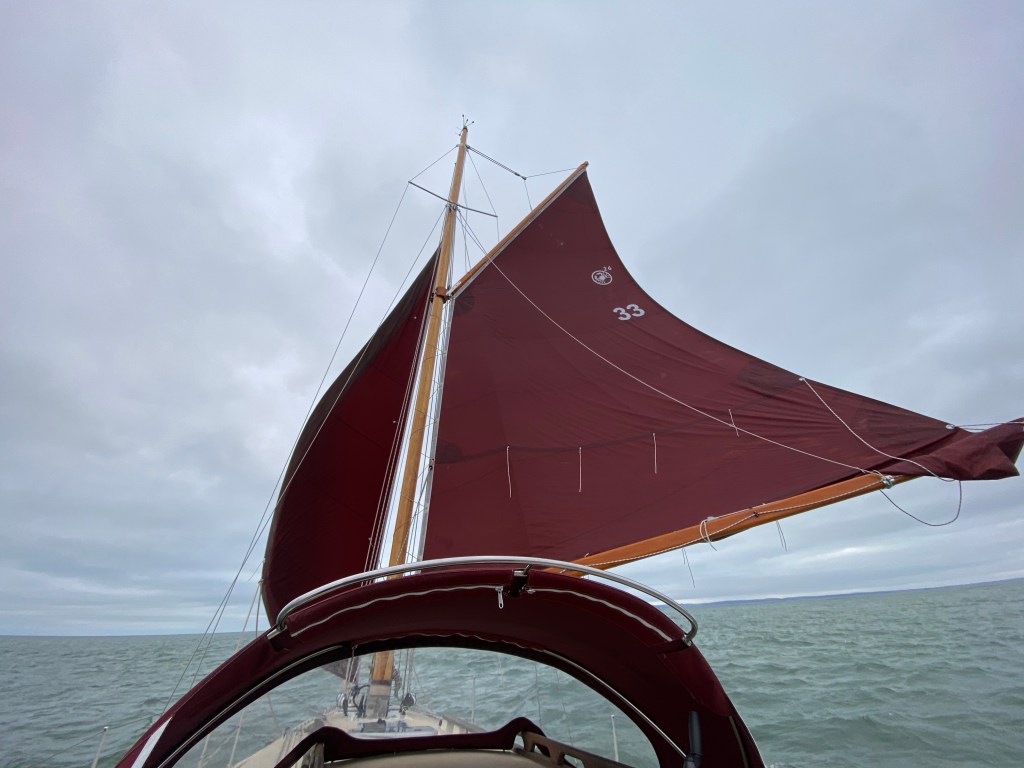
Under reefed sail in Chichester harbour

I needn’t have worried and Niki was back in half an hour with all our vittals procured. We followed the now-ebbing tide down toward the harbour mouth and ran before the wind down the Solent. As usual, there was a wide variety of craft to occupy our attention. Sadly the wind dropped and our progress was slower than hoped and, as we passed Cowes, the tide turned against us. I took to the shallows to avoid the worst of the tide, but we arrived at Newtown Creek much later than planned.

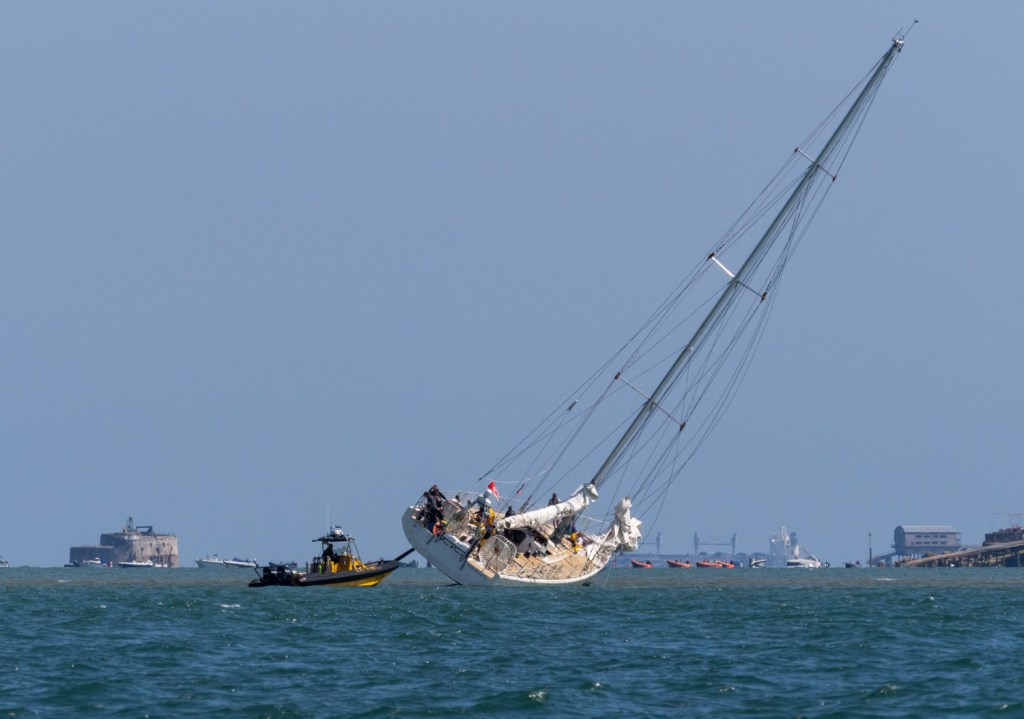
A clipper aground on Ryde sand. There was little aid the Sea Start RIB could render
The shallow water extends a surprisingly long way off shore…
…but the hovercraft has no such trouble with the shallow water off Ryde
Sail training ship Tenacious
I like this hull colour for a Shrimper
“Stealth gas”? I think not, on a ship that colour!
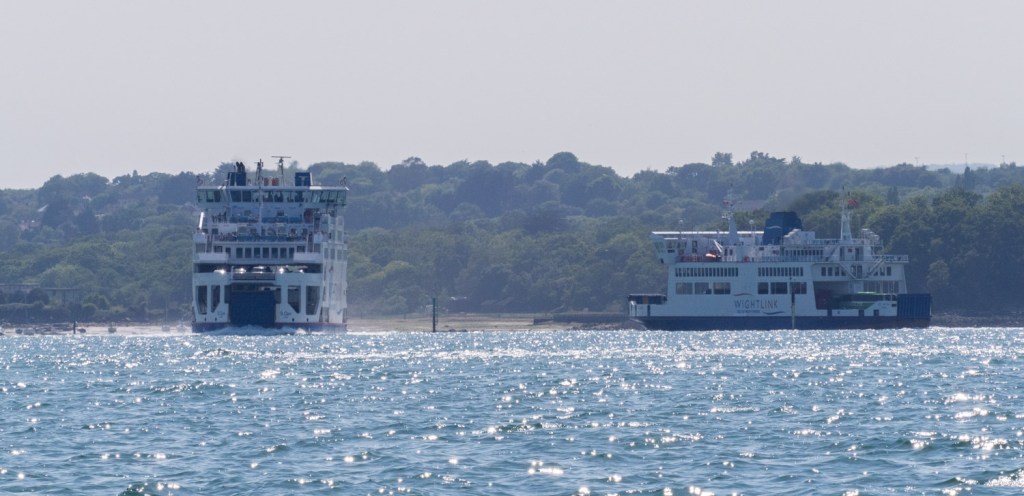
The ferries crossing outside Wootton Creek

I had hoped for another pub walk at Shalfleet, but we arrived too late for this. We crept along, plate up past the moorings in the Western Haven; a boat was already anchored in the shallow water of the upper reaches, but we squeezed in on the end.

Molly at anchor in Newtown Creek

I’d always struggled with getting our tender in and out of the locker, but during this trip discovered how much difference it makes to use the pump to draw out as much air as possible when deflating her. So I quickly had Aurelia out on the coach roof, inflated and in the water. Niki stayed aboard and I had some welcome exercise rowing through the moorings to the tumbledown quay at Shalfleet. In the golden hour, the deserted harbour was a lovely sight and I had a short but pleasant walk around the boats ashore. It did seem like a place boats come to die, but that seems true of many a boatyard. I did spot a more cheerful sight – our friend Julian’s Cape Cutter on her mooring.

Molly in the distance, viewed from ashore in Shalfleet
One of the most beautiful places to spend a night.

Our laying of the anchor had been less than perfect and I realised that we would be on the mud during the night and not be able to get out at the time we wanted, so we lifted the pin and moved to a mooring in deeper water later in the evening.

This was just as well, because when I rose at 0530 for our return passage, there was barely enough water for us to creep towards the mouth of the haven. The early start was called for, as it was a beat back to Gosport and I wanted a fair tide to help us.
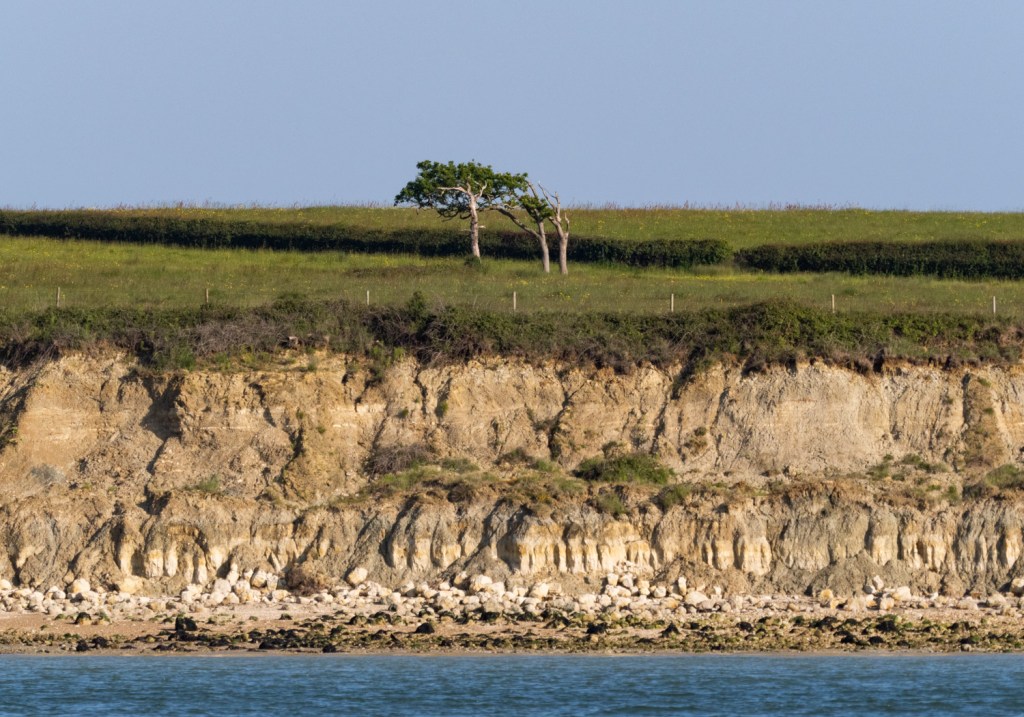
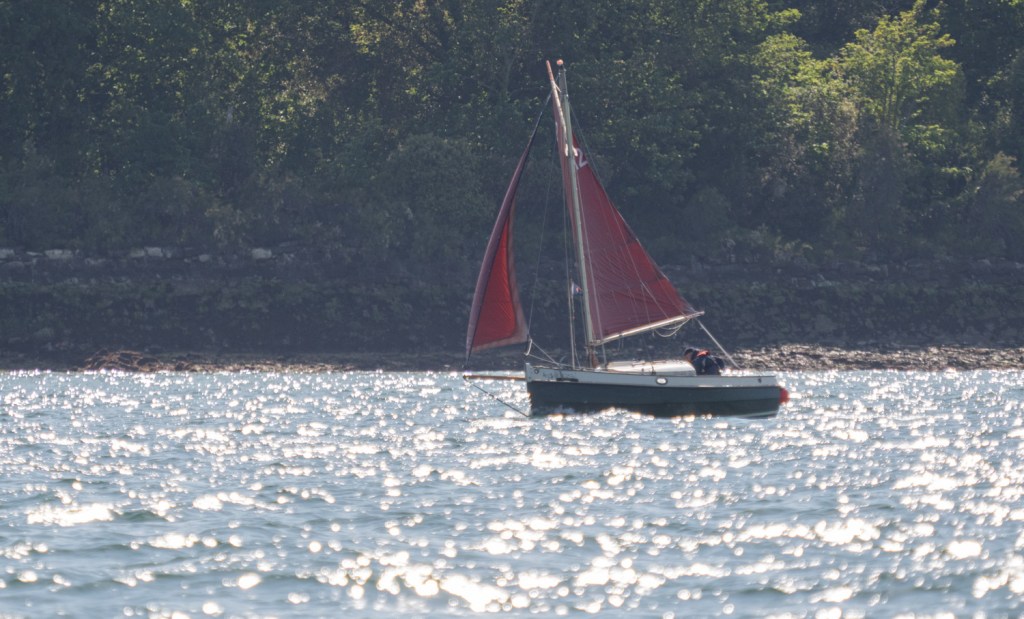
Interesting rock formations on the eroding Isle of Wight shore
A Winkle Brig in Osborne Bay
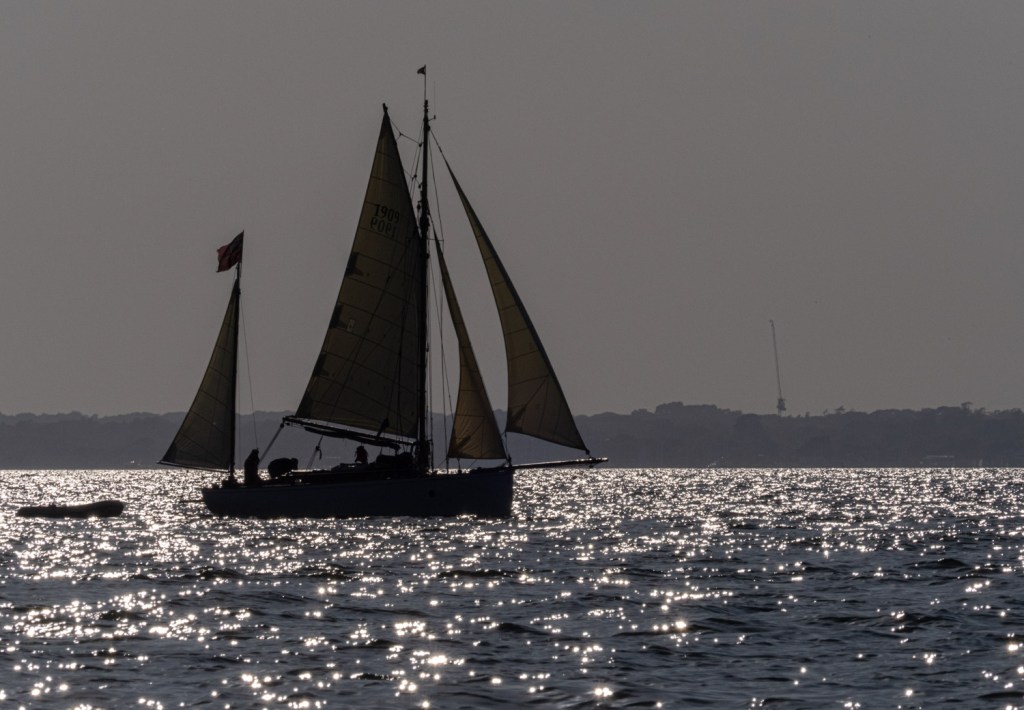
The lovely Lady Belle also beating up Solent

The wind seemed light and I raised full main, but it quickly became clear that we were overpowered and I had to stop and take in a reef. I beat across the width of the Solent arriving directly outside the mouth of the lovely Beaulieu river. I stood on as long as I could into the shallows before tacking off, hoping to avoid the need for another tack before Cowes. This was indeed how it turned out and in fact a wind shift helped us onto a course directly towards Gilkicker point. At that early hour there was little traffic and I only had the fast ferries out of Cowes to watch for. The wind gradually decreased during the morning and it was not long before I shook out the reef and carried on under full sail. A few tacks were needed to get around Gilkicker but we made surprisingly good time and were soon back on our home berth.

A French gaffer that passed us – I believe she was returning after a classic yacht event in Brixham.
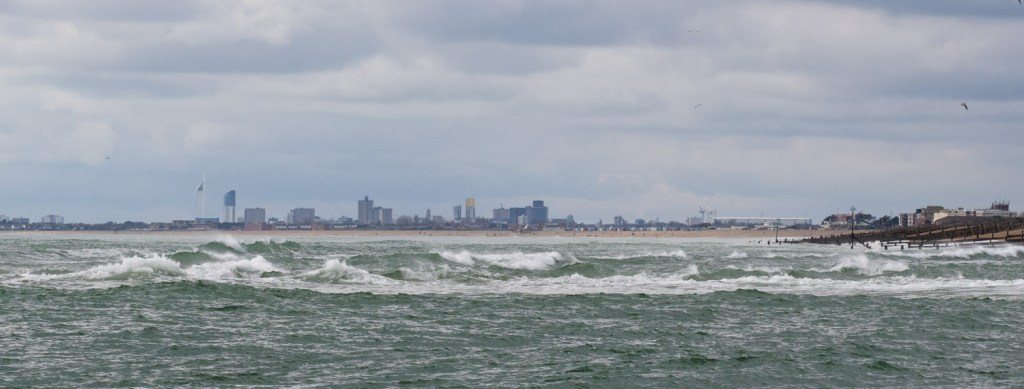
Portsmouth in sight
I was quite pleased with this track. You can clearly see how long it took me to sort a reef shortly after we started, but remarkably few tacks were needed to get home. You can also see that Portsmouth is thick with AIS targets!

YOGAF 2023

YOGAF 2023

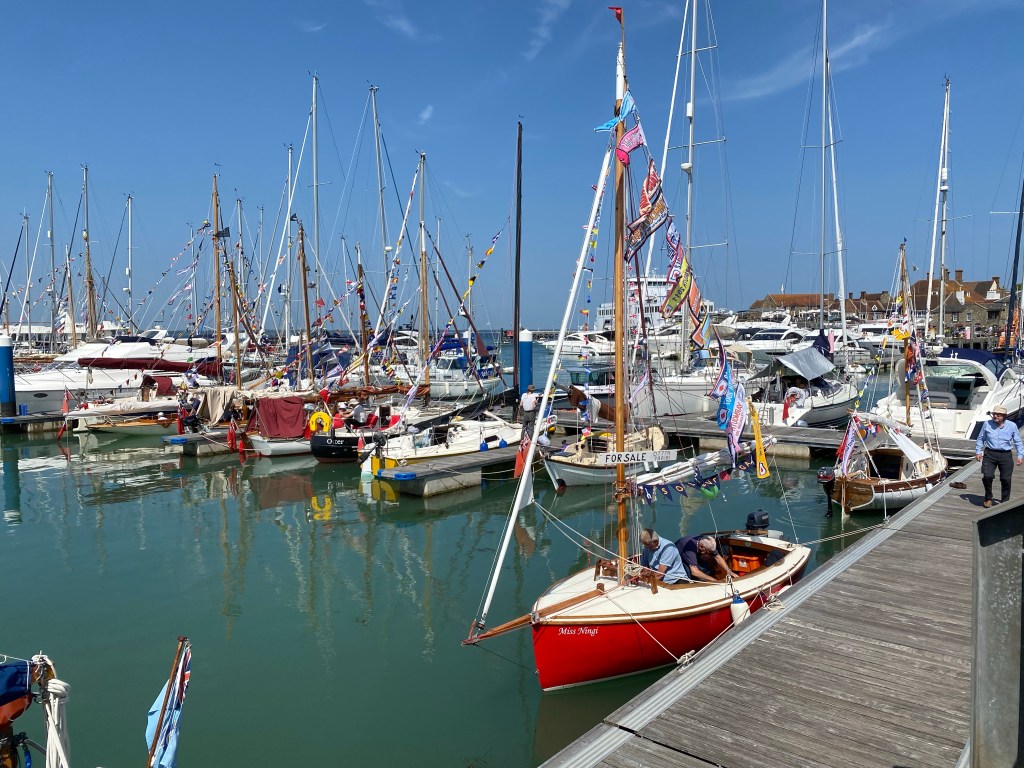
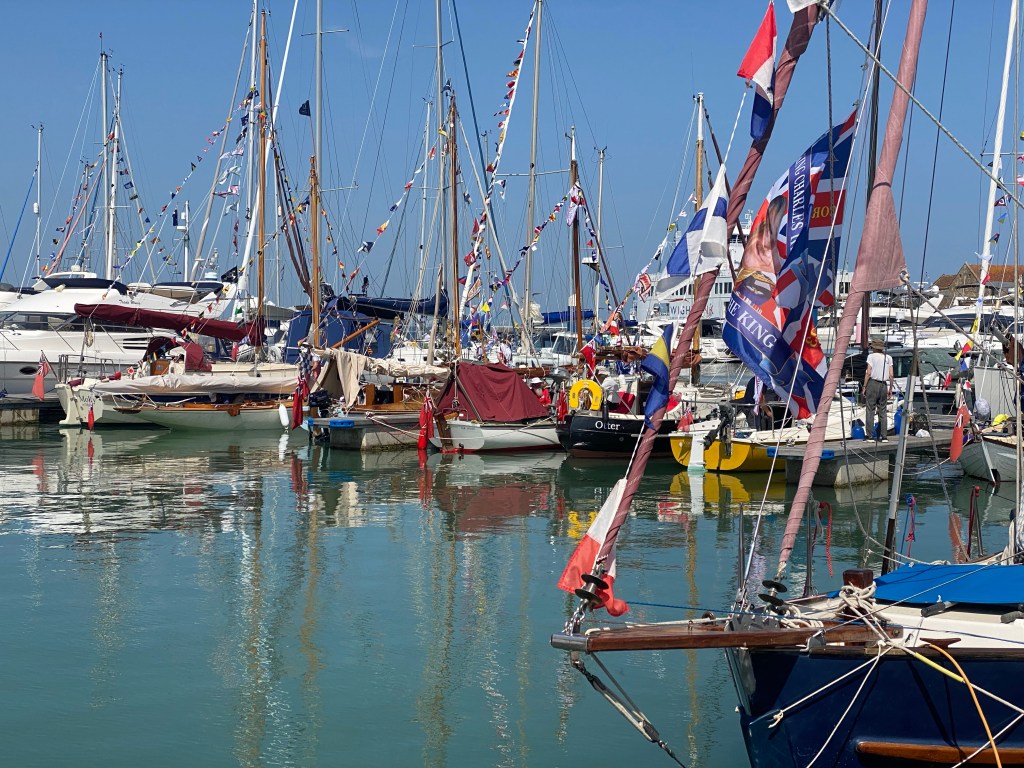
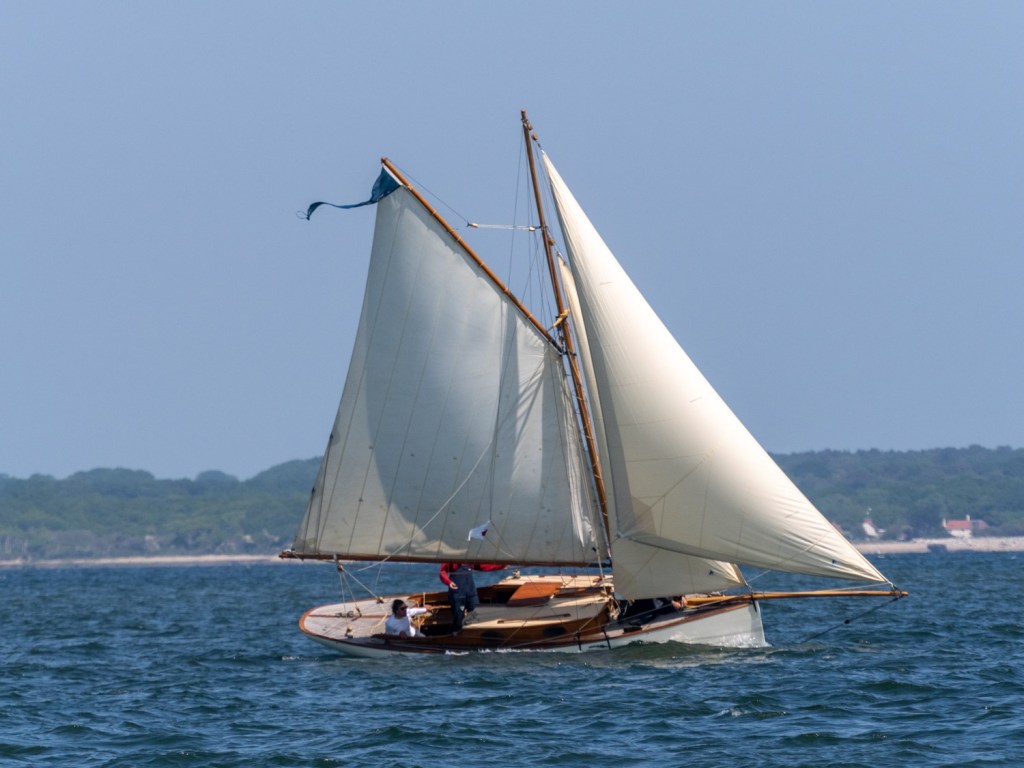
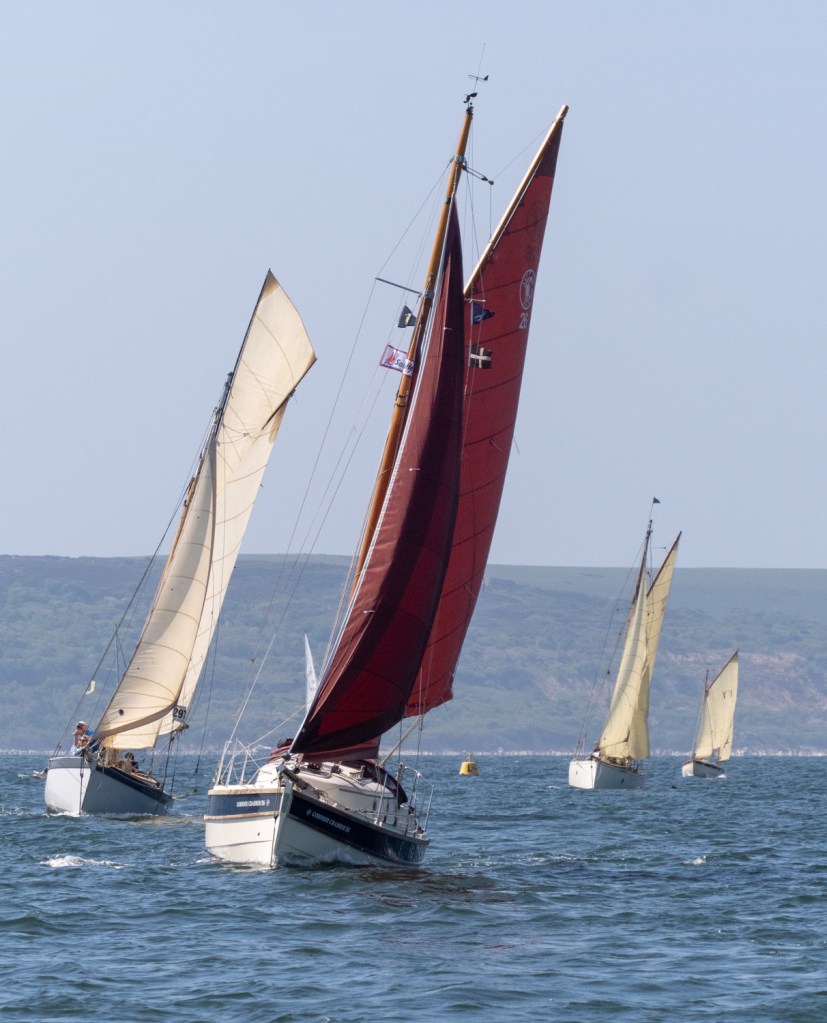
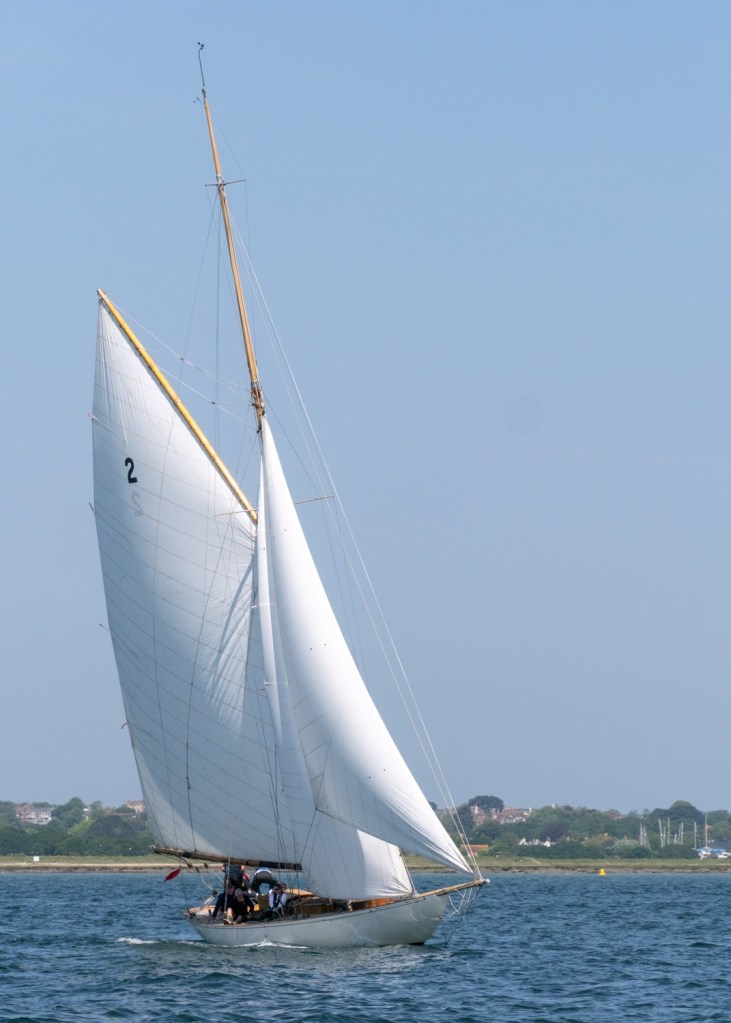
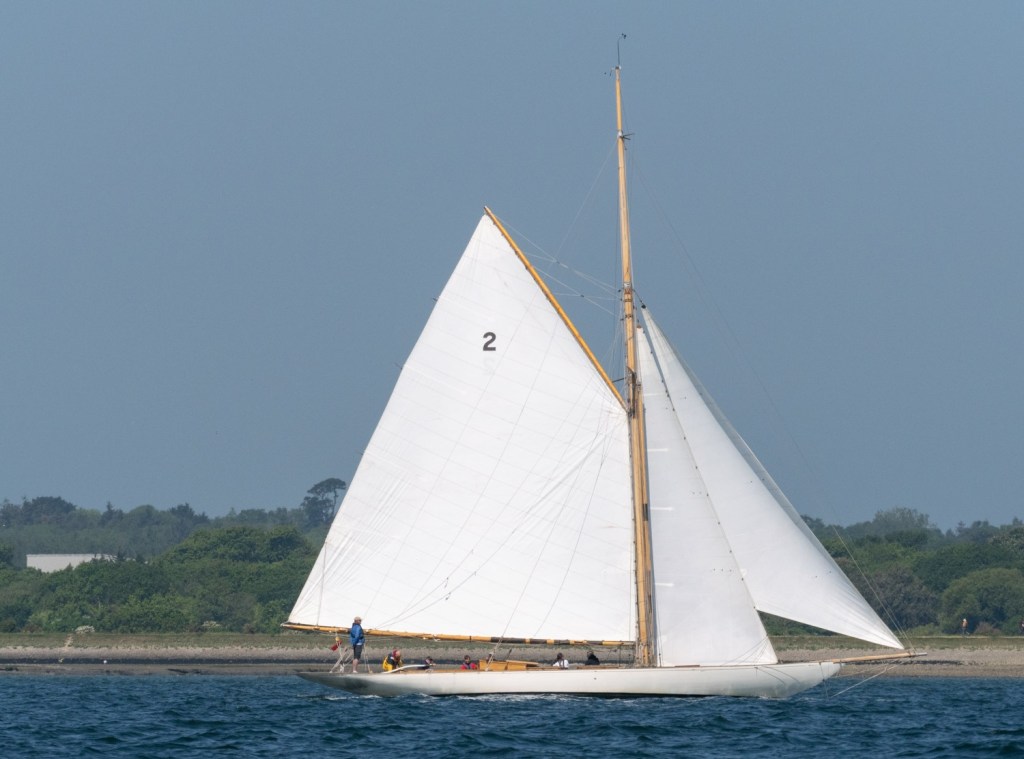
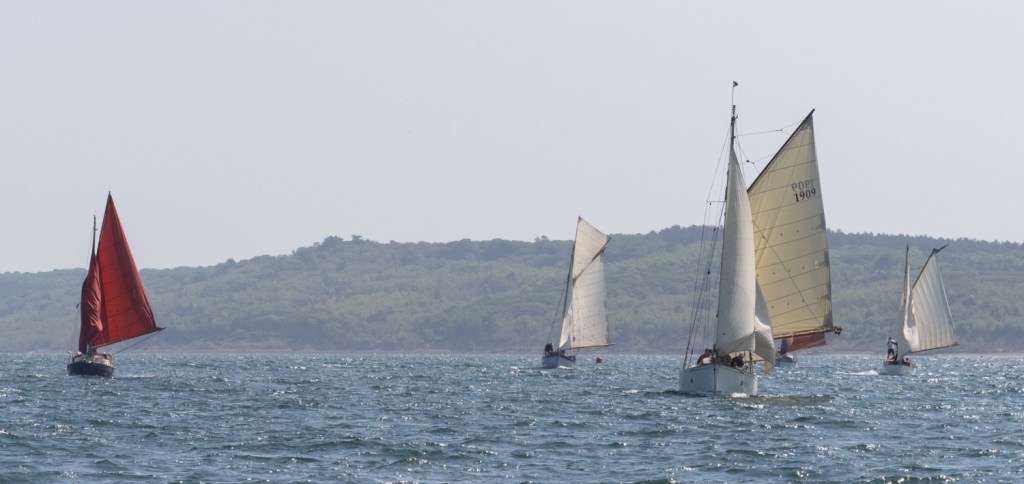
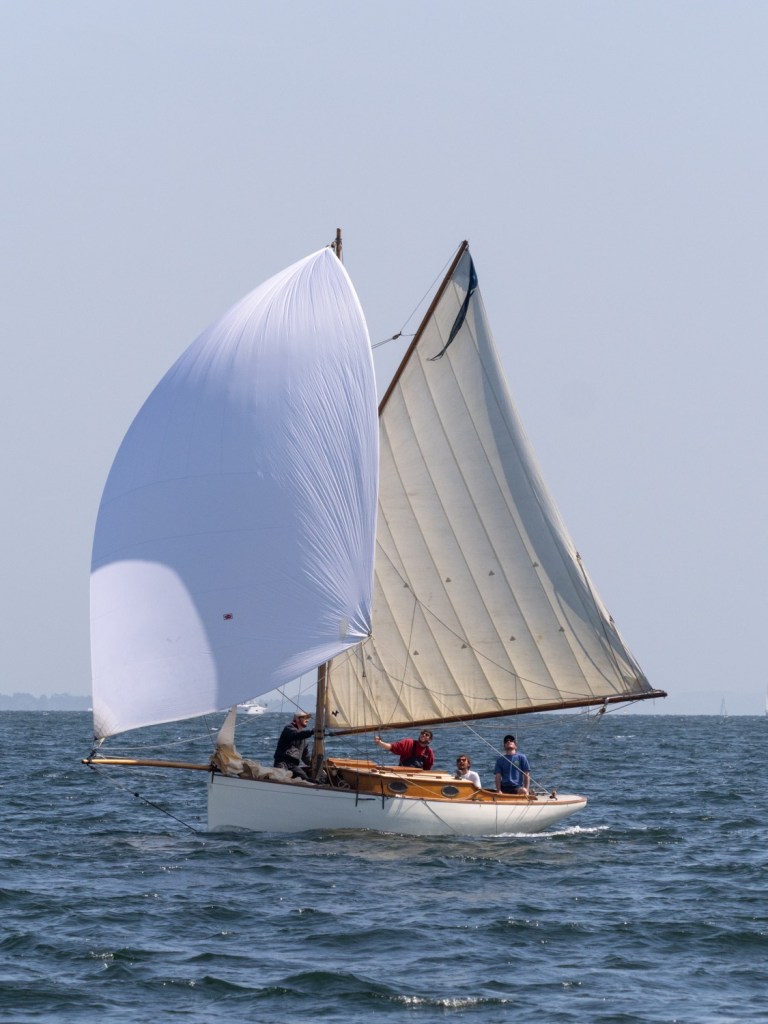
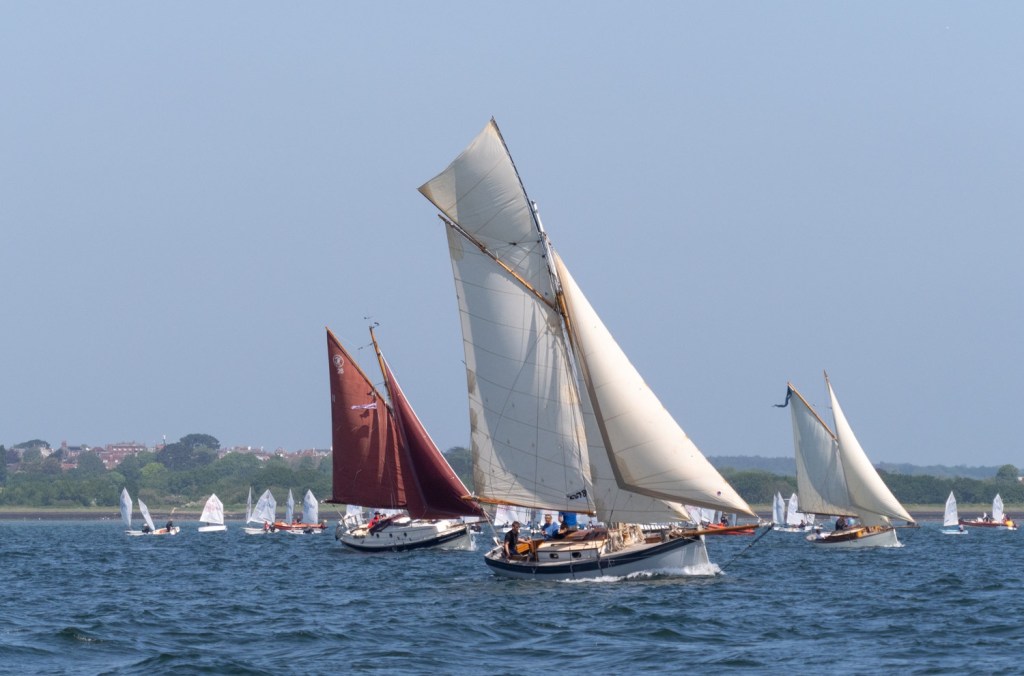
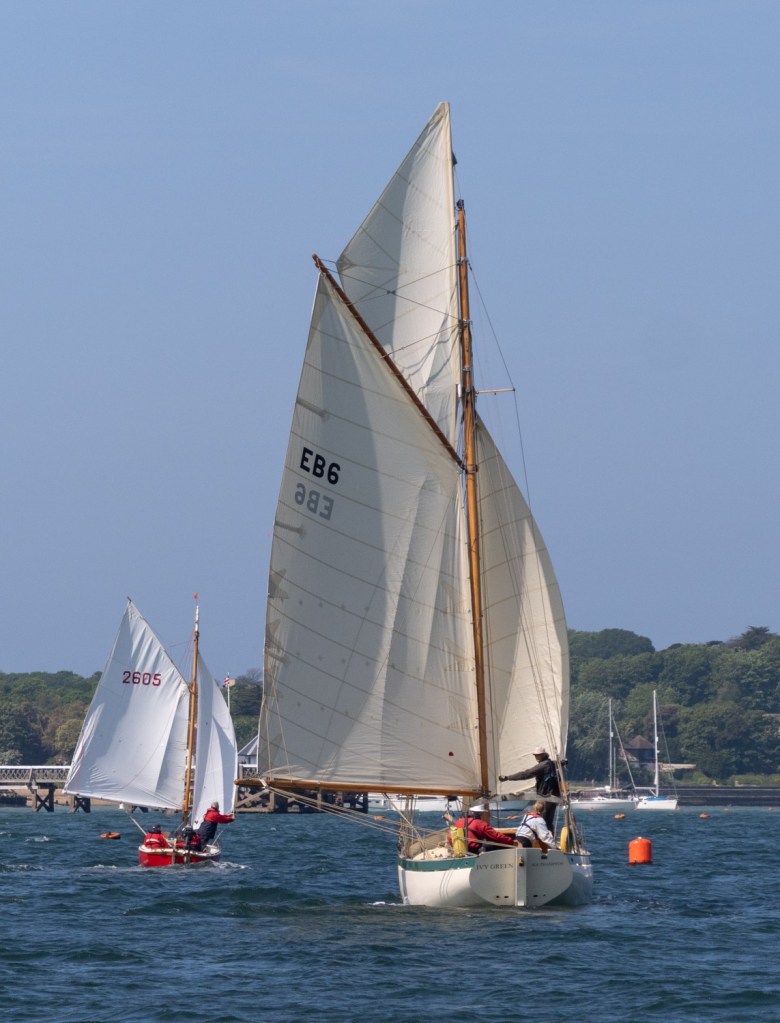
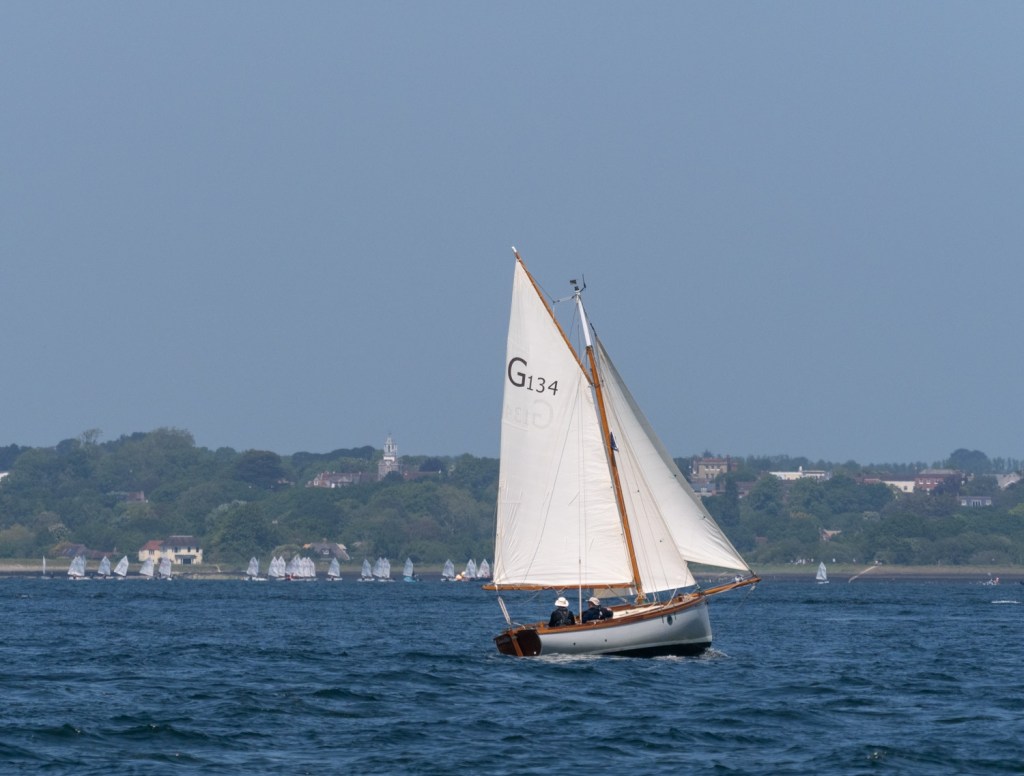
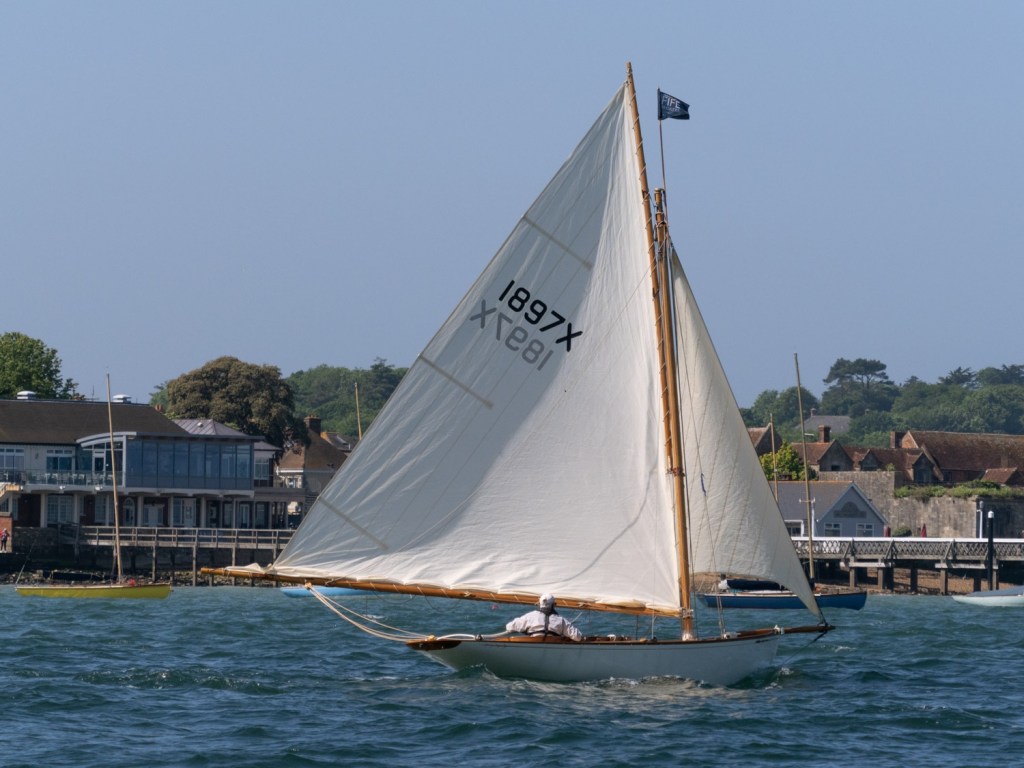
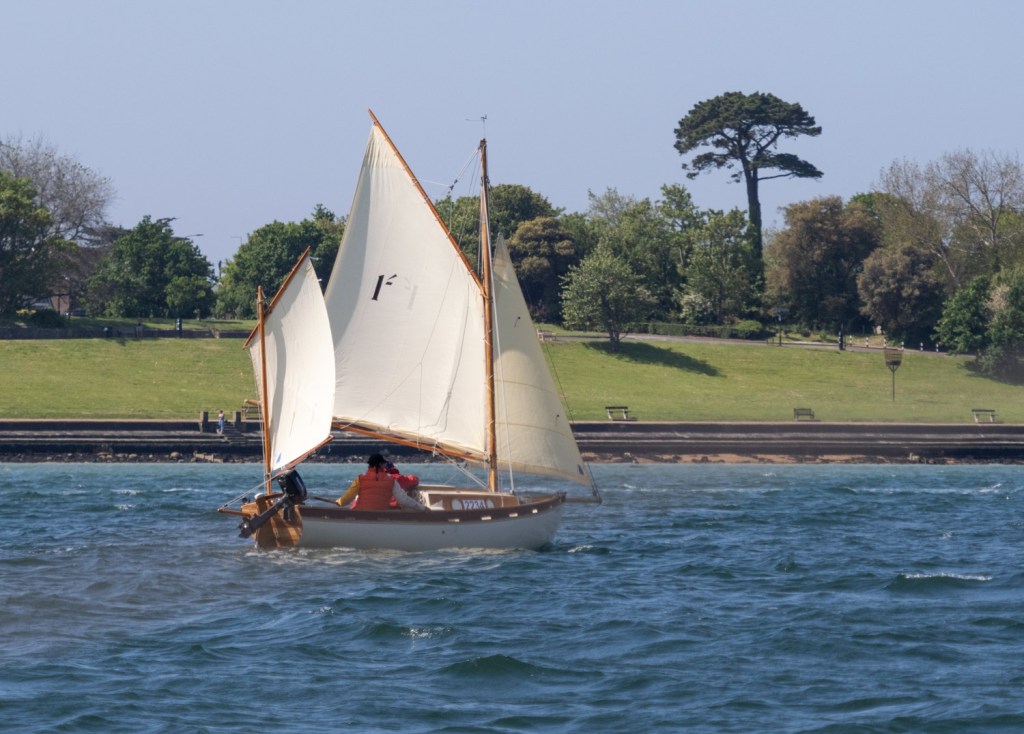
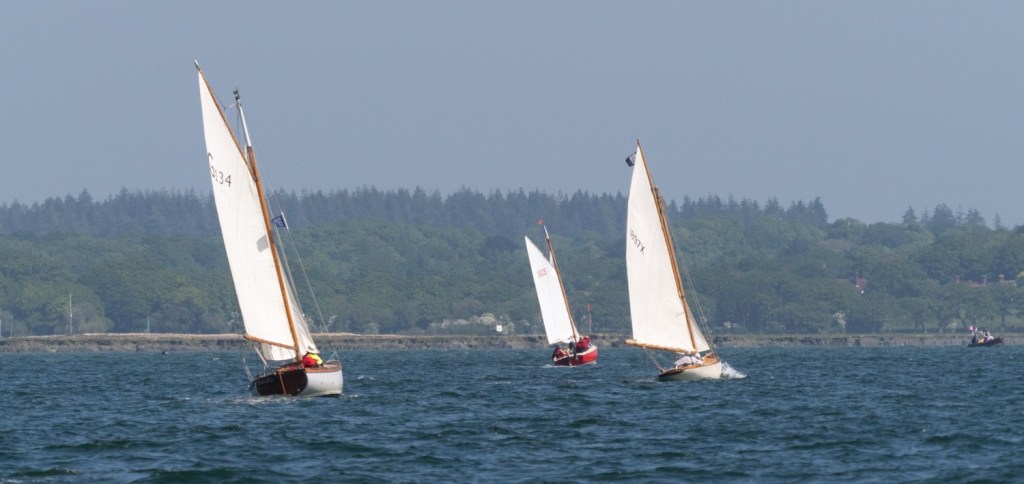
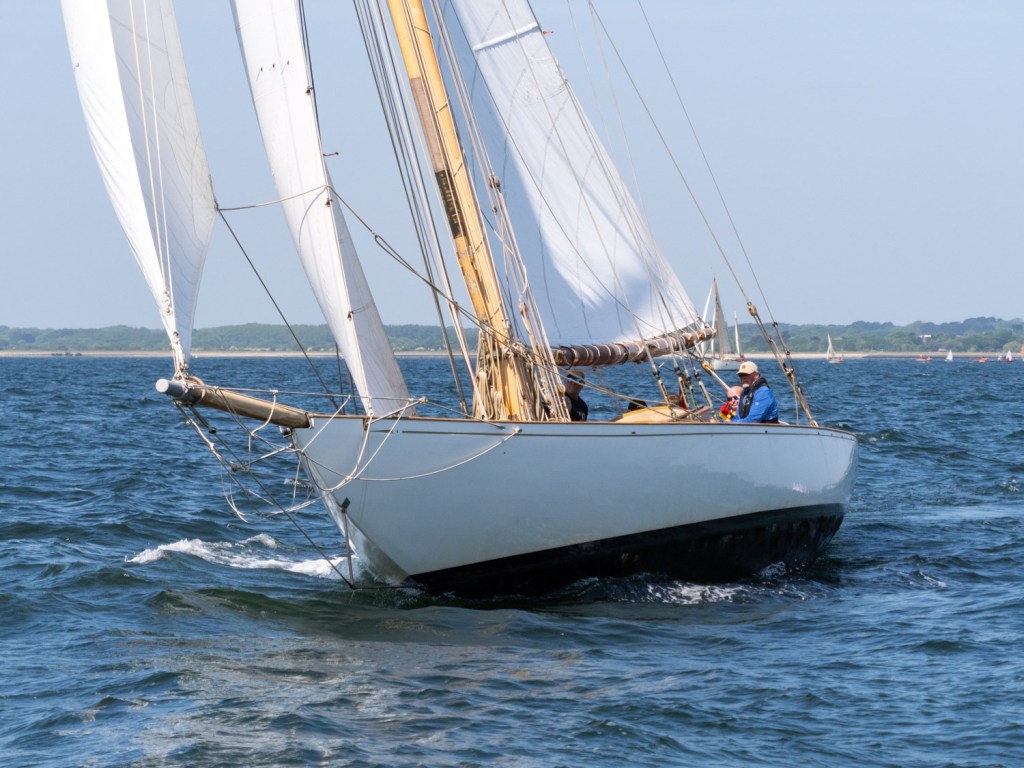
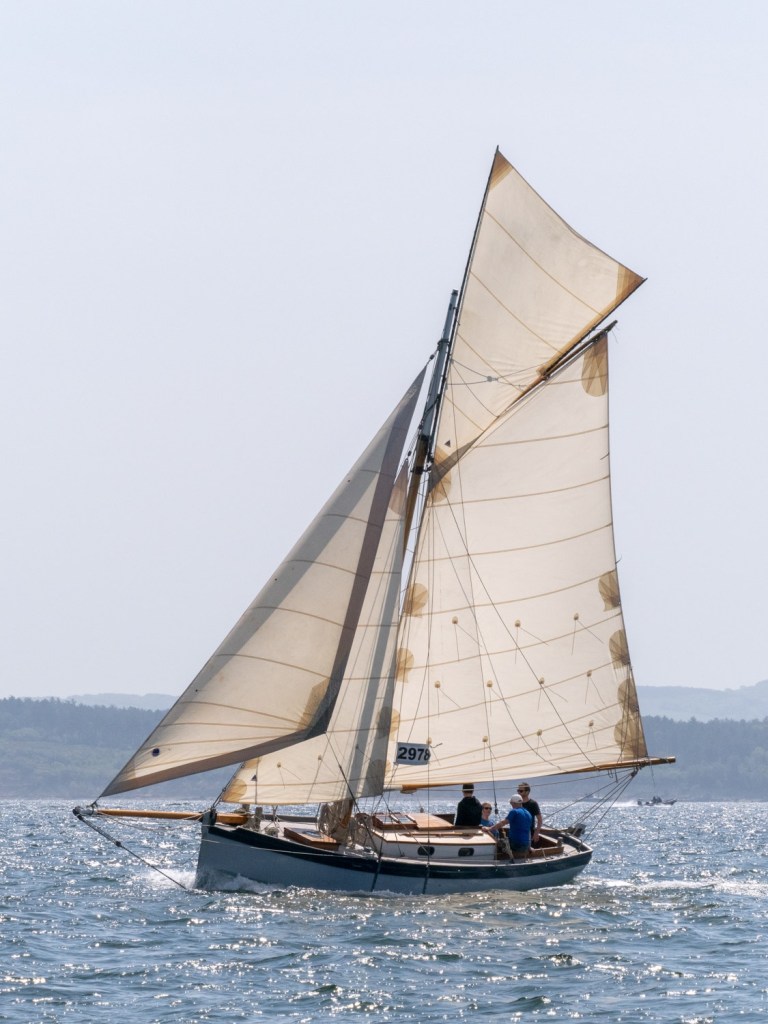
The Yarmouth OGA Festival is my favourite weekend in the Solent Gaffers calendar. It attracts gaffers large and small, old and new and it’s great to chat to so many other owners. This friendly event has a great social scene but the highlight event is the Saturday race. Here are some photos from the harbour and the race.

Thanks to Sue Pennison and the Solent OGA committee for organising, to Tim and Liz Dodwell for taking me out on High Barbaree and to all the other sailors who make this such an enjoyable event.

Moored up together
Lots of colour
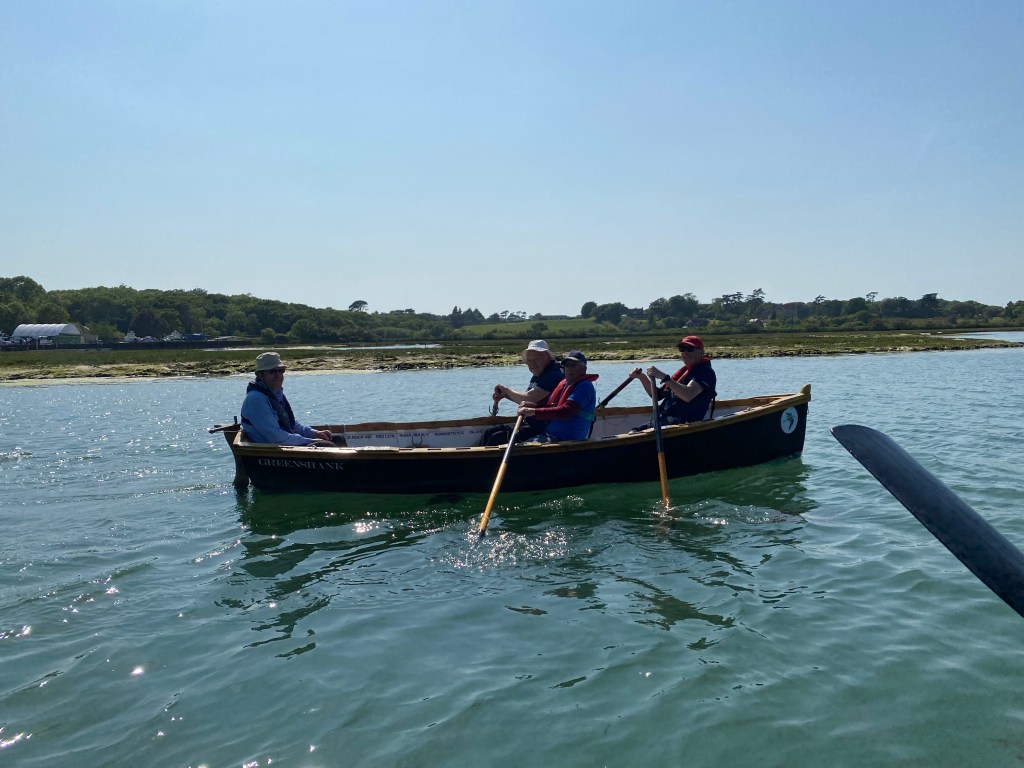
Rowing trip up the Yar
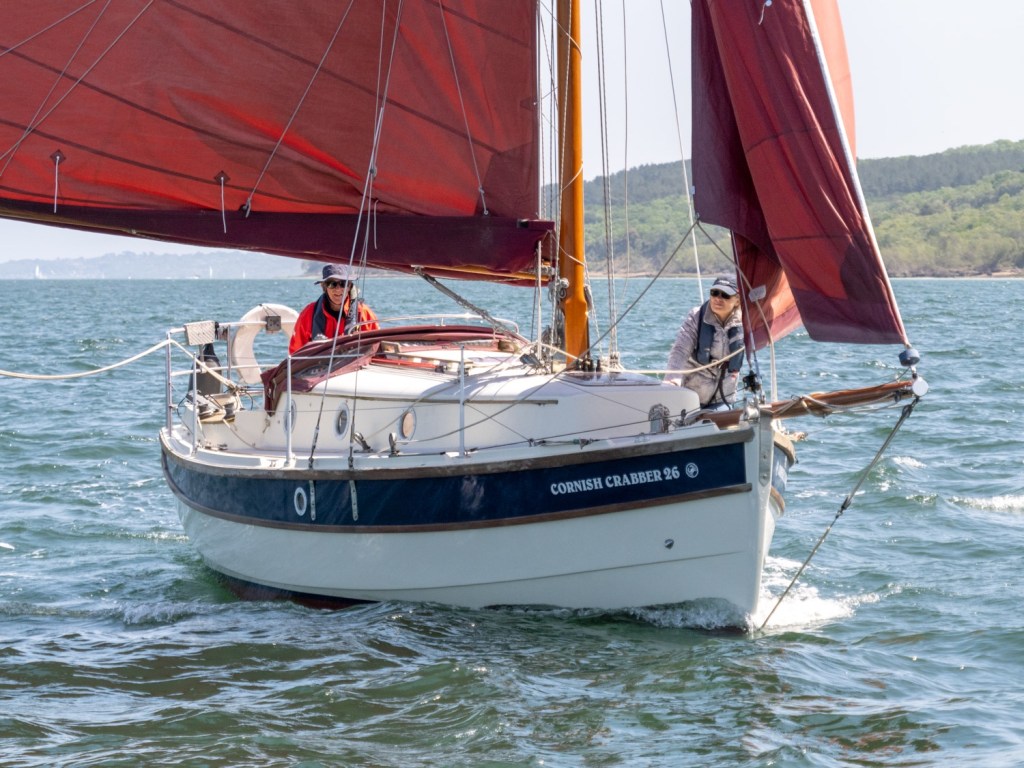
Crabber 26 Lowenna

Triangular mini-cruise

For the first proper sailing trip of the season, I was joined by my long-time diving buddy Trev. I did have trip to Emsworth in March but, without a mast, it wasn’t a sailing trip! However, the winds did suggest a return to Chichester harbour.

We drove down from the midlands amid bucketing rain and strong winds; it took faith in the forecast to believe we would be sailing the next day as we sat in the saloon hearing the rain hammering on the coach roof. Still, the steak and red wine helped take our minds off the weather.

In fact, the rain lasted longer than forecast and it was not until late morning we set off. To avoid sailing dead downwind, we shaped our course out past the Horse Sand Fort before gybing towards Chichester entrance. Conditions were lively there, with big rollers breaking on the sands to the West of the entrance. Once inside the harbour, the winds were still blustery but the water was flat and we made our way to Itchenor.

Breakers on the sand bank next to Chichester entrance

The plan was to pick up a visitor mooring and test the tender with a trip ashore for dinner at the Ship Inn. We had some trouble identifying the visitor moorings and eventually determined that they were all occupied by fishing boats. However there was no shortage of buoys to pick up – I’m used to the fairway thick with boats, but most seemed still ashore.

We found a good spot only a biscuit toss from the pontoon, pumped up the dinghy and went ashore. The Ship provided a pleasant welcome, nice beer and good food, after which we took a stroll round the village before returning to Molly.

Goose-winged at West Pole
Wind turbine blade carrier

The next morning we decided to hop across to Bembridge, as Trev had never visited “The Island” and, after wrestling the dinghy down into the locker, we set off. We were dead downwind leaving the harbour and Molly was goose-winged out to West Pole, whereupon we gybed onto a lovely reach across to the Isle of Wight. As we approached Bembridge, I could hear nothing on the radio and there was no answer at the marina. The website informed me I could book a berth online, but only by giving more than 24 hours notice. I worked all this our as Trevor guided Molly through the channel into the marina, so we made a somewhat precipitate approach to the nearest available berth and tied up. It was just as quiet at Bembridge as it had been at Itchenor and it made a lovely change to moor on the easier to access South side of the pontoon.

Plenty of space at Bembridge

This gave us plenty of time for a lovely walk up to Seaview and along the beach before looping back along footpaths through the countryside, followed by a pleasant meal at the Vine Inn.

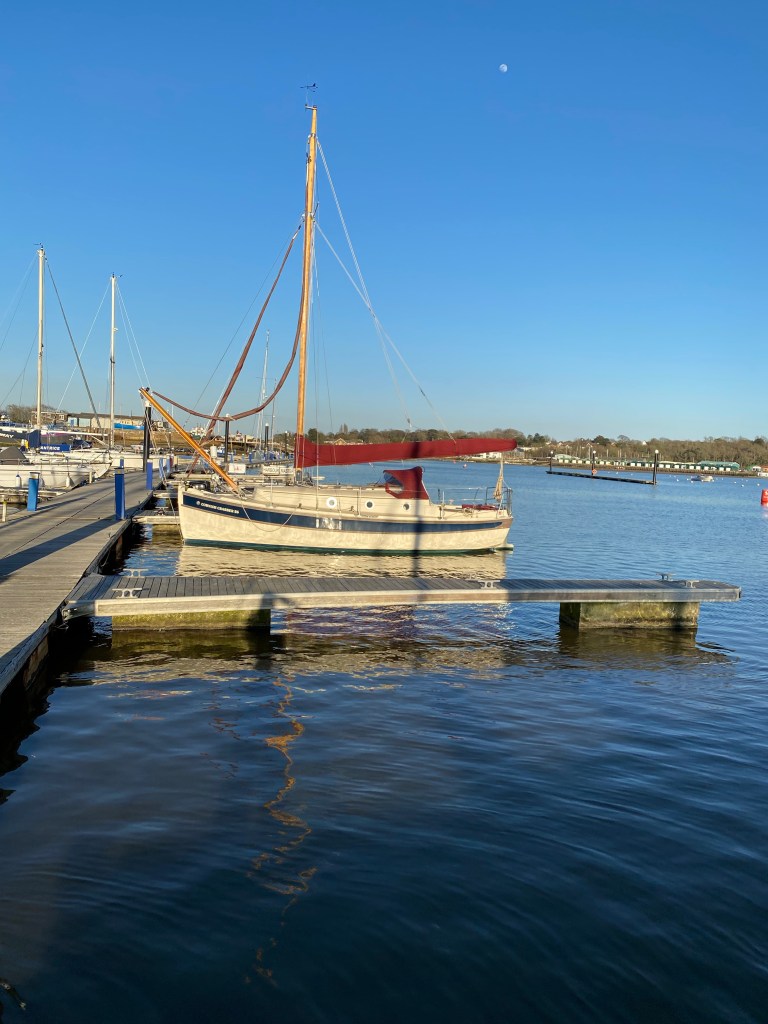
Our triangle was completed the following morning by our departure on the high tide and a short hop back to Gosport. This was my first run into Molly’s new berth, which involves a whole lot less manoeuvring in reverse.

Molly’s new berth
Trev at the helm

Mast woodwork complete

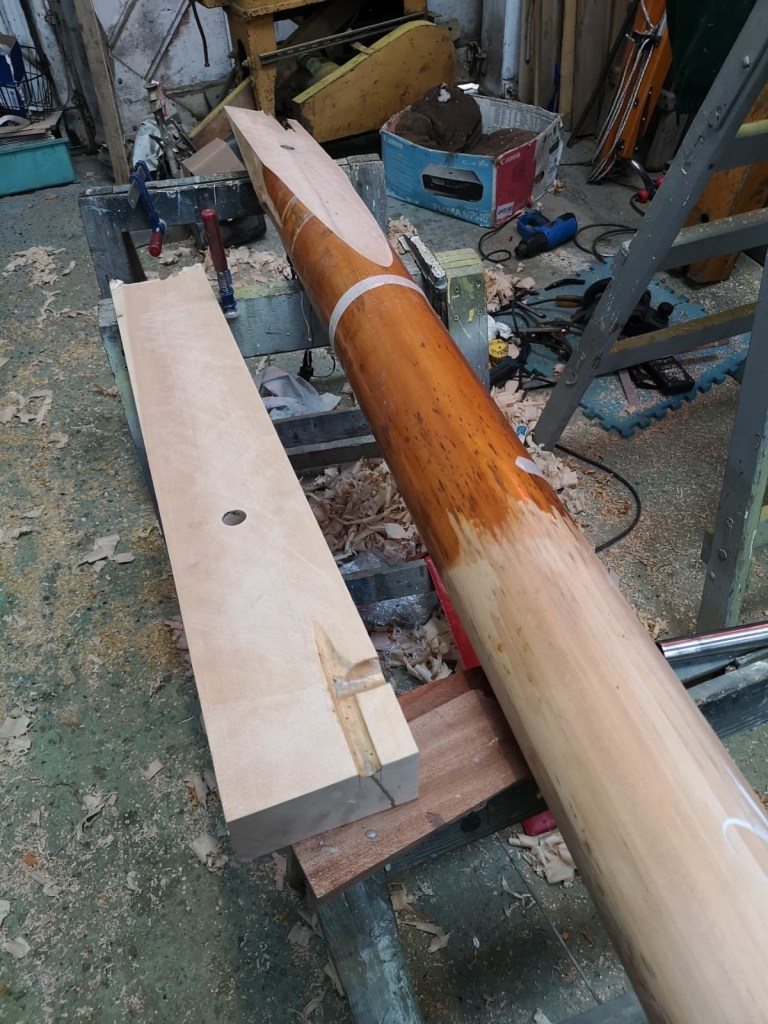
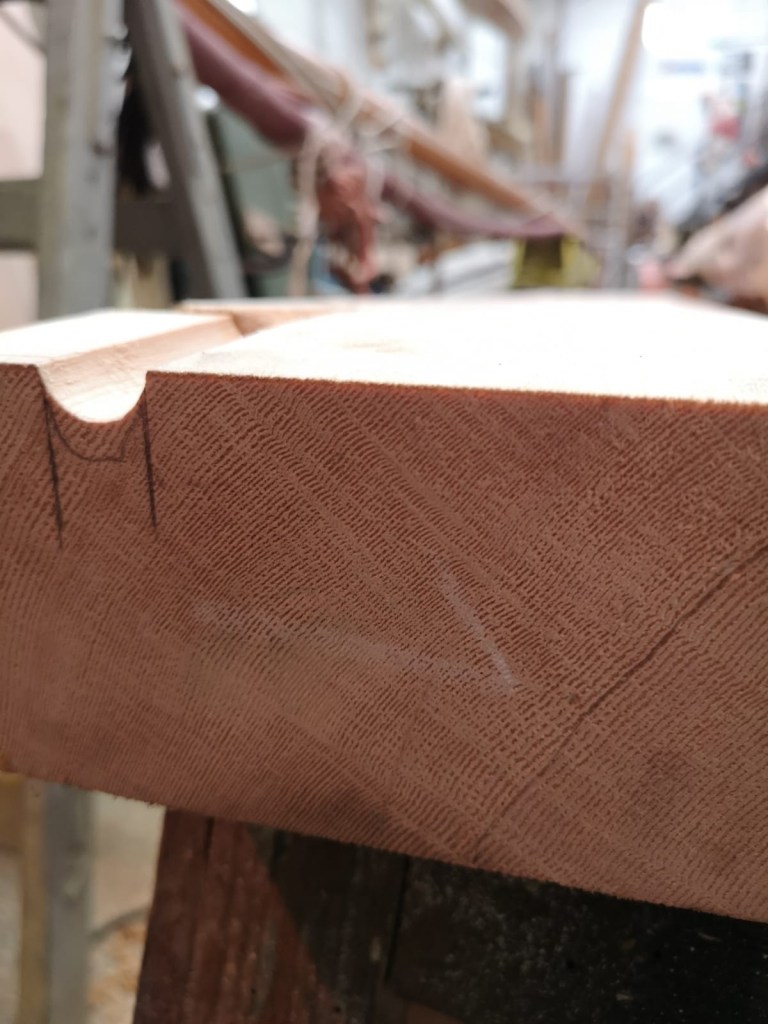
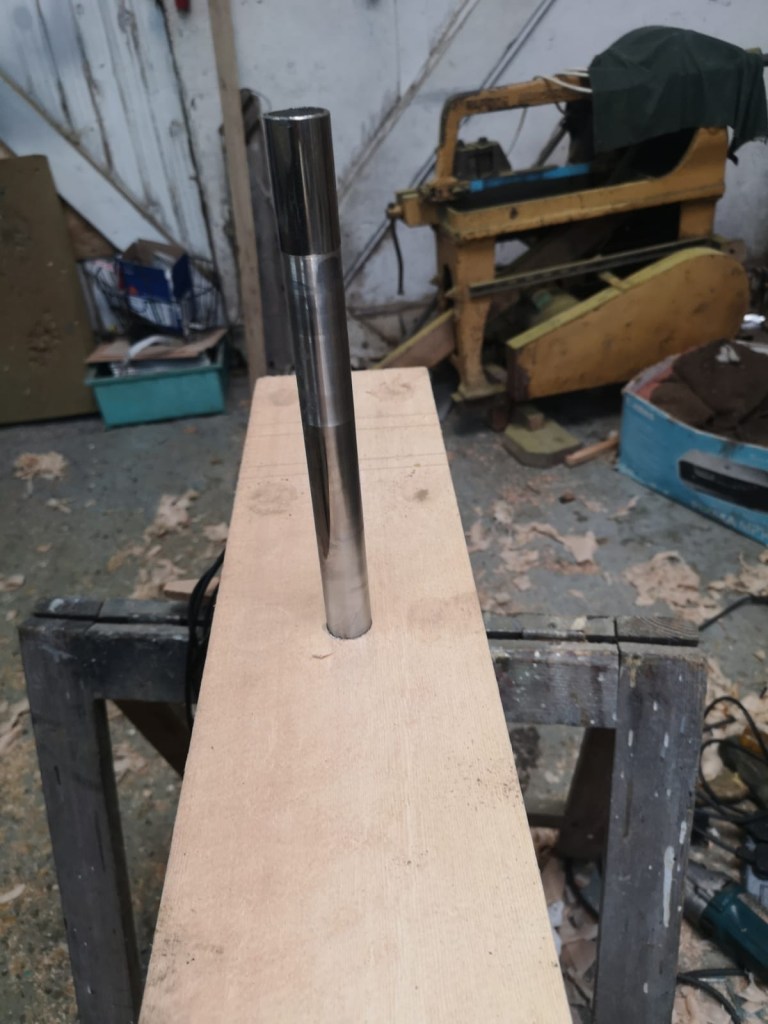
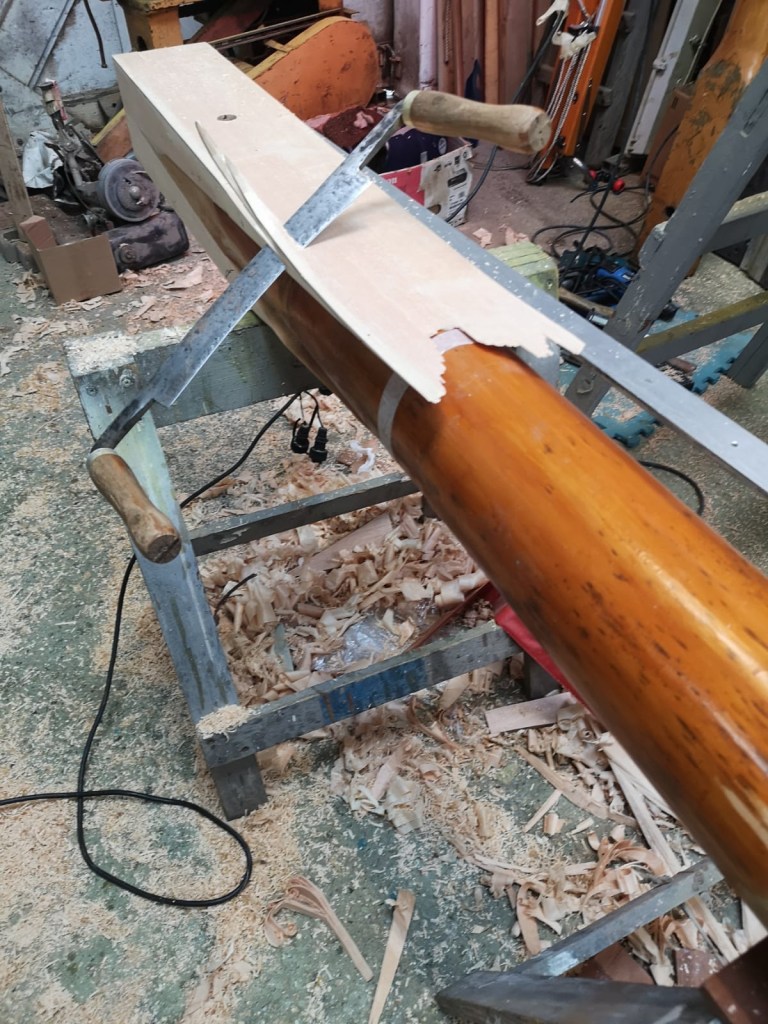
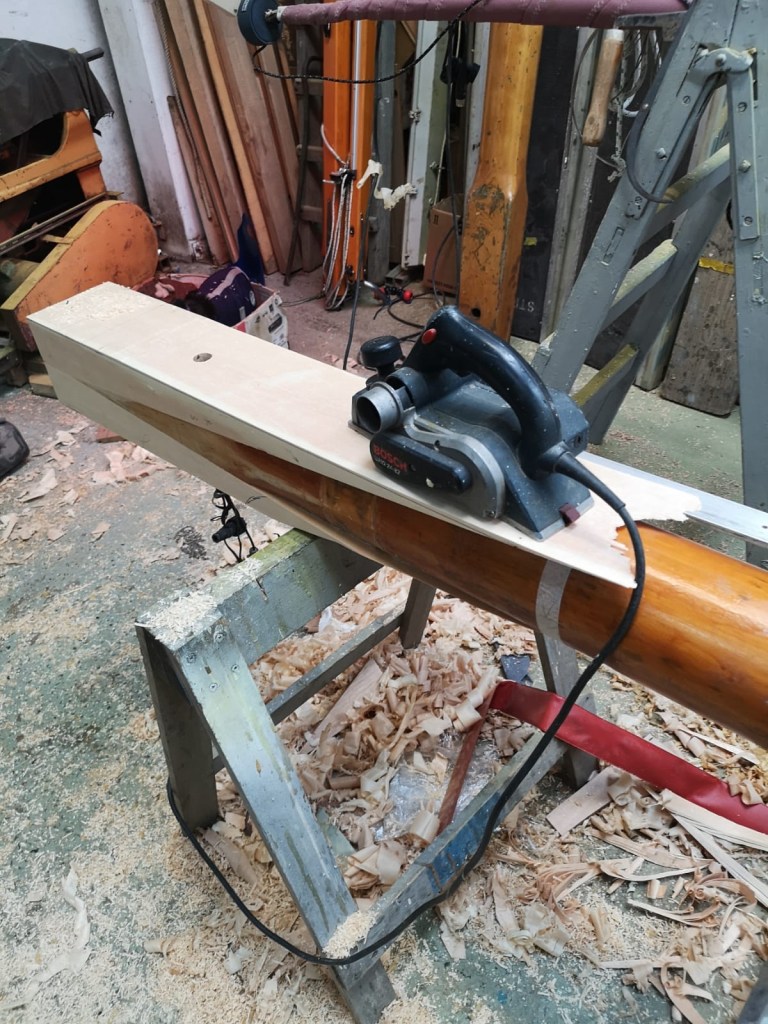
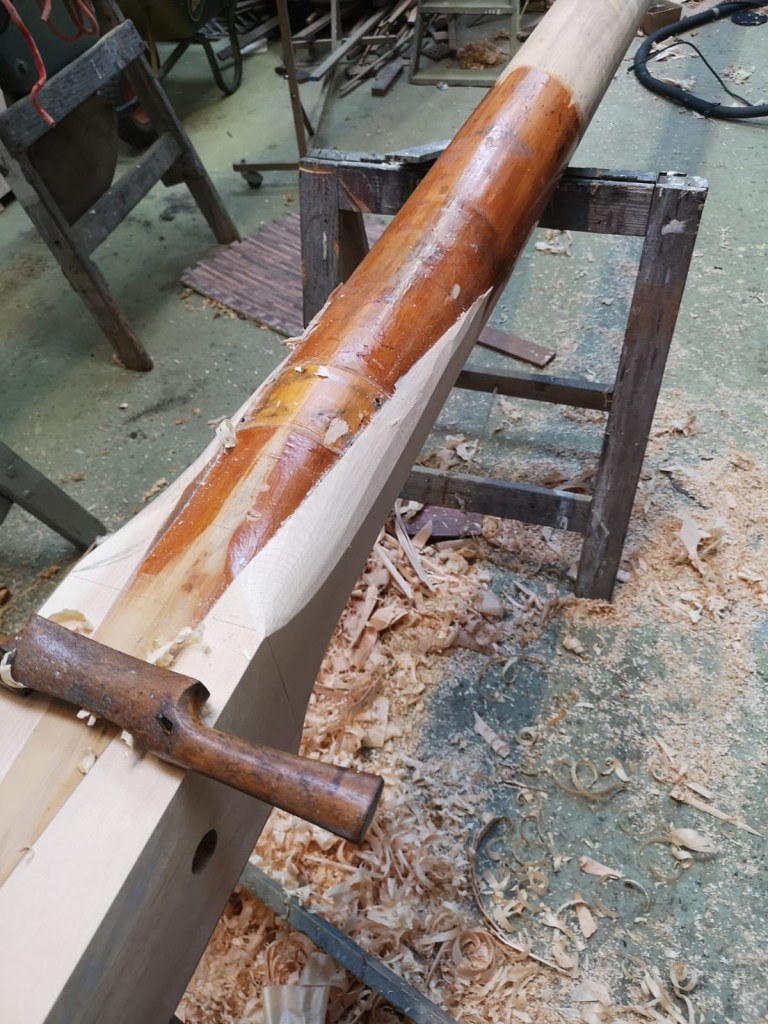
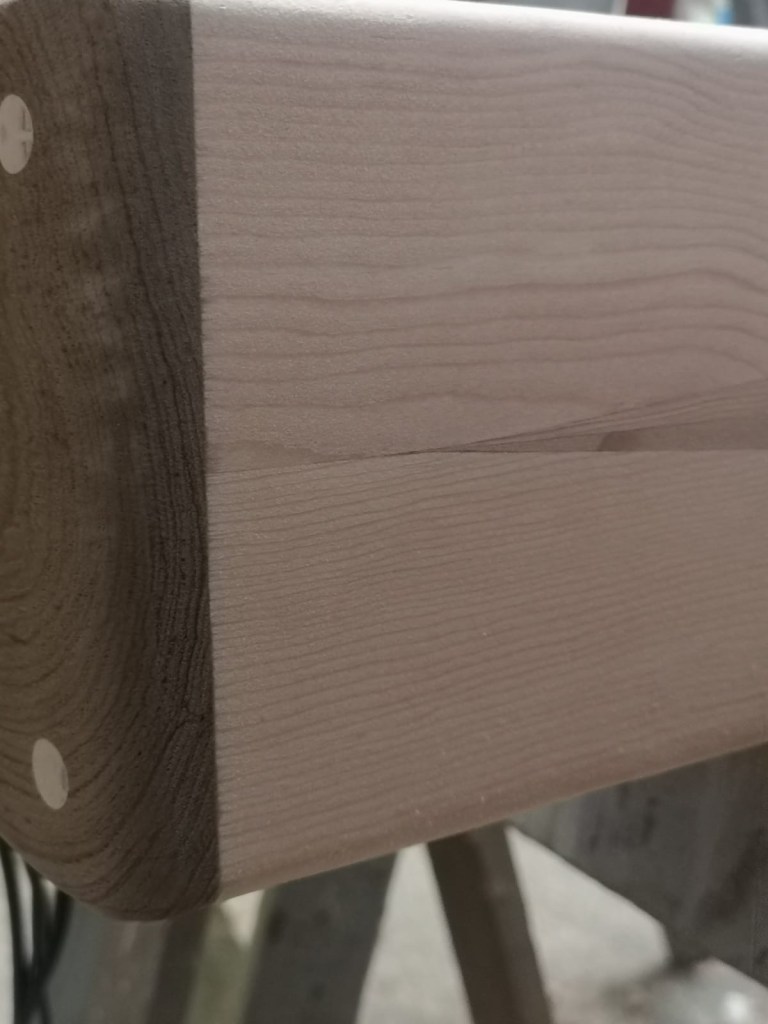
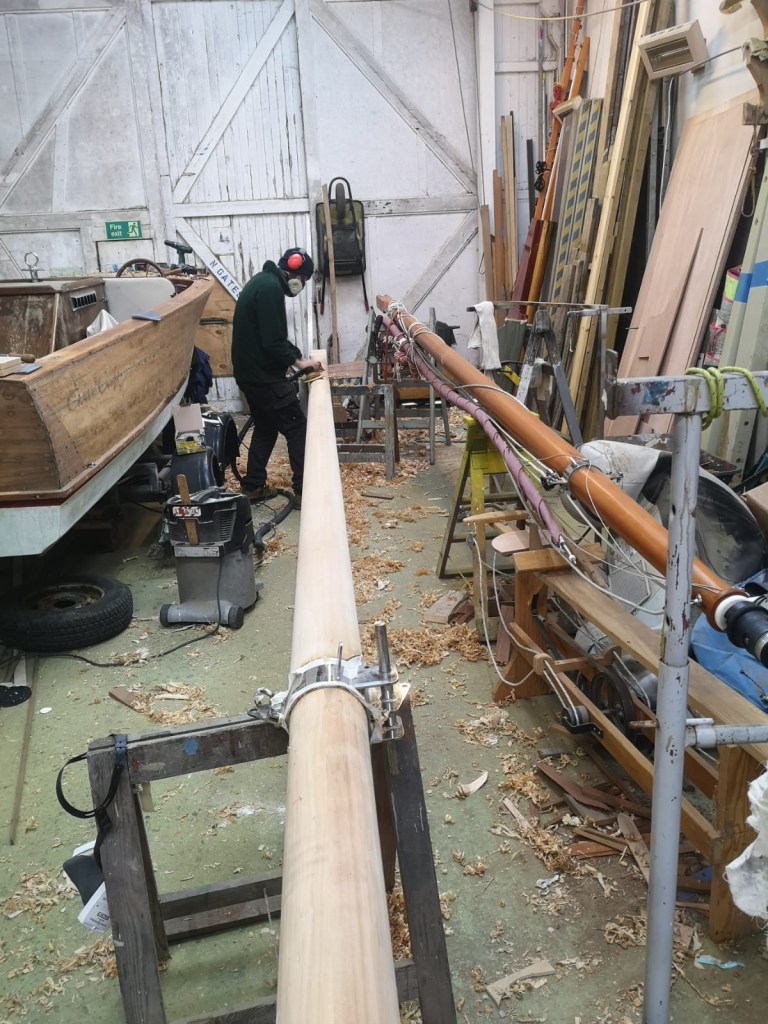
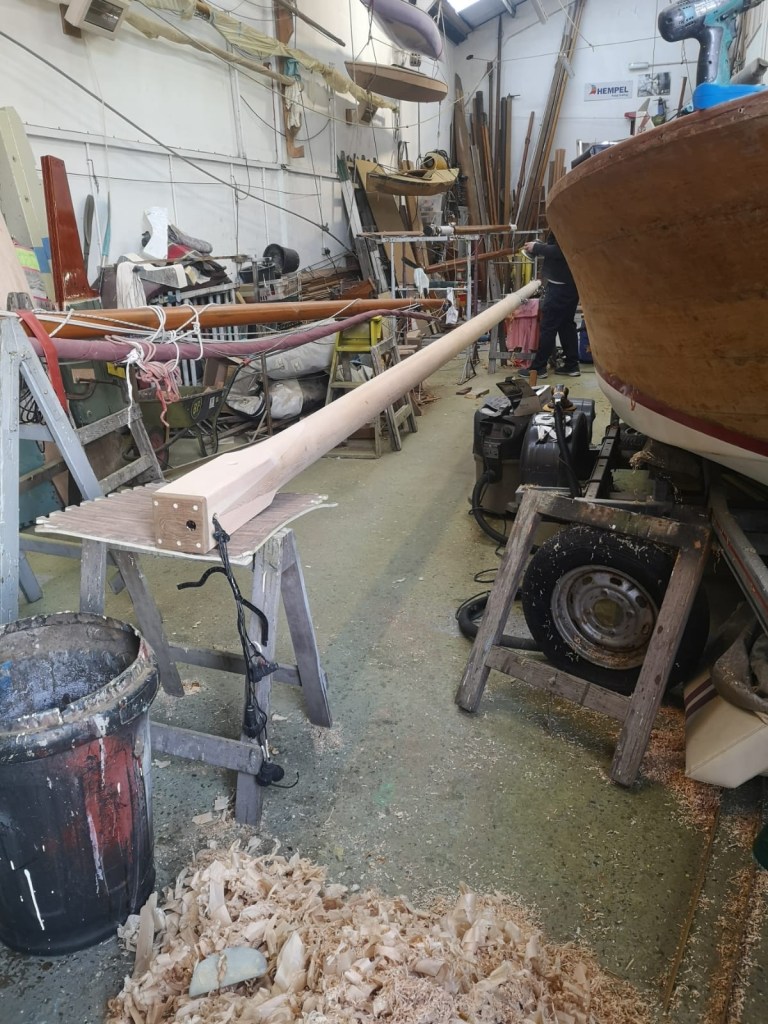
I was very happy to receive these photos today from Nick Gates, the excellent shipwright repairing the rot on Molly’s mast foot. They tell the story of how the scarph is carried out, resulting in a very elegant job, which even improves on the original.

Sitka spruce block being planed flat
New piece ready for fitting, showing channel for cables
Clamps applied!
Trimming the scarph
Pleasing shape!
Fairing the shoulders
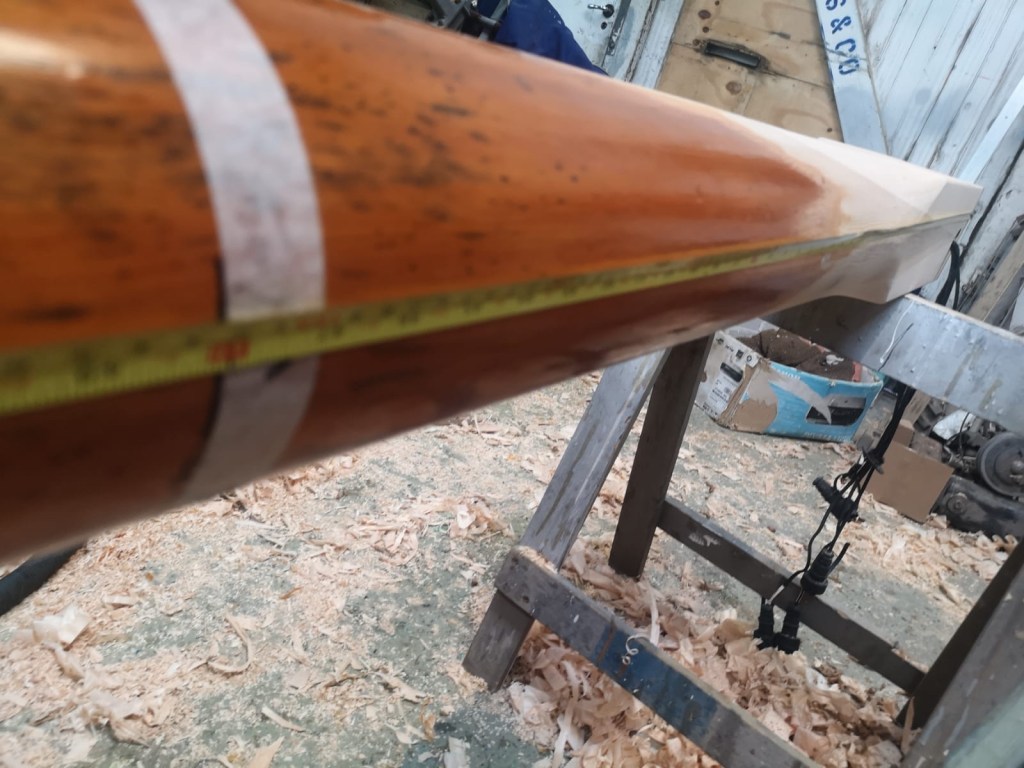
Nick put on a technical bit of tape at the start of the job, to retain the exact length of the mast
Precisely four feet from the foot
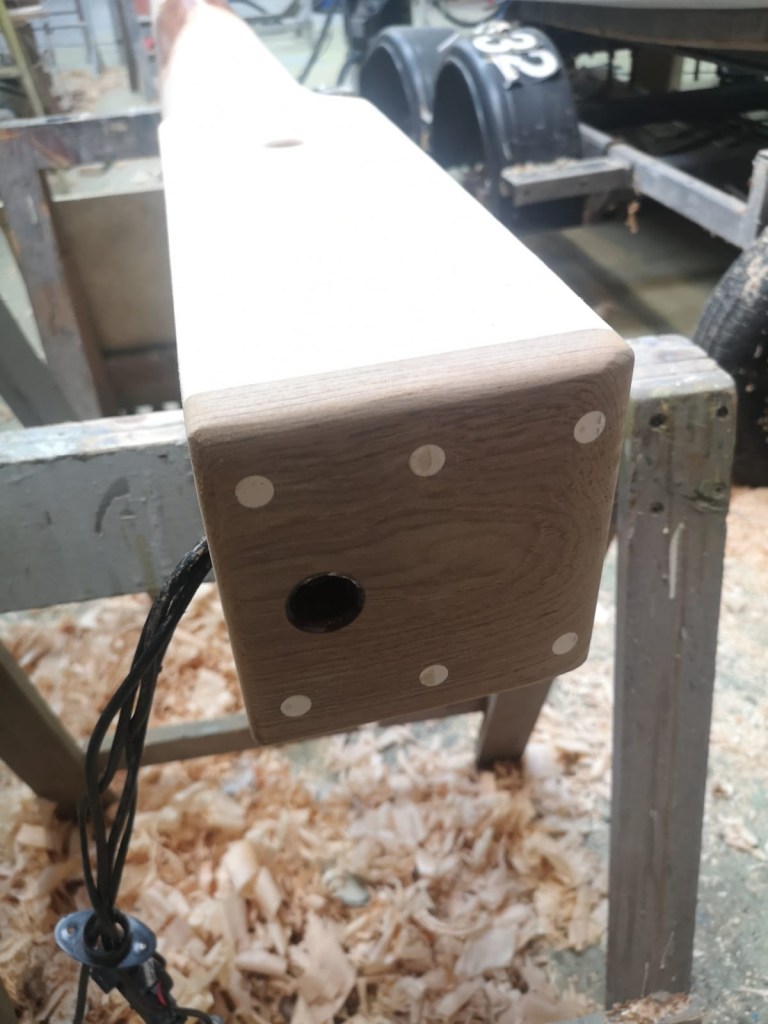
The new foot is made of teak, salvaged from the side of some steps on a Baltic Trader which was broken up 20 years ago
Foot is screwed on and the holes filled with epoxy and microlite (filler) mix
Finishing the surface prior to varnishing
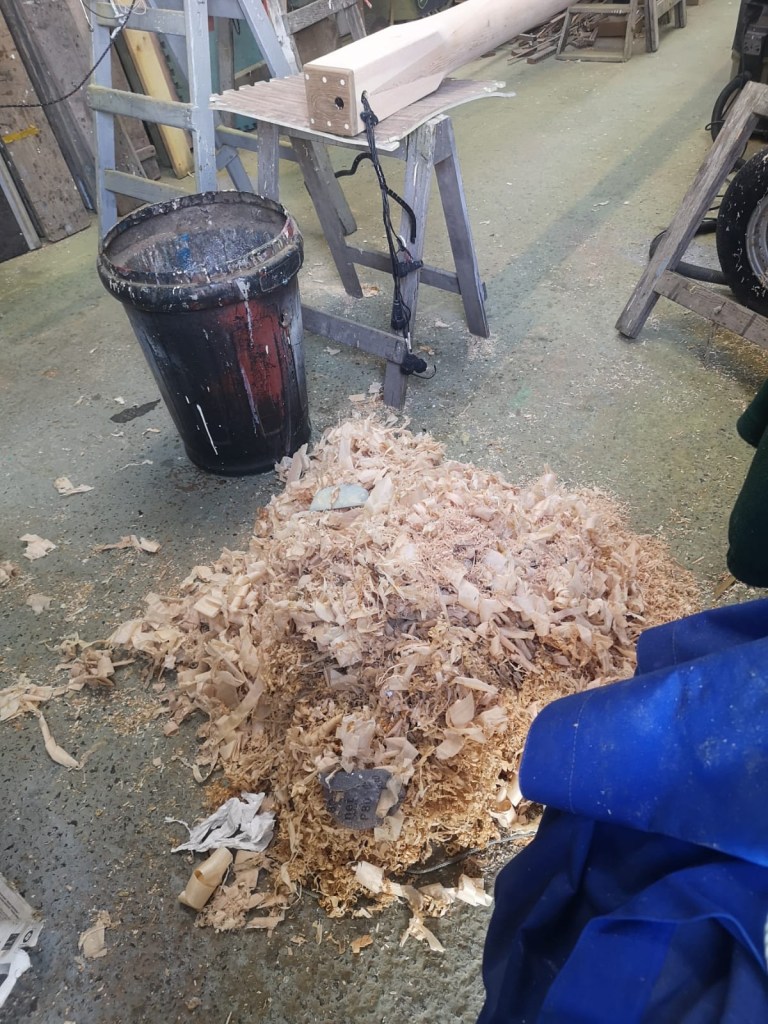
I’ve paid for a spruce block to be turned into shavings!! 😉

Mast repair

Molly’s mast lowered and ready for maintenance
The foot of Molly’s mast when we inspected it in August. In fact the rot extended inside almost up to the tabernacle bolt hole!

When we bought Molly last year, we could see that the mast needed some maintenance, but were not able to drop the mast whilst we were ashore in the yard. During the summer, we removed the mast to reapply the Sikkens coating. To our dismay, we discovered rot at the foot of the mast! This winter, work is finally going ahead to refurbish the mast: remove rotten wood, scarphing new timber and adding a hard wood cap to the foot of the mast which will protect the end grain of the spruce. Whilst we’re at it, we’ll change to coating to a more traditional varnish, which will allow us to better see any signs of water damage to the wood and, I feel, give better protection to the wood, albeit at the cost of annual or biannual sanding and topping up the varnish. Here’s a video of our trip to see the shipwright Nick Gates, who has been assessing the work, before completing the refurbishment of our mast.
Leathering the gaff saddle

On traditional gaffers, the gaff jaws are often covered in leather to help them slide along the mast and prevent wear on the mast. Whilst the Crabber 26 is not a traditional gaffer, I do like the “leather look” and it’s not that hard to do.

When we bought Molly, I noticed there was quite a bit of wear on the mast where the gaff saddle sits, especially in the position when the sail is furled. Some wear is inevitable on a gaffer, but it seemed excessive. Inspecting the gaff saddle, which is a pretty substantial piece of stainless on a Crabber 26, I could see that it was lined with a piece of plastic resembling a vinyl floor tile. Over time, this had cracked and split at the edges and appeared to be the cause of the wear. One thing I’ve long made a habit of doing when moored is to use an extra line to secure the boom towards the stern quarter and stop it moving. I’m sure over time, the constant shifting of the boom considerably adds to wear where the gaff saddle sits against the mast.

I have some experience of leathering gaff jaws on my previous boat, but the design of the gaff jaws is quite different on the Crabber 26 to my previous boat, a Cape Cutter 19. I took advice from those in the know, and Sue Pennison in the Solent OGA was very helpful. She suggested a “sandwich” arrangement using a saddle stitch. I bought my materials from Classic Marine in Suffolk, costing about £40 for the whole job. They supply pieces of the correct type leather; you simply specify the size you need and they charge you by the square foot (!). They also see tough rot-proof twine and sail-makers needles. Before starting, I took a diploma at the University of YouTube on how to do the saddle stitch (easy!). The photos below show the main stages in the process.

The condition of the gaff saddle when I started; you can see the damage to the original lining which I think was the cause of my mast wear.
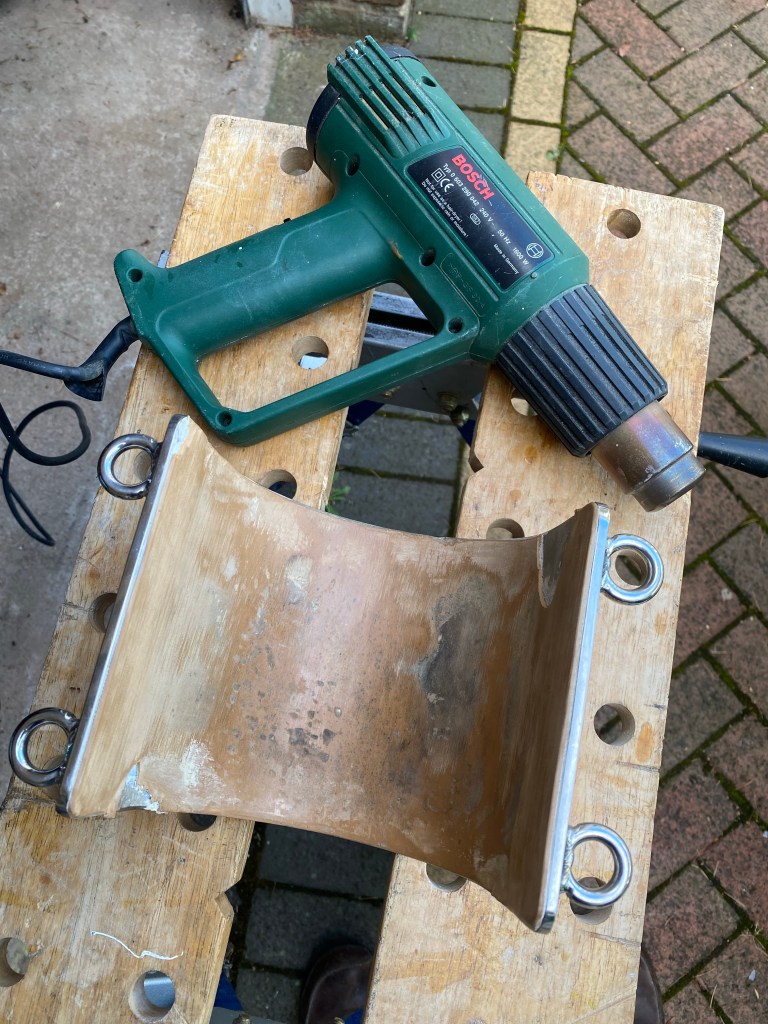
I used a paint stripper to warm the plastic and soften the adhesive – this made removing the material much easier, but I was careful to minimise heating of the metal.
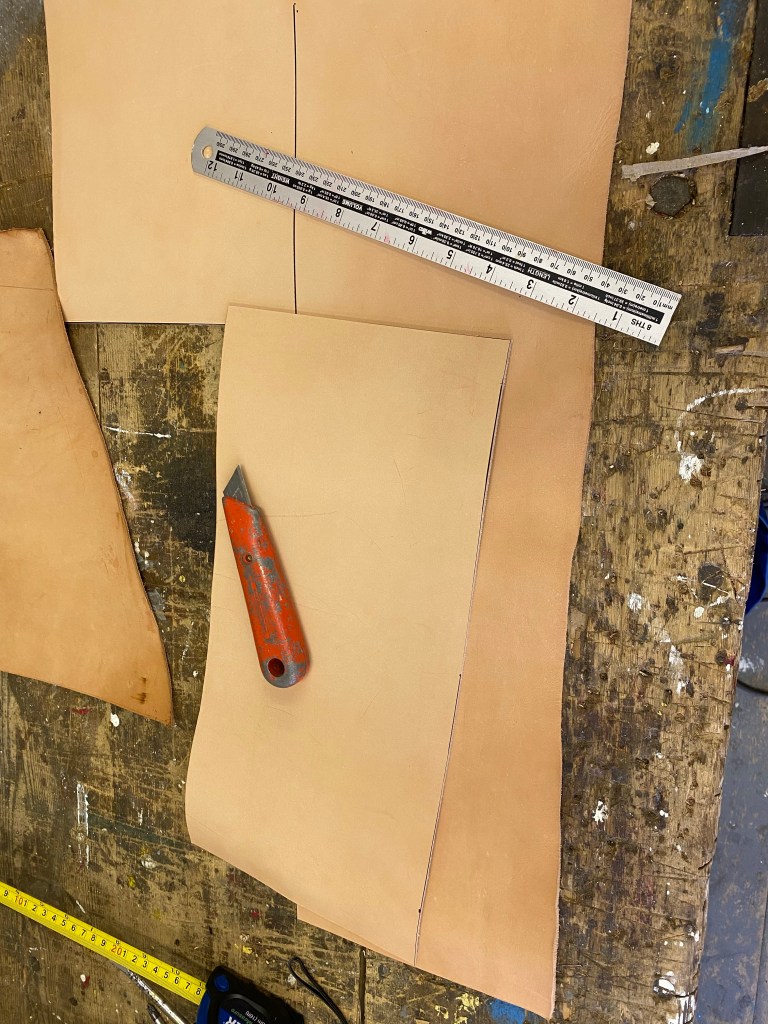
The leather was supplied in large rough cut pieces. After very careful measurements, I cut a piece which was the correct height (allowing for a 5mm seam top and bottom) but over-long, because I was not sure how much length I needed as the leather was stitched around the curve.
The trickiest part was making cut-outs for the various fittings on the back of the saddle. Despite my careful measurements, I did make one mistake (one of the large slots was too big). Measure twice (or more!), cut once… Fortunately this error does not show when the saddle is fitted. You can see I drew an outline of the metal and then added the seam allowance.
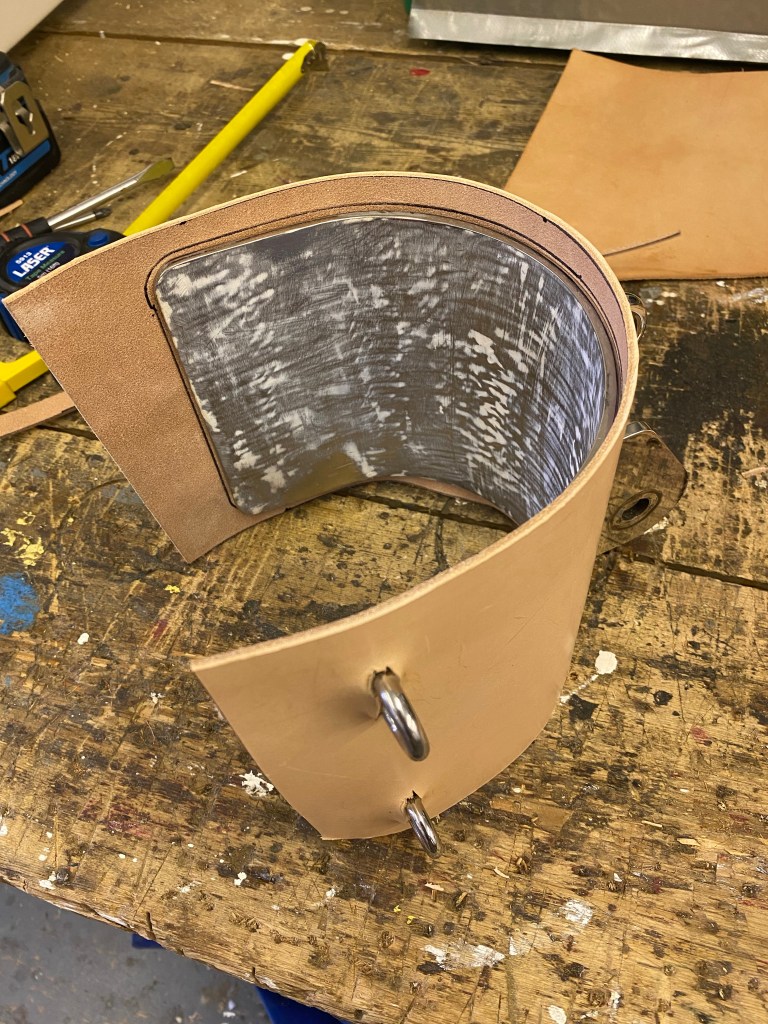
Trial fitting of the outer section.
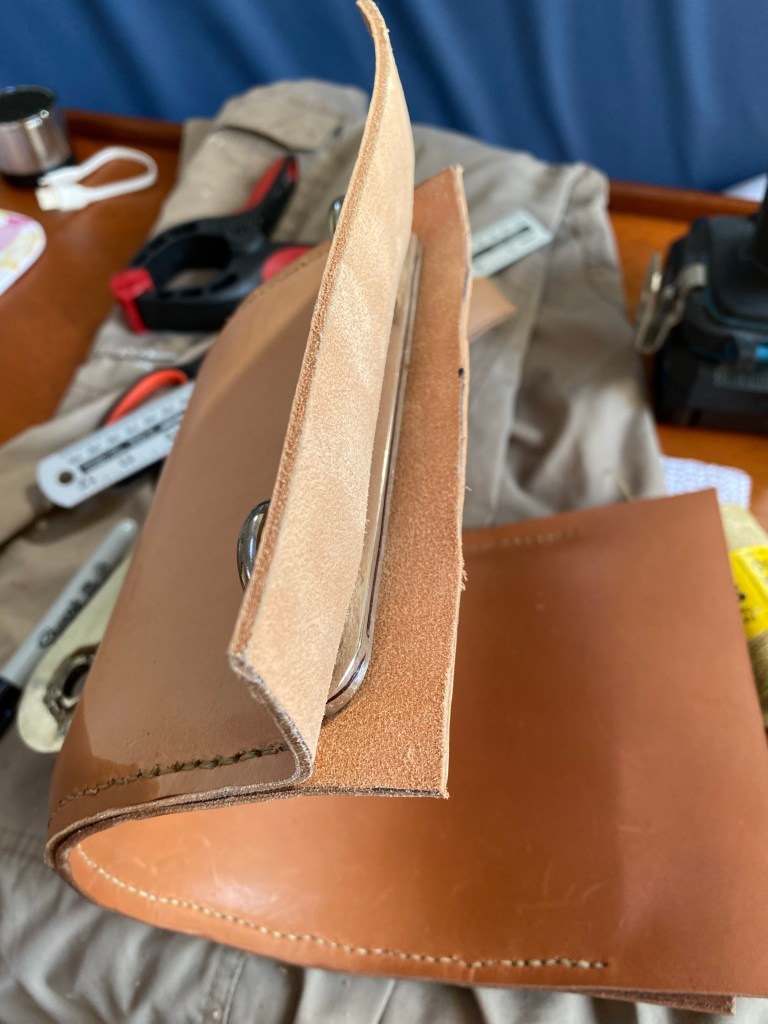
The inner piece was very easy to cut. I measured along the leather with my trusty Portland dividers, and marked with a sharpie where the holes should be, so the stitching would look even. Before fitting, I wetted the leather, to make it more supple. I held the sandwich in place with small clamps and then drilled holes. I made the holes in small batches, so that the position would be right, as the leather conformed to the curve of the saddle. Saddle stitch is a very easy stitch, using two needles cross-crossing each other. Very satisfying work!
Top and bottom now stitched. The leather is ready for trimming to size at the ends.
The ends now trimmed to size. I let the leather dry and then cut with a good pair of scissors. Note the holes drilled in measured positions, ready for stitching.
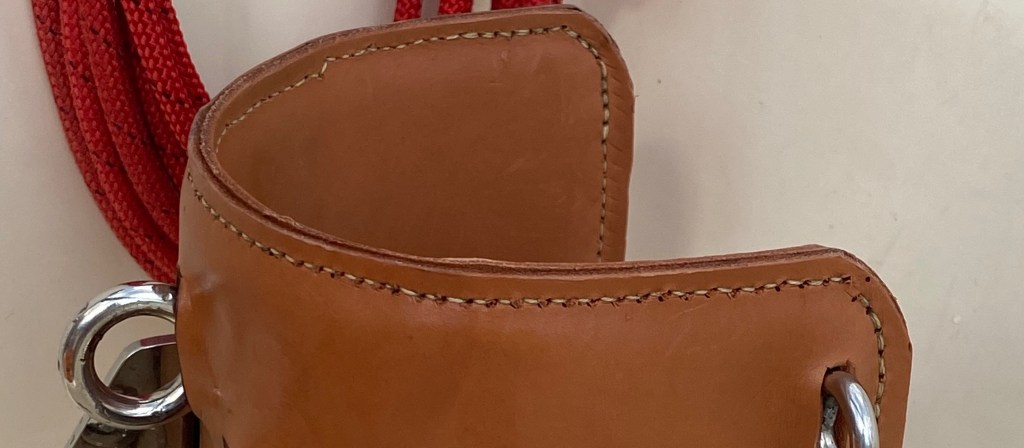
The finished work! Overall I’m really happy with the result – looks great and, a few months later, much less wear on my mast.