Tag: Swale

OGA East Coast Cruise Part 2

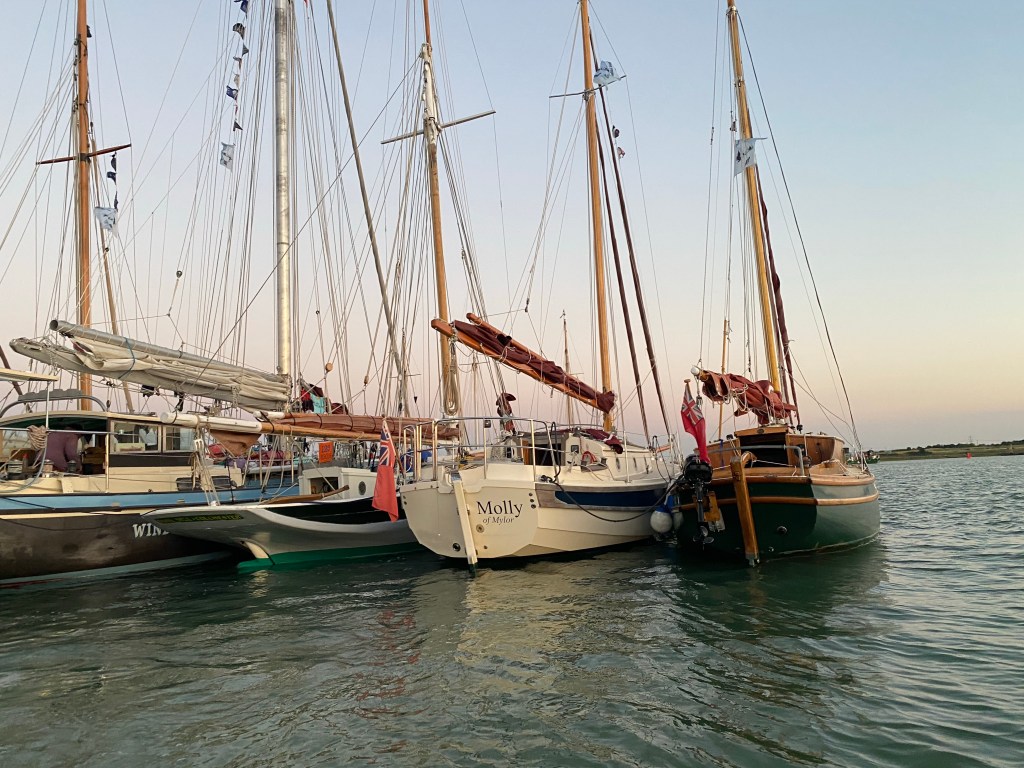
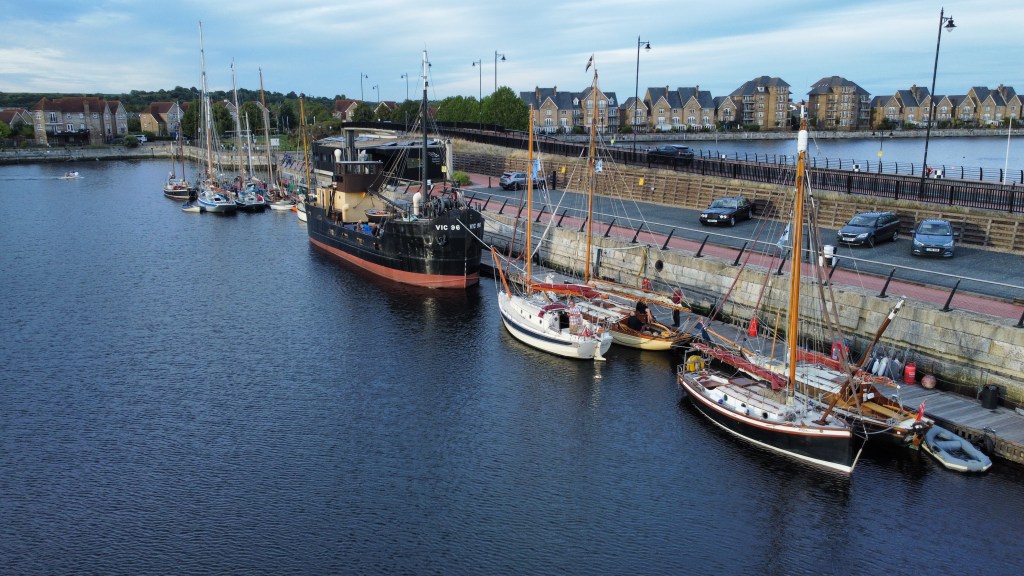
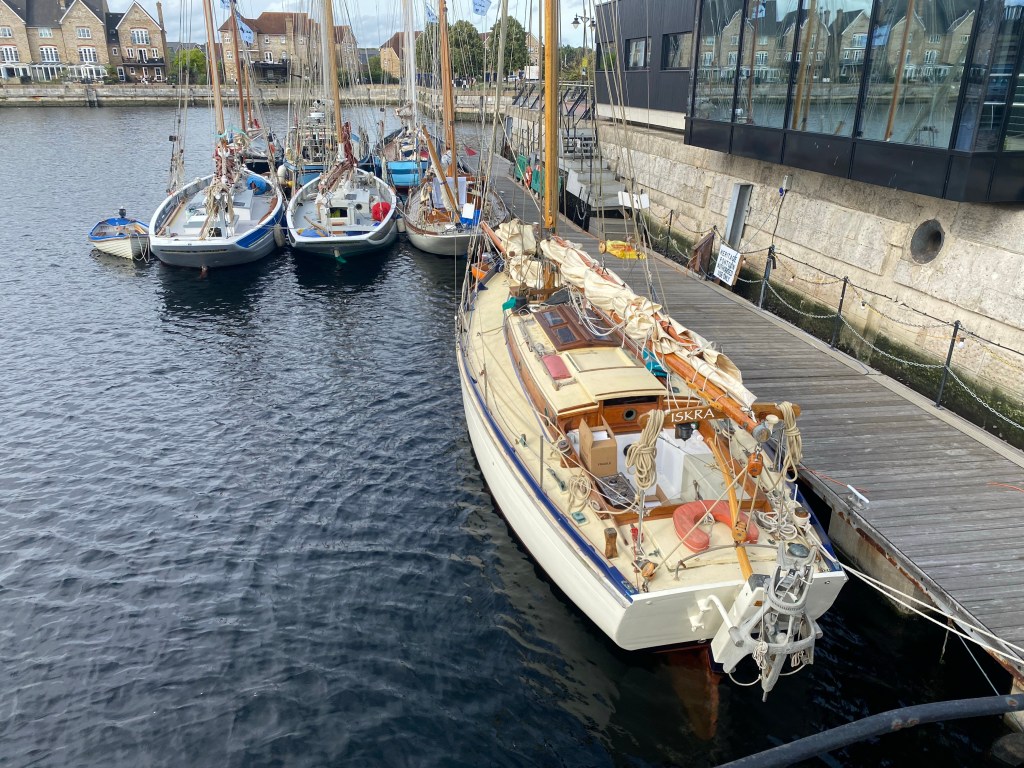
Molly rafted in Chatham to Emmanuel, between VIC96 on one side and Puffin Bach and Plum of Mylor on the other

Continuing our cruise from the Orwell to the Medway, taking in the Essex coast…

Wednesday night found us in the Swale, at Queenborough, a day earlier than expected. For the final leg of the cruise we had an interesting passage up the Medway to Chatham. The river is very industrial at the mouth, with many working (and some apparently derelict) commercial berths, mostly loading bulk goods. The river has a series of meandering bends and after the first, the river becomes much more rural.

The wind was very light and fluky, but I was determined to sail as much as possible. It was a very peaceful sail and sailing solo, I certainly had plenty of practice of single handed tacking of the foresails!

Eventually, we drew into Chatham which is approached around a large oxbow. We passed first a double commercial lock, and once around the bend the second, newer single lock into the marina on the opposite side of the loop. There are three connecting basins between these two sets of locks, though they are no longer navigable. This creates an “island” which is now a modern housing estate. The yacht marina within the eastern side is large and, as now seems to customary, lined with residential developments.

Nestling at the back of the marina, is the “heritage pier”, which predates the marina and is home to our host, the Chatham Maritime Trust. During our stay here, we were given tours of their restored wartime steam tug VIC 96, which was originally a victualling craft and, having languished as a display exhibit in Cumbria, has been restored to full working order and returned to its home.

Molly was rafted alongside a lovely 1924 30’ gaff cutter, Emanuel, fully restored by owners Jan and Robert Holden. This boat, whose mooring I had passed on my outbound visit to Sandwich, has made several historic voyages including a single handed passage to the Faeroes and Newfoundland in the 1930s. Her current custodians are understandably proud of her, and Jan was delighted to show us the immaculate interior which has been restored faithfully to the condition for those famous voyages.
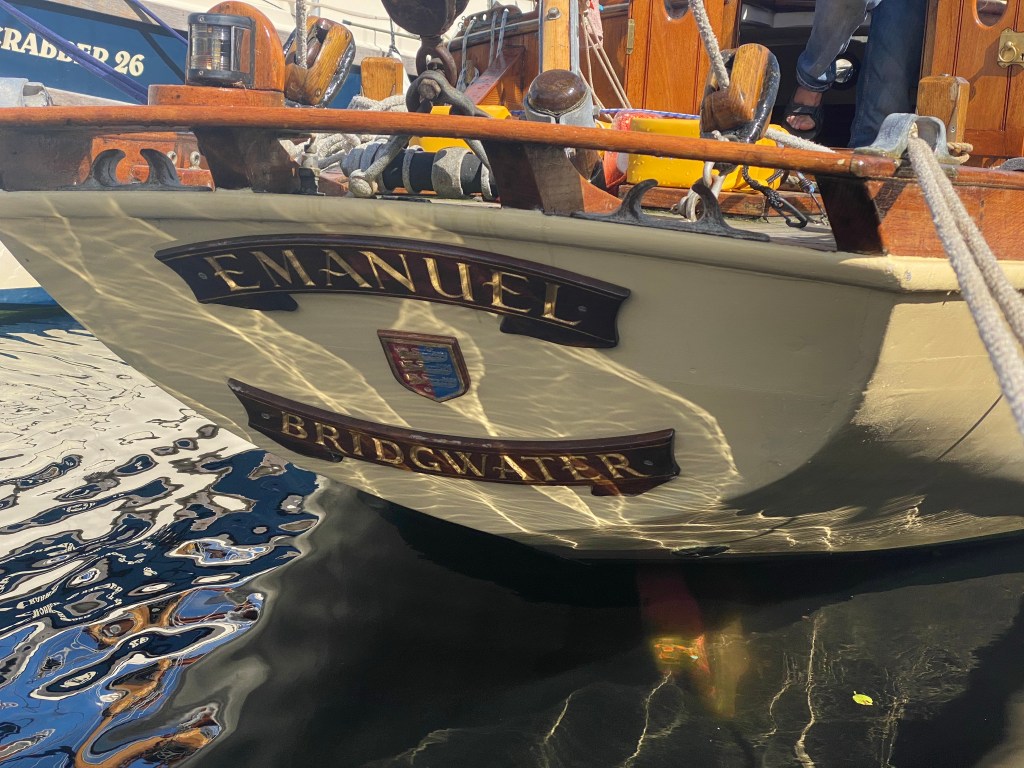
Robert telling us Emanuel’s story. Note the cinque ports crest on her stern
The coat of arms of King George III at the entrance to the historic dockyard at Chatham
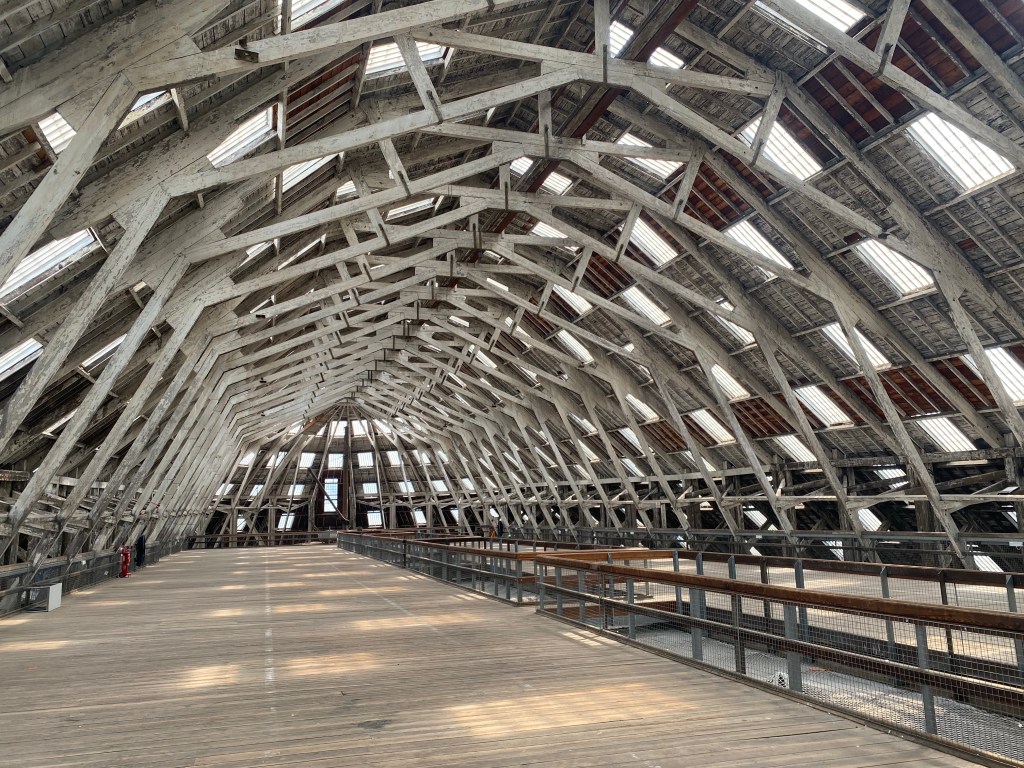
3 Slip, “the Big Space”, an amazing wooden building designed to be large enough to cover a ship in construction

During our stay, there were also tours of a local gin distillery available, though a few of us chose to visit the fascinating Historic Dockyard. This has amazingly well preserved architecture, including the last intact example of a rope walk (a building a quarter of a mile long), still working.
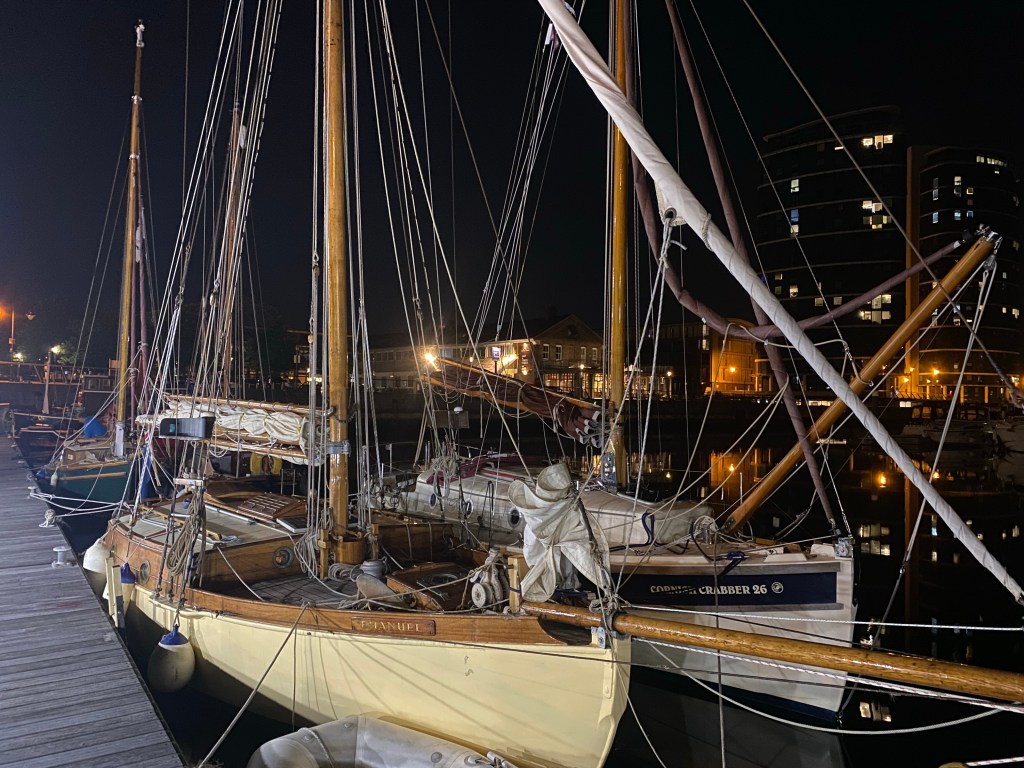
Emanuel and Molly

That evening marked the conclusion of the official rally, spent on deck of VIC 96, with a fish and chip supper.
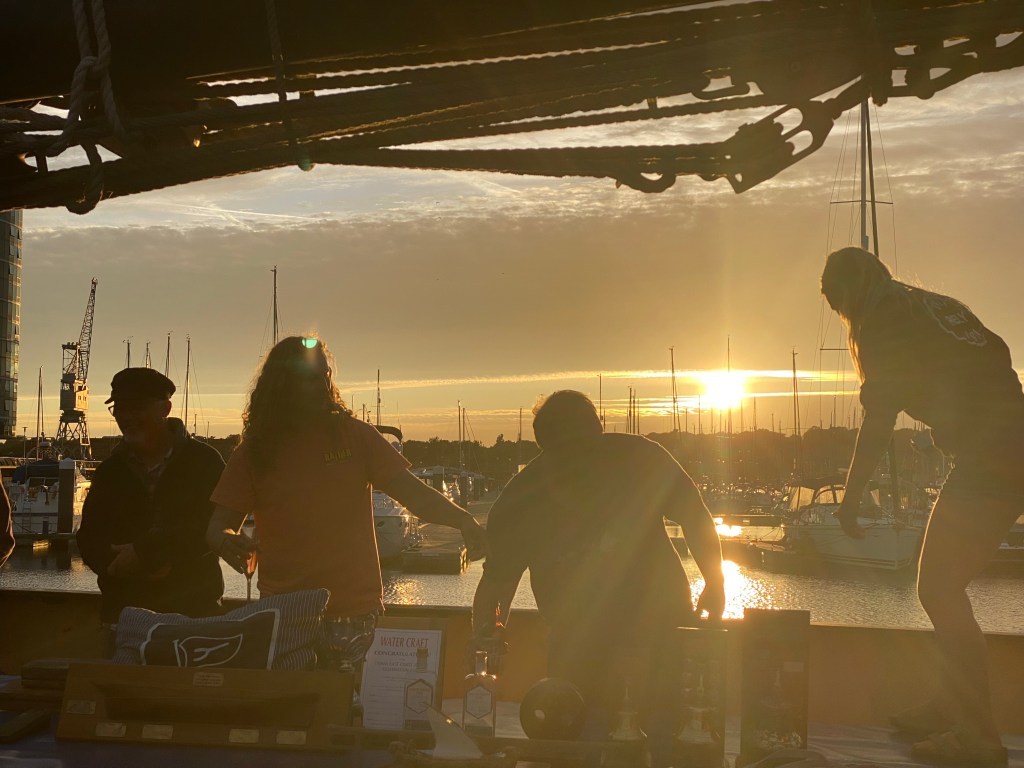
Our last evening, aboard VIC96

I had been joined for the final section of the trip by fellow Solent sailor, John, who owns a shrimper 21 and was keen to sail a Crabber 26.

The forecast was not ideal, but we dropped our warps promptly at 0730, for our passage to Ramsgate, but I was struck dumb when I radioed for a lock out and was told tbd lock was broken! It transpired that the lock had malfunctioned the previous day and the marina told us it was due to be fixed that day. However, we heard different stories at different times and it emerged that this was not the first breakdown.

I found it unbelievable that a large marina (part of the MDL chain) would be rendered inoperable on a summer weekend and a complete lack of urgency to the repairs! Frustrating though this was, the Chatham Maritime Trust were very happy to accommodate us for the duration of our enforced stay, for which we were most grateful. Many owners had to leave their boats and return the following weekend to get them home.

We made the best of the waiting time, visiting each others’ boats and also returning to see more of the historic dockyard (the ticket is valid for a year). John and I enjoyed dinner aboard Windbreker courtesy of Else and Edgar, who have lived aboard for all 25 years of their marriage.
OGA East Coast Cruise part 1

OGA East Coast Cruise part 1

The first section of Molly’s meander home would be with the OGA East Coast cruise, which had been arranged in part for the benefit of us visitors from further south. The object was to cross the Thames estuary and visit the Medway, after which we were to part ways.

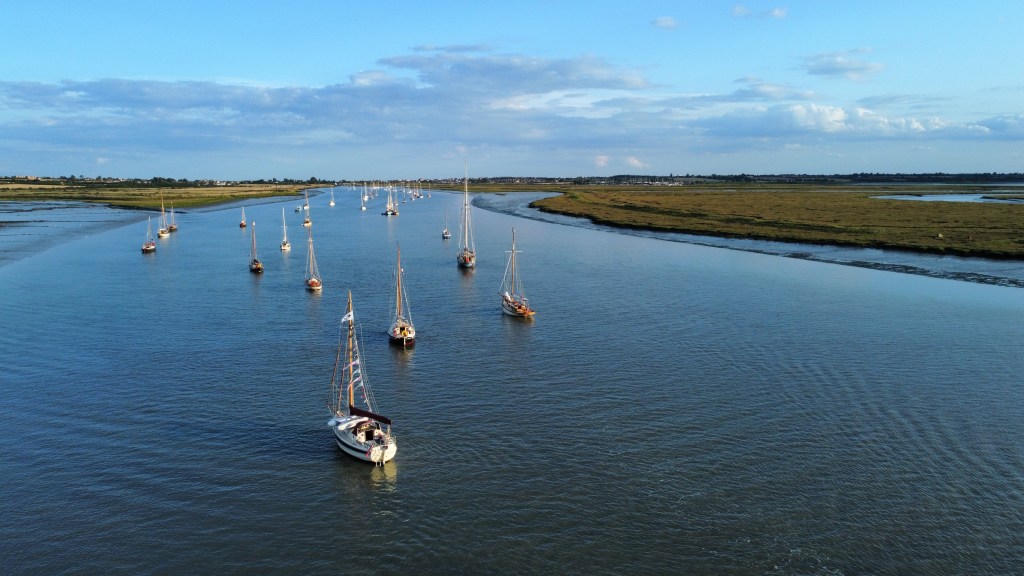
The first day of the cruise was a passage race to the Walton Backwaters. Niki helmed in the light but gusty wind, picking our way out of the Orwell, past Felixstowe docks and across the shallow bay, to the entrance of “Secret Waters”. There was plenty of room in the Walton Channel for the fleet to anchor and the crews gathered on the beach at Stone Point.

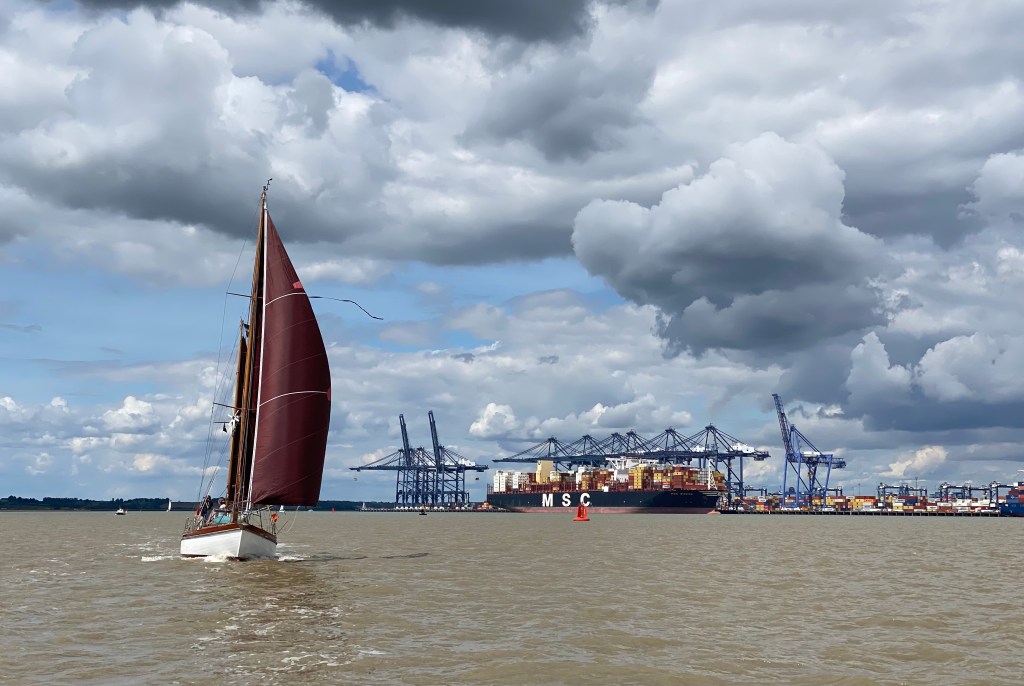
Looking back to Felixstowe docks as we leave the Orwell

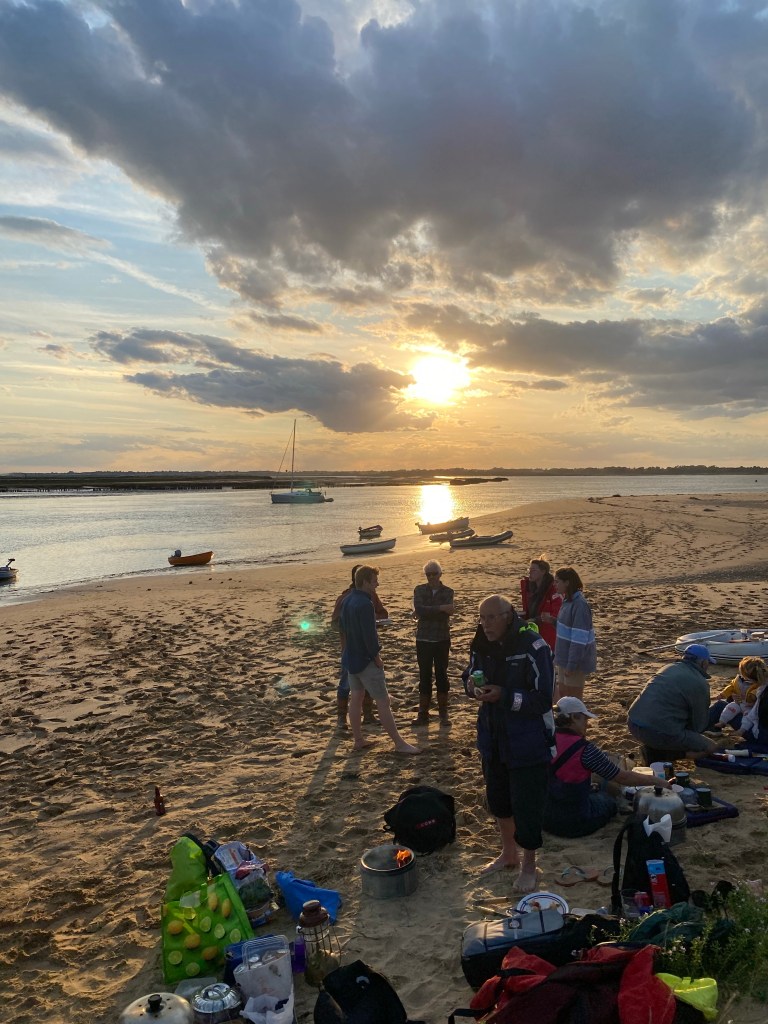
In stark contrast to the weather of the last few days, it was a beautiful golden evening. We had brought barbecue packs prepared by the cafe at Suffolk Marina, as well as bottles of the celebratory “Old Gaffer” beer and we all had stories to share; I was particularly interested to chat to those who had participated in the Round Britain Challenge. Several of these were local and had in effect finished, whereas others still had some way until completion – the furthest being Helford River in Cornwall.

Beach barbecue at Stone Point
The fleet at anchor

The shore at Stone Point is sandy and ideal for coming ashore, but progressively becomes mud up the channel. Brian noticed that Puffin Bach had been anchored ambitiously shallow and was now aground. He was concerned that if he didn’t make a dash for it, there might not be enough water to even get the tender to it, so he made a swift exit. I helped him carry his dinghy down to the water’s edge, but unfortunately we had not noticed that everyone carried their dinghy to the sandy point to launch and we were soon squelching in the mud. When Brian had been successfully launched, I realised that my feet were firmly held by the mud and I promptly fell over in the black sticky ooze, much to the amusement of the rest of the fleet! The evidence of that slip would take several days to remove from clothes and boat…

The following day was a passage race to West Mersea, down “The Wallet”. Conditions were brisk and we set out on first reef, making excellent progress. The wind continued to build and as we beat into the mouth of the Blackwater conditions became rather challenging, so in the end we abandoned racing and used the engine to maintain boat speed and enable us to point higher.

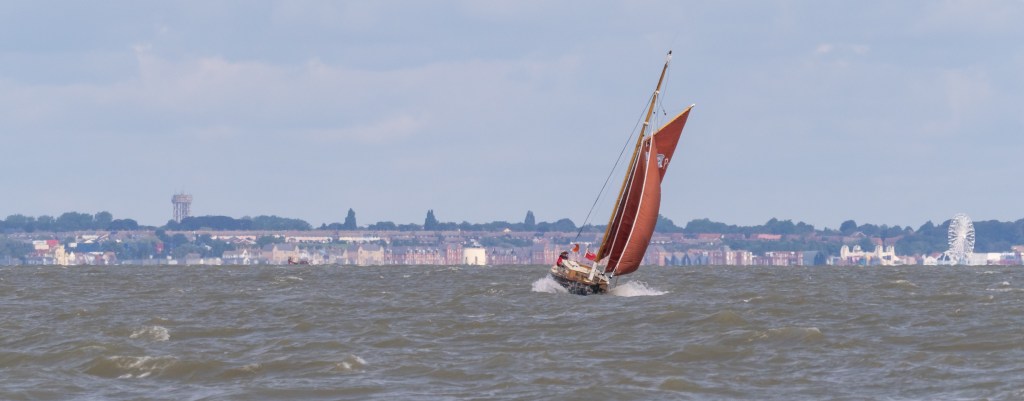
Puffin Bach with Harwich behind
Niki at the helm
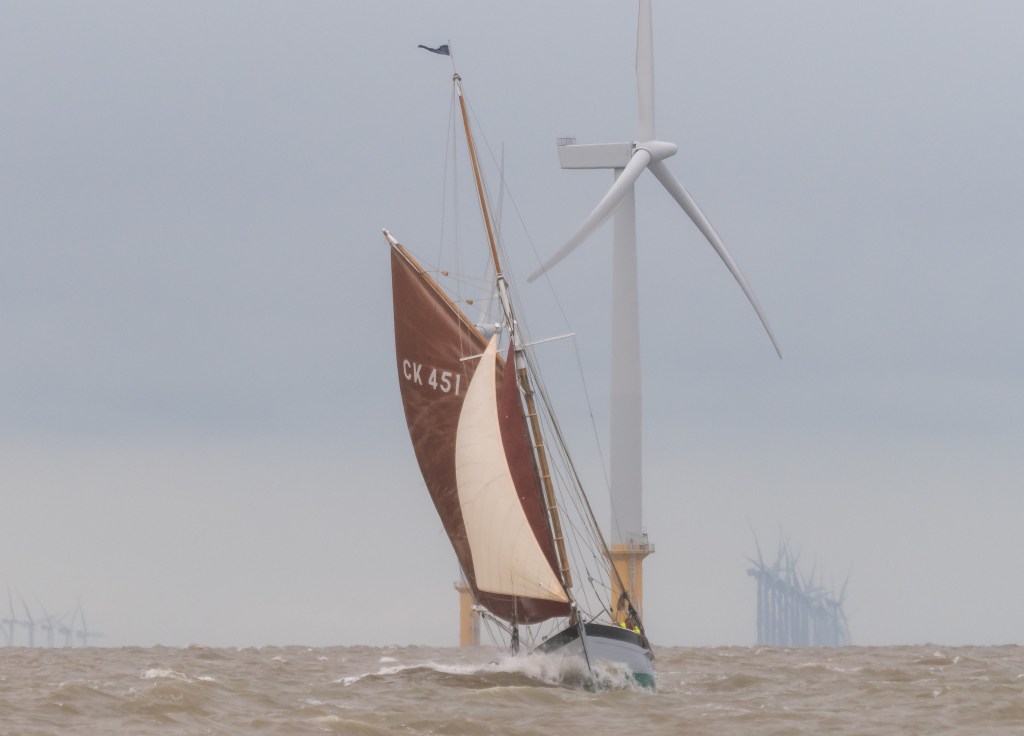
Daisy Belle with Gunfleet wind turbines behind
Jan Blank going well

A number of the fleet found conditions too challenging, turning and running downwind to shelter. Those of us that made it to Mersea were given moorings at West Mersea Yacht Club and ferried ashore for a well-earned chilli ashore.

After the rain. A red sky at night…

The next day had been planned as sailing in the Blackwater, returning to the moorings in the evening. However a decision was taken to grab a weather window of fair winds to cross the Thames estuary and enter the Medway. Unfortunately, Niki was not able to join me on this leg, so I made the journey solo.

I dropped Niki at the yacht club pontoon and took the opportunity to pack the tender up into the locker. Motor-sailing into the Blackwater, although the wind was pretty non-existent, the ebbing tide carried me out.

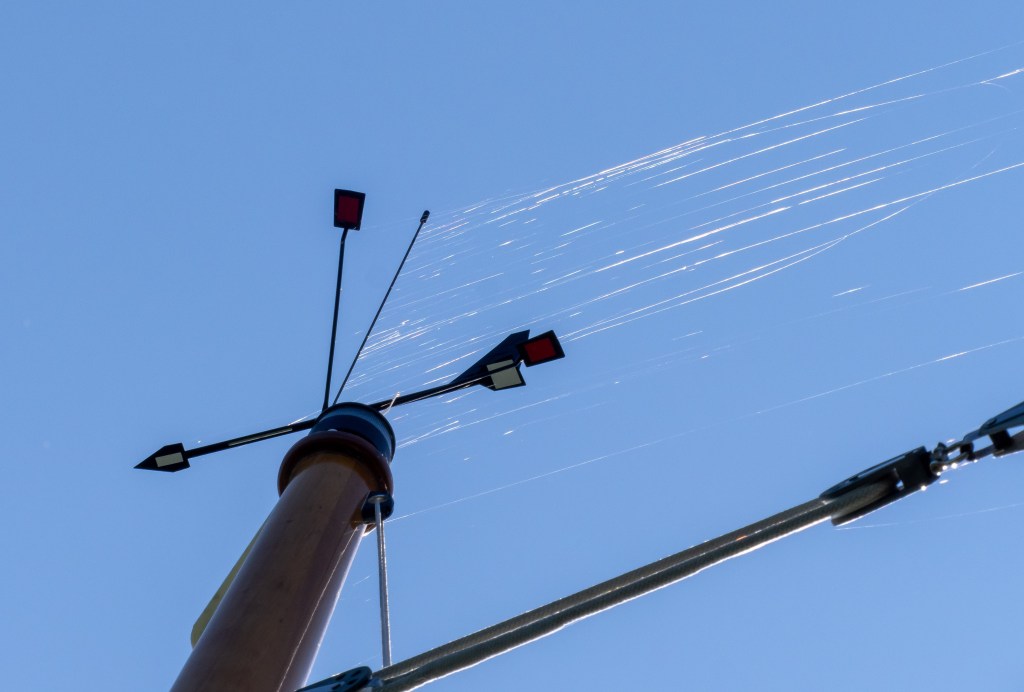
Molly’s rigging was covered in strands of spider silk the night we moored at West Mersea

Looking at a chart of the Thames Estuary, it is littered with obstructions and marks but the experience of being out on it is, of course just a wide expanse of water. I made my way some seven miles out, to take the Wallet Spitway between Buxey and Gunfleet sands.

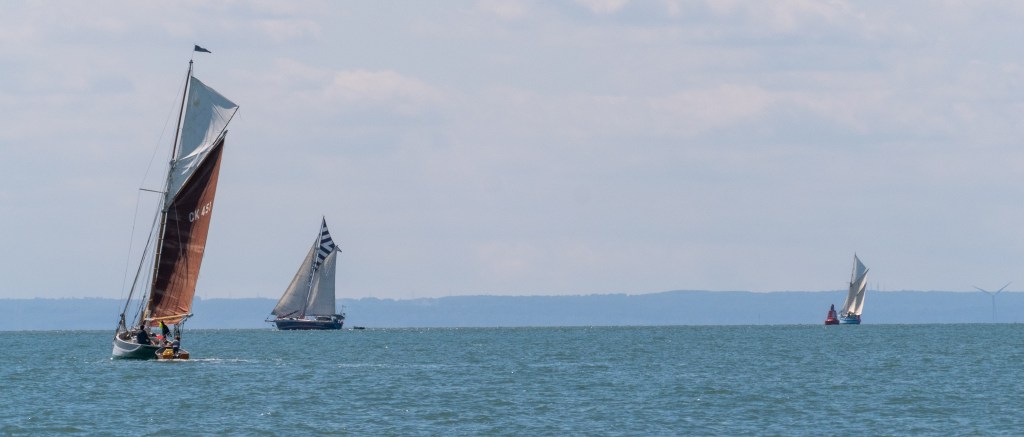
By this time, the wind was beginning to fill in and I was at last able to switch off the engine. It was a peaceful sail in full sunshine – the sort of summer day which has been in short supply this year. As I progressed passed Foulness Sand, with explosions very much visible and audible from the MoD test centre, the wind continued to fill and it became a beautiful reach. By this time, I had caught up with the fleet (they had not used engine early on), which made a lovely sight spread across water.

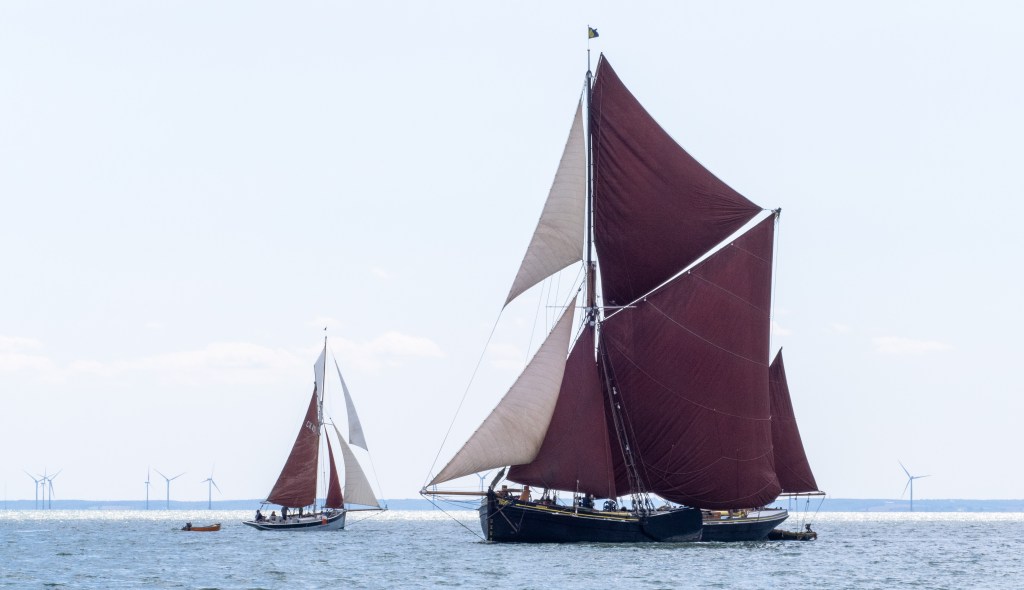
Daisy Belle passing a Thames Barge, both in full sail
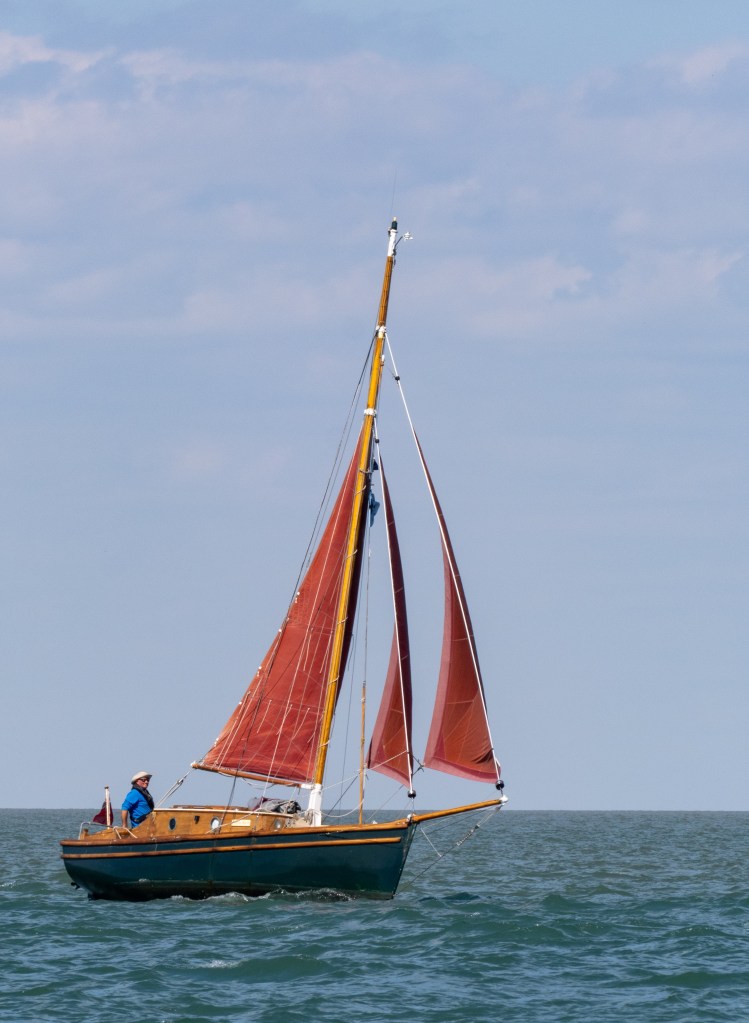
Puffin Bach

I turned towards our destination down Middle Deep and it was a leisurely beat, but the tide had begun to turn in my favour. The final hurdle was to cross the Thames’ main shipping channel. I was fortunate that there was little traffic as I crossed, bringing us to the Medway river entrance. The wide commercial harbour was devoid of traffic, so there was plenty of space to drop sails before entering our mooring at Queenborough.

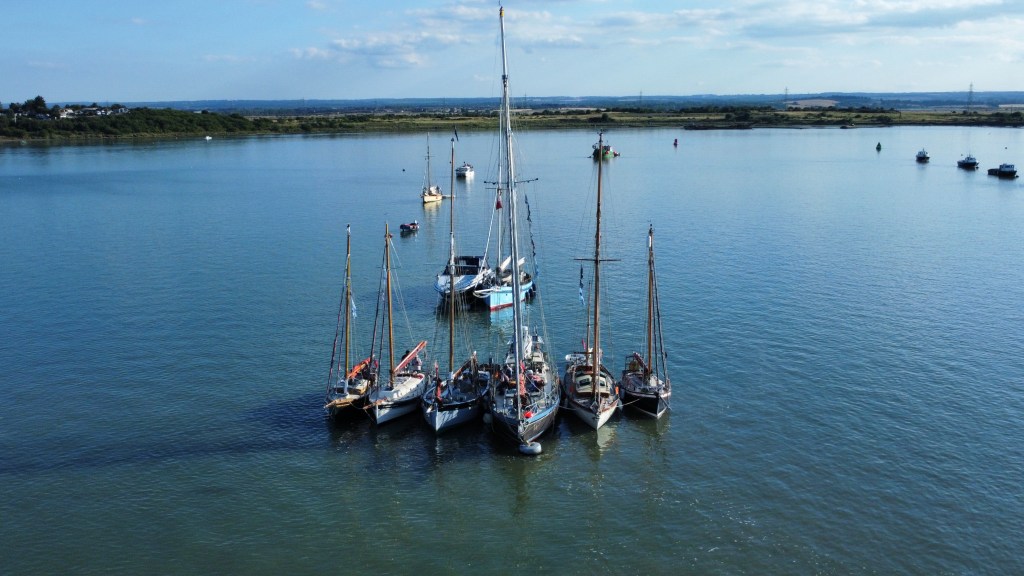
Queenborough is on the river Swale, so this was my seventh river of the trip (and I hope to add at least one more before reaching home again). We all rafted onto just two large mooring buoys and made an impressive sight in the afternoon sun. There was time for leisurely drinks and nibbles aboard Daisy Belle and Windbreker; we then cooked our evening meal aboard, before ferrying ashore in tenders, to the pub.

Continues in part 2…

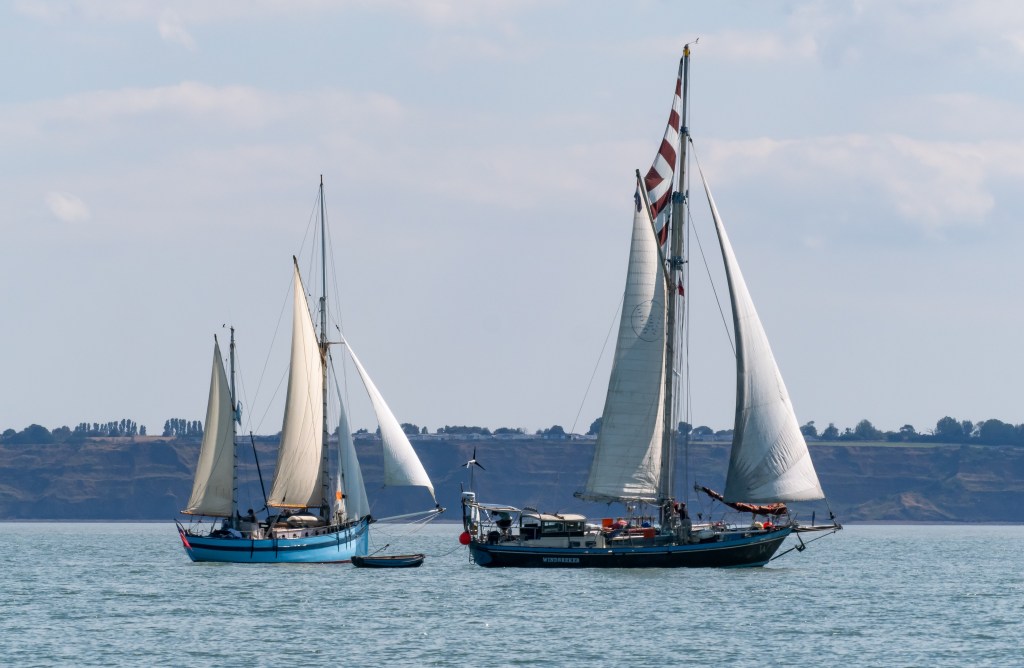
Rely and Windbreker
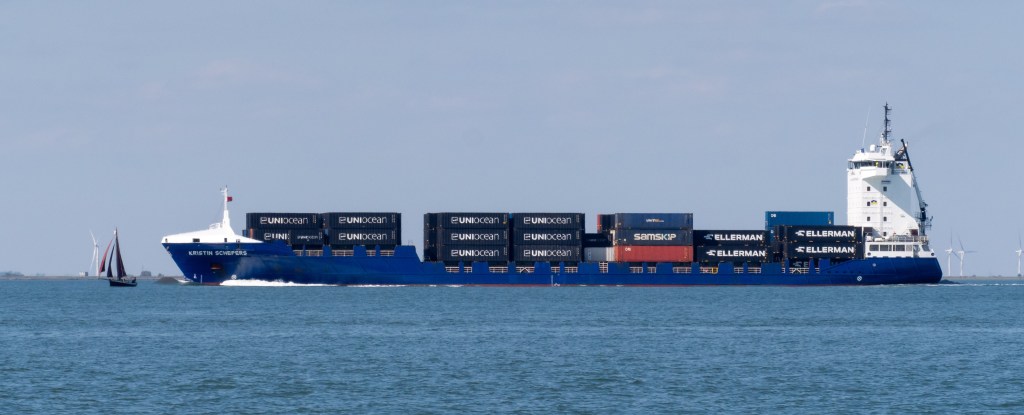
Look behind you! Plum was not so lucky with the traffic, crossing Princes channel
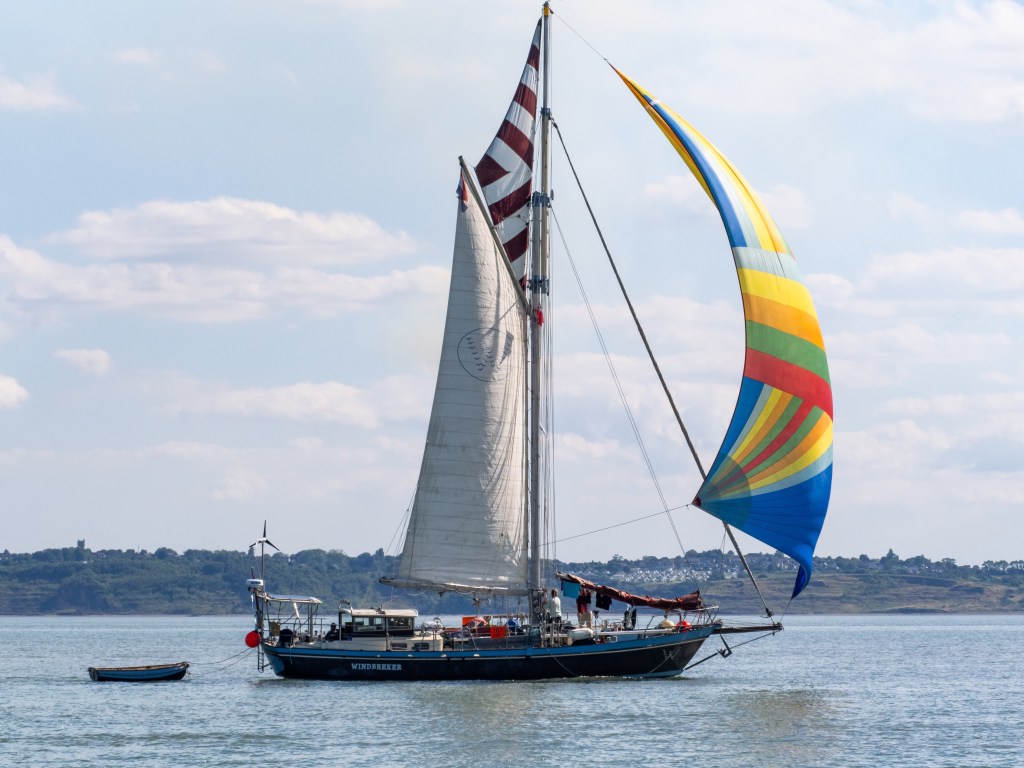
Windbreker and her “hippy” spinnaker
Rafted together
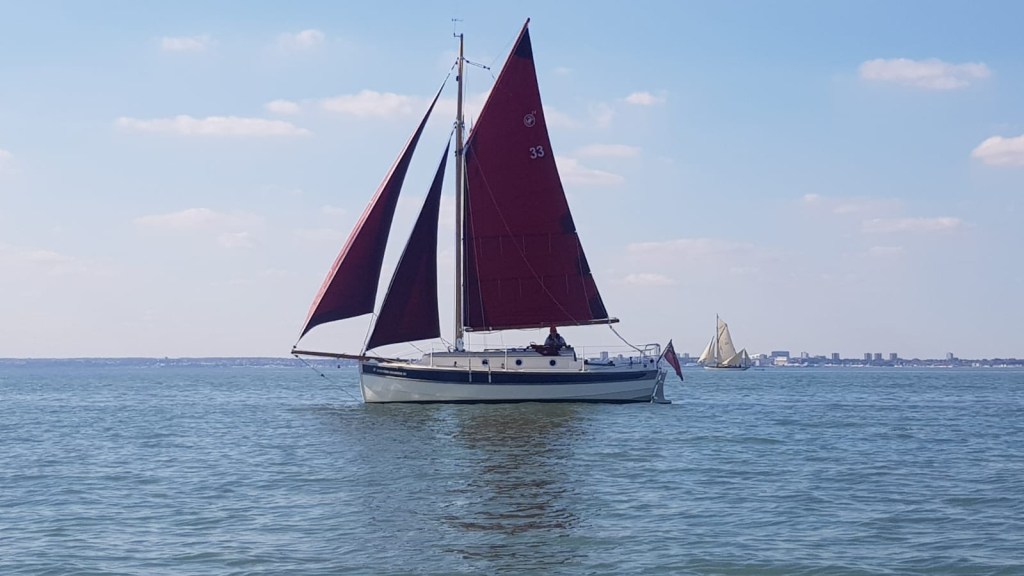
Molly approaching the Medway (thanks to Colin of Plum for the photo)
The rafted fleet at Queenborough