Tag: river

West Country Meanderings

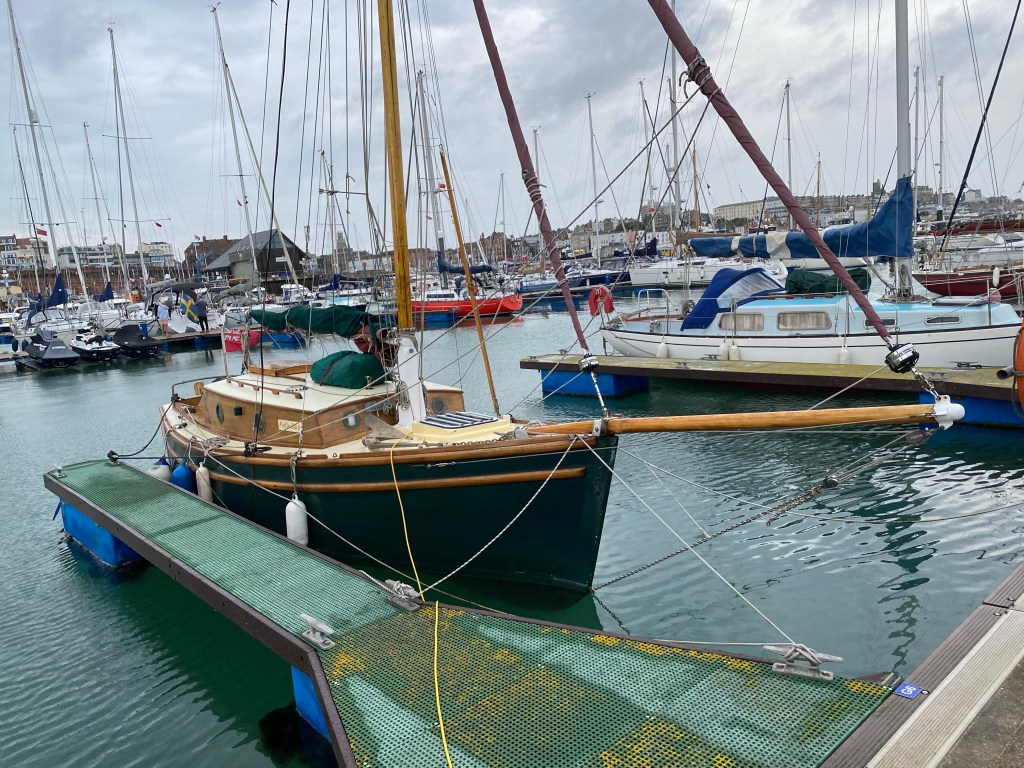
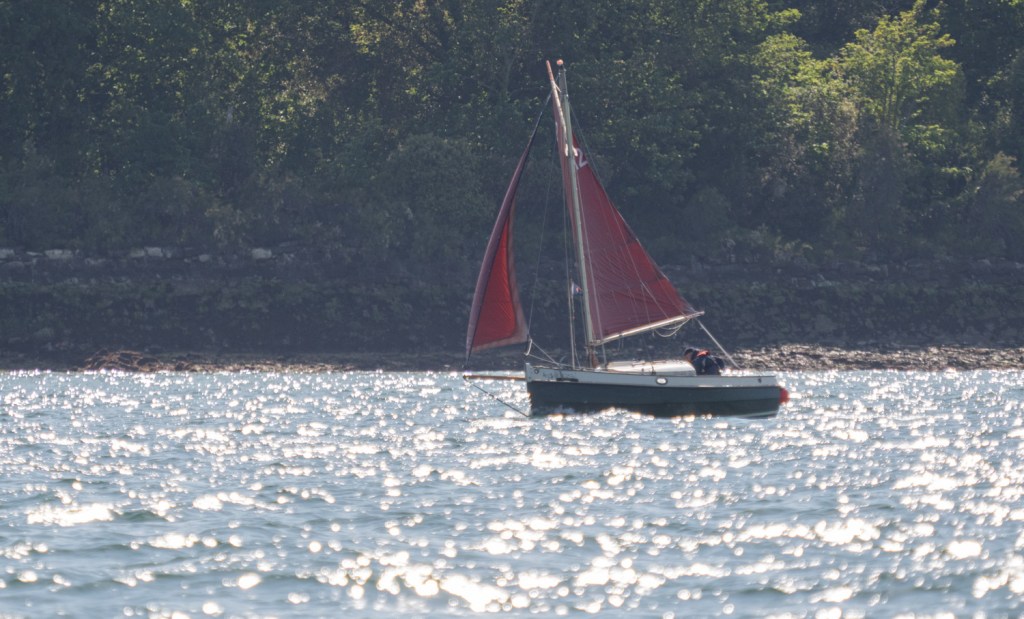
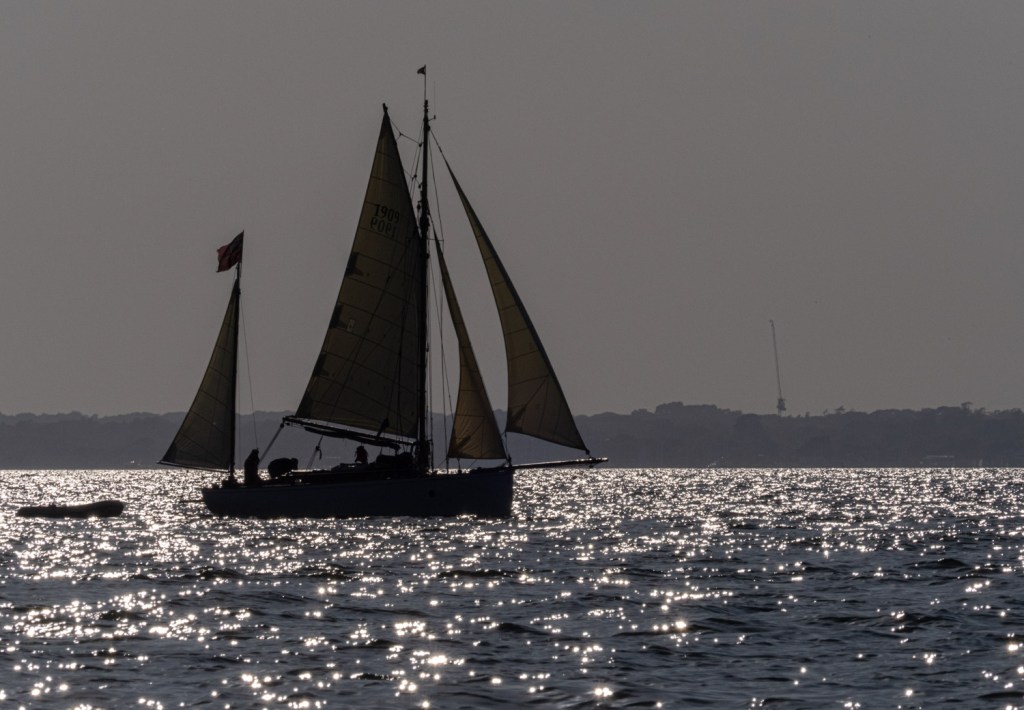
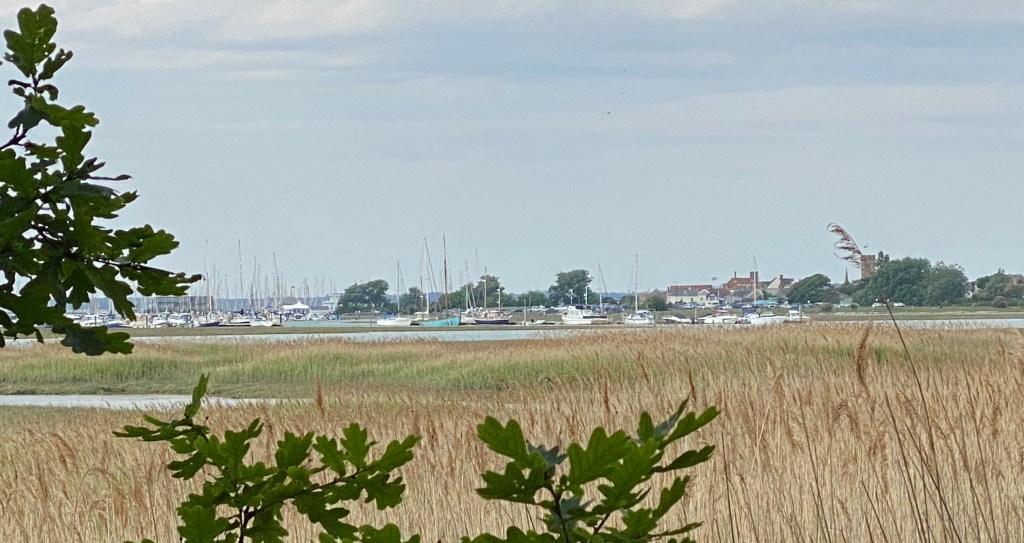
This season we have managed several rallies and a long trip in the Summer. It kicked off at the end of July when Niki and I set off, accompanied with Brian of Puffin Bach, to deliver Molly to Falmouth.

I had decided that I wanted to push my envelope a bit and cross the channel again, but this time to Alderney and then make a 24-hour passage to Falmouth.

We had an easy crossing from Gosport with an 0300 start delivering us to Braye harbour at 1930. I had planned 3 nights in Braye so we would have two clear days on the island and some good sleep before the long leg to Falmouth.
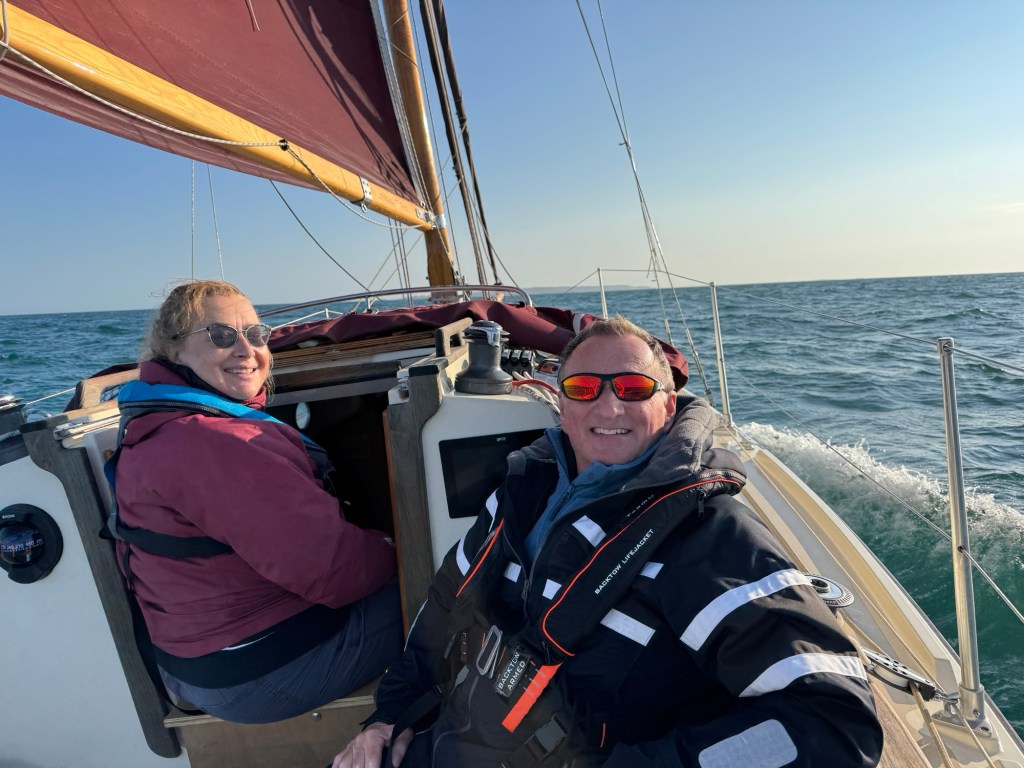
Hooray! We’re nearly there…

We managed the former but not the latter! This summer has been dominated by Easterly winds and this is not a sheltered direction for Braye. The consequence was some of the most rolly nights afloat I’ve spent. Still, the time ashore was most interesting. Braye itself offers little apart from the harbour but there is much to see on this small island.

Braye harbour

On the first day, we enjoyed a walk up to the pretty main town of St Anne’s, culminating in beer and local seafood in the sun. On the second day, we hired bikes and looped around the island. The castle at Longis and the lighthouse were particularly interesting, as was watching the massive tides pour through The Race.

After our third rather restless night, we departed for Falmouth. The first section was wonderful with Molly sailing beautifully past a (suitably distanced) view of the Casquets rocks and lighthouse. To the north of us were the busy shipping lanes and I had been advised to use the Separation Scheme to cross. As we approached, I felt like a mouse trying to run across a motorway, such was the speed and density of traffic. In a CSS, vessels must cross at right angles and this was impossible for us at our modest 5kt.

Watching the other yachts, several were making for the area just outside the CSS, and I realised this meant that the traffic was following a predictable track but we were not obliged to maintain a course at right angles to the shipping. This allowed us to turn and run parallel with the ships until we could turn and dash behind their stern, ahead of the next monster.

Having cleared the shipping lanes, there was far less traffic and the wind was on our nose. At dusk I put the main down and we motored on in the dark. This part was mostly rather dull, as there was nothing to see in the dark. The only excitement was an encounter with a fishing vessel which was behaving as if he could not see us and seemed to be permanently heading us off with his course changes.
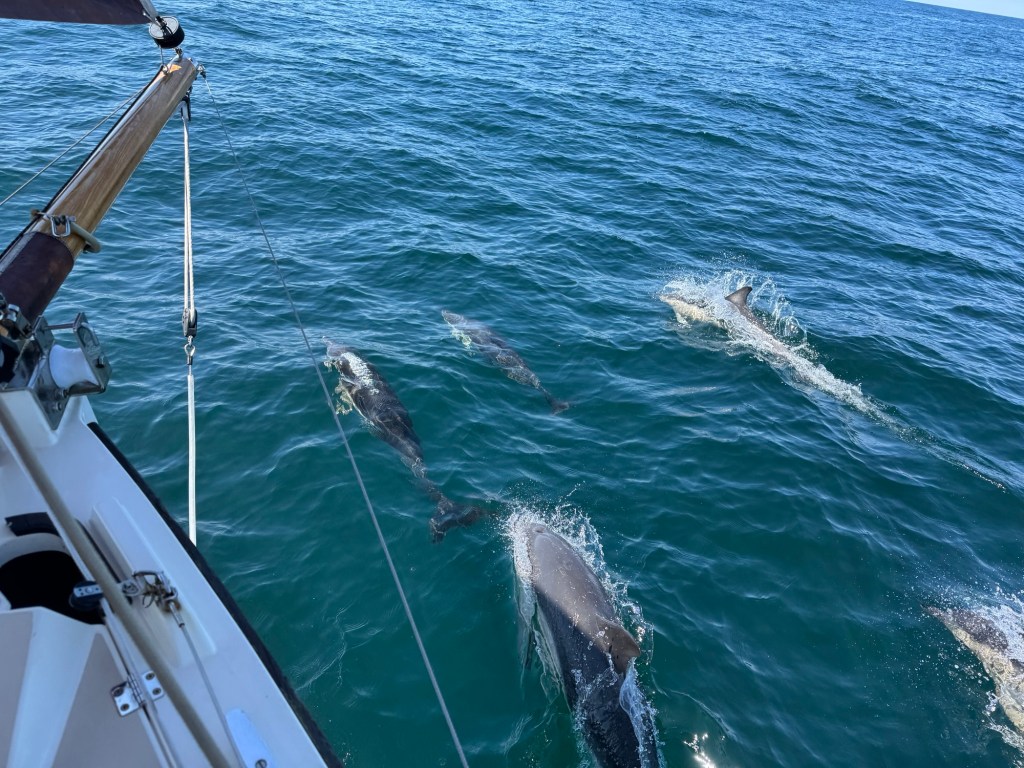
Dolphins at the bow

After 25 hours we steamed gratefully into Falmouth and berthed at Falmouth Yacht Haven. Russell, our friend and skipper of Cornish Yawl Lucy, asked if we were in trouble, as our AIS had us at 16kt some miles off Salcombe. It was then we realised that our AIS was not transmitting properly and explained the erratic behaviour of the fishing boat! I was able to quickly rectify this when I discovered the antenna connection to the unit had worked loose.

We then left Molly on a swinging mooring in the harbour, so we could travel back to the Midlands to attend the excellent Cropredy music festival, where we bumped into some fellow Solent Gaffers. This detour was facilitated by our friend Ben who lives in Falmouth and was attending the festival with us.

On our return to Falmouth, we had some memorable days in the area, anchoring and swimming anchored at lighthouse beach and a wonderful overnight anchor at Turnaware Point.

We then began a slow meander East. The first port of call was a lunch stop at Mevagissey followed by a night at Fowey. From there we moved up to Plymouth with another swim/ice cream at Cawsand before a couple of nights in Sutton Marina.

This gave us a day in Plymouth sightseeing, including a Rolls Royce in the lido (a tribute to Keith Moon, apparently) and the fireworks championships viewed from our pontoon. We were welcomed into the marina by a fellow gaffer, Chris, owner of a a lovely Oysterman 22 .

There were very strong easterlies forecast for the next couple of days and rather than hole up in the eye wateringly expensive marina, we decided to explore the local rivers.
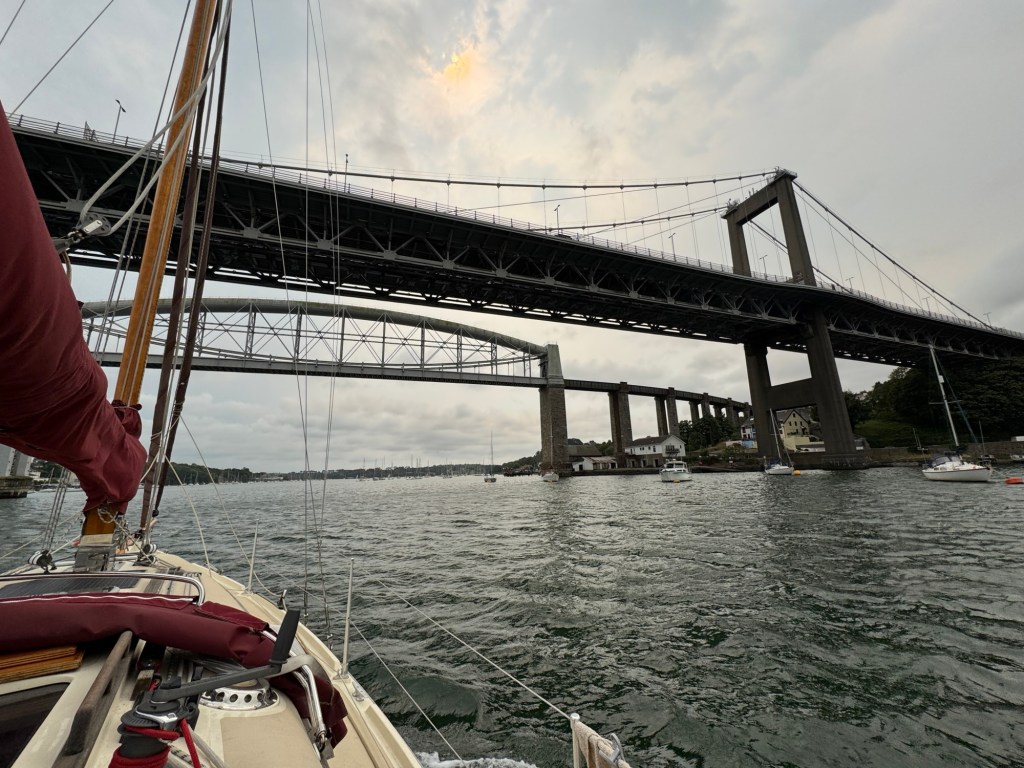
The two Tamar bridges at Saltash

Passing up the lovely Tamar under the impressive bridges at Saltash and past the Lynher and Tavy, we made our way almost 10 miles inland to Calstock, once a centre of industrial activity. The river was an important route for exporting metals and stone in the 19th Century, which dwindled away at the beginning of the 20th with the coming of the railway, illustrated by the impressive viaduct over the river.

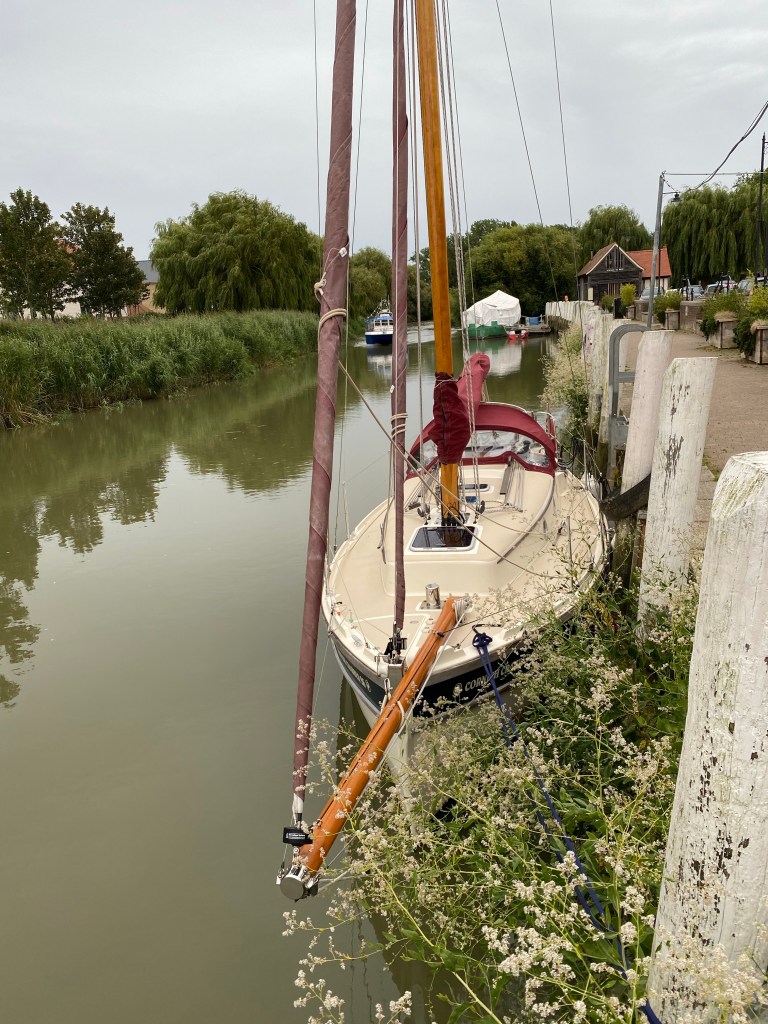
Moored on the Tamar at Calstock

We found a vibrant village with traditional music and busy pubs. We also took a trip in the tender a couple of miles upstream to Morwellham Quay.

After two nights, we dropped down the Tamar, through Plymouth sound and into the Yealm. Conditions were very blustery and just as we passed the breakwater, there was a thunder and lightning accompanied by a squall which flipped our dinghy. Nonetheless we arrived in Noss Mayo unharmed and spent two more nights in its shelter, enjoying some lovely walks through Newton Ferrers and a loop along the coast walk.

Upriver in the tender

Our next stop was Salcombe, and we were rejoined by Ben. Salcombe was buzzing and we enjoyed a few beers at the Victoria Inn before returning to Molly for dinner aboard.

Noss Mayo

The following day, the three of us set off for Dartmouth but passed straight through the town, heading for Totnes. We wound our way up the lovely Dart arriving at Baltic Wharf just at high tide. We enjoyed excellent beer and a meal at the Old Albert Inn (my favourite was RealAletivity – the pub is named after Einstein rather than Victoria’s consort).
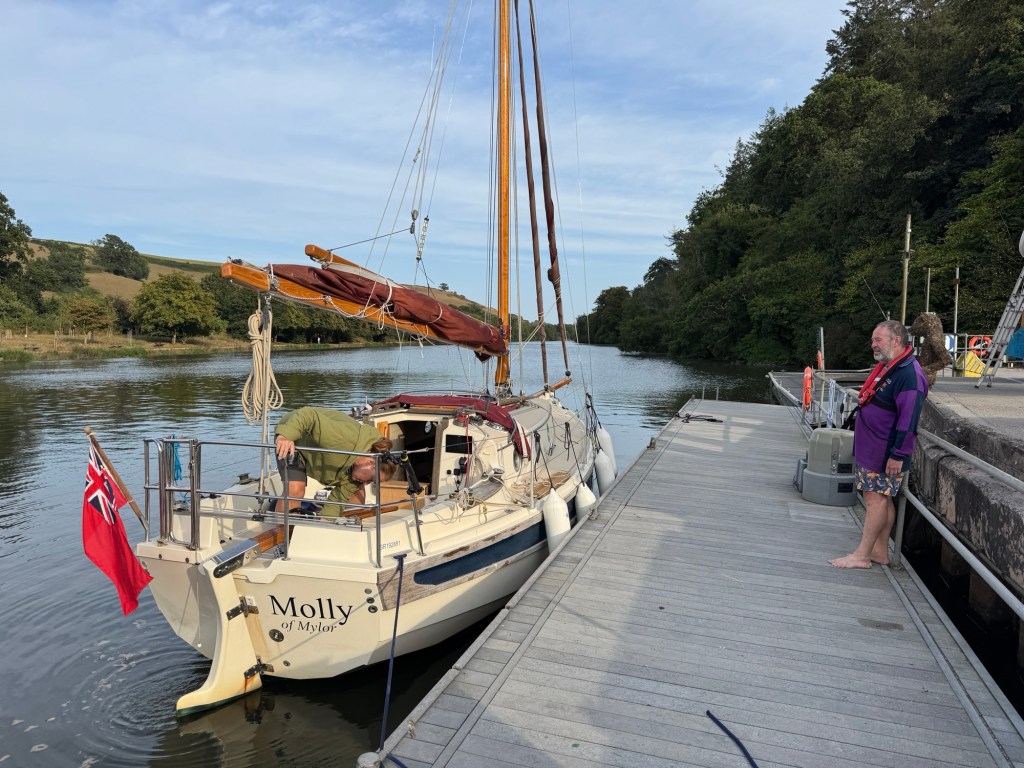
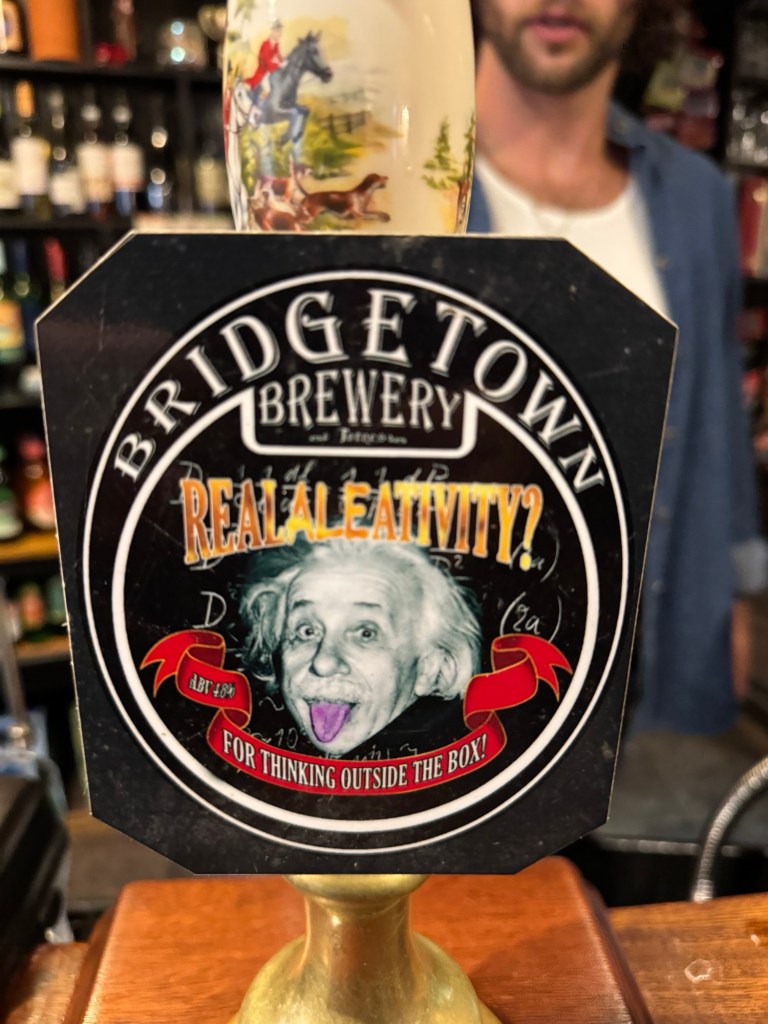
Totnes

We were awoken early next morning to be told we had moored in the wrong place, but were planning to leave on the high tide in any case. We dropped downriver to a pleasant anchorage to enjoy the sun before finding a berth in Dartmouth for the night. The town was very busy, as the annual regatta week was warming up and we had an excellent seafood meal at Rockfish. The following morning, Ben had to return home and, after early provisioning but an agonising wait for our turn on the water pontoon, we departed.

We had missed the tide, but it mattered little because the tide was not strong and there was virtually no wind so we made easy progress across Torbay, anchoring for a swim in the shelter of Anstey’s Cove whilst we waited for the tide to rise.

In the late afternoon, we made a very interesting entrance to Teignmouth. There is a very strong flow into the river mouth between the channel markers and then a hard-to-starboard ferry glide across the current to the part of the channel that loops through the town. Teignmouth is a busy town with a working commercial port and the kiss-me-quick seafront. We turned up just as a music festival was starting and it turned out the visitor berths were very close to the stage on the beach – we were just the right distance to enjoy the music. Whilst we were there, we took a tender trip across to pretty Shaldon on the opposite side of the estuary and which was having its regatta, so we were treated front row seats as the dinghies and rowing gigs raced past.
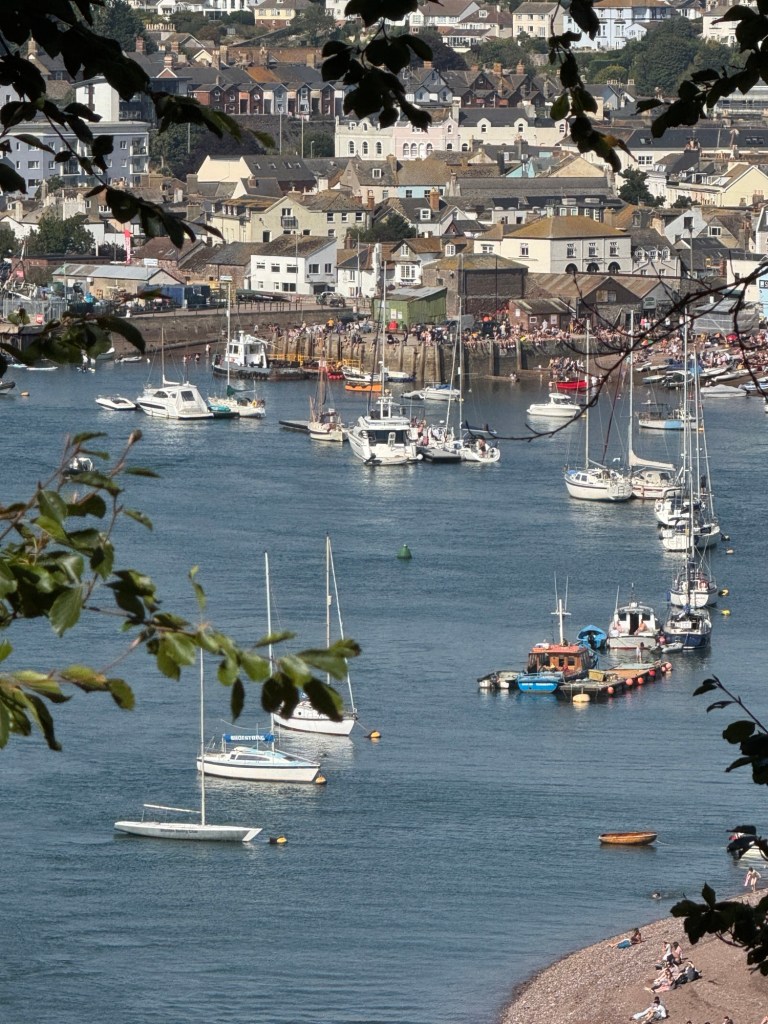
Teignmouth

Feeling we had had full value from the bank holiday weekend, we spent a hot day anchored in Anstey’s cove again. With the weather finally due to swing round to the south west, we would be ready to leave the West Country early the next morning by rounding Portland Bill back into what we think of as “home waters”.

Swimming at Anstey’s Cove

Drills on the river

Less than favourable weather made a trip out of the harbour an unattractive prospect today. Nevertheless Niki and I spent the day gainfully employed in the harbour calibrating the log, some drills up at the Wicor pontoons and a lovely downwind sail back to our berth.

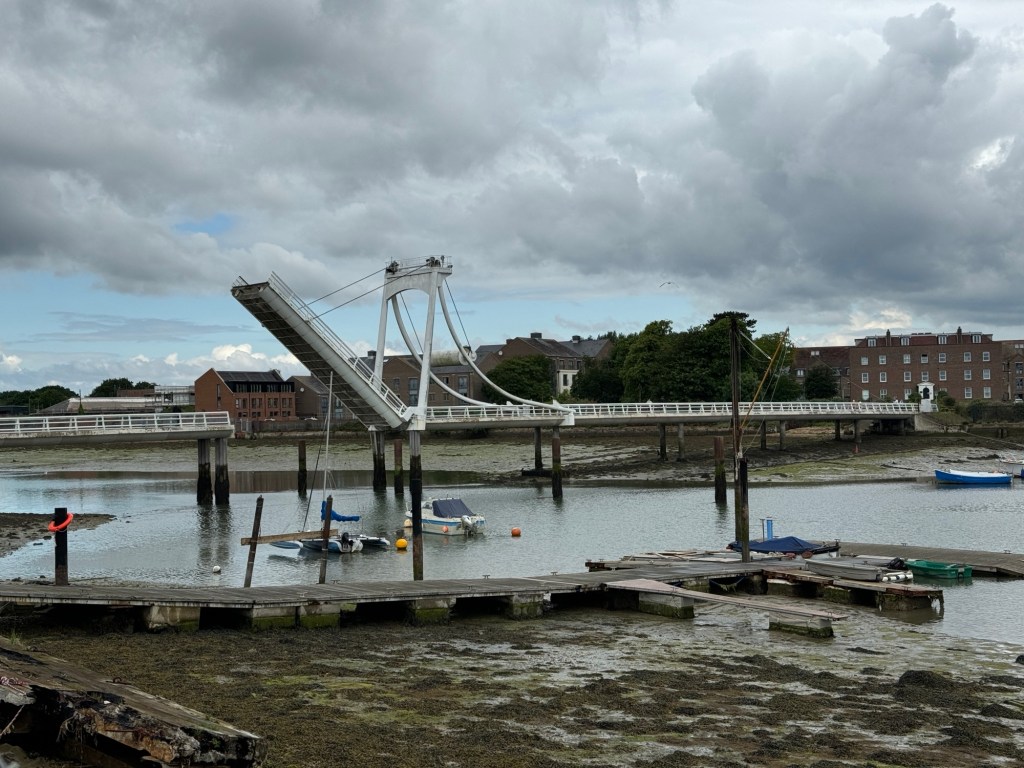
The millennium bridge raised at low tide
Second reef
Back down to Gosport
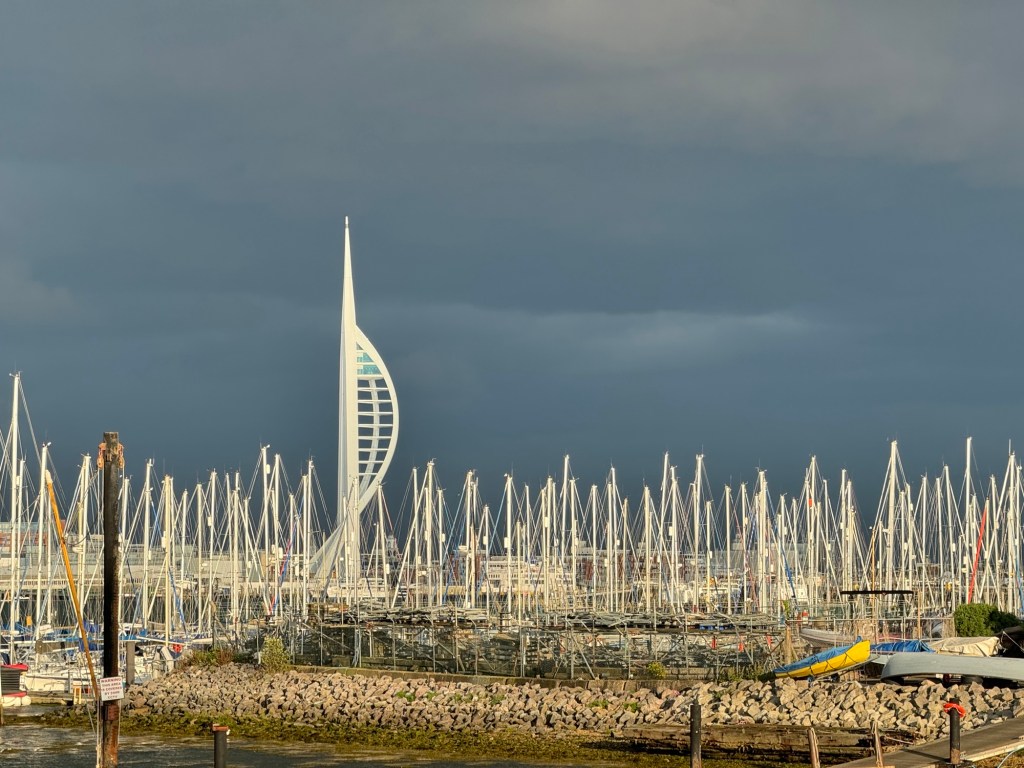
Dramatic sky over Portsmouth (we were in the pub by this time!)
Beautiful evening light

Westbound again

Following the OGA60 party and the East Coast cruise, Molly found herself in Chatham Martime Marina, on its heritage pontoon and with almost 200 miles to travel home. I had allowed 6 days for this passage, but circumstances intervened.

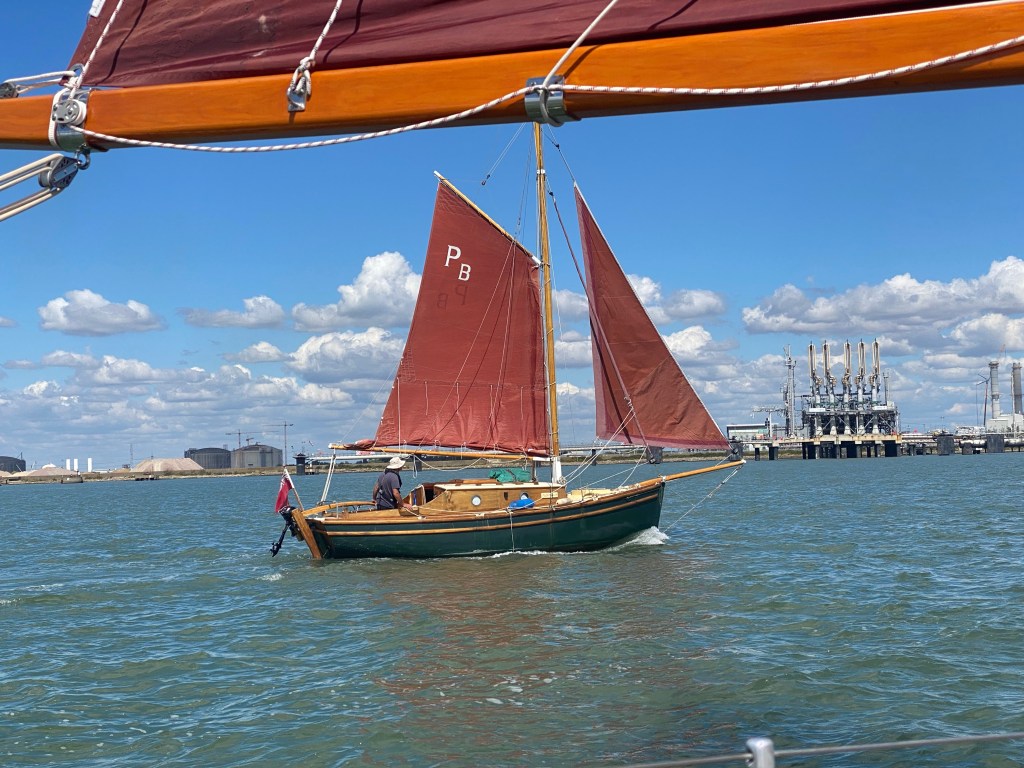
Puffin Bach passin back up the Medway

We had a sense that all was not well when we locked in to Chatham. We were given conflicting instructions by lock control, the lock was not operated efficiently (ie not full and boats waiting) and on one cycle, both sets of doors were opened at once, allowing a torrent to flow out of the lagoon.

The lock gates broke down on Friday, but we only learned of this when we tried to leave on Saturday. A sorry series of events ensued, during which the marina staff did not cover themselves in glory or demonstrate any particular urgency. We ended up contacting MDL’s head office, which seemed to stimulate events a little and, to cut a long story short, after four days trapped in Chatham marina, the lock gates were fixed and the fleet was able to escape on Tuesday. Suffice it to say that I will avoid MDL marinas in future.

The train of depressions, which the jet stream has been bowling us, had come to an end and we left the Medway with very welcome hot, sunny weather and light winds (ie finally, we started having August weather!). The forecast was for declining winds and I only had three days to compete Molly’s passage home to Gosport. I had been joined for this section by John Frampton, a fellow Cornish Crabber owner (Shrimper 21 to be precise).

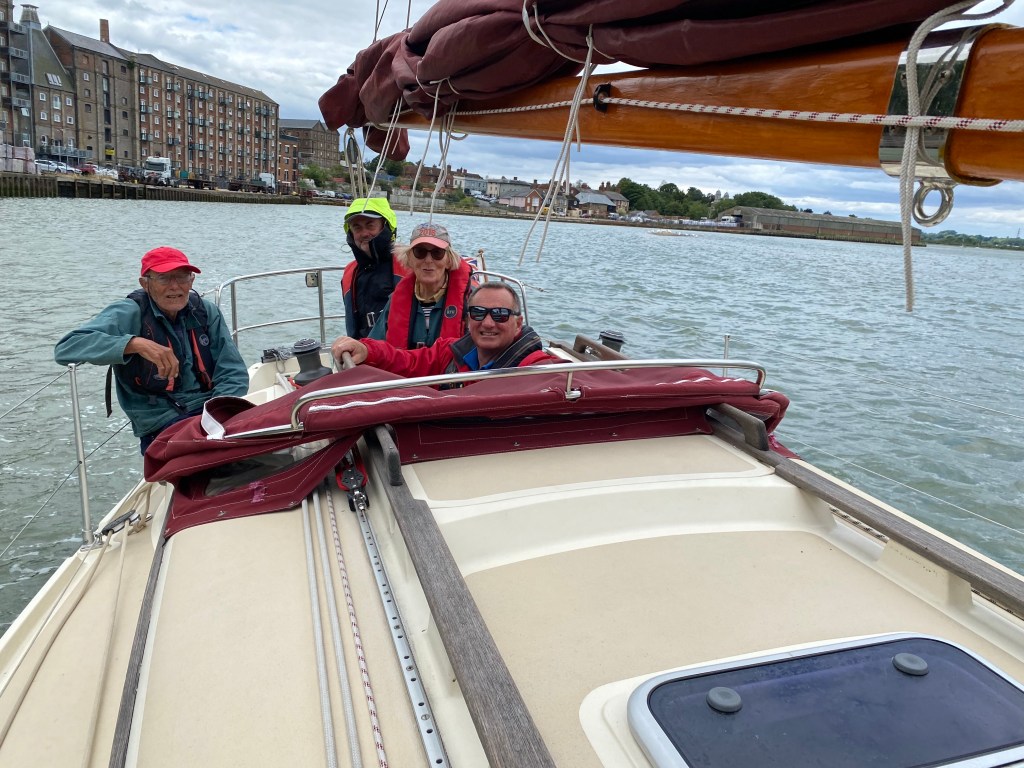
John at the helm

Before we could travel West, we needed first to travel East. As we left the Medway, we were treated to flat seas and a steady southwesterly. John and I opted, rather than hugging the shore, to enjoy a good sail and visit some of the landmarks in the estuary.

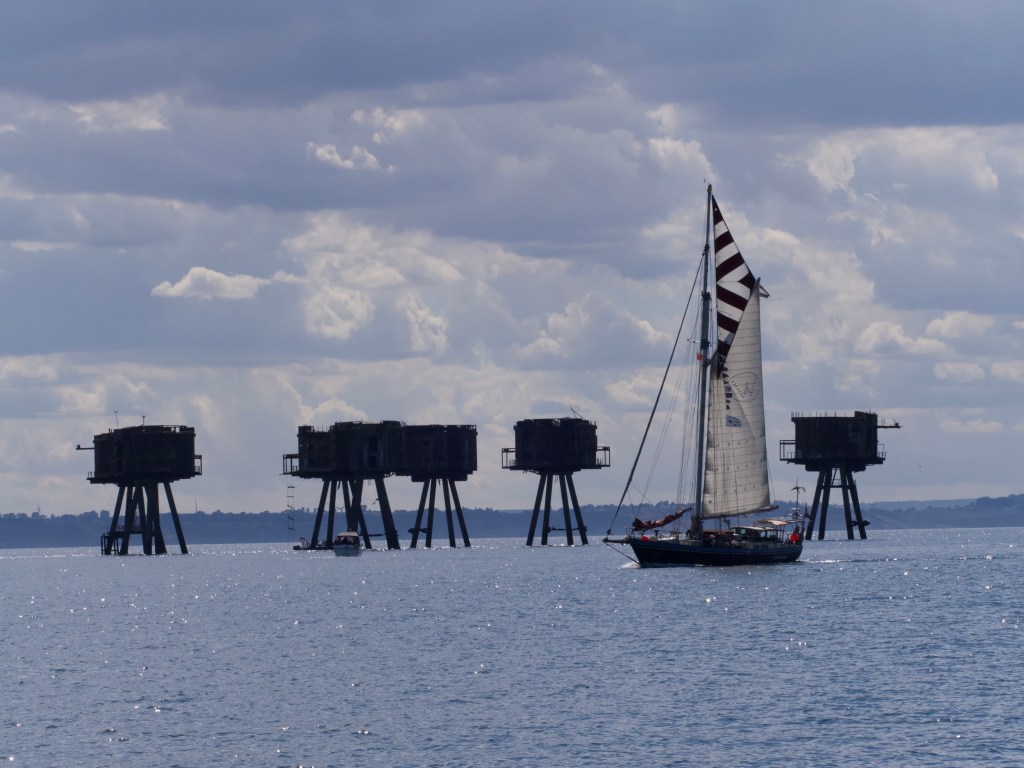
We had a fair tide to carry us East, so we made for the main Princes Channel, taking in our first point of interest, which was the Red Sand Forts. These are steel structures were observation posts on legs attached to sunken barges, dating from WWII. They are one of a number of “Maunsell forts” (after their designer) whose original purpose was to provide warning of incoming aircraft and deter mine laying in the important Thames estuary. They continued to operate post-war and since their decommissioning have been sometime pirate radio stations.

Windbreker at the Red Sand Forts

Nowadays they make a striking but rather eerie and forlorn sight and appear to be deteriorating rapidly. There are moves to preserve them and I hope it comes to pass, as they are a unusual historical feature. Evidently they are a tourist attraction, as we could see visiting motor boats (in addition to yachts sailing close by).

Shivering Sand forts

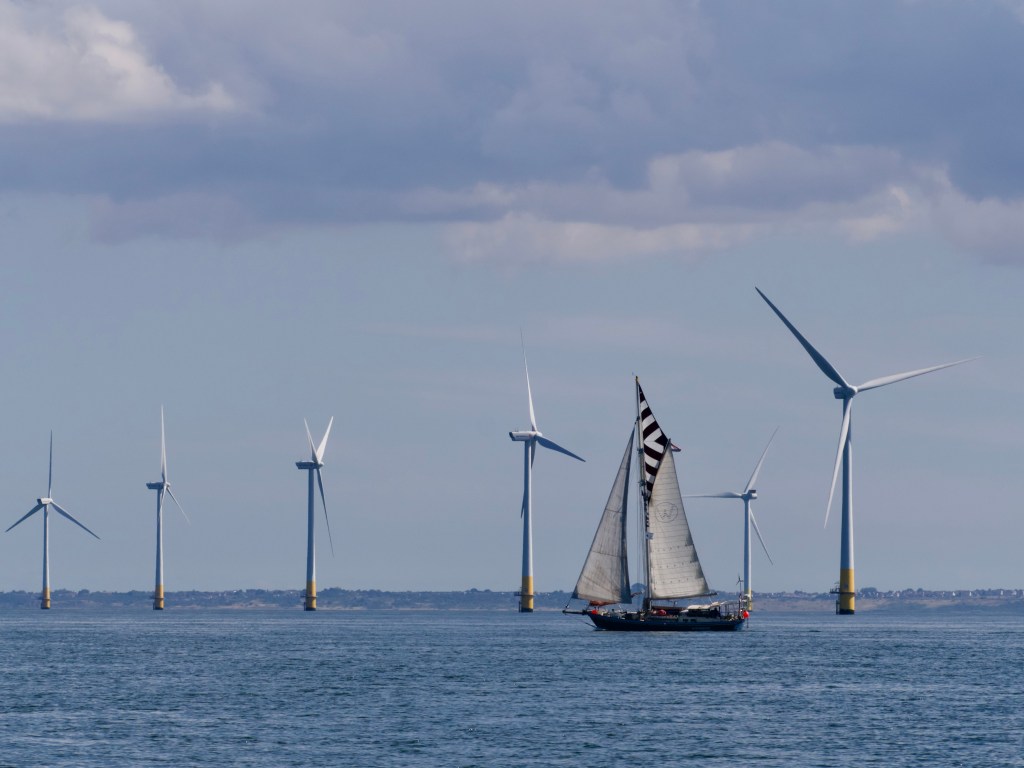
During our tacks down the Thames estuary, we saw another set of Maunsell forts on the intruigingly named Shivering Sands, as well as skimming the edge of yet another array of wind turbines at Kentish Flats.

Kentish Flats wind farm

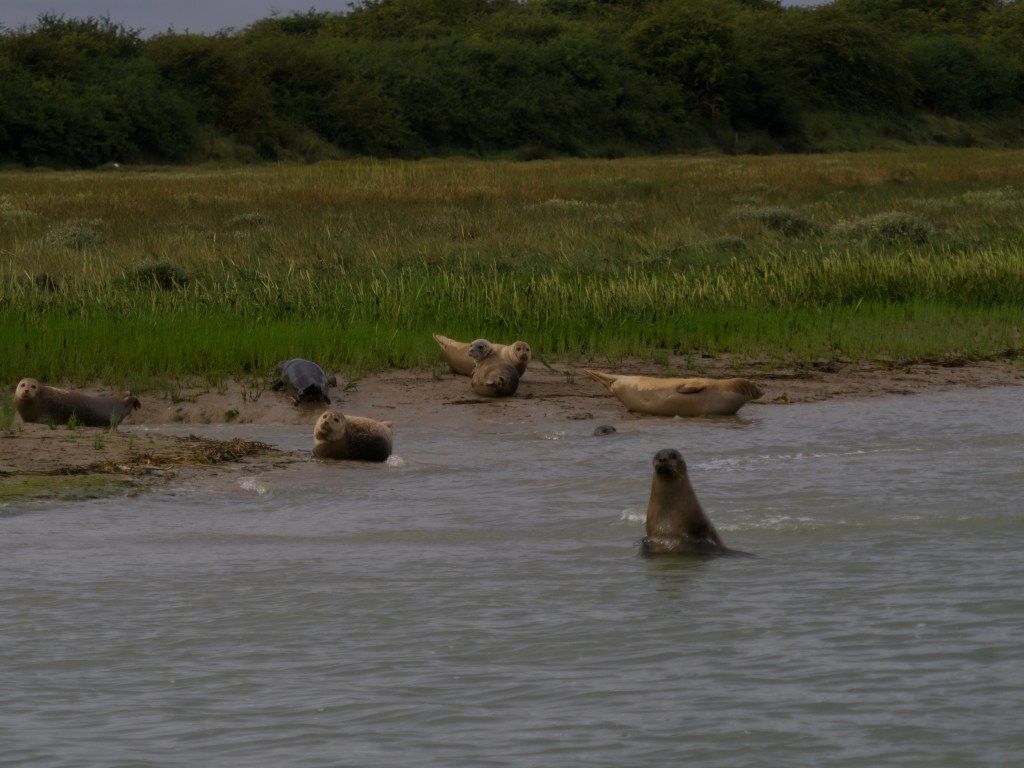
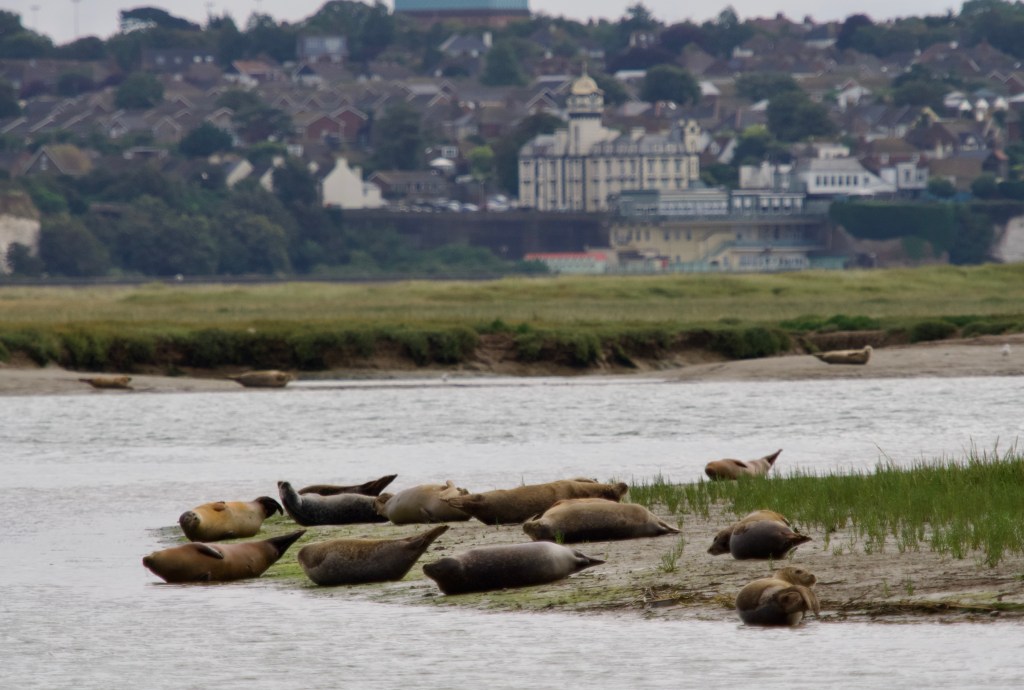
We passed along the outside of Margate sands at low tide, and could see groups of basking seals, though we dared not approach too closely in these very shallow waters.

Margate sands complete with seals

Nearing North Foreland, as we lost the shelter of the land, the wind strength increased and the sea grew more choppy. Having passed this iconic corner and we were westbound again and, as John pointed out, we had the whole sea area from North Foreland to Selsey Bill to cover.

The wind was right on the nose, so we motored on main only into Ramsgate. We were followed by Puffin Bach and all of us rapidly decamped into town for some lovely fresh fish and chips, followed by a pint in the very friendly bar of Royal Temple Yacht Club.

Puffin Bach entering Ramsgate
The arches on Ramsgate Harbour
OGA East Coast Cruise part 1

OGA East Coast Cruise part 1

The first section of Molly’s meander home would be with the OGA East Coast cruise, which had been arranged in part for the benefit of us visitors from further south. The object was to cross the Thames estuary and visit the Medway, after which we were to part ways.

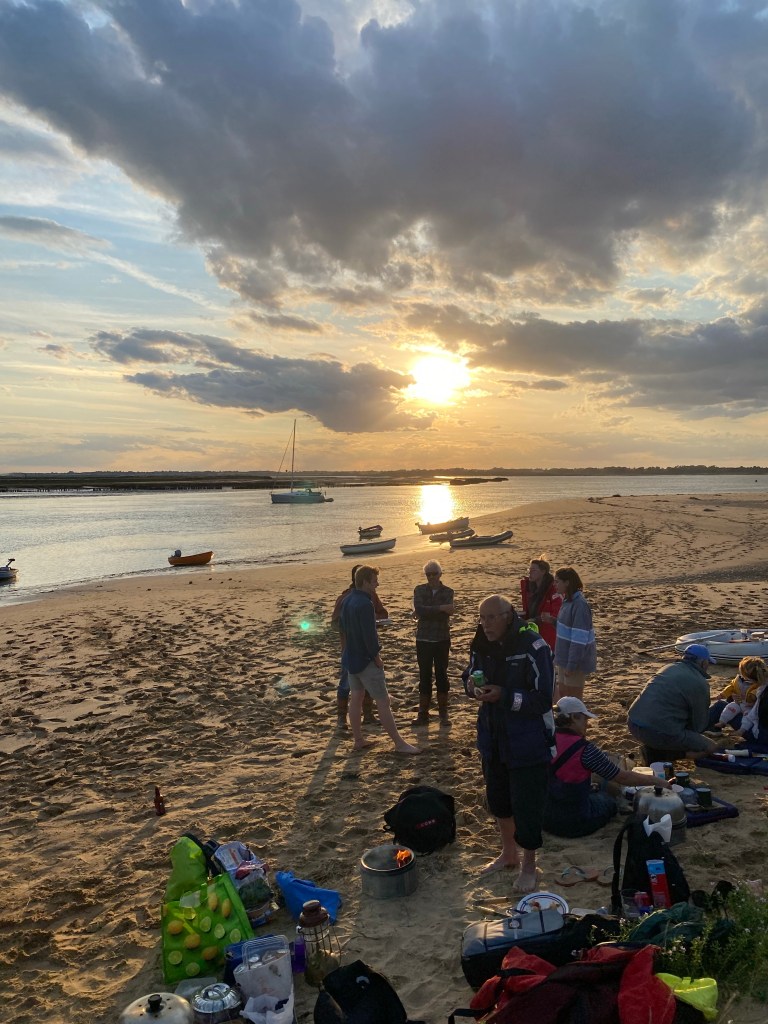
The first day of the cruise was a passage race to the Walton Backwaters. Niki helmed in the light but gusty wind, picking our way out of the Orwell, past Felixstowe docks and across the shallow bay, to the entrance of “Secret Waters”. There was plenty of room in the Walton Channel for the fleet to anchor and the crews gathered on the beach at Stone Point.
Looking back to Felixstowe docks as we leave the Orwell

In stark contrast to the weather of the last few days, it was a beautiful golden evening. We had brought barbecue packs prepared by the cafe at Suffolk Marina, as well as bottles of the celebratory “Old Gaffer” beer and we all had stories to share; I was particularly interested to chat to those who had participated in the Round Britain Challenge. Several of these were local and had in effect finished, whereas others still had some way until completion – the furthest being Helford River in Cornwall.

Beach barbecue at Stone Point
The fleet at anchor

The shore at Stone Point is sandy and ideal for coming ashore, but progressively becomes mud up the channel. Brian noticed that Puffin Bach had been anchored ambitiously shallow and was now aground. He was concerned that if he didn’t make a dash for it, there might not be enough water to even get the tender to it, so he made a swift exit. I helped him carry his dinghy down to the water’s edge, but unfortunately we had not noticed that everyone carried their dinghy to the sandy point to launch and we were soon squelching in the mud. When Brian had been successfully launched, I realised that my feet were firmly held by the mud and I promptly fell over in the black sticky ooze, much to the amusement of the rest of the fleet! The evidence of that slip would take several days to remove from clothes and boat…

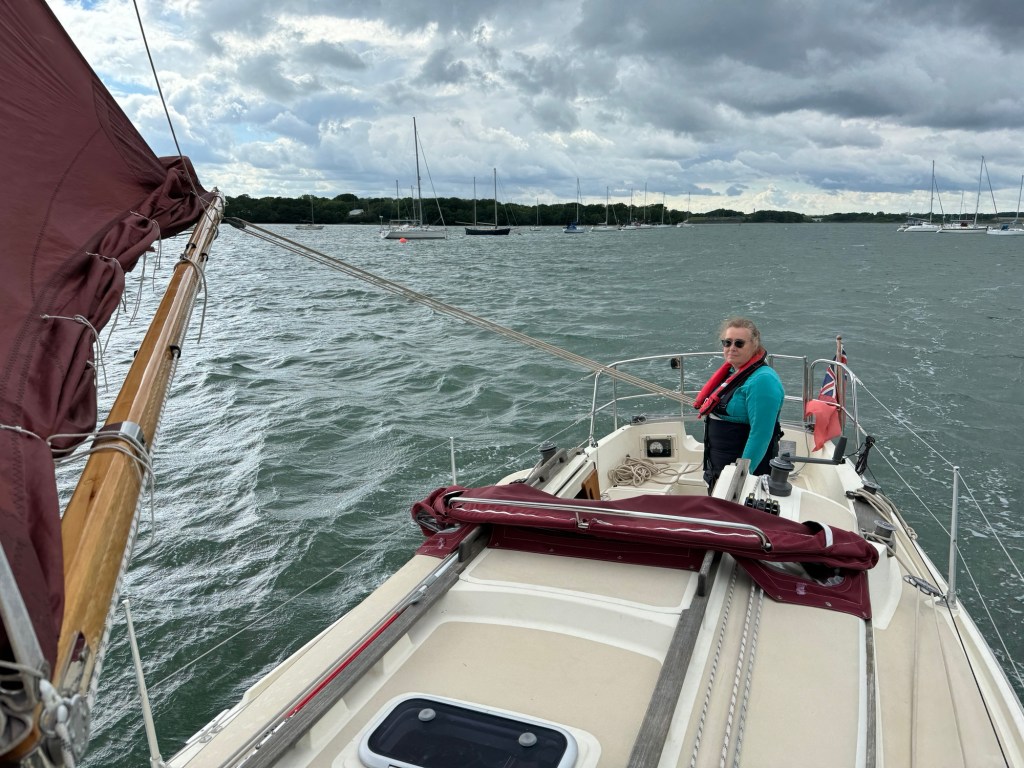
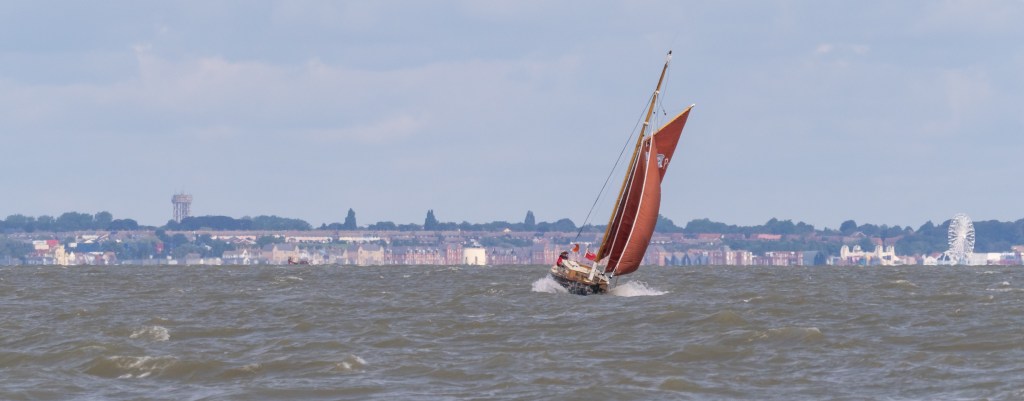
The following day was a passage race to West Mersea, down “The Wallet”. Conditions were brisk and we set out on first reef, making excellent progress. The wind continued to build and as we beat into the mouth of the Blackwater conditions became rather challenging, so in the end we abandoned racing and used the engine to maintain boat speed and enable us to point higher.
Puffin Bach with Harwich behind
Niki at the helm
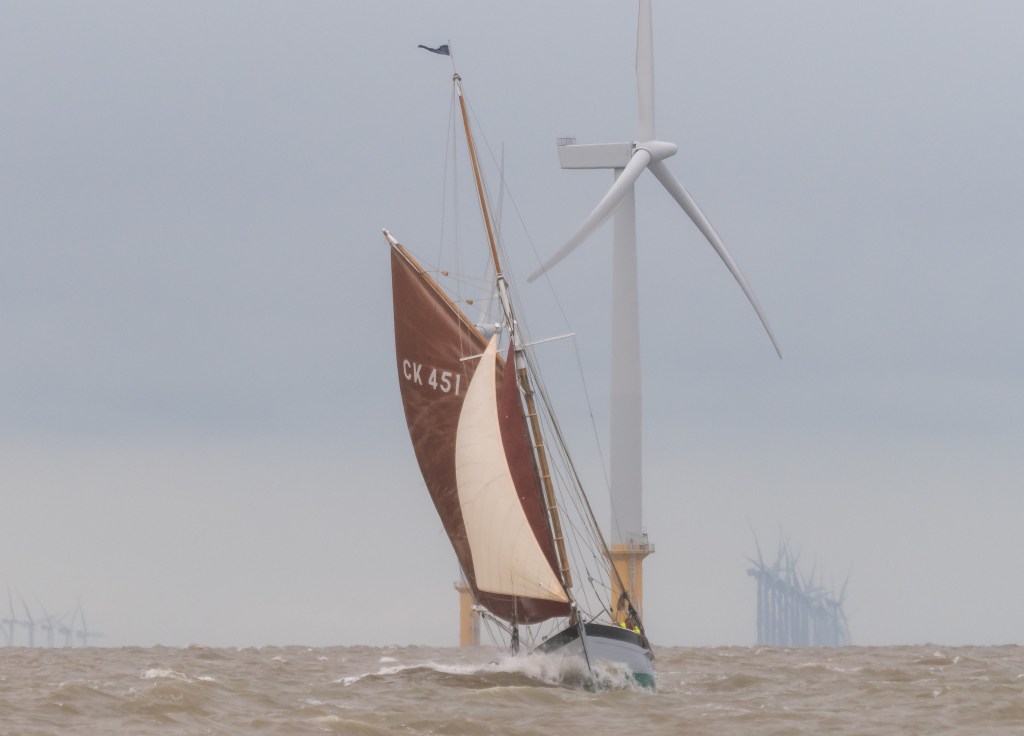
Daisy Belle with Gunfleet wind turbines behind
Jan Blank going well

A number of the fleet found conditions too challenging, turning and running downwind to shelter. Those of us that made it to Mersea were given moorings at West Mersea Yacht Club and ferried ashore for a well-earned chilli ashore.

After the rain. A red sky at night…

The next day had been planned as sailing in the Blackwater, returning to the moorings in the evening. However a decision was taken to grab a weather window of fair winds to cross the Thames estuary and enter the Medway. Unfortunately, Niki was not able to join me on this leg, so I made the journey solo.

I dropped Niki at the yacht club pontoon and took the opportunity to pack the tender up into the locker. Motor-sailing into the Blackwater, although the wind was pretty non-existent, the ebbing tide carried me out.

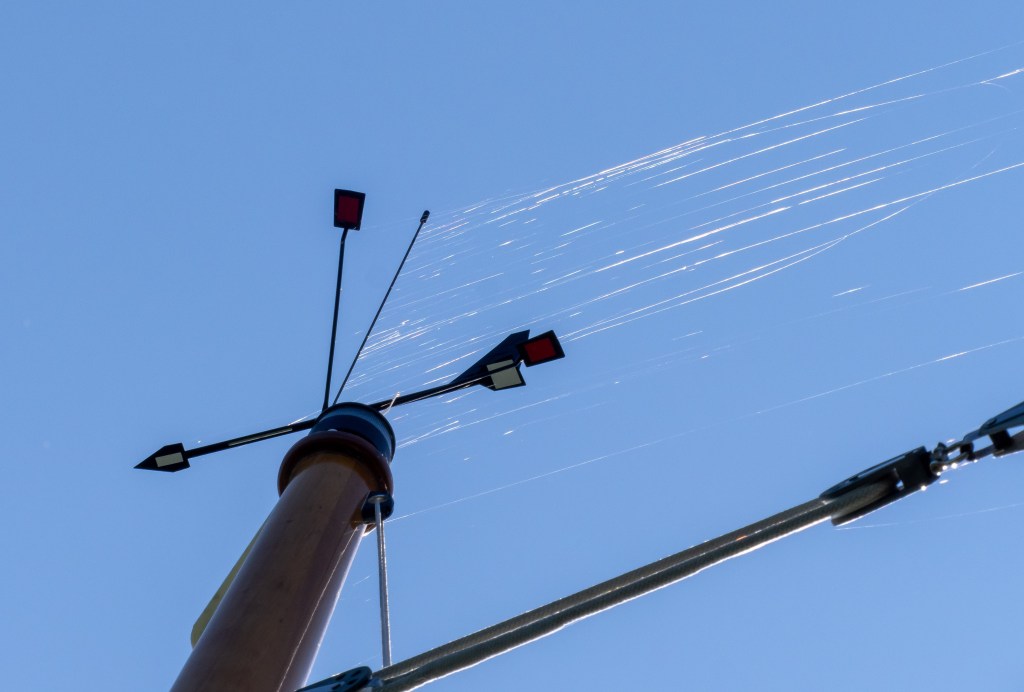
Molly’s rigging was covered in strands of spider silk the night we moored at West Mersea

Looking at a chart of the Thames Estuary, it is littered with obstructions and marks but the experience of being out on it is, of course just a wide expanse of water. I made my way some seven miles out, to take the Wallet Spitway between Buxey and Gunfleet sands.

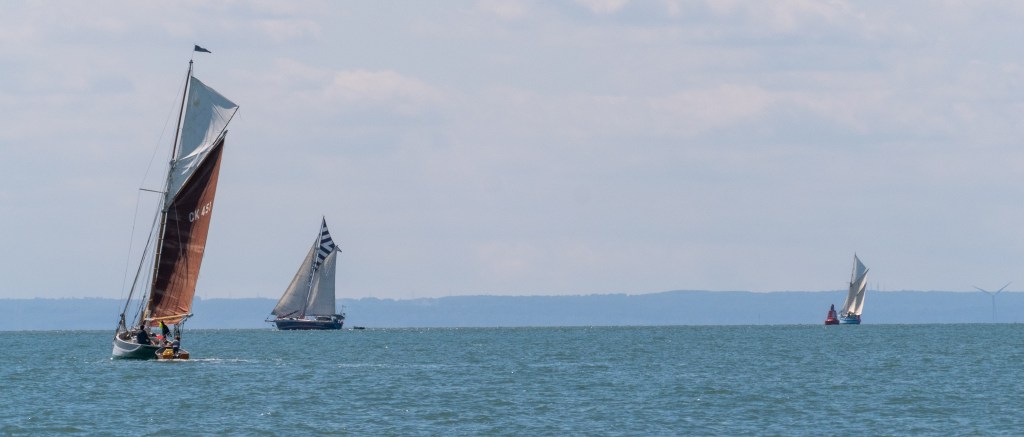
By this time, the wind was beginning to fill in and I was at last able to switch off the engine. It was a peaceful sail in full sunshine – the sort of summer day which has been in short supply this year. As I progressed passed Foulness Sand, with explosions very much visible and audible from the MoD test centre, the wind continued to fill and it became a beautiful reach. By this time, I had caught up with the fleet (they had not used engine early on), which made a lovely sight spread across water.

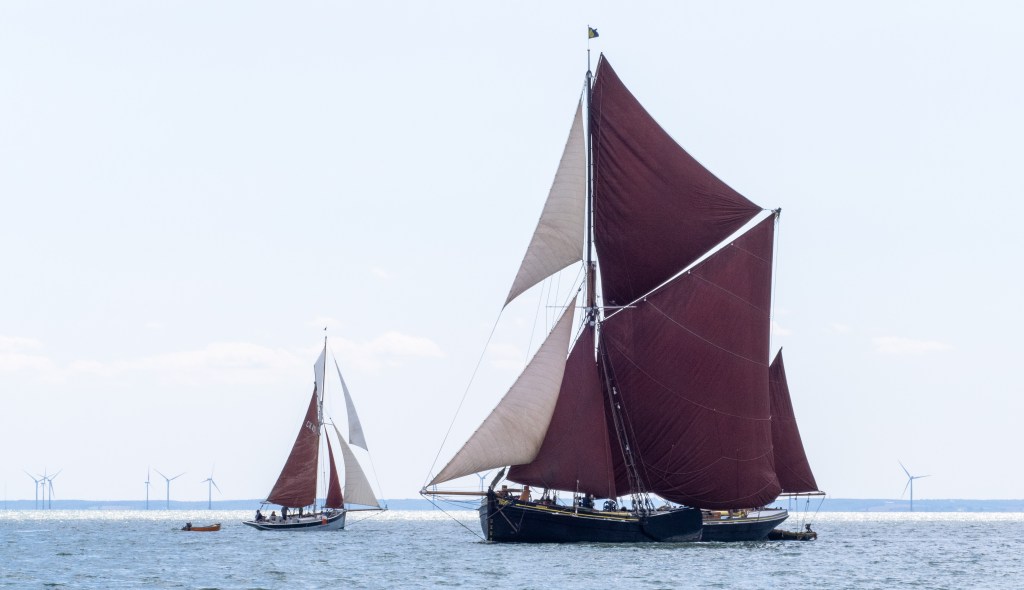
Daisy Belle passing a Thames Barge, both in full sail
Puffin Bach

I turned towards our destination down Middle Deep and it was a leisurely beat, but the tide had begun to turn in my favour. The final hurdle was to cross the Thames’ main shipping channel. I was fortunate that there was little traffic as I crossed, bringing us to the Medway river entrance. The wide commercial harbour was devoid of traffic, so there was plenty of space to drop sails before entering our mooring at Queenborough.

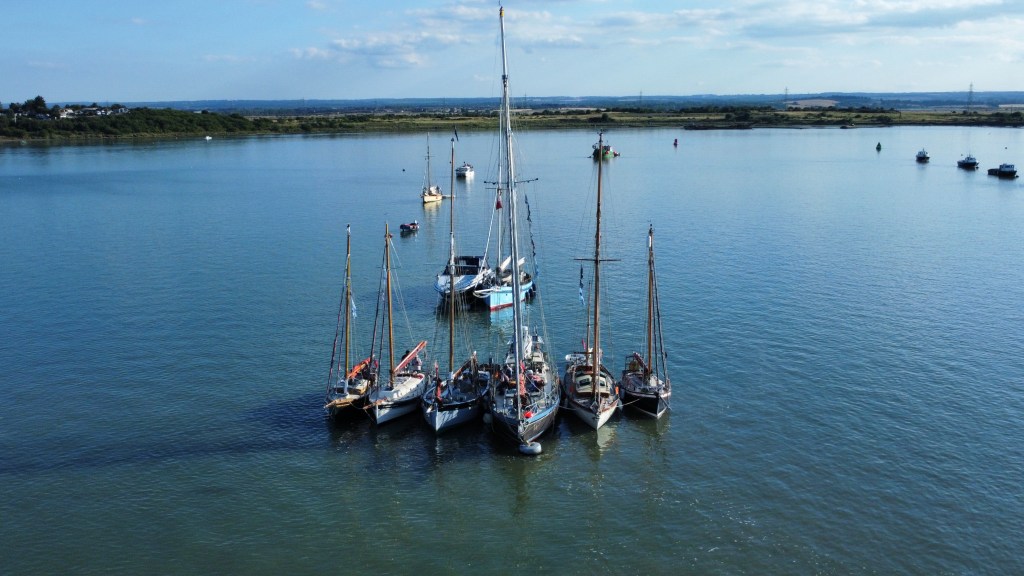
Queenborough is on the river Swale, so this was my seventh river of the trip (and I hope to add at least one more before reaching home again). We all rafted onto just two large mooring buoys and made an impressive sight in the afternoon sun. There was time for leisurely drinks and nibbles aboard Daisy Belle and Windbreker; we then cooked our evening meal aboard, before ferrying ashore in tenders, to the pub.

Continues in part 2…

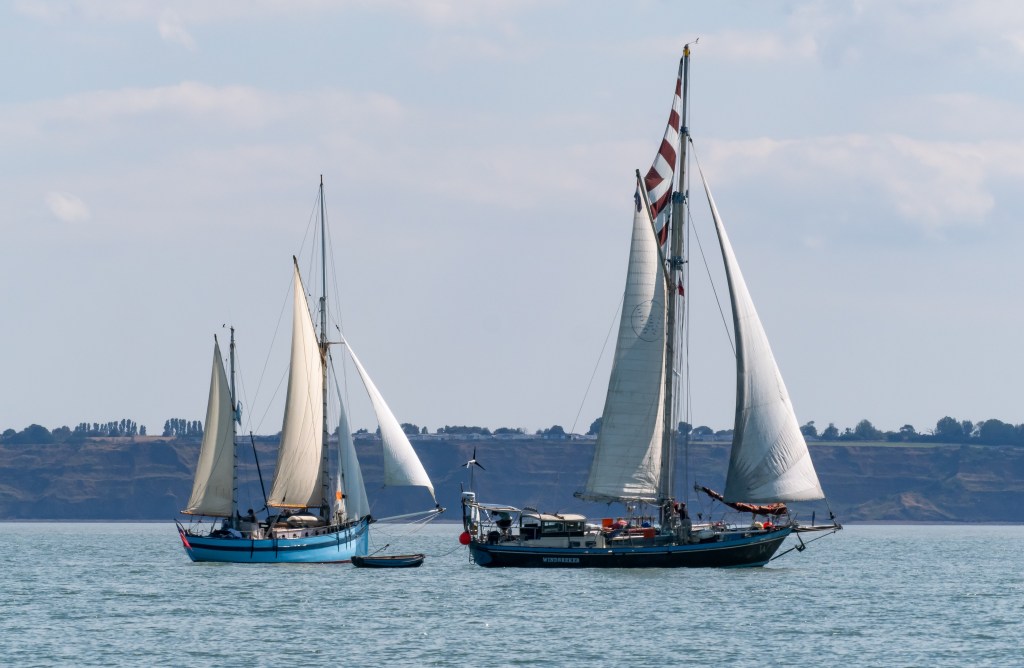
Rely and Windbreker
Look behind you! Plum was not so lucky with the traffic, crossing Princes channel
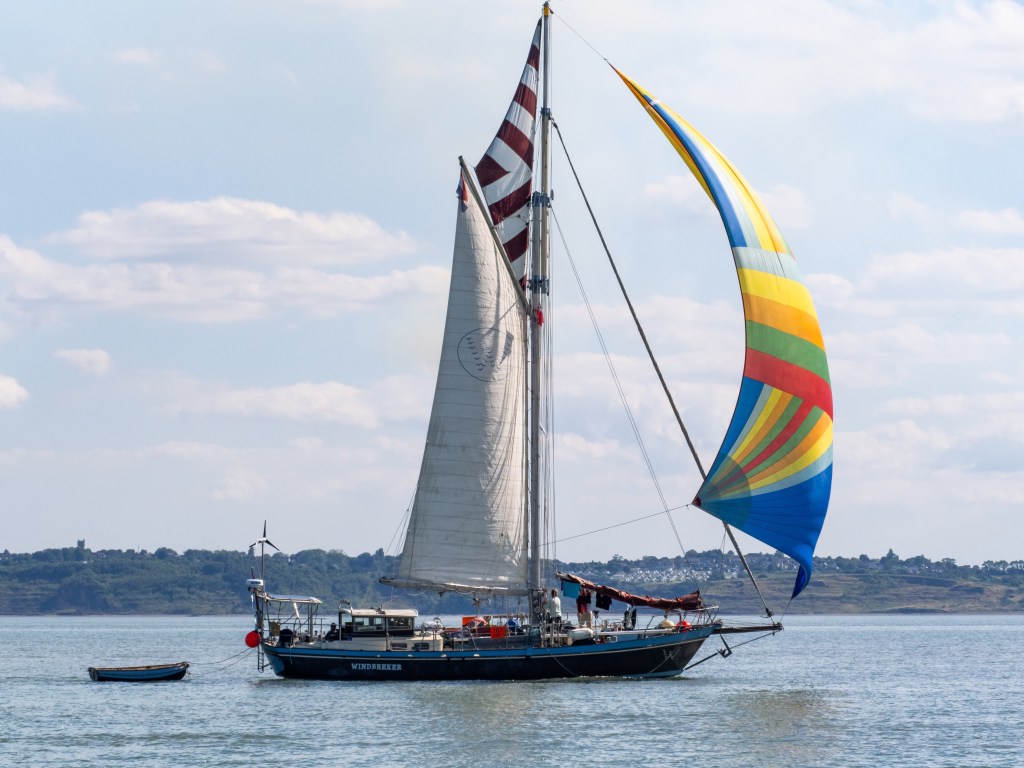
Windbreker and her “hippy” spinnaker
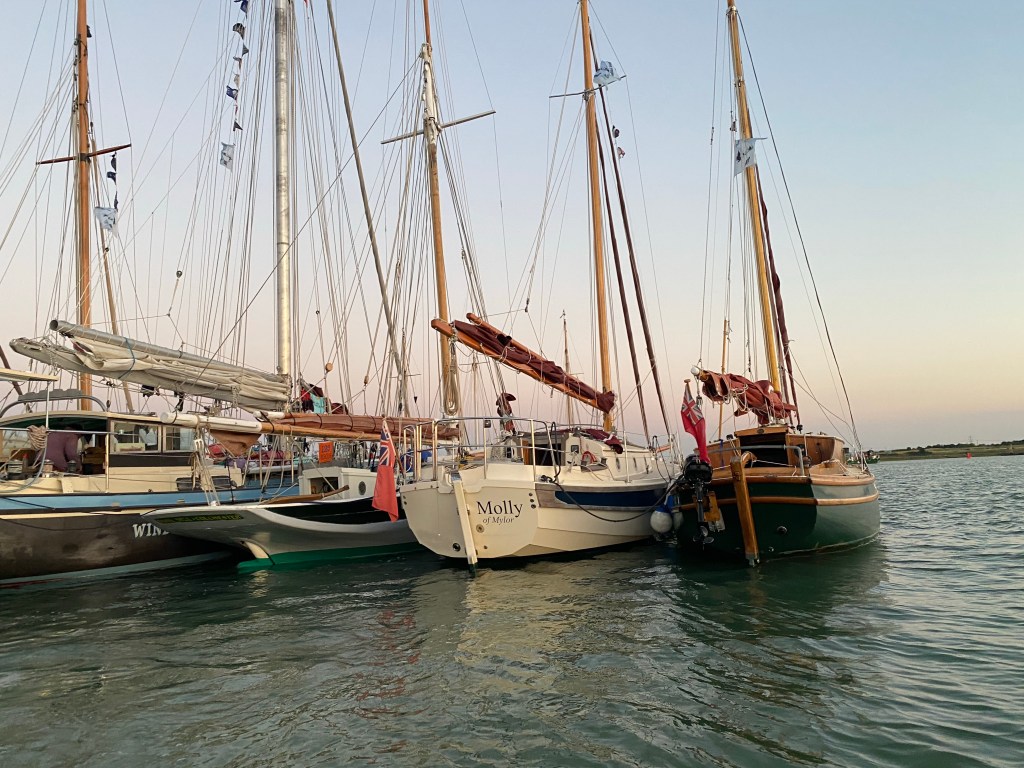
Rafted together
Molly approaching the Medway (thanks to Colin of Plum for the photo)
The rafted fleet at Queenborough

OGA diamond jubilee party

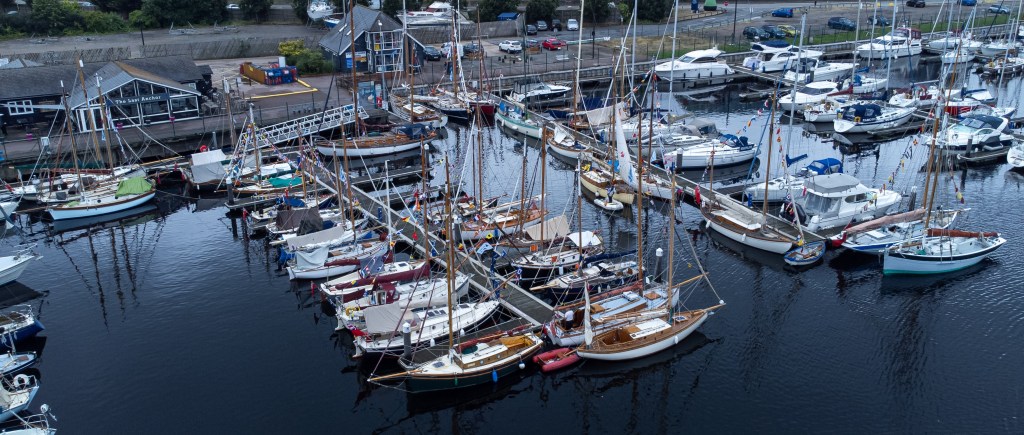
The party to mark 60 years of the OGA (association for gaff rigged sailing) took place in two halves. Celebrations kicked off right in the centre of Ipswich with all the cruising boats moored together at Ipswich Haven Marina. A series of organised events were available but Huw (who had sailed with me from Ramsgate), joined by his wife Maggie, and I enjoyed a sunny sail down the Orwell to the docks and back.

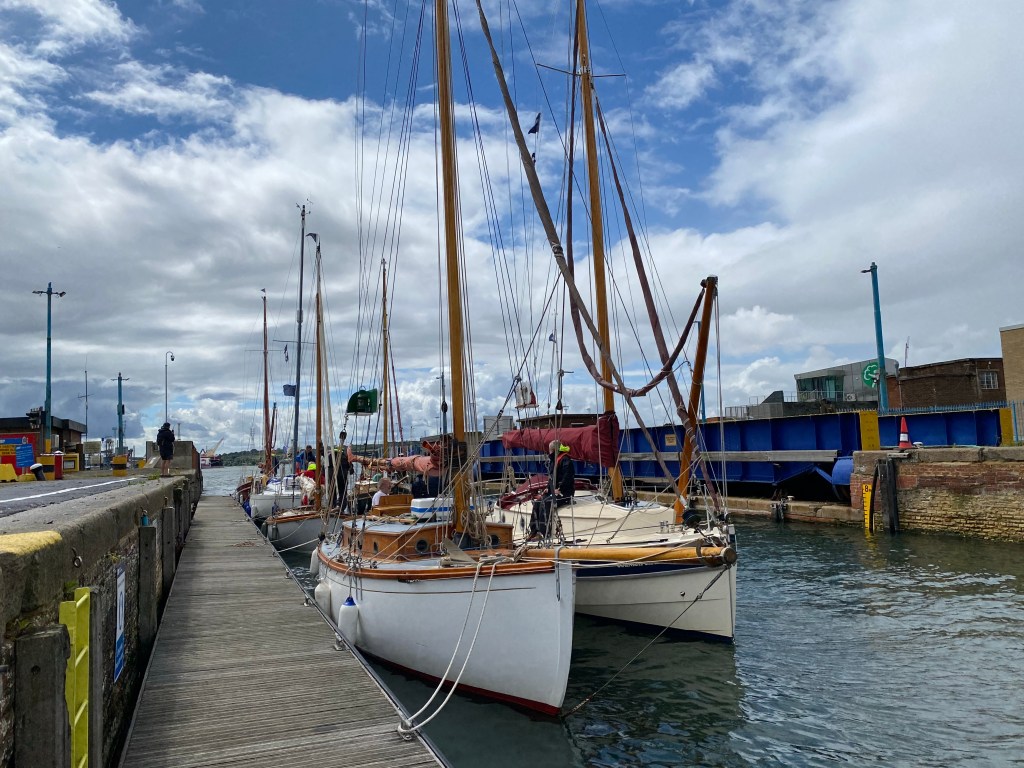
Rafted in Suffolk Yacht Haven
Huw and Maggie at the helm
Rafted to Nancy Blackett, locking in to Ipswich marina
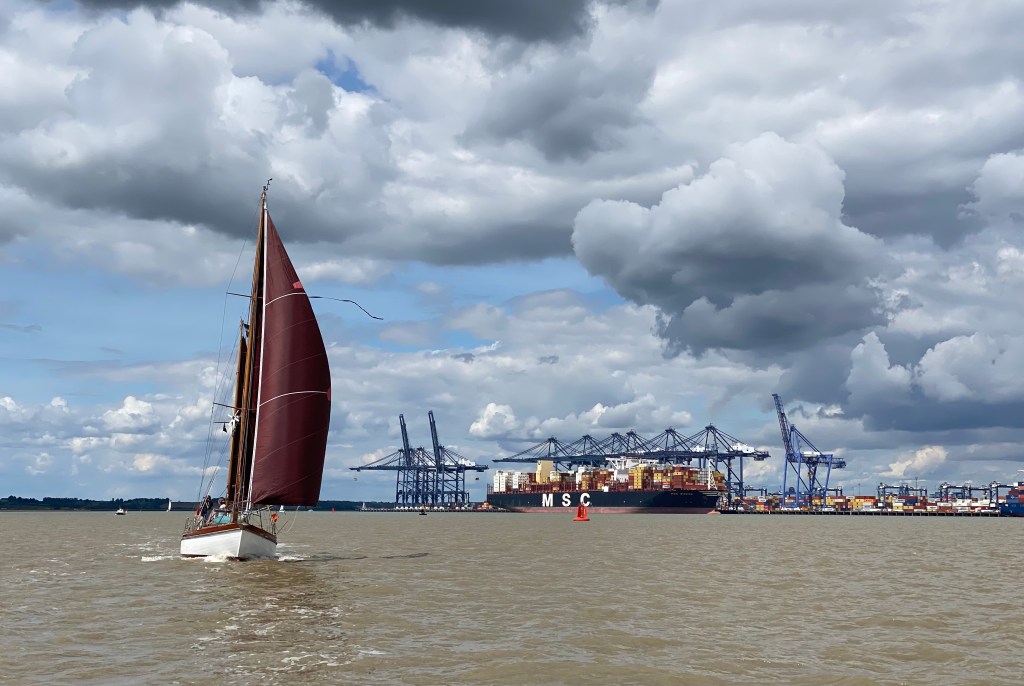
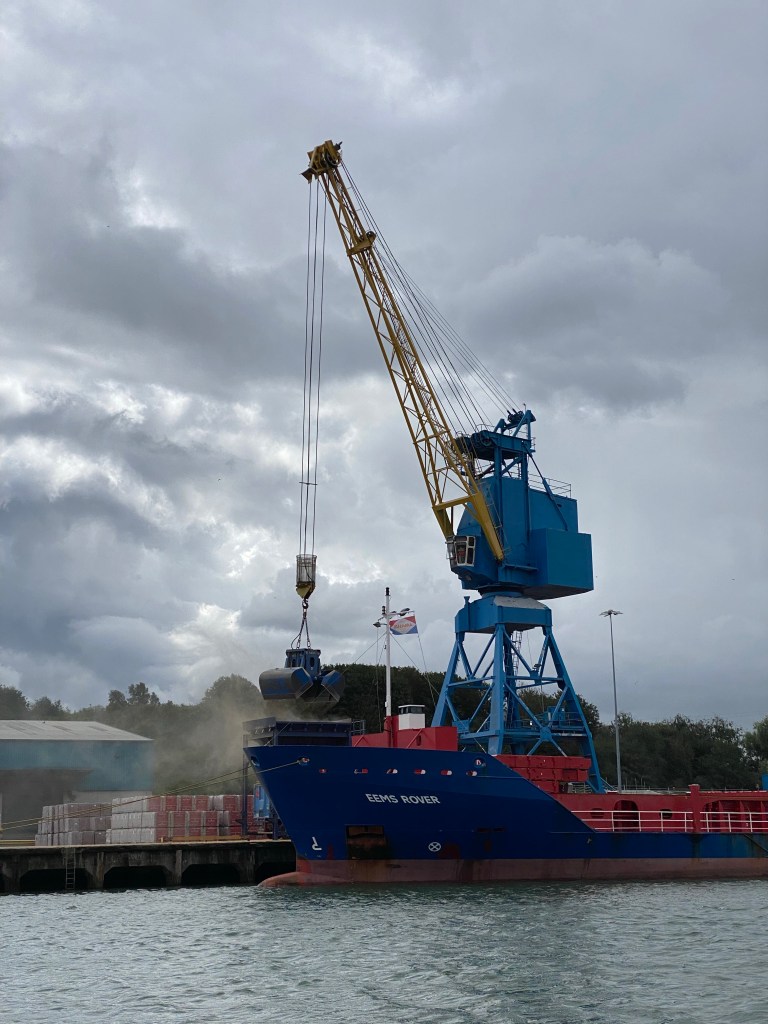
Ipswich commercial port

The two evening gatherings were lively affairs in a local deconsecrated church. Gaffers are an unruly lot and the briefing was very much a “herding cats” scenario. The main event of the second day was a parade of sail, in which all of the cruising boats were to process down the Orwell to Suffolk Yacht Harbour at Levington, joined by all the trailer sailers who would sail up from Suffolk Yacht Harbour to meet us for the second half of the party.

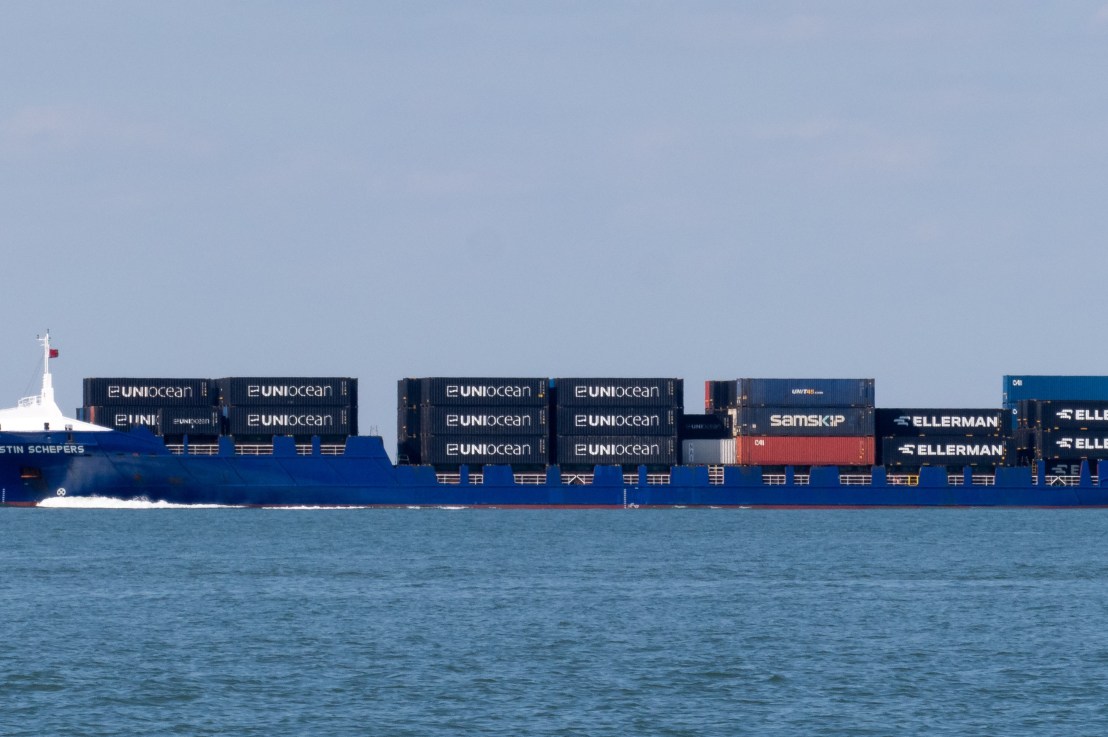
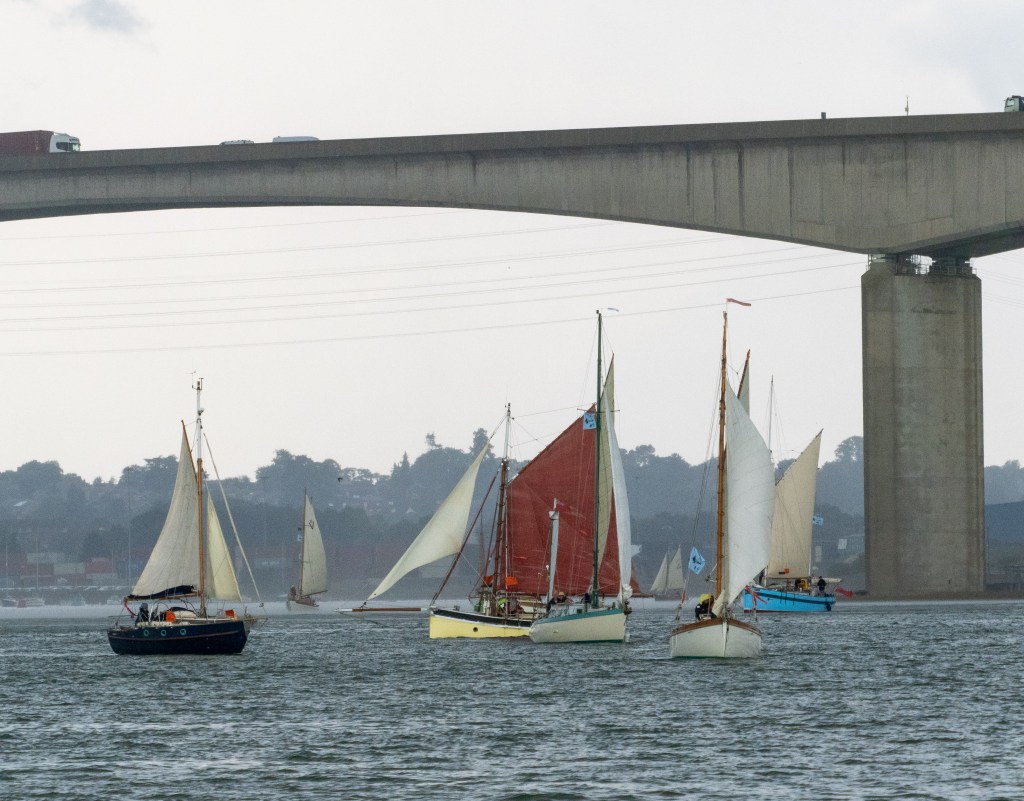
Ipswich lock was opened on free flow, after a large cargo vessel had turned about in the narrow commercial port, and we all made our way down to the Orwell road bridge. The fleet was divided up into a number of “squadrons” in order to help the boats, which varied enormously in size and type, to stay in some sort of formation.

Parade forming up under the Orwell Bridge
Molly on a mooring as the procession forms up
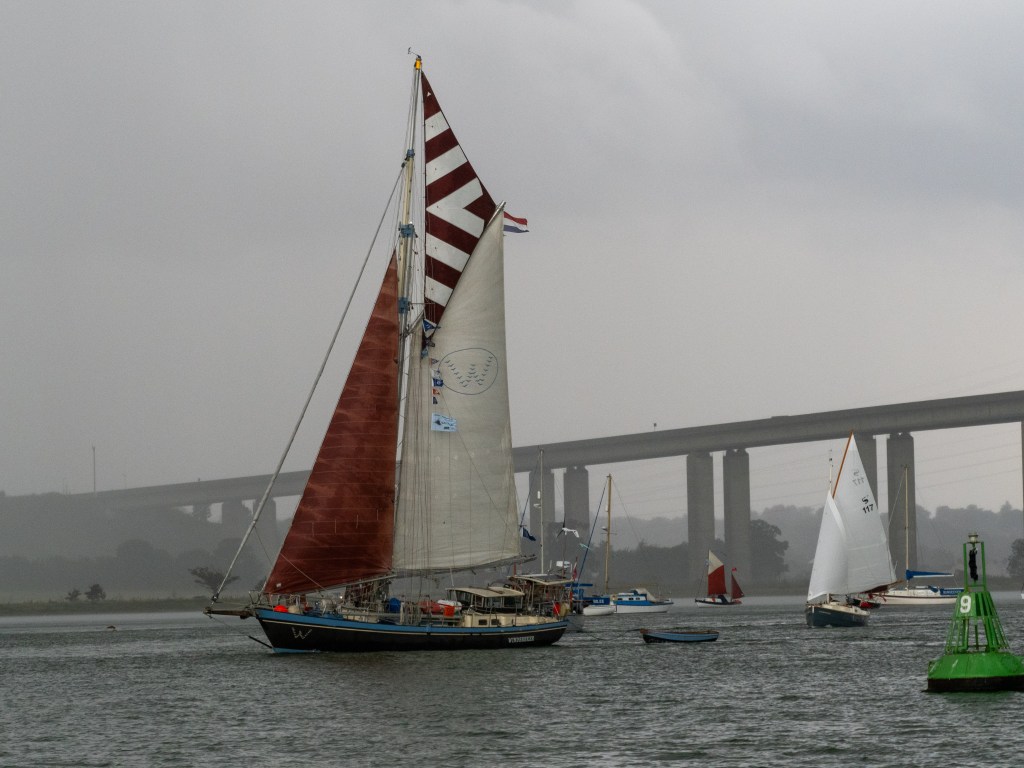
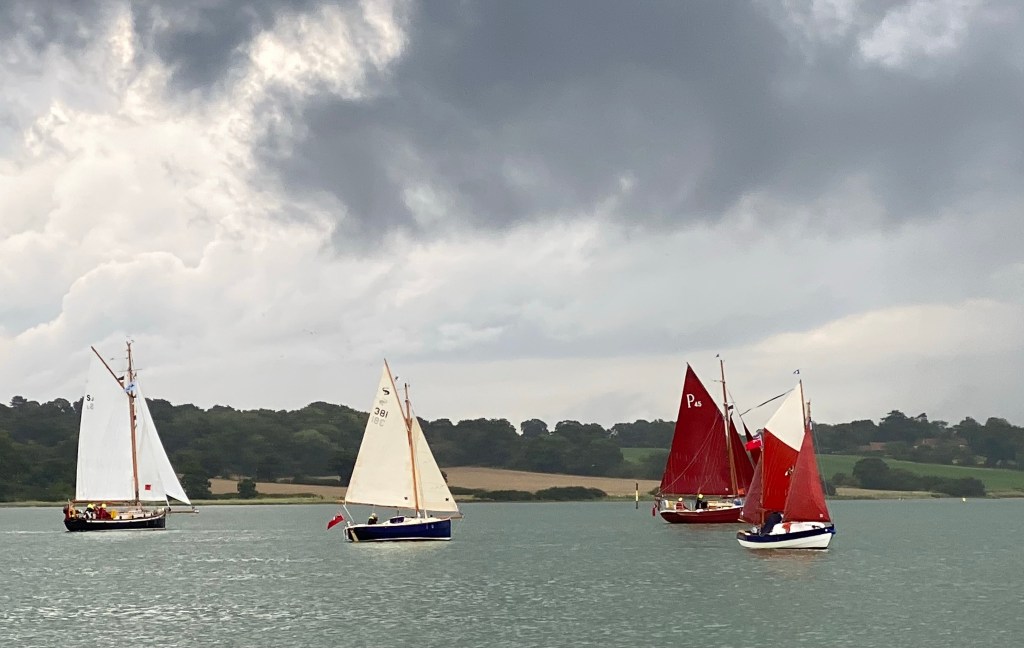
The grand parade
The thunderstorm approaches…
The rain closing in
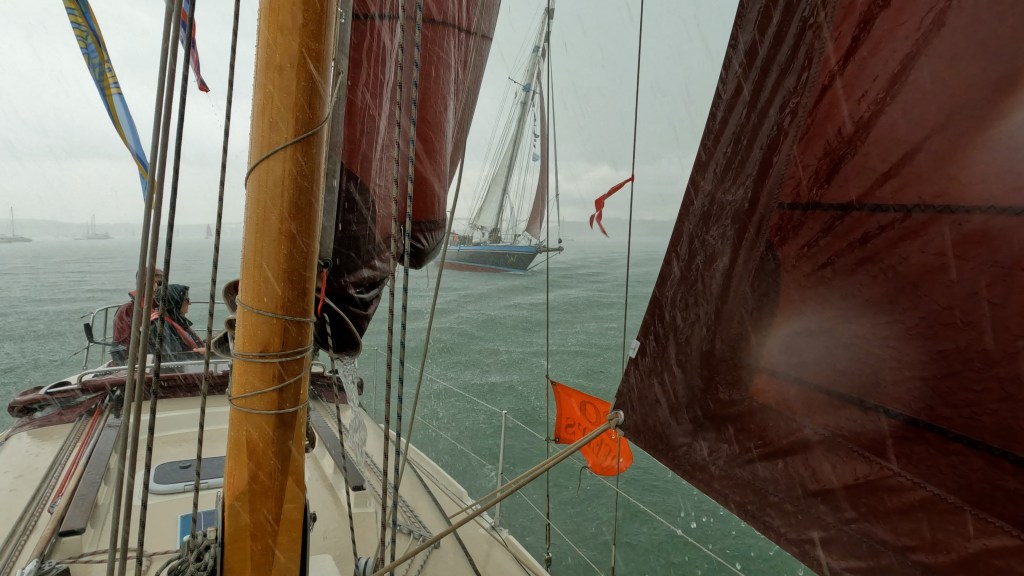
In the deluge! (you can see a torrent of water pouring off our reef)

Molly was among the early boats to leave harbour, with Niki and Alice aboard as well as Solent friends Grant and Amanda. We picked up a mooring below the bridge and watched the procession forming, before taking our own place. The day started as a lovely summer day with light winds and a few puffy clouds drifting by.

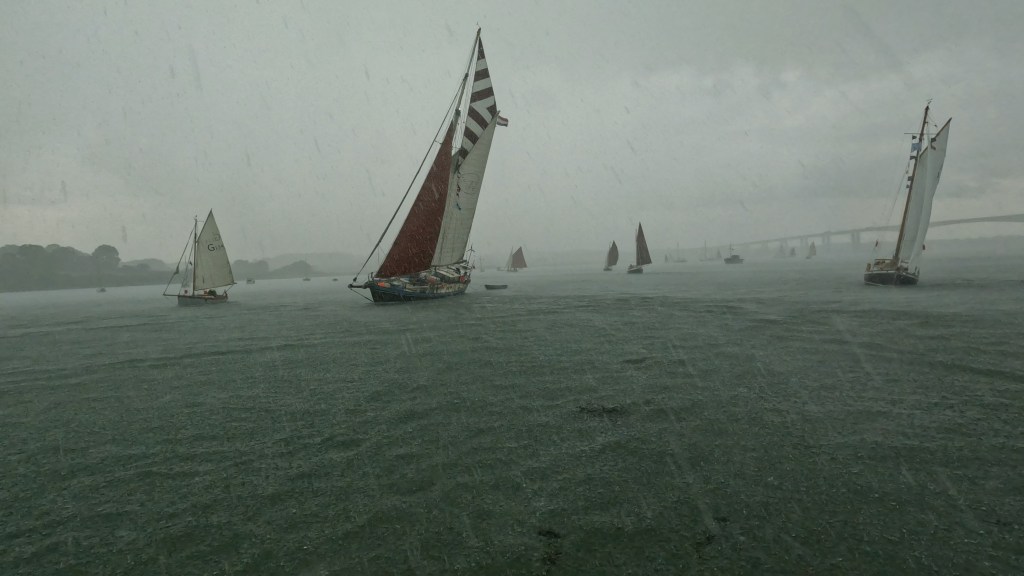
The weather changed though; as the procession got going, a bank of ominous cloud approached. We could clearly see a line of rain advancing towards us. However we were unprepared for the intensity of the deluge that arrived, complete with thunder and lightning, though fortunately no strong winds. The fleet continued undaunted and eventually the rain eased for the protracted process of getting all the boats squeezed into the Suffolk Yacht Harbour for the second half of the party.

Sadly, the next day was filled with heavy rain and very light winds, followed by strong winds the day after. Molly’s crew skipped the racing and we all had a pleasant day in Woodbridge. The evening entertainments were not dampened by the weather, with live music, an open mic and several interesting talks. By this time, the crews from boats small or large and from all regions were well-mixed, and swapping stories.

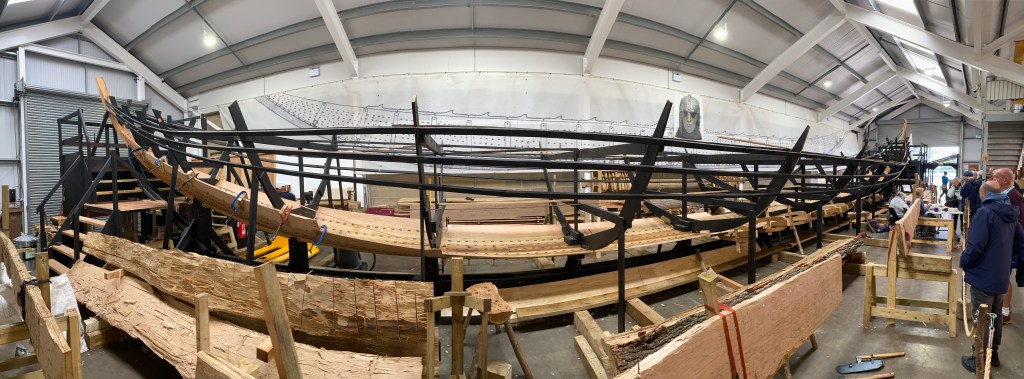
Replica Saxon longboat made, using measurements from the Sutton Hoo dig, as well as period correct (as far as known) techniques and materials
Afternoon tea!
OGA60: prologue

OGA60: prologue

I have explored the Stour in our previous boat Aurora, a Cape Cutter 19 and I wanted to repeat a passage I had made to the navigable limit at Manningtree. The crews of the three boat that sailed from the Solent congregated on Molly with an objective to visit Stour Sailing Club for a pint.

A barge leaving Mistley

It was surprisingly rough at Harwich as we left the shelter of the marina and motored into the teeth of the wind. “It’s a shame we didn’t come in summer”, Brian commented ironically.

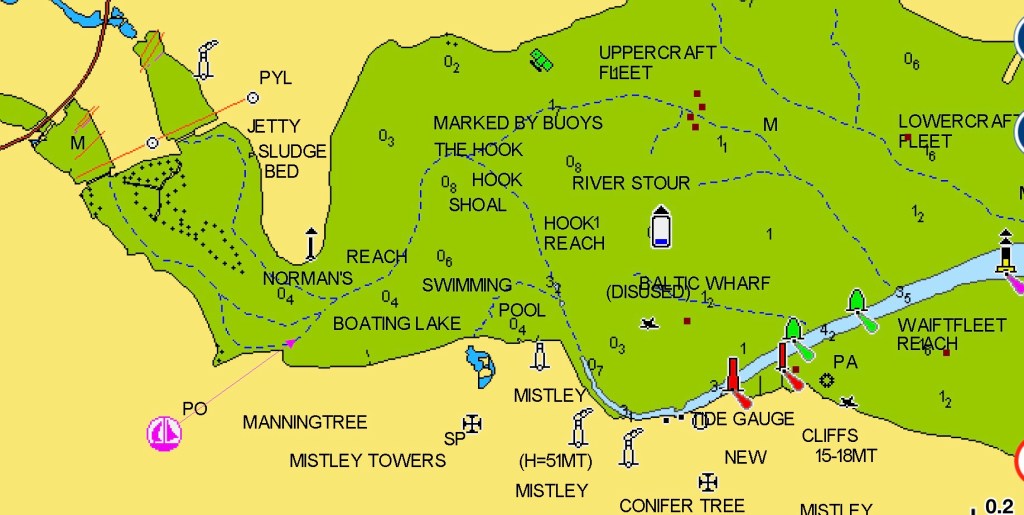
As we progressed up river, it gradually became less choppy. We were crossed by a yacht beating up river and also admired a number of sail boarders. We also passed a large barge on its way downstream shortly before we reached its departure point at Mistley, the point where the river shows all drying green on the chart.

Manningtree is the navigable limit of the river Stour

At this point it was necessary to weave more slowly, seeking out the channel of deeper waters. Guided by the line of moored boats and a few channel buoys we approached quay at Manningtree. At first there seemed no room, but the sailing dinghies and their rescue boats were moved aside for our benefit and we moored up behind another visiting yacht.

Hesitating outside the Stour SC clubhouse, the door opened and we were beckoned in by a member, clearly used to visitors “on the clock”. We had arrived at high tide, but our stay would be brief!

Departing Manningtree

We quickly signed in and had a round of drinks, made very welcome guests in the club, before I had to usher the crew back to Molly. Not a moment too soon, we reversed our course and gingerly retraced our steps back to Mistley. I’m sure if we had stayed only 10 minutes more, we could have been trapped by the falling tide.

Cruising back past Mistley

Once in the deeper water, we could dispense with the engine and ran back on jib only. After a much calmer trip back, we locked back into Shotley marina before another pleasant evening aboard High Barbaree.

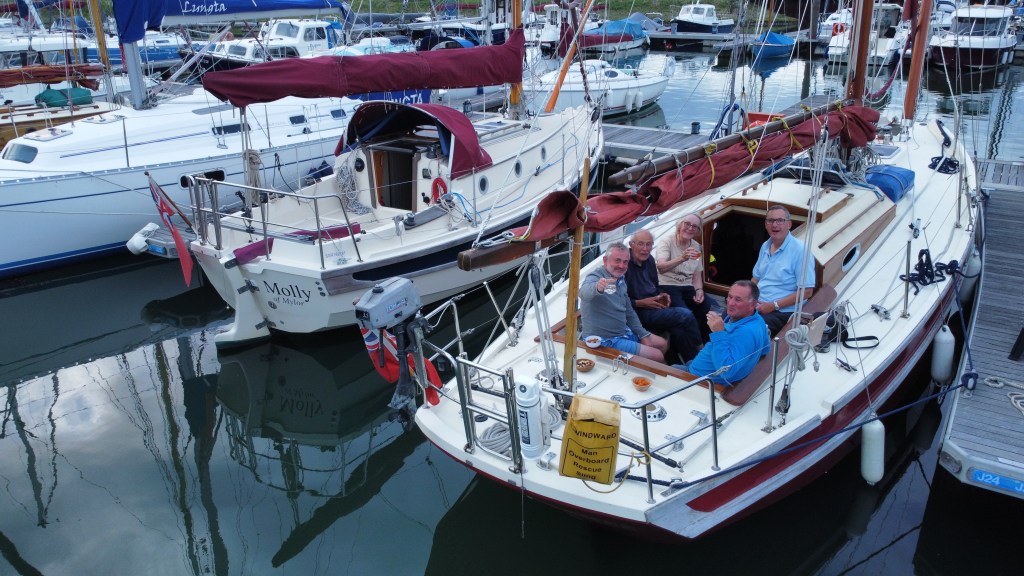
Cockpit drinks aboard High Barbaree

Sailing to the East Coast 2: Dover, Sandwich and Ramsgate

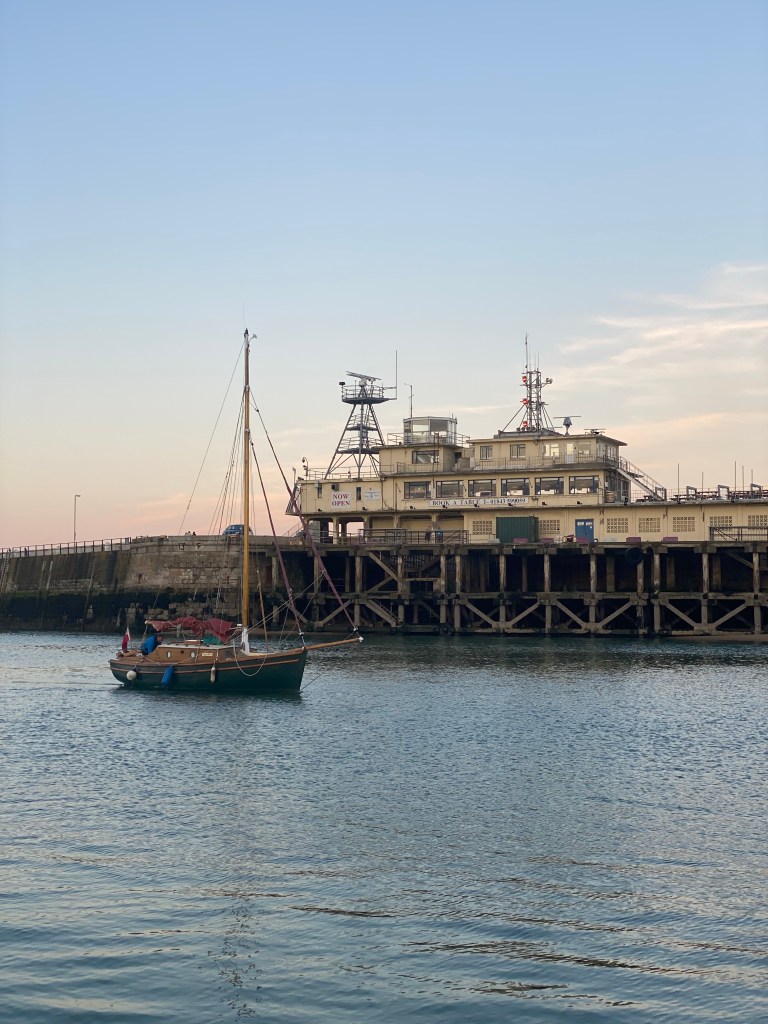
Having reached Dover, and with a couple of days of bad weather approaching, I made for Sandwich. When I was planning this trip, I particularly wanted to visit because of the cruise up the creek. This particular river, the Stour, shares its name with my home town, Stourbridge, as well as a counterpart in Suffolk we were on our way to visit.

Molly and Delphyn, a Contessa leaving Dover

I left Dover with a Dutch Contessa yacht that I would meet again further down the line. We both followed port control instructions to leave via the busy eastern entrance to the harbour. With strong winds and a foul tide, I used engine and staysail to pass the famous white cliffs and along the shore of the low-lying land north of Deal.

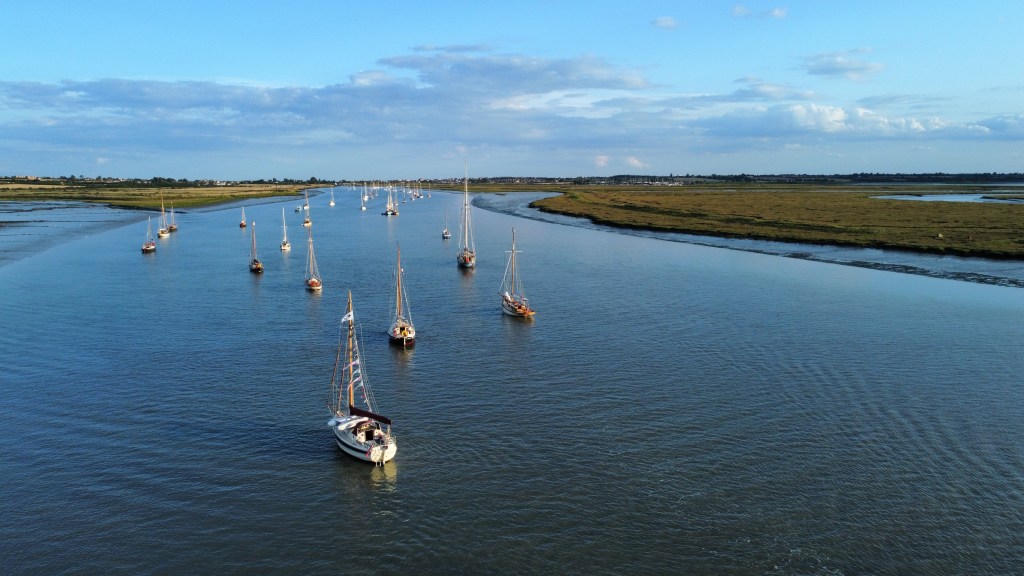
The entrance to the river Stour was easy enough to find and the channel well buoyed. I had timed my arrival for an hour before high tide and this gave me plenty of time and depth to get into the river proper. The least depth I saw in the entrance was around 3m, though the main channel in the river was at least 4m.

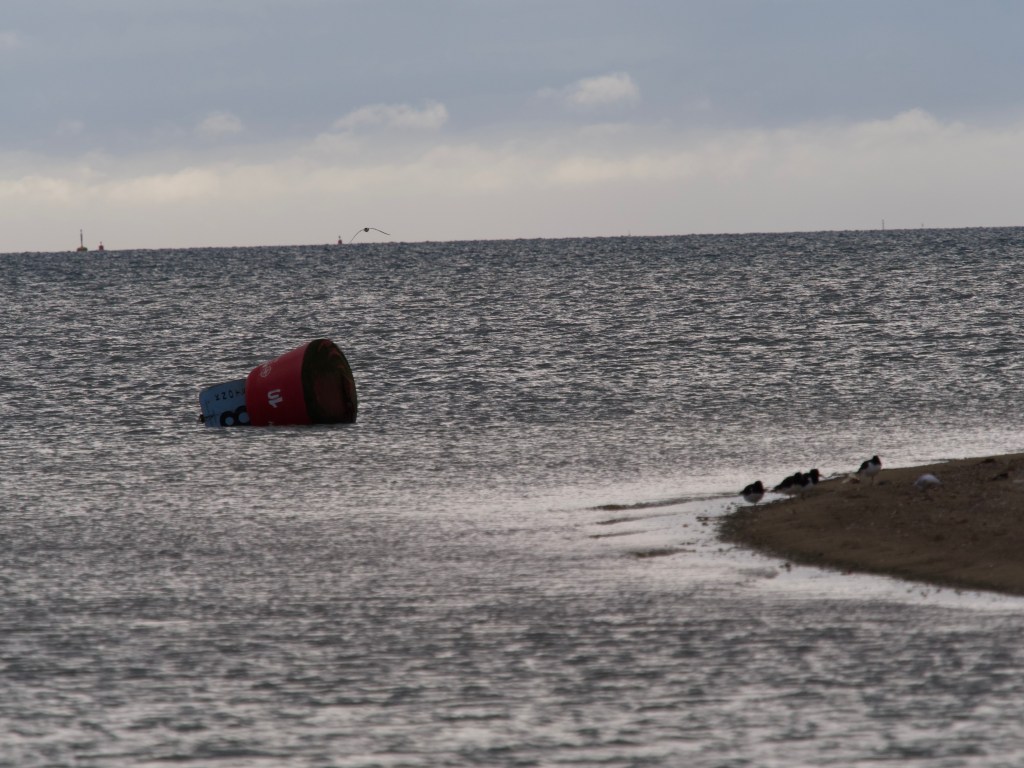
I’m sure the channel buoy shouldn’t be like that!

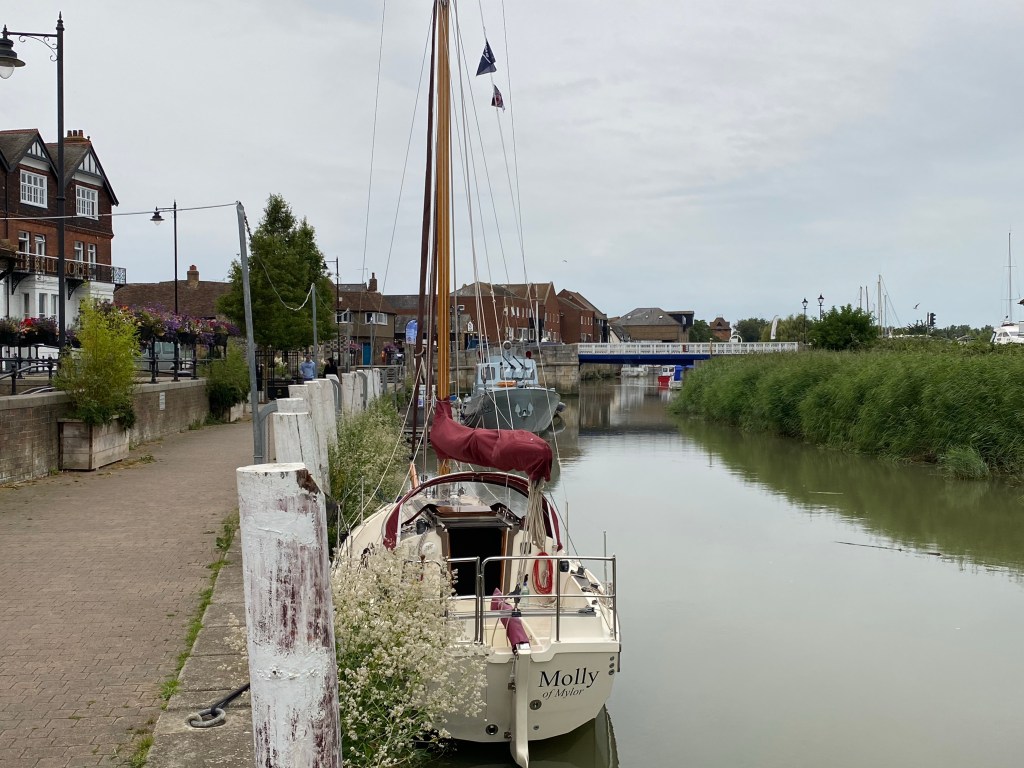
I motored past argumentative terns with young, several large groups of seals and many species of wetland birds. The town of sandwich is about 2 miles inland, reached by nearly 5 miles of winding river. I passed two large boat yards and the huge Pfizer pharmaceutical complex, eventually arriving at the lovely town of Sandwich.

Molly moored in Sandwich town quay

The town quay is lined with wooden posts, against which visitors lie, and gives easy access to the town. Sandwich is a very historic place with many buildings dating back to medieval, Norman or Saxon times. I enjoyed a lazy couple of wet and windy days here, exploring the narrow streets. I particularly enjoyed a visit the the small independent cinema, a family run enterprise.

Aptly named street name, given the weather!
The Empire cinema, Sandwich

The tides are odd here, with the water continuing to flow in for some time after high water, indicating Thanet is still an island, even though the river is much silted up. The friendly harbour master recommended leaving “when you can see the water has just stopped ebbing”. That’s only two and a half hours before high water. In the event, when I left, the water had started to flow in and to turn Molly around, I gently motored her bow into the reeds on the opposite bank and let the flow turn her. I was then able to motor away.

What sort of terns are these? Sandwich terns!
Oi! Who’re you looking at?

My next leg was a short hop down to Ramsgate to meet two other gaffers heading East from the Solent for the OGA party in Ipswich. The forecast was not looking good and we were waiting for a gap in the weather to make a break across the Thames estuary.

One of the boats, High Barbaree, I’d sailed aboard previously. She’s a Cornish Crabber Pilot Cutter 30, owned by Tim and Liz. The other was unfamiliar to me – a Tamarisk 24 called Puffin Bach. Skipper Brian appeared just at the right time as I entered harbour and took a line for me; I was also cordially greeted by Barbara from Delphyn, the Dutch Contessa that had left Dover at the same time as Molly and who were also waiting for a gap in the weather.

Meanwhile Huw arrived; he had come to sail the next leg with me,. The Solent Crew had a pleasant lunch aboard High Barbaree, during which I invited invited everyone for dinner aboard Molly.

Dinner (well, dessert at that stage) aboard Molly

A second very windy day was passed, followed by a very entertaining evening aboard Puffin Bach, with Brian at the Primus stove.

Puffin Bach

Solent Potter

With warm sunny weather but strong winds forecast, Niki and I decided to enjoy a few lazy days aboard and visit some of our favourite anchorages. Our first stop was in Chichester harbour.

We beat up from Gosport against a lively North Easterly. We had some trouble tacking against the wind and noticed that we did much better on one tack than the other – it was then Niki realised that one of the shrouds had worked loose. I recalled that when I had re-stepped the mast, I had not had time to properly adjust the rig tension and so had not secured the turnbuckles!

There are several popular encourages in Chichester, which offer great protection from the prevailing south westerly wind direction, but there are fewer options when that direction is reversed. East Head looked far from pleasant and conditions at our customary spot under Pilsea Island were not to our liking either.

The chart indicates that there is anchorage in the Bosham channel, so we poked our nose up there. However this was no good for dropping the pin either, as the moorings extend the whole way down the channel. At this point, we admitted defeat and picked up a mooring.

Peaceful mooring in the Bosham channel

The harbour master arrived later in the evening to collect the dues and pointed out that the mooring we had picked up was not for visitors, but told us we could stay out as the resident was away. I was glad of this, as this location was much more sheltered than the visitor moorings near the main Itchenor channel.

We passed a comfortable evening aboard, cooking a delicious steak dinner and slept soundly, after carefully securing halyards to prevent rattling in the strong wind. In the morning I spend some time checking all the shrouds and adjusting them to equal tension and then securing the turnbuckles – a job I should not have left home without doing.

We had decided to stay on for another day, as the strong wind remained steadily in the eastern quadrant. After a leisurely morning, we rowed ashore for a walk. I had noticed that there is a footpath which follows the whole peninsula of Chidham. Niki got rather muddy disembarking the dinghy, but we found a tap at the nearby sailing club and she was able to wash her legs.

Bosham Quay

We were rewarded with a spectacular walk with salt marsh and fields to one side and Bosham Creek on the other. We had beautiful views of the very picturesque Bosham Quay and then turned inland to follow the footpath through lovely farmland to the village of Chidham and its most welcome pub, “The Old House at Home”. This is quite an unusual name and I had thought it a Black Country term, as that is the only other time I had heard it. According to Google, the name comes from the words of an early Victorian song popular with soldiers far from home.

A welcome pint of excellent beer at the halfway point of our walk

The circumnavigation was completed with a walk along the more open western perimeter of Chidham and the last part along a footpath on the flinty foreshore itself, complete with stern warnings about the dangers of the tide. We passed around Cobnor Point to the welcome sight of Molly on her mooring.

Cobnor Point

Having spotted a slipway at the sailing club, I saved Niki more mud and rowed the tender from its muddy landing place to collect her and return aboard. We were a little low on provisions but wanted to spend another night at anchor and decided on Newtown Creek, after some food shopping in Emsworth, for the following day.

We were started awake just after first light by a call of “you’re on my mooring, please move”. I stumbled groggily into the cockpit to find a bright yellow Dragonfly with its solo skipper circling us a little impatiently. It was the work of moments to start the engine and cast off mooring, whilst Niki charmed him with her explanation that we had been given permission.

We thought of setting off then and there, but that was before we looked at our watches and discovered it was but 5am! A (visitor) mooring was picked up and we returned to bed for some more sleep.

Short stay pontoon at Emsworth

At a rather more civilised hour, we cast off the mooring and sailed into the Emsworth channel, where there is a short stay pontoon. The pontoon was thick with small children and their parents, who seemed oblivious to our shouts but nevertheless moved reluctantly out of our way as we arrived. A prominent sign prohibited crabbing, but was completely ignored; we took this prohibition not to apply to Molly either! Though it was around high tide, there was just 2m of water so, not knowing how long the shopping sortie would take, I stayed aboard Molly whilst Niki strode out.

Under reefed sail in Chichester harbour

I needn’t have worried and Niki was back in half an hour with all our vittals procured. We followed the now-ebbing tide down toward the harbour mouth and ran before the wind down the Solent. As usual, there was a wide variety of craft to occupy our attention. Sadly the wind dropped and our progress was slower than hoped and, as we passed Cowes, the tide turned against us. I took to the shallows to avoid the worst of the tide, but we arrived at Newtown Creek much later than planned.

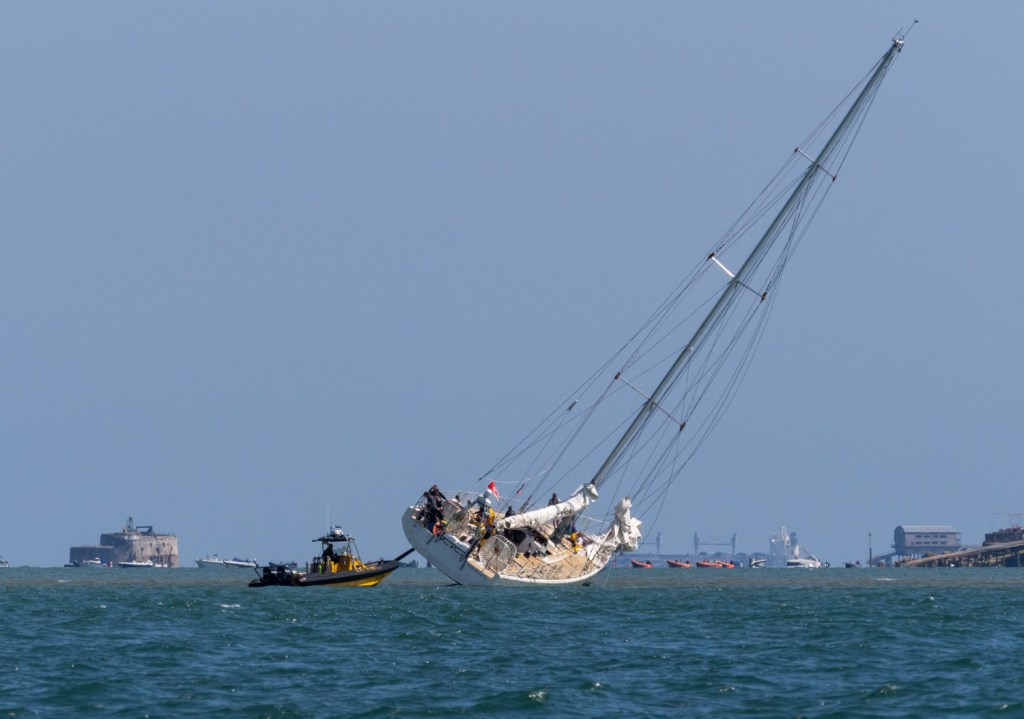
A clipper aground on Ryde sand. There was little aid the Sea Start RIB could render
The shallow water extends a surprisingly long way off shore…
…but the hovercraft has no such trouble with the shallow water off Ryde
Sail training ship Tenacious
I like this hull colour for a Shrimper
“Stealth gas”? I think not, on a ship that colour!
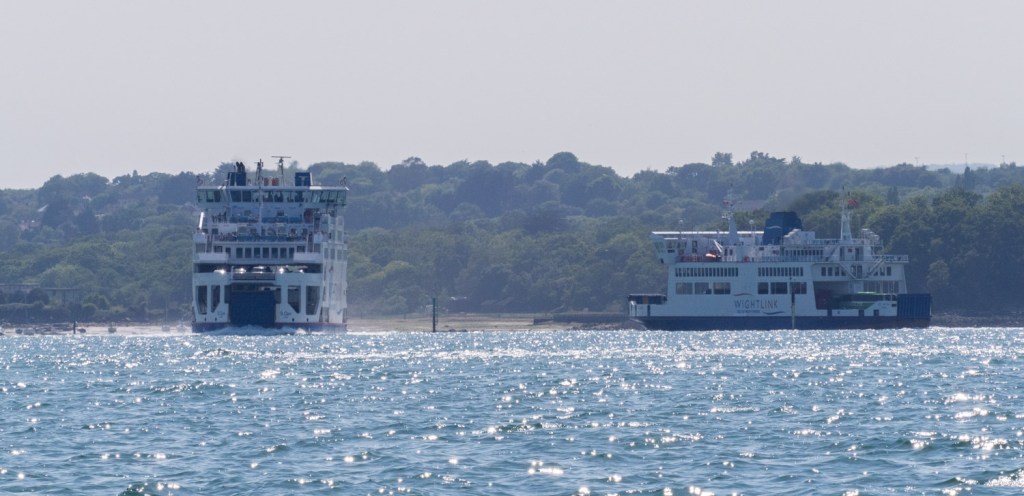
The ferries crossing outside Wootton Creek

I had hoped for another pub walk at Shalfleet, but we arrived too late for this. We crept along, plate up past the moorings in the Western Haven; a boat was already anchored in the shallow water of the upper reaches, but we squeezed in on the end.

Molly at anchor in Newtown Creek

I’d always struggled with getting our tender in and out of the locker, but during this trip discovered how much difference it makes to use the pump to draw out as much air as possible when deflating her. So I quickly had Aurelia out on the coach roof, inflated and in the water. Niki stayed aboard and I had some welcome exercise rowing through the moorings to the tumbledown quay at Shalfleet. In the golden hour, the deserted harbour was a lovely sight and I had a short but pleasant walk around the boats ashore. It did seem like a place boats come to die, but that seems true of many a boatyard. I did spot a more cheerful sight – our friend Julian’s Cape Cutter on her mooring.

Molly in the distance, viewed from ashore in Shalfleet
One of the most beautiful places to spend a night.

Our laying of the anchor had been less than perfect and I realised that we would be on the mud during the night and not be able to get out at the time we wanted, so we lifted the pin and moved to a mooring in deeper water later in the evening.

This was just as well, because when I rose at 0530 for our return passage, there was barely enough water for us to creep towards the mouth of the haven. The early start was called for, as it was a beat back to Gosport and I wanted a fair tide to help us.

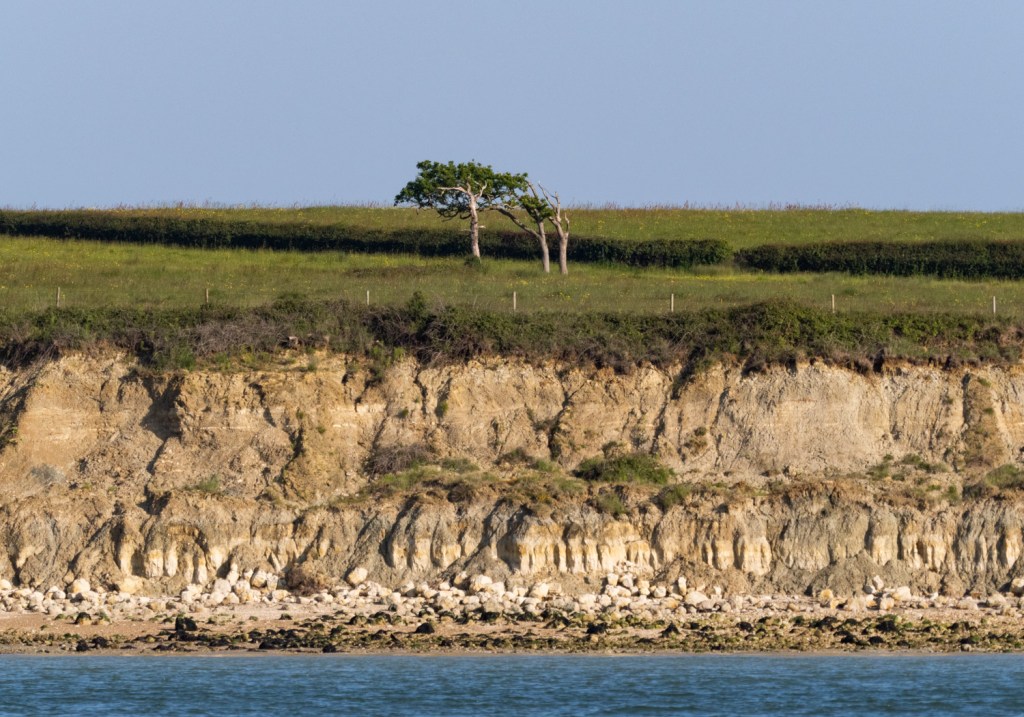
Interesting rock formations on the eroding Isle of Wight shore
A Winkle Brig in Osborne Bay
The lovely Lady Belle also beating up Solent

The wind seemed light and I raised full main, but it quickly became clear that we were overpowered and I had to stop and take in a reef. I beat across the width of the Solent arriving directly outside the mouth of the lovely Beaulieu river. I stood on as long as I could into the shallows before tacking off, hoping to avoid the need for another tack before Cowes. This was indeed how it turned out and in fact a wind shift helped us onto a course directly towards Gilkicker point. At that early hour there was little traffic and I only had the fast ferries out of Cowes to watch for. The wind gradually decreased during the morning and it was not long before I shook out the reef and carried on under full sail. A few tacks were needed to get around Gilkicker but we made surprisingly good time and were soon back on our home berth.

A French gaffer that passed us – I believe she was returning after a classic yacht event in Brixham.
Portsmouth in sight
I was quite pleased with this track. You can clearly see how long it took me to sort a reef shortly after we started, but remarkably few tacks were needed to get home. You can also see that Portsmouth is thick with AIS targets!

Yarmouth gaffers

Every year, the Solent area OGA holds a rally in the lovely Isle of Wight town of Yarmouth. It’s always an enjoyable weekend and this year, owing to the Platinum Jubilee, it was over four days, instead of the usual three.

My passage back from Falmouth had been timed to be able to attend this rally, so I was glad Ben and I had had no delays sailing Molly to her new home waters. I dropped Ben in Lymington and took the opportunity to re-provision there too, before crossing the Solent again into Yarmouth.

Lymington town quay – rafted three deep

It was great to see attendance up on last year, following the cancellation of the event in 2020 (last year I attended in Aurora, as part of the Cape Cutter 19 rally) and there was a pleasant pontoon drinks party to restore connections from previous years.

The last few long days of sailing caught up with me and I retired to bed early after a delicious steak cooked aboard and a glass or two of red. In the morning I woke refreshed and had a leisurely start before sailing back to Lymington once more to collect Niki, who returned to the boat after a few days at home with Alice.

Molly dressed all over

After eating a rather good paella cooked in our thermal cooker, we repaired to the sailing club for live music and dancing. After a nightcap aboard Molly with the intrepid crew of Miss Ningi, we hit the sack.

Miss Ningi

Saturday morning is always the gaffer race, organised by Royal Solent SC, but sadly the race was cancelled this year, as the wind was too strong.

Royal Solent sailing club

Niki and I elected for a walk and enjoyed a wonderful seven-mile loop to Freshwater Bay on the south of the island. This was an absolute treat, taking in cool woodland, rolling farmland and the marshes along the banks of the river Yar.

Boats on the Yar seen from the lovely wooded footpath along the old railway line

The event was rounded off with prize giving and a BBQ meal; see you all next year!