Tag: Ramsgate

Return to the Solent

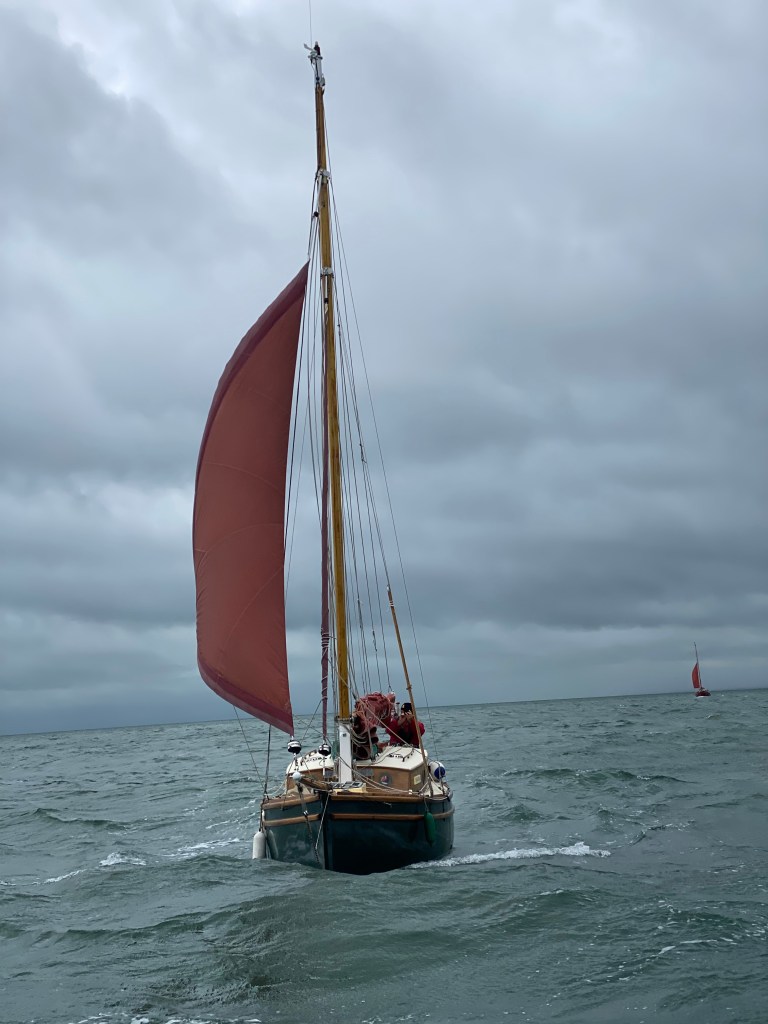
Having escaped from Chatham marina and made it around the corner of Kent, to Ramsgate, I only had two days to get home to Gosport. This meant two more long days in quick succession for John and I

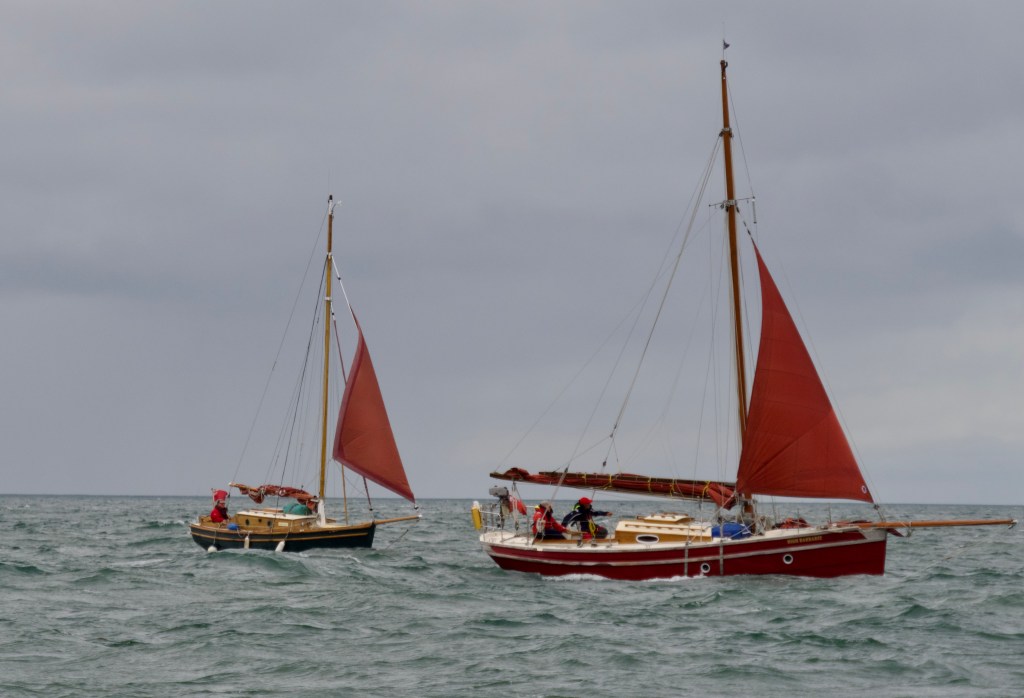
After a late arrival in Ramsgate (and a short but pleasant evening), we made an early departure the following morning for Eastbourne, again in company with Brian of Puffin Bach.

We had spring tides and wanted to use them to best effect, though the timing was not too convenient. The main tidal gate was Dungeness, but without a particularly early reveille we could not make that with a fair tide. Puffin and Molly managed to leave before 7am and carry the fair tide down the coast past Dover. I put the main sail up, but it was not doing much and we didn’t bother with a jib.

When I arrived at a point two miles from Dover harbour, I radioed VTS to ask for permission to cross, and was told to pass at least a mile outside the harbour. I could see at least five cross channel ferries visually and on the AIS. The latter was really useful for deciding whether I would cross their track safely (ie behind them) and I changed course to ensure this. Evidently my judgement was not accurate enough for VTS, as they called me up and warned me that I would not pass far enough away from harbour, so I duly diverted further around. I did notice a small motor boat pass across the harbour only a few hundred metres out without radio contact, causing VTS to warn every vessel passing in or out, which made me feel better about my misjudgement! My lesson learned was that there is no point in passing close to South Foreland, due to the offing needed for Dover.

Passing off Dover

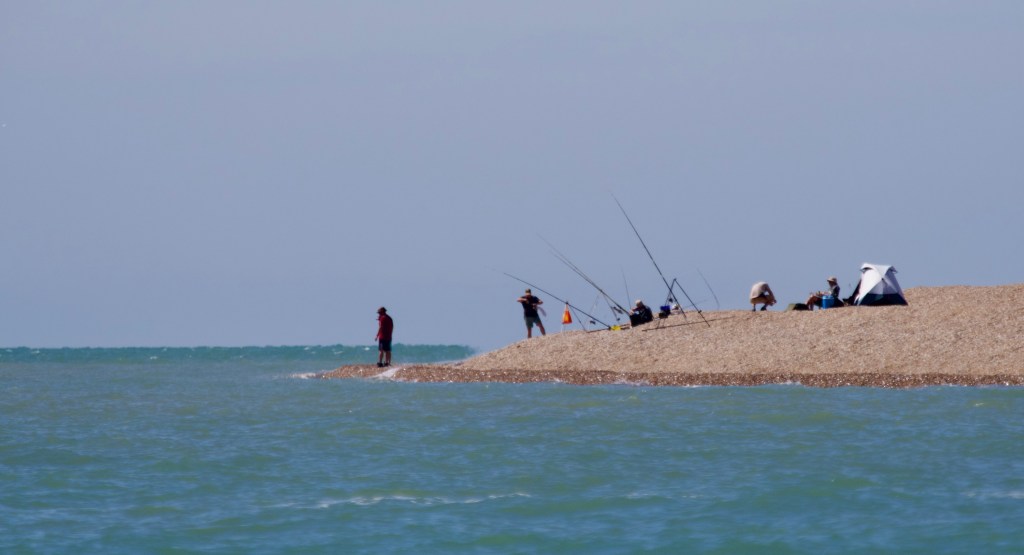
As we continued westward, the fair tide decreased and then turned against us. My plan was to pass close inshore after Folkestone, to minimise the foul tide, round Dungeness as close to the beach as possible and then continue in Rye bay out of the flood. It was a hot sunny day and the sea breeze began to fill in, giving us a reach and with the benefit of all sail as well as the iron topsail, we passed about 20m from the anglers on the shore and in nearly 20m of water. I hope we made an impressive sight!
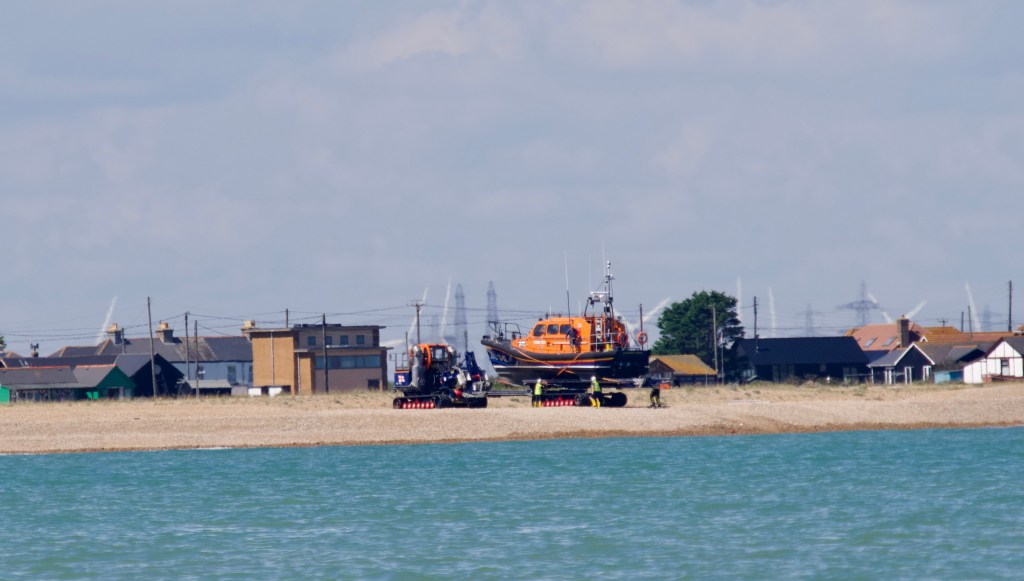
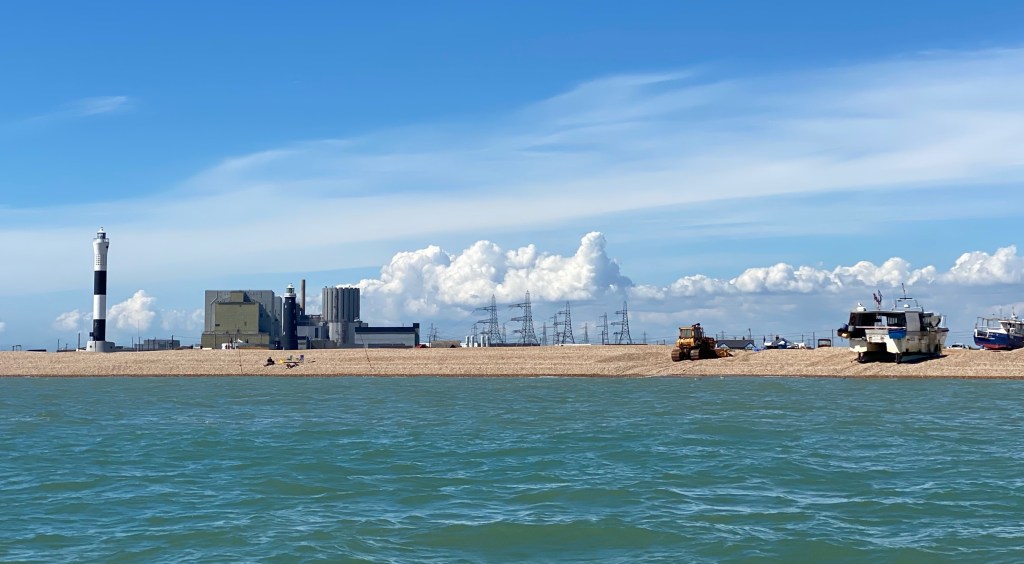
Beach launch for the Dungeness lifeboat
Dungeness beach

Traversing the low-lying shore off Pett Level, the sedimentary cliffs rose up, leading to Fairlight and then Hastings and Bexhill. My wish to view the sea fronts of those familiar places was fulfilled this time, having been thwarted by poor visibility and rain on the outbound journey.

Hastings old town
Hastings castle

We reached Eastbourne’s Sovereign harbour almost exactly 12 hours after our departure from Ramsgate, at low tide. The evening was almost completely windless, with three optimistic yachts drifting on the bay. Approaching from the East with the evening sun in our eyes, the safe water mark and isolated danger marks could easily be confused by the unwary. Fortunately, being able to see the boilers of the Barn Hill wreck breaking the surface, the hazard was clear.

After what felt like a very long lock cycle (perhaps a little over sensitive after our experience at Chatham), followed by a stop at the fuel berth, we were no sooner moored, than Brian turned up. Once he was safely tied up, we made straight for the eateries and enjoyed a very nice Thai meal together. This was to be the parting of the ways, as Brian was intending to have a late start, whereas I had opted for a very early start in order to reach Gosport and home the following day.
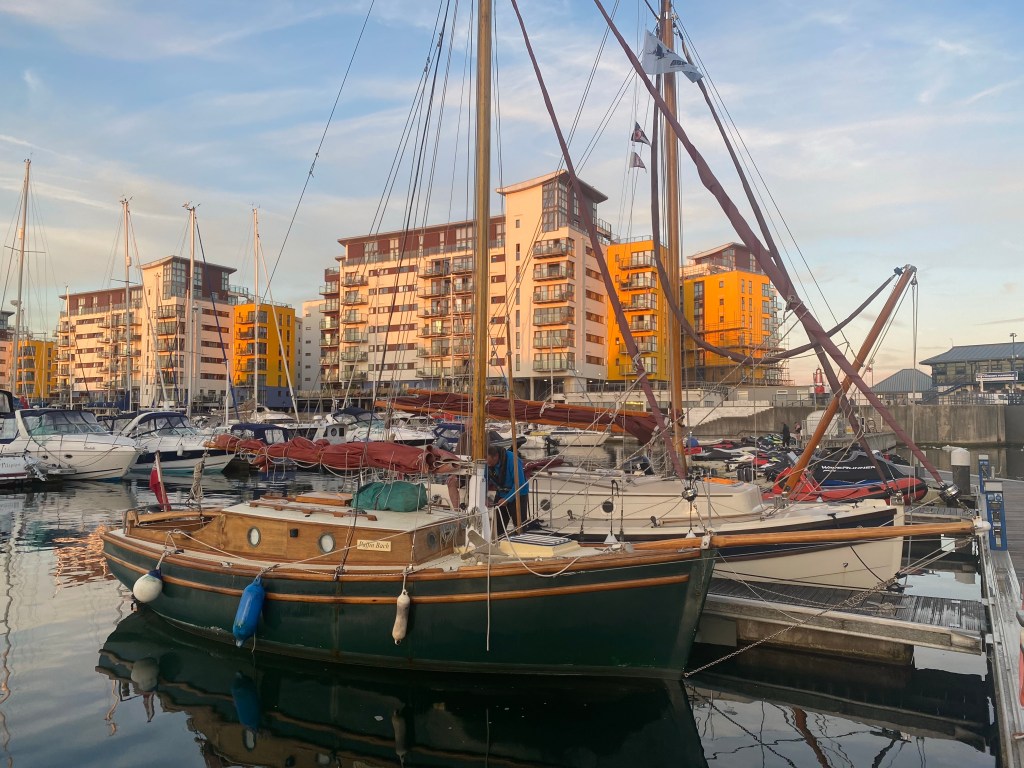
Puffin and Molly at Eastbourne

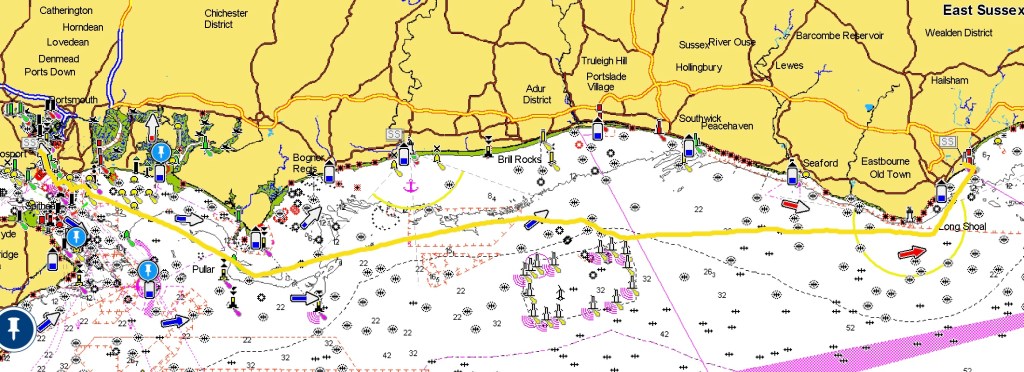
We took the 0500 lock out and found an easterly breeze already blowing. I had timed our departure to catch the last of the ebb past Beachy Head; we made excellent time round our penultimate headland and set a course to pass just inside the Rampion wind farm off Brighton, towards Selsey Bill. This track was very deep downwind and we were not able to fly the jib, especially with the roll of the gentle swell. Molly got most of the way across Rye bay under engine and main before the tide began to turn back in our favour, and we gave the motor a rest on our approach to our last headland of the journey, Selsey Bill.

Molly passed through the Looe channel under sail, with the wind behind her and the full ebb of a spring tide, at about 7kt and entered her home waters of the Solent again. Passing the familiar landmarks of Chichester and Langstone harbour entrances, I couldn’t resist bearing off and gybing the last few miles with full sail, after all that time dead downwind. Meanwhile, we heard that High Barbaree, after various travails, had left Brighton that afternoon and would arrive in Gosport not long after us.
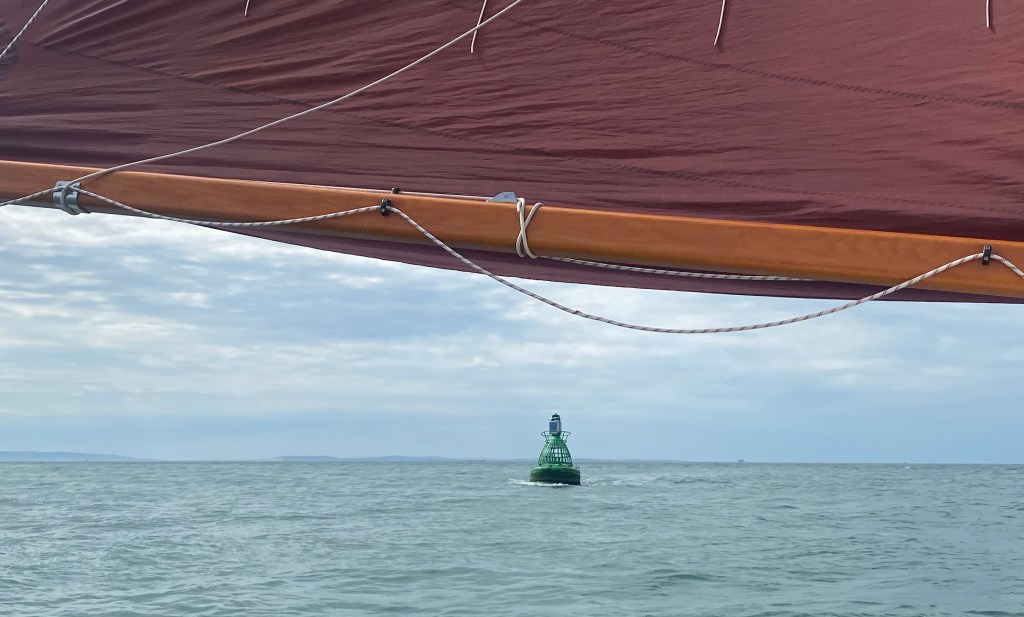
Boulder buoy leaning in the current

Molly arrived back on her home berth in the warm evening sun, after 65nm, a little over twelve hours after our departure from Eastbourne, 180 miles from the end of the rally in Chatham and almost 500 miles after last leaving Gosport. So it was John and I enjoyed a celebratory meal at the light ship in Gosport with Liz and Tim before putting Molly to bed for a rest, awaiting hopefully one or two more outings before winter ashore.
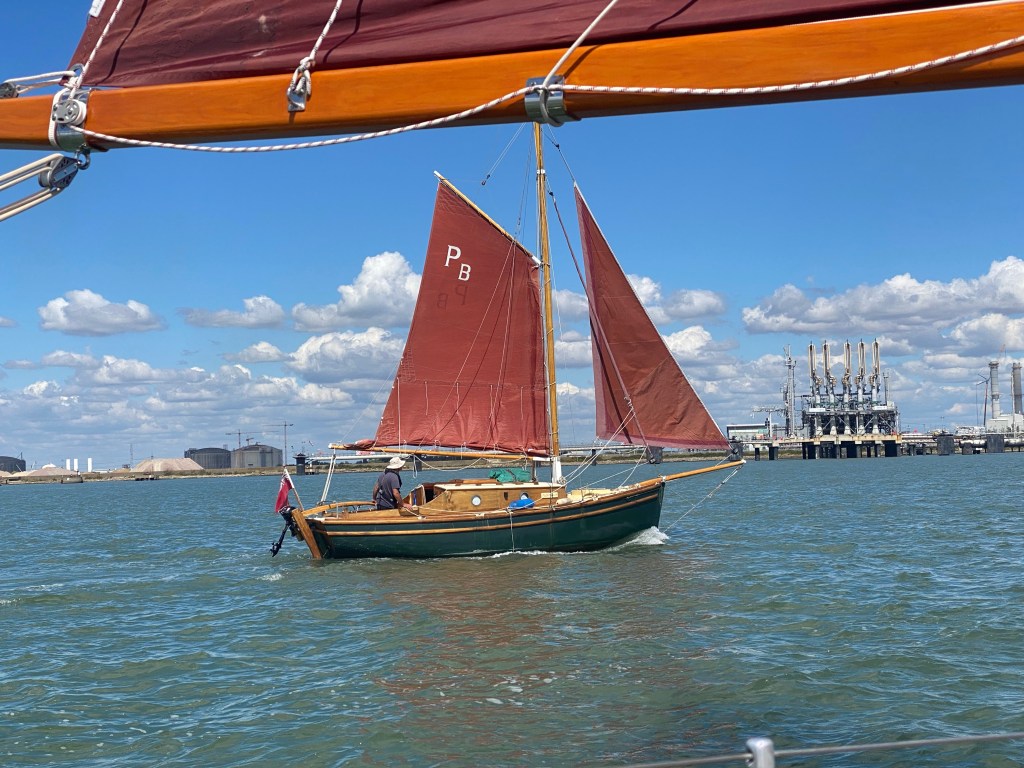
Westbound again

Following the OGA60 party and the East Coast cruise, Molly found herself in Chatham Martime Marina, on its heritage pontoon and with almost 200 miles to travel home. I had allowed 6 days for this passage, but circumstances intervened.

Puffin Bach passin back up the Medway

We had a sense that all was not well when we locked in to Chatham. We were given conflicting instructions by lock control, the lock was not operated efficiently (ie not full and boats waiting) and on one cycle, both sets of doors were opened at once, allowing a torrent to flow out of the lagoon.

The lock gates broke down on Friday, but we only learned of this when we tried to leave on Saturday. A sorry series of events ensued, during which the marina staff did not cover themselves in glory or demonstrate any particular urgency. We ended up contacting MDL’s head office, which seemed to stimulate events a little and, to cut a long story short, after four days trapped in Chatham marina, the lock gates were fixed and the fleet was able to escape on Tuesday. Suffice it to say that I will avoid MDL marinas in future.

The train of depressions, which the jet stream has been bowling us, had come to an end and we left the Medway with very welcome hot, sunny weather and light winds (ie finally, we started having August weather!). The forecast was for declining winds and I only had three days to compete Molly’s passage home to Gosport. I had been joined for this section by John Frampton, a fellow Cornish Crabber owner (Shrimper 21 to be precise).

John at the helm

Before we could travel West, we needed first to travel East. As we left the Medway, we were treated to flat seas and a steady southwesterly. John and I opted, rather than hugging the shore, to enjoy a good sail and visit some of the landmarks in the estuary.

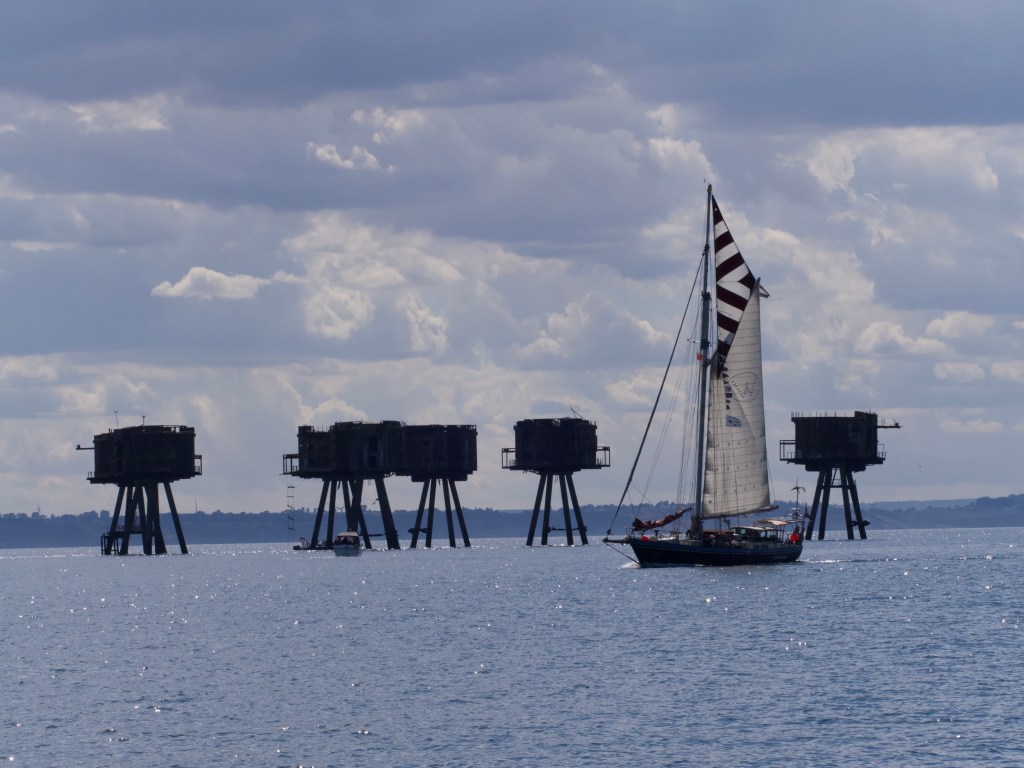
We had a fair tide to carry us East, so we made for the main Princes Channel, taking in our first point of interest, which was the Red Sand Forts. These are steel structures were observation posts on legs attached to sunken barges, dating from WWII. They are one of a number of “Maunsell forts” (after their designer) whose original purpose was to provide warning of incoming aircraft and deter mine laying in the important Thames estuary. They continued to operate post-war and since their decommissioning have been sometime pirate radio stations.

Windbreker at the Red Sand Forts

Nowadays they make a striking but rather eerie and forlorn sight and appear to be deteriorating rapidly. There are moves to preserve them and I hope it comes to pass, as they are a unusual historical feature. Evidently they are a tourist attraction, as we could see visiting motor boats (in addition to yachts sailing close by).

Shivering Sand forts

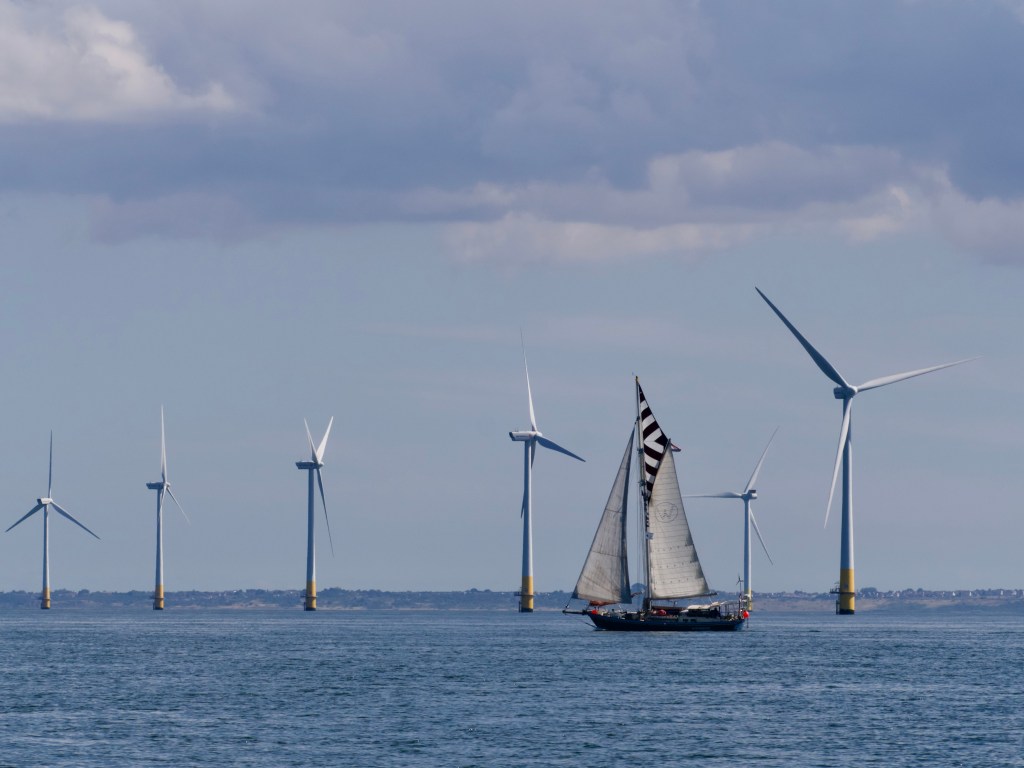
During our tacks down the Thames estuary, we saw another set of Maunsell forts on the intruigingly named Shivering Sands, as well as skimming the edge of yet another array of wind turbines at Kentish Flats.

Kentish Flats wind farm

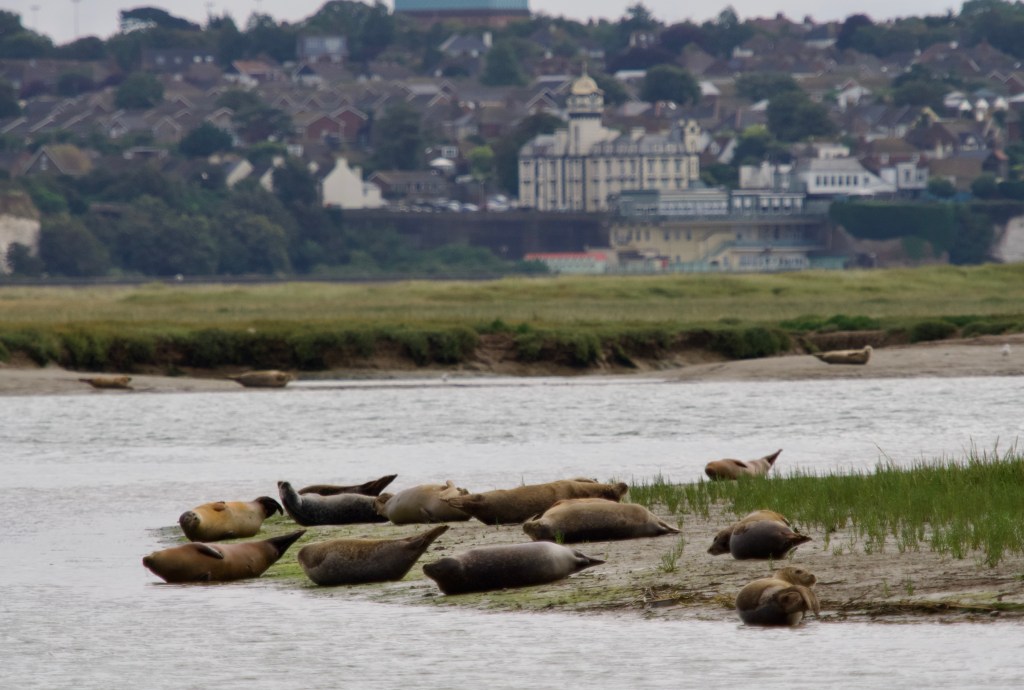
We passed along the outside of Margate sands at low tide, and could see groups of basking seals, though we dared not approach too closely in these very shallow waters.

Margate sands complete with seals

Nearing North Foreland, as we lost the shelter of the land, the wind strength increased and the sea grew more choppy. Having passed this iconic corner and we were westbound again and, as John pointed out, we had the whole sea area from North Foreland to Selsey Bill to cover.

The wind was right on the nose, so we motored on main only into Ramsgate. We were followed by Puffin Bach and all of us rapidly decamped into town for some lovely fresh fish and chips, followed by a pint in the very friendly bar of Royal Temple Yacht Club.

Puffin Bach entering Ramsgate
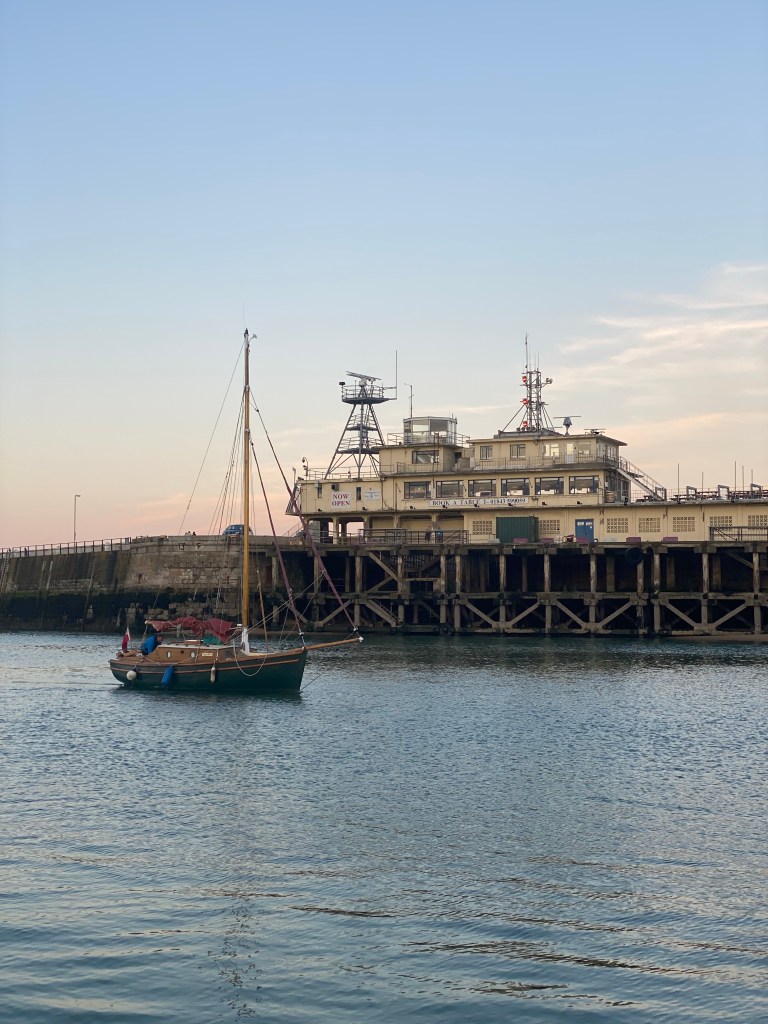
The arches on Ramsgate Harbour
Sailing to the East coast 3: Crossing the Thames estuary

Sailing to the East coast 3: Crossing the Thames estuary

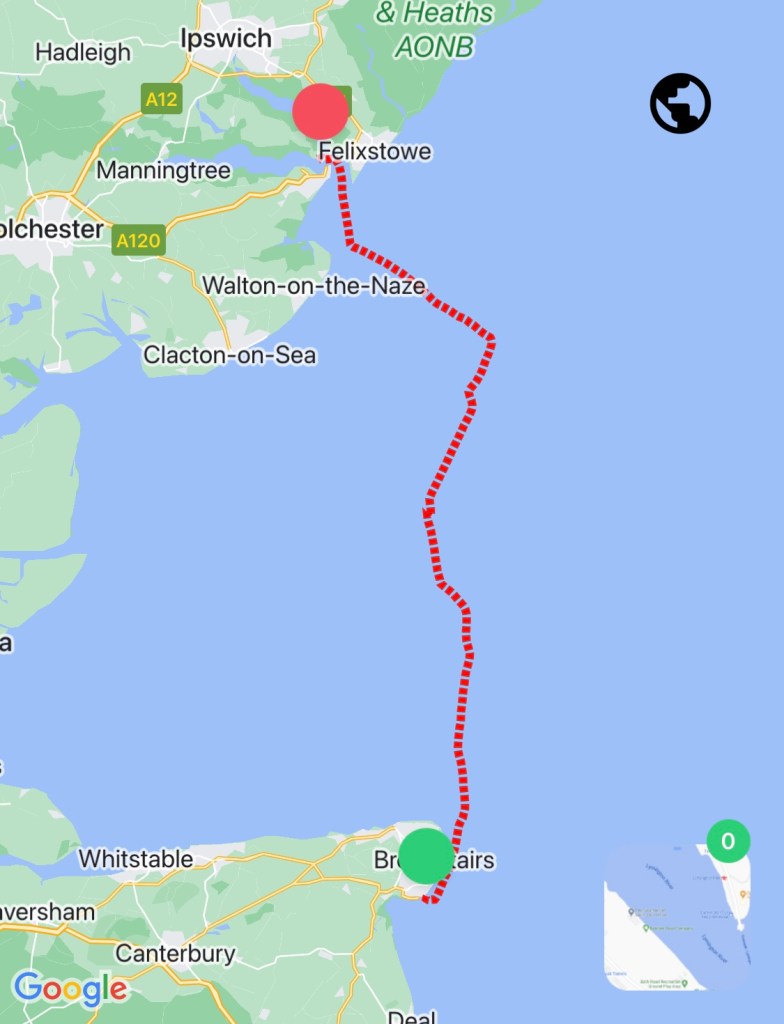
The wavy jet stream has been bowling low pressure systems at us one after another and we three boats from the Solent have been obsessively poring over weather forecasts, waiting for a gap to allow us to complete the final leg of our journey, from Ramsgate in Kent across the Thames estuary to Suffolk. My plan had been to spend some time on the Suffolk rivers, but these plans were now abandoned and I was just hoping for a suitable day to cross before our party in Ipswich.

The three boats in question were Huw and myself on Molly, Liz and Tim on High Barbaree (Cornish Crabbers Pilot Cutter 30) and Brian on Puffin Bach (Tamarisk 24). We decided our window had come after two very windy days in Ramsgate and set off determined to stay together in a gusty SW F5.

Passing Broadstairs
Puffin Bach and High Barbaree making for North Foreland under jib and engine

We initially had jib only with engine and ran north along the chalky coast past Broadstairs and the iconic North Foreland, into the wide mouth of the Thames. The main landmarks were the huge Thanet wind farm close by, with the London array visible in the distance. The latter was our target and pass through this grid of turbines to cross Foulgers Gat, a passage between one of many sand banks in the Thames estuary.

We had been promised a decreasing wind by the forecast, but that was not to be. Huw and I decided that raising the main would ease the uncomfortable motion of that confused water. What a difference it made! We cut much more easily through the chop between the turbines on double reefed main and jib. As we emerged into Black Deep, the main shipping channel, it was clear we were leaving behind Puffin Bach, sailed solo by Brian. On a broad reach at that point, we tacked back round to him then tacked once more onto to our original course.

Huw at the helm, as we sailed through London array wind farm

We switched from jib to staysail, in order to match pace with the smaller boat and continued north. However the gusty wind increased in strength and veered to NE, right on the nose. This forced us to drop our sails and motor right into it. Thus ensued a quite uncomfortable period with some very steep chop right on our beam.

High Barbaree and Puffin Bach

The first sign of the Suffolk shore was the distinctive silhouette of the cranes at Felixstowe, long before we could make out the actual land. At long last we closed with the shore, crossed the Medusa shallows and entered the mouth of the Orwell. Conditions were still pretty lively so Huw and I dropped our plans to anchor for the night and chose the shelter of Shotley marina.

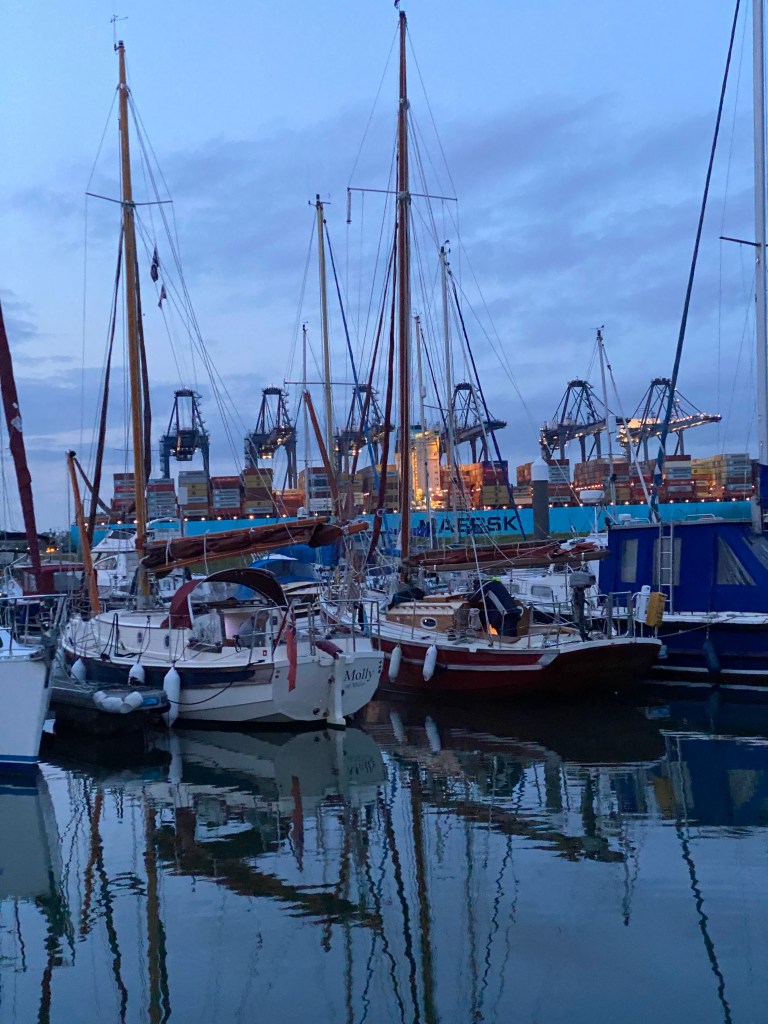
Locking in to the serenity of this harbour in the shadow of great container ships in Felixstowe, we enjoyed corned beef hash aboard High Barbaree for dinner, after which we returned aboard Molly and our heads barely touched the pillows before our eyes closed.

Molly and High Barbaree in Shotley

Sailing to the East Coast 2: Dover, Sandwich and Ramsgate

Having reached Dover, and with a couple of days of bad weather approaching, I made for Sandwich. When I was planning this trip, I particularly wanted to visit because of the cruise up the creek. This particular river, the Stour, shares its name with my home town, Stourbridge, as well as a counterpart in Suffolk we were on our way to visit.

Molly and Delphyn, a Contessa leaving Dover

I left Dover with a Dutch Contessa yacht that I would meet again further down the line. We both followed port control instructions to leave via the busy eastern entrance to the harbour. With strong winds and a foul tide, I used engine and staysail to pass the famous white cliffs and along the shore of the low-lying land north of Deal.

The entrance to the river Stour was easy enough to find and the channel well buoyed. I had timed my arrival for an hour before high tide and this gave me plenty of time and depth to get into the river proper. The least depth I saw in the entrance was around 3m, though the main channel in the river was at least 4m.

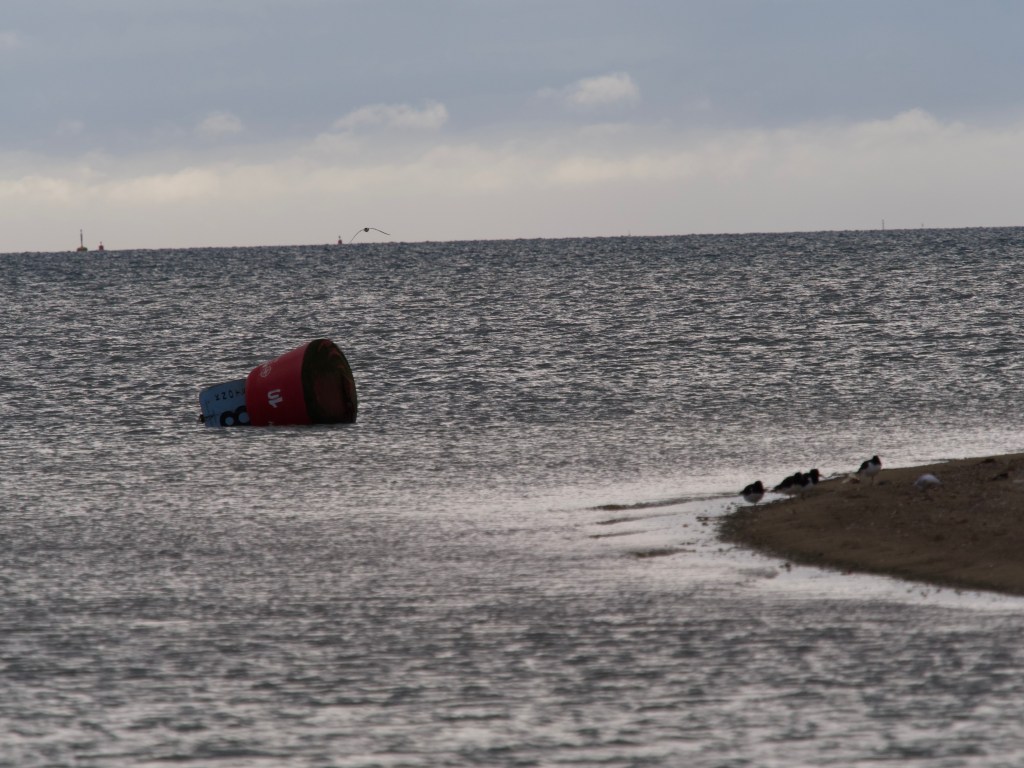
I’m sure the channel buoy shouldn’t be like that!

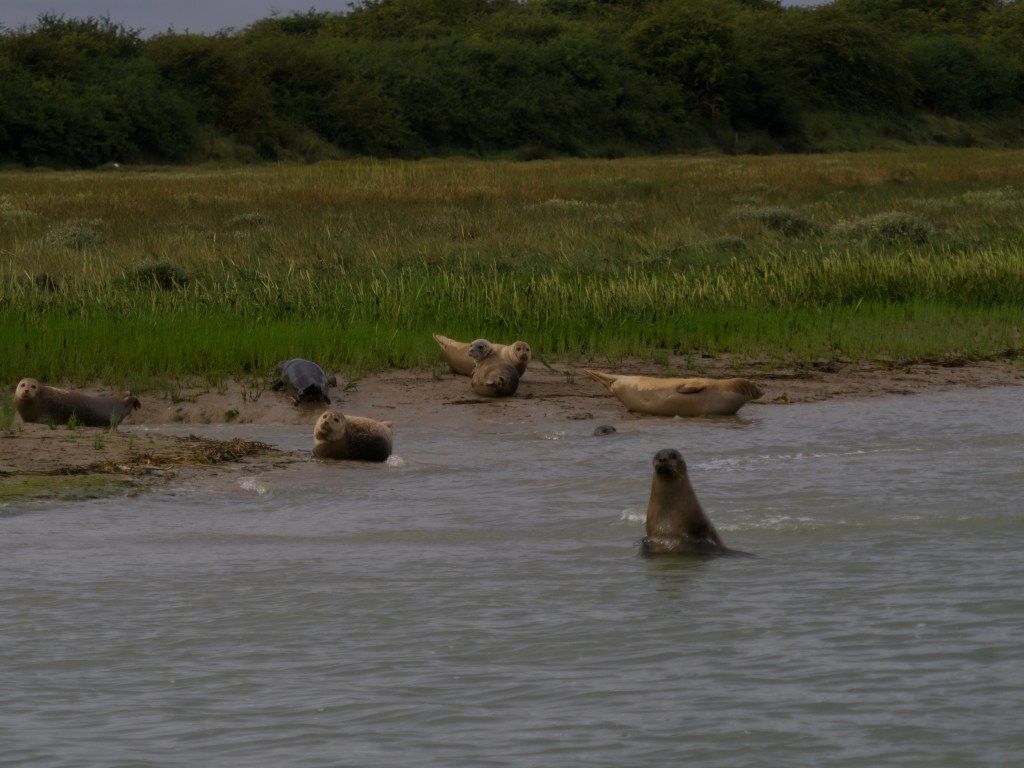
I motored past argumentative terns with young, several large groups of seals and many species of wetland birds. The town of sandwich is about 2 miles inland, reached by nearly 5 miles of winding river. I passed two large boat yards and the huge Pfizer pharmaceutical complex, eventually arriving at the lovely town of Sandwich.

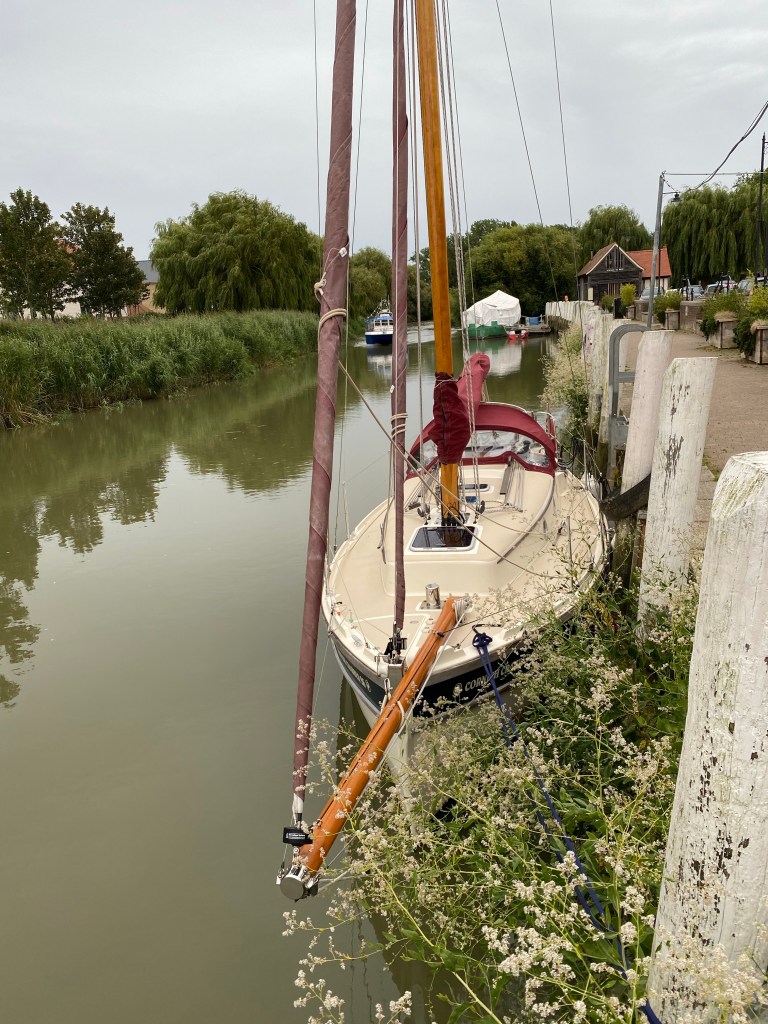
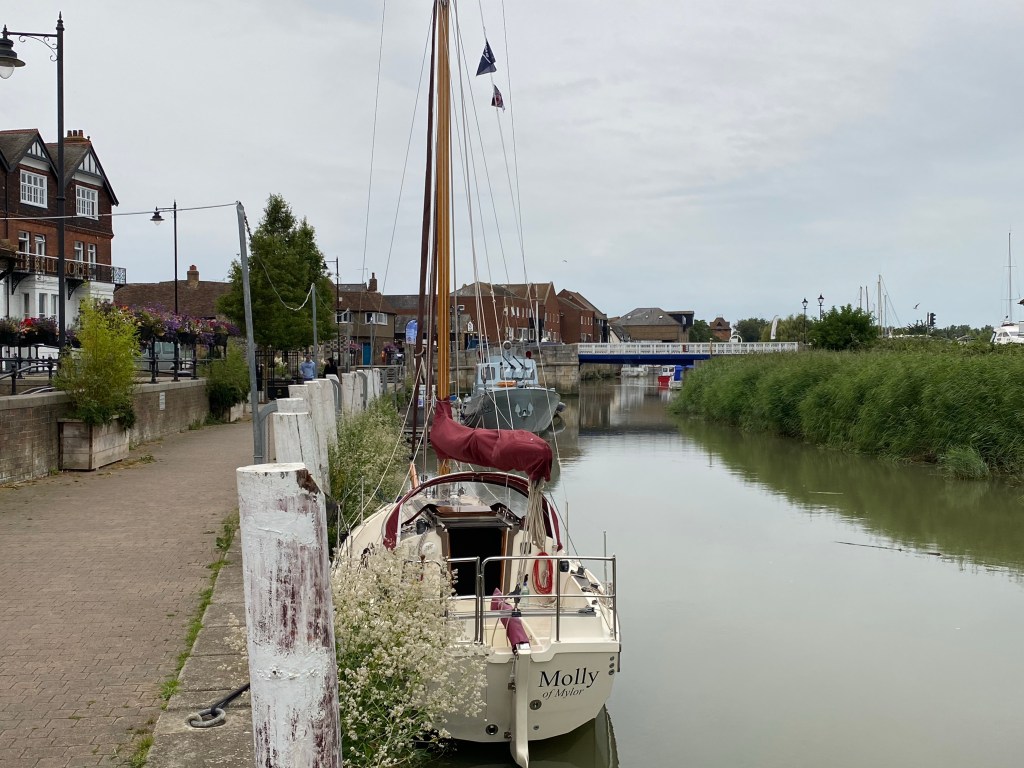
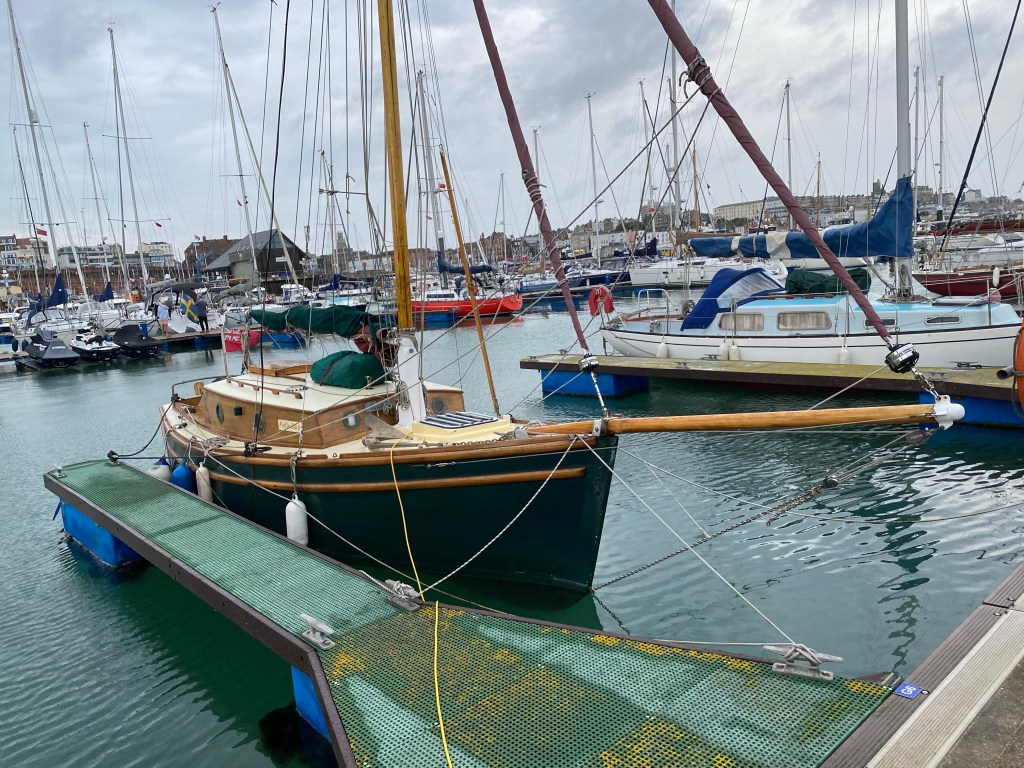
Molly moored in Sandwich town quay

The town quay is lined with wooden posts, against which visitors lie, and gives easy access to the town. Sandwich is a very historic place with many buildings dating back to medieval, Norman or Saxon times. I enjoyed a lazy couple of wet and windy days here, exploring the narrow streets. I particularly enjoyed a visit the the small independent cinema, a family run enterprise.

Aptly named street name, given the weather!
The Empire cinema, Sandwich

The tides are odd here, with the water continuing to flow in for some time after high water, indicating Thanet is still an island, even though the river is much silted up. The friendly harbour master recommended leaving “when you can see the water has just stopped ebbing”. That’s only two and a half hours before high water. In the event, when I left, the water had started to flow in and to turn Molly around, I gently motored her bow into the reeds on the opposite bank and let the flow turn her. I was then able to motor away.

What sort of terns are these? Sandwich terns!
Oi! Who’re you looking at?

My next leg was a short hop down to Ramsgate to meet two other gaffers heading East from the Solent for the OGA party in Ipswich. The forecast was not looking good and we were waiting for a gap in the weather to make a break across the Thames estuary.

One of the boats, High Barbaree, I’d sailed aboard previously. She’s a Cornish Crabber Pilot Cutter 30, owned by Tim and Liz. The other was unfamiliar to me – a Tamarisk 24 called Puffin Bach. Skipper Brian appeared just at the right time as I entered harbour and took a line for me; I was also cordially greeted by Barbara from Delphyn, the Dutch Contessa that had left Dover at the same time as Molly and who were also waiting for a gap in the weather.

Meanwhile Huw arrived; he had come to sail the next leg with me,. The Solent Crew had a pleasant lunch aboard High Barbaree, during which I invited invited everyone for dinner aboard Molly.

Dinner (well, dessert at that stage) aboard Molly

A second very windy day was passed, followed by a very entertaining evening aboard Puffin Bach, with Brian at the Primus stove.

Puffin Bach