The 2025 AGM for the gaffers’ association was held in historic Gloucester, at the confluence of the mighty Severn river and the Sharpness canal. National AGM’s don’t have an inspiring reputation, but the weekend was a great opportunity to catch up with boaters from all over the country.
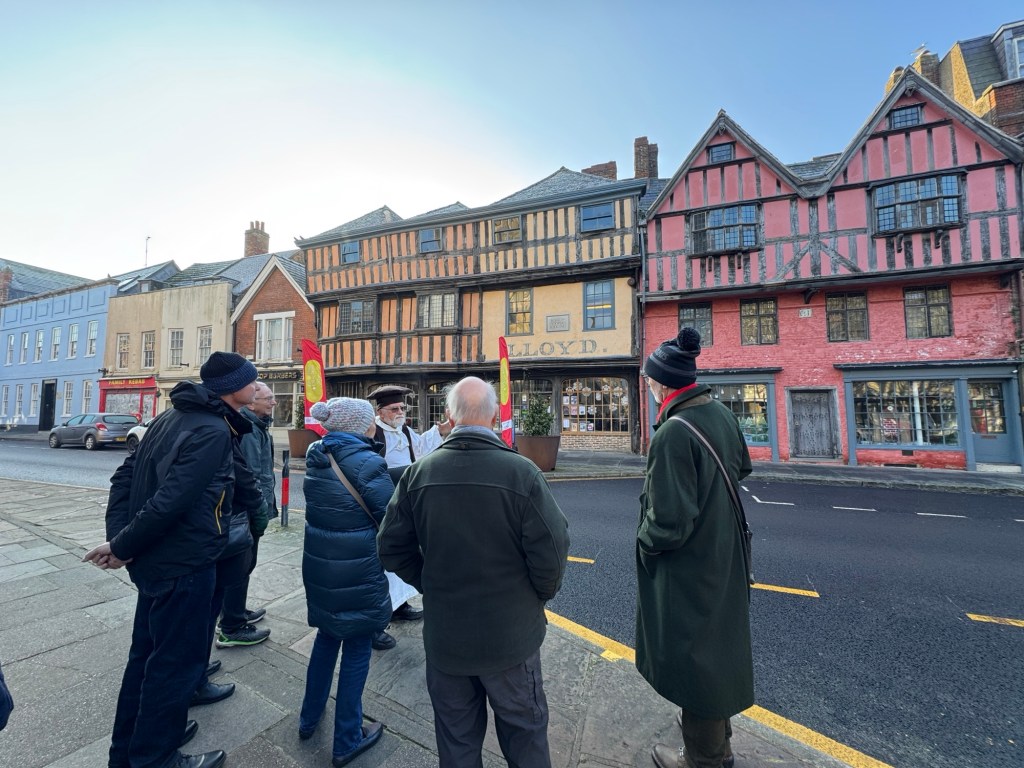
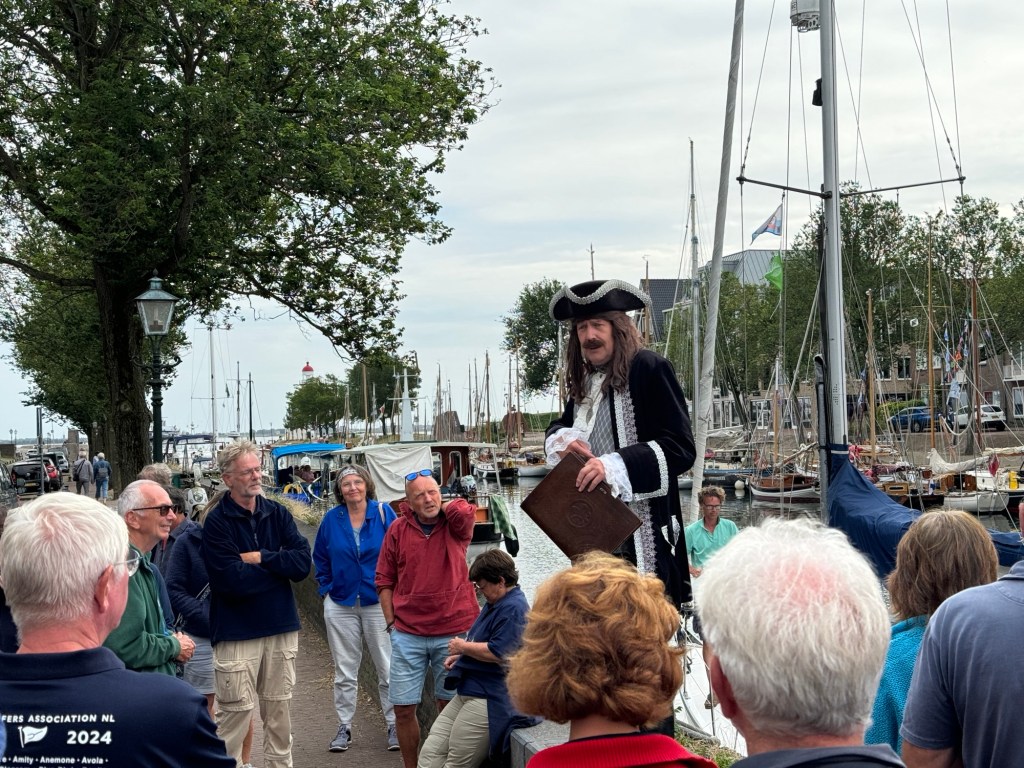
Costumed guide to historic Gloucester
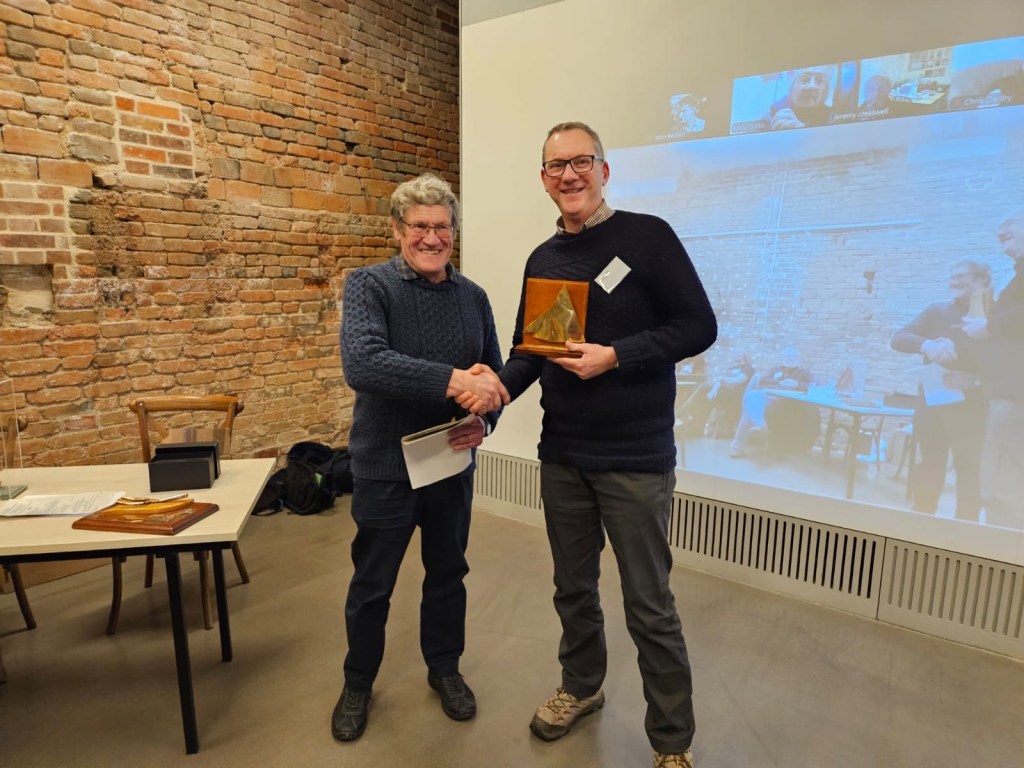
I was very chuffed to not only win the “sailing gaffers” category of the photo competition, but this blog (and the YouTube channel: https://youtube.com/@erbster200?si=9rEUk5N9owhUyVz7) was also recognised with an award. The meeting, in medieval Llanthony Secunda priory, was rounded off with a meal and some music.
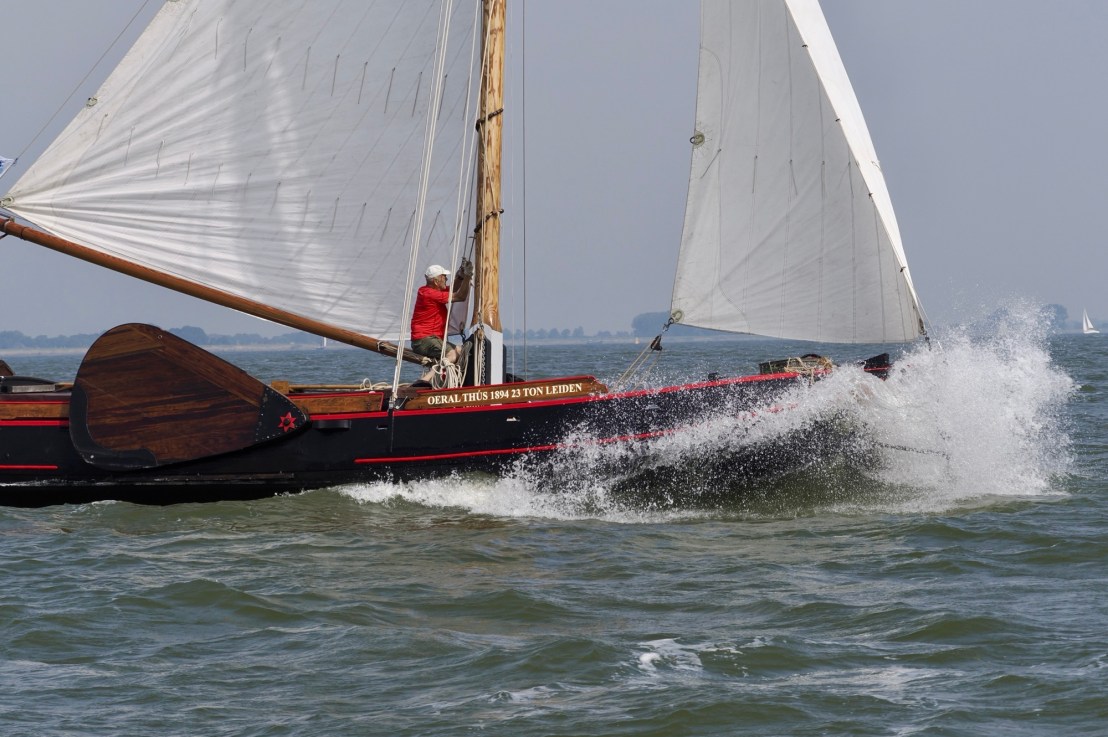
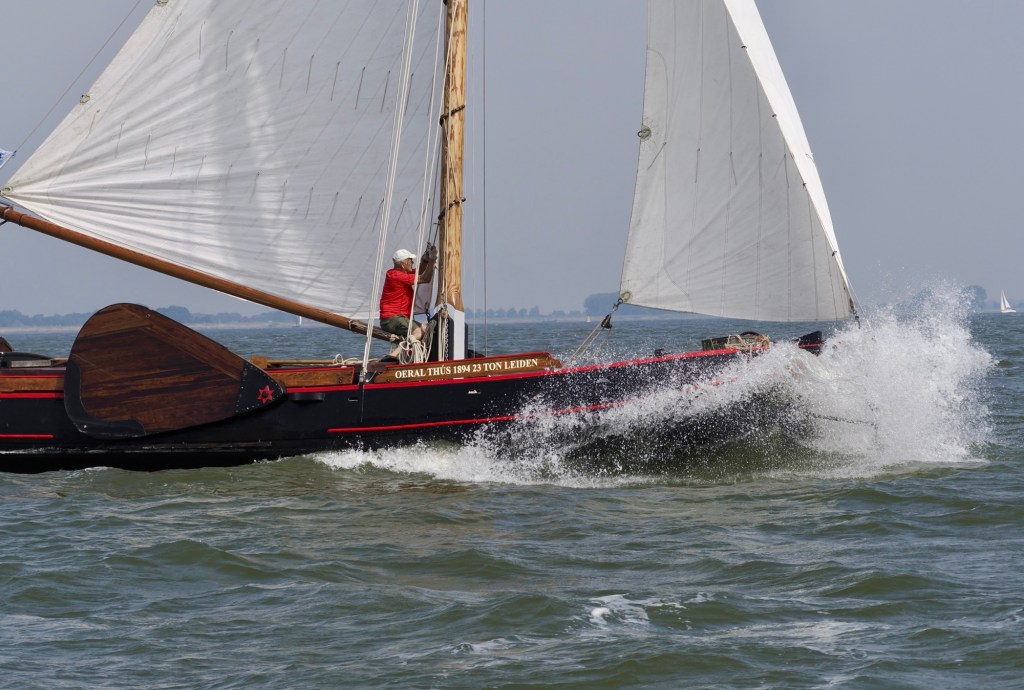
Winner of photo competition!My winning image of skipper Frits sweating the halyards of historic Dutch barge Oeral ThusOGA “Tales of Sail” trophy for this blog
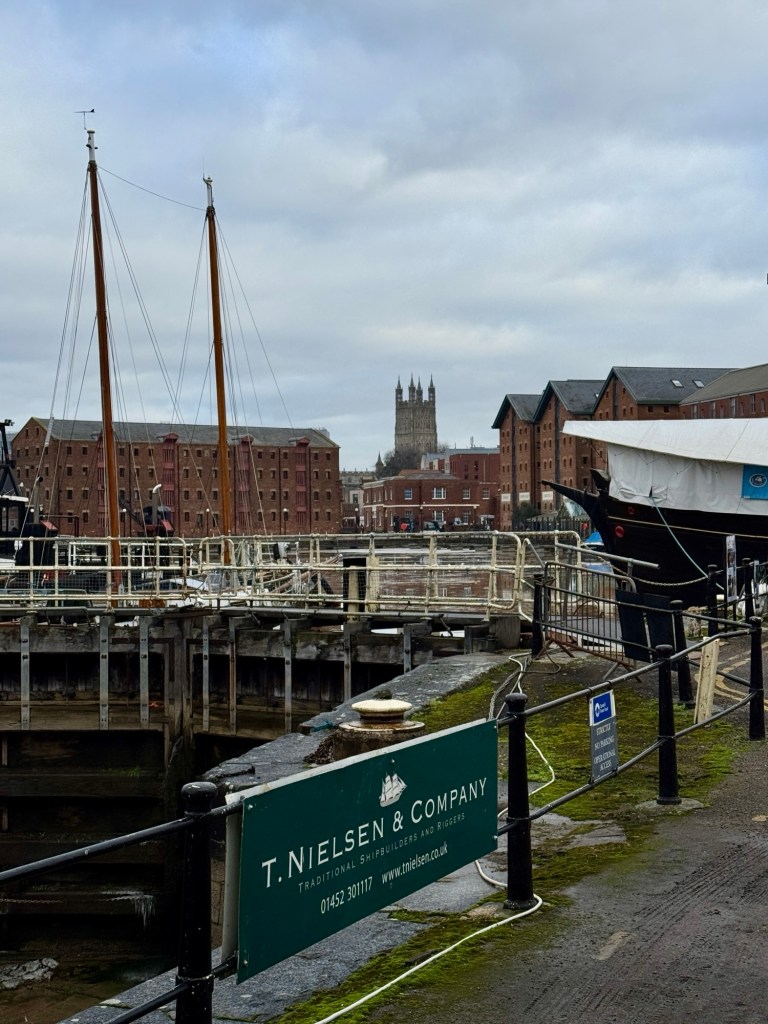
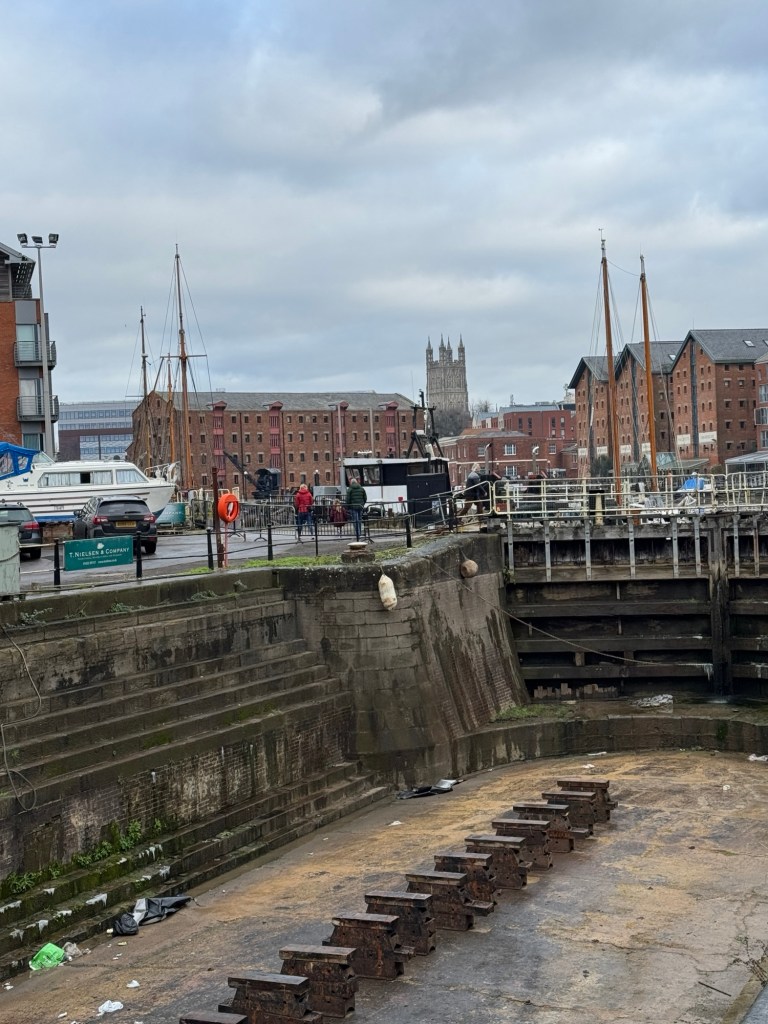
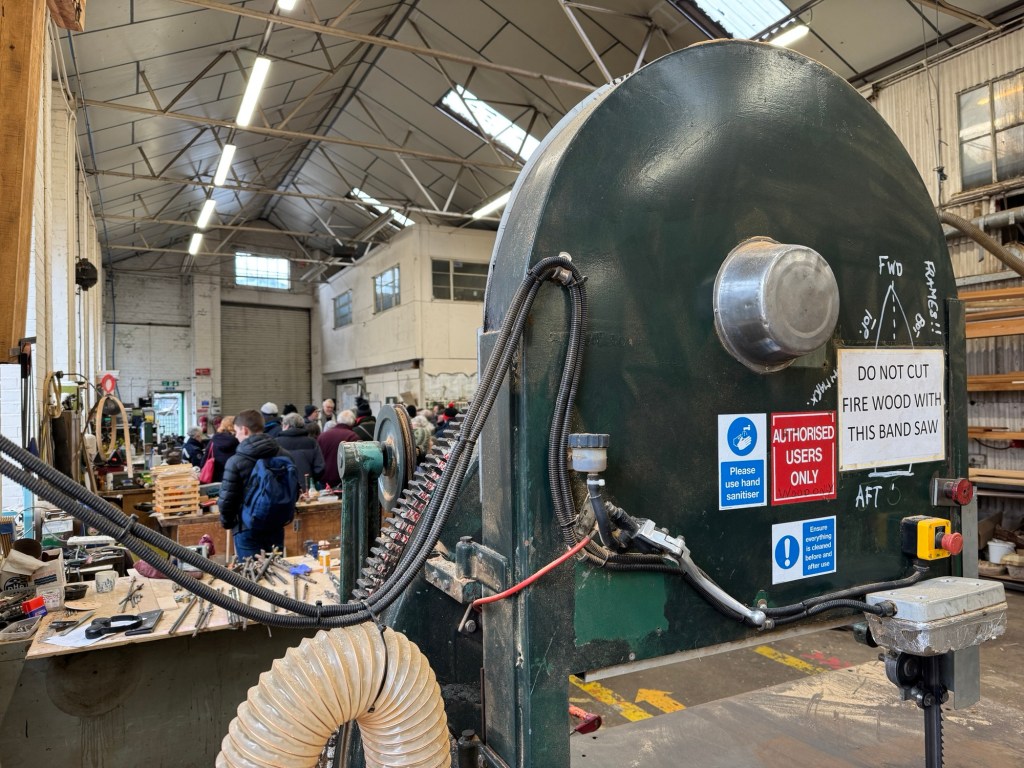
On the following morning we were treated to a guided tour of the Nielsen boatyard, given by the owner himself. The yard is almost unique in having dry docks and facilities to work on classic boats of any size, from timber planks and frames, to rigging and even foundry facilities. It’s great to see traditional skills being kept alive and work carried out on classic boats.
I left Nieuwpoort before light and experienced that sailor’s privilege, to see the sun rise out of the sea. I made my way close inshore against the last of the eastgoing tide. There was no wind and I abandoned attempts to sail.
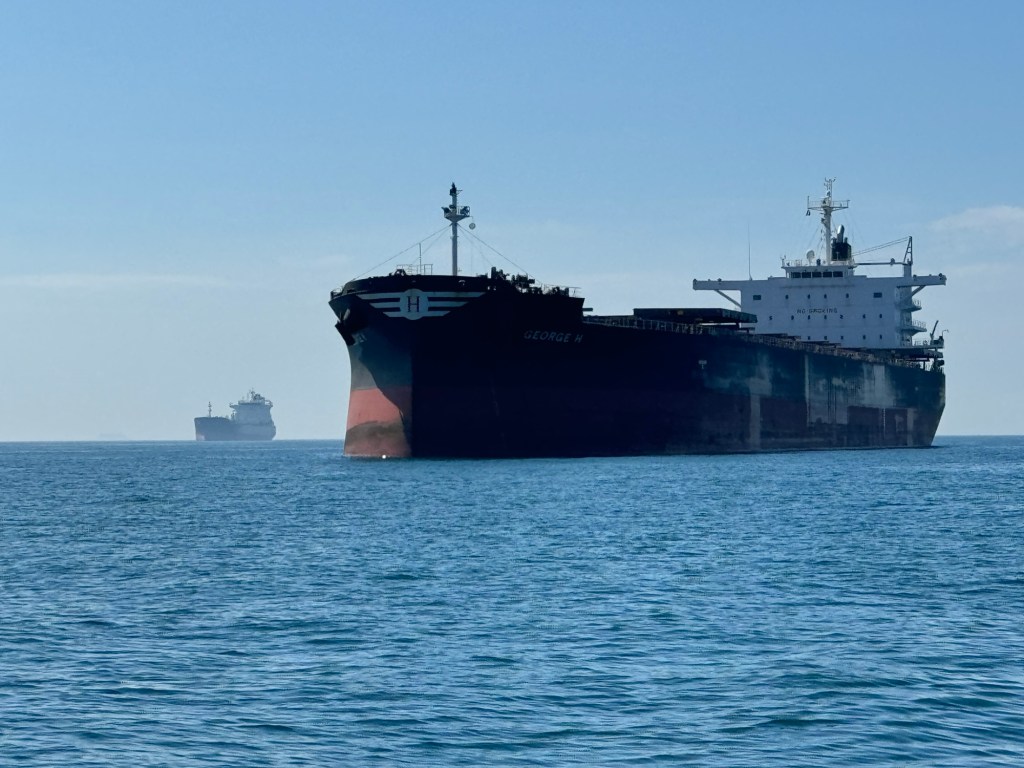
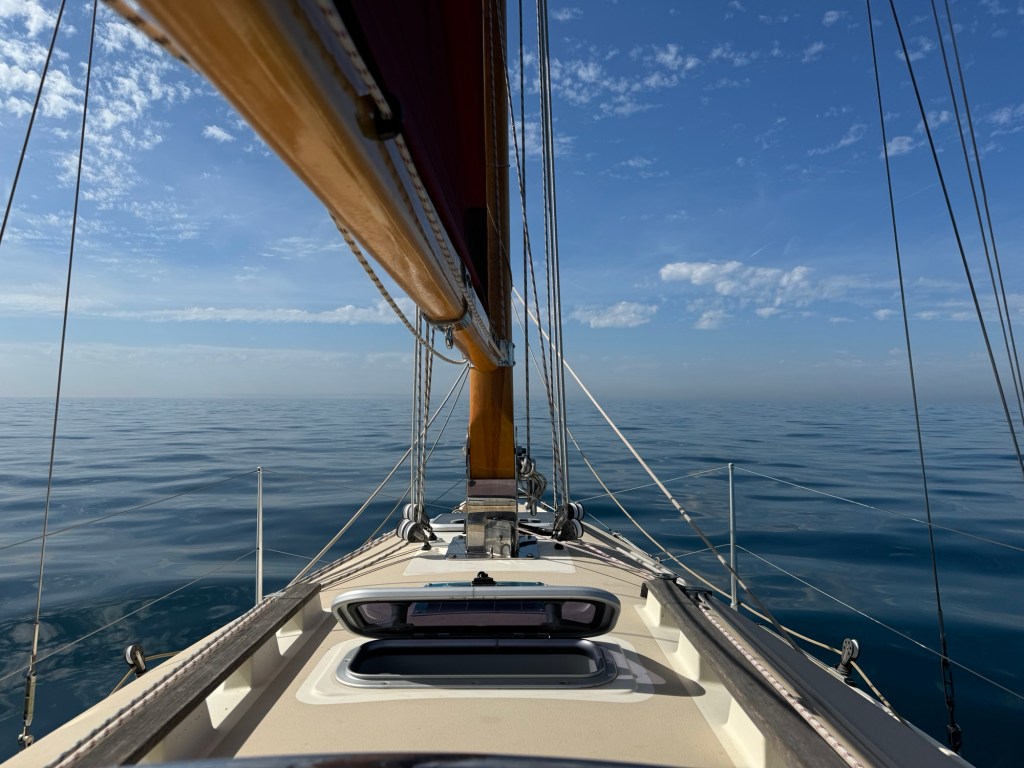
Anchored ships near the shipping lanes. From a distance, hard to discriminate from the fast moving ships in the separation zoneBin bags – a glassy sea
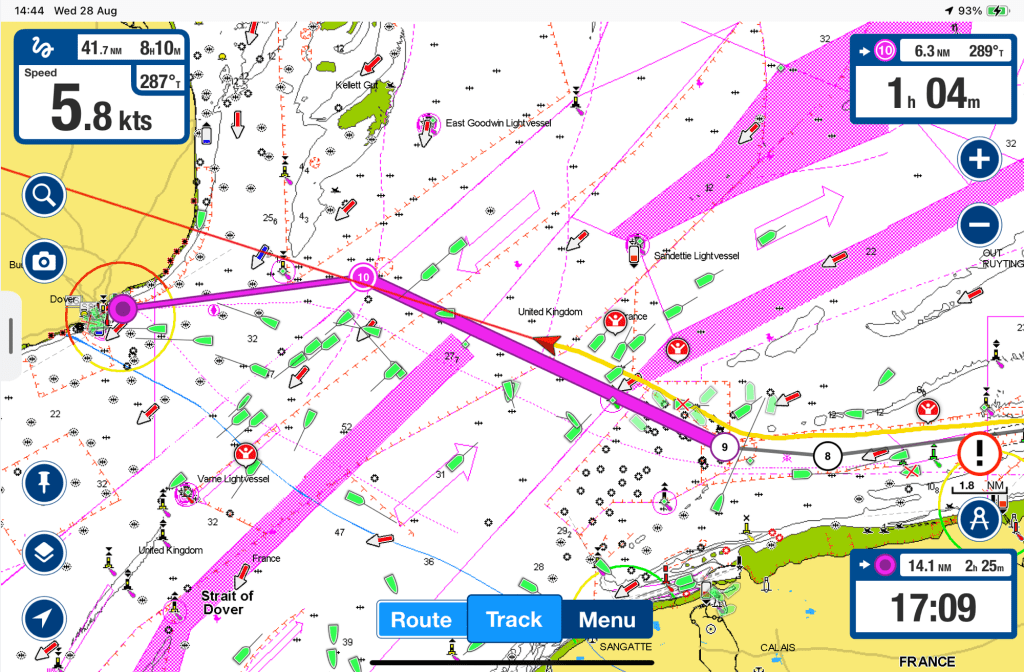
The sea was glassy smooth and the day grew very hot. Visibility was not good and a haze hung across the horizon, making it difficult to judge distance. I was monitoring VHF channels 16 and 74 (channel VTS) and heard no less than three reports of large inflatable boats carrying migrants. This was the first day of calm weather after a period of strong winds, and evidently boats were setting out uptide on the French coast. A French navy vessel was patrolling and deployed its two fast RIBs to track the migrants along the edge of French waters. From the VHF traffic, it seemed that the migrants were picked up by a lifeboat and taken to Dover.
The MOB markers on the east of the chart were the reported locations of inflatables trying to cross the channel. The MOB marker to the west was a group of channel swimmers!
Approaching Dover harbour I was welcomed by a porpoise gliding past, as well as a seal inside the harbour. I paused to refuel before taking my berth, and this took some time. Although the fuel pumps had the mechanism for self service, a rather uncertain looking man leaned over the high quay and said that self service was not working. Only one pump was working, so I had a wait and once I had filled my tank, I had to visit the man in his shed. He was in charge of a most Byzantine computer system and after a few minutes of “hunt and peck”, suggested I might type it faster. All of this contrived to occupy an hour from entering the marina to tying up. Fortunately, I was not in a hurry.
The EU administration of border control had been accomplished by visiting the cheerful border policeman in his office the previous evening. The UK side of things was achieved via an efficient looking web site. However, the information was far from clear. “We have sent you an email”. No, you didn’t. “You must ring yacht line as soon as you enter UK waters”. When I rang, the automated message told me no call was needed. “You must fly a Q flag until contacted by border control”. I’d be flying that still, if I’d followed that instruction!
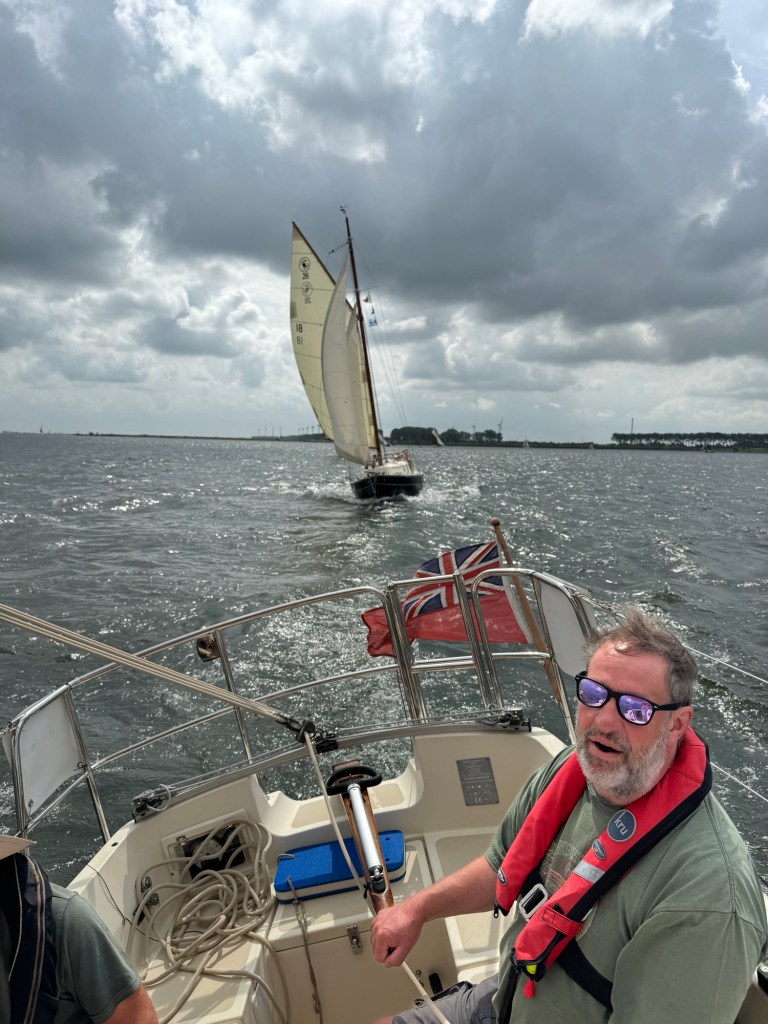
The next morning was forecast for northeasterlies, increasing in strength and swinging to SW. I left early, but not early enough. The promised SE wind was light and variable and not long before Dungeness head, I noticed a yacht ahead of me on a parallel course bear away to the south, close hauled. Sure enough, a few minutes later, I experienced the same 90-degree wind shift. I decided to drop sails and motor into the wind, the other boat beat on. I took an offshore route past Dungeness, to maximise the tidal lift but progress gradually slowed across Rye bay. The wind increased to about F6 and though Molly bravely plugged into the short steep seas this created, her speed was rather curtailed. I watched as the boat I had seen earlier crossed and recrossed my path, evidently with much better boat speed than me.
The day started well enough – a three sail reach (I had second reef in anticipation of the forecasted winds)Later, boat or submarine?The new Royal Sovereign light under construction (the stump of it to the right)
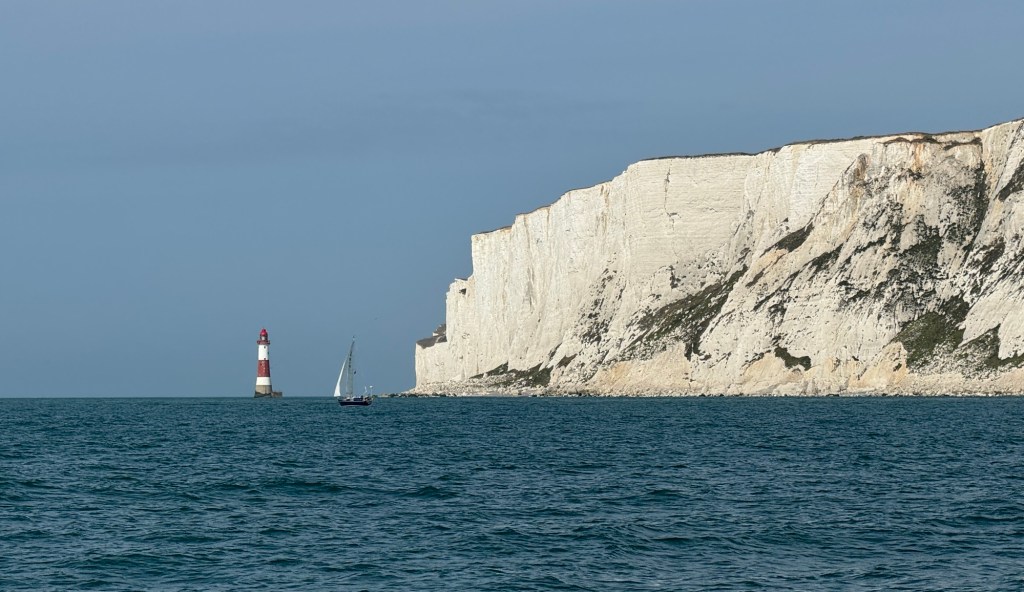
Late, I crept up to Beachy Head on a foul tide, slower and slower until the speed over the ground was less than two knots. He who fights and runs away lives to fight another day, so I reluctantly turned tail and sped downwind into Eastbourne at seven knots!
Beachy Head in more benign conditions the next dayThe “Seven Sisters”, west of Beachy Head. There always seems to me to be eight, but it depends on how you count them. These are often shown when a stock shot of “the white cliffs of Dover” is needed for a film or TV programme. They’re white and cliffs, it not Dover!
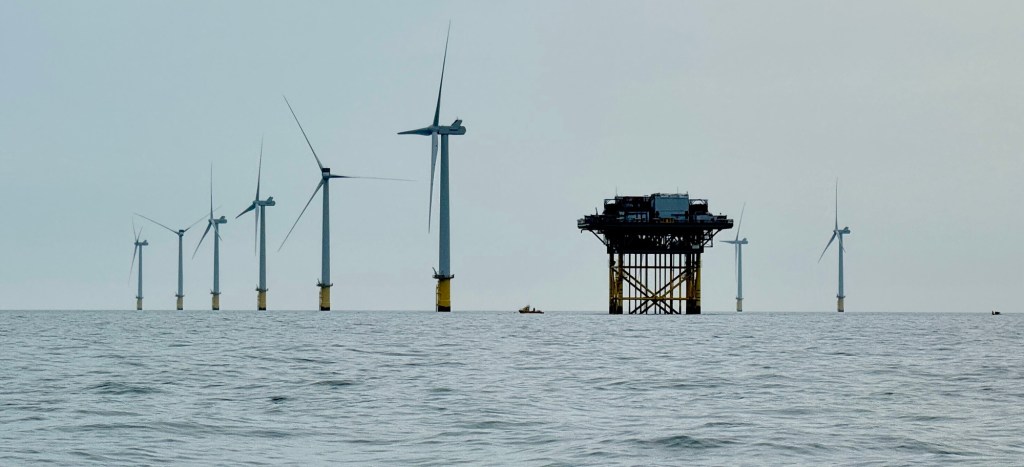
The next day was much calmer, with wind in the north. However it was too light to be useful, so I motored across Sussex Bay past the Rampion wind farm.
Rampion wind farm off Brighton
I was earlier than planned at Selsey and the current was still foul. However, it was neap tides and the sea was very flat. I therefore decided to avoid as much of the tide as possible by approaching from somewhat south of the Looe Channel and then motoring over the Outer Owers.
This is an outlying reef usually carefully avoided, but this very shallow water (4-12m observed) carried perceptibly less current. The breeze woke up at that point too, so I got a little help from the sails just when it was most helpful!
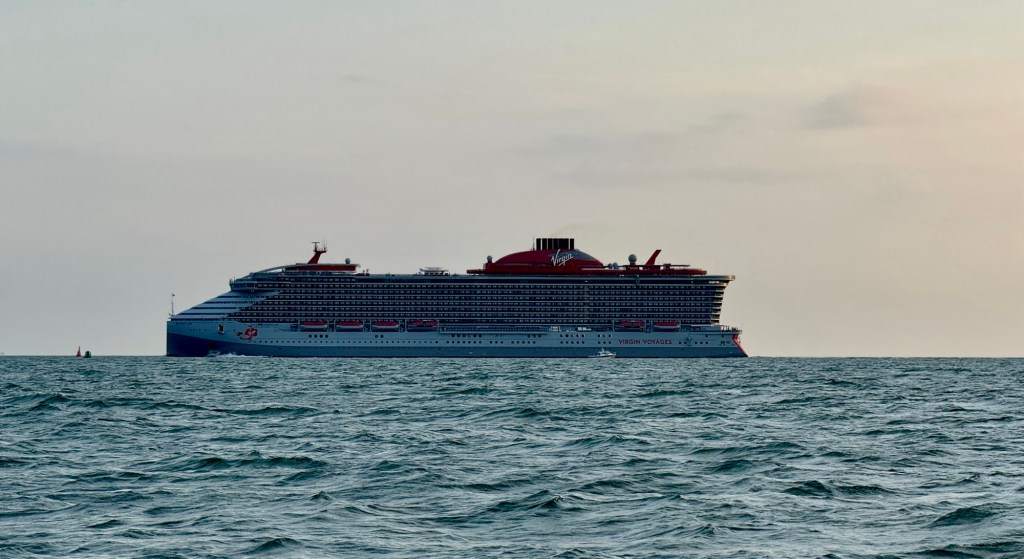
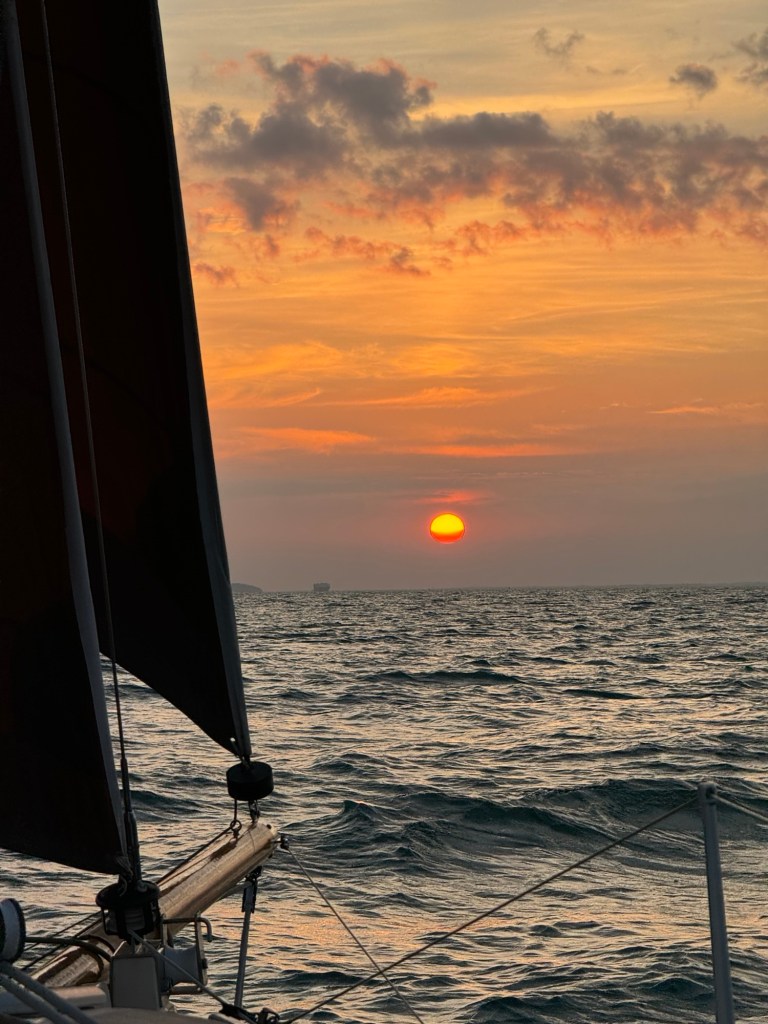
The Looe channel. For me this is the boundary of the Solent, so I was back in home watersThe beautiful Queen Mary 2 departing the Solent.This cruise ship (My Resilient Lady) has a much higher capacity but is not exactly pleasing to the eye!Sunset behind No Man’s Land fort, with spinnaker tower standing over Portsmouth harbour entrance
A great breeze from the north east filled in and gave me a lovely sail across the eastern Solent – what a fabulous way to end this wonderful adventure. I was enjoying the sail so much that I sailed right into the harbour, dropping the main right opposite HMS Queen Elizabeth. The police boat mooched over to give me marks out of ten, though I’m glad it was dark, because it was not a tidy fuel! I had breeze and tide pushing me into my berth, as well as being full dark by that time. I was pleased I managed that nicely but was pleased someone came by to help had I needed it.
So that’s the end of Molly’s Netherlands meander, and what a wonderful adventure it’s been. I’d like to publicly thank the wonderful Dutch organising team, Dirk and Linda Peeters for their guidance during the return leg and to my fellow UK OGA members who were such great company.
The season is mostly over, but Molly will stay in the water this winter because I hope to make a few local trips in the coming months.
The weather was still pretty boisterous and also straight out of the SW, so we had a day of motoring into the wind from Oude Tonge, through the Krammer sluis and along the Oosterschelde. This was surprisingly rough water and we were stemming a tide too. The wind was too strong to sail, as well as being on the nose, so we motored towards Roompot, until we could turn away towards the Zandkreeksluis. Anemone and East Breeze took an alternative route around an island to Plum and Molly, but it made little difference to our arrival time. Having passed through that lock, it was time to finally bid farewell to Dirk and Linda on Anemone, who had sailed with us ever since the pre-rally rally from Wemeldinge. Good friendships made, I am sure they will be renewed at some point in the future.
Anemone making an impressive bow wave on the Oosterschelde swellPlum lifting her bowsPlum, Anemone and East BreezePlum against the impressive bridge across the OosterscheldeHidden shallows – skirting the withies
Our destination was Veere, at the far end of the Veerse meer. This very pretty town had just enough space to accommodate our fleet of three against the pontoon. Another sailing club with excellent facilities and another companionable meal aboard Molly, prepared by Marion of East Breeze.
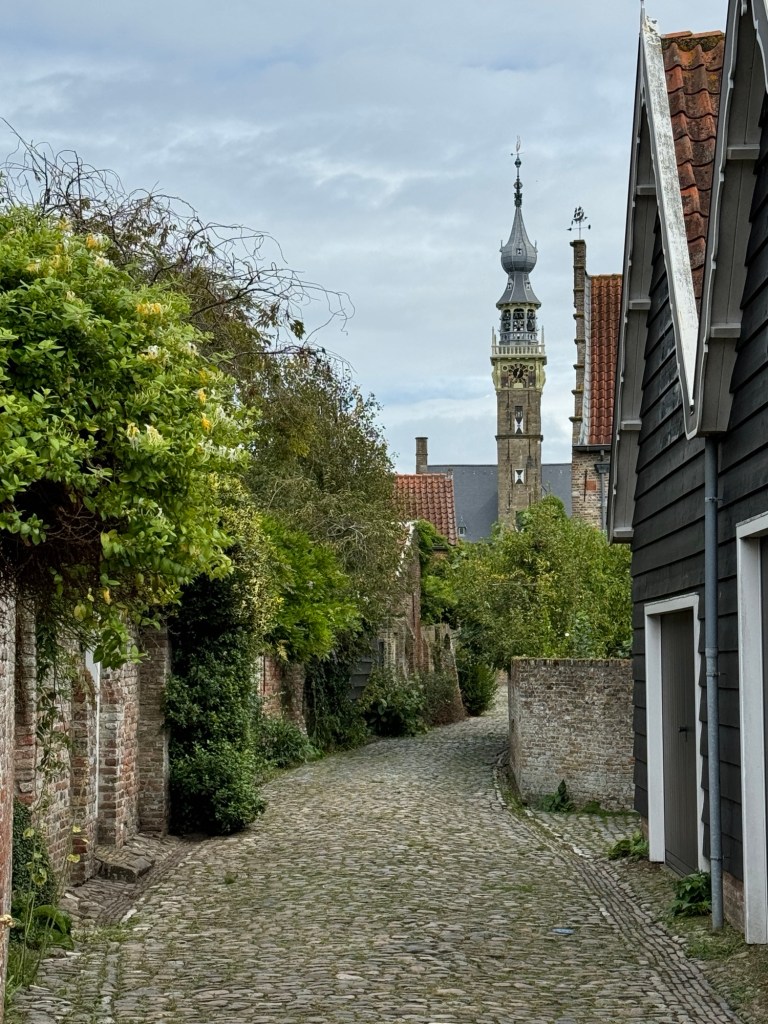
Moored in VeereVeere’s ornate town hall viewed from the immaculate old streetsGrote Kirk. The angular structure at the top is the observatory. The beautiful golden galleon at the top is always sailing downwind!
In the morning, there was time to walk around the old town and enjoy an excellent slice of Apple Cake. Colin and I visited the Grote Kirk. This place was less a place of worship and more of an art and history museum. The city of Veere was historically significant in earlier centuries and the church had also suffered both heavy damage and re-purposing in the nineteenth and twentieth centuries. The impressive 50m tall sixteenth century tower survives and we climbed the 240-odd steps to its onion shaped wooden observatory, which offered superb views away north to the sea, southwest down the Veerse meer and East over the farm land.
The impressive view from the top. Veere in the foreground, with the Veerse meer, Roompot and North Sea in the distance
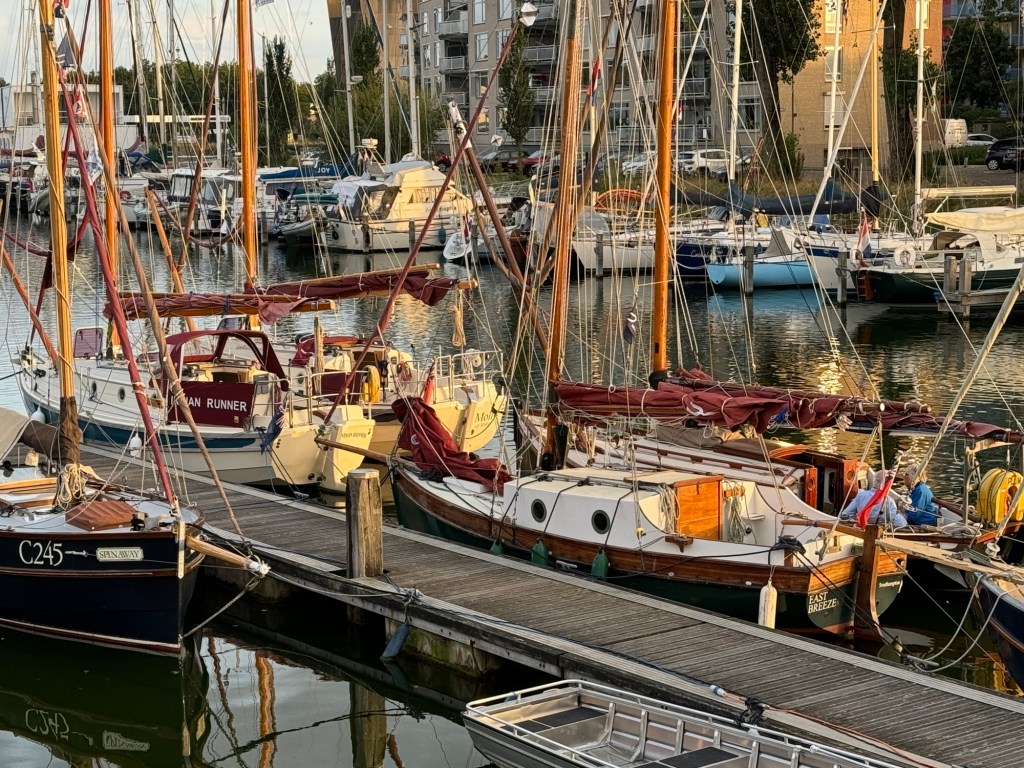
It was in that direction we motored after lunch, to join Moon River and Indian Runner in Middelburg, ready for our departure onto the North Sea the next day. We were welcomed with the customary helpfulness by harbourmaster Susanne, and we moored by her Mk1 Crabber, Spinaway.
Passing through the Oranjesluis back into the canals
During the rally, we enjoyed an extended period of warm, sunny weather but the remnants of hurricane Ernesto upset this fair spell. Several members of the fleet had made a rapid departure down the North Sea canal to Ijmuiden and a sea crossing before the bad weather arrived, but they were all heading for the English East coast. With strong SW winds expected along the Dutch North Sea coast, this route was not an option for Molly, so a group of us elected to reverse our outbound path along the standing mast route.
Anemone on a glassy Markermeer
With limited time available, we made longer hops each day and missed out several stops, but also took the opportunity to overnight at some different places.
The first day, I sailed Molly from Enkhuizen to Durgerdam, whilst Niki and Alice took the train to visit Amsterdam for the day. My trip started with “bin bags”, motoring across a glassy sea. As I rounded the island of Marken though, a lovely breeze filled in and I enjoyed a welcome sail all the way into Durgerdam. We stayed at the very welcome Het Y sailing club again and enjoyed beers on the veranda before pizza aboard Molly.
The next morning we made an early start and passed through Amsterdam and onto the Zijkanaal south towards Haarlem. We spent another night against the wall in the city and entertained Dirk and Linda of Anemone aboard for a dinner of vegetable curry, prepared in the thermal cooker at lunchtime, whilst waiting for the Spaarndam bridges.
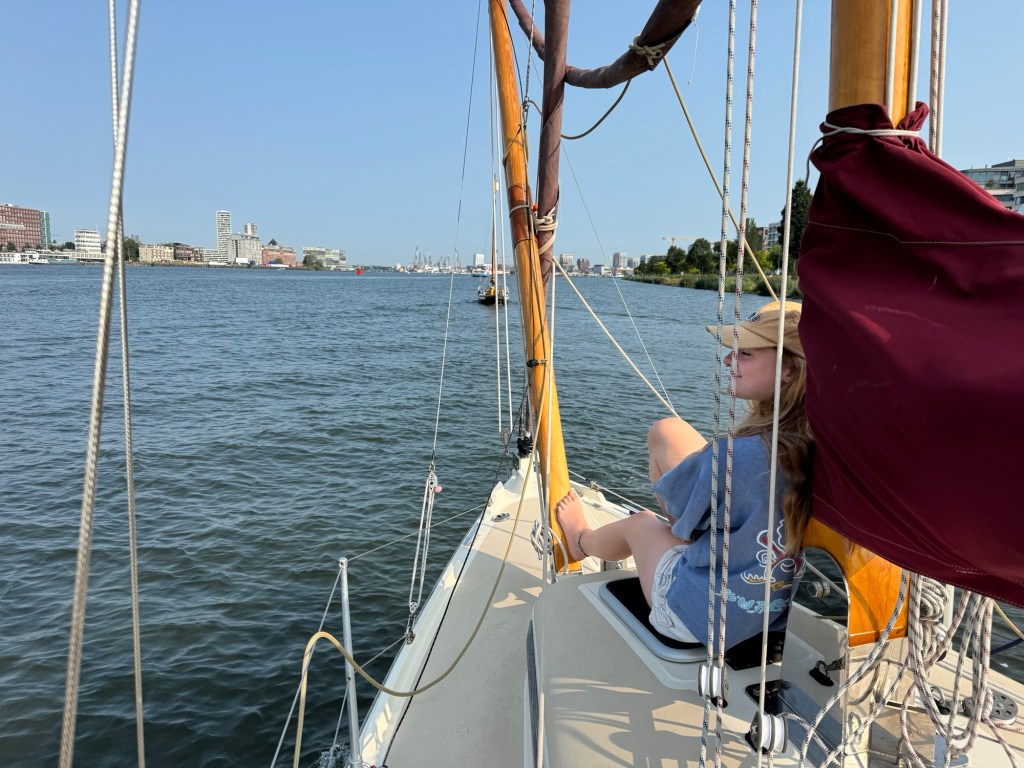
Passing through Amsterdam
The third day was shorter, with a later start and the first of two “bridge marathons”. After twelve bridges (and one lock), we passed Kaag, pausing only to refuel and moved on to an overnight stop at a lovely spot at the southern end of the Braasemermeer at Gr Hem, a sort of hollow island surrounded by the lake. The facilities were simple but it was a glorious spot, though we were not really able to appreciate it as it rained heavily most of the afternoon and evening (though this was only the third rainy day in a month!)
An early departure from the Brassemermeer
Our fourth day, the last with Niki and Alice aboard, was to be a second “bridge marathon” to pass through Alphen and Gouda. The bridge before Gouda had been closed for maintenance during the previous week and that day was the first opening. As a result, there was a lot of other southbound traffic, in contrast to previous days. Nevertheless we made fantastic progress and were past the bridges at Alphen and the lock at Gouda before 11.30. That’s 15 bridges before lunchtime! Unfortunately, in the heavy traffic, our fleet became divided with only Avola and Molly in the vanguard.
Alphen aan den RijnAvola before the bridge at Krimpen
Avola and Molly reached the Wijnhaven Marina in Dordrecht in late afternoon and found there was only just space for us. Niki, Alice and I went out for a valedictory meal, as the girls were due to fly home the next day and I was to bring Molly home from solo from that point.
At Hoorn, we were joined by Alice and her friend Leah, who had been inter-railing together since finishing their exams in June.
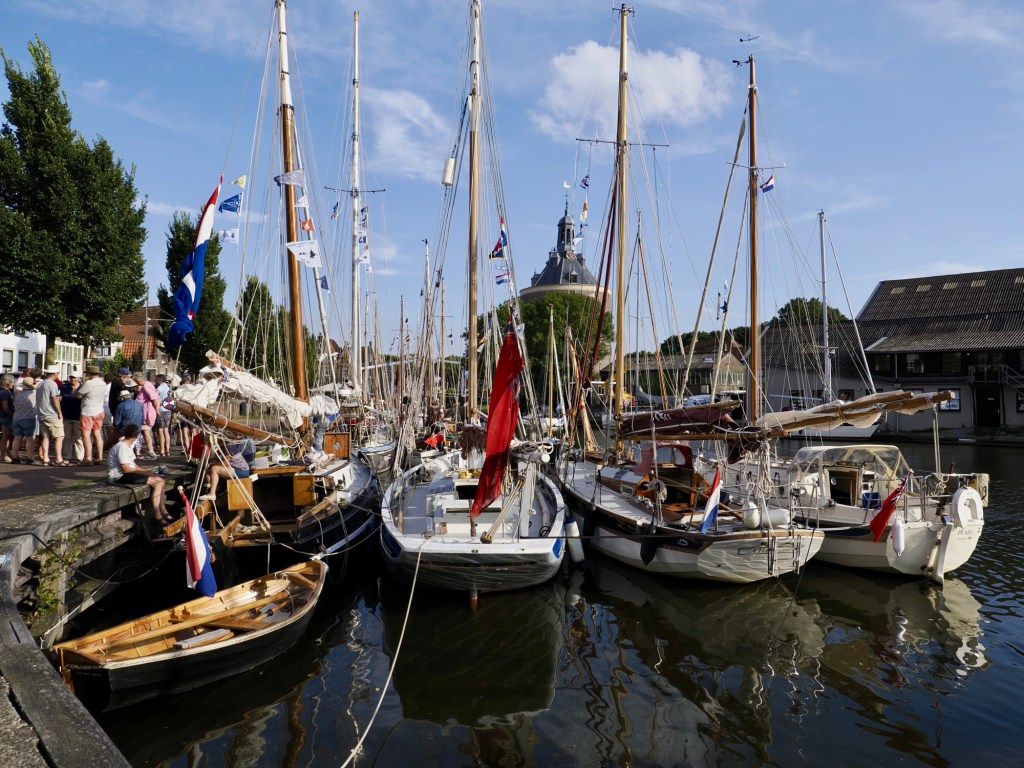
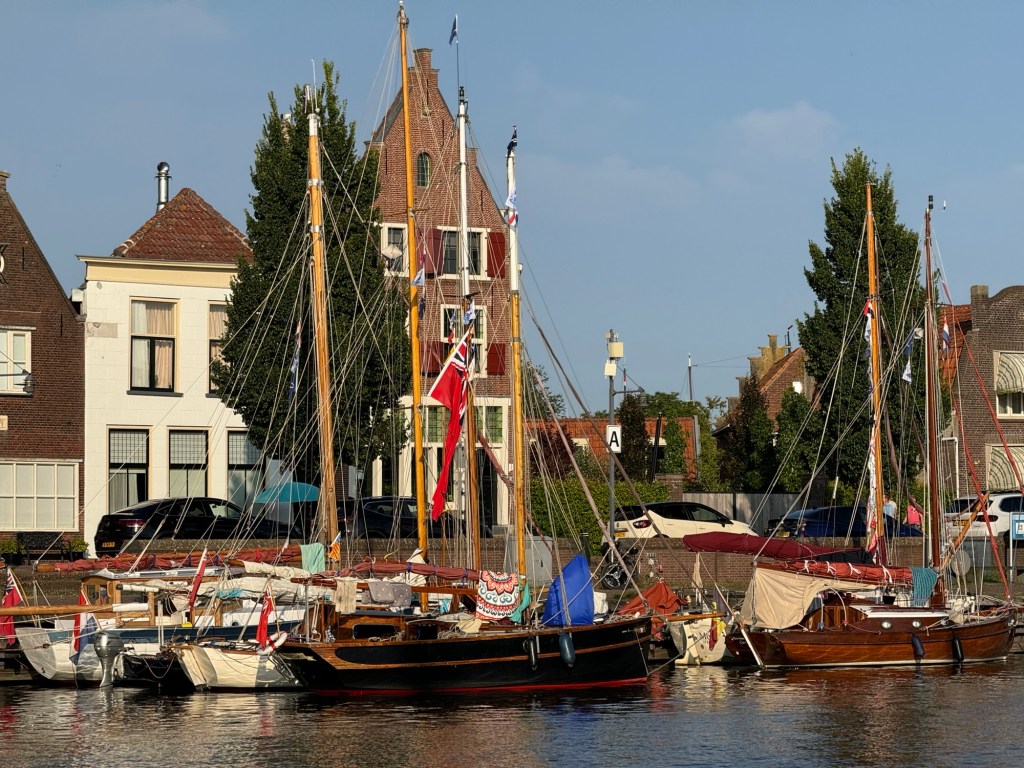
The first battle of the ZuiderzeeMolly and Lahloo rafted at HoornGames in the park
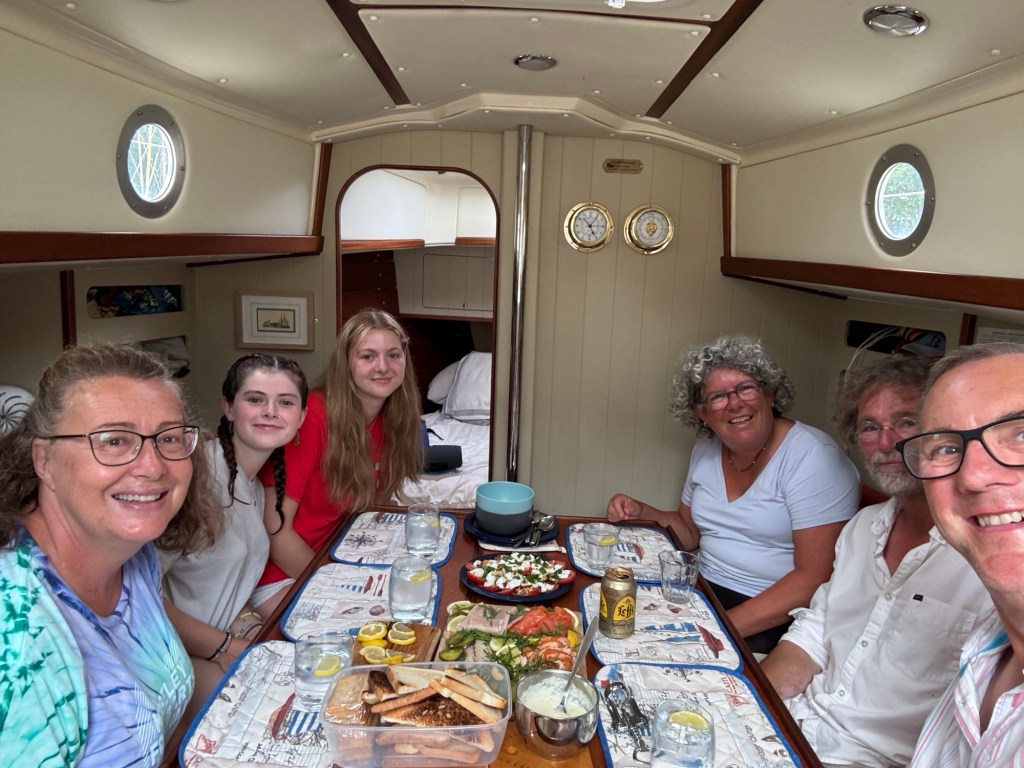
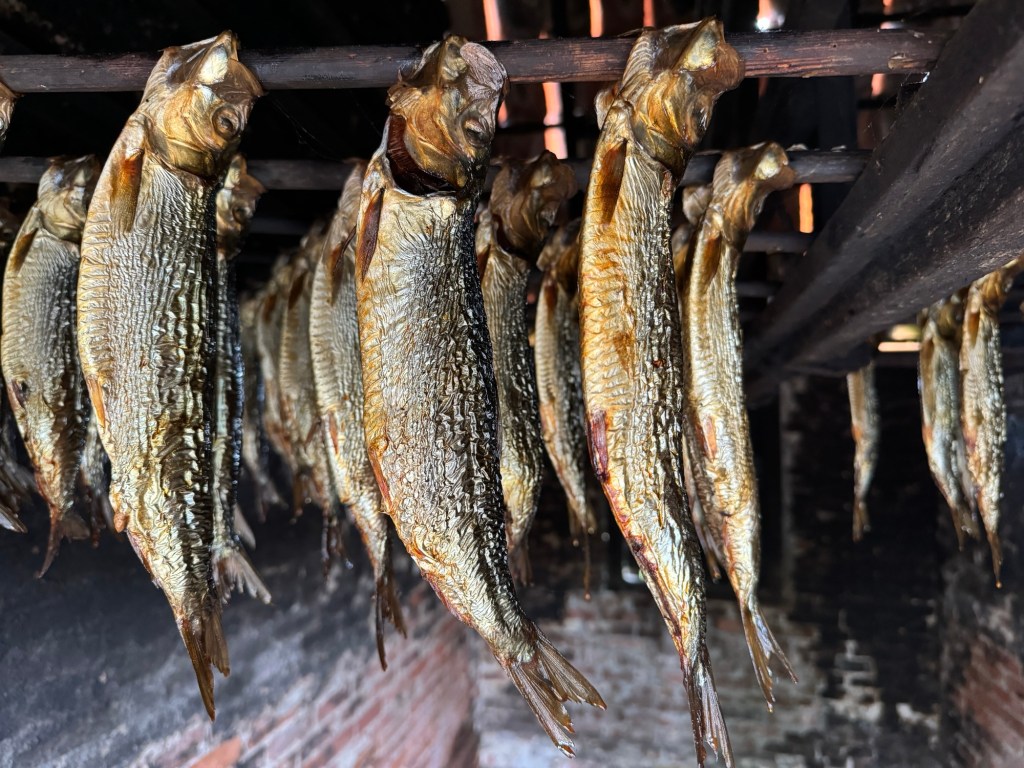
We enjoyed two nights in Hoorn, and on the second hosted an exchange meal aboard Molly. Each English crew was paired at random with a Netherlands crew, in order to further foster Anglo-Dutch friendship. Our guests were Maud and Freek, of Bluebird, a beautiful wooden 1912 Bermudan racing boat. We were treated to wonderful platter of local smoked fish for a starter and team Molly reciprocated with coq au vin from the thermal cooker. The gin and tonic aperitifs, followed by some lovely red wine ensured a convivial evening.
The crews of Molly and Bluebird sharing an exchange meal aboard Molly
The next morning was A-level results day for the girls, an entirely electronic affair conducted with the traditional IT struggles but both girls were delighted to gain the grades they needed for their chosen university.
Celebratory fizz!
After the very light airs for most of the passage to Hoorn, we were treated to a marvellous sail, off the wind for the final outward leg of the rally from Hoorn to Enkuisen. The fleet made a terrific sight spread out across the bay and we soon arrived at the sluis which transferred us from one body of fresh water to another, the Markermeer into the IJsselmeer.
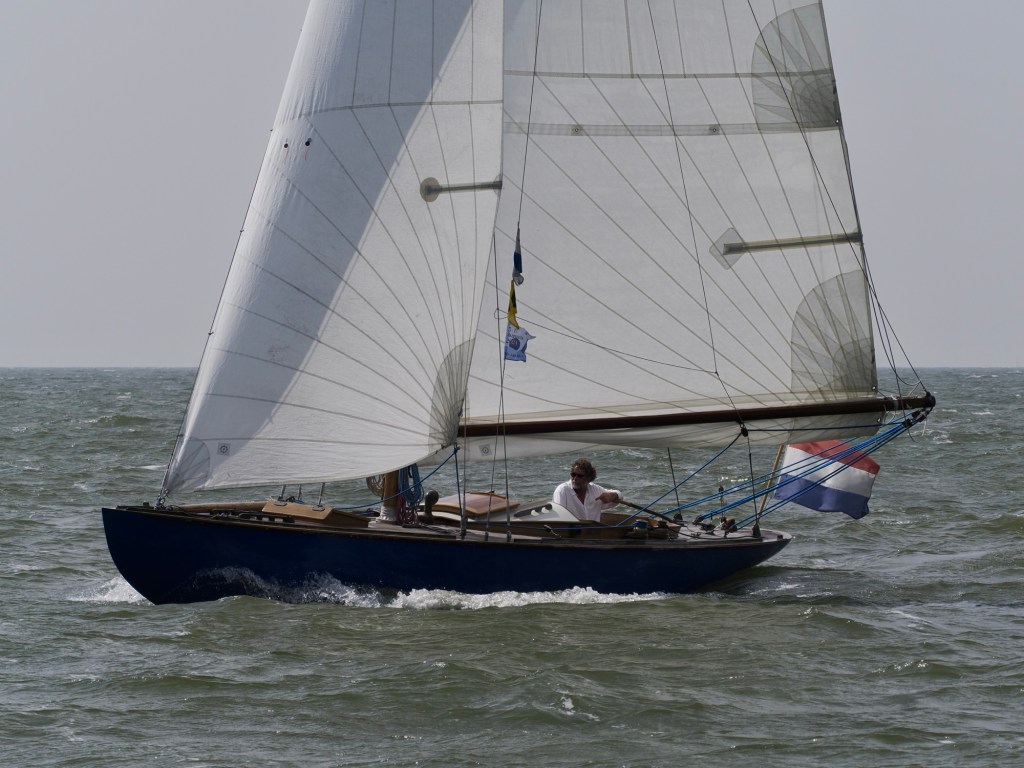
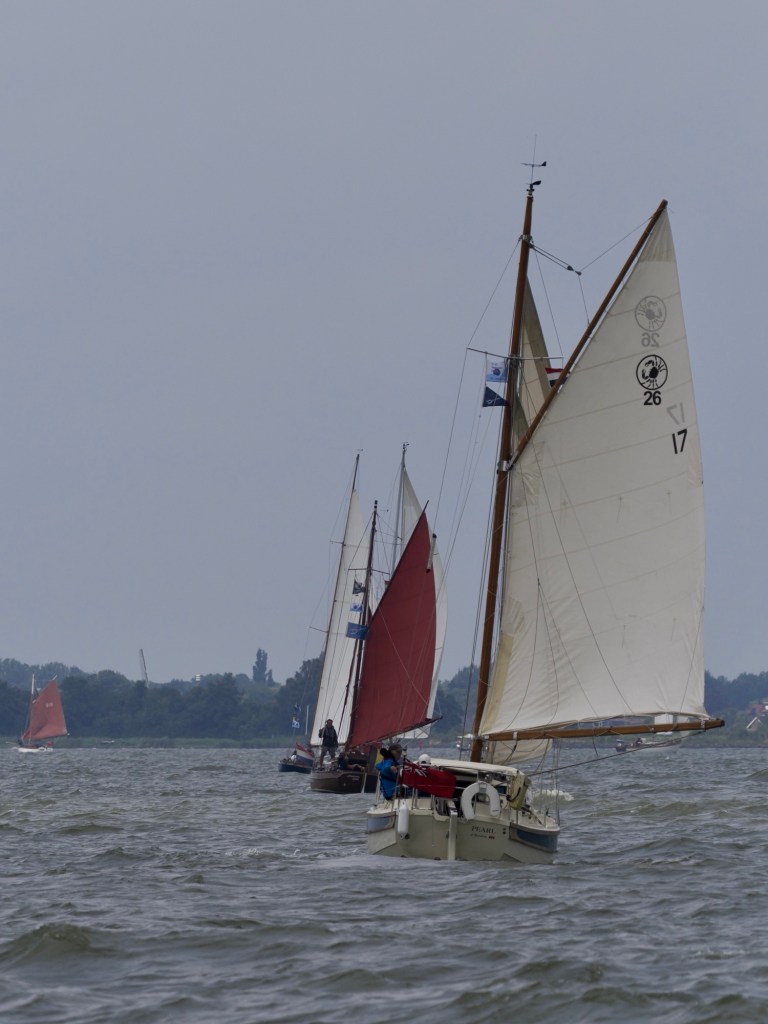
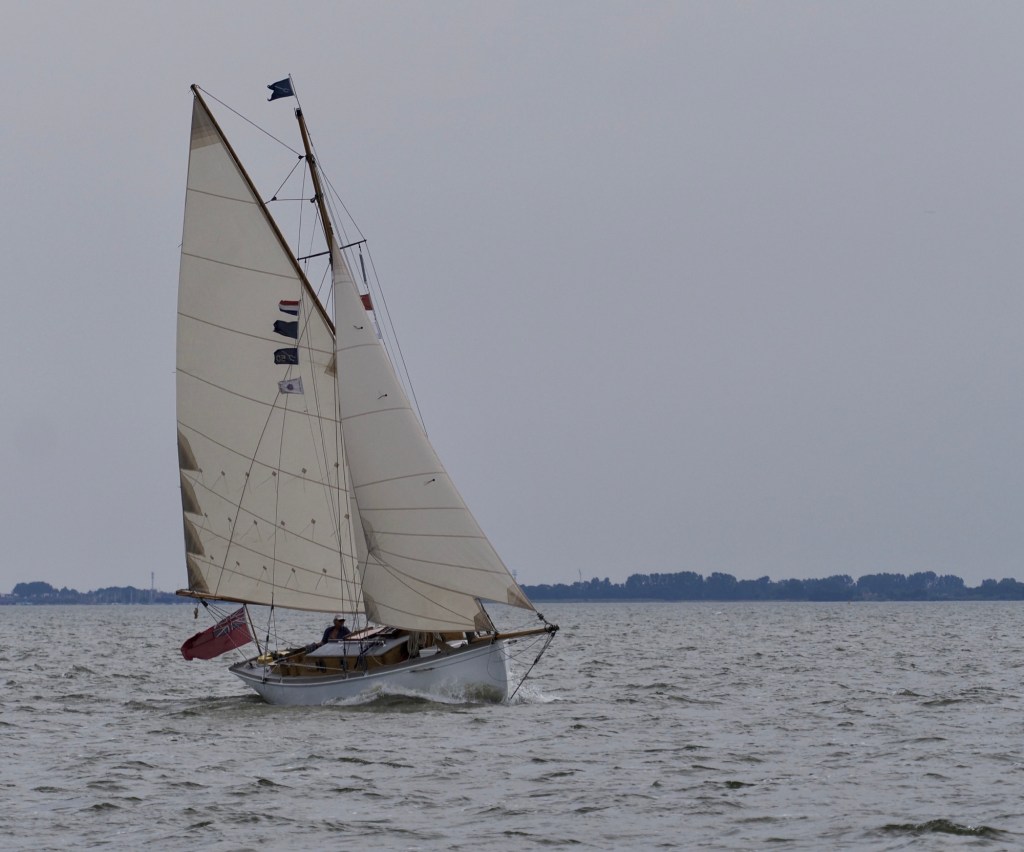
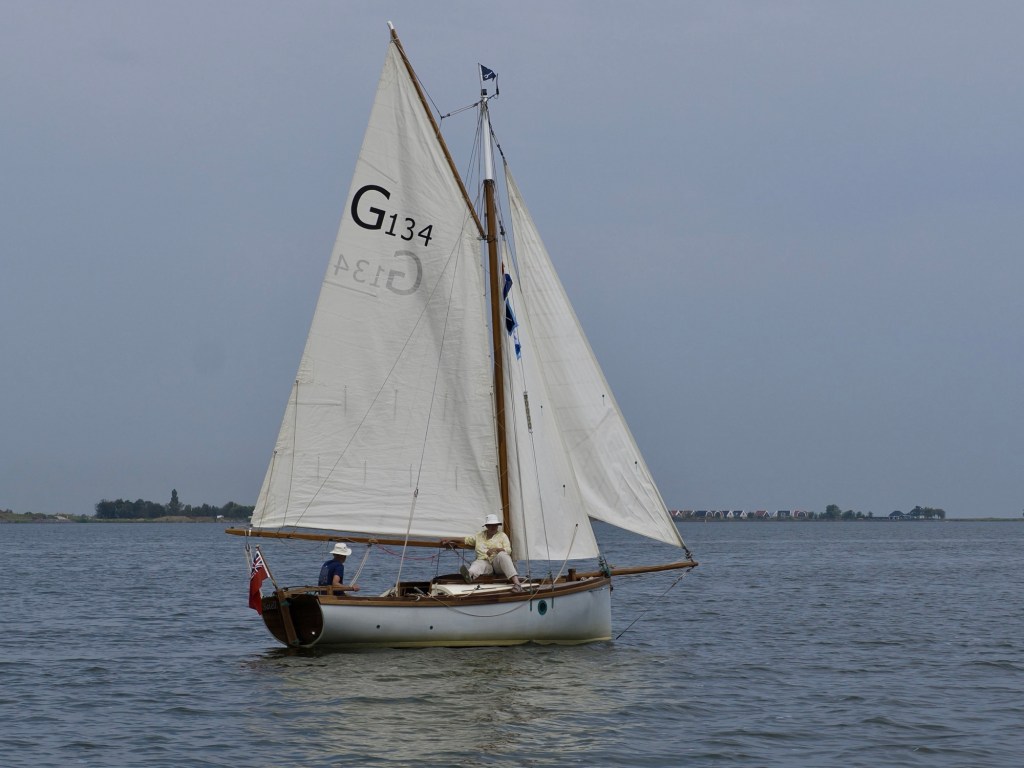
Freek at the helm of BluebirdOeral Thùs (name means “at home everywhere “) powering along. She is a sailing barge dating from the end of the 19th CenturyCape Cutter 19 StardustJan Blank, self built by Rik HansenCornish Crabber 26 Pearl of Beaulieu
The first skirmish of the Battle of the Zuiderzee was fought during this passage. We towed clogs again but had also been set the task to pass a capsule containing the sailing instructions from boat to boat whilst we were underway. We saw the heaving line cast from Stardust to Clytie and then to Bonita. Bonita passed it to us during a slightly hairy close pass.
Drinks on the quayside
As usual, the fleet made a fine sight at the new port, Enkhuizen, rafted to the town quay. We celebrated the girls’ success with a harbourside meal not twenty yards from our berth. The next day began wet and grey, but undaunted we went to the Zuiderzee museum.
Hot smoked herring (it was delicious!)Zuiderzee museum
This was a very interesting place, comprised of buildings, boats and other artefacts showing the life of the folk who lived and fished around the former Zuiderzee before it was shut off from the sea in the early part of the 20th Century. Land was recovered, the water became fresh and a way of life faded from existence; the purpose of the museum is to record these customs.
After dinner aboard, we shared drinks with our raft-mates Dirk and Linda on Anemone (“the enemy”) and we found we had much in common, particularly enjoyment of good beer and whisky.
I had visited a slijterij (off licence) to procure a bottle of Dutch gin and having chatted to the proprietor had been persuaded to also buy a bottle of Dutch whisky (that wasn’t hard!). I did not even know such a thing existed (there are several, this was Millstone from Rotterdam) and whilst it’s not “scotch”, it’s a pleasant drink.
Delicious Trappist beer aboard Anemone
We bowed out of the second skirmish of the battle of the Zuiderzee and chose instead to provision the boat, ready for the long passage home. With some stiff south westerlies forecast for mid-week, thoughts of the quicker sea route were discarded and we set to devising the quickest way to reverse our outward journey.
The end of the rally was marked with a most enjoyable party, each boat being awarded a small individual gift to mark their participation in the event. Alice was much more pleased to be taught to play the “bones” and then gifted with a pair to take away and practice on! With many new social bonds formed during the rally it was a lively affair and many fond farewells made before the final dispersal of the fleet the next morning.
Prize giving ceremony
Niki and I shared a nightcap with Jelle and crew aboard his lovely Cornish Crabber pilot cutter. Much whisky was drunk and sea tales exchanged.
After two weeks cruising the canals and lakes of Holland along the standing mast route, Molly is now back to more open water.
Leaving HaarlemNiki at the helmPuffin
From Haarlem, we passed under the Spaarnespoor railway bridge and through the Rijnlsndsluis onto the North Sea canal, passing through the centre of Amsterdam and out of the Oranjesluis onto the Markermeer.
The Markermeer is part of a former inland sea, the Zuiderzee, which has been gradually reclaimed under the Zuiderzee Works. The Markermeer is a body of fresh water, separated by a dyke from the IJsselmeer to the north.
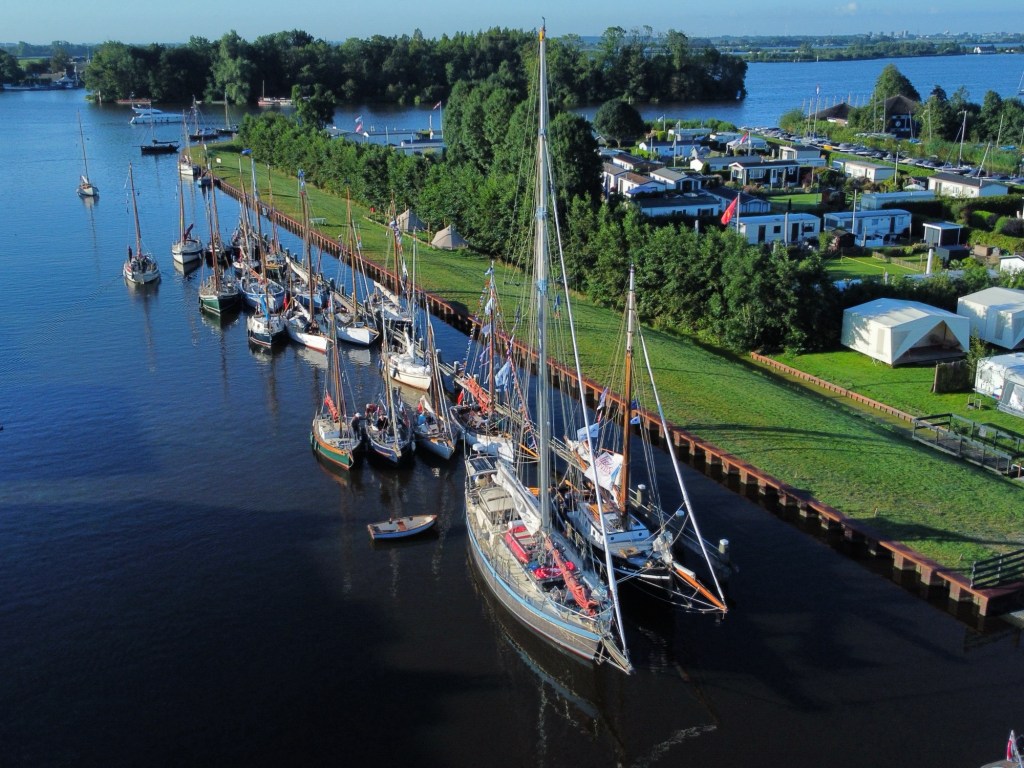
It was incredibly hot as we approached Durgerdam, so chose to anchor in the bay outside the harbour for a swim. Lots of other boats had the same idea and vessels of all sorts were scattered across the bay.
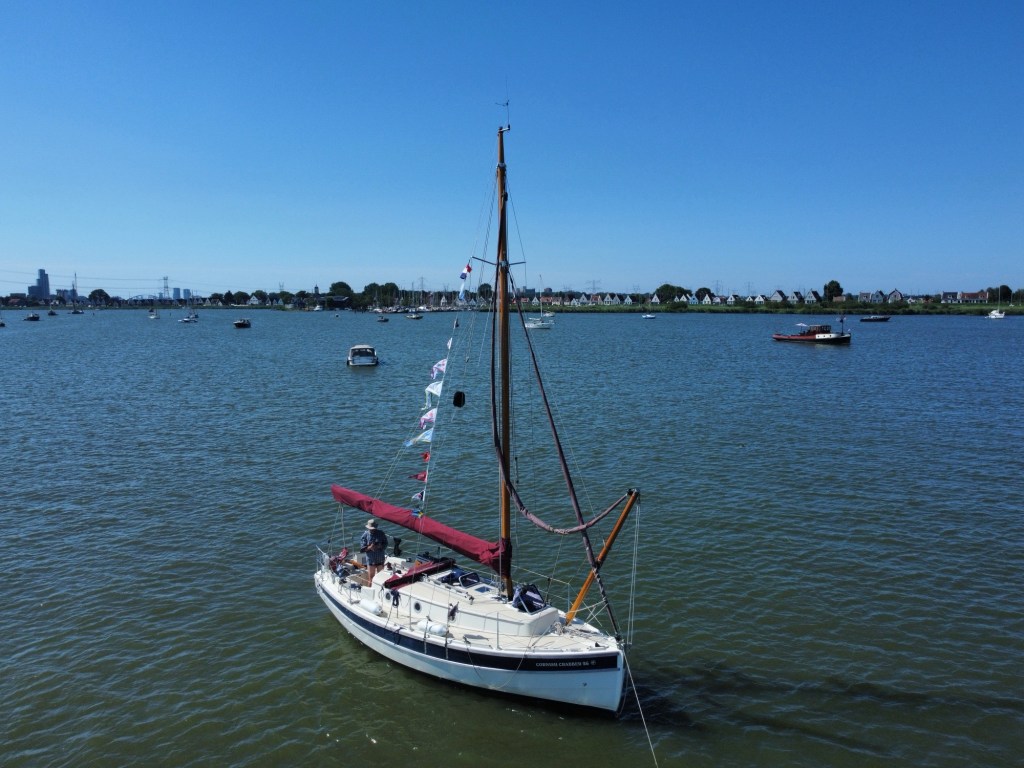
At anchor outside Durgerdam
Refreshed, we entered the Het Y sailing club for the NL OGA 20 party. With formalities and many beers exchanged between the Dutch and English fleets, the rules of engagement for the following day’s Battle of the Zuiderzee were exchanged.
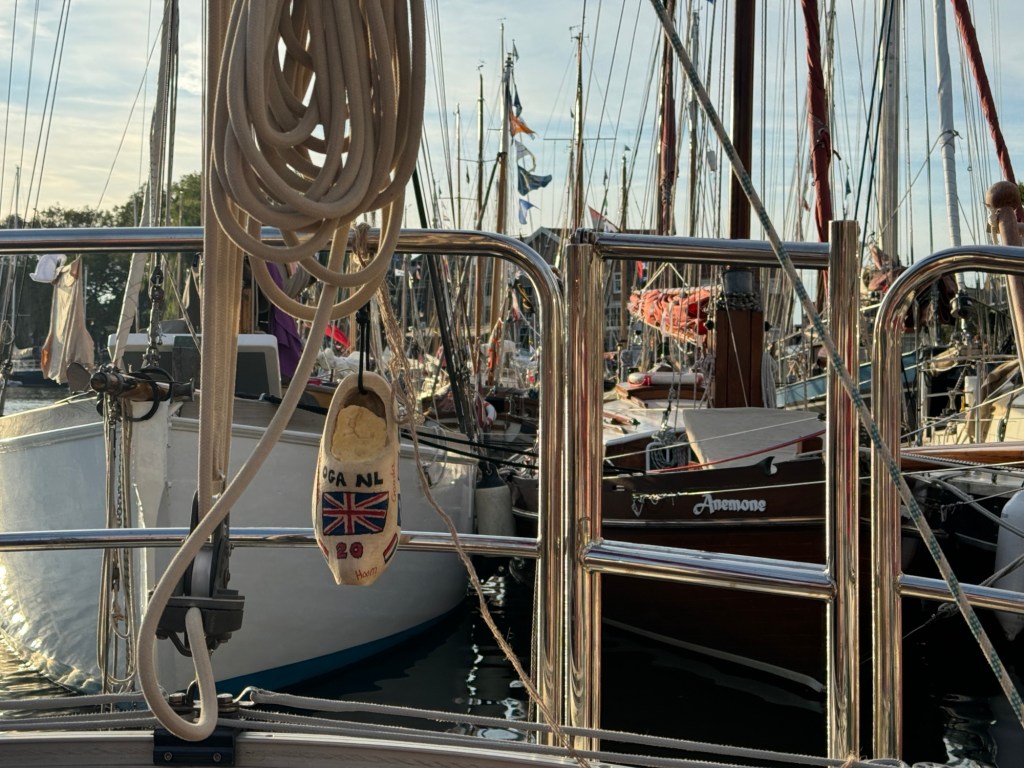
Each boat had been decorating a clog, which was to be towed astern on the passage to Hoorn. The object was to capture the opposing team’s clogs, whilst avoiding losing one’s own.
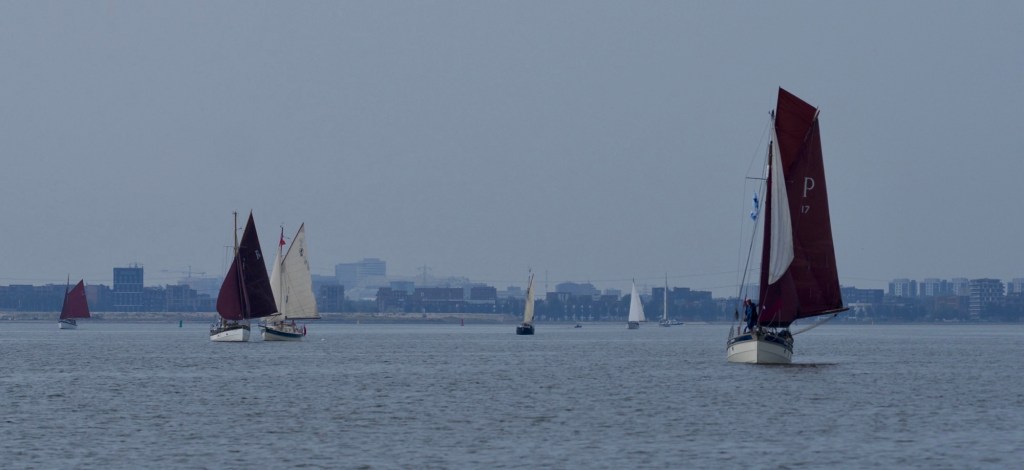
There was very little wind as we made our way out and it was a case of “death in slow motion” as one boat drew up to another, those with the biggest sails at the advantage. Molly scored an early victory, capturing a Dutch clog early on. She was raided twice, on the first occasion the raiders (Bluebird), having snagged our clog with their boat hook, dropped it and I dived in to retrieve it. On the second raid, our clog was captured by Persis.
Jan Blank was not above sculling up to relieve a victim of her clog Pilot cutter Persis bearing down to capture our clogOnward of Ito
The air was hot and still, so after we lost our clog, we started the engine to create a breeze of our own, but before long the true breeze filled in and we had a lovely sail for the last few miles into Hoorn.
During this leg, we encountered the dreaded weed. The Markermeer is an almost uniform 4m deep in this area and there are large patches of water plant in places. This has long fronds which can entangle boats. We could hear the fronds brushing Molly’s underside at times and several times under engine we could hear the revs drop. Clearly we had passed over weed beds and some had caught around the stern. I found that a big burst of astern cleared it, but our centre plate makes us vulnerable. We seem to have escaped unscathed but next time we anchor, I’ll don my mask and take a look for myself.
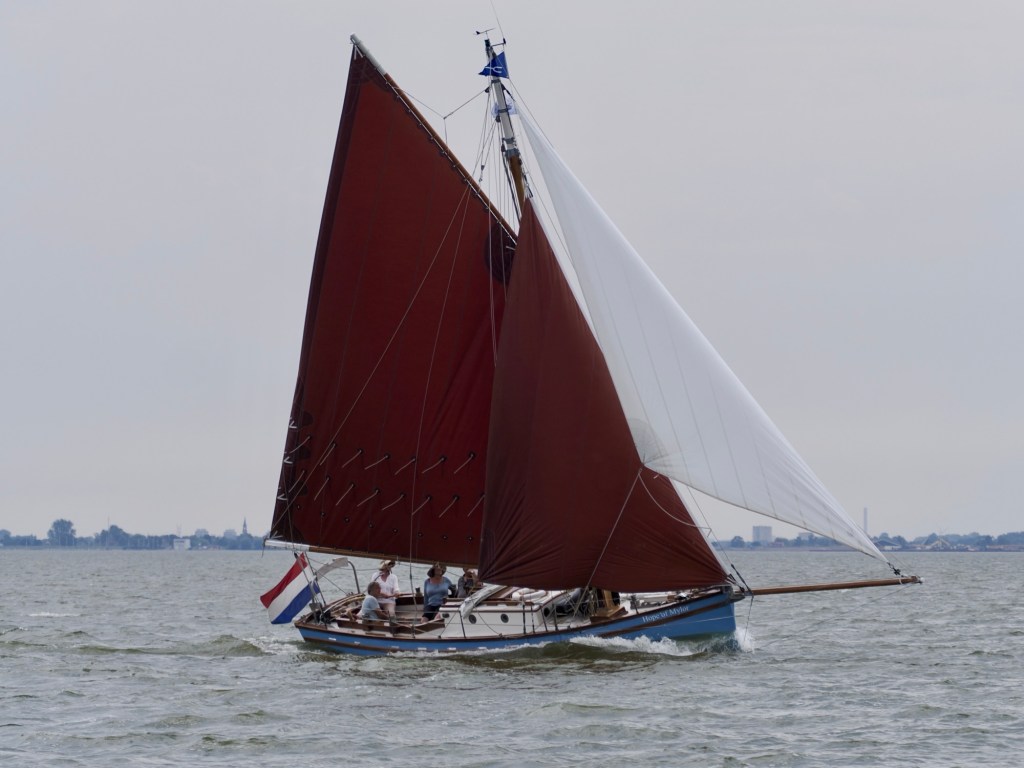
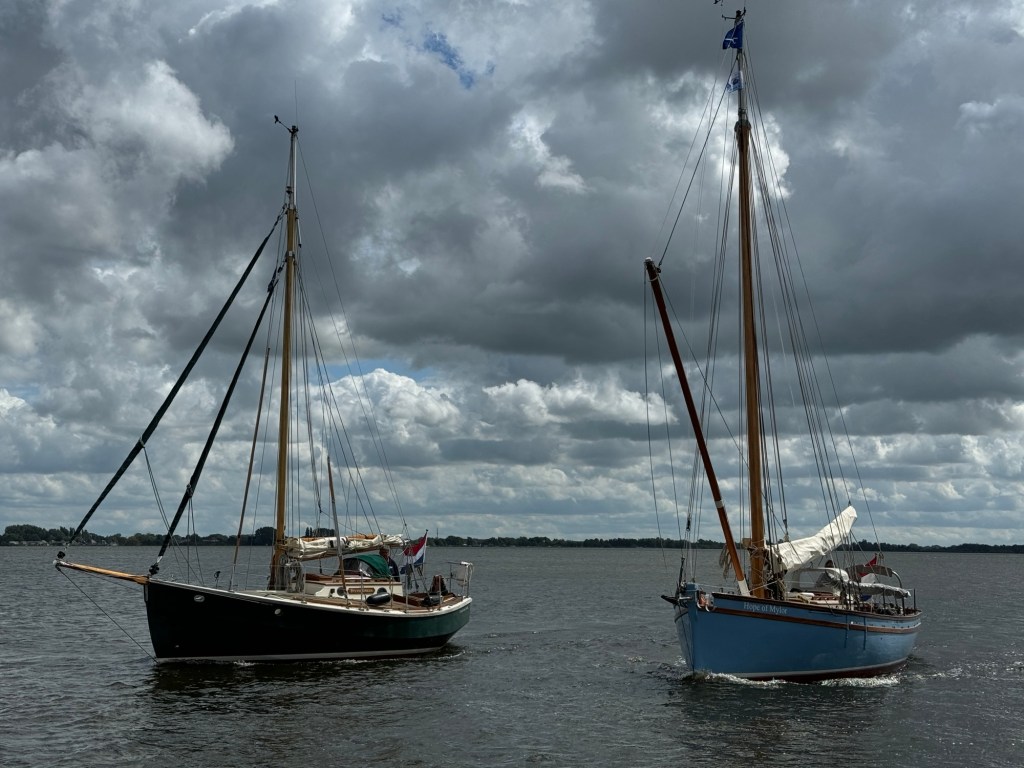
Clytie Hope of MylorLahlooSatelliteThe fleet in Hoorn
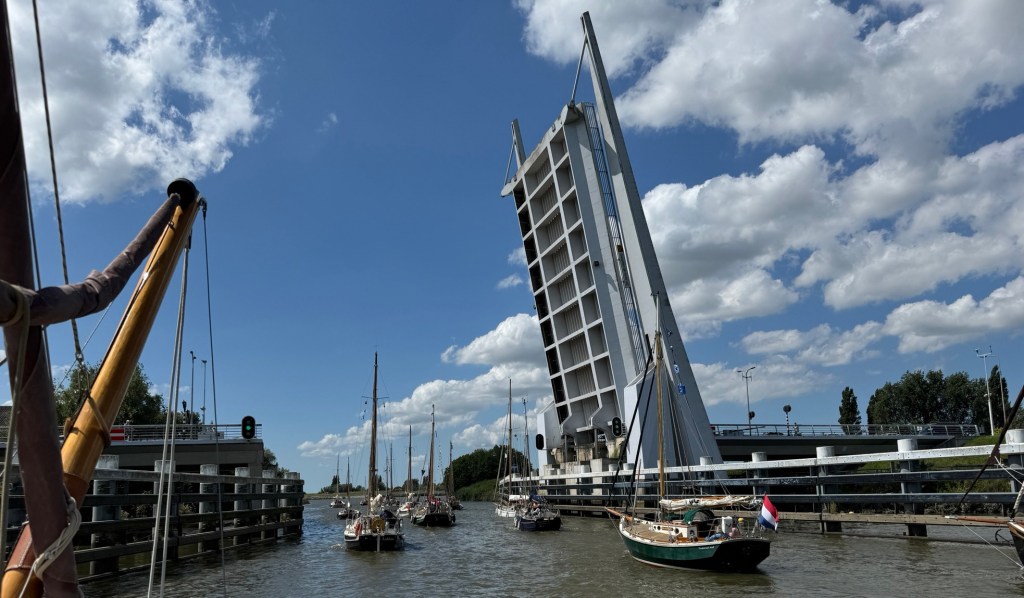
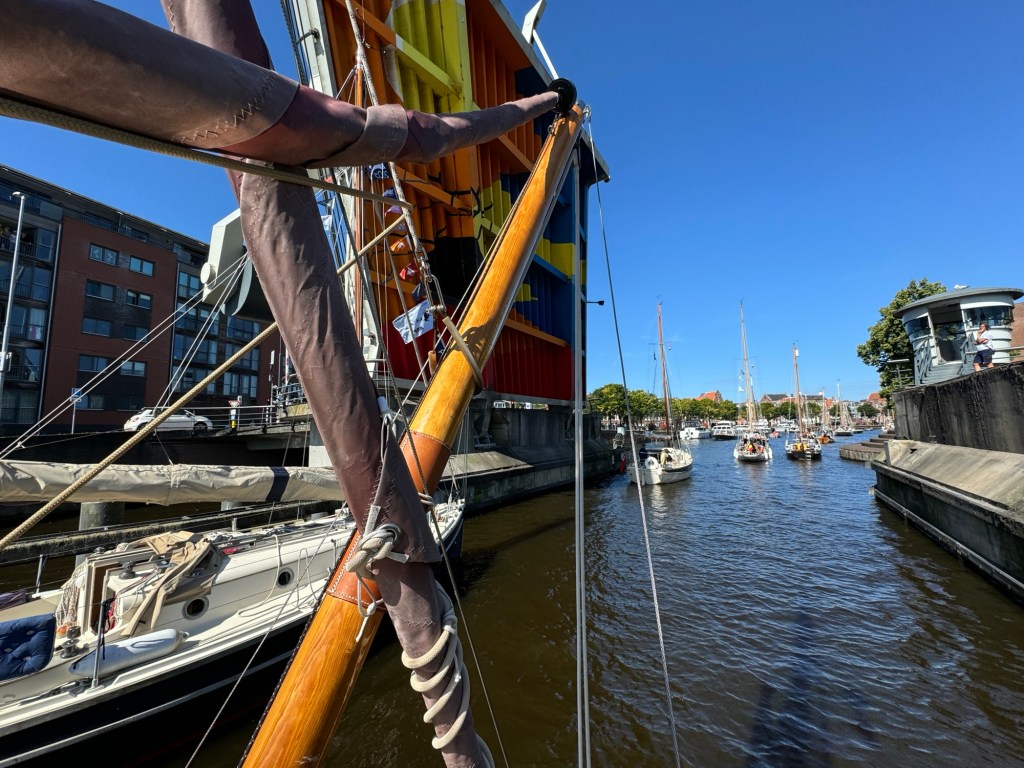
Passing through one of the huge lifting bridges to Gouda
The NL OGA 20 armada left the lovely Wijnhaven Marina in Dordrecht in two enormous streams, when the bridge lifted at 0820 and again at 0850. Shipping had been warned of this by the rally organisers and this seemed to have worked because there was little traffic ax we crossed the wide Oude Maas and made our way up the Noord on our route to Gouda. Molly squeezed under the Alblasserdamsebrug railway bridge, the first of many on our way through the countryside.
Locking in to Gouda
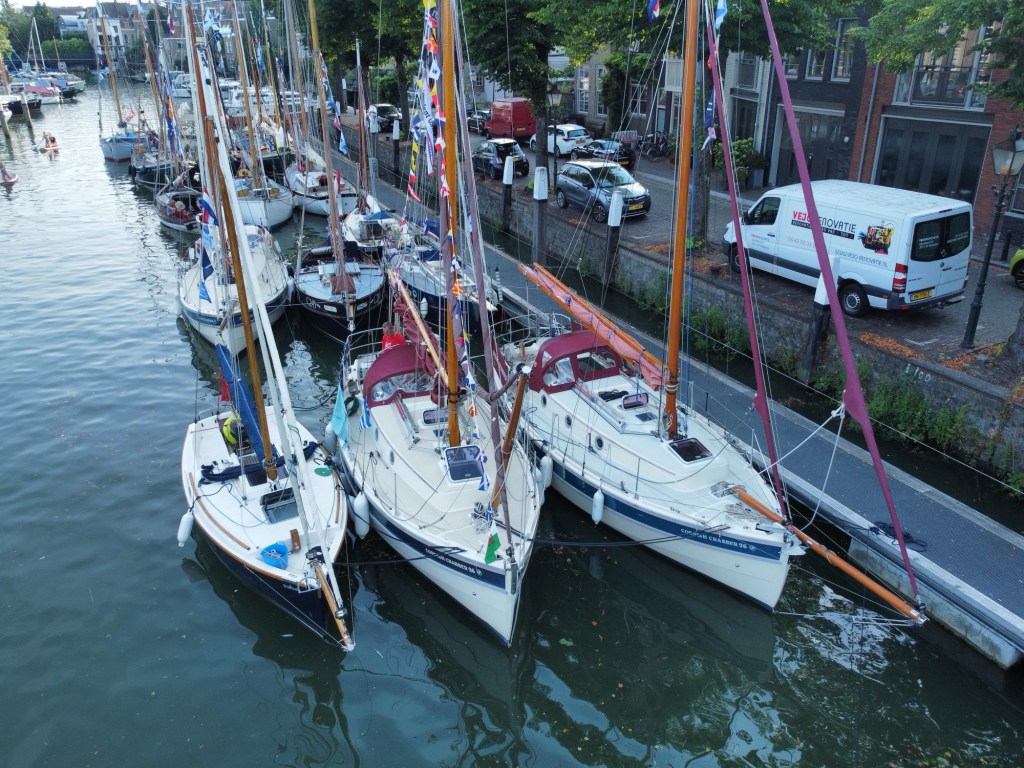
Our hopes of staying in the museum harbour of Gouda had been blocked by a broken lock, but no sooner had we arrived and moored on the main canal outside the town than we were told the lock was fixed! It took us over 2 hours to negotiate all the bridges and the lock to enter the city, but it meant we were right in the heart of things and the boats looked wonderful dressed all over.
Molly dressed all over in Gouda
Apart from the usual socialising, we went to see the “cheese pantomime market” in the town centre, stock up on provisions and generally eat well.
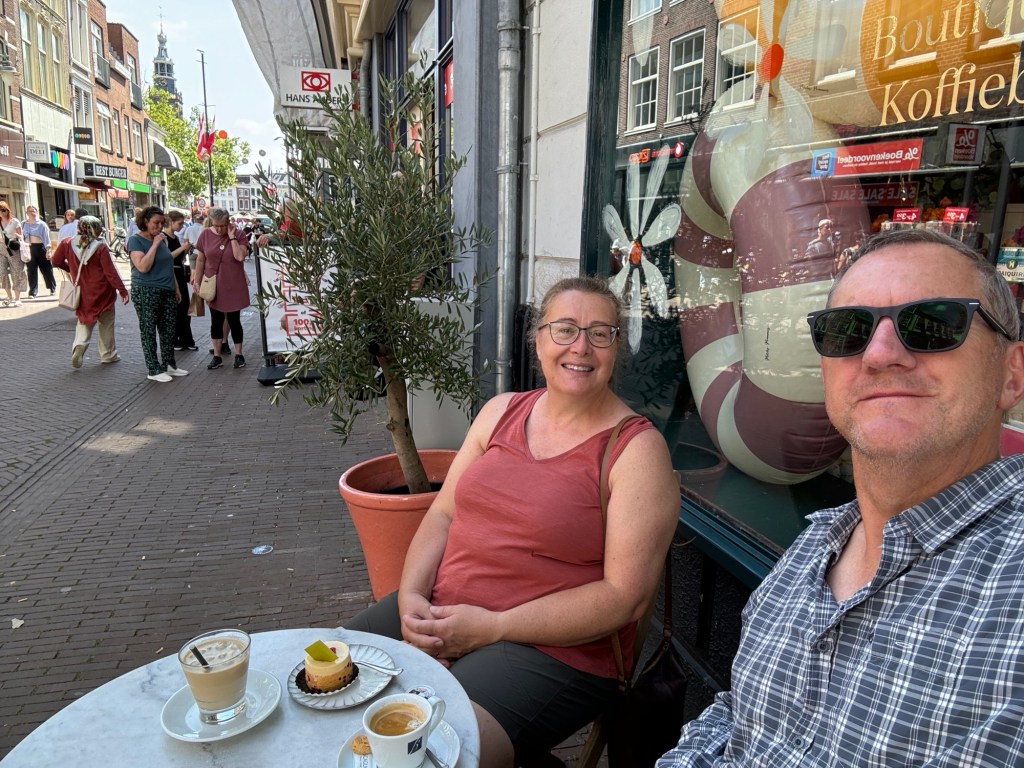
Moving north to KaagAfternoon coffee and cakes
It took us two more days to reach Haarlem, passing through very rural parts of North Holland, punctuated with small, neat towns . It’s very obvious that the general land level is below that of the canals and only remains habitable through the pumps that keep the waters out. The countryside was very beautiful and we saw much wildlife as we travelled.
We made our overnight stop on a lake near the town of Kaag and were led to a lovely secluded harbour called Meldsteiger where we were serenaded by musicians from the traditional barge which had joined our fleet.
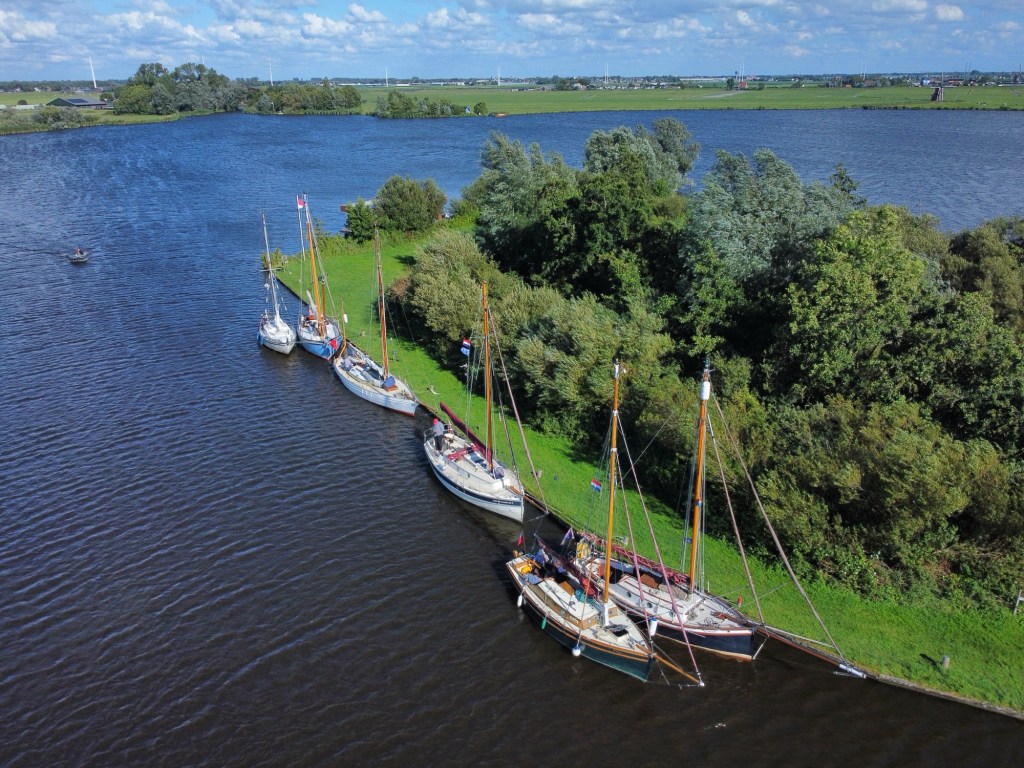
Secluded moorings at Meldsteiger
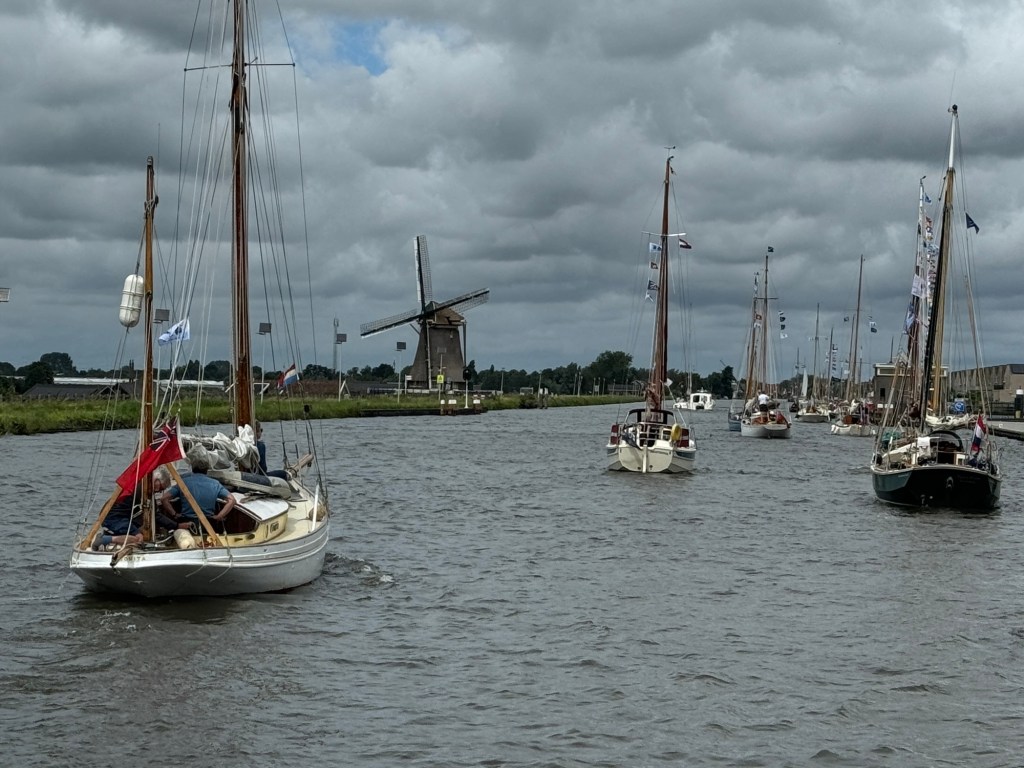
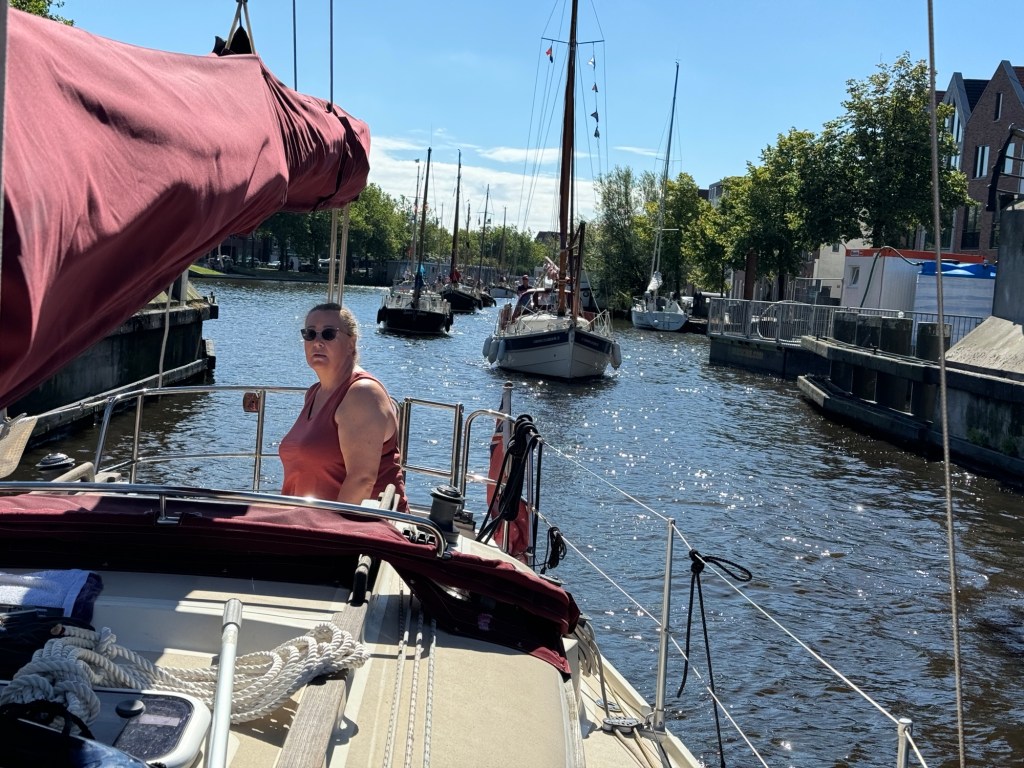
We completed our journey to Haarlem the next day, traversing 11 bridges. Our convoy of over 30 boats looked wonderful and the bridges opened in turn like magic as the fleet approached. We attracted quite a bit of attention as we passed, giving the trip a party feel, though it required a great deal of concentration to travel so close to so many other boats.
The fleet massing before the railway bridge, to pass north to HaarlemEntering Haarlem
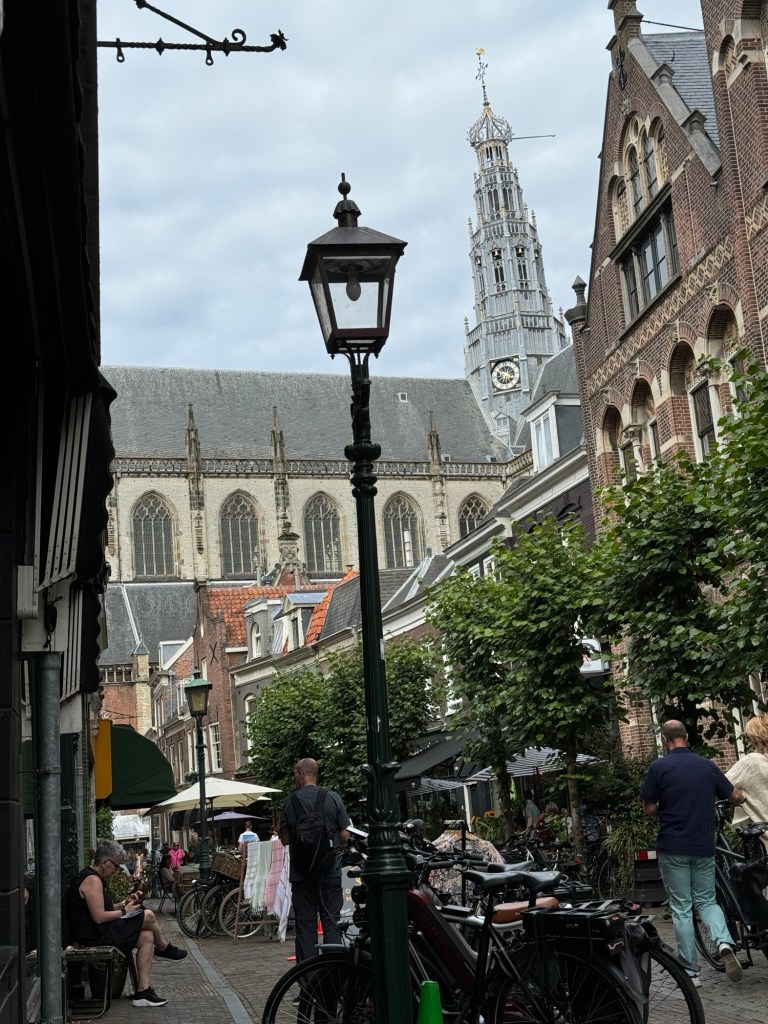
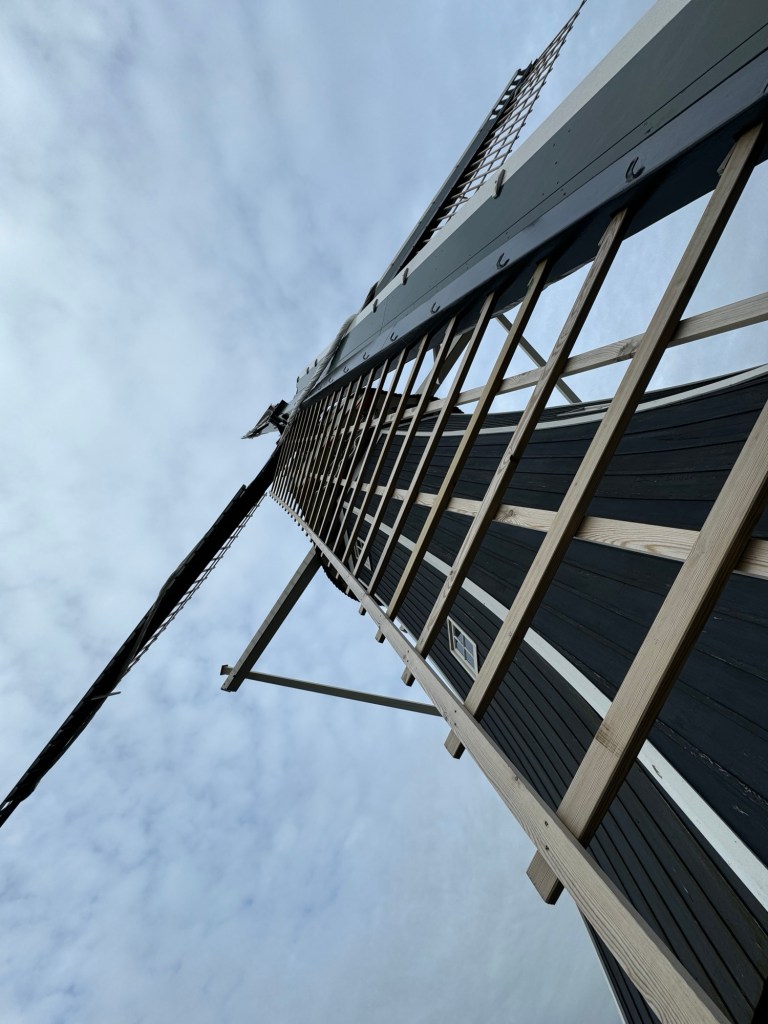
Arriving in Haarlem, we had two nights in the centre of the city, giving us a chance to re supply ourselves and enjoy the beautiful city. We had a tour of the reconstructed mill of Adriaan, which had successively ground mortar for building, tobacco for snuff and grain for bread and brewing.
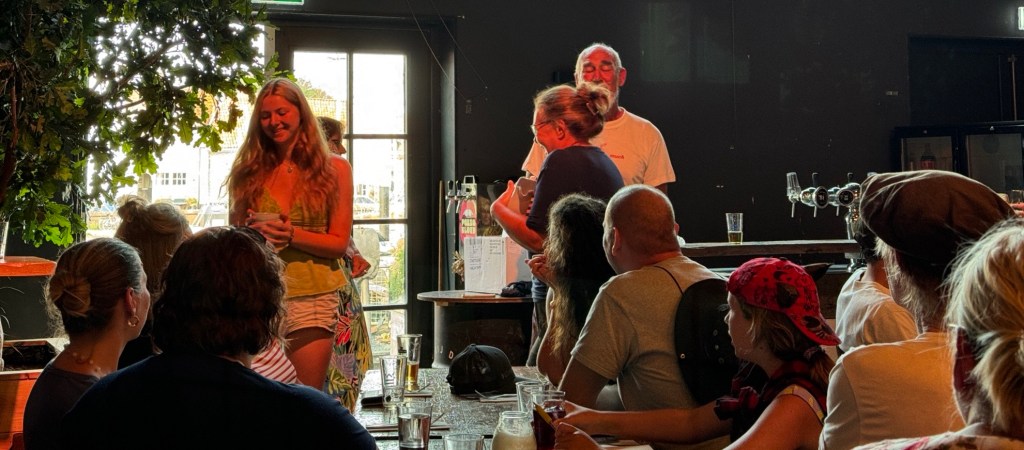
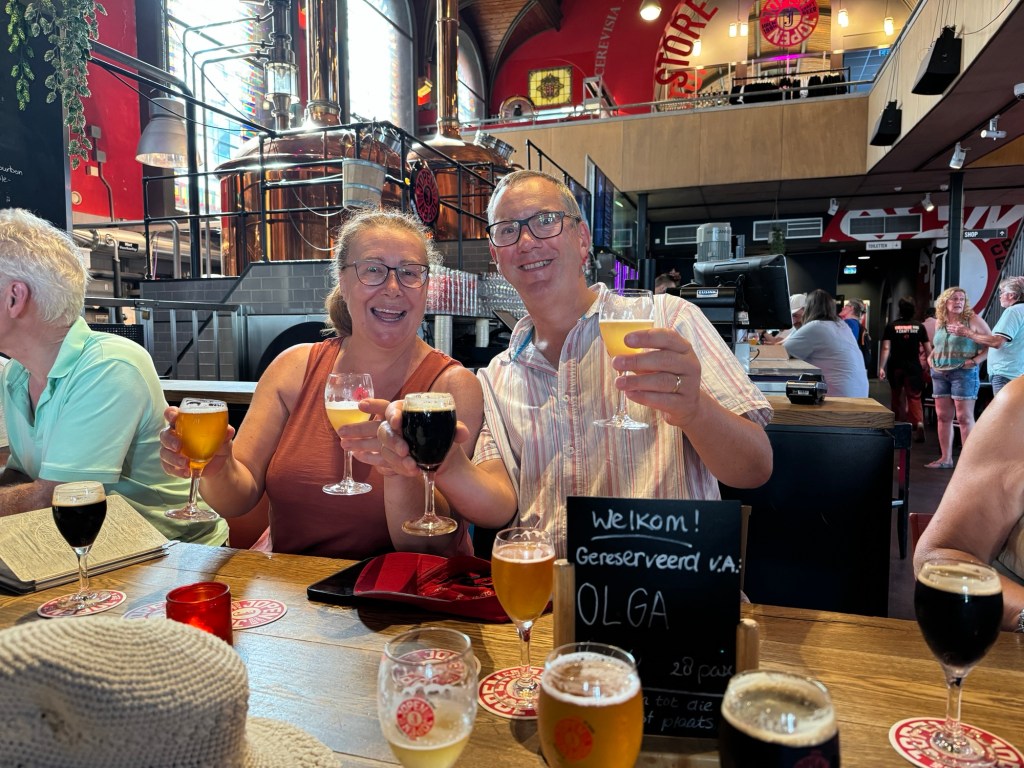
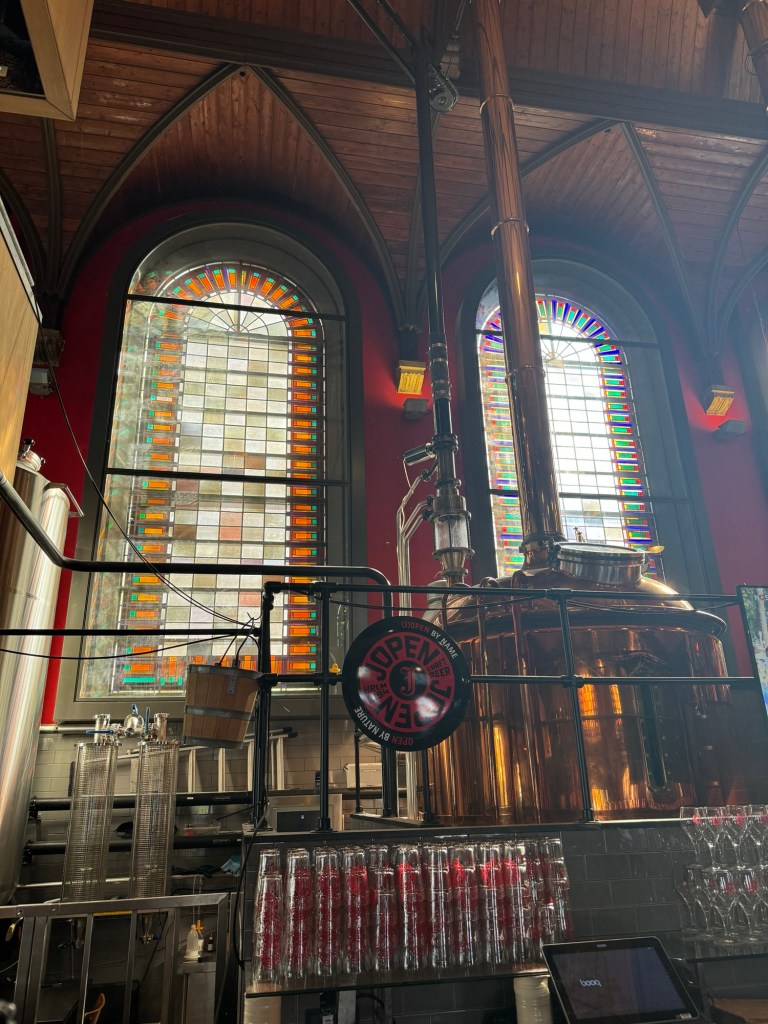
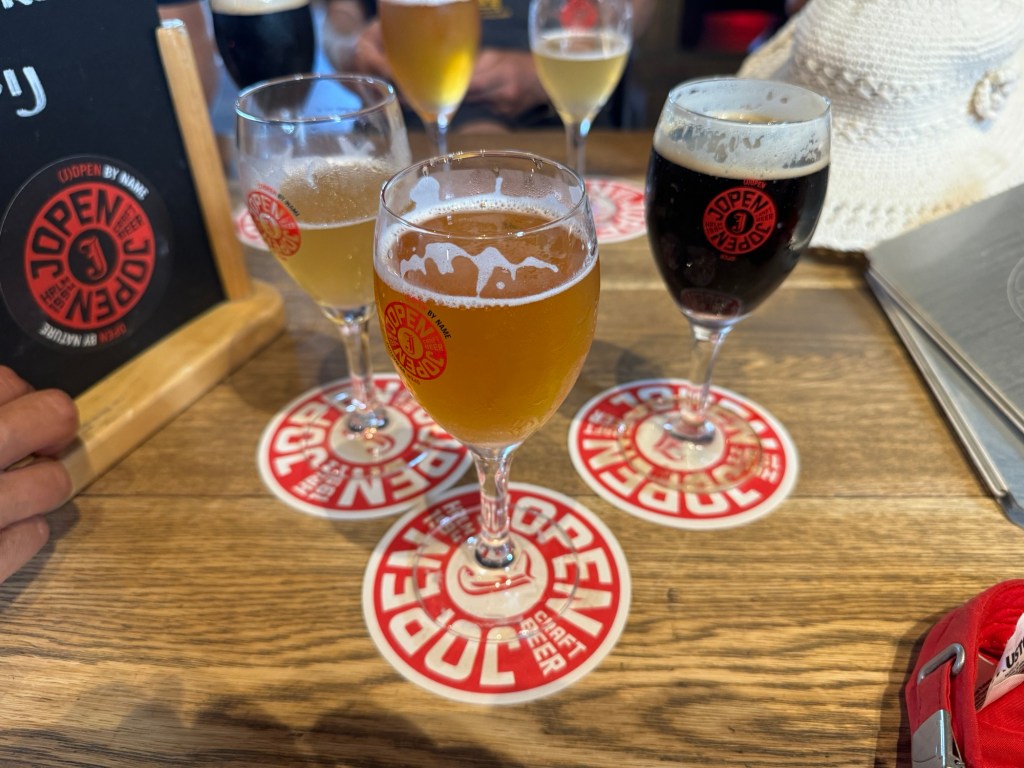
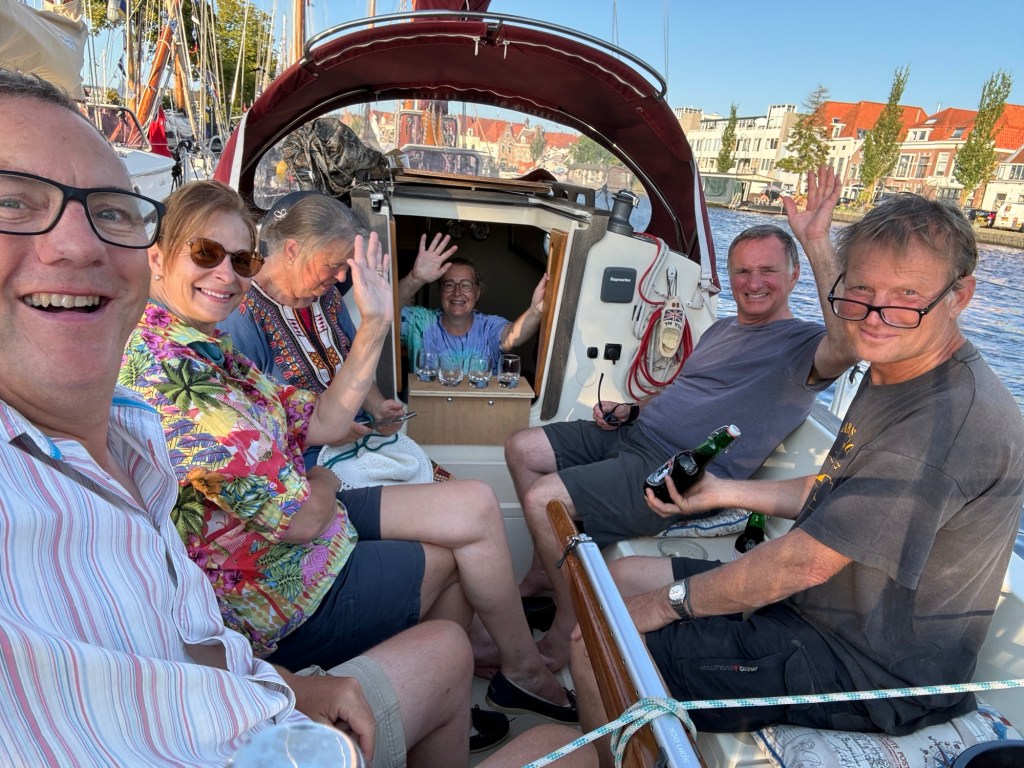
On the second night we tasted some of the different beers at the Jopen brewery, housed in a repurposed church. The weather was scorching hot, so cold beers were very welcome! We invited the crews of Puffin and Windbreker aboard Molly for dinner and had a most enjoyable evening – beef dhansak from the thermal cooker.
Haarlem cityAdriaan millBeer tasting at the Jopen breweryDinner aboard Molly
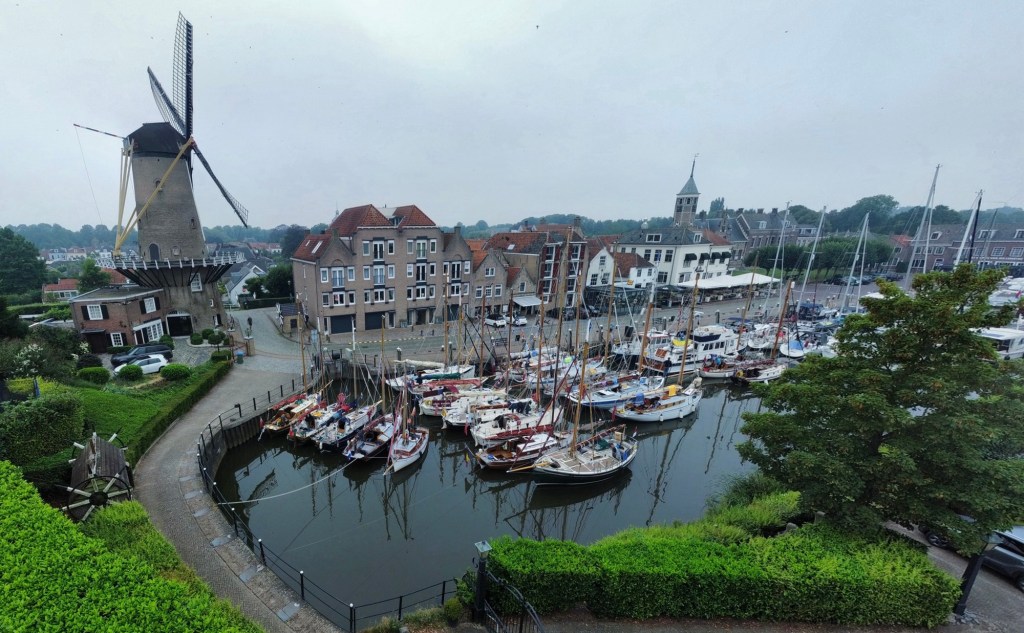
Our group of boats which had gathered at Wemeldinge began their journey to Hellevoetsluis by first visiting the picturesque town of Willemstad. The fleet rafted to the town quay made a wonderful sight and we enjoyed another alfresco meal that evening. The passage to Hellevoetsluis the next day was begun under sail, downwind in increasingly light airs. As the boat speed dwindled to a crawl, Ben and I took turns to swim off the boat, which was very refreshing on such a hot day. We then reluctantly fired up the engine and motored across the glassy water.
We were all greeted in Hellevoetsluis by local organiser Else, who we had met at previous events in the UK. One of the treats of a rally is receiving the goody bag of items. Apart from the beautifully produced rally program and T-shirt, we found, among other little treats, stroopwaffels, a mysterious foam-filled clog (evidently for turning into a boat), a flashlight and a lovely laser-cut plaque.
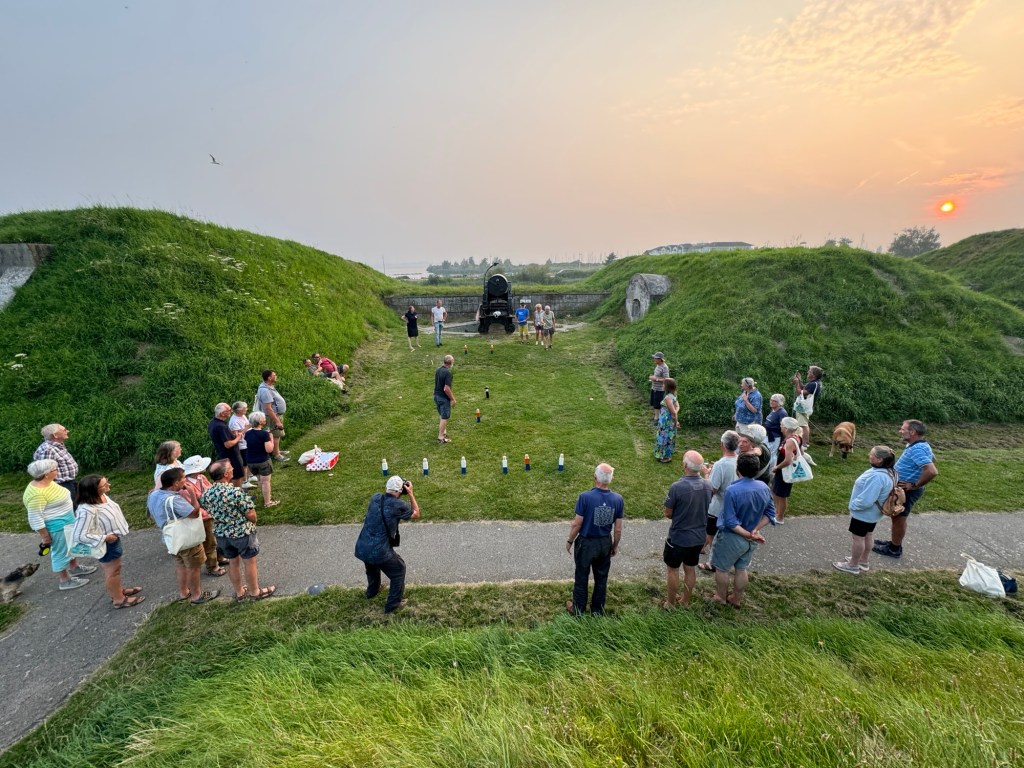
Reception partyHostilities between Dutch and English navies begin…
The reception party was a very jolly affair at an old armoury in this historically important town. We were served a stream of delicious shared pizzas from a “pizza van”, followed by a sea battle between the Dutch and British navies in the form of a game of skittles devised by organised Rijk.
Hellevoetsluis
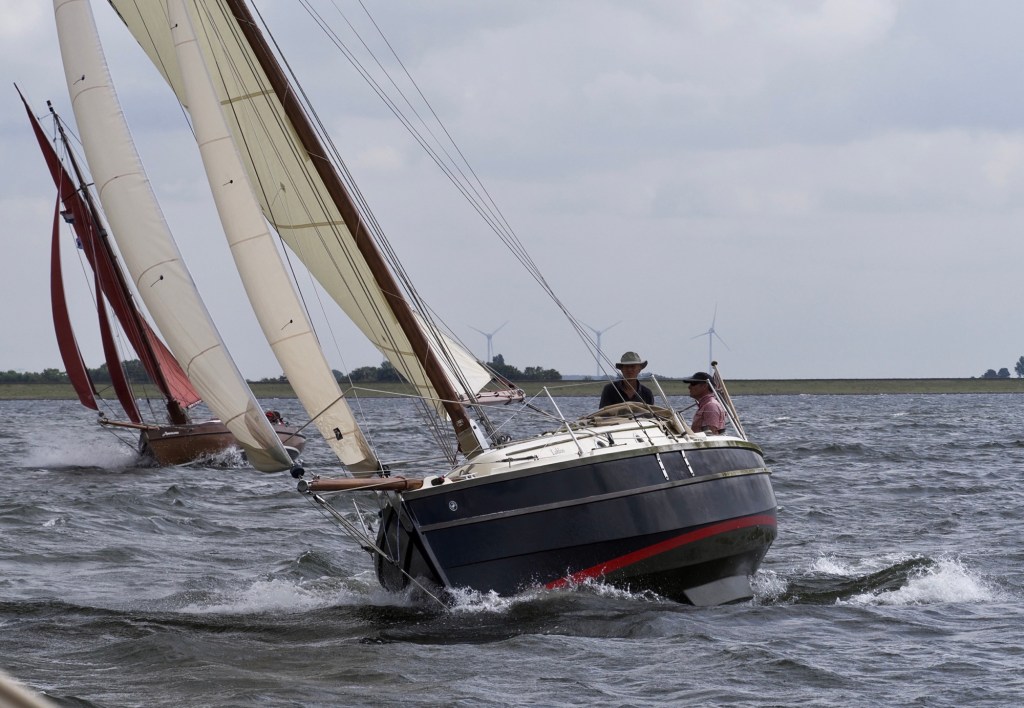
We stayed two days in Hellevoetsluis and enjoyed a race on each day. In the first race we sailed really well in a good breeze and managed to beat the other two Crabber 26’s racing but did not fare so well on the second day in some very light airs.
LahlooMolly had the legs of Lahloo on a breezy day……but we didn’t do so well the next day in light airsAnemone“Admiral De Reuter” giving us a tour of Hellevoetsluis
On Saturday afternoon Niki joined the boat and we attended the formal opening of the rally and on Monday made our way to the next port, Dordrecht. We chose a river route, following the tidal Spui to join the Oude Maas (“old river Maas”). The former was very rural surrounded by fields and dotted with swimming places, whereas the latter was busier and more industrial with a lot of commercial traffic. We had to negotiate a couple of major junctions, the AIS was really useful here for being able to spot commercial traffic coming round the corner.
Colin of Plum making good use of a parasol
No locks on this journey but an enormous bridge, carrying a busy railway line, as well as a road bridge. This opens once an hour in a meticulously synchronised operation. We just made an opening time and I was glad not to have to wait for an hour in these busy and choppy waters.
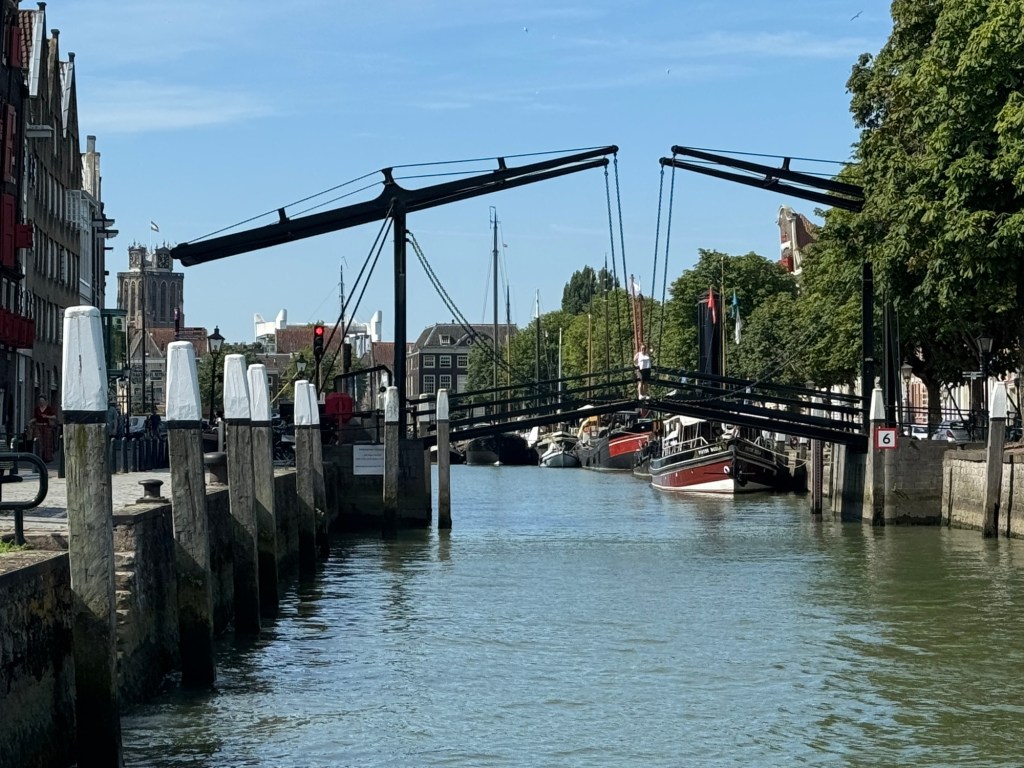
We saw a train cross the bridge and, seconds later, the middle section started to slowly rise, whilst the bascules of the road bridge also hinged upward. As soon as there was enough air draught, the boats began motoring through, under the watchful eye of the bridge master. We brought up the rear, at full revs to get under in time. The rail bridge was already lowering as we passed through and had been up for less than two minutes!
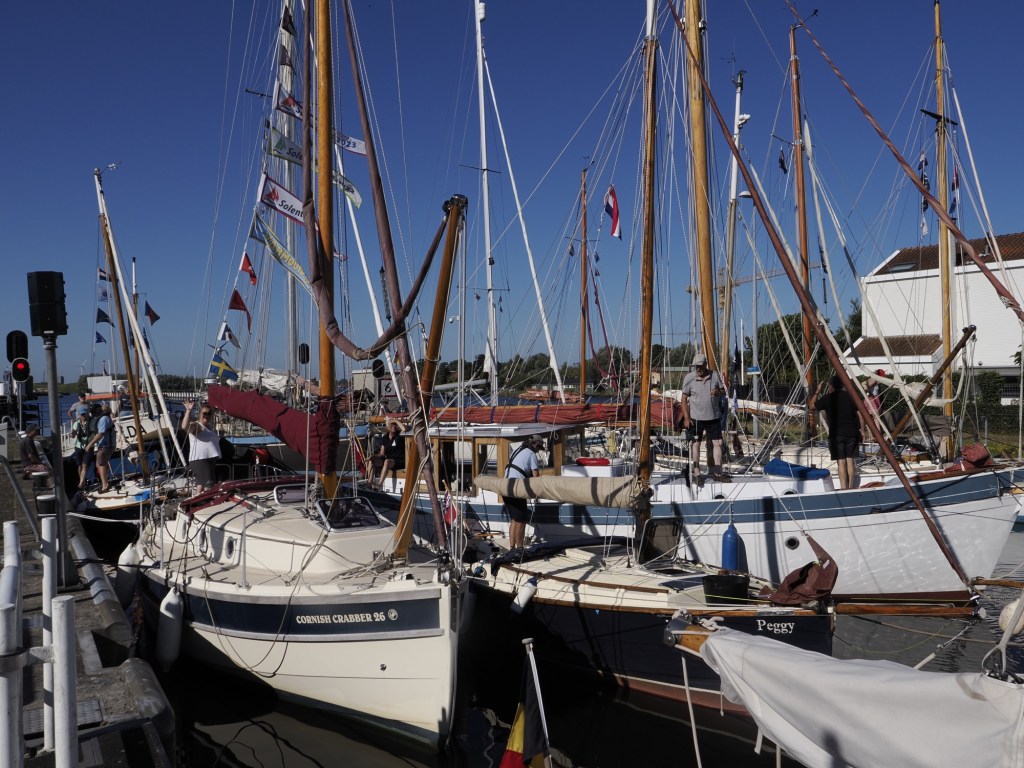
The rail bridge at DordrechtThe fleet in Dordrecht
The second bridge of the day was at the narrow entrance to Wijnhaven and after the usual boat dancing, the fleet was rafted three-deep to the pontoon.
The next day was a rest day and we enjoyed an Indonesian meal, walks around the picturesque city and generally trying to keep cool in the wonderful hot sunny weather.
I wanted to top up the fuel but the fuel berth is designed for commercial vessels and is not safe for small boats to moor, so I ended up carrying two 10-litre cans back to Molly.
We waved Ben off back to Falmouth in Dordrecht. It had been good to have his experience on board, particularly for the channel crossing. It would be just Niki and I for the next couple of weeks, until Alice and her friends join us near the end of the rally.
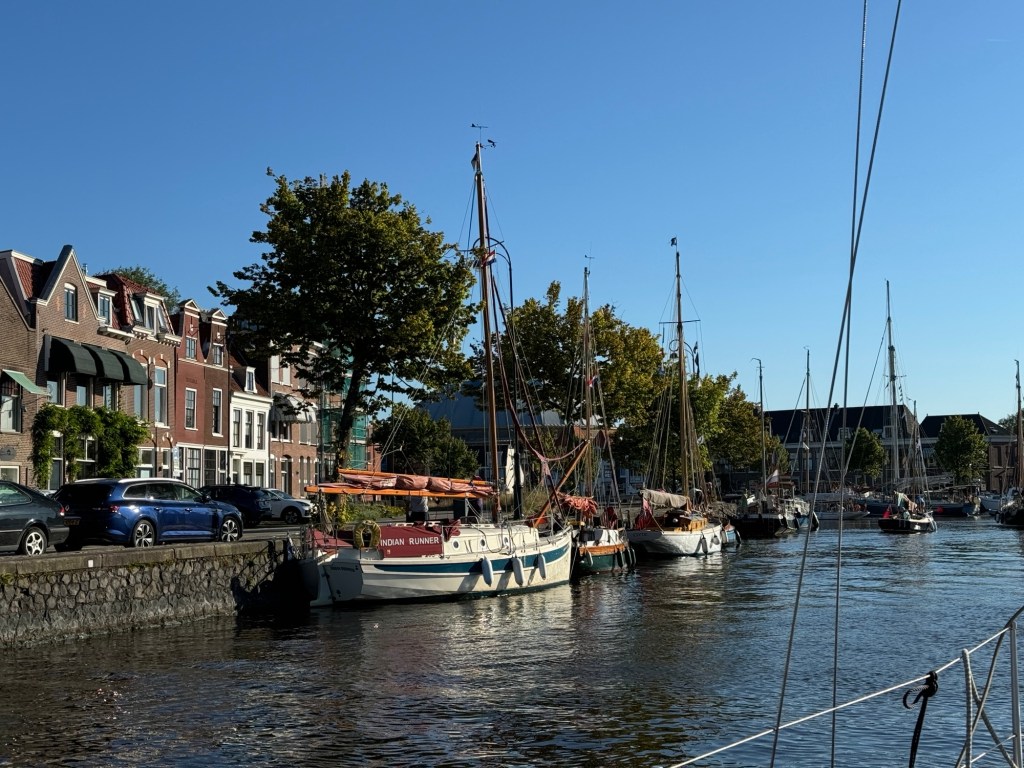
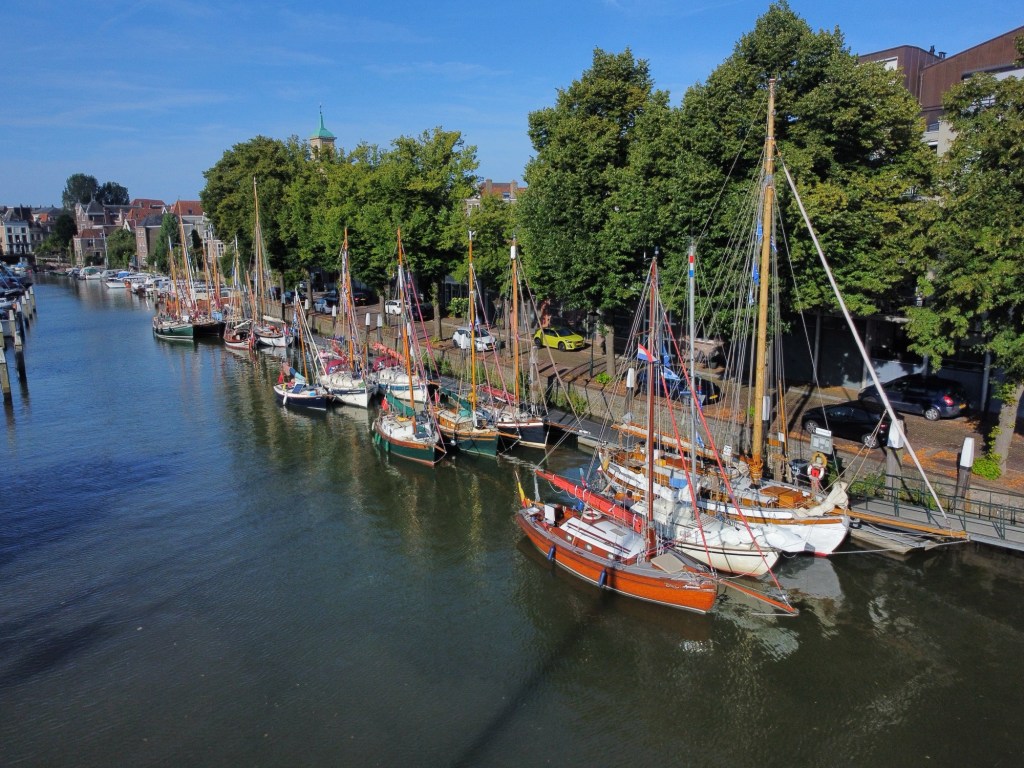
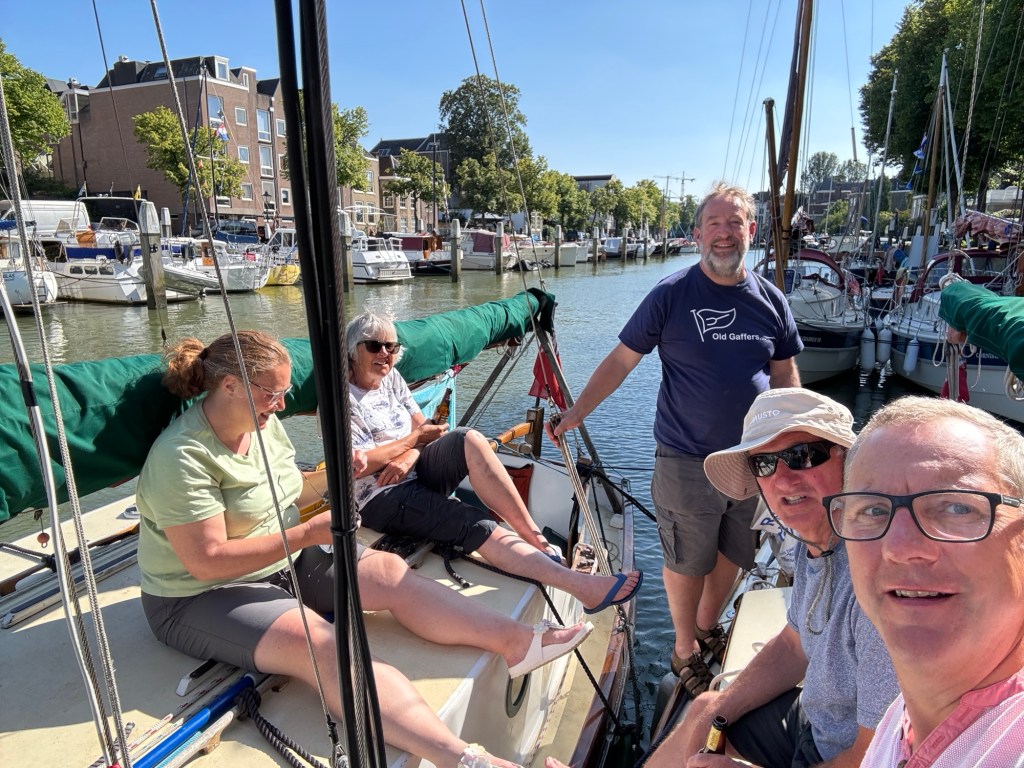
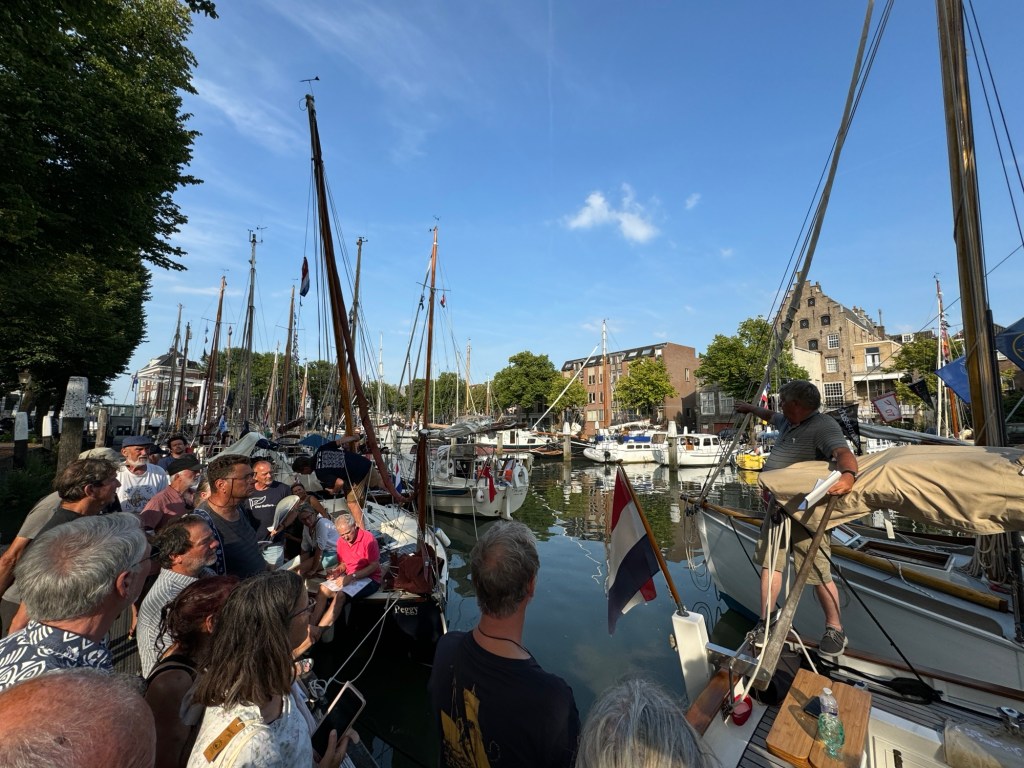
Drinks aboard East BreezePicturesque DordrechtHistoric boats in the harbourThe palaver on the pontoon (briefing for the next day)Stardust, Molly and Indian Runner
Having entered the canals and reached Middleburg, our next task was to cross the Zeeland region to reach the pre-rally gathering in Wemeldinge.
After fuelling up, we motored down the wide straight canal to the lock at Veere which opens onto the Verse Meere. This is a brackish lagoon created as part of the system to control water levels. It’s evidently very popular for all kinds of water sports and is bordered by beaches, camp sites and sailing clubs. The buoyed channel is quite narrow and winding and it’s necessary to stay within its path as we found out to our cost!
We threaded our way under sail – our course always seemed to be a beat, despite the twists and turns of the channel. Every time we thought we could sail straight to the next mark, the wind would shift to head us off! After an hour or two of short tacking back and forth in the narrow channel, we gave up and motored, as we’d been warned not to turn up late to our destination that night, Goes (pronounced like a Scot might refer to his home: “hoose”).
We needn’t have worried, when we reached the lock to leave the Verse Meer, we discovered it was broken and quite a few boats were waiting. We rafted onto the waiting pontoon and, er, waited. It was no hardship in the sun!
After something over an hour, the lock was fixed and disgorged its waiting flotilla of boats. I had been worried that we might not get into the lock as so many boats were waiting. However, the lock was huge and after over 30 boats had emerged, we were cleared to enter – all the waiting boats fitted easily.
Indian Runner and Molly on the Oosterschelde
Even though it was now late, we were still determined to reach Goes, so motored a short distance along the tidal Eastern Scheldt to our final lock and the short canal to Goes. As we entered that lock we were told there was a problem with one of the bridges ahead but we went ahead anyway. It was early evening by then but engineers were working to fix it and, by the time reached it, it was opened. We passed up to the town, moored and walked to the town square for our evening meal.
Approaching GoesThe Mary Magdalen church in the centre of GoesNight view of Goes
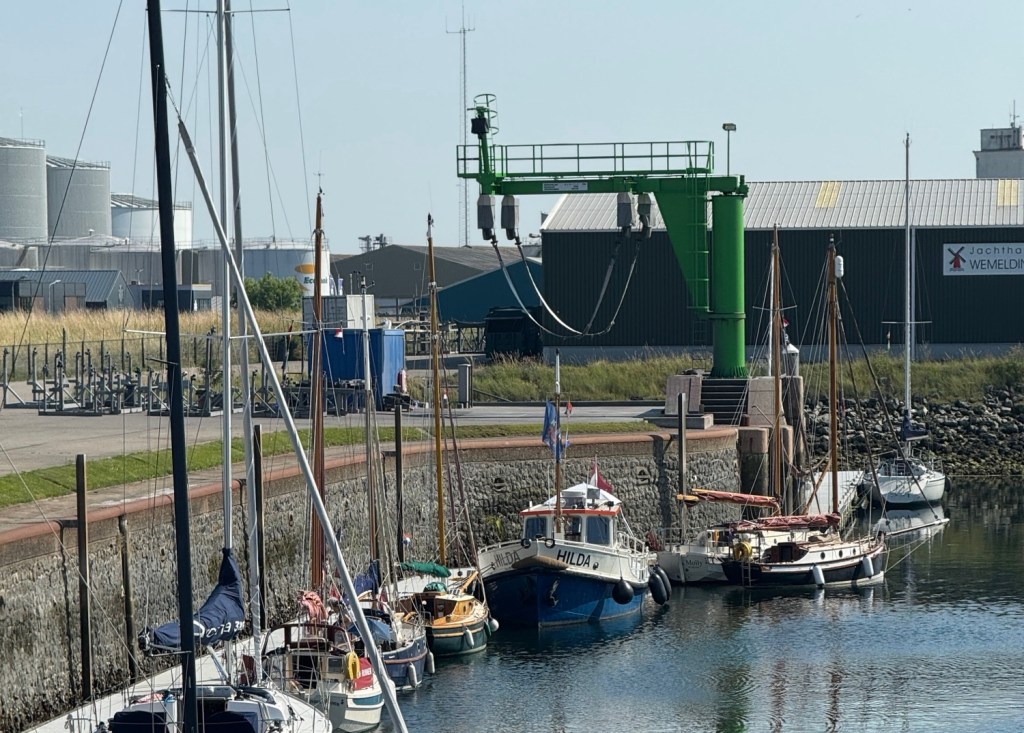
The following day our target was to travel the six miles or so to Wemeldinge, for the “pre-rally rally”. Many of the boats travelling to Hellevoetsluis for the main rally were to gather at Wemeldinge and travel onward in convoy.
We left our moorings in Goes and made our way along the short canal to the sea lock, only to be stopped at a bridge in the small village of Wilheminasdorf. We had two red lights, indicating a delay and we received local information that the bridge was broken and it would be several hours until it opened, so we made fast as best we could. It was a very hot day but I could think of worse places to be trapped!
Plum, Moon River, Molly, Indian Runner and Puffin Bach trapped in Wilhelminasdorf
After a while, we we visited by local fellow gaffer owner Rik who offered us a lift to the bar whilst we waited. As I knew we had a couple more hours to wait, I inflated our tender and ferried some of our party ashore. Rik very kindly drove us to the sailing club bar, where we bought ice creams back for everyone.
Just before the engineer was due to arrive, a large fleet of boats arrived behind us from Goes. The bridge was lifted as soon as the engineer arrived and there was a general jostle to reach the lock. It took two lock cycles to pass all the waiting boats through, but we were soon in Wemeldinge.
Transcur en route to Wemeldinge
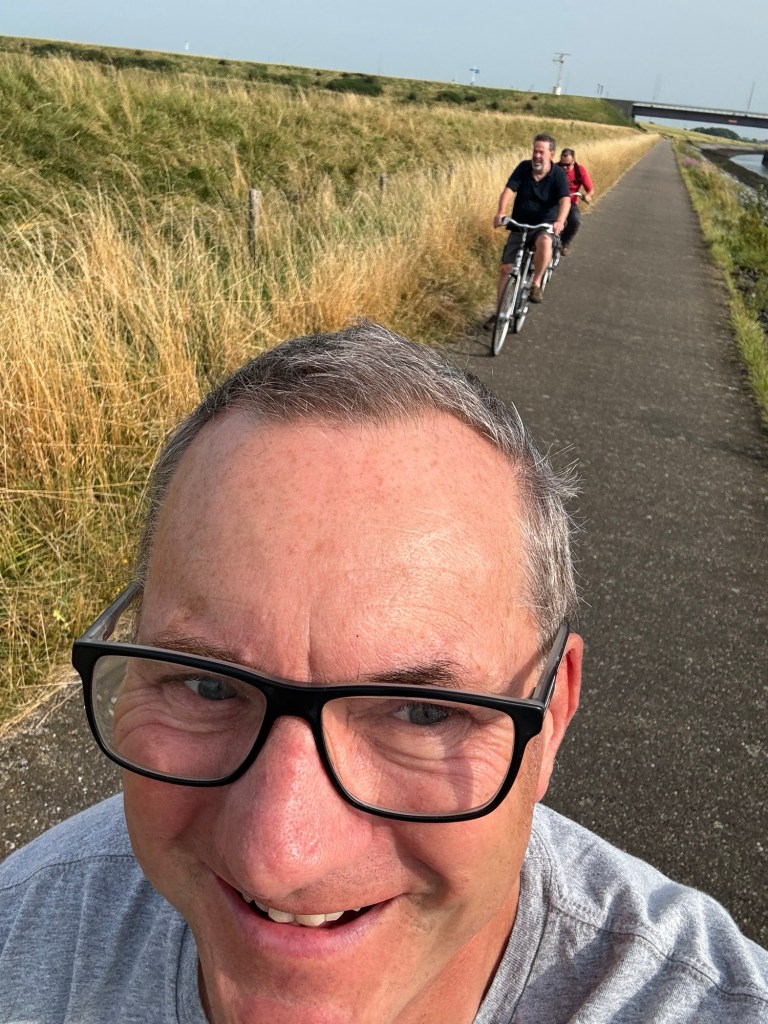
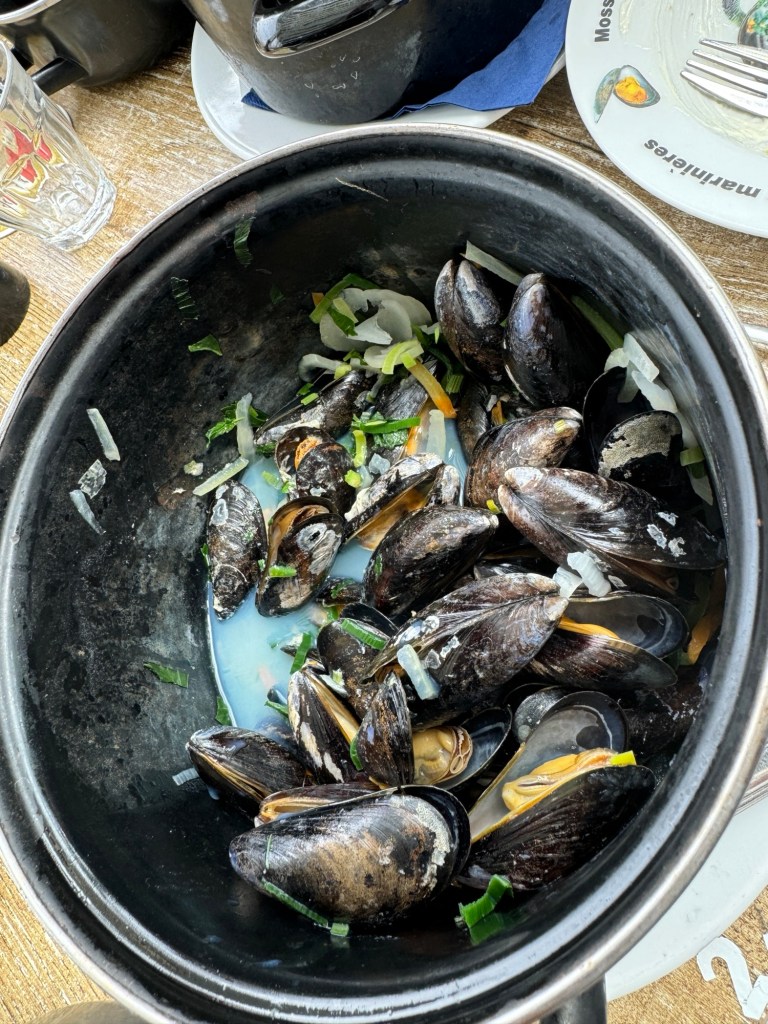
We took the next day as a rest day, hired bikes for a tour of the local area and sampled the excellent seafood in nearby Yerseke. Later, a reception had been arranged to welcome all the travellers and we spent the evening getting to know our travelling companions.
Cycling along the canal Seafood in YersekeExcellent mussels cooked local styleWelcoming reception
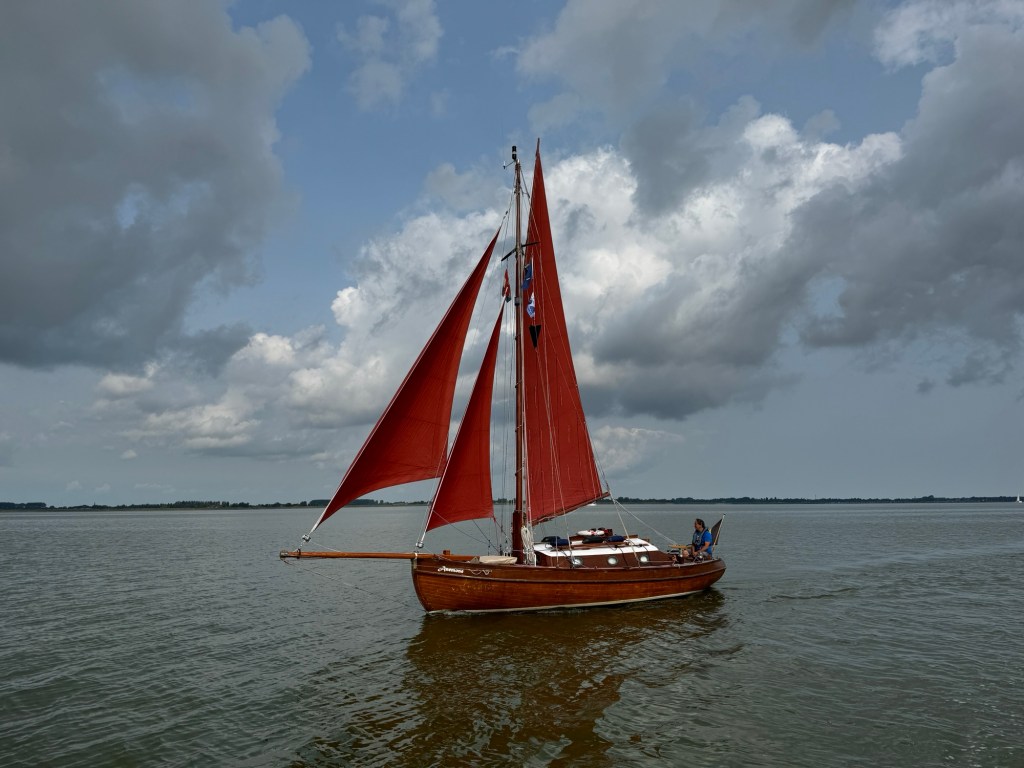
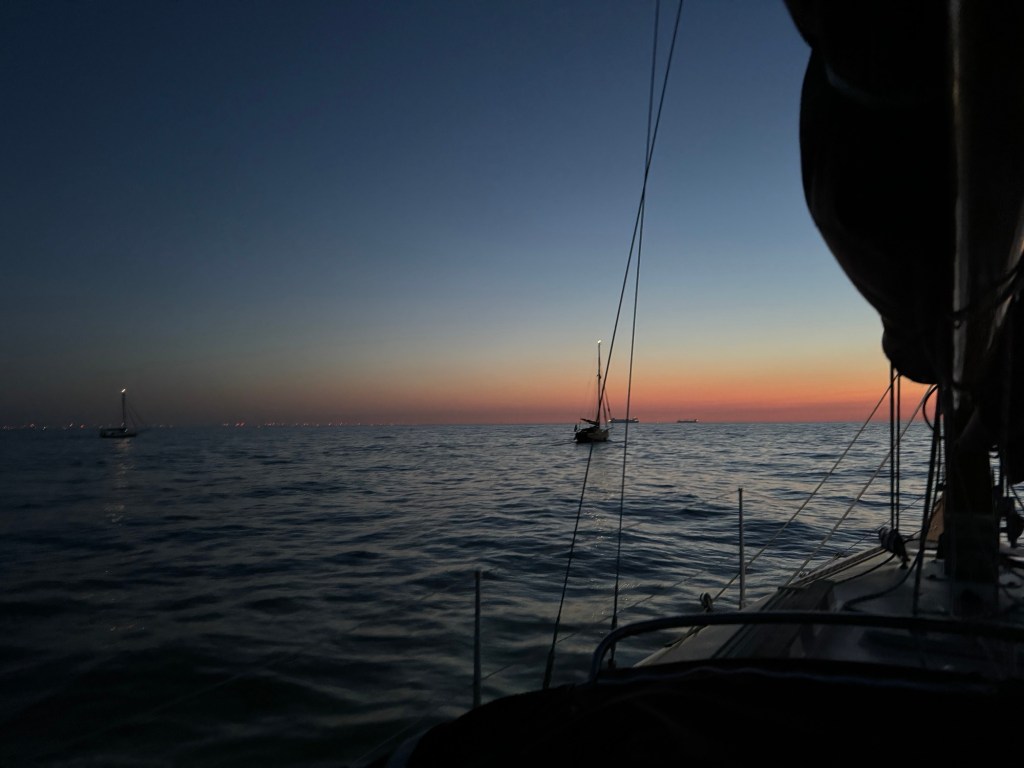
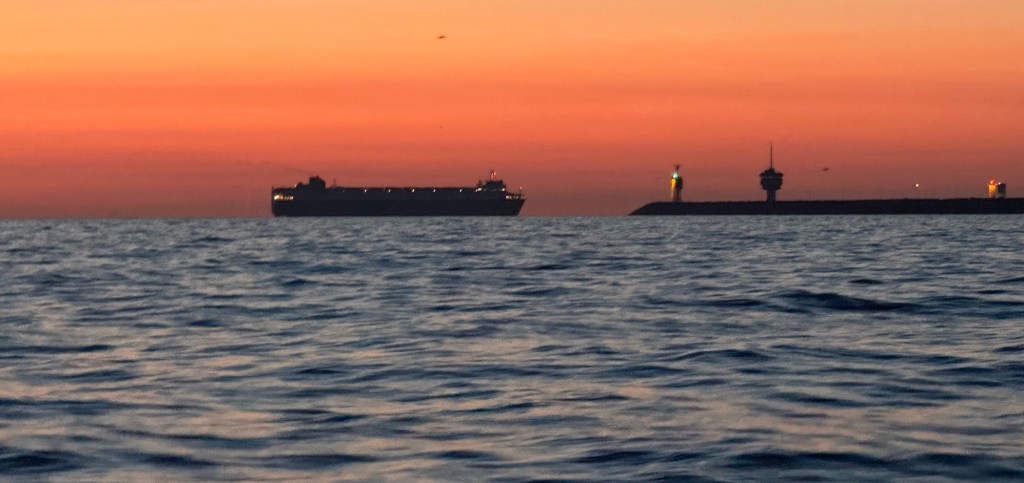
We made a 4.30am start from Blankenburg, leaving the port in the darkness with the bright lights of Zeebrugge port ahead. It was a very calm morning and we motored down tied with just the staysail to stabilise us. Despite being a neap tide, the current was very strong and we were making over 6kt as Zeeland hove into view. We had to wait for a large container ship to pass before turning across the Westerschelde to enter Vlissingen. There were a number of other boats waiting for the ship lock into the canal, as apparently there had been a problem with the lock. We passed through a few minutes after the time for the “blue wave”, where a convoy of boats passes through the bridges opening in sequence.
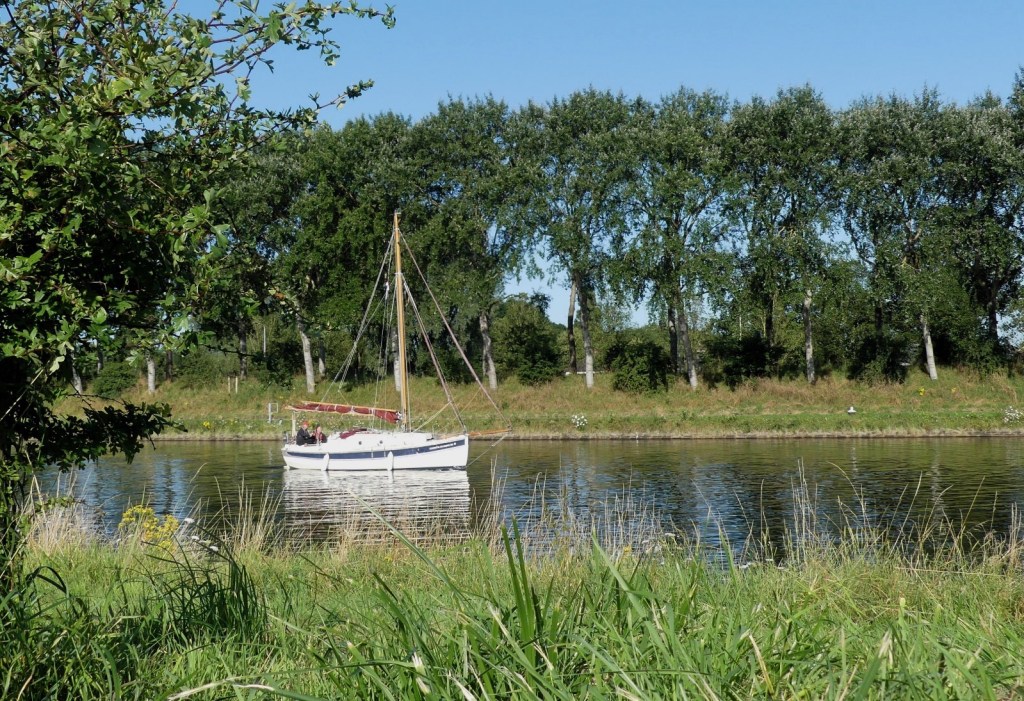
Our destination was just a few miles up in the historic city of Middleburg. Before we could relax and have a kip after our early start, we were introduced to box moorings. I’m sure we entertained the onlookers but with help, managed to get settled.
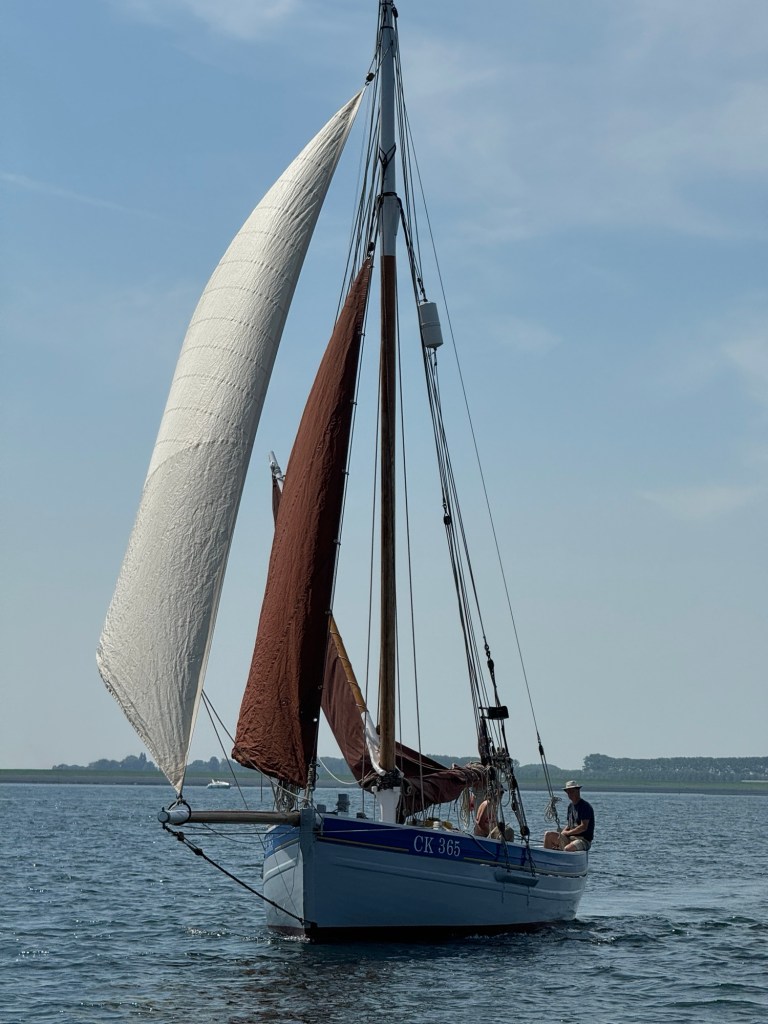
Predawn departure Approaching ZeebruggeSunrise over ZeelandRaising the NL courtesy flag Into the canal Keeping up with the Blue WaveMolly motoring up to Middleburg (photo courtesy of E. Frenks)Arrived in Middleburg Moored stern to














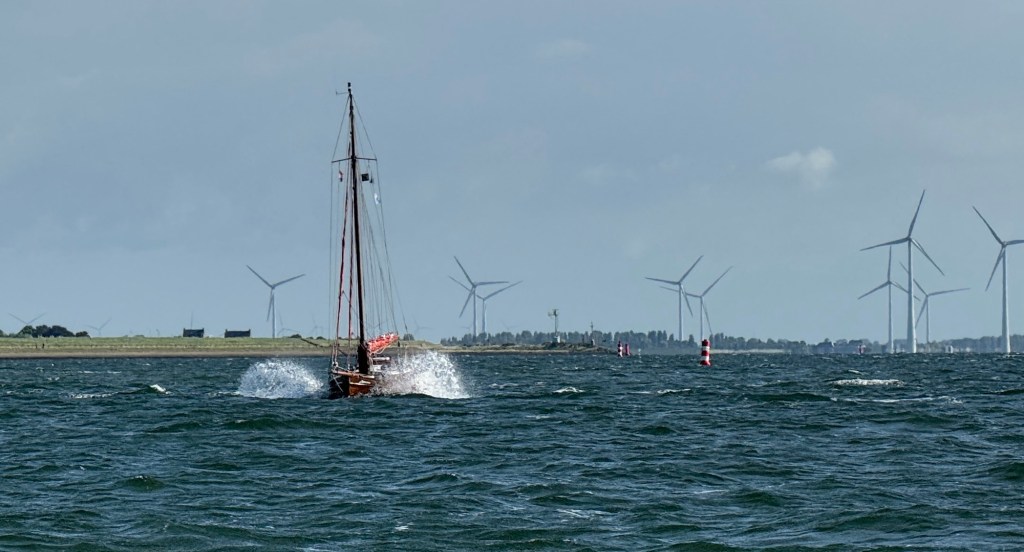


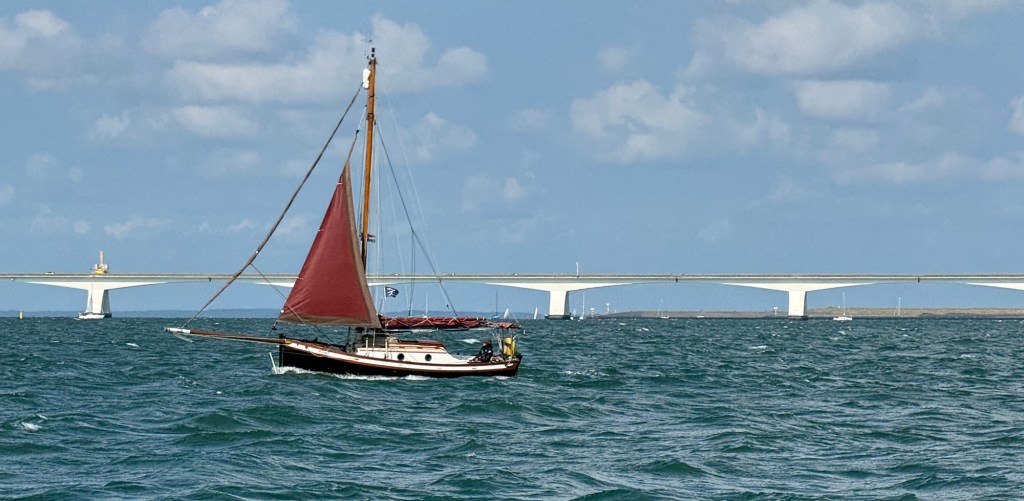
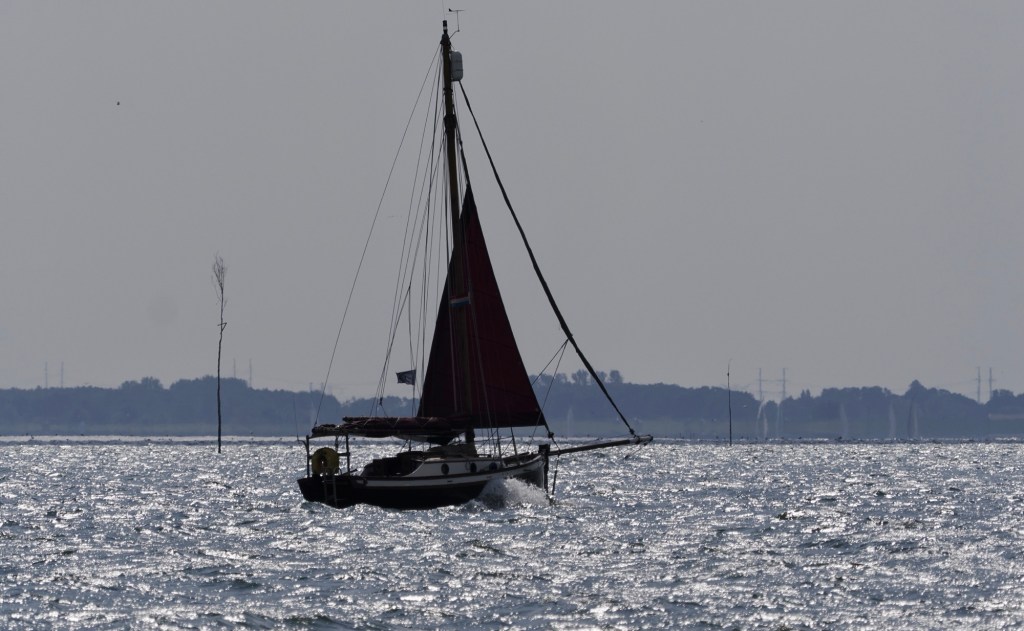




































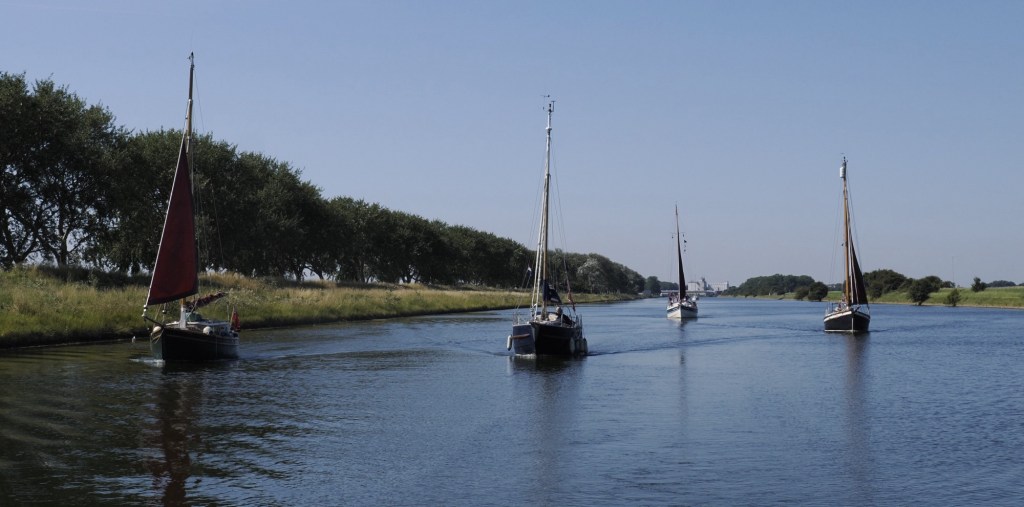
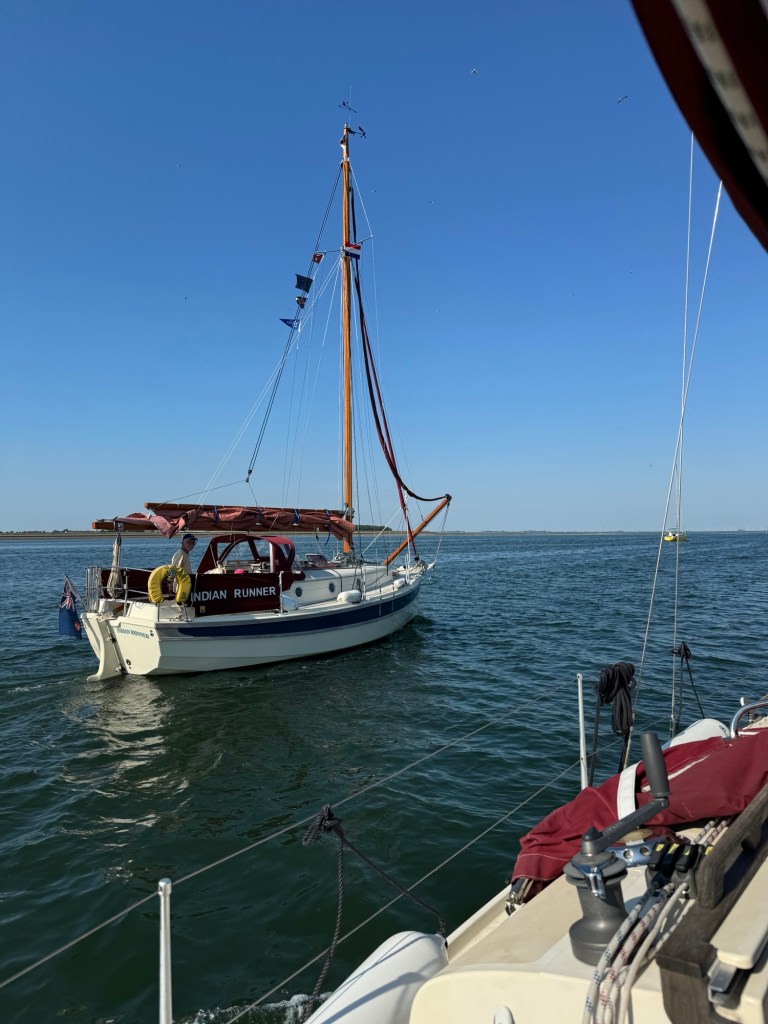
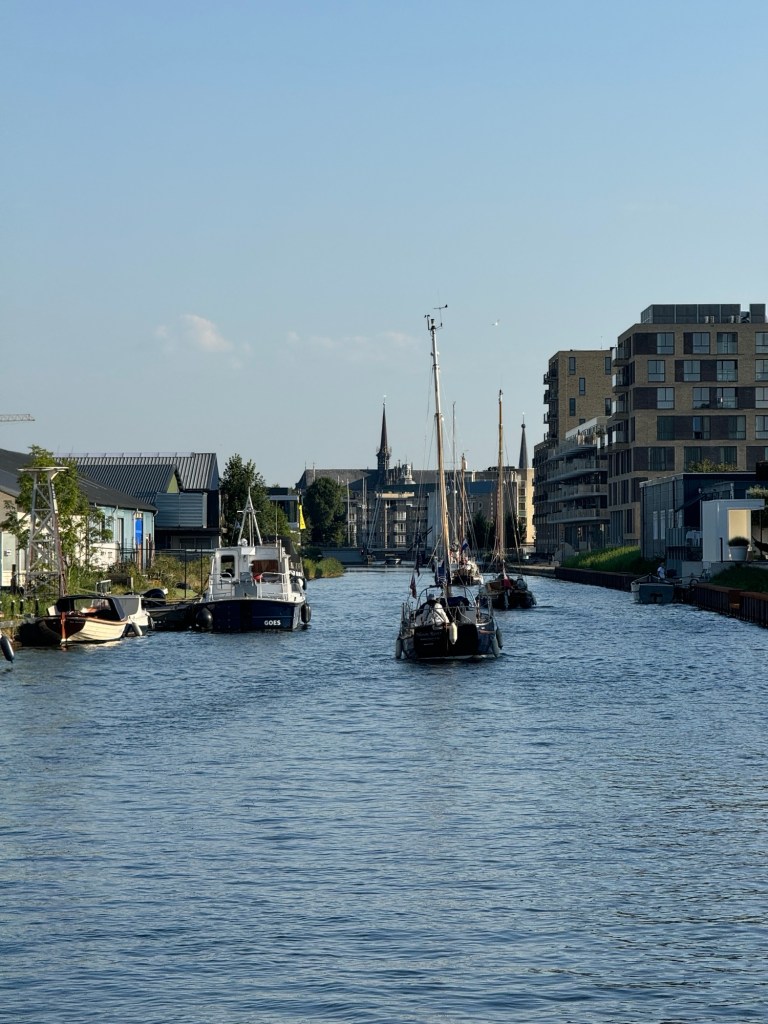

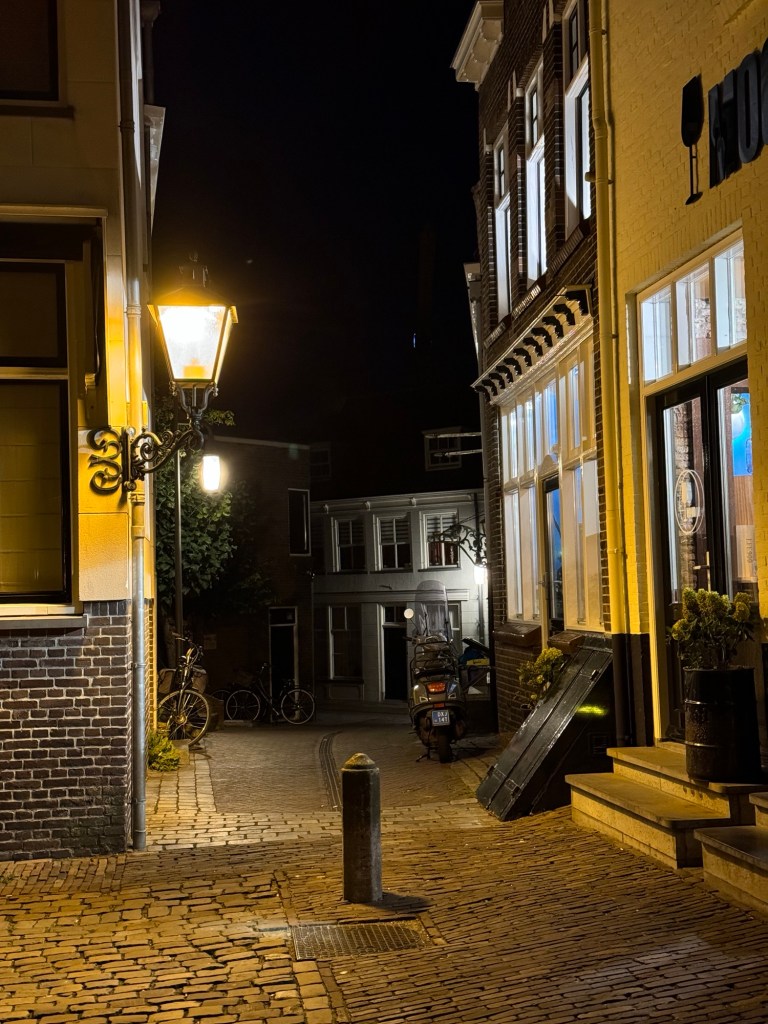








 Meandering Molly