Tag: mast

Winter maintenance

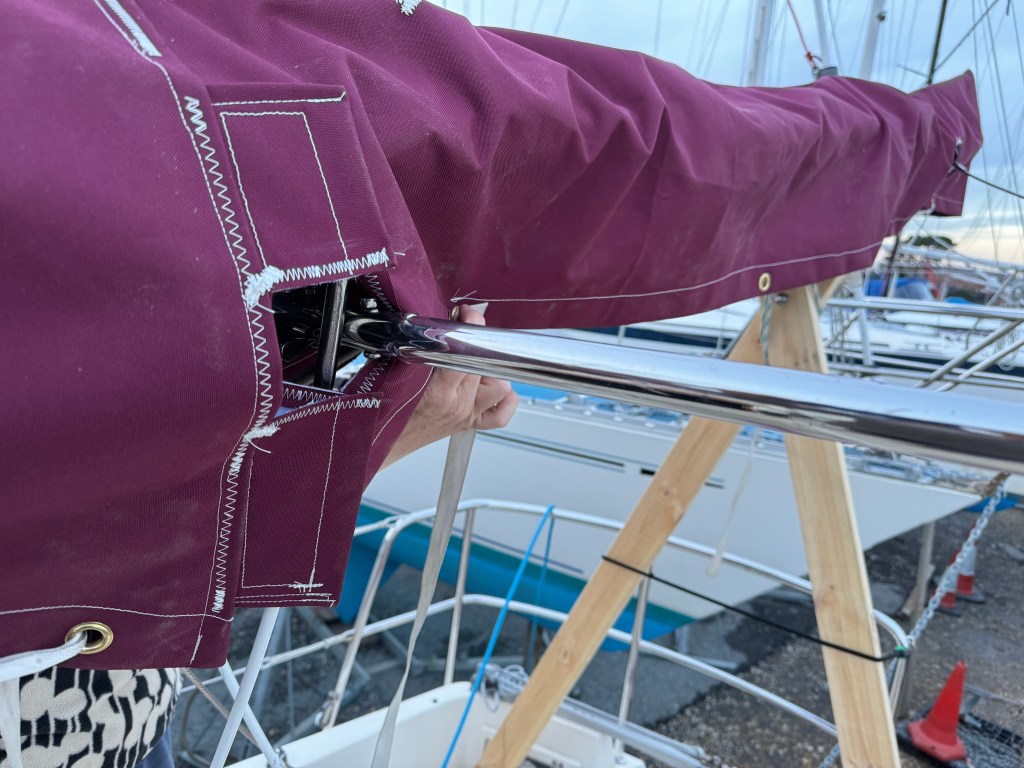
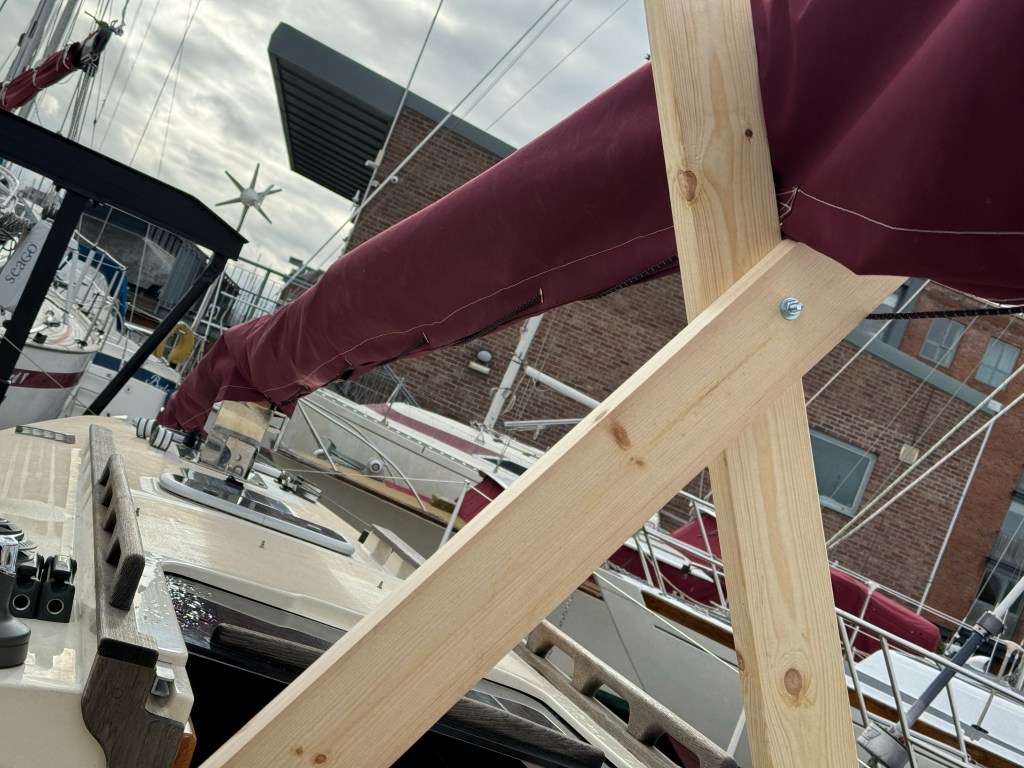
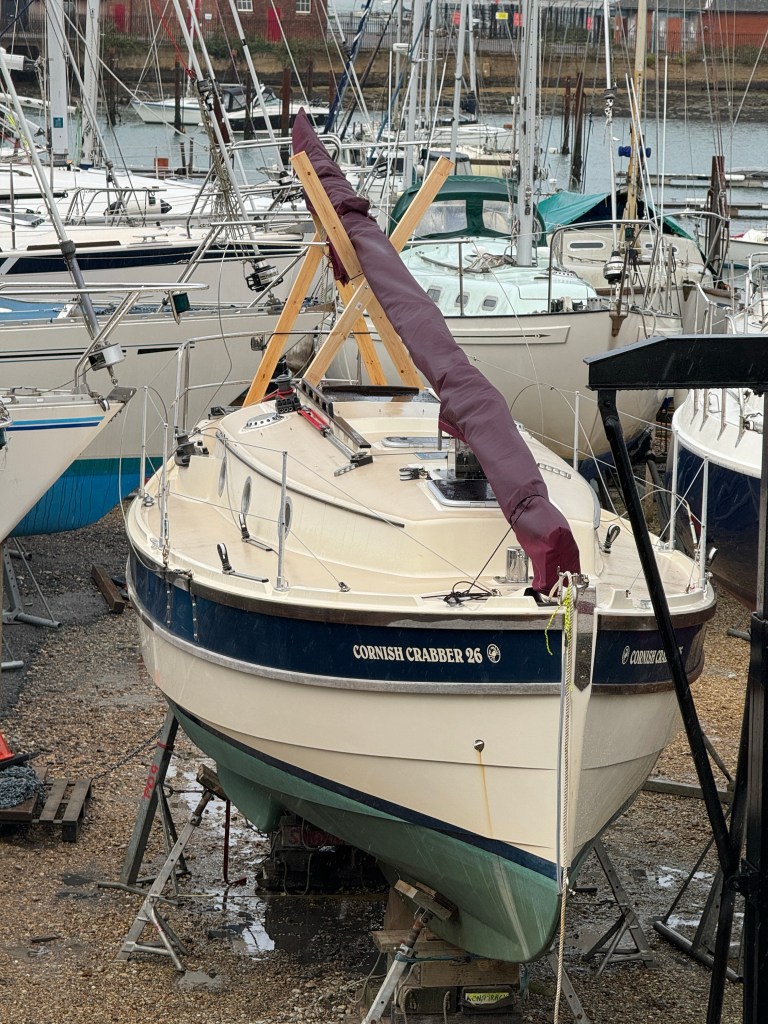
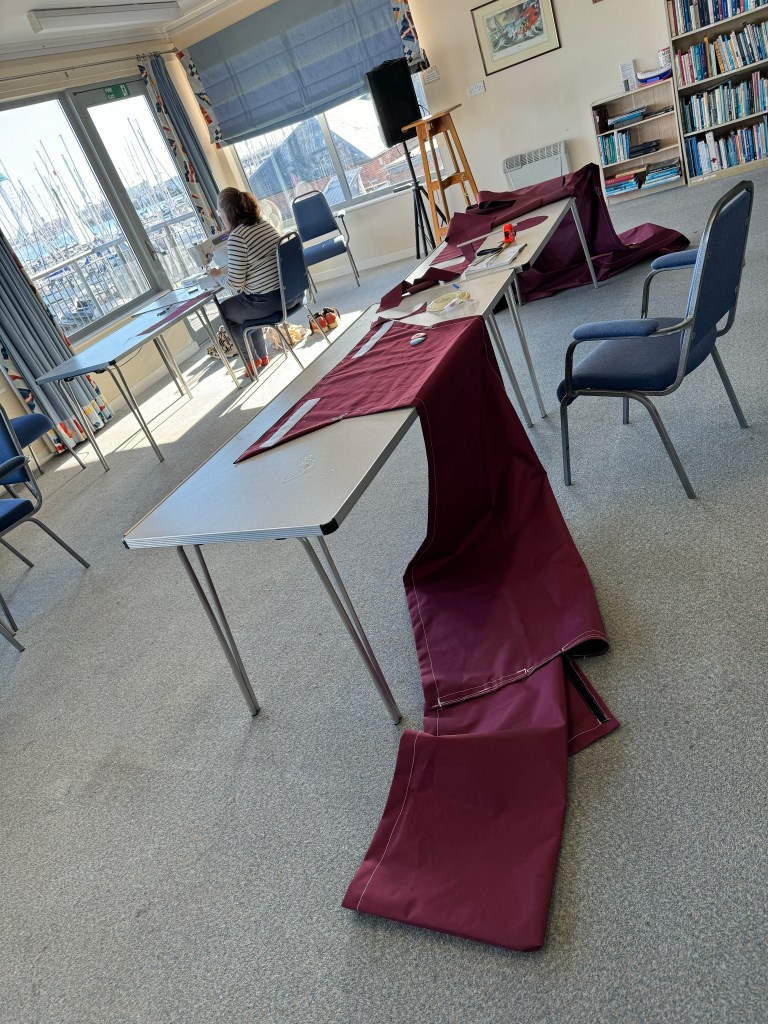
When Molly came ashore for the winter, I wanted to protect the mast from the worst of the weather. Withe the mast lowered, I was able to make wooden cruitches to support the top end, either side of the spreaders; the lower end sat comfortably through the tabernacle. Meanwhile Niki made a waterproof fabric cover for the mast which will keep wind and rain off not just the varnish, but also accommodates the jib on its carbon fibre furler and also the running rigging.

The list of winter jobs is not too long, but one I have been avoiding is the holding tank pump. This has not worked since we bought the boat and, though I can hear the pump run, it has no effect. It’s been no hardship to not use the holding tank but I’m expecting to need it next season and, besides it bothers me that it doesn’t work.

So, I emptied the port locker and removed the partitions to the electrical equipment and then the leisure battery for access. After a modest amount of wrestling, the “poo pump” was removed and dismantled (the model is called “Gulper”; this seems a very inappropriate name, given what it ingests!

There was good news and bad news at this point. The good news was that the reason for its lack of function was pretty obvious – it has four “tricuspid” valves that ensure the flow is in one direction only, and one pair of them had been fitted the wrong way around. Either it had been assembled incorrectly at the factory or else when the pump was installed on Molly (evidently never been used). The bad news was that the valves in the service kit I’d bought were the wrong size.

After an extra trip to the chandlery, the pump wax reassembled and tested by part-filling the holding tank with water and pumping out. Success! I celebrated by cleaning the prop. I tried vinegar to remove the calcified deposits last year but that was not very successful. This year, I tried HG descaler which worked much better. This evidently had a component which reacted with the timescale and softened it, making it easy to remove. All the other limescale removers I looked at in the supermarket seemed be mostly detergent. It’s clear the prop anode had been doing its job and needs replacing after just one season.

Hibernation time

Having been afloat for eighteen months, it was time for Molly to be hauled out. To protect the mast from the elements and enable maintenance of the wood and rigging, I dropped the mast. This is quite a straightforward process and uses elements of the existing rigging.

Having removed the sails, boom and gaff, I attached the mainsheet between the end of the bowsprit and the jib halyard. I rigged the bowsprit just forward of vertical and led the tail of the main sheet back to a winch. This gives a lot of purchase, and little force is required to ease the mast to horizontal. I made a wooden A-frame to support the mast at the stern and the mast dropped easily onto this. The rigged mast is heavy though, and it took three of us to ease the mast forward, so that the foot is near the bow, which reduces the overhang at the stern.

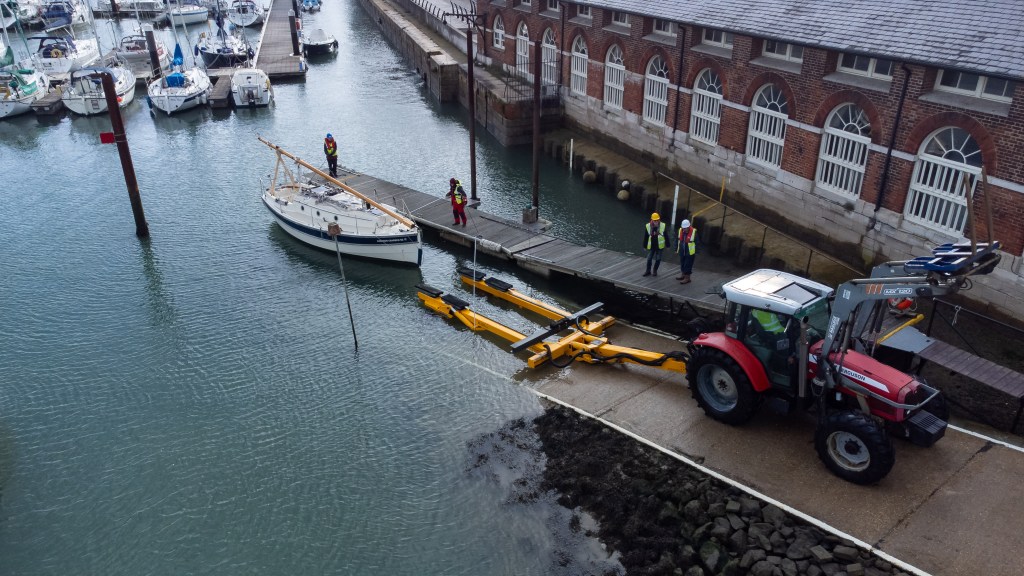
The haul out at our club is a meticulously organised process and Molly was tucked in among the other boats – you can see from the photos why it is not possible to raise or lower the mast once she is parked!

Mast woodwork complete

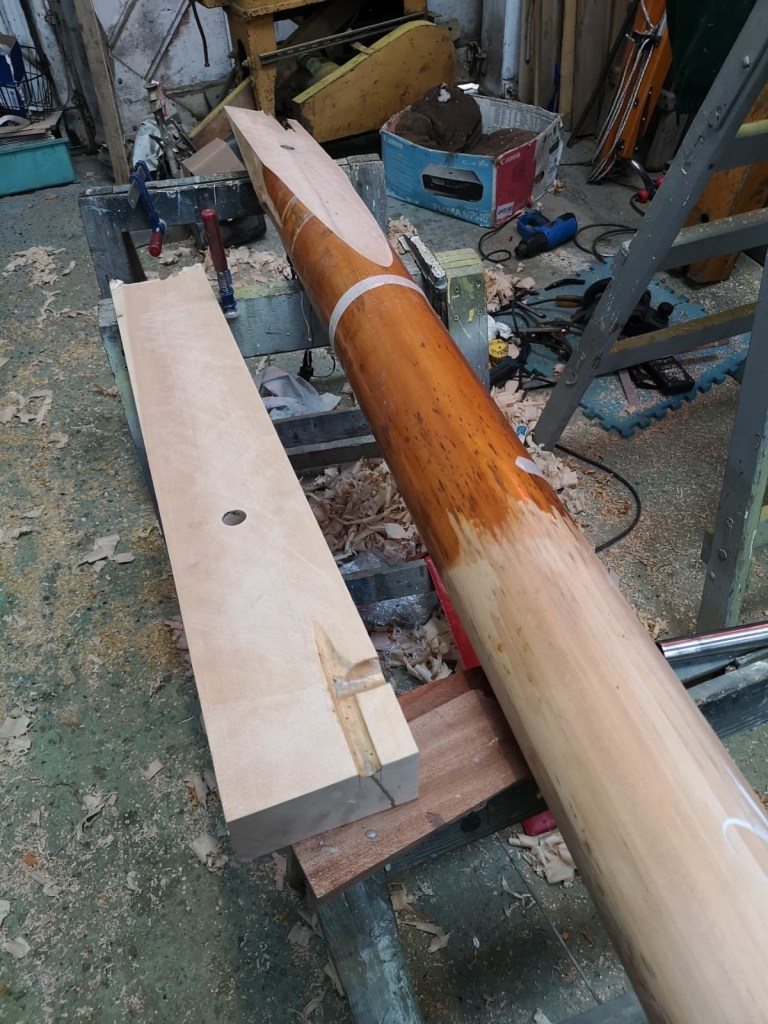
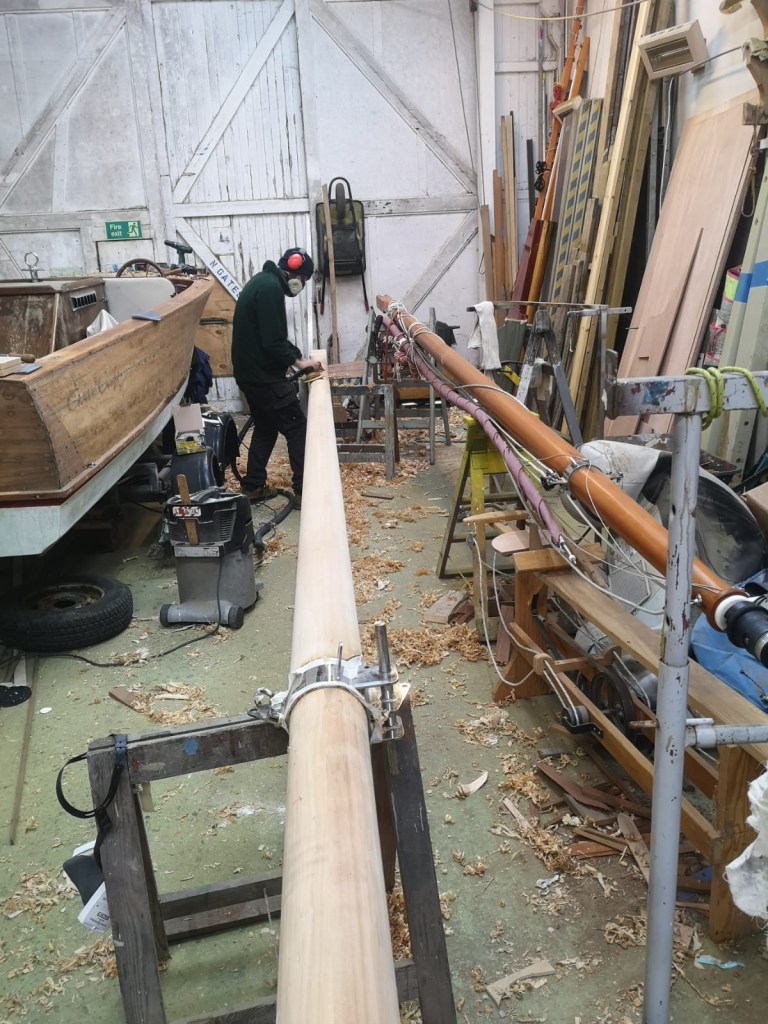
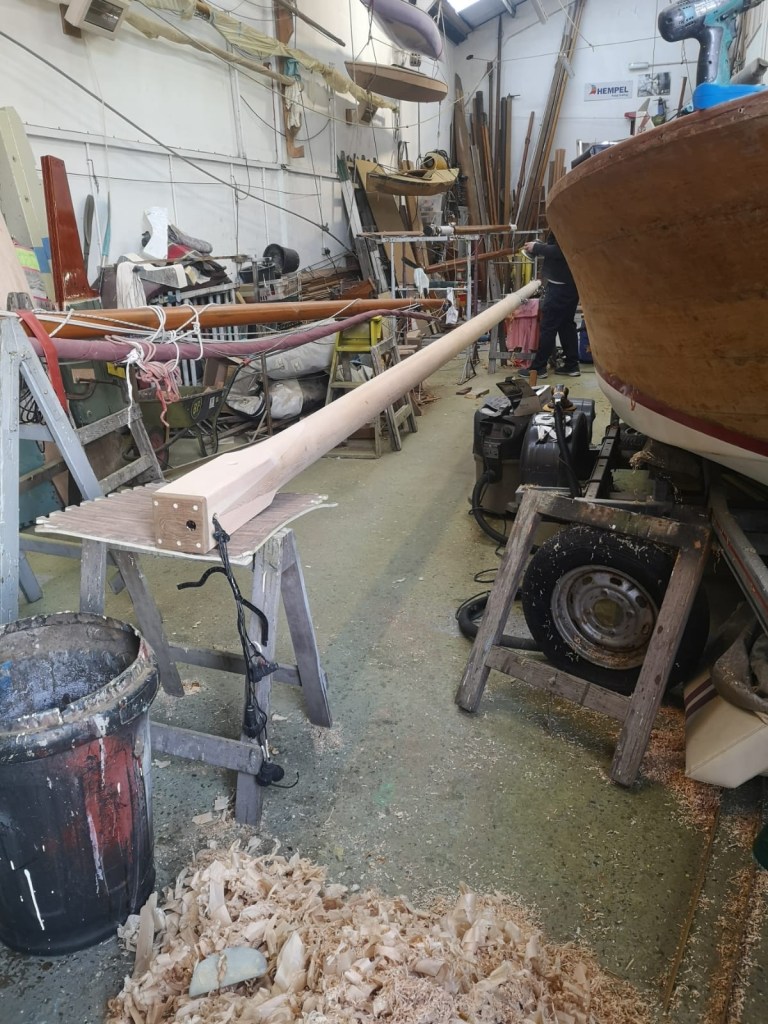
I was very happy to receive these photos today from Nick Gates, the excellent shipwright repairing the rot on Molly’s mast foot. They tell the story of how the scarph is carried out, resulting in a very elegant job, which even improves on the original.

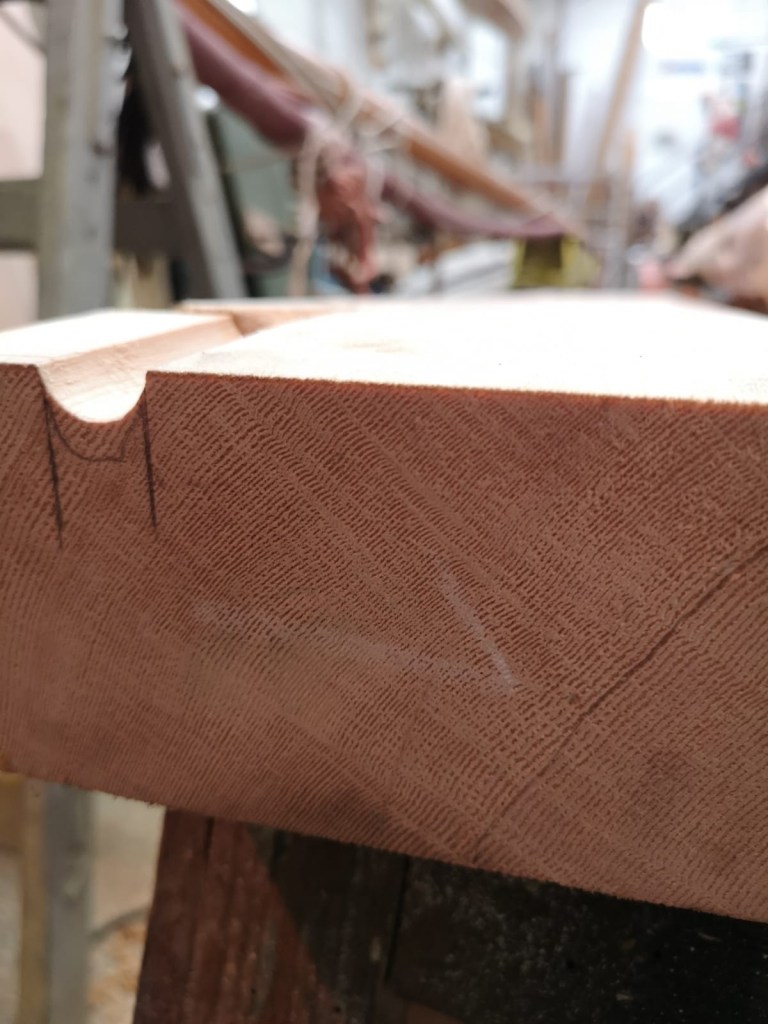
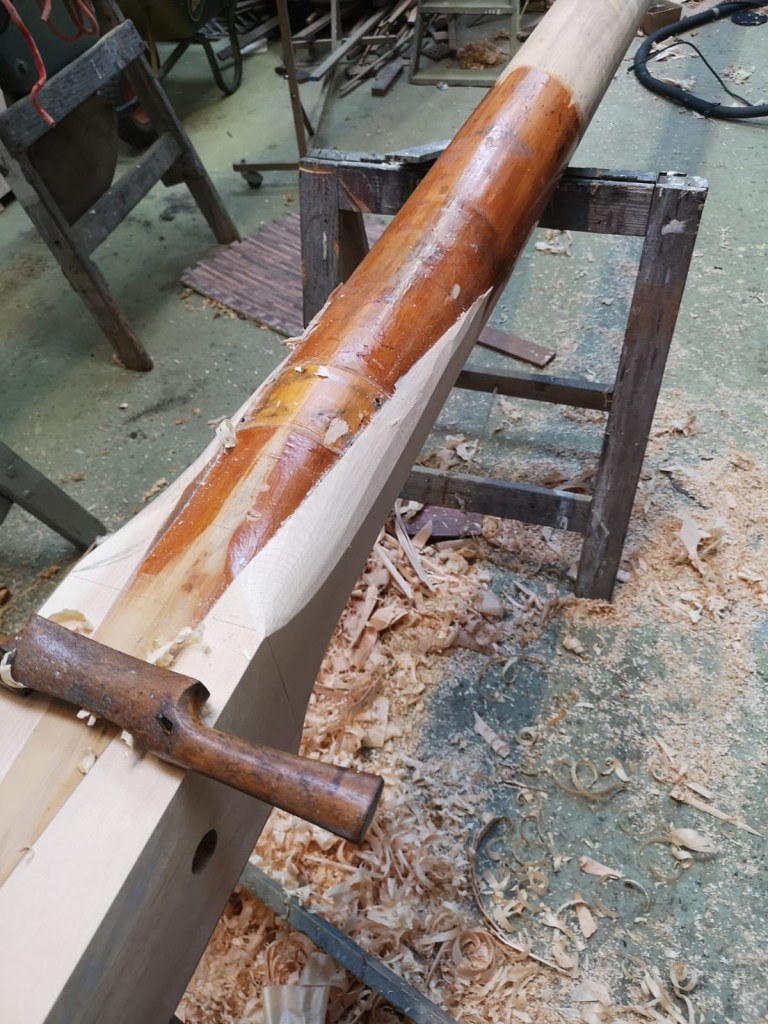
Sitka spruce block being planed flat
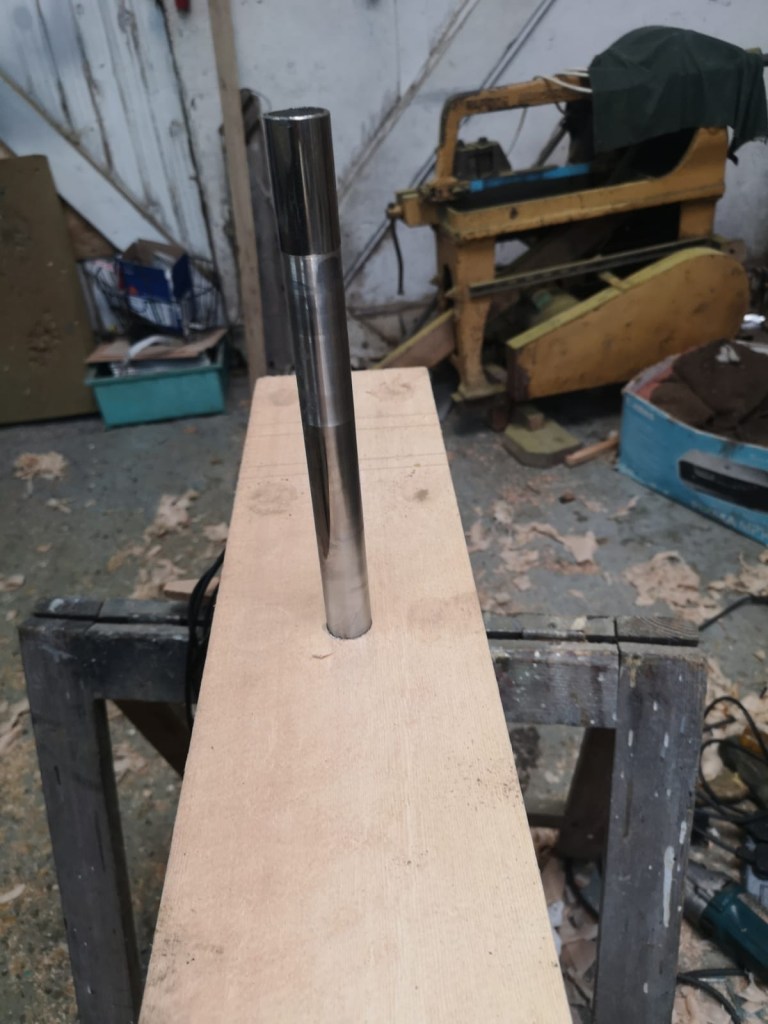
New piece ready for fitting, showing channel for cables
Clamps applied!
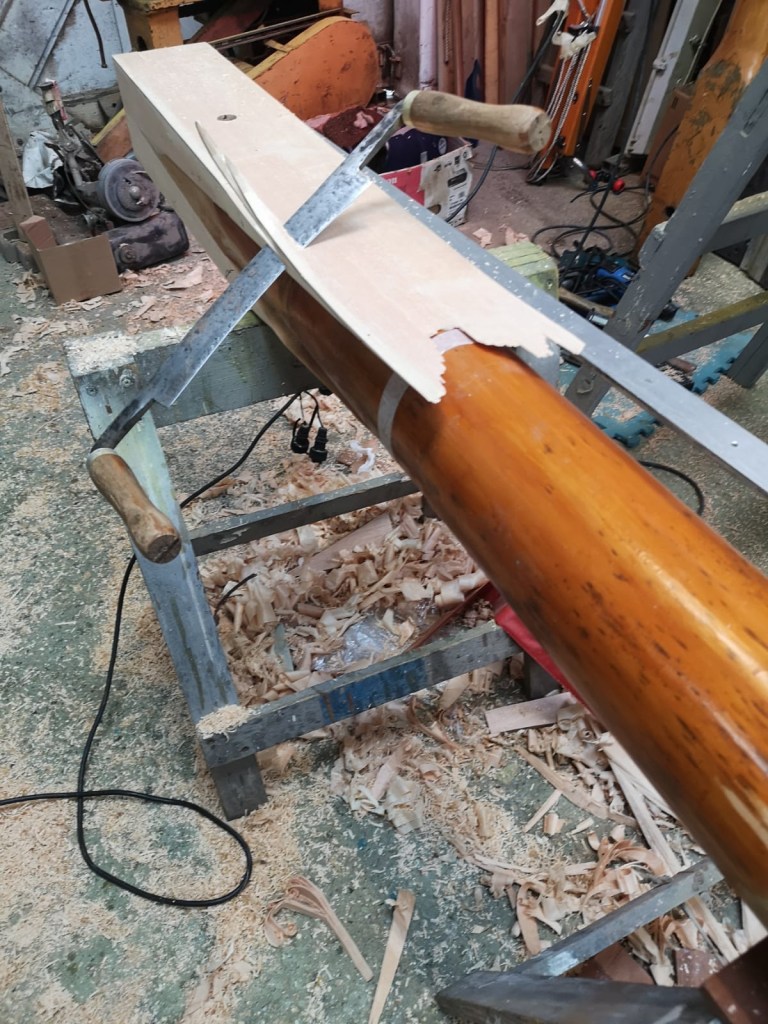
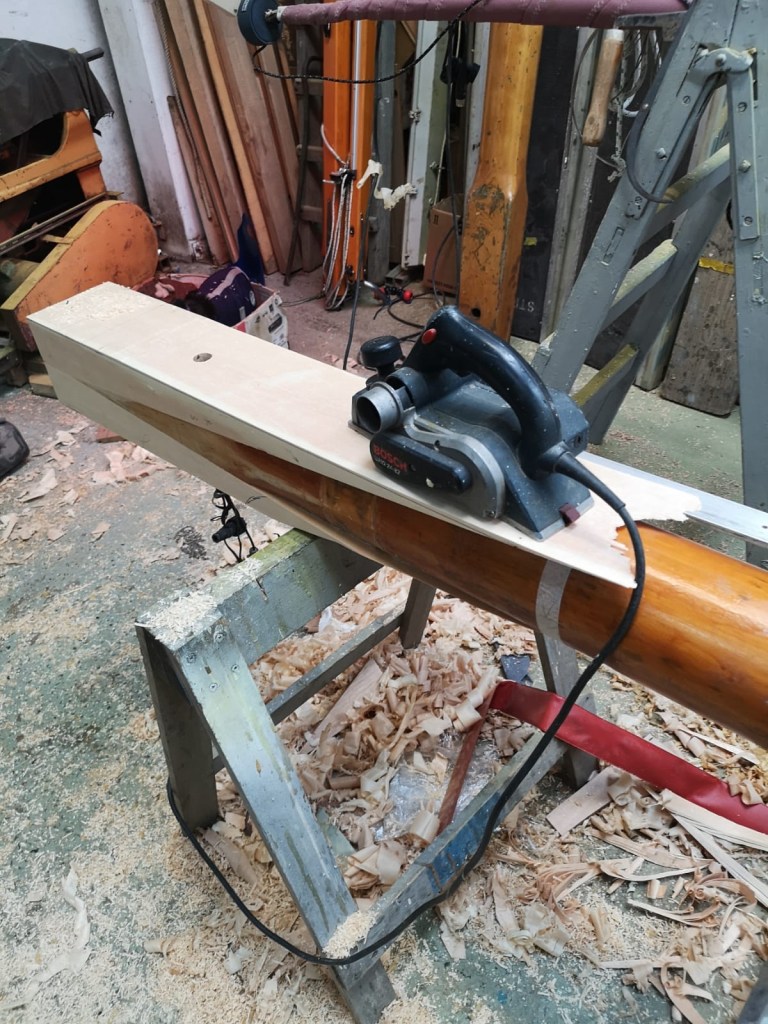
Trimming the scarph
Pleasing shape!
Fairing the shoulders
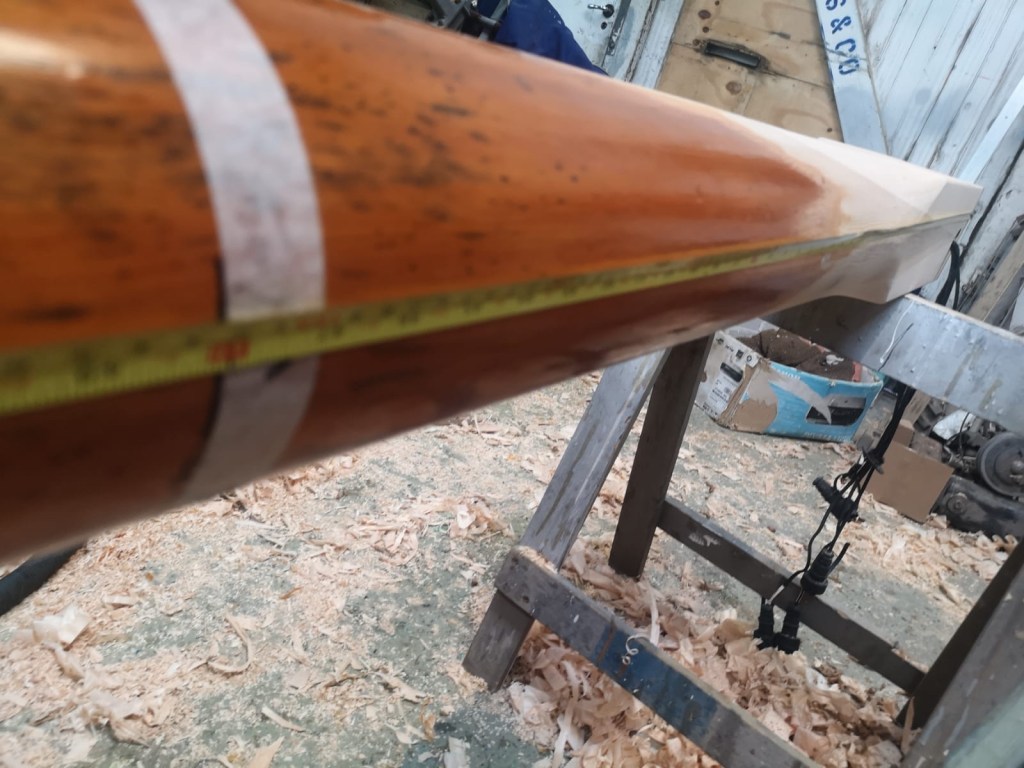
Nick put on a technical bit of tape at the start of the job, to retain the exact length of the mast
Precisely four feet from the foot
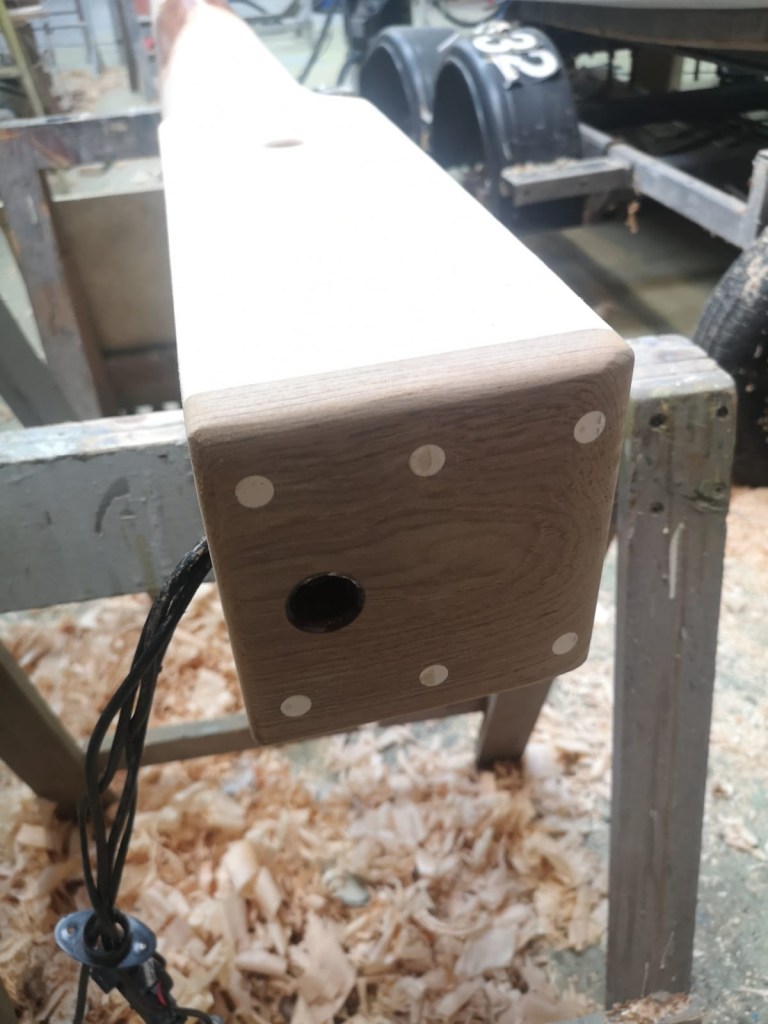
The new foot is made of teak, salvaged from the side of some steps on a Baltic Trader which was broken up 20 years ago
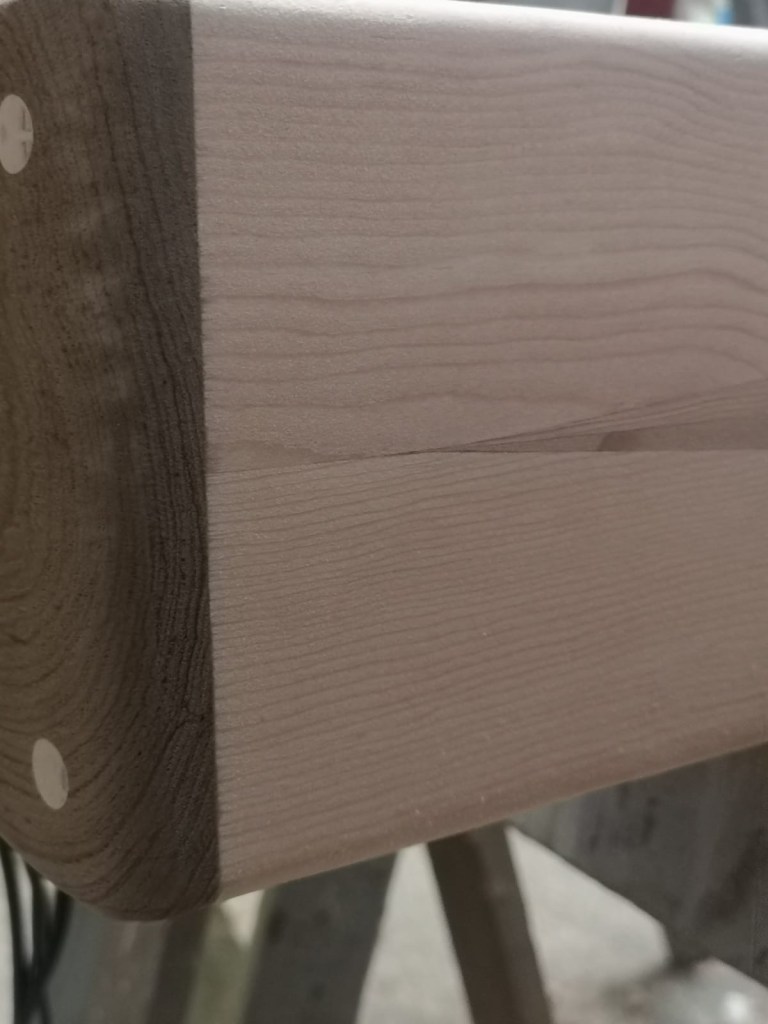
Foot is screwed on and the holes filled with epoxy and microlite (filler) mix
Finishing the surface prior to varnishing
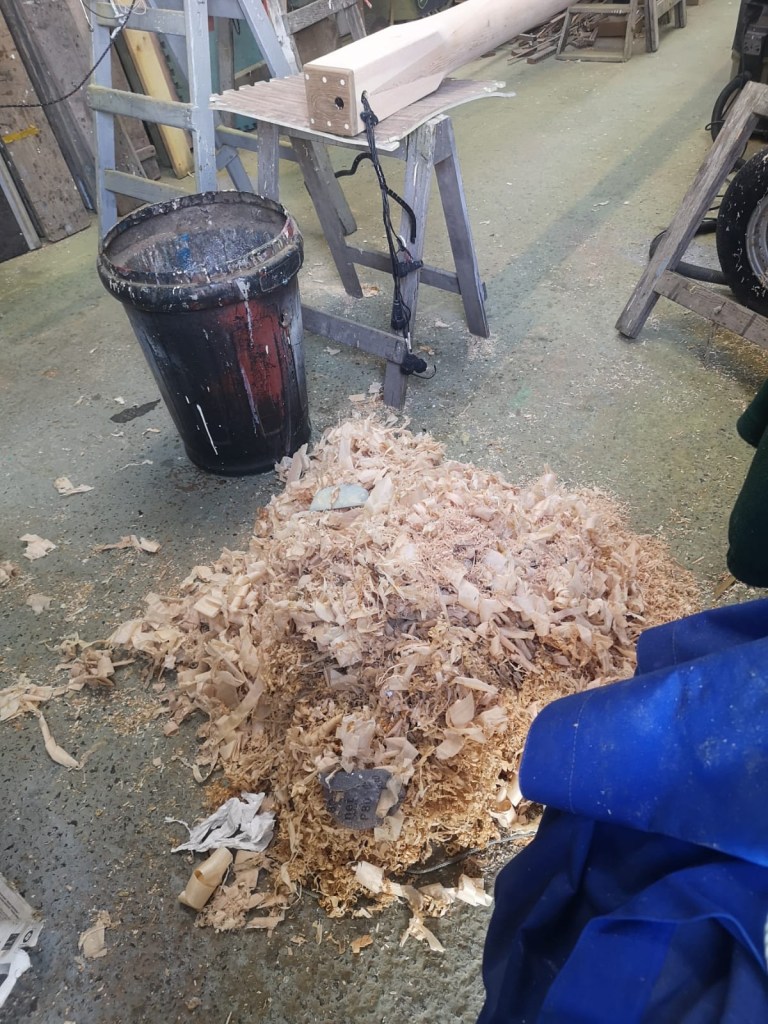
I’ve paid for a spruce block to be turned into shavings!! 😉

Mast repair

Molly’s mast lowered and ready for maintenance
The foot of Molly’s mast when we inspected it in August. In fact the rot extended inside almost up to the tabernacle bolt hole!

When we bought Molly last year, we could see that the mast needed some maintenance, but were not able to drop the mast whilst we were ashore in the yard. During the summer, we removed the mast to reapply the Sikkens coating. To our dismay, we discovered rot at the foot of the mast! This winter, work is finally going ahead to refurbish the mast: remove rotten wood, scarphing new timber and adding a hard wood cap to the foot of the mast which will protect the end grain of the spruce. Whilst we’re at it, we’ll change to coating to a more traditional varnish, which will allow us to better see any signs of water damage to the wood and, I feel, give better protection to the wood, albeit at the cost of annual or biannual sanding and topping up the varnish. Here’s a video of our trip to see the shipwright Nick Gates, who has been assessing the work, before completing the refurbishment of our mast.