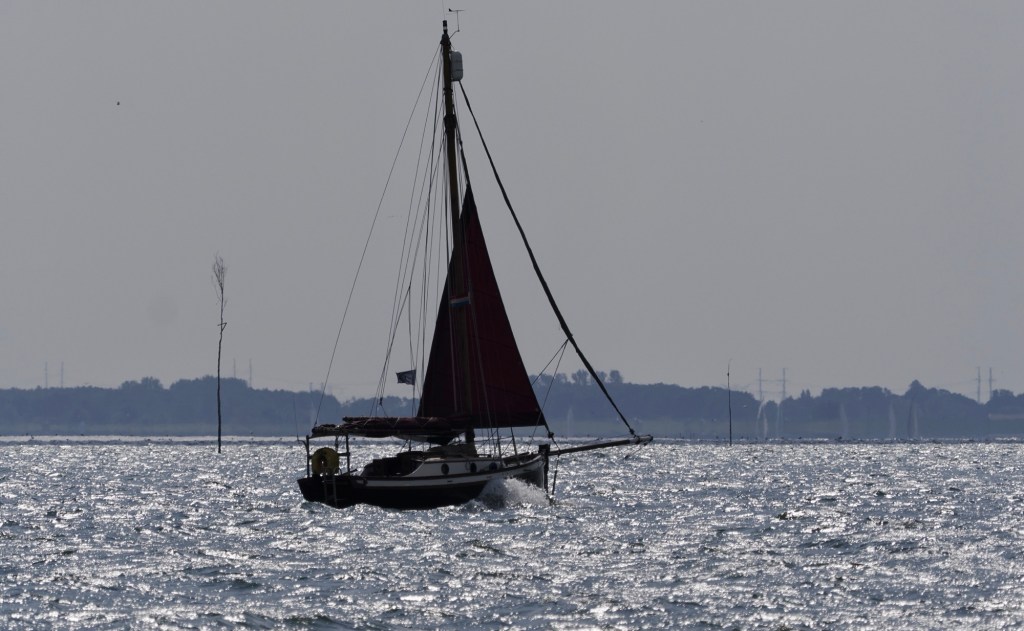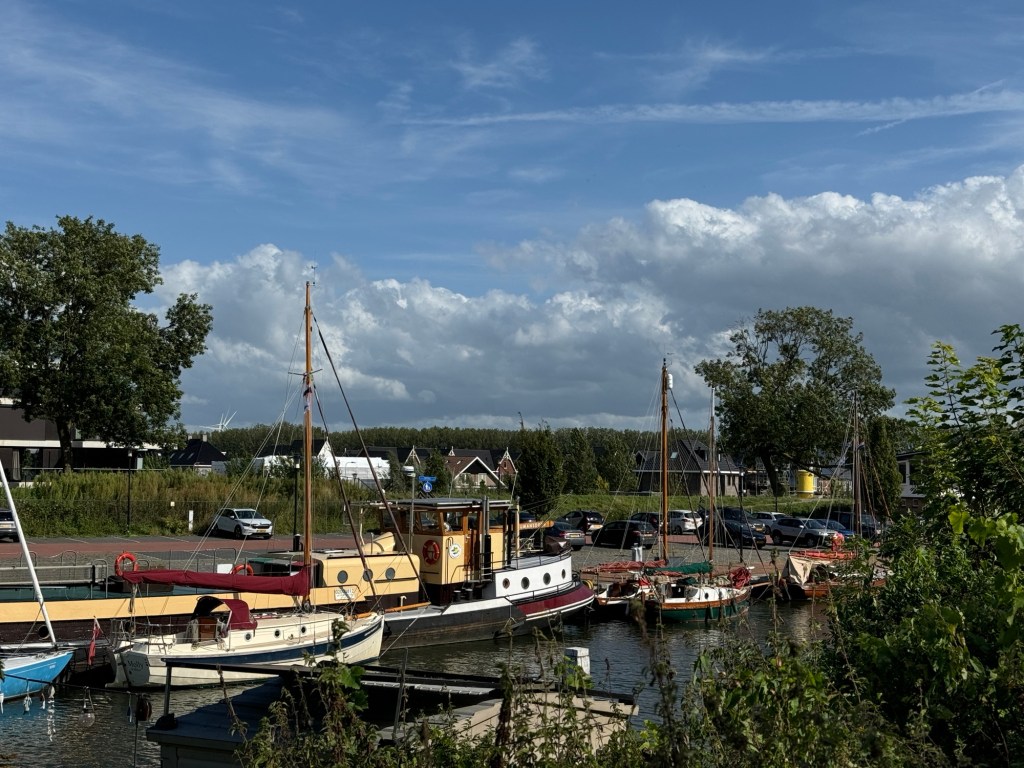
Tag: harbour

From Canal to Channel

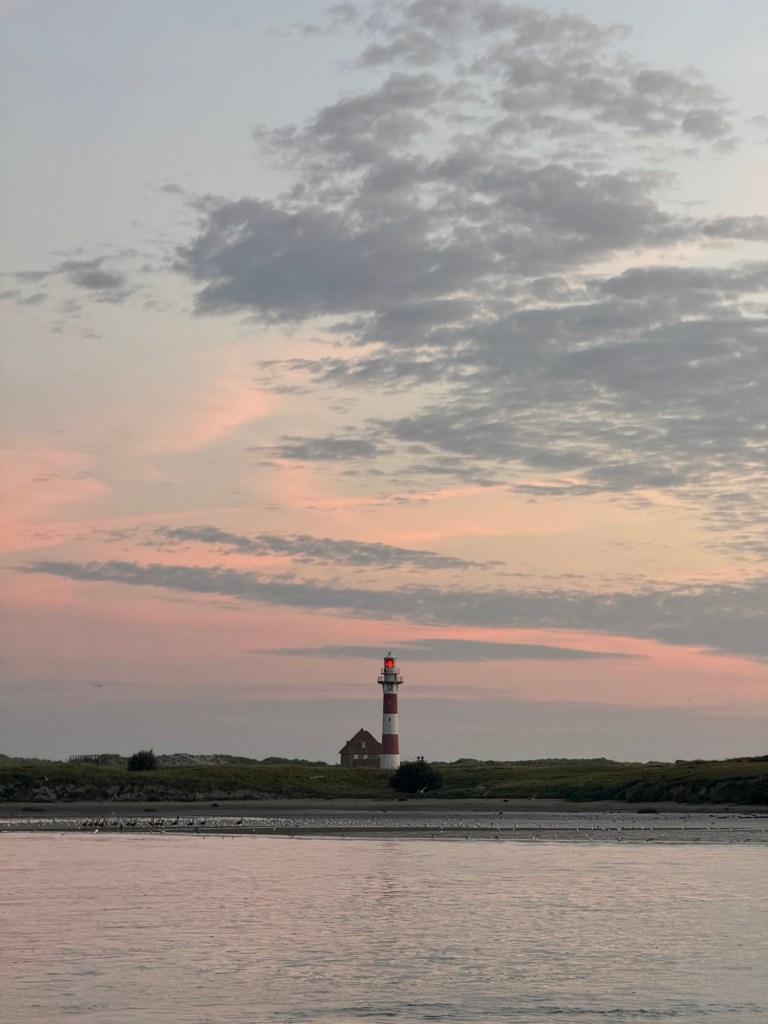
Nieuwpoort light

I left Nieuwpoort before light and experienced that sailor’s privilege, to see the sun rise out of the sea. I made my way close inshore against the last of the eastgoing tide. There was no wind and I abandoned attempts to sail.
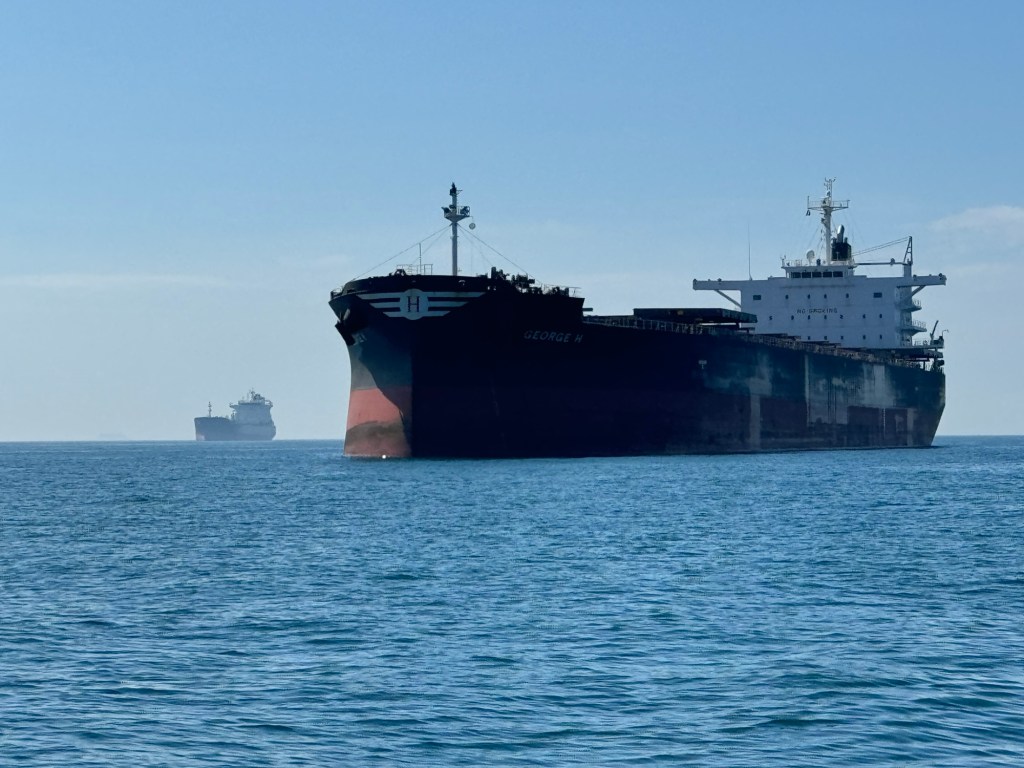
Anchored ships near the shipping lanes. From a distance, hard to discriminate from the fast moving ships in the separation zone
Bin bags – a glassy sea

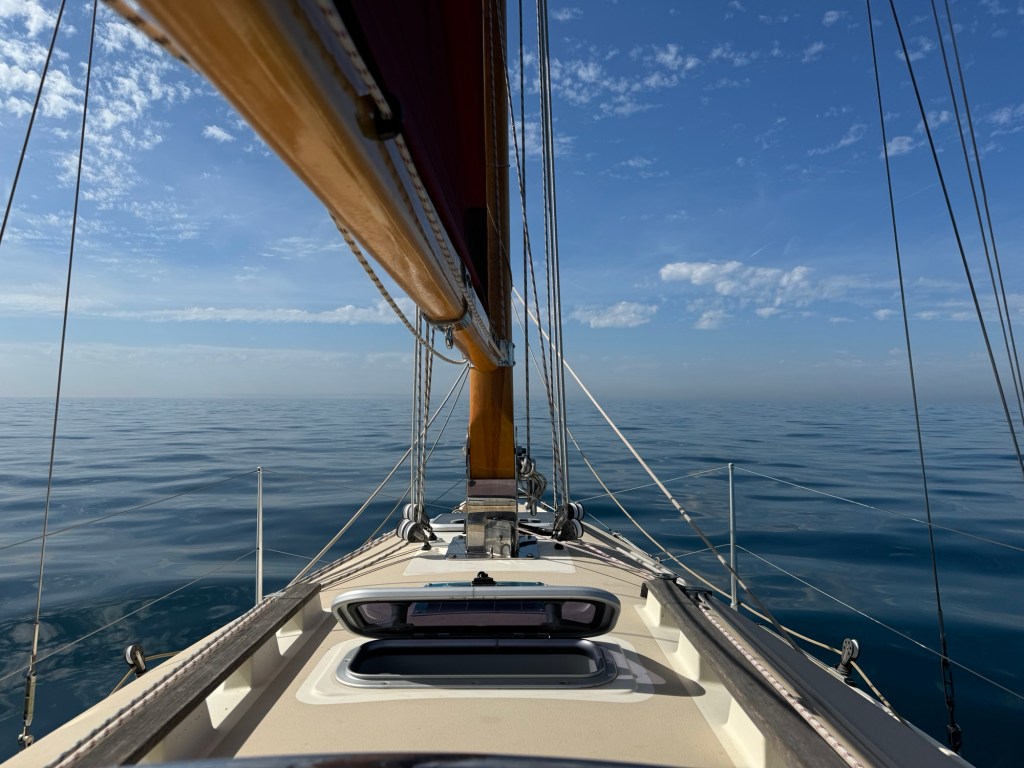
The sea was glassy smooth and the day grew very hot. Visibility was not good and a haze hung across the horizon, making it difficult to judge distance. I was monitoring VHF channels 16 and 74 (channel VTS) and heard no less than three reports of large inflatable boats carrying migrants. This was the first day of calm weather after a period of strong winds, and evidently boats were setting out uptide on the French coast. A French navy vessel was patrolling and deployed its two fast RIBs to track the migrants along the edge of French waters. From the VHF traffic, it seemed that the migrants were picked up by a lifeboat and taken to Dover.
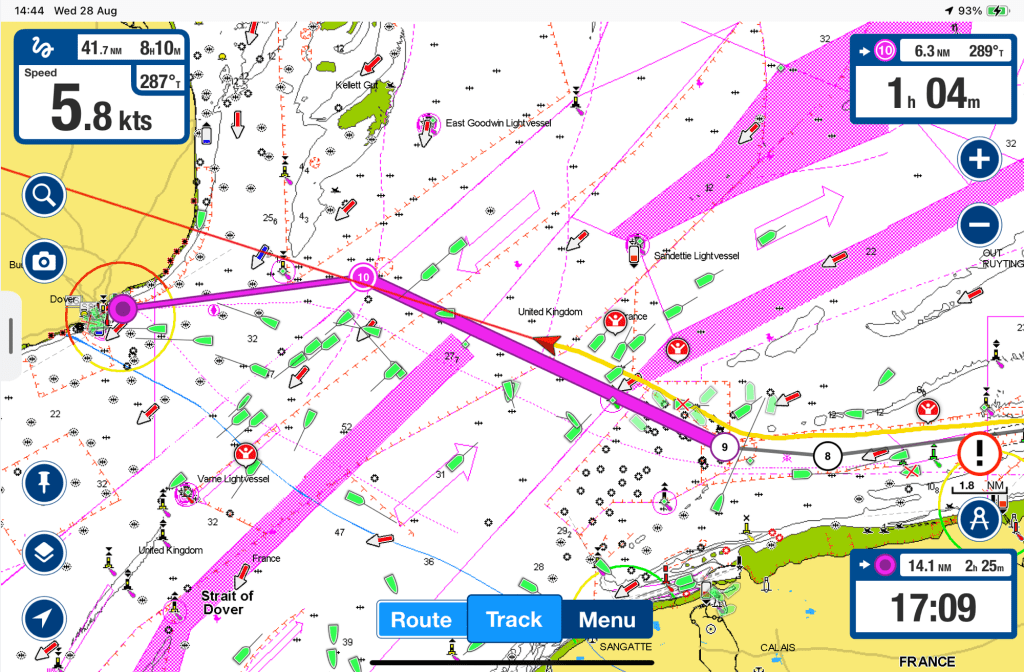
The MOB markers on the east of the chart were the reported locations of inflatables trying to cross the channel. The MOB marker to the west was a group of channel swimmers!

Approaching Dover harbour I was welcomed by a porpoise gliding past, as well as a seal inside the harbour. I paused to refuel before taking my berth, and this took some time. Although the fuel pumps had the mechanism for self service, a rather uncertain looking man leaned over the high quay and said that self service was not working. Only one pump was working, so I had a wait and once I had filled my tank, I had to visit the man in his shed. He was in charge of a most Byzantine computer system and after a few minutes of “hunt and peck”, suggested I might type it faster. All of this contrived to occupy an hour from entering the marina to tying up. Fortunately, I was not in a hurry.

The EU administration of border control had been accomplished by visiting the cheerful border policeman in his office the previous evening. The UK side of things was achieved via an efficient looking web site. However, the information was far from clear. “We have sent you an email”. No, you didn’t. “You must ring yacht line as soon as you enter UK waters”. When I rang, the automated message told me no call was needed. “You must fly a Q flag until contacted by border control”. I’d be flying that still, if I’d followed that instruction!

The next morning was forecast for northeasterlies, increasing in strength and swinging to SW. I left early, but not early enough. The promised SE wind was light and variable and not long before Dungeness head, I noticed a yacht ahead of me on a parallel course bear away to the south, close hauled. Sure enough, a few minutes later, I experienced the same 90-degree wind shift. I decided to drop sails and motor into the wind, the other boat beat on. I took an offshore route past Dungeness, to maximise the tidal lift but progress gradually slowed across Rye bay. The wind increased to about F6 and though Molly bravely plugged into the short steep seas this created, her speed was rather curtailed. I watched as the boat I had seen earlier crossed and recrossed my path, evidently with much better boat speed than me.

The day started well enough – a three sail reach (I had second reef in anticipation of the forecasted winds)
Later, boat or submarine?
The new Royal Sovereign light under construction (the stump of it to the right)

Late, I crept up to Beachy Head on a foul tide, slower and slower until the speed over the ground was less than two knots. He who fights and runs away lives to fight another day, so I reluctantly turned tail and sped downwind into Eastbourne at seven knots!
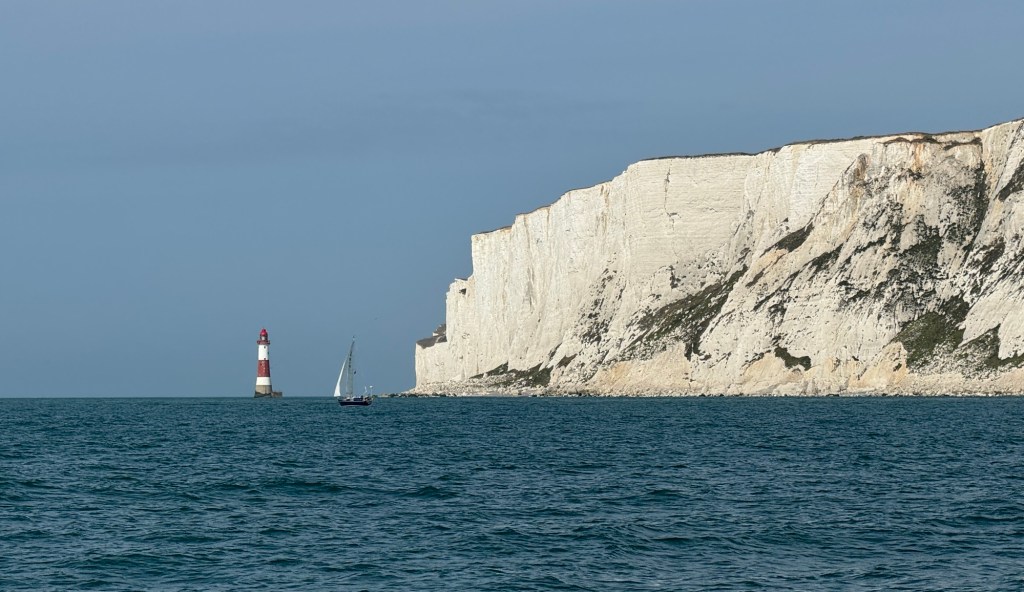
Beachy Head in more benign conditions the next day
The “Seven Sisters”, west of Beachy Head. There always seems to me to be eight, but it depends on how you count them. These are often shown when a stock shot of “the white cliffs of Dover” is needed for a film or TV programme. They’re white and cliffs, it not Dover!

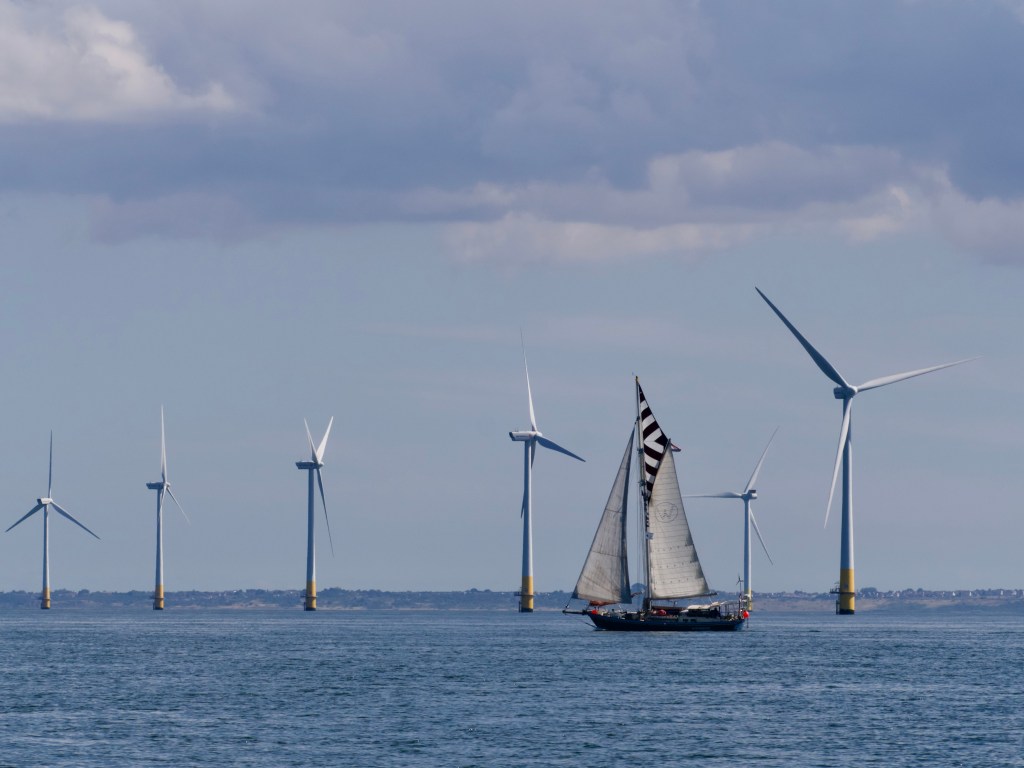
The next day was much calmer, with wind in the north. However it was too light to be useful, so I motored across Sussex Bay past the Rampion wind farm.
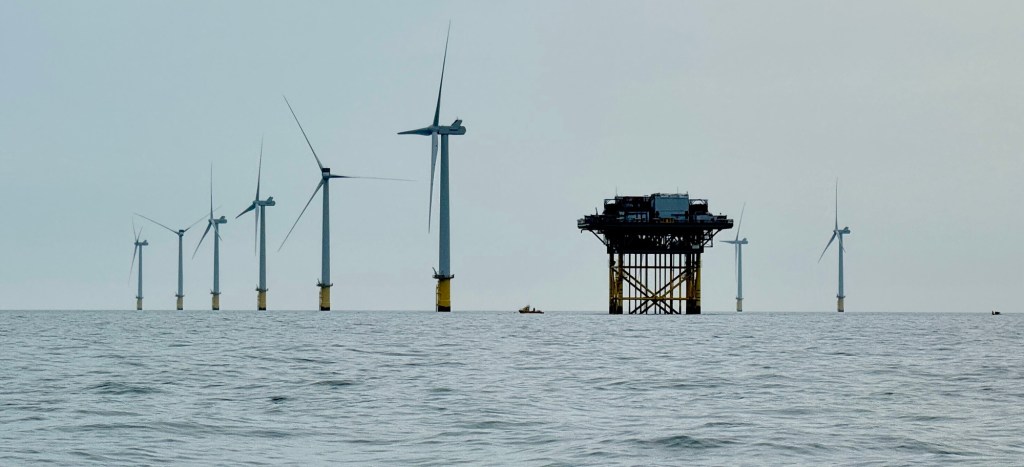
Rampion wind farm off Brighton

I was earlier than planned at Selsey and the current was still foul. However, it was neap tides and the sea was very flat. I therefore decided to avoid as much of the tide as possible by approaching from somewhat south of the Looe Channel and then motoring over the Outer Owers.

This is an outlying reef usually carefully avoided, but this very shallow water (4-12m observed) carried perceptibly less current. The breeze woke up at that point too, so I got a little help from the sails just when it was most helpful!

The Looe channel. For me this is the boundary of the Solent, so I was back in home waters
The beautiful Queen Mary 2 departing the Solent.
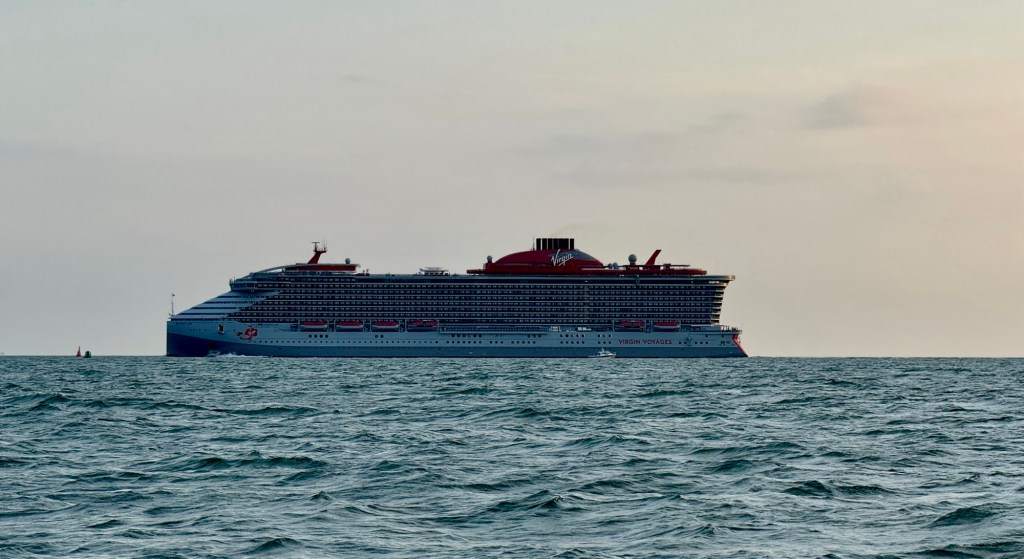
This cruise ship (My Resilient Lady) has a much higher capacity but is not exactly pleasing to the eye!
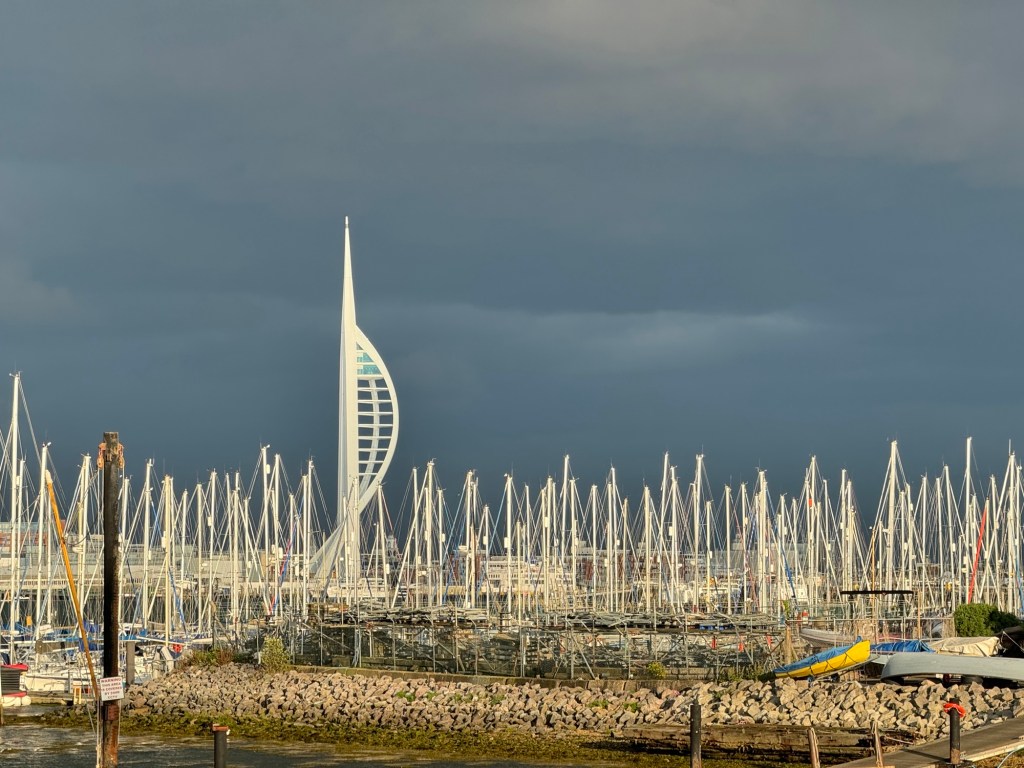
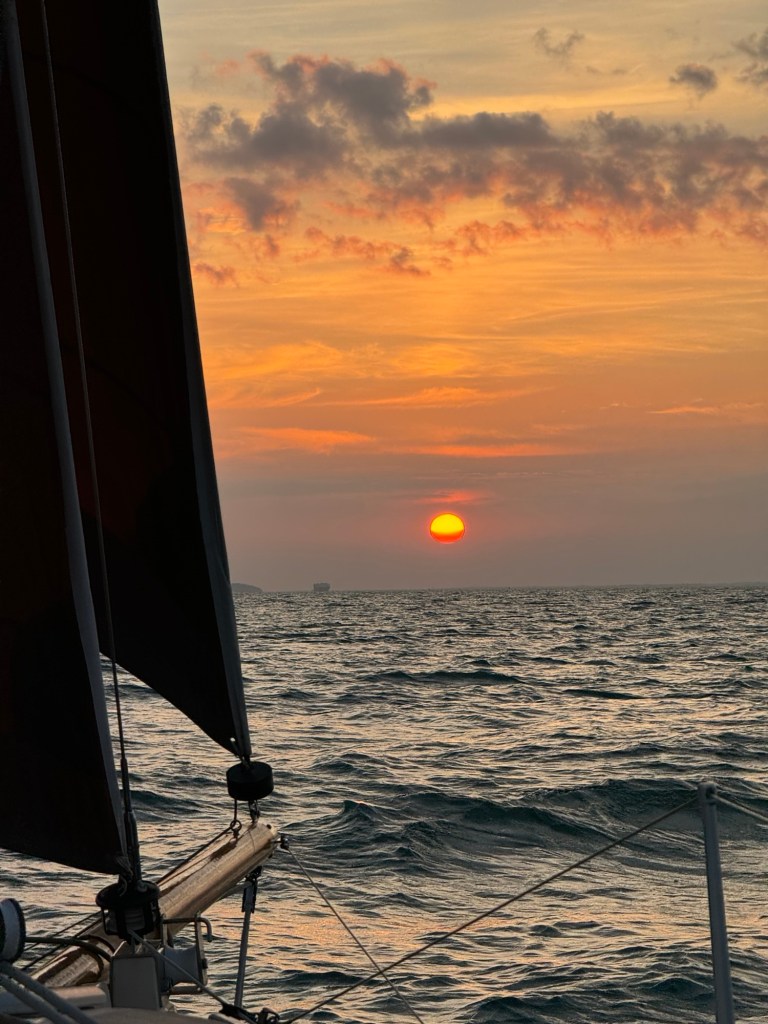
Sunset behind No Man’s Land fort, with spinnaker tower standing over Portsmouth harbour entrance

A great breeze from the north east filled in and gave me a lovely sail across the eastern Solent – what a fabulous way to end this wonderful adventure. I was enjoying the sail so much that I sailed right into the harbour, dropping the main right opposite HMS Queen Elizabeth. The police boat mooched over to give me marks out of ten, though I’m glad it was dark, because it was not a tidy fuel! I had breeze and tide pushing me into my berth, as well as being full dark by that time. I was pleased I managed that nicely but was pleased someone came by to help had I needed it.

So that’s the end of Molly’s Netherlands meander, and what a wonderful adventure it’s been. I’d like to publicly thank the wonderful Dutch organising team, Dirk and Linda Peeters for their guidance during the return leg and to my fellow UK OGA members who were such great company.

The season is mostly over, but Molly will stay in the water this winter because I hope to make a few local trips in the coming months.
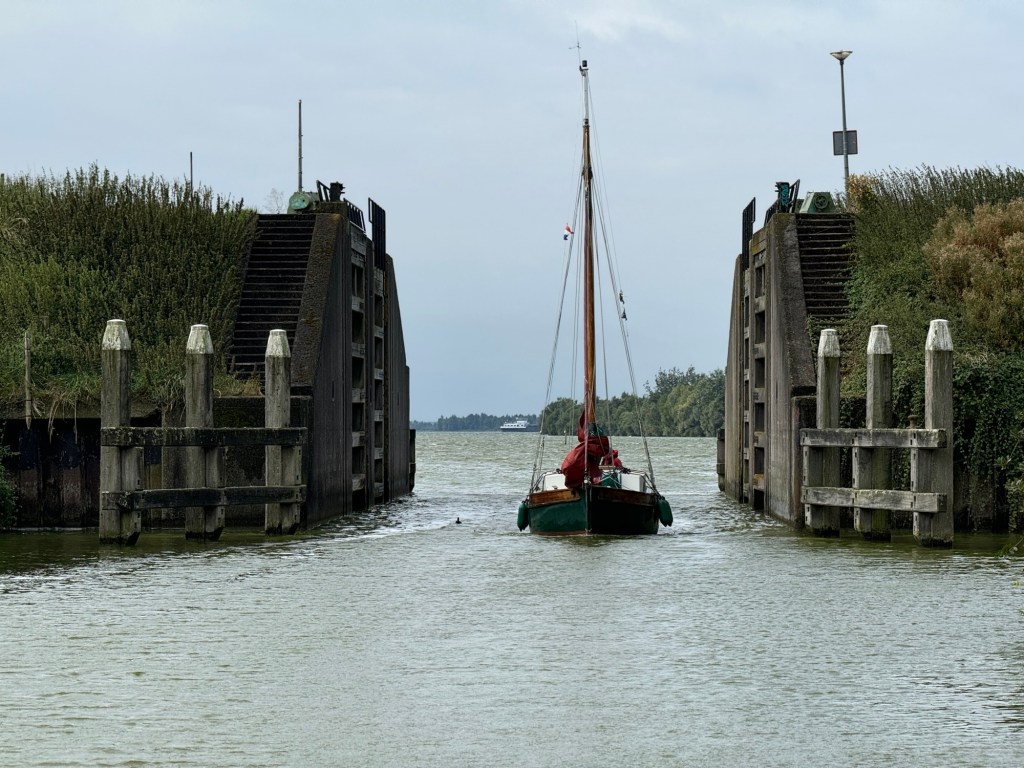
The last lock

With the strong south westerlies from the remnant of storm Ernesto finally abating, it was time to leave the seclusion of the canal system and return to la mer.

Leaving Middelburg
Exiting the sea lock at Vlissingen

As if to remind us of the comparative slowness of travelling in the shelter of inland waterways, the “blue wave” from Middelburg to Vlissingen was frustratingly slow. We then had a longer wait than expected at the sea lock.

We did however, have plenty of time for the fair tide, so once we were discharged from the lock, we emerged onto the busy Westerschelde, gathered like a clutch of ducklings before dashing through a gap in the shipping to the southern shore.

Container ship on the Westerschelde

The strong tide carried us quickly around the corner and then helped us along the coast. The wind direction was good for a fetch the whole way. Nevertheless, I used the engine too to ensure that I reached Nieuwpoort in time to check out with the customs, allowing me to be able to make an early start the next day.

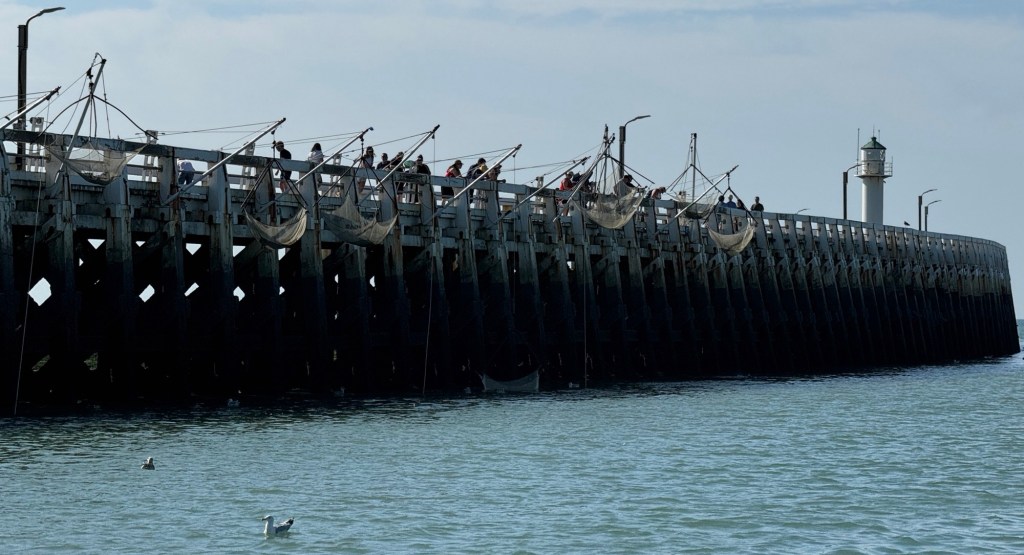
Fishing from the harbour arm at Nieuwpoort

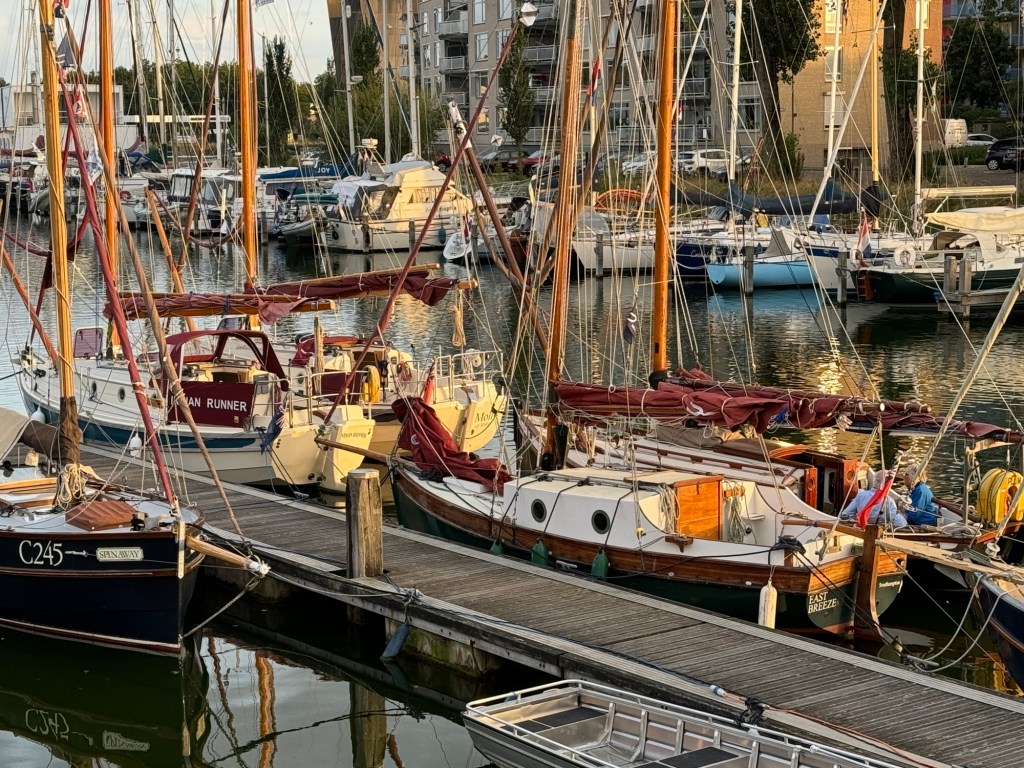
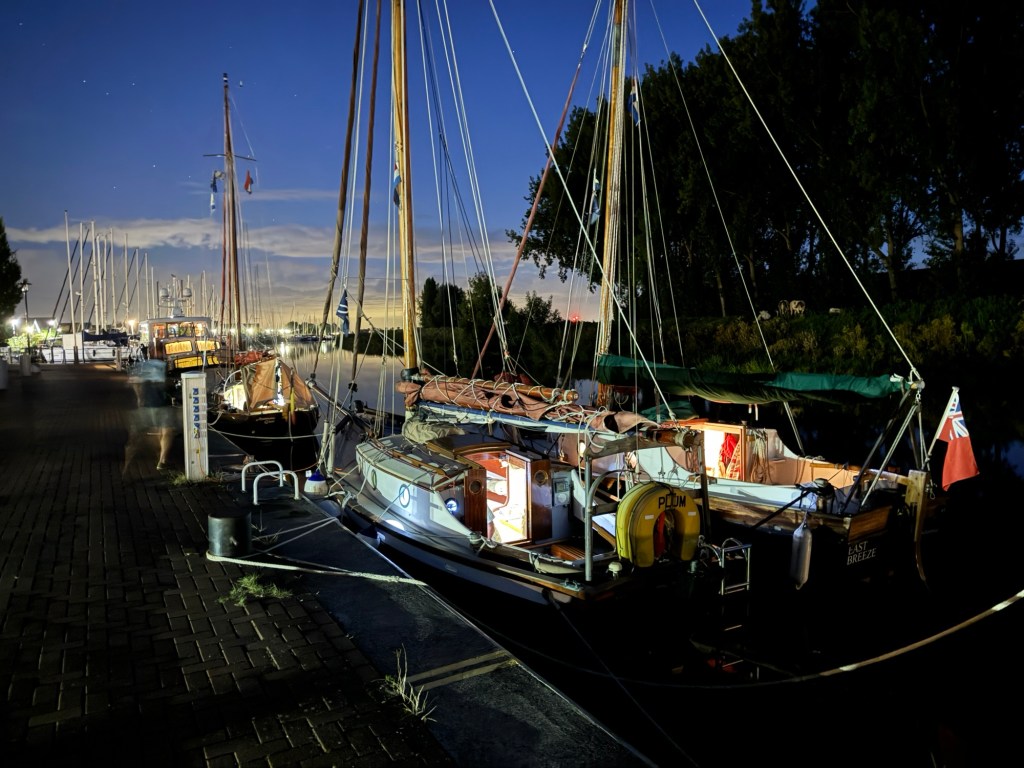
The five crews rather tired crews of Molly, Indian Runner, East Breeze, Moon River and Plum met to eat a meal together, in celebration of Chris’ birthday and our last evening as a group. Following this, Plum and East Breeze were heading for the east coast, via Ramsgate, whereas the rest of us were to cross to Dover for points west.

I’m not very good at selfies…

Return to Middleburg

A peaceful sunrise in Oude Tonge

The weather was still pretty boisterous and also straight out of the SW, so we had a day of motoring into the wind from Oude Tonge, through the Krammer sluis and along the Oosterschelde. This was surprisingly rough water and we were stemming a tide too. The wind was too strong to sail, as well as being on the nose, so we motored towards Roompot, until we could turn away towards the Zandkreeksluis. Anemone and East Breeze took an alternative route around an island to Plum and Molly, but it made little difference to our arrival time. Having passed through that lock, it was time to finally bid farewell to Dirk and Linda on Anemone, who had sailed with us ever since the pre-rally rally from Wemeldinge. Good friendships made, I am sure they will be renewed at some point in the future.
Anemone making an impressive bow wave on the Oosterschelde swell
Plum lifting her bows
Plum, Anemone and East Breeze
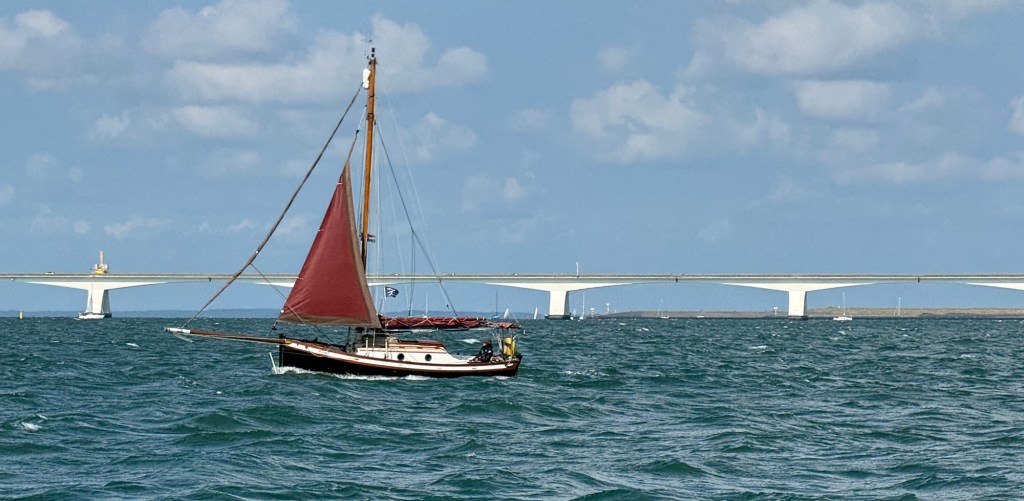
Plum against the impressive bridge across the Oosterschelde
Hidden shallows – skirting the withies

Our destination was Veere, at the far end of the Veerse meer. This very pretty town had just enough space to accommodate our fleet of three against the pontoon. Another sailing club with excellent facilities and another companionable meal aboard Molly, prepared by Marion of East Breeze.

Moored in Veere
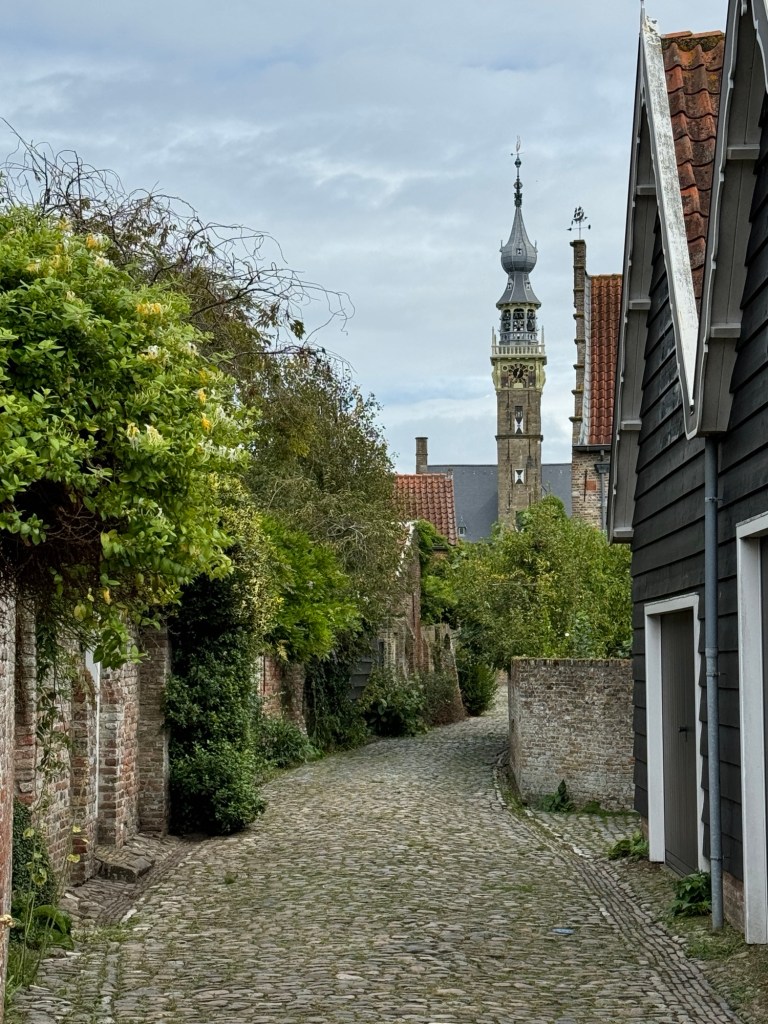
Veere’s ornate town hall viewed from the immaculate old streets
Grote Kirk. The angular structure at the top is the observatory. The beautiful golden galleon at the top is always sailing downwind!

In the morning, there was time to walk around the old town and enjoy an excellent slice of Apple Cake. Colin and I visited the Grote Kirk. This place was less a place of worship and more of an art and history museum. The city of Veere was historically significant in earlier centuries and the church had also suffered both heavy damage and re-purposing in the nineteenth and twentieth centuries. The impressive 50m tall sixteenth century tower survives and we climbed the 240-odd steps to its onion shaped wooden observatory, which offered superb views away north to the sea, southwest down the Veerse meer and East over the farm land.

The impressive view from the top. Veere in the foreground, with the Veerse meer, Roompot and North Sea in the distance

It was in that direction we motored after lunch, to join Moon River and Indian Runner in Middelburg, ready for our departure onto the North Sea the next day. We were welcomed with the customary helpfulness by harbourmaster Susanne, and we moored by her Mk1 Crabber, Spinaway.

Dinner in the evening sun on Plum

Hidden havens

Numansdorp harbour at the end of its canal

An advantage of travelling with a local is that you see places that might well otherwise pass beneath the radar. Our latest two stops are good examples of this, thanks to our good fortune to be travelling back from NL OGA 20 with Dirk and Linda of Anemone.

The Netherlands has a network of Watersportsvereniging (thankfully abbreviated to WSV!) which are basically private clubs that have visitor berths, rather than commercial marinas. These can often be found in small towns nestled behind the dykes and accessed by narrow channels.

Numansdorp and Oude Tonge are two examples of this. They are accessed by improbably narrow channels (made possible by the effective absence of tide) and providing both excellent shelter and charming locations.

In our current crawl south west against the worst that ex-storm Ernesto can throw at us, we have been looking for short hops to bring us to the best place to pop out onto the sea when the weather is more favourable for our passage.

Numansdorp entrance from the shore
Numansdorp entrance seen from the outside

When we approached Numansdorp along the Hollandsch Diep, I almost sailed straight past, so narrow was the entrance. In the especially lively conditions prevailing, motoring towards that lee shore felt quite intimidating but a mole projecting from the entrance made the waters in the approach very calm. After winding past reef beds into the town, we found sheltered berths for our party.

Numansdorp

The weather was bad enough that we stayed two nights and I took the opportunity to repair the autohelm mount (important for the impending long passages on my solo homeward journey) and also borrow a bike to explore nearby. The second night was topped off with a lovely shared meal, prepared on our boats. The aperitif was enjoyed on the quayside and then the crews of Anemone, Plum, East Breeze and Hussar repaired aboard Molly for the remainder.

Eating aboard
Numandorp evening

The next morning was an early start to use a short weather window to make more progress, this time to Oude Tonge. This was another small town with plenty of space for visitors, lovely local eateries and convenient shops. The harbourmaster’s assistant bucked the trend of these WSV marinas, in that the staff are almost universally friendly, accommodating and helpful.

Oude Tonge was one of the worst affected villages during the terrible flood during the winter of 1953. We visited the memorial and the devastating effects of the inundation were a reminder of the vulnerability of the Netherlands to the sea. The plaques commemorating the dead showed whole families lost in this tragedy.

In common with most of these villages, Oude Tonge has an impressive brick church

In the evening, we shared a most excellent final meal together at the quayside hotel – I enjoyed the most delicious mussels I’ve ever eaten, cooked in the Dutch way with a few vegetables (celery, onion and carrot) and herbs (thyme and rosemary). A fitting end to this phase of the trip.

Looking back, passing through the dyke at Oude Tonge
Travelling up the canal to Oude Tonge
Moored on the quayside at Oude Tonge

From Dordrecht to Gouda and Haarlem

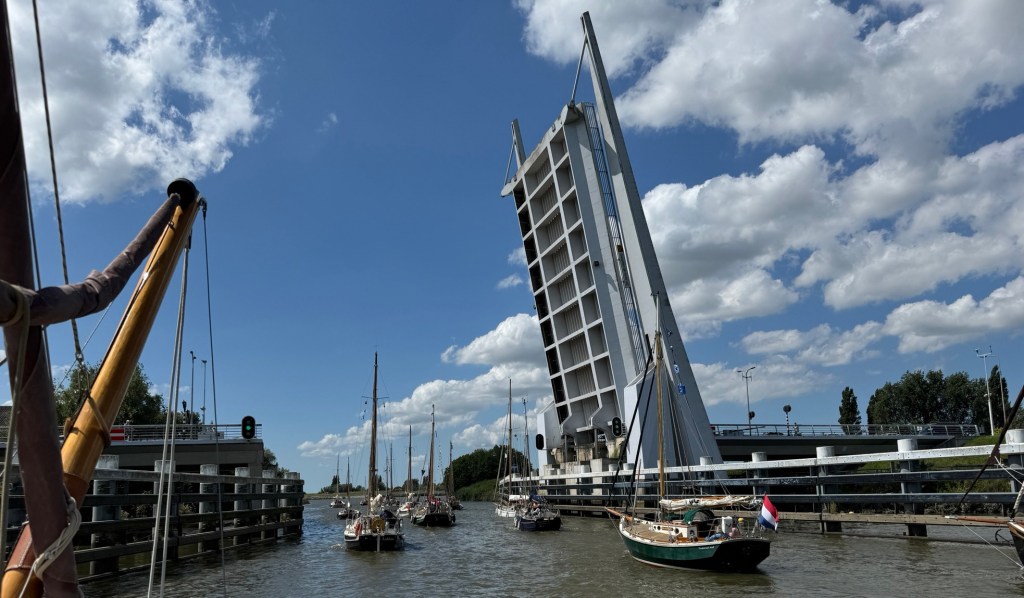
Passing through one of the huge lifting bridges to Gouda

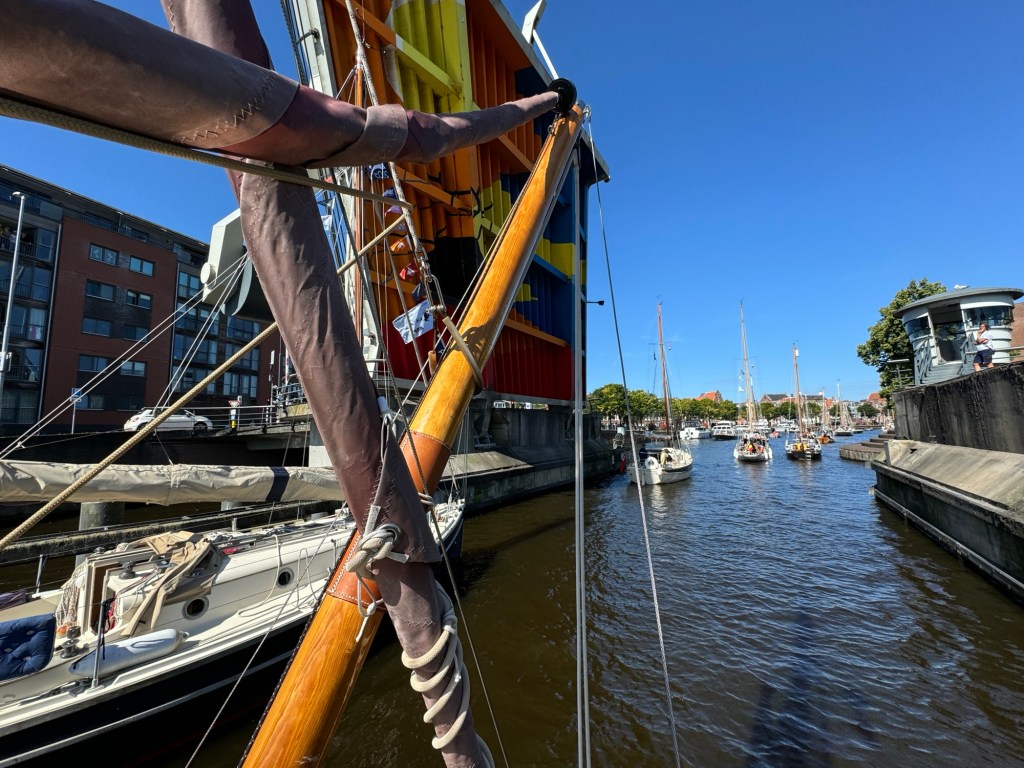
The NL OGA 20 armada left the lovely Wijnhaven Marina in Dordrecht in two enormous streams, when the bridge lifted at 0820 and again at 0850. Shipping had been warned of this by the rally organisers and this seemed to have worked because there was little traffic ax we crossed the wide Oude Maas and made our way up the Noord on our route to Gouda. Molly squeezed under the Alblasserdamsebrug railway bridge, the first of many on our way through the countryside.

Locking in to Gouda

Our hopes of staying in the museum harbour of Gouda had been blocked by a broken lock, but no sooner had we arrived and moored on the main canal outside the town than we were told the lock was fixed! It took us over 2 hours to negotiate all the bridges and the lock to enter the city, but it meant we were right in the heart of things and the boats looked wonderful dressed all over.

Molly dressed all over in Gouda

Apart from the usual socialising, we went to see the “cheese pantomime market” in the town centre, stock up on provisions and generally eat well.

Moving north to Kaag
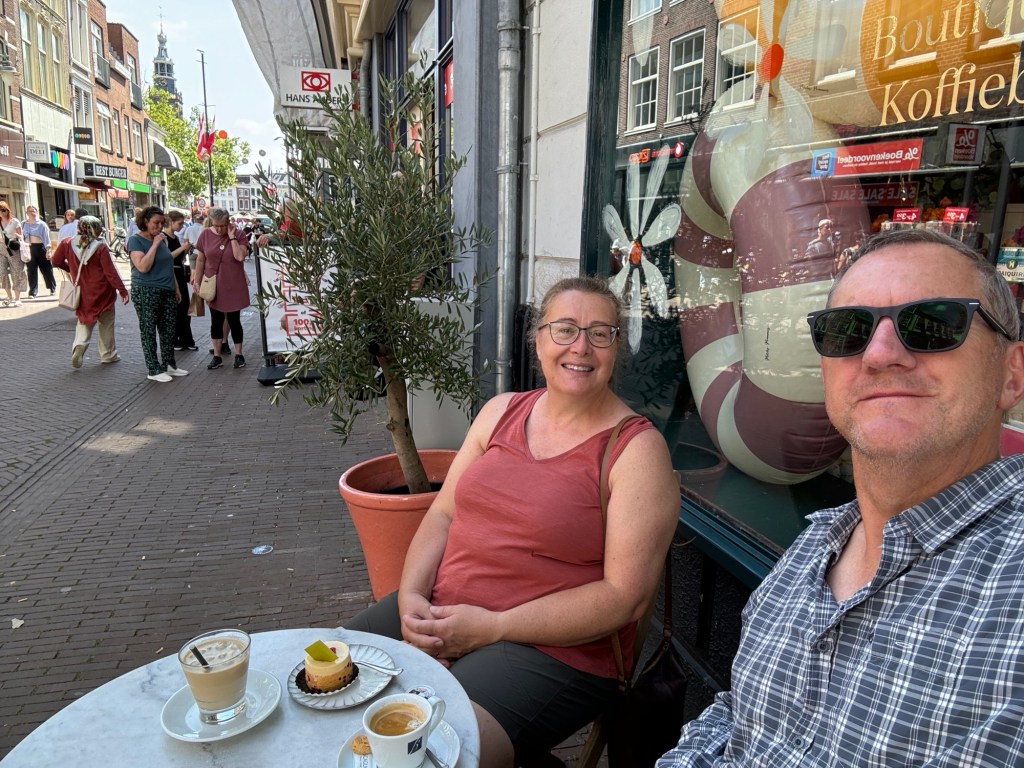
Afternoon coffee and cakes

It took us two more days to reach Haarlem, passing through very rural parts of North Holland, punctuated with small, neat towns . It’s very obvious that the general land level is below that of the canals and only remains habitable through the pumps that keep the waters out. The countryside was very beautiful and we saw much wildlife as we travelled.

We made our overnight stop on a lake near the town of Kaag and were led to a lovely secluded harbour called Meldsteiger where we were serenaded by musicians from the traditional barge which had joined our fleet.

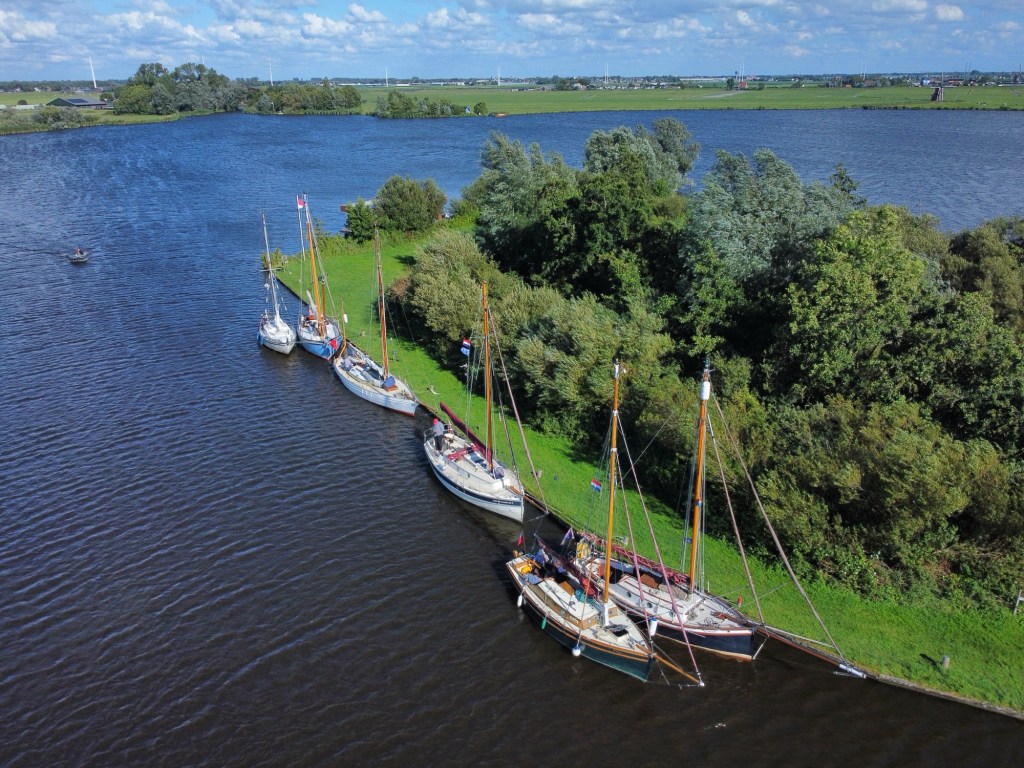
Secluded moorings at Meldsteiger

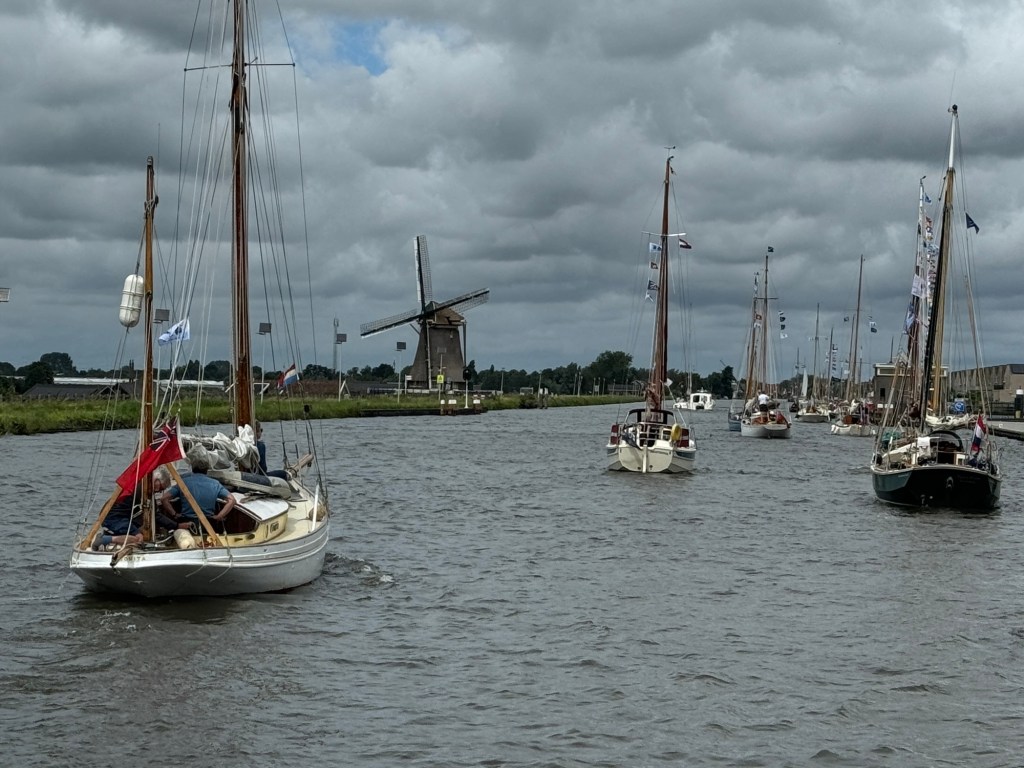
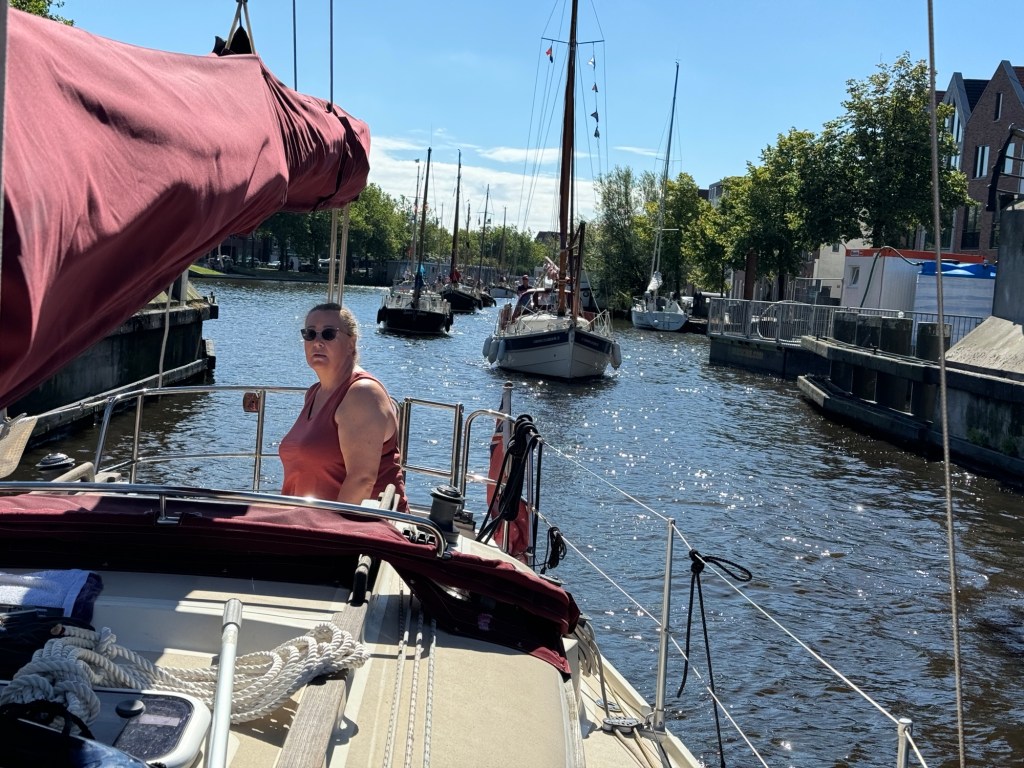
We completed our journey to Haarlem the next day, traversing 11 bridges. Our convoy of over 30 boats looked wonderful and the bridges opened in turn like magic as the fleet approached. We attracted quite a bit of attention as we passed, giving the trip a party feel, though it required a great deal of concentration to travel so close to so many other boats.

The fleet massing before the railway bridge, to pass north to Haarlem
Entering Haarlem

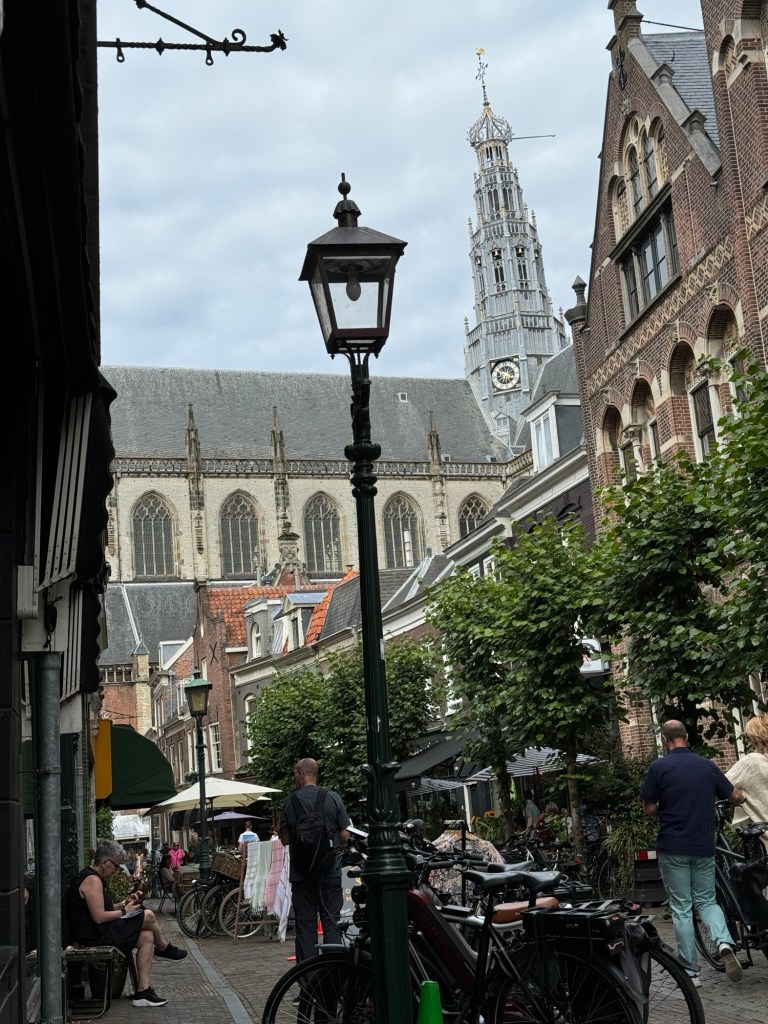
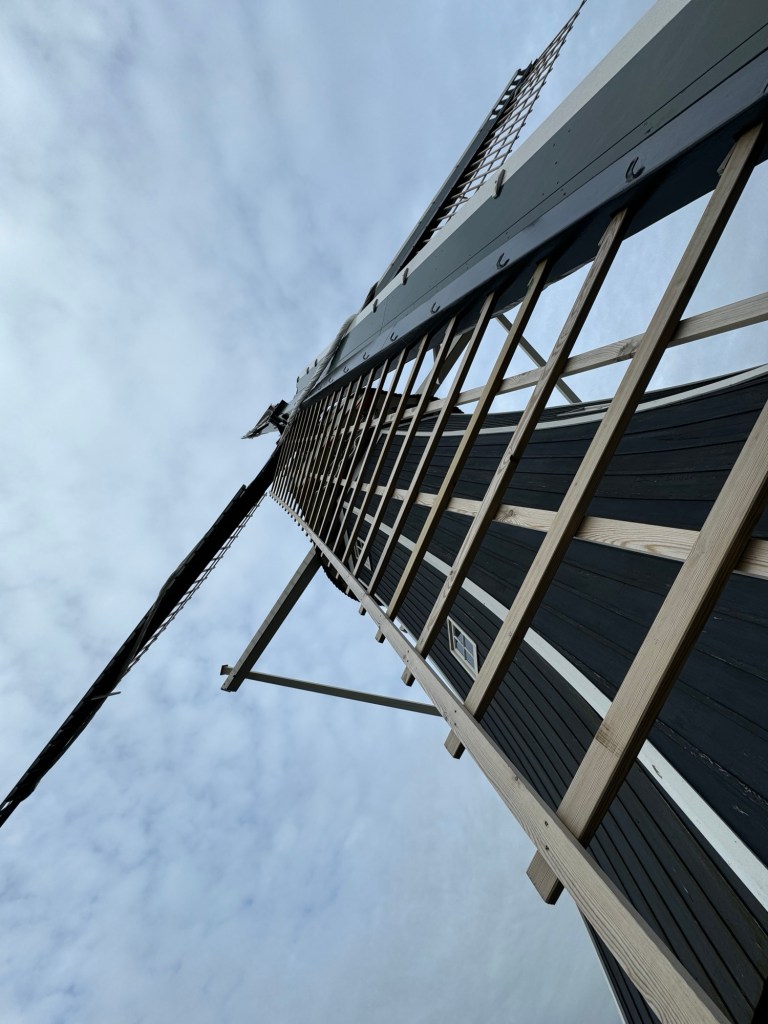
Arriving in Haarlem, we had two nights in the centre of the city, giving us a chance to re supply ourselves and enjoy the beautiful city. We had a tour of the reconstructed mill of Adriaan, which had successively ground mortar for building, tobacco for snuff and grain for bread and brewing.

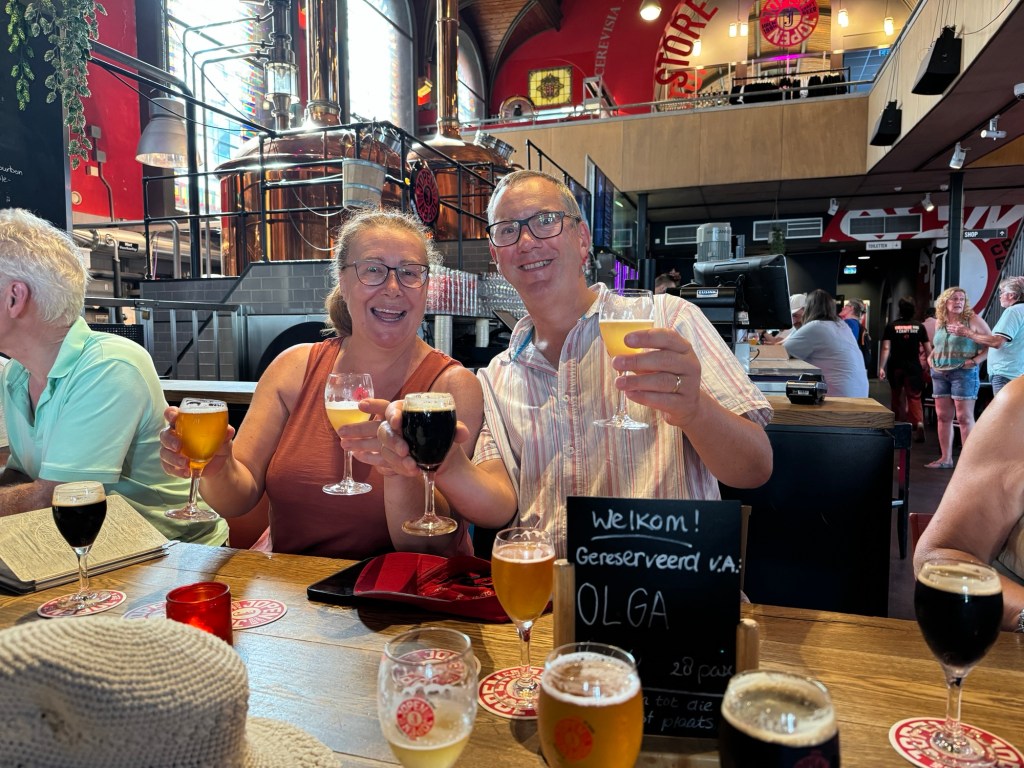
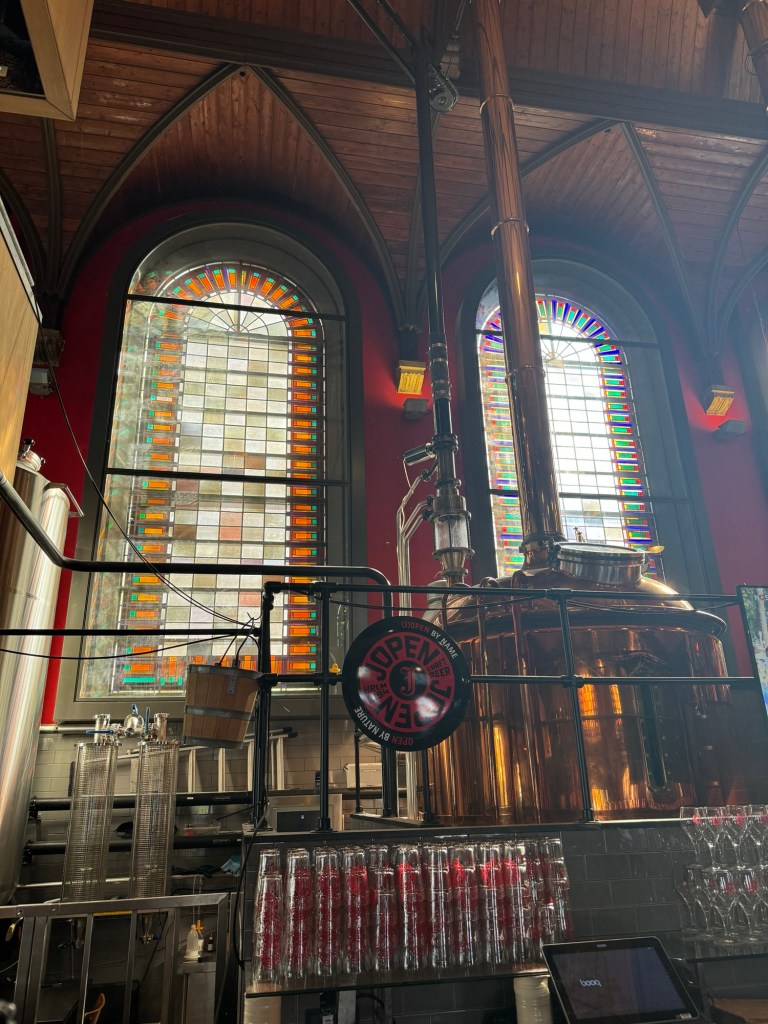
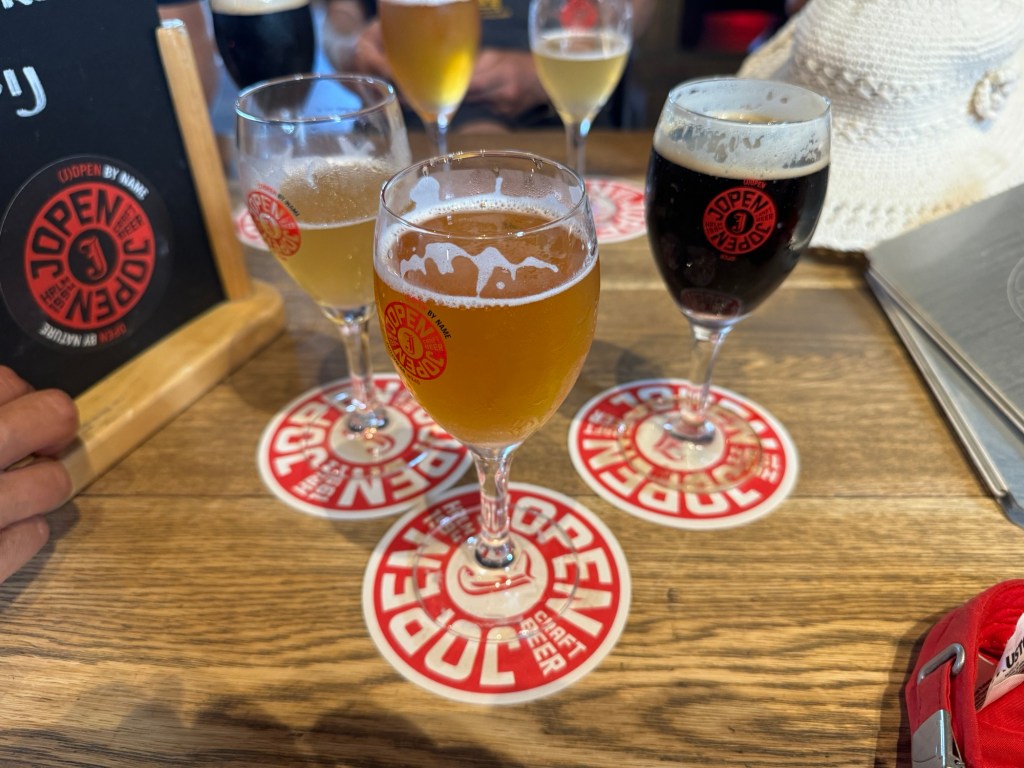
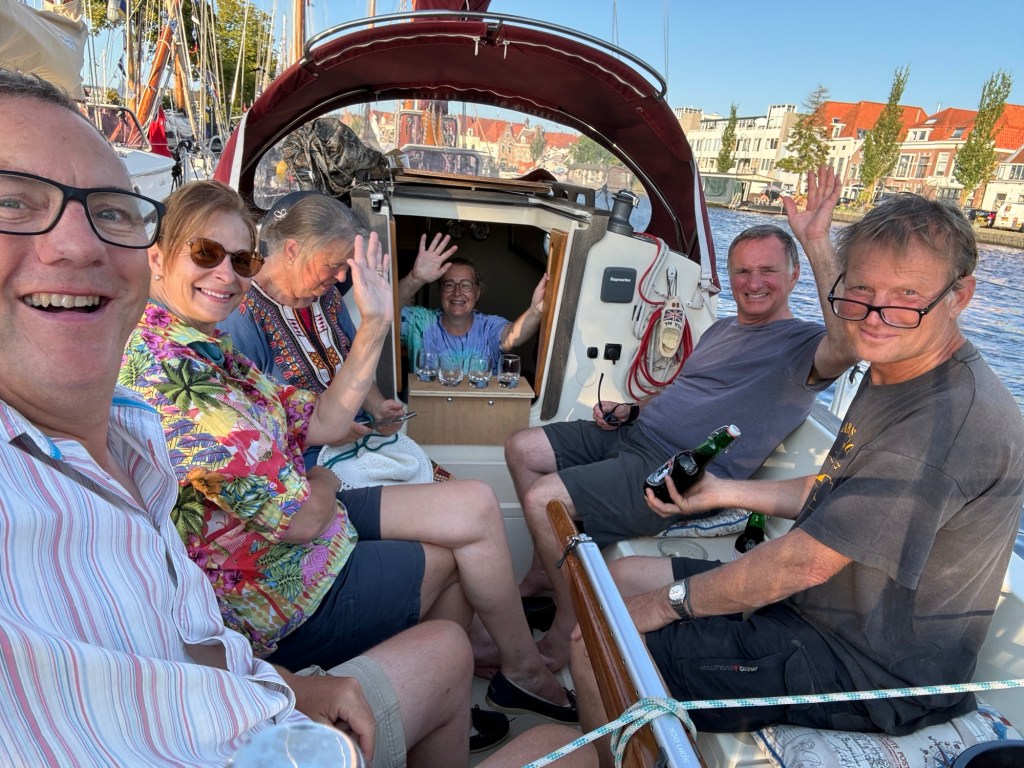
On the second night we tasted some of the different beers at the Jopen brewery, housed in a repurposed church. The weather was scorching hot, so cold beers were very welcome! We invited the crews of Puffin and Windbreker aboard Molly for dinner and had a most enjoyable evening – beef dhansak from the thermal cooker.

Haarlem city
Adriaan mill
Beer tasting at the Jopen brewery
Dinner aboard Molly

Drills on the river

Less than favourable weather made a trip out of the harbour an unattractive prospect today. Nevertheless Niki and I spent the day gainfully employed in the harbour calibrating the log, some drills up at the Wicor pontoons and a lovely downwind sail back to our berth.

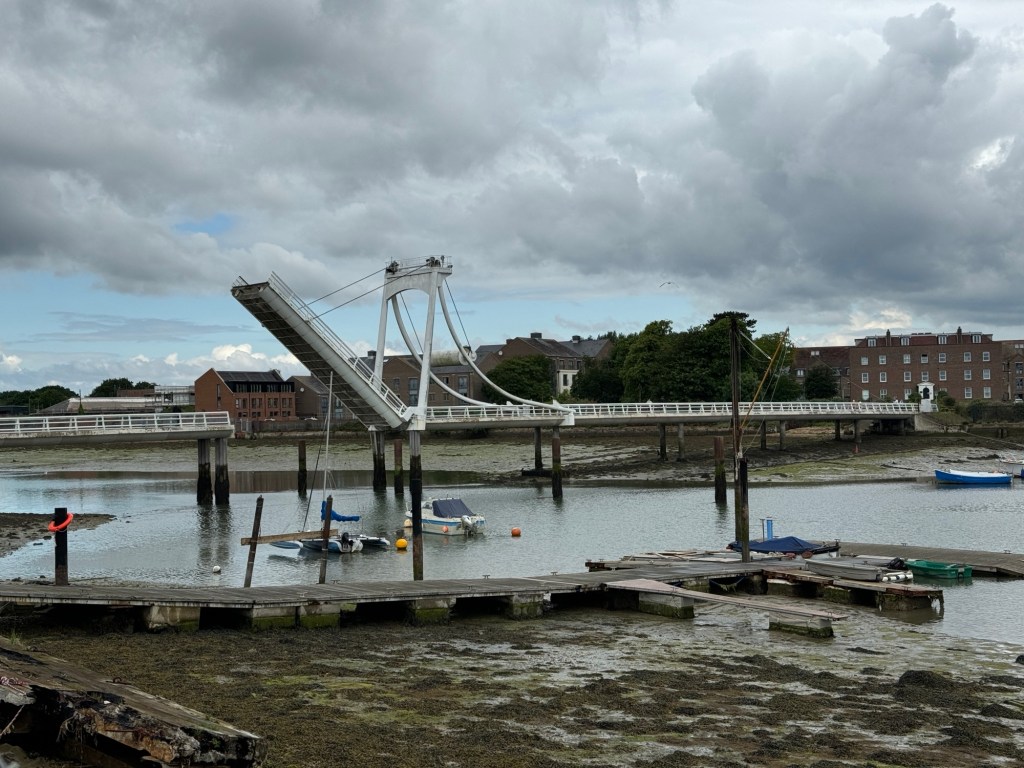
The millennium bridge raised at low tide
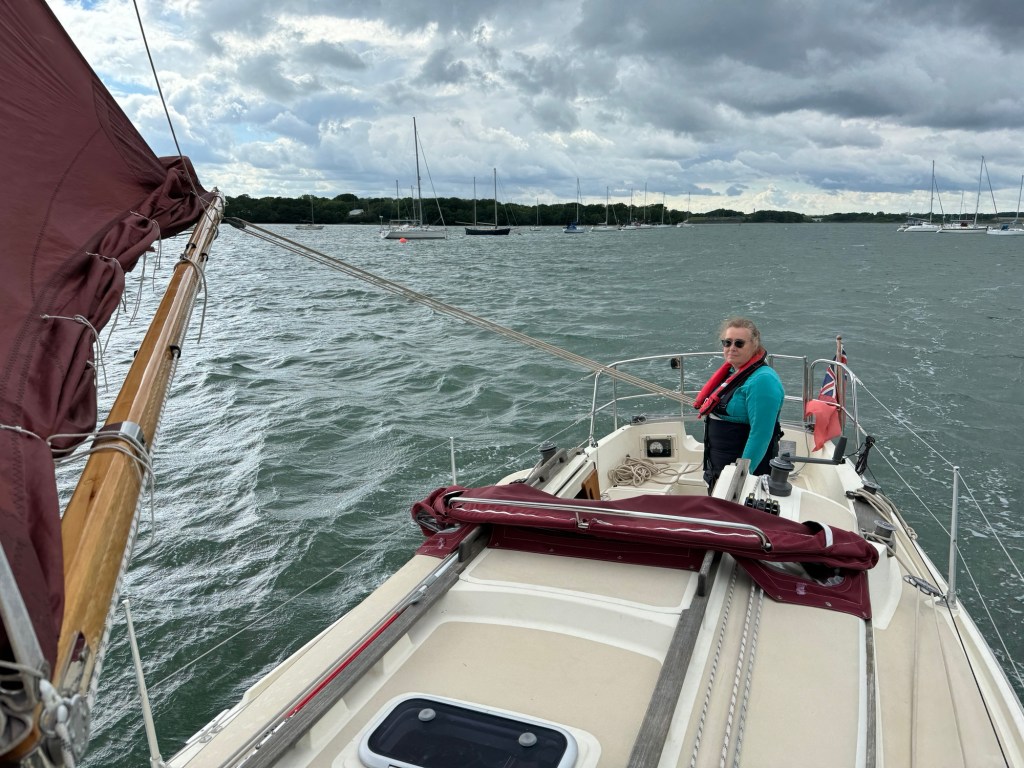
Second reef
Back down to Gosport
Dramatic sky over Portsmouth (we were in the pub by this time!)
Beautiful evening light

Westbound again

Following the OGA60 party and the East Coast cruise, Molly found herself in Chatham Martime Marina, on its heritage pontoon and with almost 200 miles to travel home. I had allowed 6 days for this passage, but circumstances intervened.

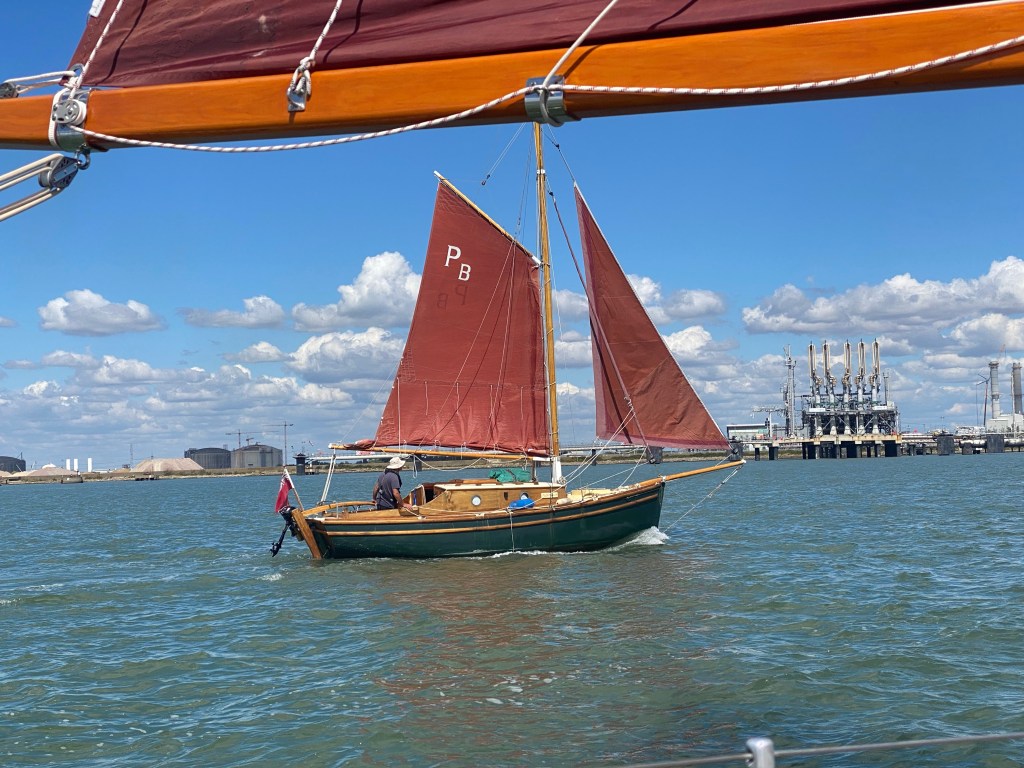
Puffin Bach passin back up the Medway

We had a sense that all was not well when we locked in to Chatham. We were given conflicting instructions by lock control, the lock was not operated efficiently (ie not full and boats waiting) and on one cycle, both sets of doors were opened at once, allowing a torrent to flow out of the lagoon.

The lock gates broke down on Friday, but we only learned of this when we tried to leave on Saturday. A sorry series of events ensued, during which the marina staff did not cover themselves in glory or demonstrate any particular urgency. We ended up contacting MDL’s head office, which seemed to stimulate events a little and, to cut a long story short, after four days trapped in Chatham marina, the lock gates were fixed and the fleet was able to escape on Tuesday. Suffice it to say that I will avoid MDL marinas in future.

The train of depressions, which the jet stream has been bowling us, had come to an end and we left the Medway with very welcome hot, sunny weather and light winds (ie finally, we started having August weather!). The forecast was for declining winds and I only had three days to compete Molly’s passage home to Gosport. I had been joined for this section by John Frampton, a fellow Cornish Crabber owner (Shrimper 21 to be precise).

John at the helm

Before we could travel West, we needed first to travel East. As we left the Medway, we were treated to flat seas and a steady southwesterly. John and I opted, rather than hugging the shore, to enjoy a good sail and visit some of the landmarks in the estuary.

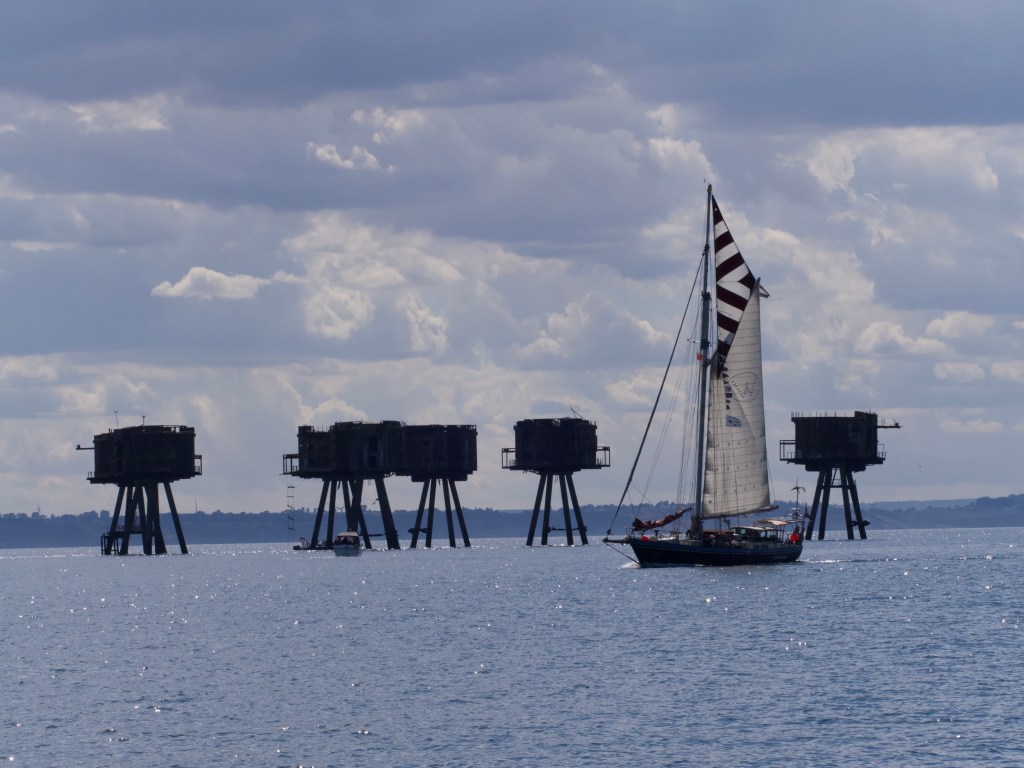
We had a fair tide to carry us East, so we made for the main Princes Channel, taking in our first point of interest, which was the Red Sand Forts. These are steel structures were observation posts on legs attached to sunken barges, dating from WWII. They are one of a number of “Maunsell forts” (after their designer) whose original purpose was to provide warning of incoming aircraft and deter mine laying in the important Thames estuary. They continued to operate post-war and since their decommissioning have been sometime pirate radio stations.

Windbreker at the Red Sand Forts

Nowadays they make a striking but rather eerie and forlorn sight and appear to be deteriorating rapidly. There are moves to preserve them and I hope it comes to pass, as they are a unusual historical feature. Evidently they are a tourist attraction, as we could see visiting motor boats (in addition to yachts sailing close by).

Shivering Sand forts

During our tacks down the Thames estuary, we saw another set of Maunsell forts on the intruigingly named Shivering Sands, as well as skimming the edge of yet another array of wind turbines at Kentish Flats.

Kentish Flats wind farm

We passed along the outside of Margate sands at low tide, and could see groups of basking seals, though we dared not approach too closely in these very shallow waters.

Margate sands complete with seals

Nearing North Foreland, as we lost the shelter of the land, the wind strength increased and the sea grew more choppy. Having passed this iconic corner and we were westbound again and, as John pointed out, we had the whole sea area from North Foreland to Selsey Bill to cover.

The wind was right on the nose, so we motored on main only into Ramsgate. We were followed by Puffin Bach and all of us rapidly decamped into town for some lovely fresh fish and chips, followed by a pint in the very friendly bar of Royal Temple Yacht Club.

Puffin Bach entering Ramsgate
The arches on Ramsgate Harbour
Sailing to the East coast 3: Crossing the Thames estuary

Sailing to the East coast 3: Crossing the Thames estuary

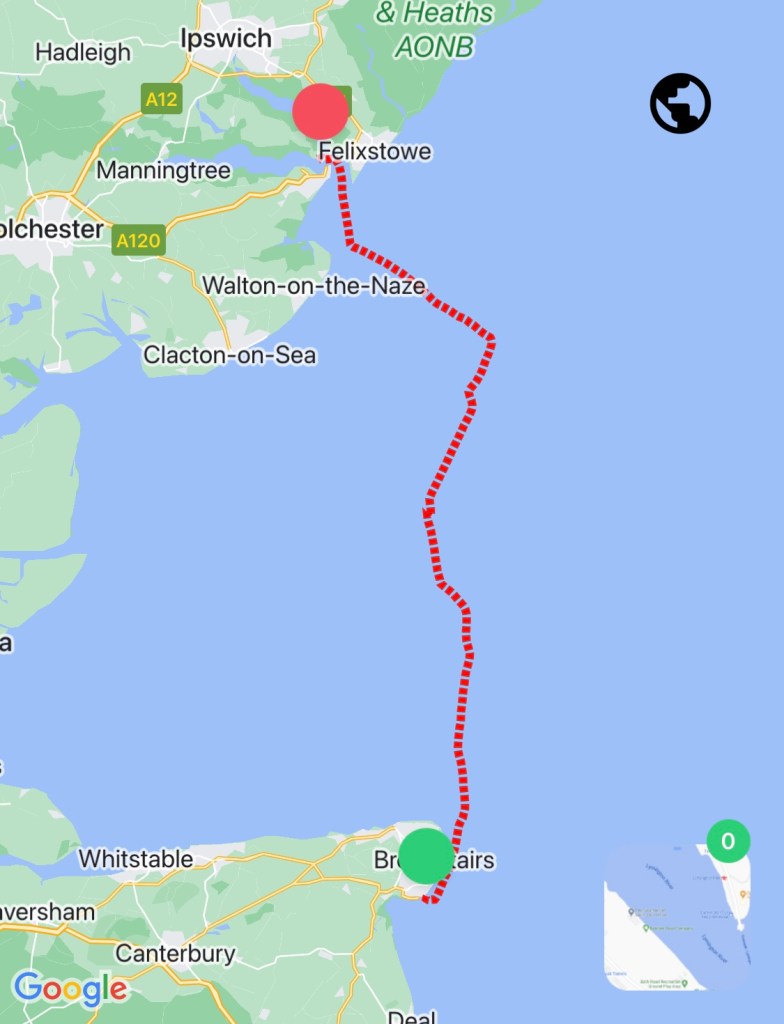
The wavy jet stream has been bowling low pressure systems at us one after another and we three boats from the Solent have been obsessively poring over weather forecasts, waiting for a gap to allow us to complete the final leg of our journey, from Ramsgate in Kent across the Thames estuary to Suffolk. My plan had been to spend some time on the Suffolk rivers, but these plans were now abandoned and I was just hoping for a suitable day to cross before our party in Ipswich.

The three boats in question were Huw and myself on Molly, Liz and Tim on High Barbaree (Cornish Crabbers Pilot Cutter 30) and Brian on Puffin Bach (Tamarisk 24). We decided our window had come after two very windy days in Ramsgate and set off determined to stay together in a gusty SW F5.

Passing Broadstairs
Puffin Bach and High Barbaree making for North Foreland under jib and engine

We initially had jib only with engine and ran north along the chalky coast past Broadstairs and the iconic North Foreland, into the wide mouth of the Thames. The main landmarks were the huge Thanet wind farm close by, with the London array visible in the distance. The latter was our target and pass through this grid of turbines to cross Foulgers Gat, a passage between one of many sand banks in the Thames estuary.

We had been promised a decreasing wind by the forecast, but that was not to be. Huw and I decided that raising the main would ease the uncomfortable motion of that confused water. What a difference it made! We cut much more easily through the chop between the turbines on double reefed main and jib. As we emerged into Black Deep, the main shipping channel, it was clear we were leaving behind Puffin Bach, sailed solo by Brian. On a broad reach at that point, we tacked back round to him then tacked once more onto to our original course.

Huw at the helm, as we sailed through London array wind farm

We switched from jib to staysail, in order to match pace with the smaller boat and continued north. However the gusty wind increased in strength and veered to NE, right on the nose. This forced us to drop our sails and motor right into it. Thus ensued a quite uncomfortable period with some very steep chop right on our beam.

High Barbaree and Puffin Bach

The first sign of the Suffolk shore was the distinctive silhouette of the cranes at Felixstowe, long before we could make out the actual land. At long last we closed with the shore, crossed the Medusa shallows and entered the mouth of the Orwell. Conditions were still pretty lively so Huw and I dropped our plans to anchor for the night and chose the shelter of Shotley marina.

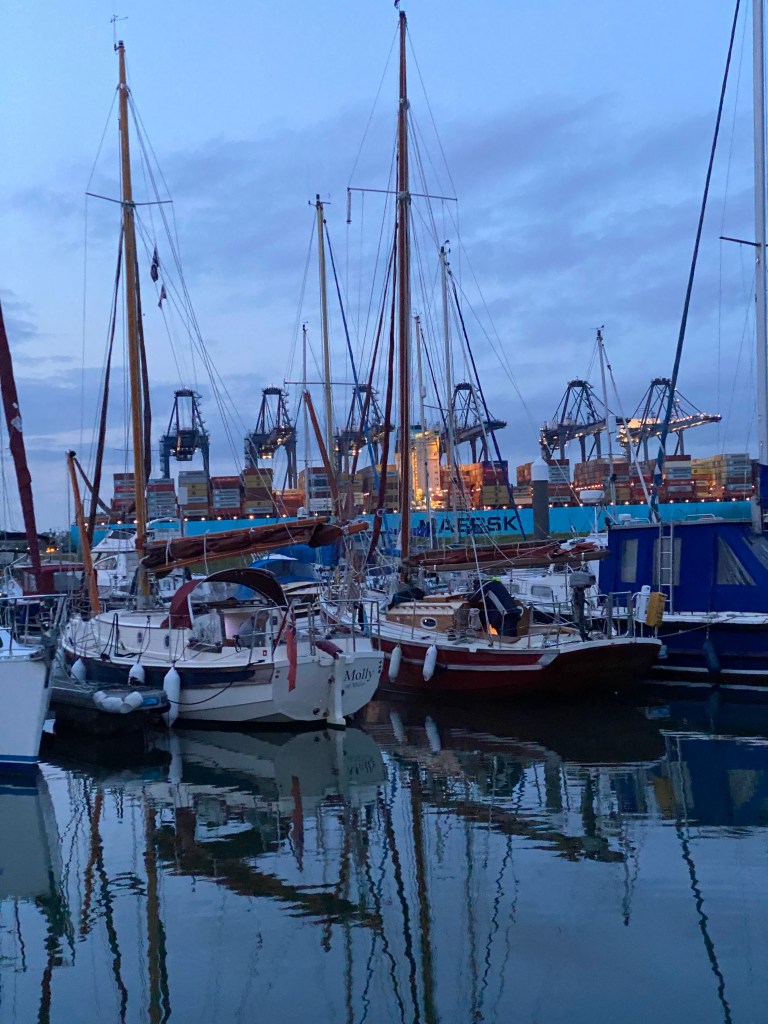
Locking in to the serenity of this harbour in the shadow of great container ships in Felixstowe, we enjoyed corned beef hash aboard High Barbaree for dinner, after which we returned aboard Molly and our heads barely touched the pillows before our eyes closed.

Molly and High Barbaree in Shotley

Southsea Rally

It’s a pleasure to visit somewhere new and what better way than in company! I was very happy to join a rally in Langstone harbour with the Solent OGA group. Langstone is a place I had never previously visited, sandwiched between our home patch of Portsmouth harbour and the ever-popular Chichester harbour.

Tom Cunliffe describes Langstone as a piece of wilderness, between these two high developed and much manicured areas of water. Southsea harbour is accessed over a cill which open at about half tide. Since this window of opportunity was centred on mid-afternoon, Niki and I set off as soon as the sea breeze kicked in.

Rather than sailing the quickest route (only 5M), we reached out to sea past the forts and then tacked back inshore towards Langstone harbour mouth. The pilot warns of strong tides and that was exactly what we got – we swept in at about 6kt, but others who had arrived on full flood made more than 9kt over the ground!

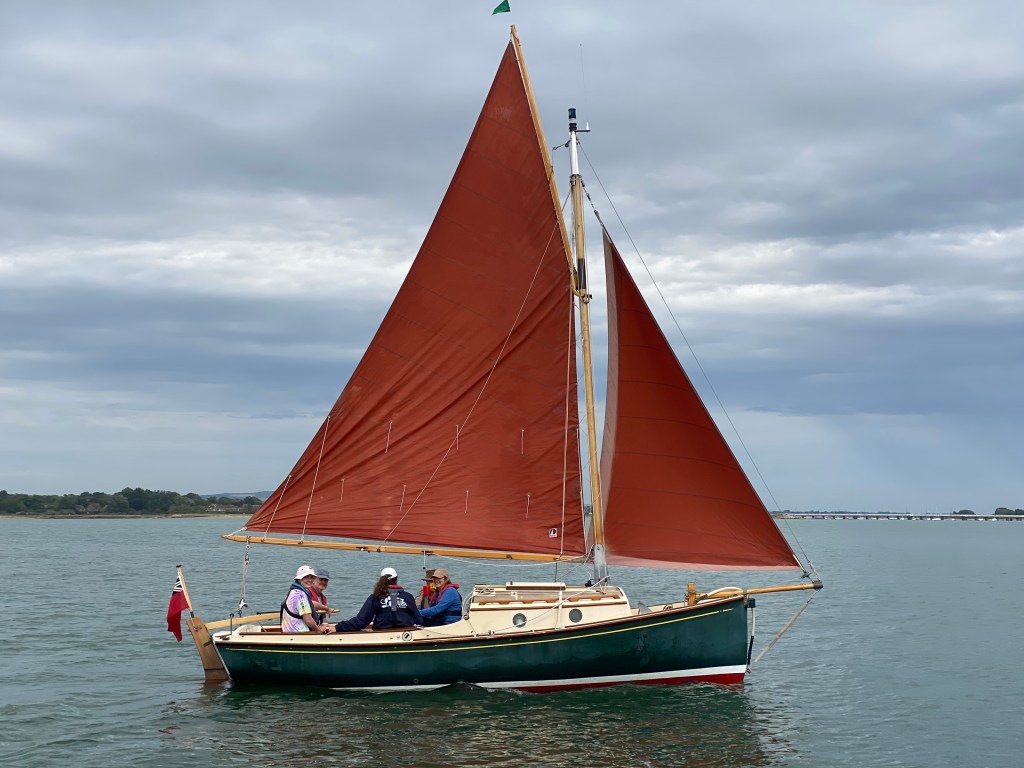
The weekend was a pleasant mix of good food and enjoyable company, with an afternoon cruise on Saturday. We’d had blistering weather for the arrival day, but Saturday morning was grey and some rain, but as our flotilla passed out into the harbour for a cruise, the weather brightened up and the gentle breeze made for a very relaxed trip.

I was surprised by the scarcity of boats (or moorings) in the main part of the water (unlike Chichester) and it’s clear this is a great place to anchor. Our local guides agreed, but I got the impression they’d rather it remained off the list of popular anchorages!

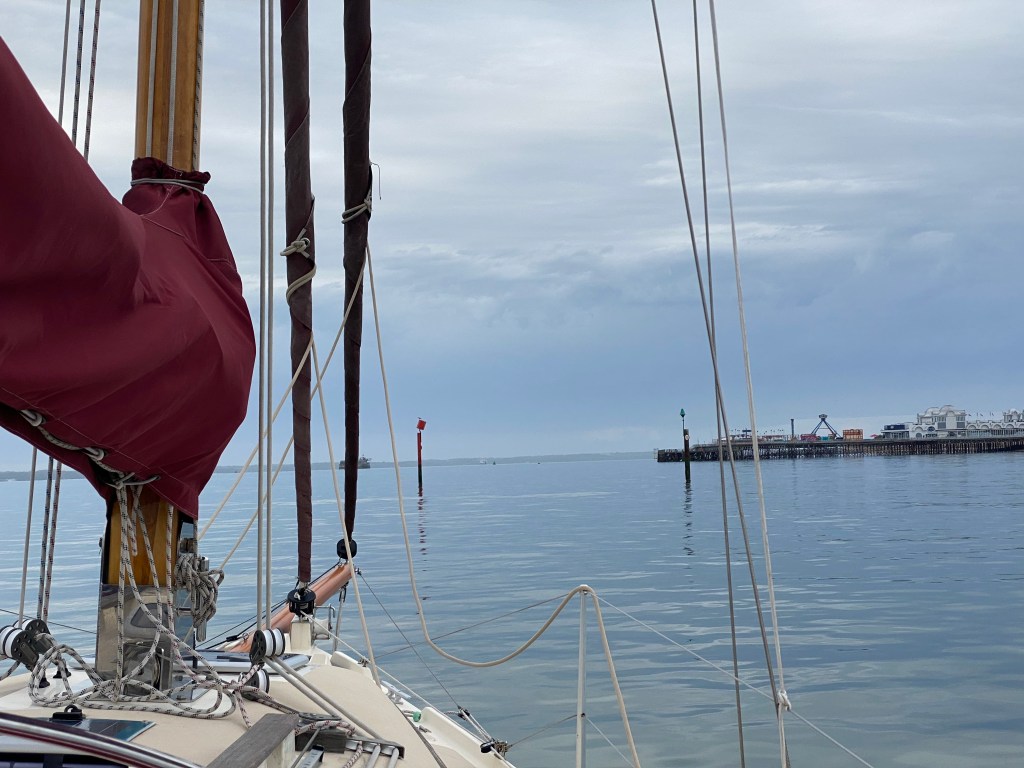
Sunday morning was an early start and we crossed the cill at 7am before the falling tide confined all to the marina for the morning. There was no wind at all, so I motored along the 4m contour, close enough to the shore to watch the early morning swimmers, joggers and dog-walkers on the beach. I passed through the inshore small boat passage, past Southsea pier and back into Portsmouth, leaving us plenty of time to tidy the boat before returning home in plenty of time.

Tied up alongside Nancy Blackett, once owned by Arthur Ransome, bought from the proceeds of Swallows and Amazons and the model for the boat in his book We Didn’t Mean to Go to Sea
It’s not often I get an excuse to pass through this small boat passage very close inshore
Huw, the rally organiser, on his Norfolk Gypsy, Mincarlo
Exiting Southsea marina
Giving Molly’s hull a clean prior to the rally, ready for her summer voyages