Tag: fish and chips

Westbound again

Following the OGA60 party and the East Coast cruise, Molly found herself in Chatham Martime Marina, on its heritage pontoon and with almost 200 miles to travel home. I had allowed 6 days for this passage, but circumstances intervened.
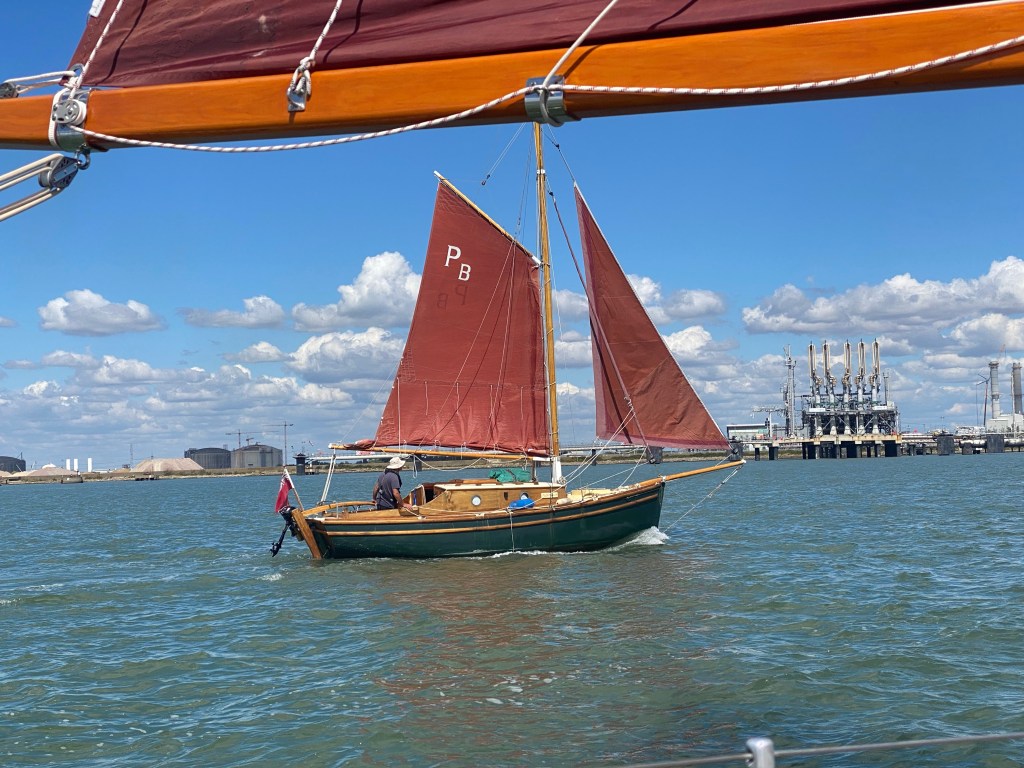
Puffin Bach passin back up the Medway

We had a sense that all was not well when we locked in to Chatham. We were given conflicting instructions by lock control, the lock was not operated efficiently (ie not full and boats waiting) and on one cycle, both sets of doors were opened at once, allowing a torrent to flow out of the lagoon.

The lock gates broke down on Friday, but we only learned of this when we tried to leave on Saturday. A sorry series of events ensued, during which the marina staff did not cover themselves in glory or demonstrate any particular urgency. We ended up contacting MDL’s head office, which seemed to stimulate events a little and, to cut a long story short, after four days trapped in Chatham marina, the lock gates were fixed and the fleet was able to escape on Tuesday. Suffice it to say that I will avoid MDL marinas in future.

The train of depressions, which the jet stream has been bowling us, had come to an end and we left the Medway with very welcome hot, sunny weather and light winds (ie finally, we started having August weather!). The forecast was for declining winds and I only had three days to compete Molly’s passage home to Gosport. I had been joined for this section by John Frampton, a fellow Cornish Crabber owner (Shrimper 21 to be precise).

John at the helm

Before we could travel West, we needed first to travel East. As we left the Medway, we were treated to flat seas and a steady southwesterly. John and I opted, rather than hugging the shore, to enjoy a good sail and visit some of the landmarks in the estuary.

We had a fair tide to carry us East, so we made for the main Princes Channel, taking in our first point of interest, which was the Red Sand Forts. These are steel structures were observation posts on legs attached to sunken barges, dating from WWII. They are one of a number of “Maunsell forts” (after their designer) whose original purpose was to provide warning of incoming aircraft and deter mine laying in the important Thames estuary. They continued to operate post-war and since their decommissioning have been sometime pirate radio stations.
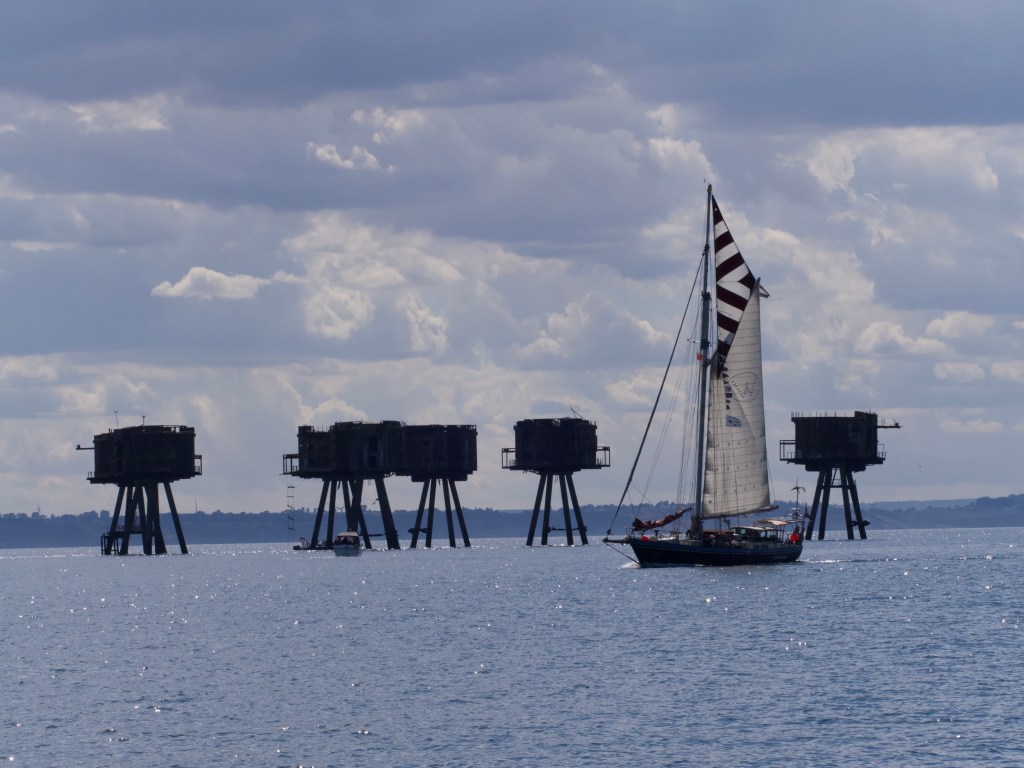
Windbreker at the Red Sand Forts

Nowadays they make a striking but rather eerie and forlorn sight and appear to be deteriorating rapidly. There are moves to preserve them and I hope it comes to pass, as they are a unusual historical feature. Evidently they are a tourist attraction, as we could see visiting motor boats (in addition to yachts sailing close by).

Shivering Sand forts

During our tacks down the Thames estuary, we saw another set of Maunsell forts on the intruigingly named Shivering Sands, as well as skimming the edge of yet another array of wind turbines at Kentish Flats.
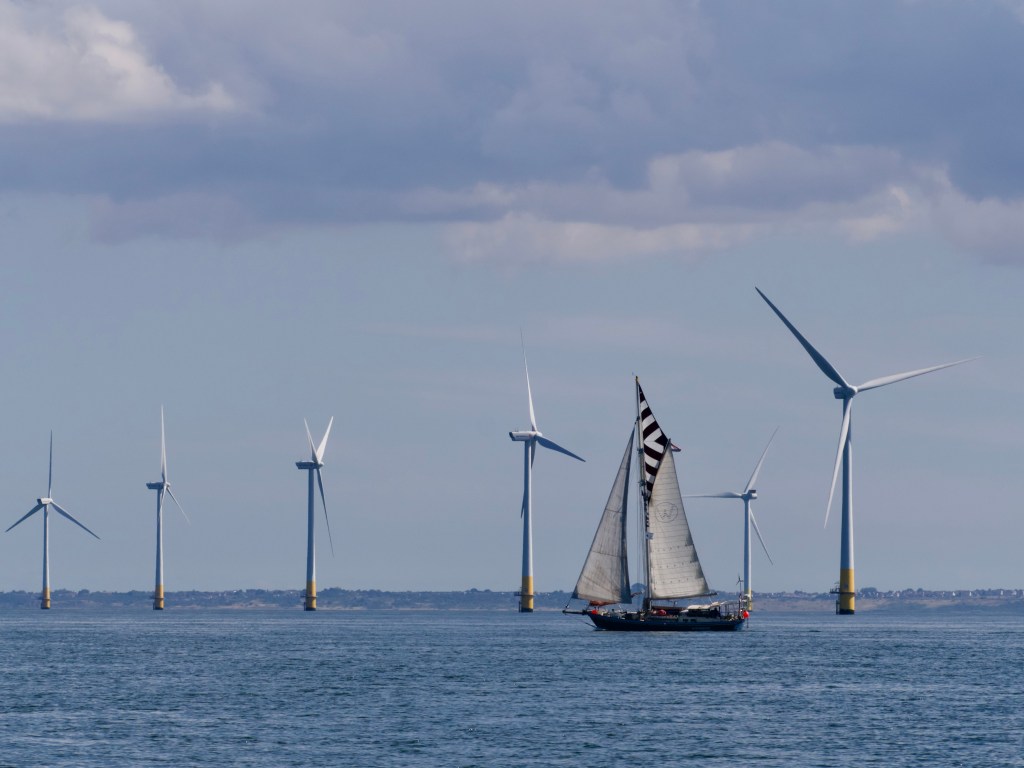
Kentish Flats wind farm

We passed along the outside of Margate sands at low tide, and could see groups of basking seals, though we dared not approach too closely in these very shallow waters.

Margate sands complete with seals

Nearing North Foreland, as we lost the shelter of the land, the wind strength increased and the sea grew more choppy. Having passed this iconic corner and we were westbound again and, as John pointed out, we had the whole sea area from North Foreland to Selsey Bill to cover.

The wind was right on the nose, so we motored on main only into Ramsgate. We were followed by Puffin Bach and all of us rapidly decamped into town for some lovely fresh fish and chips, followed by a pint in the very friendly bar of Royal Temple Yacht Club.
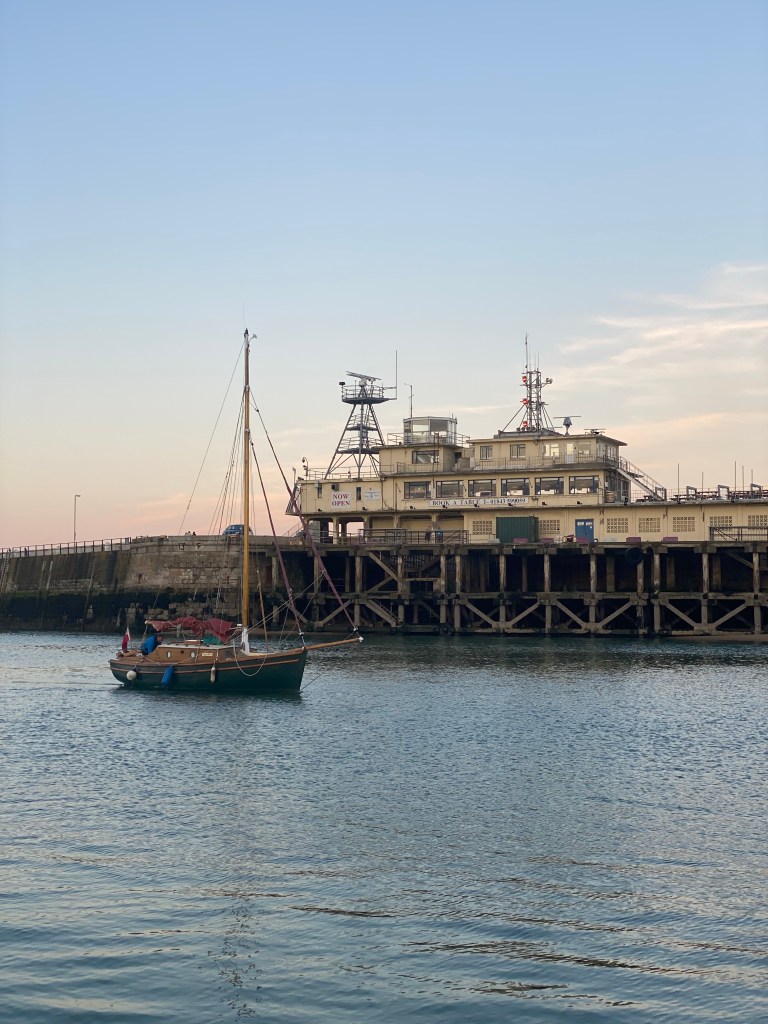
Puffin Bach entering Ramsgate
The arches on Ramsgate Harbour

Yarmouth and back

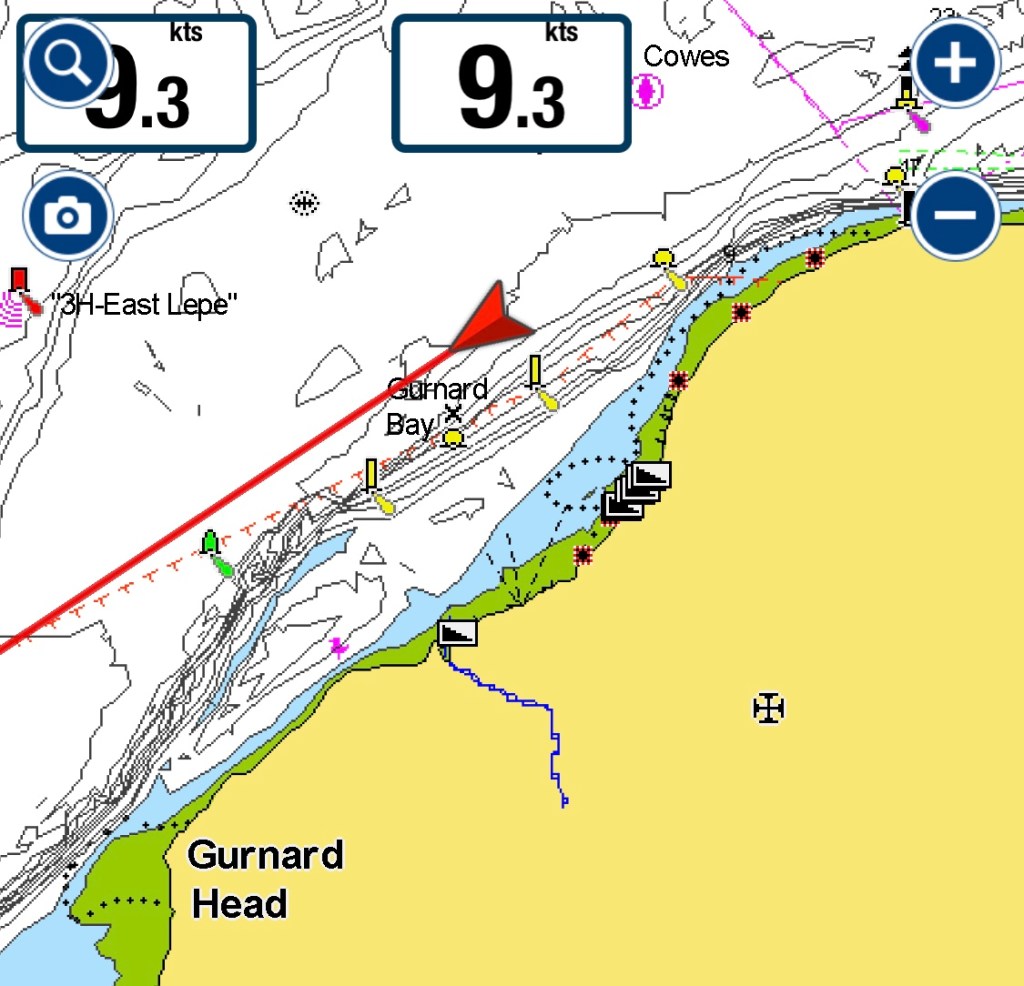
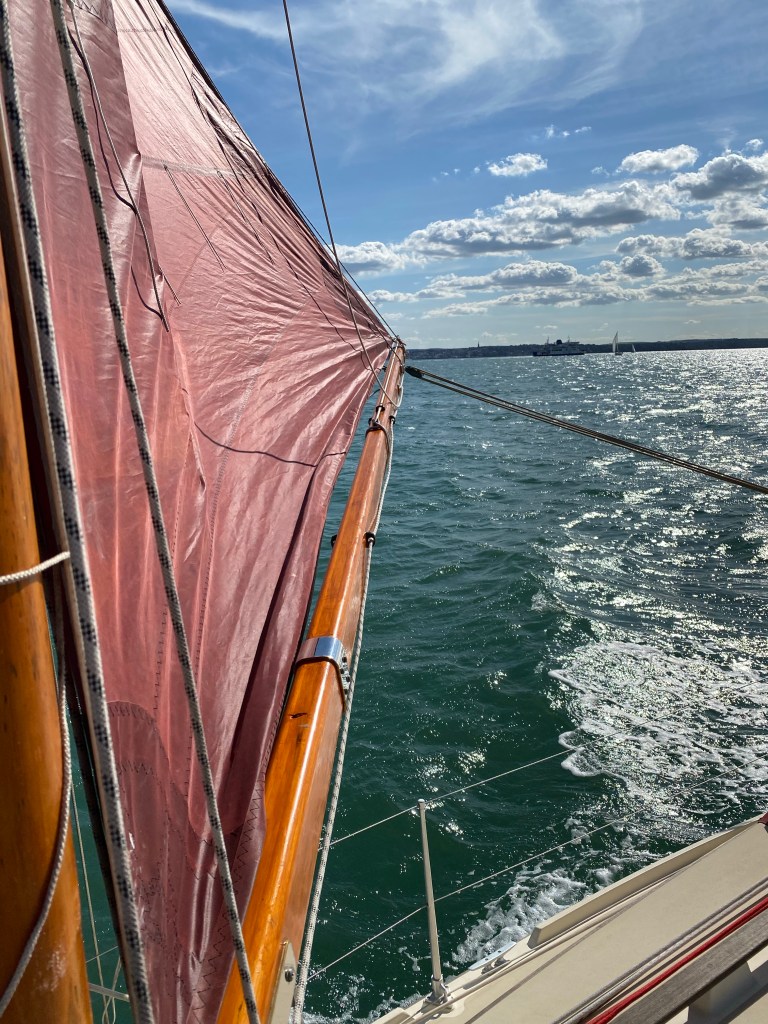
As the season draws to an end, there was one more rally to attend. The gathering was in Yarmouth, which is always a lovely place to visit. There was to be an informal OGA gathering on the Friday night, followed by a race and formal dinner on Saturday, organised by Royal Solent YC. I couldn’t attend the Saturday events, as I needed to return to Gosport to pick Niki up, but I was treated to a magnificent sail down on Friday afternoon. The ebb was in full swing, so I had almost 2kt of fair tide. The unusual NW direction of the wind gave a fast point of sail on a single tack the whole way – a broad reach most of the time. This was my first long sail since I re-stepped the mast (more on that later) and I was hoping the heavy weatherhelm had been improved. I set out with 2 reefs in, as I was solo and wanted to check the reefing, but shook one of the reefs out as soon as I was out of the lee of Gilkicker point and could feel the breeze that would carry me to the other end of the Solent.

Molly didn’t dip below 8kt between Cowes and Yarmouth!
Alva, a 170ft 1939 Swedish luxury yacht, at anchor off Lee-on-Solent

As usual it there was plenty to see – not much commercial shipping, but pleasure craft of all sizes, including many interesting boats (see photos). The trip was completed in very quick time; Molly was making between eight and nine knots from Cowes to Yarmouth! She handled beautifully – the helm was almost completely neutral with single reefed main, staysail and jib, the weatherhelm only pulling in the bigger gusts.

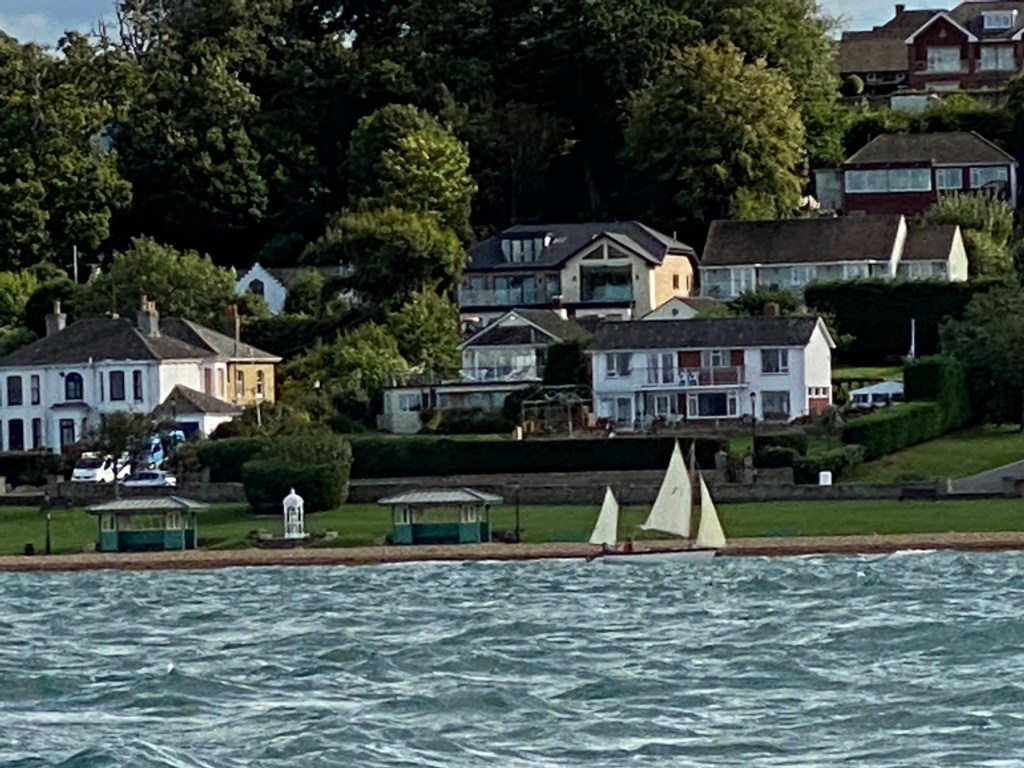
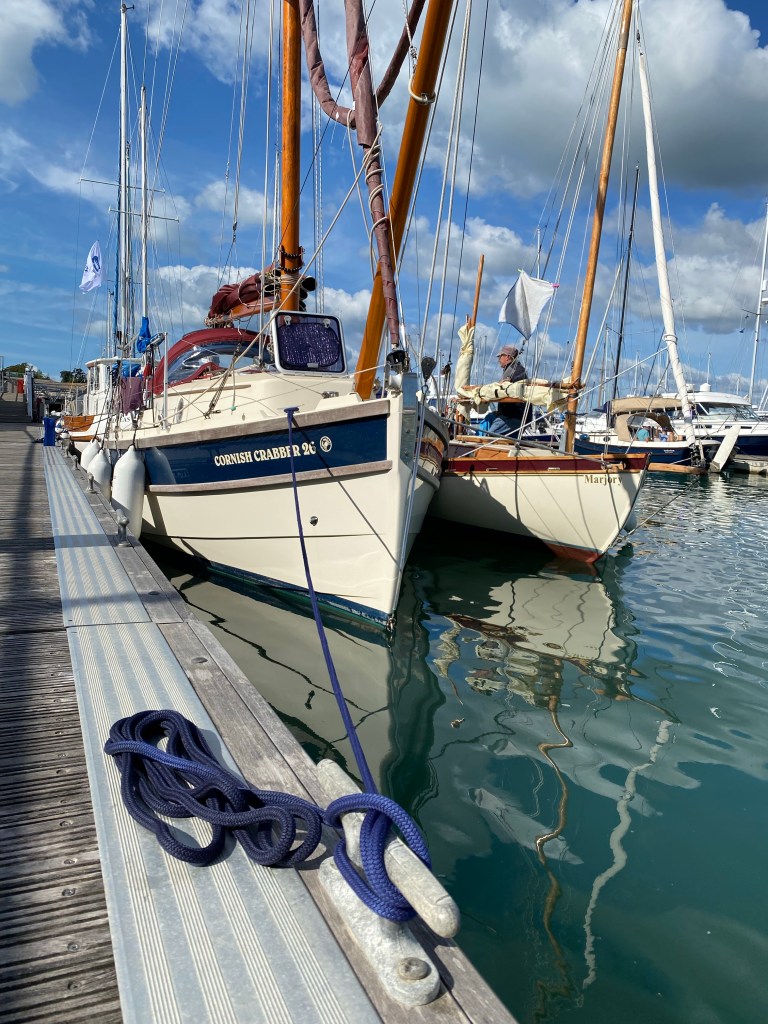
Marjorie, a Shilling Yawl going great guns past Cowes
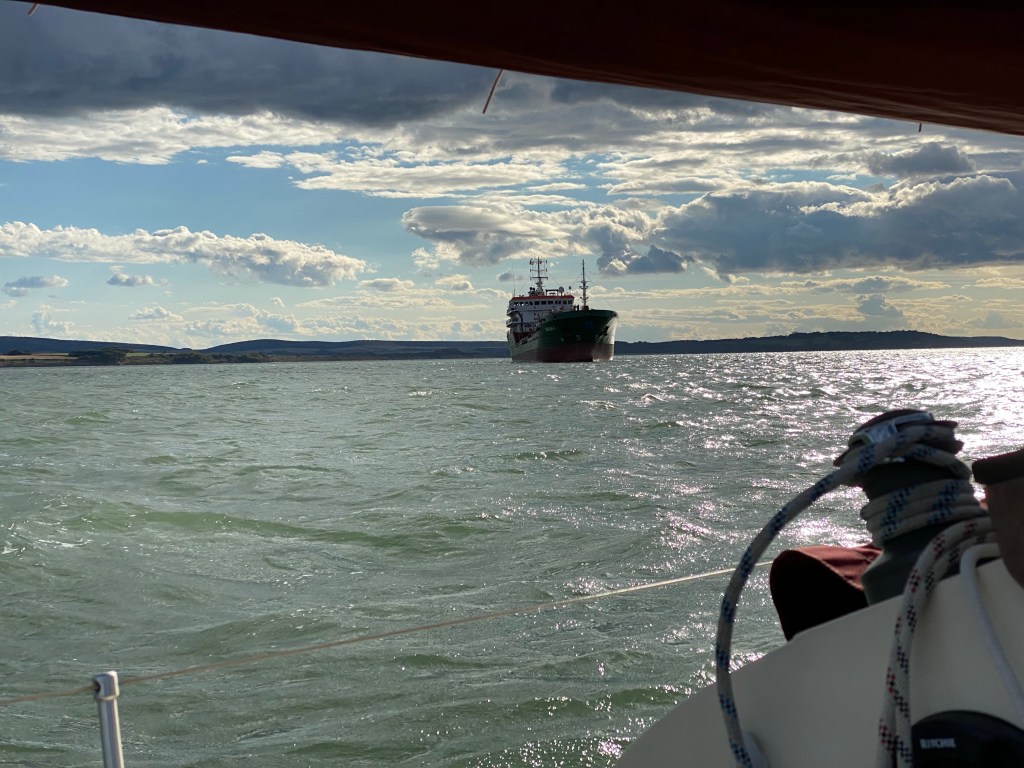
Colregs? Normally you don’t want to see a cargo ship from that angle, but fortunately this one is anchored!
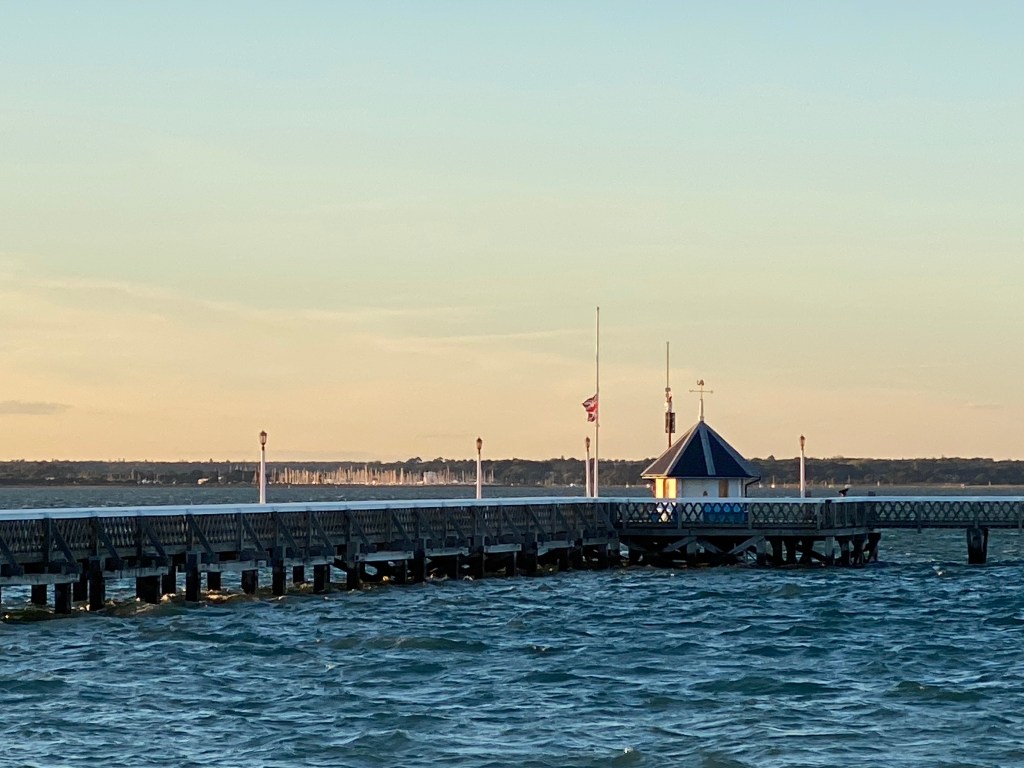
Yarmouth pier in the evening, with flag at half mast for Queen Elizabeth, and the forest of sails at Lymington in the distance on the mainland.
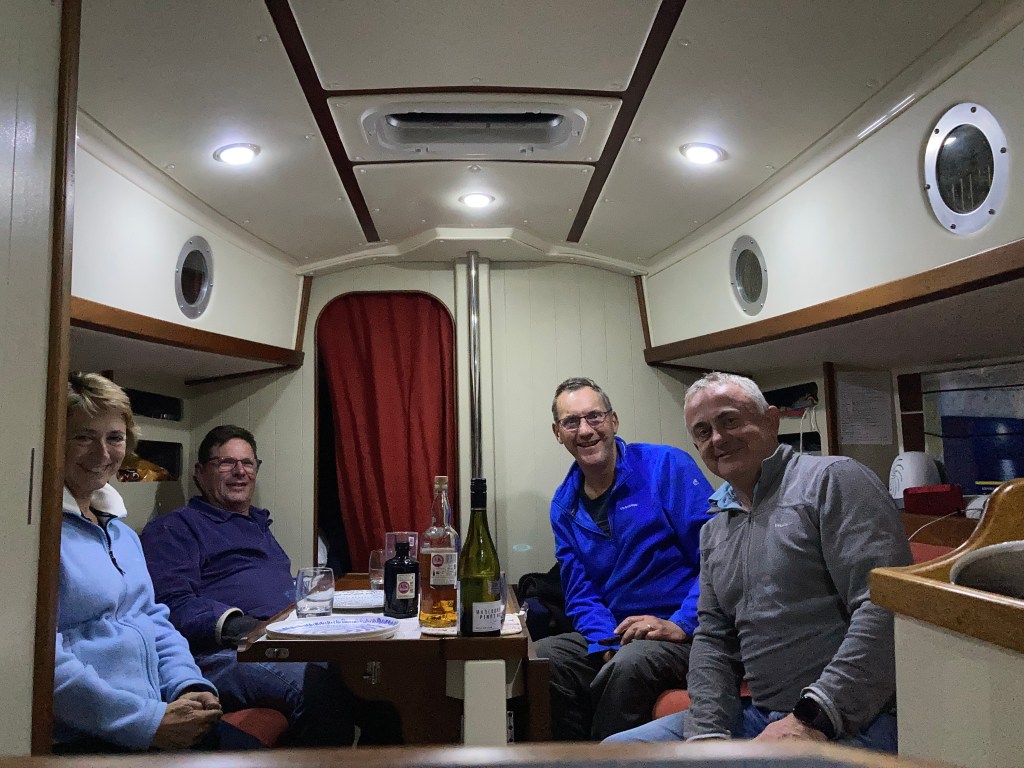
A lovely evening on Molly with Maggie and Huw of Minarlo (nearest the camera) and Tom of Marjorie and myself.

Yarmouth harbour had not been able to put all the gaffers together, so we were a little dispersed. I ended up on a pontoon with Marjorie, who I had sailed alongside down the Solent, rafted to me. Nearby was Mincarlo, a Norfolk Gypsy, whose Maggie and Huw we’d met several times at events this season. We enjoyed some excellent fish and chips from the Blue Crab (highly recommended- they have a booking system so you can be sure it’s been cooked to order!

The following day was much lighter, but still a NW breeze. I had to leave at midday, in order to catch the flood tide and was expecting to motor for at least some of the way, but ended up sailing the whole time in the sun, varying between a relaxed amble and a brisk trot. All in all, quite a treat!

Molly and Marjorie
Mincarlo slipping her warps to return home
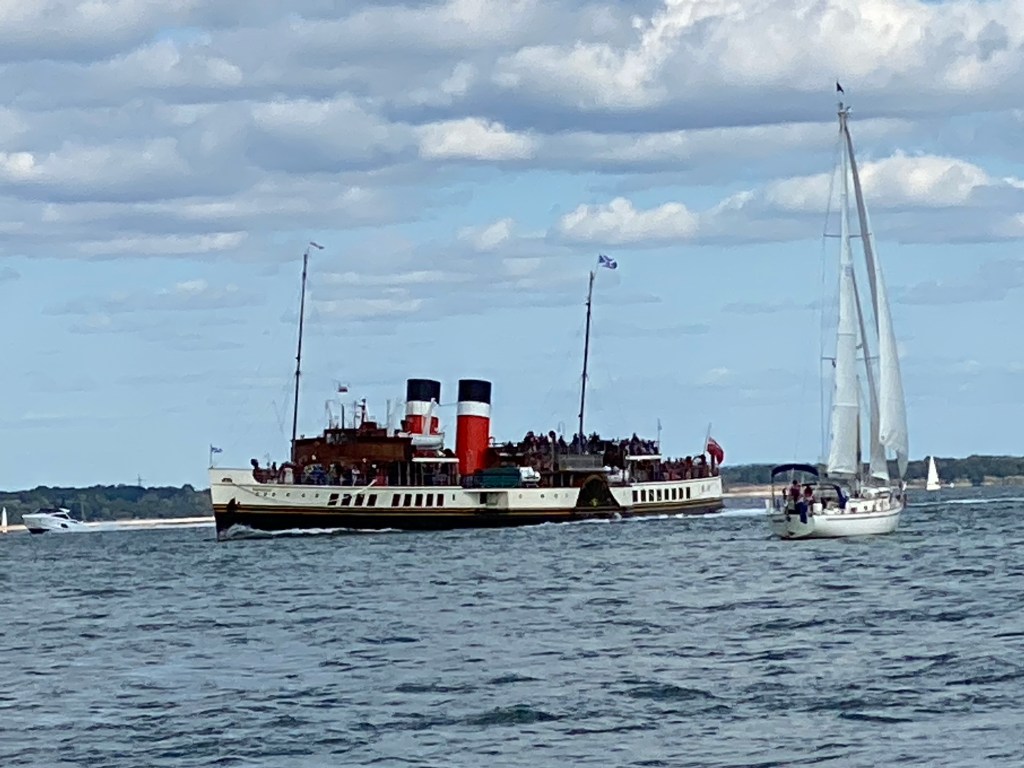
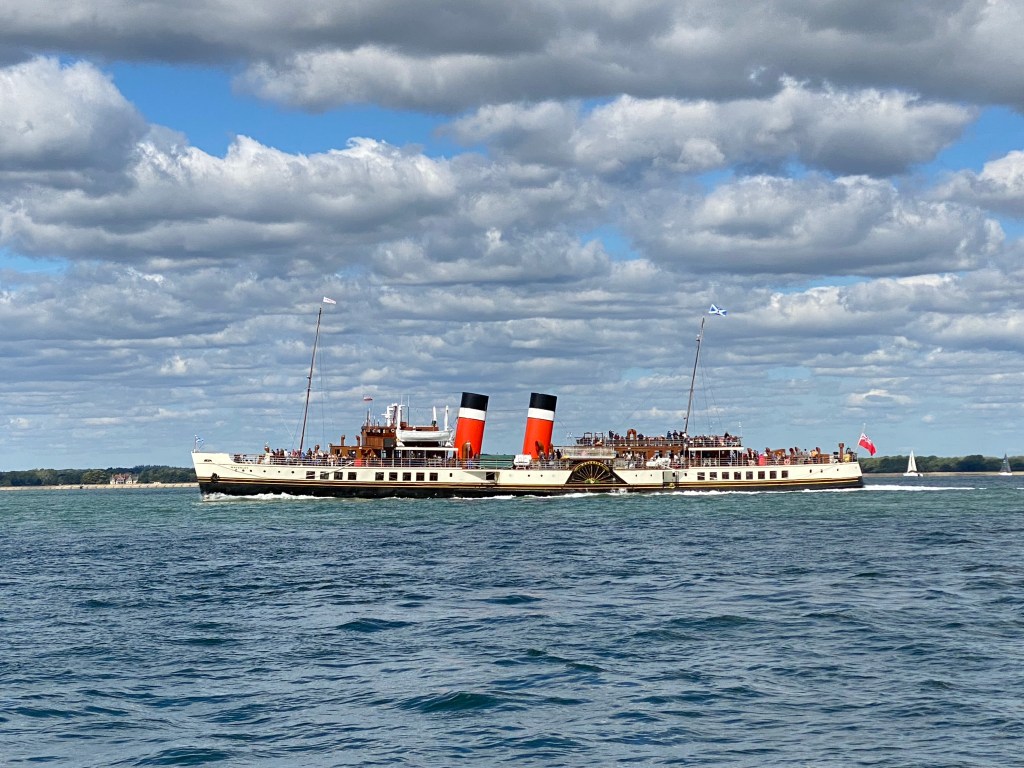
Paddle steamer Waverley, seen on both legs of this journey

Dartmouth

We had an early start and made full use of the excellent facilities at Sutton Marina in Plymouth. Niki left us for the train back to Falmouth, pausing in Plymouth again on her way back for brunch with Aimee, who was in the midst of her uni exams, before driving home. Our passage plan was to move Molly another good hop towards her new home, and make for Dartmouth.

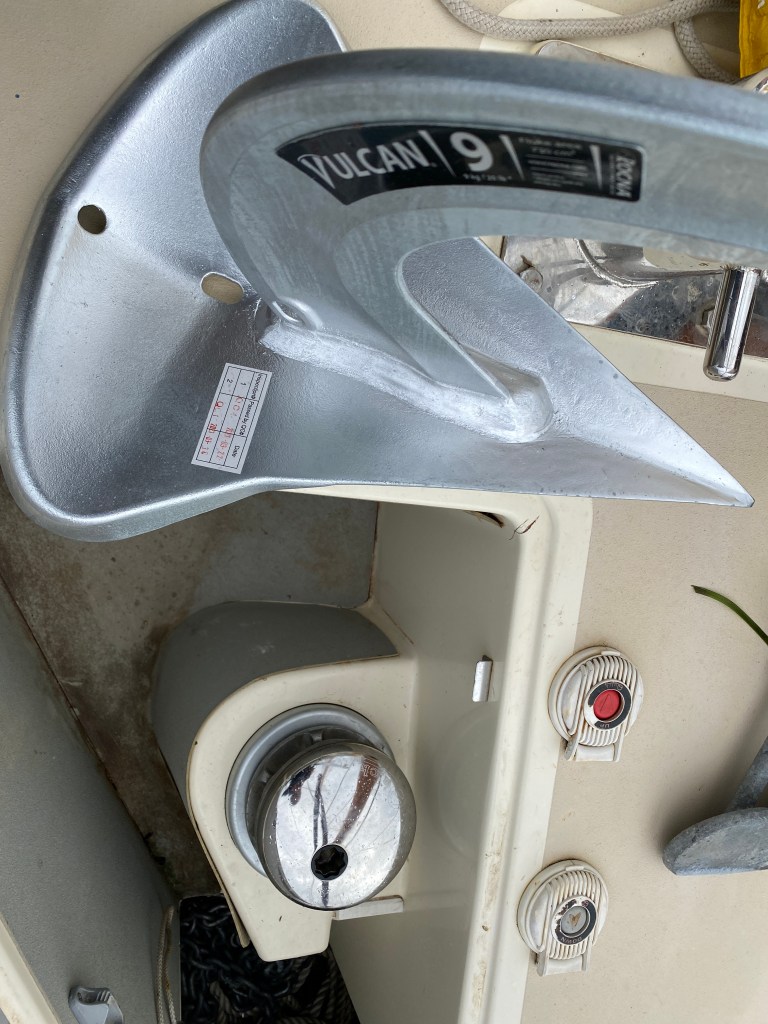
My main order of the day, following yesterday’s experience was to replace my anchor for something more grippy before departing. After reading around, the ground tackle of choice seemed to be either a Rocna or its later development, the slightly more compact Vulcan. It was reassuring to know that not only had others testified to its holding but importantly also reported that it fitted the anchor locker of the Crabber 26.

Plymouth ought to be a good place to procure boat equipment, but most of the chandleries didn’t have my anchor of choice. Fortunately the excellent chandlery at Mountbatten had a 9kg Vulcan in stock, so Ben and I took the foot ferry across the harbour. Pausing only to restock with pasties for our voyage, we returned to Molly and fitted her shiny new pin, made our way through the lock and motored out into the sound.

Anchor well and prosper! Mr Spock, the 9kg Vulcan

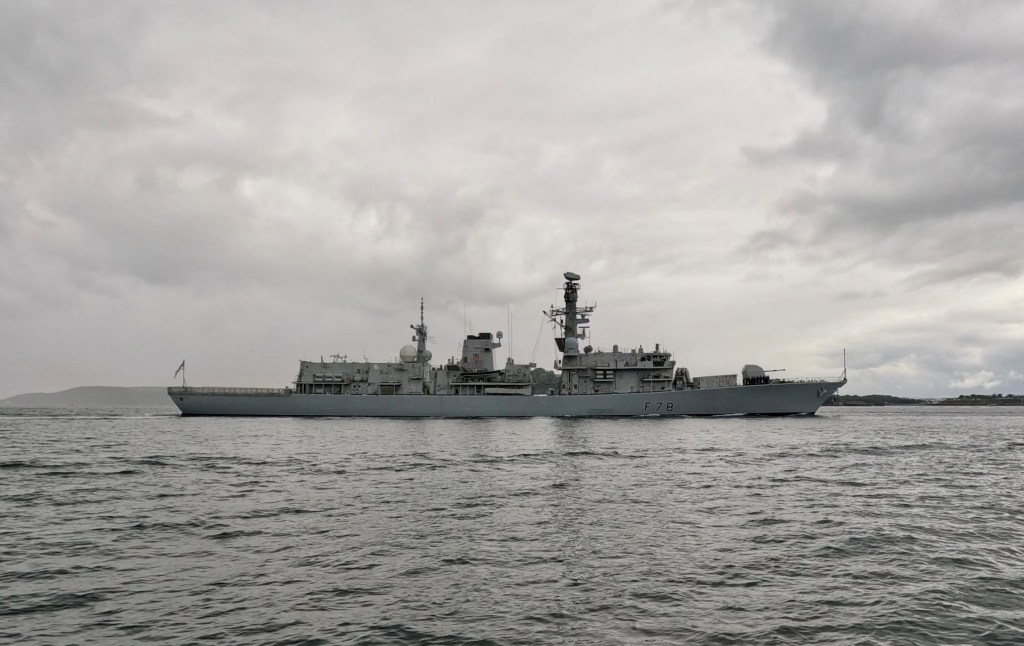
Just as we were hoisting the main, a military RIB asked us to move out of the channel, and moments later the frigate HMS Kent came steaming up the East channel at speed.

HMS Kent

Although we had the main up, it was not working at all and it was not a very peaceful passage down the Devon coast; although there was little swell, the sea felt confused without the drive of the sails and gave us an uncomfortable motion. We passed by some of my favourite diving sites at Hilsea point and the Persier wreck in Bigbury Bay, where we could see the mouths of the Erme and Avon from afar. I thought, not for the first time, that I wished there was time to explore these places.

Eventually Molly passed Bolt Tail and we travelled along that forbidding four miles of cliff, until we reached Bolt Head and the entrance to Salcombe. We had discussed this as an alternative place to overnight, but Ben and I both agreed we should carry on.

The sea was much flatter now and a fair tide was increasing; we quickly passed Prawle Point and approached the prominent outcrop of Start Point with its conspicuous lighthouse. By this time we were scooting along at over 7kt and were rapidly covering the remaining ground.

Rain approaching

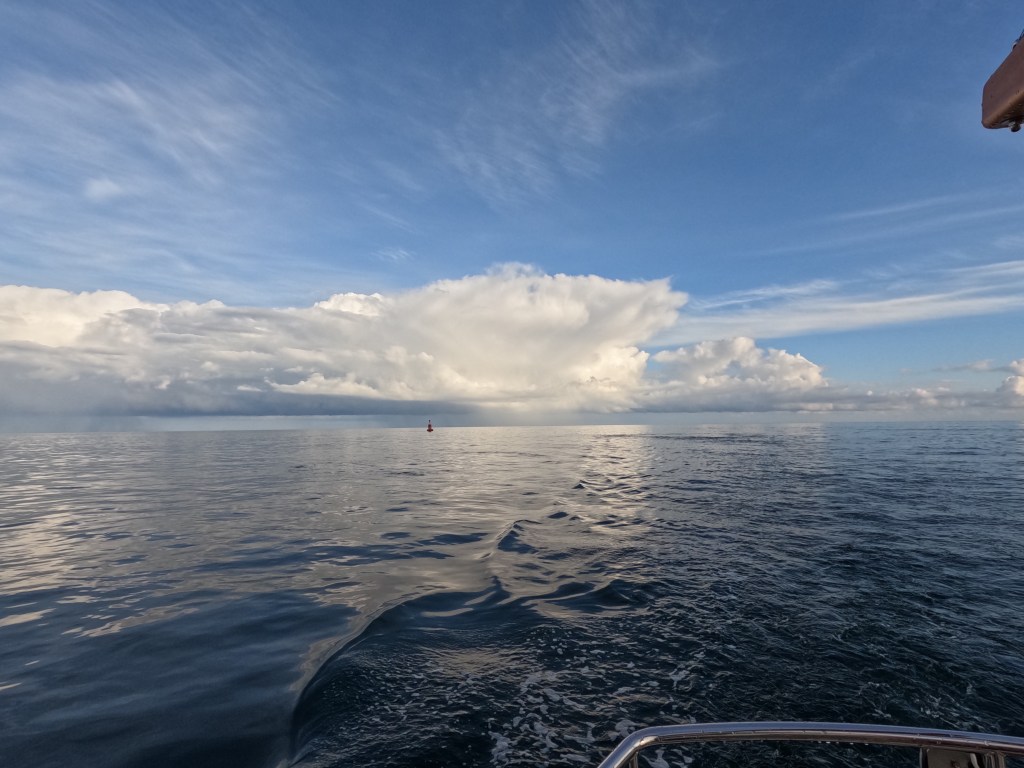
We were treated to some spectacular meteorology, with banks of dark grey cumulus approaching. We could see a lovely pilot cutter in the distance turning across our track. The heavens opened and a massive downpour began with the rain cascading down onto glassy water. It was so quiet that could the strange hiss of the drops on the surface of the sea as we sped along. We watched the pilot cutter pass in front of us and follow the shore of Start Bay; we took a route outside the Skerries Bank, though there the only evidence of overfalls were occasional patches of boiling water on the glassy water surface.

Hetty entering Start Bay

The cloud passed away as we entered the mouth of Dart River and Ben and I were treated to the sight of Dartmouth and Kingswear in the early evening sun. We treated ourselves to a berth on the town quay, ready for some well-earned fish and chips. It was only when we were tied up that I noticed that as this was the ferry quay, we needed to be away by 0845 the following morning. The helpful harbour master pointed out that we were welcome to move to one of the pontoon berths in the morning if we wished, so we decided to stay put.

We were joined just after by the gaffer we had seen in the bay, which turned out to be Hetty, a 1906 pilot cutter, who was travelling in the opposite direction to us, from Weymouth on her way to Cornwall for a pilot cutter rally.

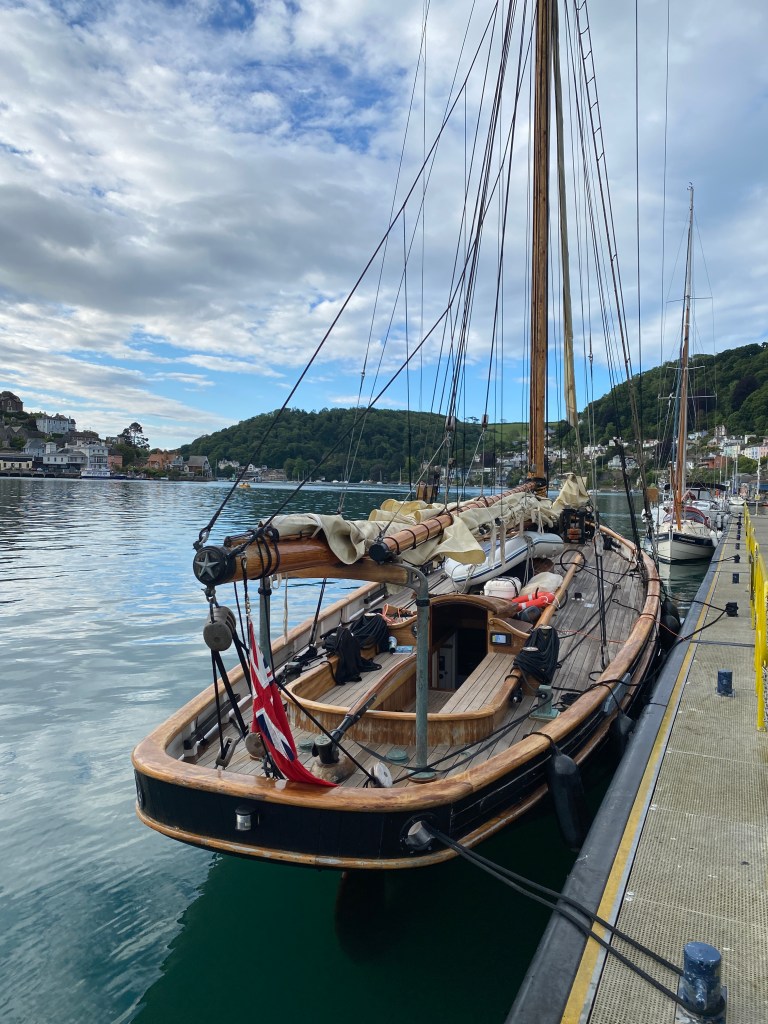
Hetty alongside in Dartmouth

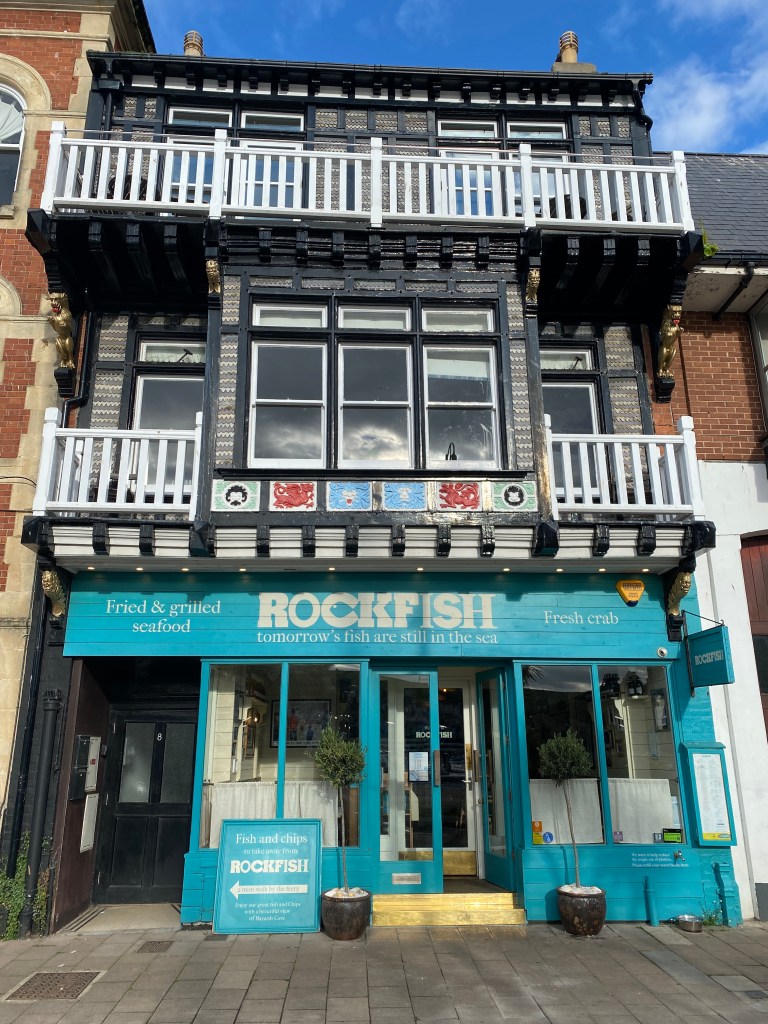
We enjoyed Rockfish fillet and chips aboard Molly with the fine Shropshire bitter I had brought with me from home. The meal was provided by the chip shop of the same name and was excellent.

We spent the rest of the evening discussing our next move. The wind had been favourable but very light for the past several days. We had one more day of favourable wind forecast, followed by a day of no wind and then adverse winds. The forecasts had not been accurate, but I really did want to end the week with Molly on her berth in Gosport and I also did not want to plod upwind on the motor if I could avoid it.

Ben and I considered many options, but in the end decided that we’d make an early start in the morning, pass off well off Portland with a favourable spring tide in the early evening and see where we got to, with the option of going overnight all the way into the Solent or, more likely, anchoring somewhere before Swanage to avoid sailing through the whole night and allowing us to time our Solent entrance to a fair tide.

Excellent fish and chips!