Tag: Dorset

Into The Solent

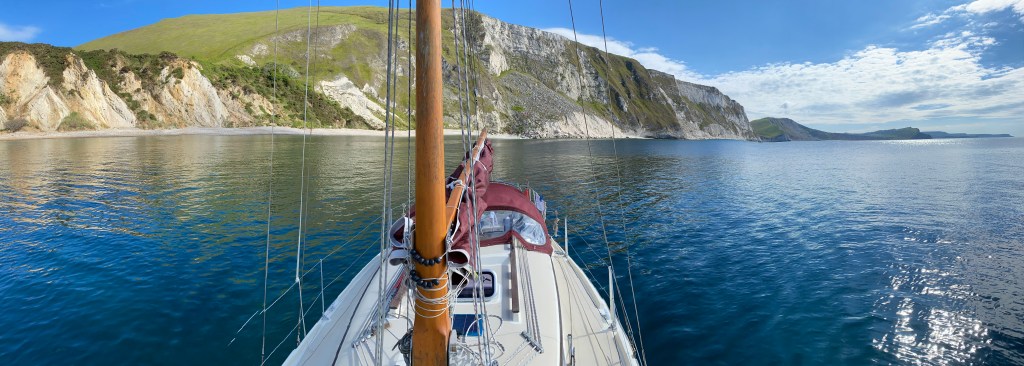
Worbarrow Bay

Wednesday dawned bright and fair. Ben and I had a leisurely breakfast whilst admiring our beautiful anchorage. The anchor alarm showed that we had held firm through the night, which increased my confidence in the holding ability Mr. Spock, our Vulcan anchor, as we had had strong gusts during the night. I wanted to fly my drone, but sadly the anchorage fell within the scope of Lulworth firing range, which prevented takeoff.

Mupe Rocks
Good holding!

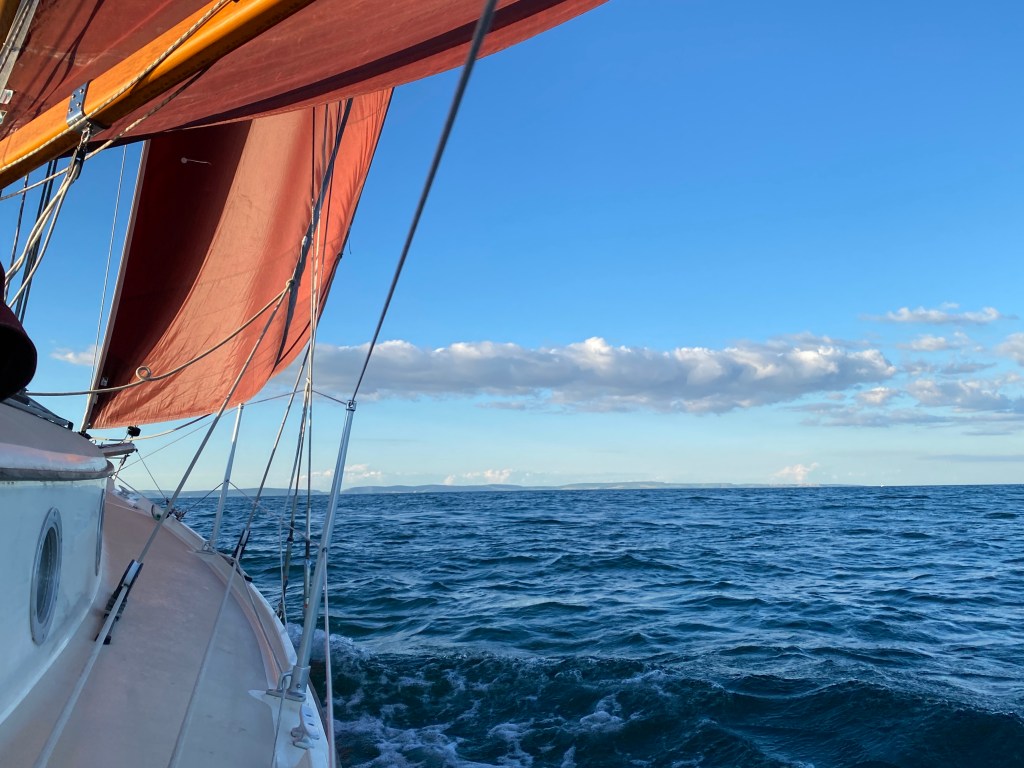
Today was expected to be a “no wind” day, but there was a lovely southerly sailing breeze as we lifted anchor and continued our voyage east. With a fair tide under us we passed off St Albans head, turning to follow the coast past Peveril Point, Swanage and finally Old Harry Rocks. The water was very busy with all kinds of pleasure craft, from canoes and small dinghies to large yachts and motor boats, everyone enjoying the sun and sea breeze.

Dorset’s impressive Jurassic coast
Handfast Point and Old Harry Rock
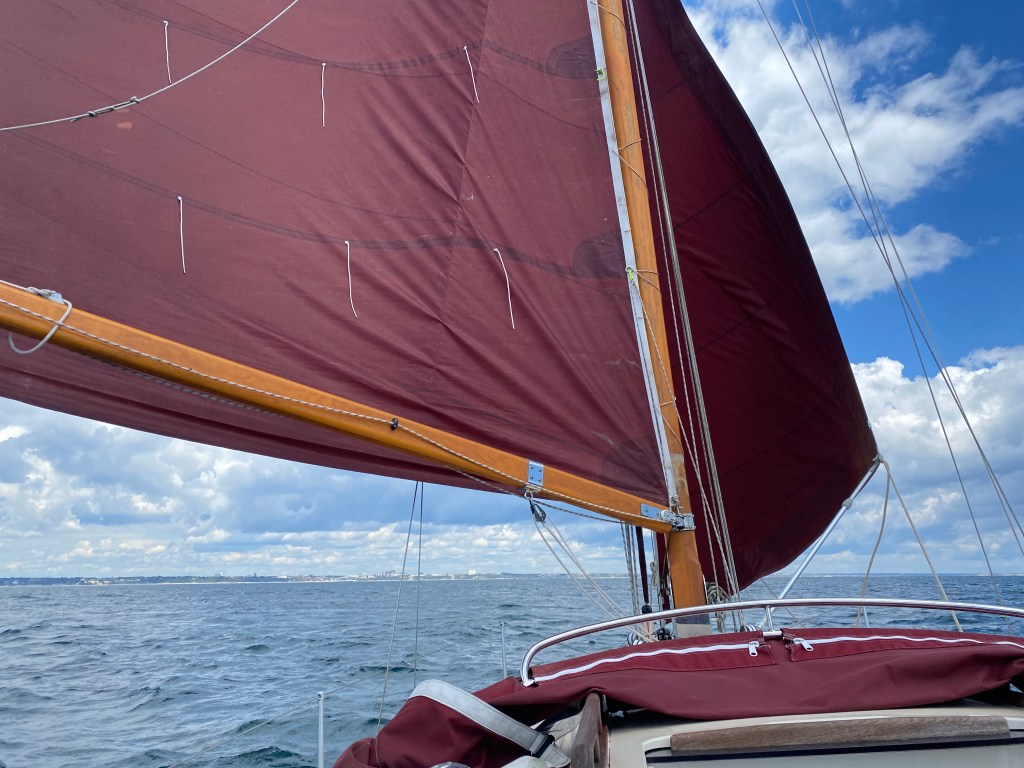
Staysail poles out with a boat hook

At this point, the tide had turned against us, so we angled into Bournemouth Bay to minimise to its adverse effect. There were obvious overfalls at Hengistbury Head, where the ebbing tide was pouring off the shallow water of Christchurch Bay, over a ledge into the deeper water of Bournemouth Bay.

We had time to kill before the tide changed once more and we could enter the Solent. Our hope was to poke our nose into Christchurch h harbour, but it looked like we would be trapped by the falling tide if we had done so. As an alternative, we sailed into the lee of Hengistbury Head and anchored for an hour or so.

The was not a very comfortable experience initially because I had not allowed for the tide. The anchor bit immediately but Molly did not rest head to wind into the waves, but lay almost broadside due to the flow of the tide. I could not believe that just over 0.5kt of tide could beat 15kt of breeze, but the evidence was clear: as the foul tide eased, Molly turned head to wind.

By the time we lifted the anchor, the breeze was a steady F4 SW and we made excellent progress across the bay, keeping fairly close in and shaping our course for North Head buoy. This marked the beginning of our track into the Solent close round Hurst Point. I wanted to show Ben the full effect of Solent tides, he being unused to strong tides in his home waters of Falmouth, but the wind dropped once we were in the shelter of land on both sides and also shifted to dead downwind.
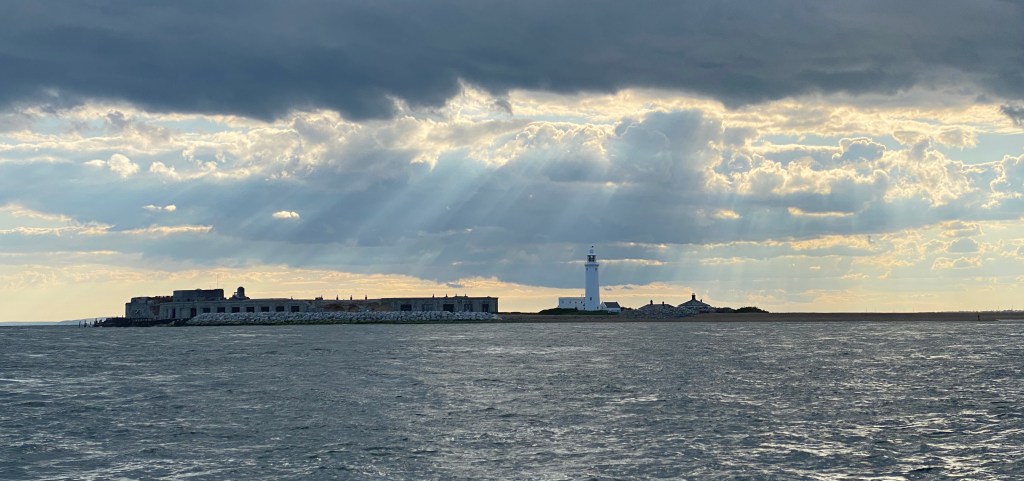
Looking back to Hurst Point

We shook out the reef we had been carrying and moving quickly, despite sailing slowly, soon made Newtown Creek. I had particularly wanted to show Ben this marvellous anchorage; we had a clue how crowded the anchorage would be by the number of boats anchored outside sheltering under the low headland. Crowded through it was, we did not have much trouble finding a place to anchor. Little scope is needed in this shallow water; in fact we had to raise the centreplate within the anchorage.
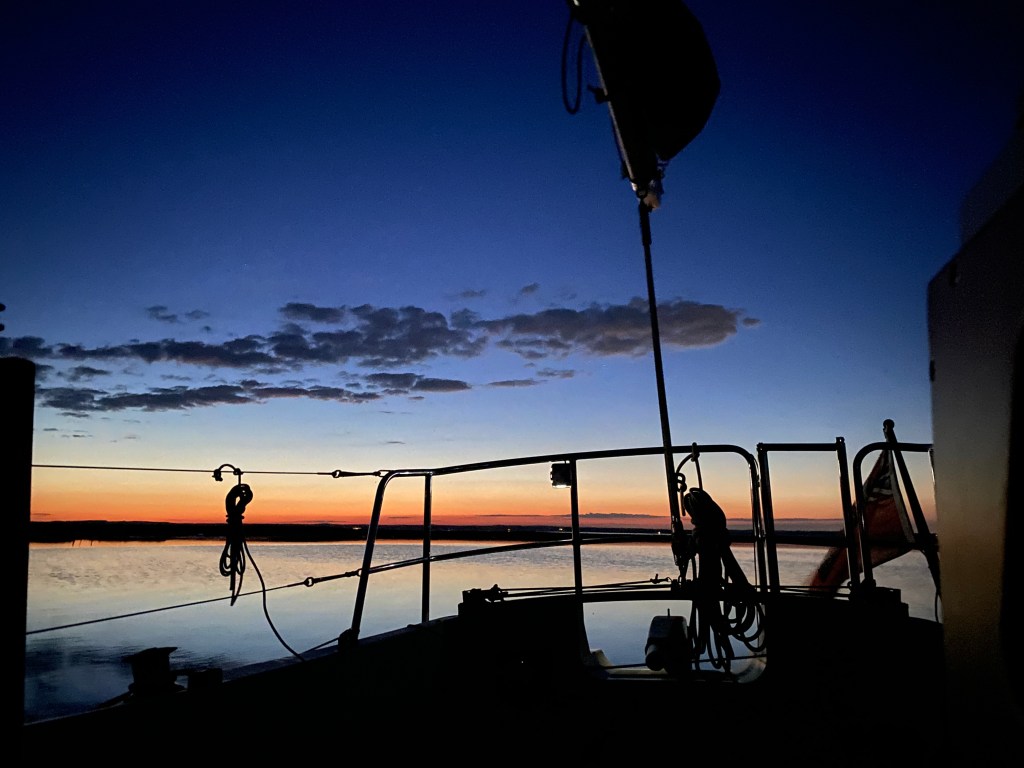
Sunset at Newtown Creek

As the sun set, the wind faded and we were treated to a most beautiful sunset and rise of the young crescent moon, to the soundtrack of the calls of oystercatchers, geese and terns.

I was very glad of the oven and had put our tinned pies in as we approached the entrance to the creek, so by the time the tinned vegetables were warmed we had a welcome hot dinner.

We had had an amazing passage, covering almost 40 miles and only using the engine for an hour in total – not bad for a “no wind” day!
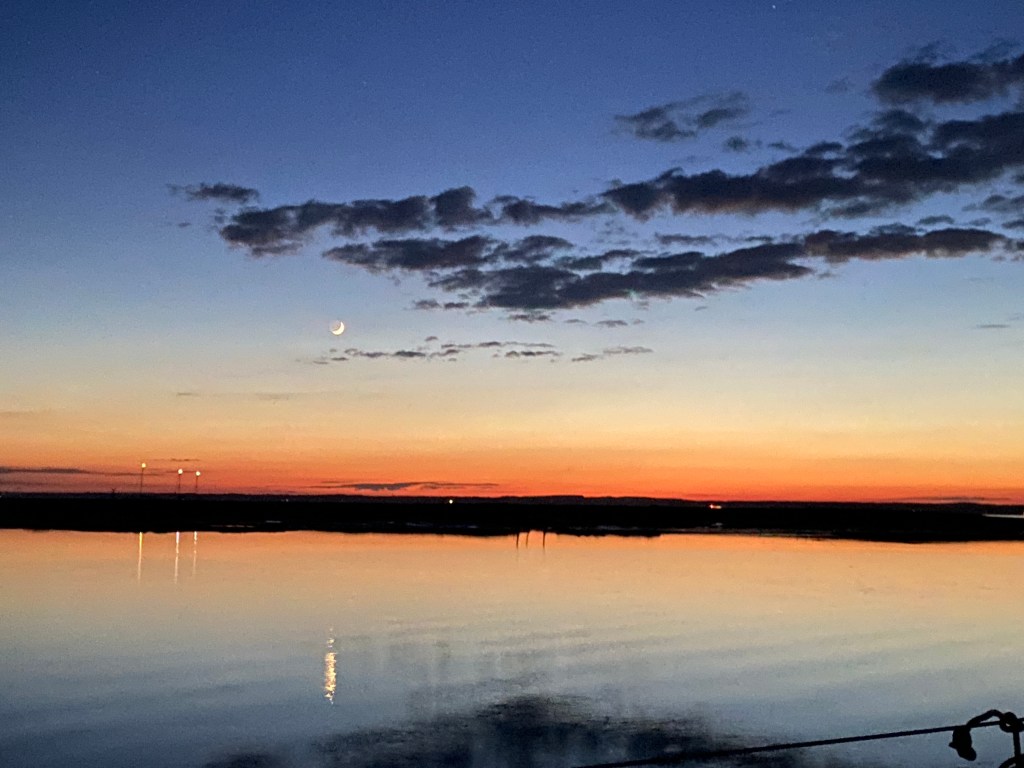
Moonrise

Conquering Portland Bill

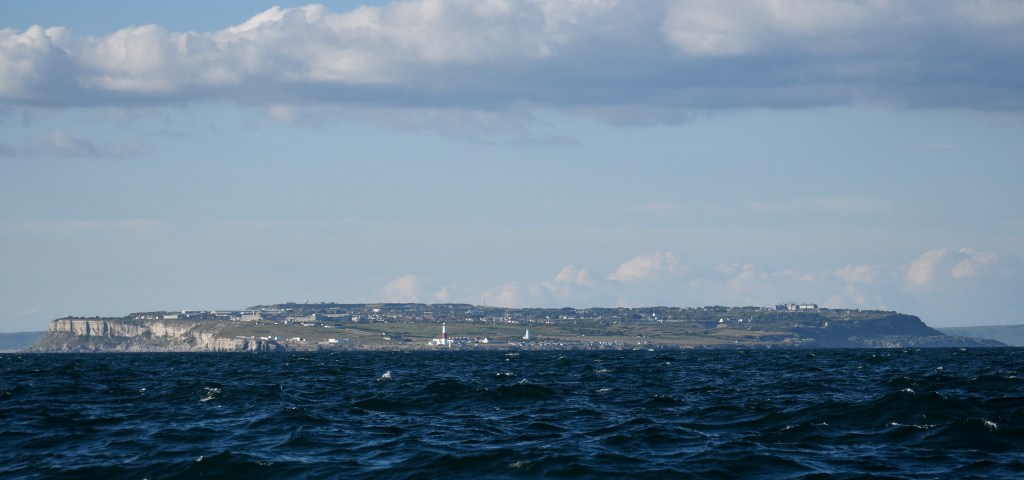
The Bill of Portland

The Bill of Portland is an enormous wedge of eponymous rock sticking out into the channel. The strong tides, overfalls and eddies are very considerable and constitute a significant inconvenience, not to mention hazard to small craft making their way along the coast.

Today was exactly on spring tides, so the currents would be at their strongest and it was important to time our arrival carefully. Travelling east, this is not easy because there is nowhere convenient to wait if one arrives early (as there is when travelling West), but it is also important not to arrive late either.

There is an inshore passage which saves considerable distance, but I considered it too risky for my first passage and on springs. So that dictated that we should pass at least 3nm off, arriving at 6pm, at the turn of the tide when the overfalls were least and then take advantage of a fair tide into Weymouth bay.

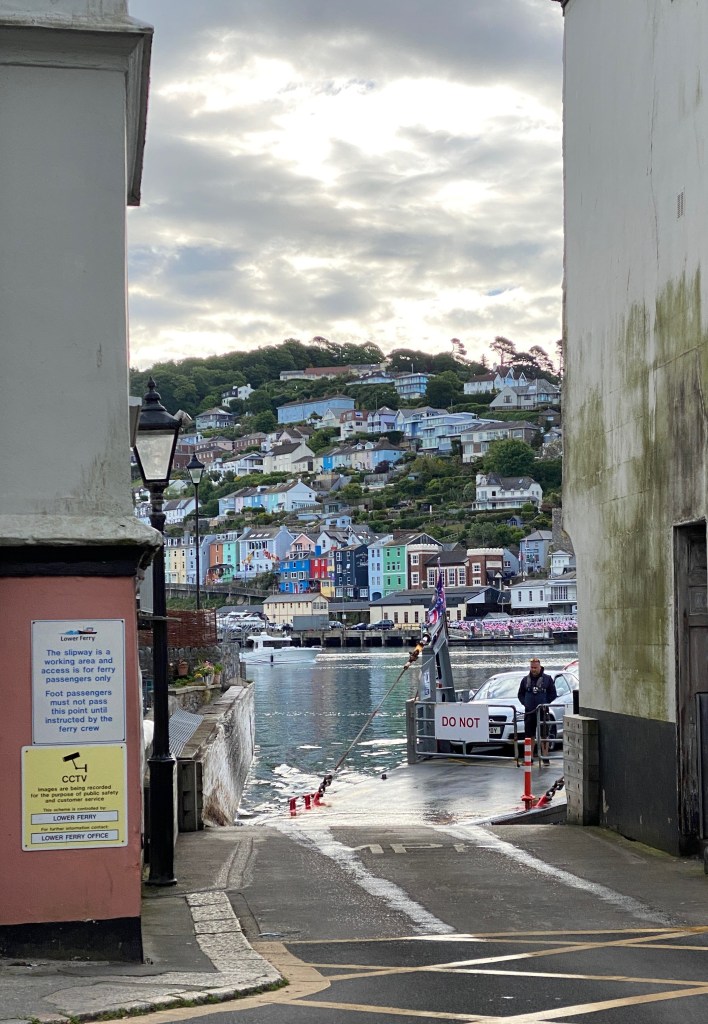
The ferry which runs between Dartmouth and Kingswear
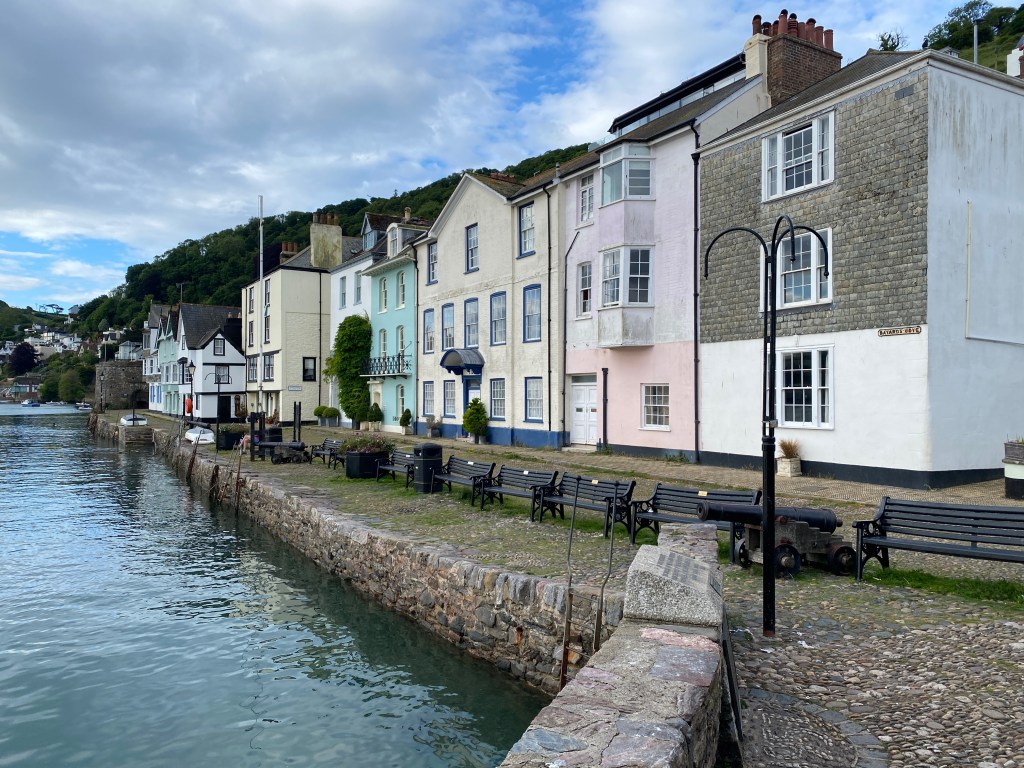
Bayards Cove, where the Mayflower and Speedwell first set off for America, before being forced to return to Plymouth for repairs to the leaking Speedwell

We took an early morning stroll around Dartmouth town, a lovely place with a lot of character and history, before taking on some provisions and departing. The provisions took the form of more pasties, in fact double rations as both Ben and I both bought some. These were definitely Devonish Pasties (as opposed to Cornish pasties) with their wacky flaky pastry!

Devonish Pasty
Offshore passage. Note Andy “the arm” Autohelm is wearing his plastic raincoat.

Our track was due East, passing the line of rocks outside Dartmouth and then opening Torbay as we left Berry Head behind. We had main up but there was little wind. As we moved further offshore, towards the invisible Portland Bill, the wind gradually filled in, to give a good training run. However the wind shifted gradually, until we were dead downwind and the jibs were not pulling.

Our track for this passage. The red dot lower right was the centre of the 6nm circle of live firing. At this scale, the chart shows The Shambles as an oval to the east of Portland

We could hear on the VHF two ships warning of live firing. “Warship Westminster” was no concern, being far to the east, but RFA Cardigan Bay was reporting a 6nm radius of live fire in our track.

This forced us to gybe in order to stay on a track which maintained our minimum 3nm offing from Portland, whilst staying out of the radius reported.

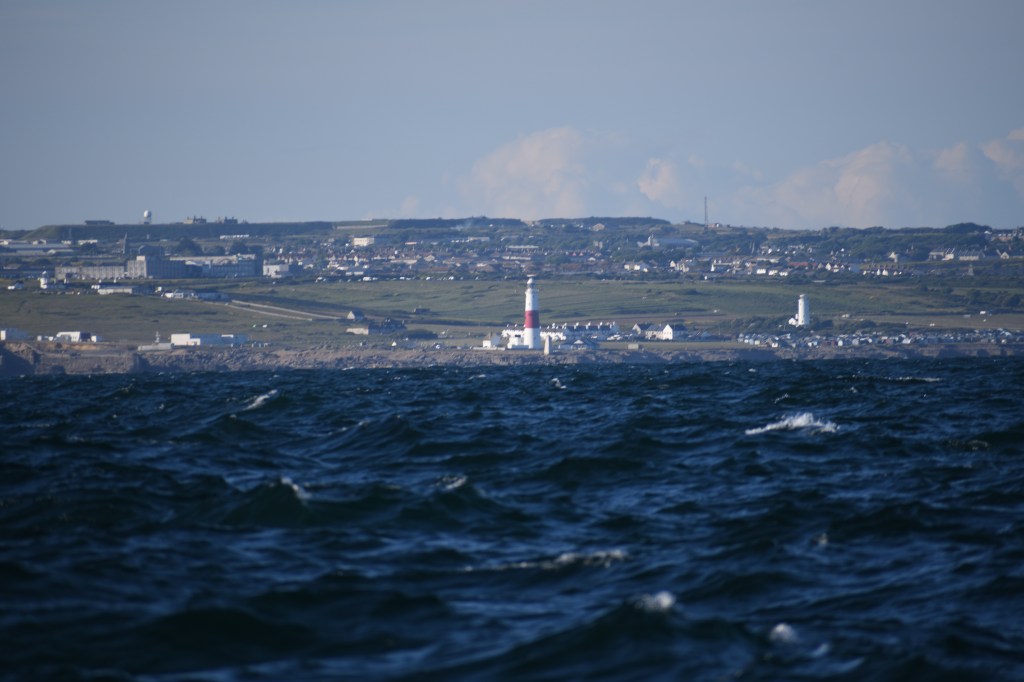
Portland light due North

In the end, the wind strength was too high for main only and we took it down (not easy in the big rollers that were forming) because the helm was too heavy without the balance of a jib sail, which weren’t setting as we were dead downwind. We continued on engine and jib and watched the enormously long wedge of cheese that is Portland Bill take on form and colour as we approached. The tide was against us; progress was slow and we reached the watershed of directly south of Portland Light at 1900. From then on, the tide built in our favour and we were soon skimming along outside Shambles Bank at over 8kt in a joyous reach.

We had decided to try the new anchor in Worbarrow Bay, at Mupe Rocks, where we would be sheltered from the SW breeze. The forecast was for the wind to drop to nothing overnight, so we were not too worried about the swell. The sun was setting as we closed the land, but we made a very efficient main sail drop in time to drop anchor, tucked into the lee of the rocks and shielded by the magnificent chalk cliffs, before twilight faded.

Whoosh!
Fast reach at sunset

Ben and I ate our second pasty of the day with a well-earned glass of beer before retiring to bed. I set an anchor alarm, but I was confident in “Mr Spock” (our Vulcan) – Molly came to a full stop when we had motored full astern during our anchor setting. In any case, the forecast was for the wind to disappear almost completely for the next 24 hours. Well, it did not turn out that way! The wind rose and backed to NW, which gave us the full shelter of the cliffs we were under, and Molly held her ground perfectly as she swung to the shifts and strong gusts. A resounding win for the new anchor! I woke in the night to poke my head out and was greeted by the most fabulously clear star-filled sky. I was too tired to admire it for more than a few moments before returning gratefully to my warm berth.

Starry night at Mupe Bay