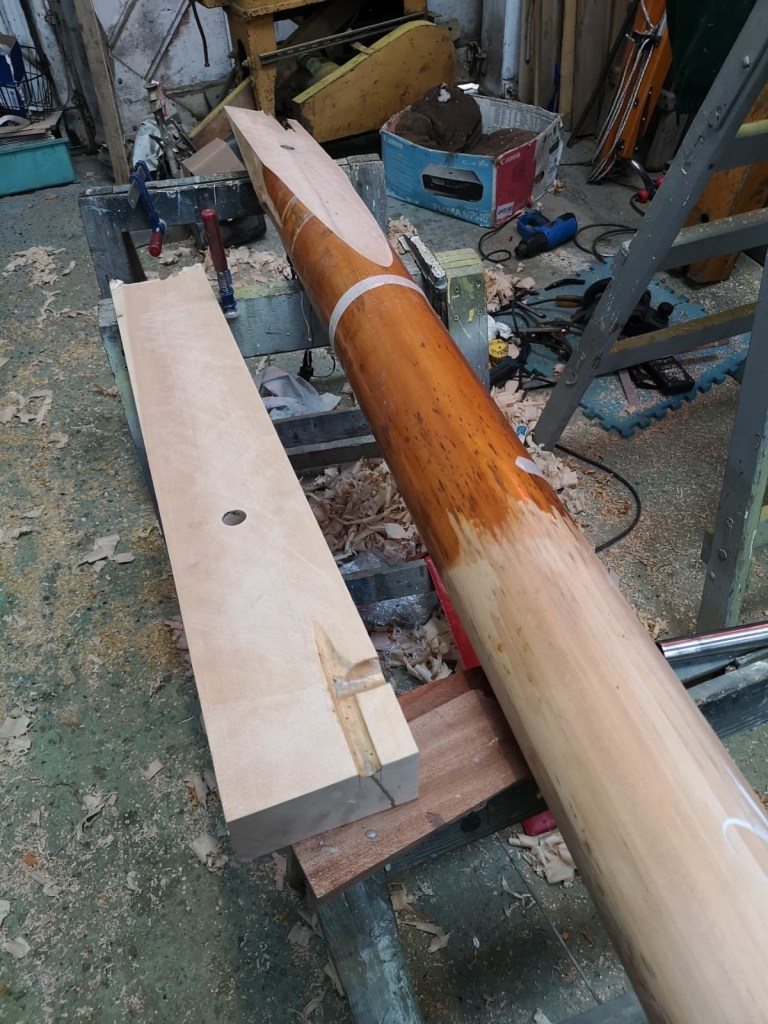
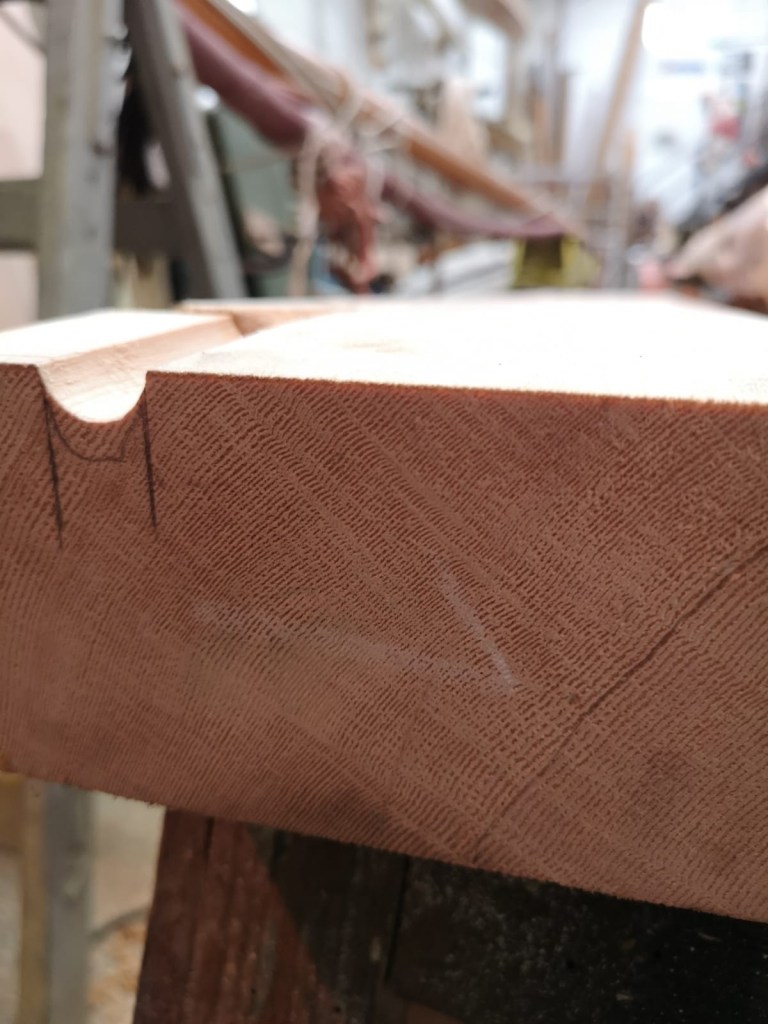
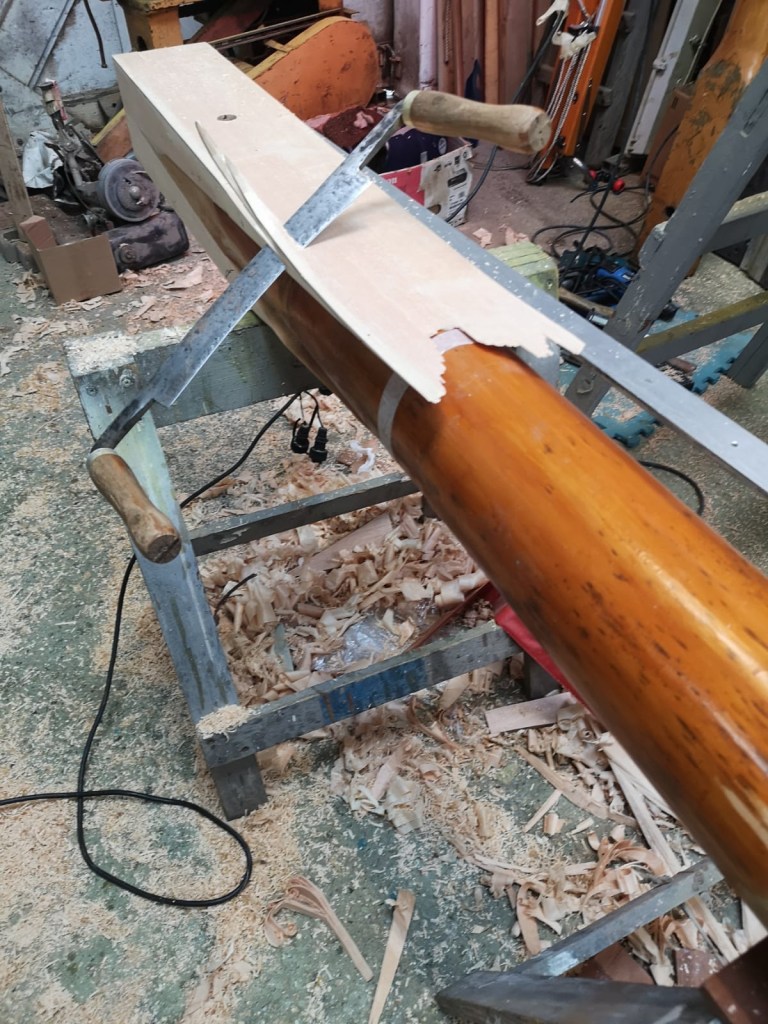
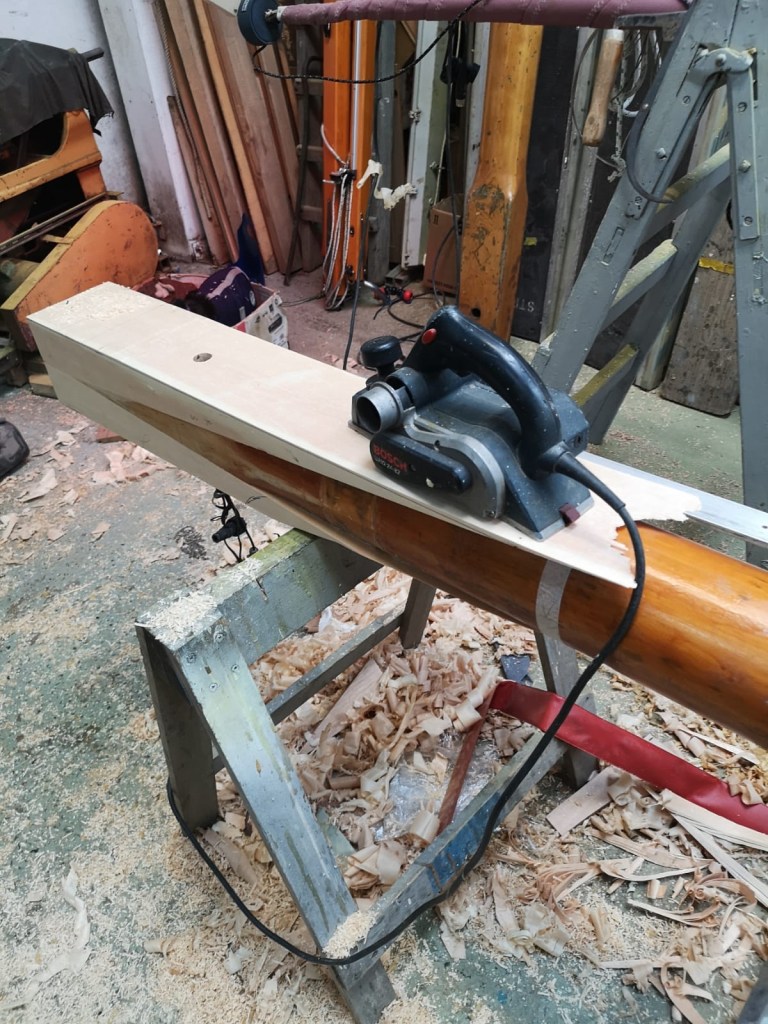
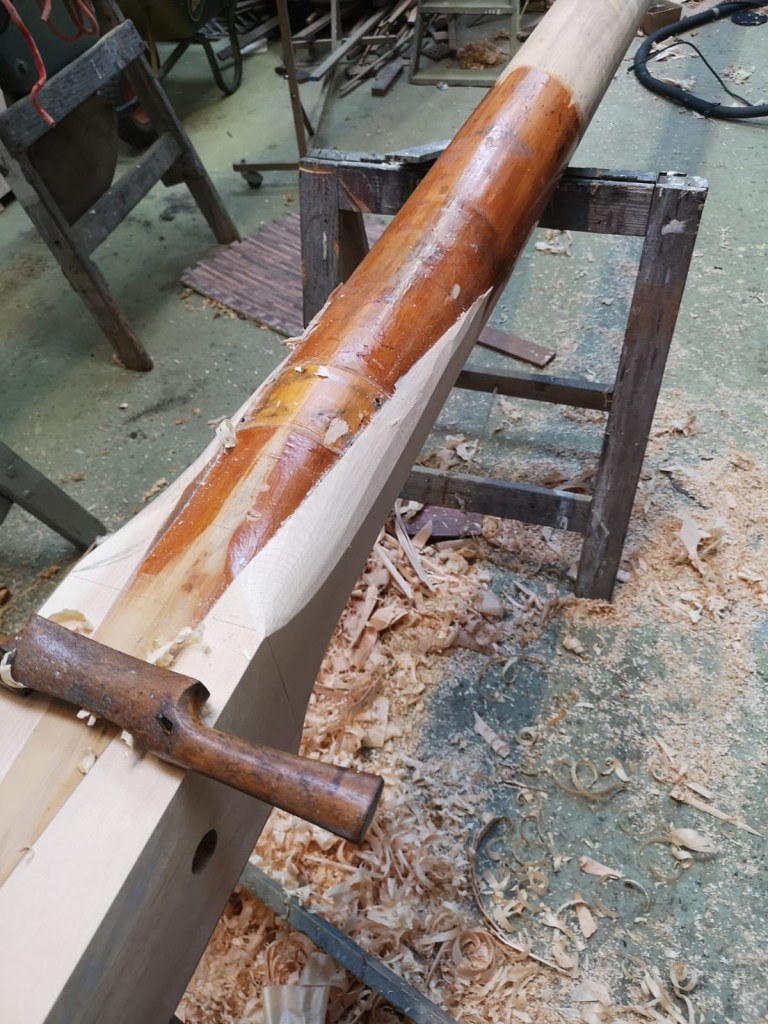
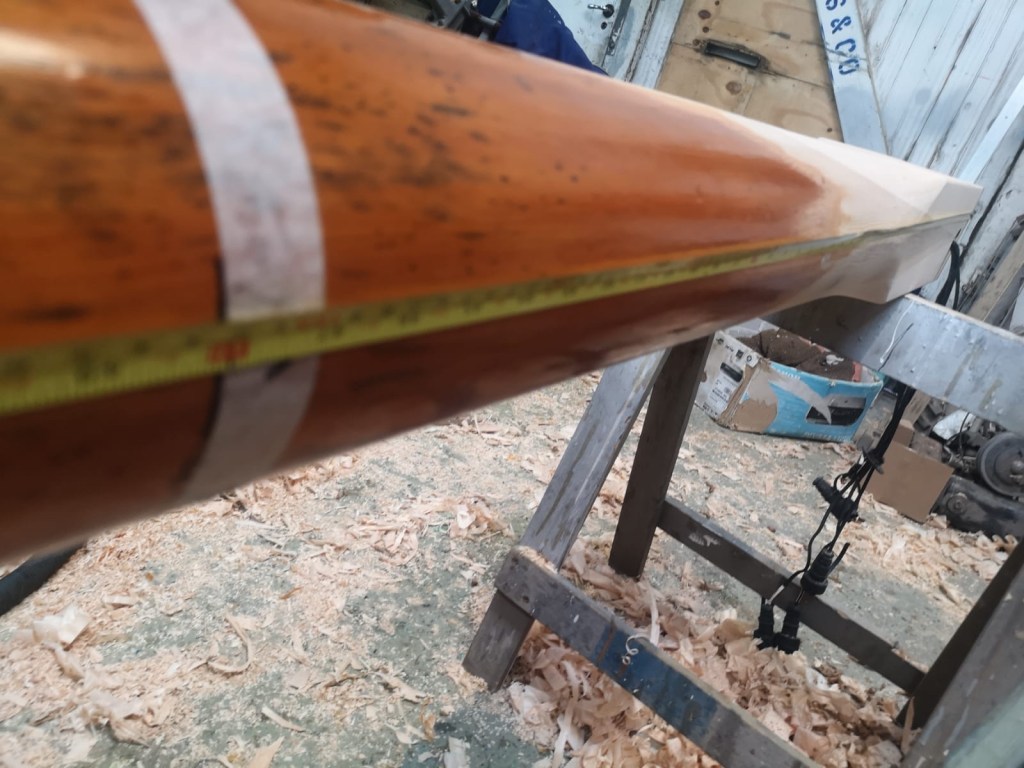
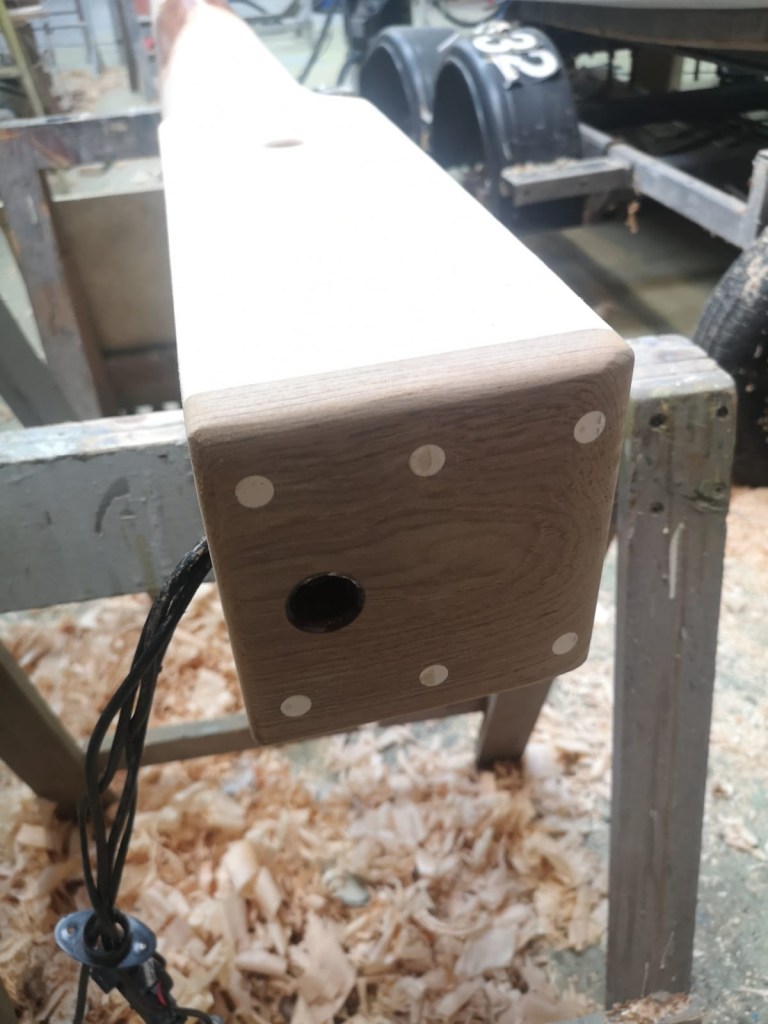
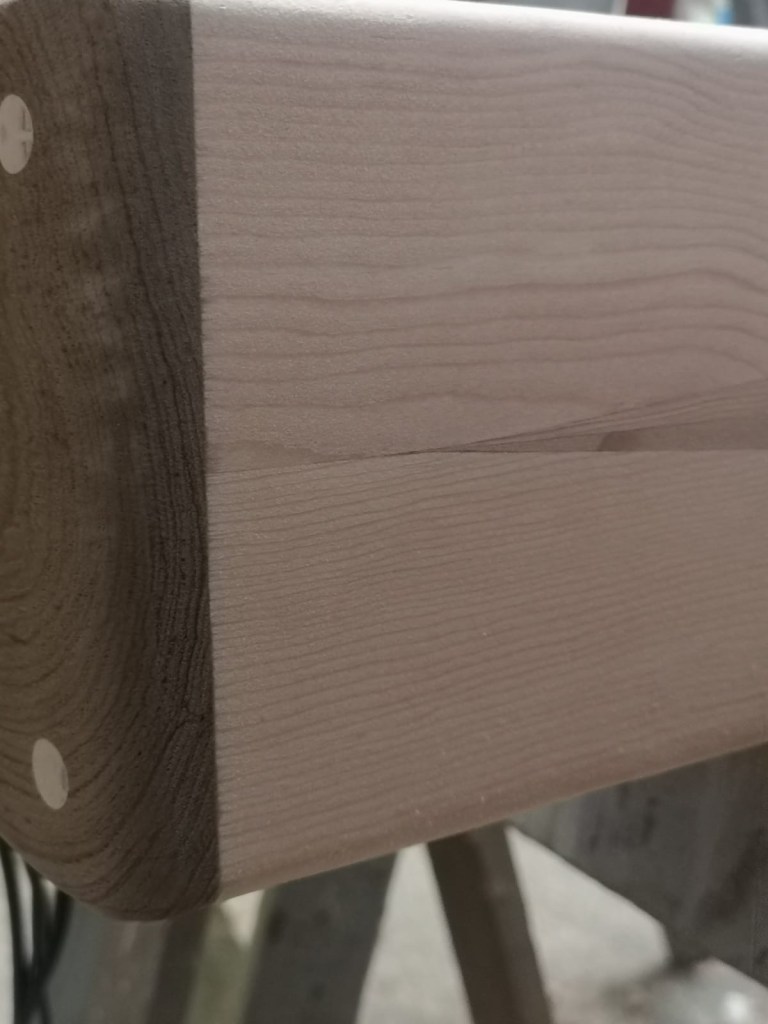
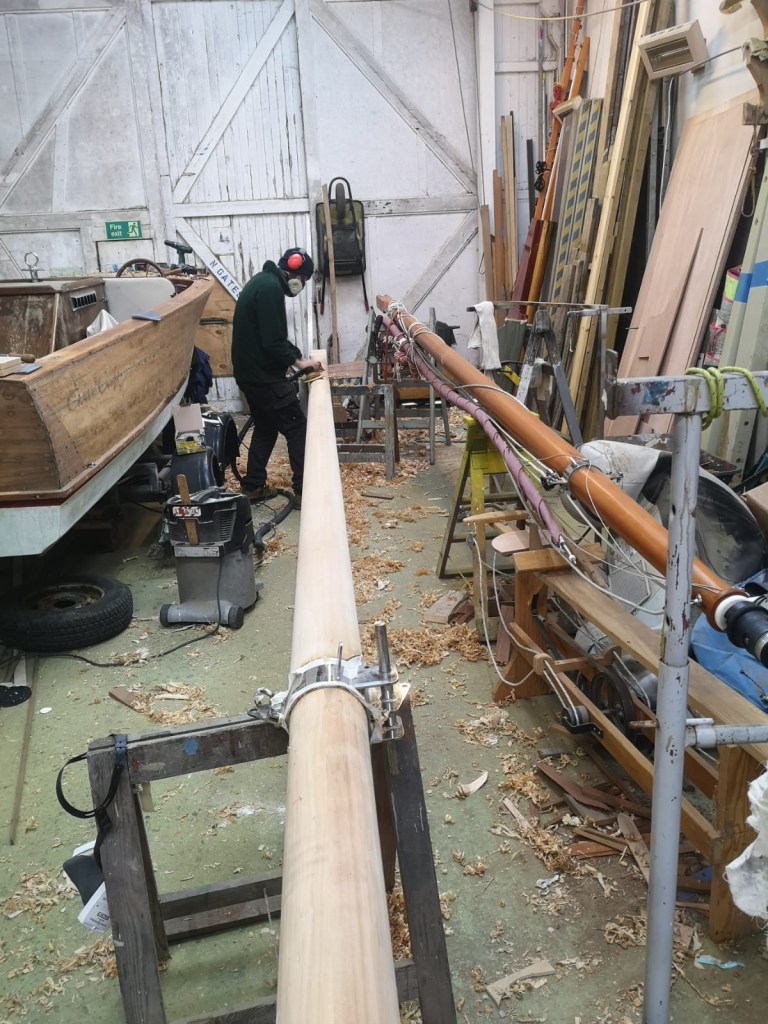
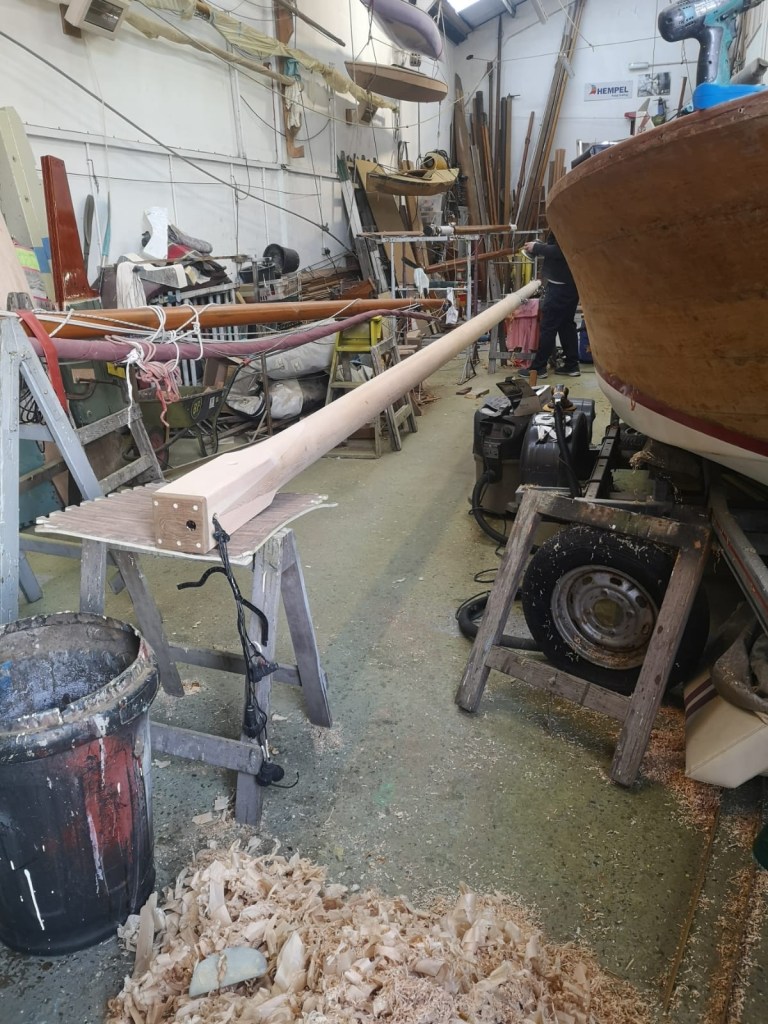
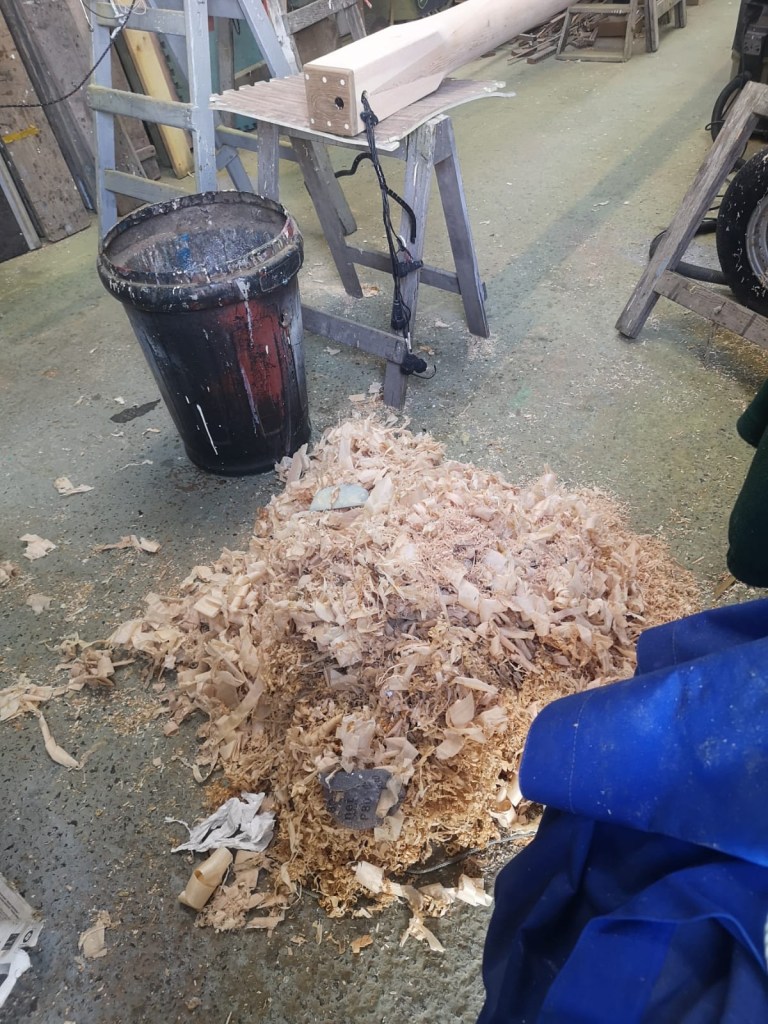
I was very happy to receive these photos today from Nick Gates, the excellent shipwright repairing the rot on Molly’s mast foot. They tell the story of how the scarph is carried out, resulting in a very elegant job, which even improves on the original.
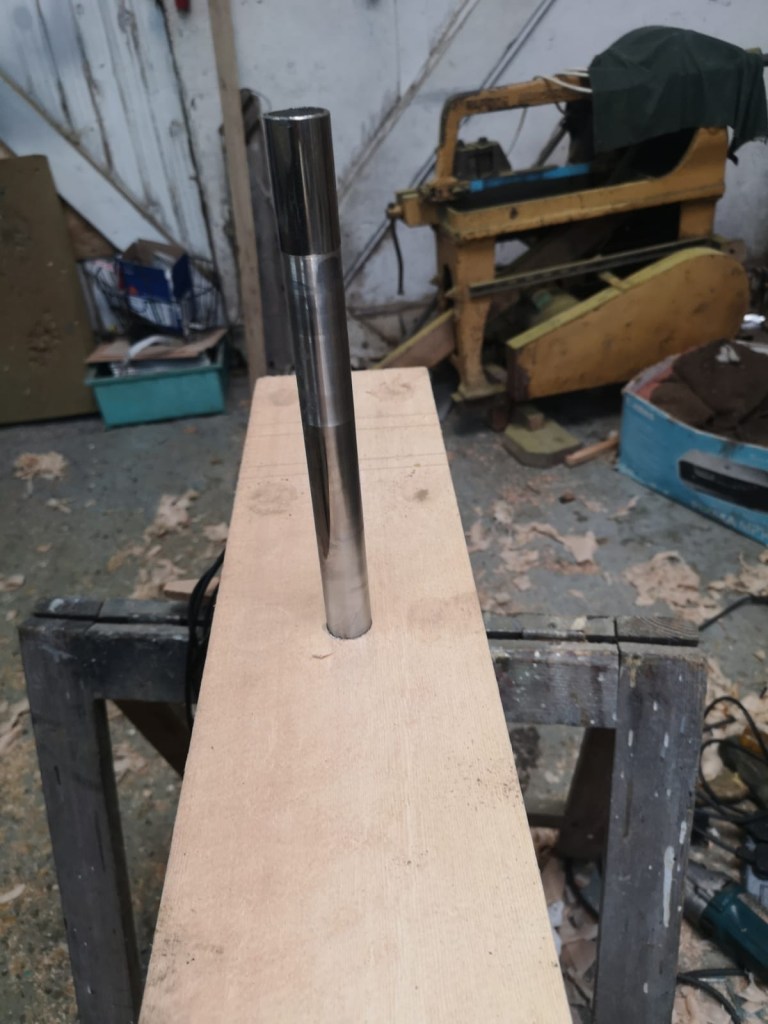
Sitka spruce block being planed flatNew piece ready for fitting, showing channel for cablesClamps applied!Trimming the scarphPleasing shape!Fairing the shouldersNick put on a technical bit of tape at the start of the job, to retain the exact length of the mastPrecisely four feet from the footThe new foot is made of teak, salvaged from the side of some steps on a Baltic Trader which was broken up 20 years agoFoot is screwed on and the holes filled with epoxy and microlite (filler) mixFinishing the surface prior to varnishing I’ve paid for a spruce block to be turned into shavings!! 😉
Molly’s mast lowered and ready for maintenance The foot of Molly’s mast when we inspected it in August. In fact the rot extended inside almost up to the tabernacle bolt hole!
When we bought Molly last year, we could see that the mast needed some maintenance, but were not able to drop the mast whilst we were ashore in the yard. During the summer, we removed the mast to reapply the Sikkens coating. To our dismay, we discovered rot at the foot of the mast! This winter, work is finally going ahead to refurbish the mast: remove rotten wood, scarphing new timber and adding a hard wood cap to the foot of the mast which will protect the end grain of the spruce. Whilst we’re at it, we’ll change to coating to a more traditional varnish, which will allow us to better see any signs of water damage to the wood and, I feel, give better protection to the wood, albeit at the cost of annual or biannual sanding and topping up the varnish. Here’s a video of our trip to see the shipwright Nick Gates, who has been assessing the work, before completing the refurbishment of our mast.
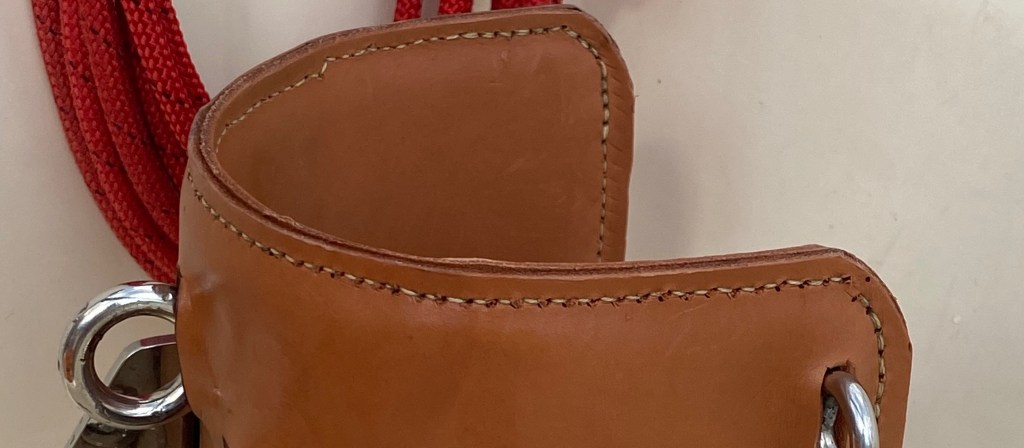
On traditional gaffers, the gaff jaws are often covered in leather to help them slide along the mast and prevent wear on the mast. Whilst the Crabber 26 is not a traditional gaffer, I do like the “leather look” and it’s not that hard to do.
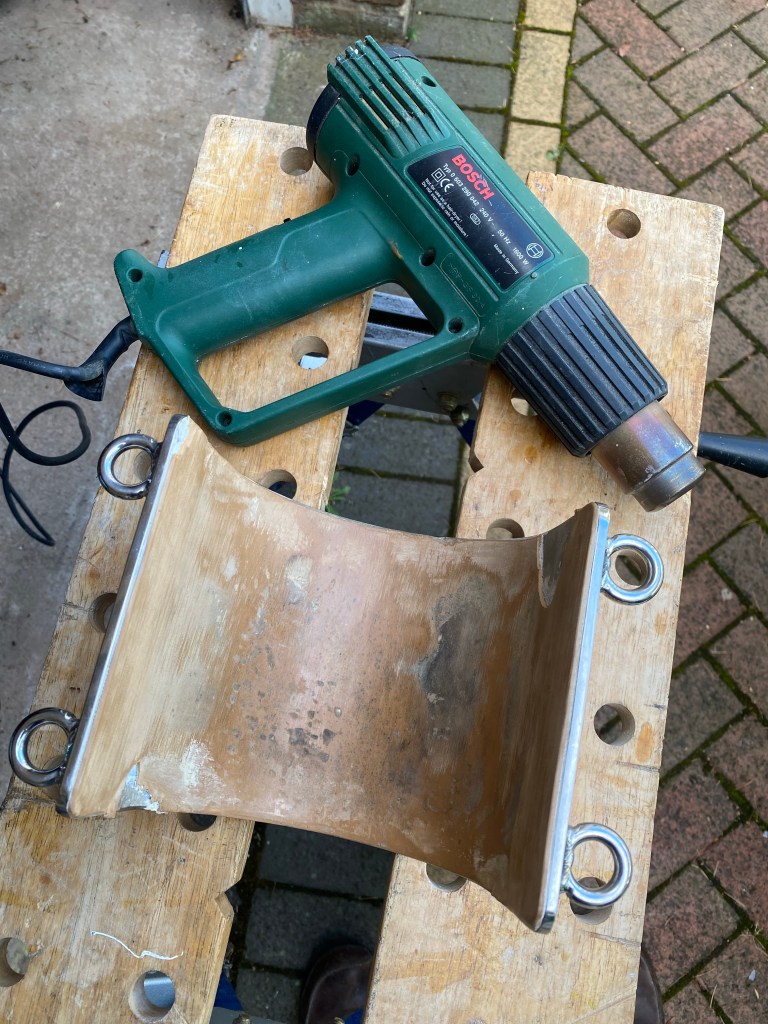
When we bought Molly, I noticed there was quite a bit of wear on the mast where the gaff saddle sits, especially in the position when the sail is furled. Some wear is inevitable on a gaffer, but it seemed excessive. Inspecting the gaff saddle, which is a pretty substantial piece of stainless on a Crabber 26, I could see that it was lined with a piece of plastic resembling a vinyl floor tile. Over time, this had cracked and split at the edges and appeared to be the cause of the wear. One thing I’ve long made a habit of doing when moored is to use an extra line to secure the boom towards the stern quarter and stop it moving. I’m sure over time, the constant shifting of the boom considerably adds to wear where the gaff saddle sits against the mast.
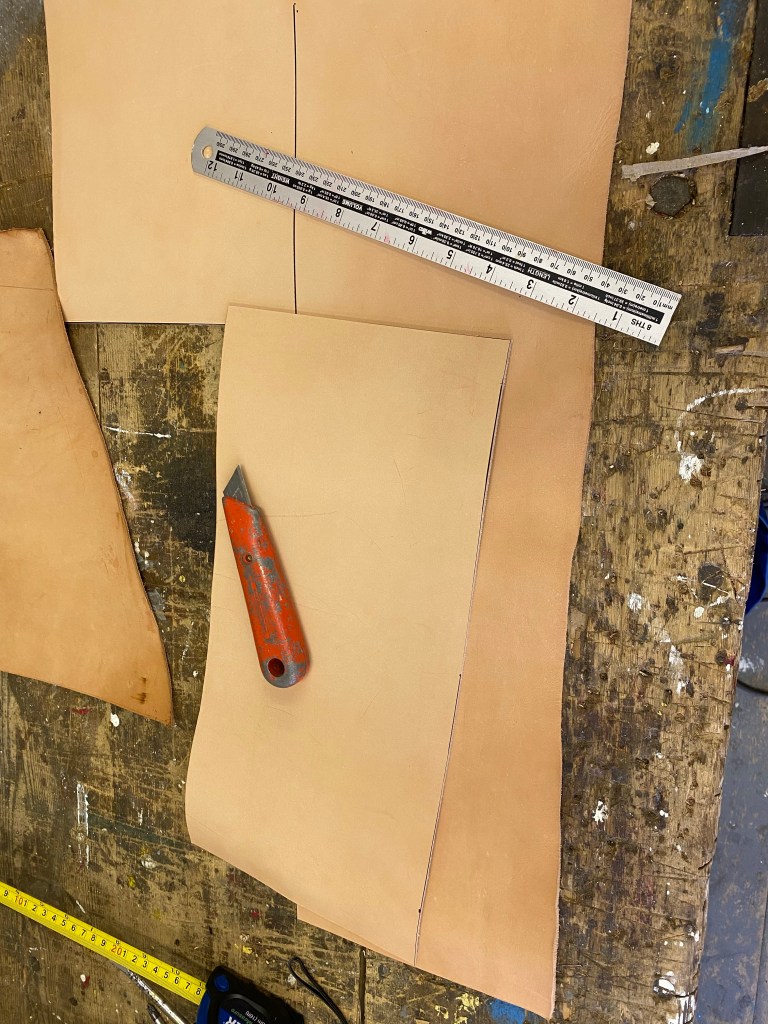
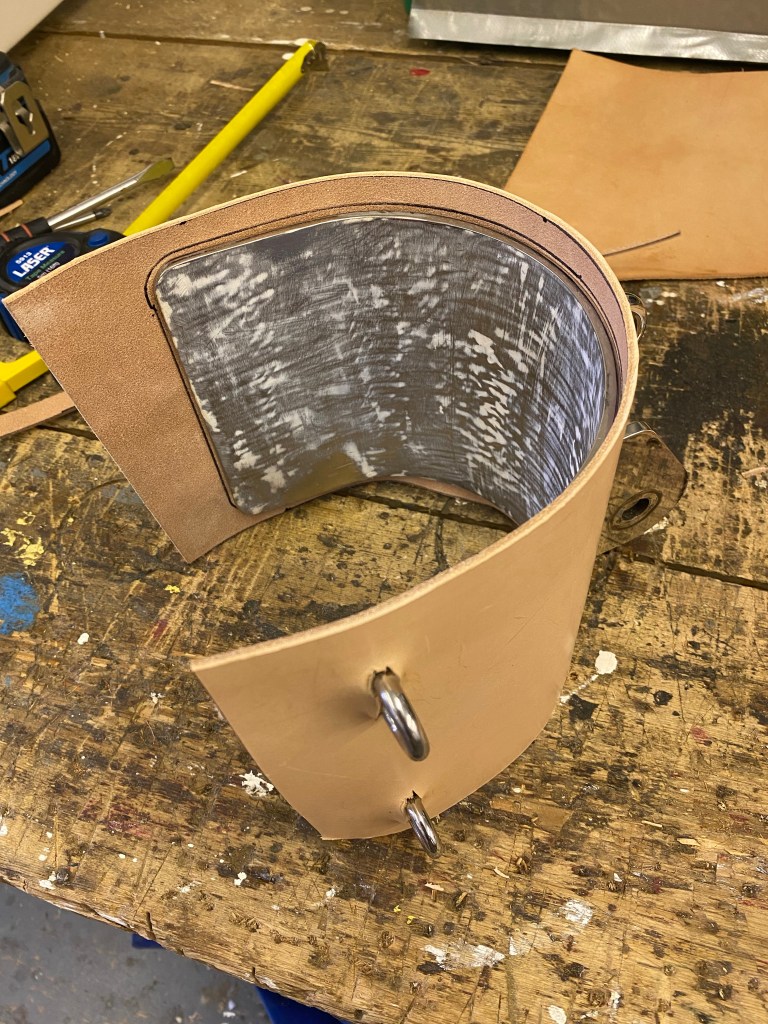
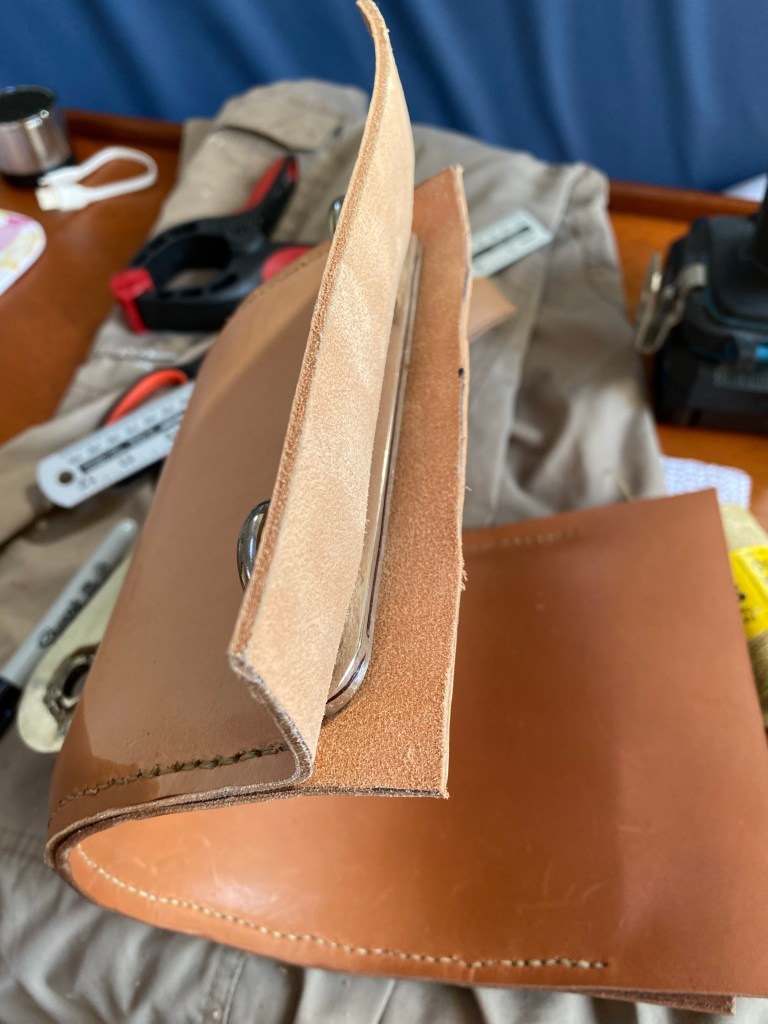
I have some experience of leathering gaff jaws on my previous boat, but the design of the gaff jaws is quite different on the Crabber 26 to my previous boat, a Cape Cutter 19. I took advice from those in the know, and Sue Pennison in the Solent OGA was very helpful. She suggested a “sandwich” arrangement using a saddle stitch. I bought my materials from Classic Marine in Suffolk, costing about £40 for the whole job. They supply pieces of the correct type leather; you simply specify the size you need and they charge you by the square foot (!). They also see tough rot-proof twine and sail-makers needles. Before starting, I took a diploma at the University of YouTube on how to do the saddle stitch (easy!). The photos below show the main stages in the process.
The condition of the gaff saddle when I started; you can see the damage to the original lining which I think was the cause of my mast wear. I used a paint stripper to warm the plastic and soften the adhesive – this made removing the material much easier, but I was careful to minimise heating of the metal. The leather was supplied in large rough cut pieces. After very careful measurements, I cut a piece which was the correct height (allowing for a 5mm seam top and bottom) but over-long, because I was not sure how much length I needed as the leather was stitched around the curve. The trickiest part was making cut-outs for the various fittings on the back of the saddle. Despite my careful measurements, I did make one mistake (one of the large slots was too big). Measure twice (or more!), cut once… Fortunately this error does not show when the saddle is fitted. You can see I drew an outline of the metal and then added the seam allowance. Trial fitting of the outer section. The inner piece was very easy to cut. I measured along the leather with my trusty Portland dividers, and marked with a sharpie where the holes should be, so the stitching would look even. Before fitting, I wetted the leather, to make it more supple. I held the sandwich in place with small clamps and then drilled holes. I made the holes in small batches, so that the position would be right, as the leather conformed to the curve of the saddle. Saddle stitch is a very easy stitch, using two needles cross-crossing each other. Very satisfying work!Top and bottom now stitched. The leather is ready for trimming to size at the ends.The ends now trimmed to size. I let the leather dry and then cut with a good pair of scissors. Note the holes drilled in measured positions, ready for stitching. The finished work! Overall I’m really happy with the result – looks great and, a few months later, much less wear on my mast.
Autumn weather is often volatile, but offers lovely opportunities if you pick your moment. This weekend was a case in point. With three days of sailing available, I wanted to travel a little further afield but the forecast showed that that would be a little unwise. Accordingly, our plan was to take advantage of the best weather day and make a shorter trip to the lovely anchorage at Newtown Creek, dodge the showers the following day to return to port and hunker down for the next day of wind and rain.
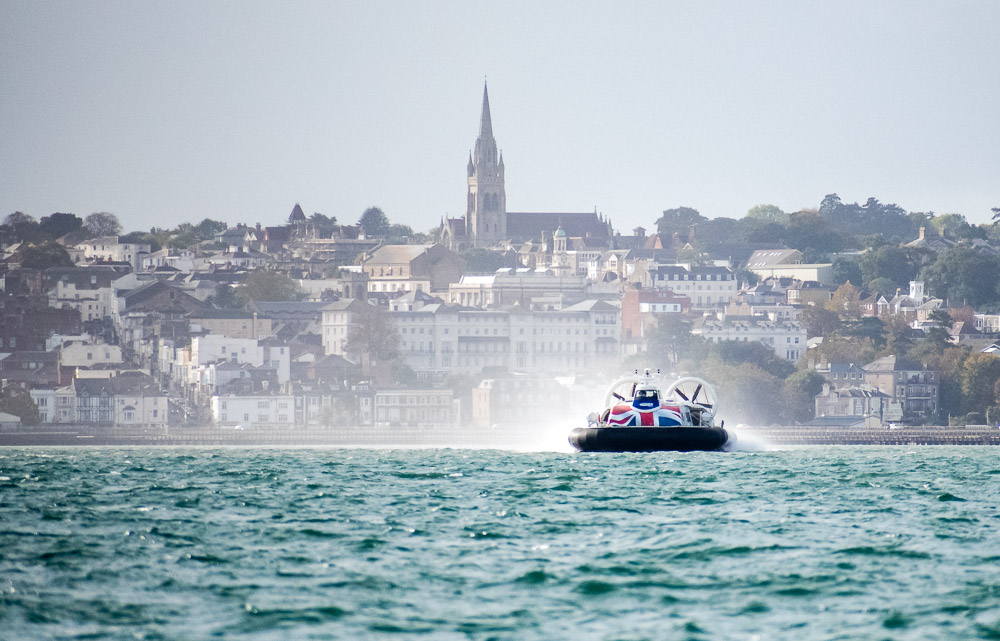
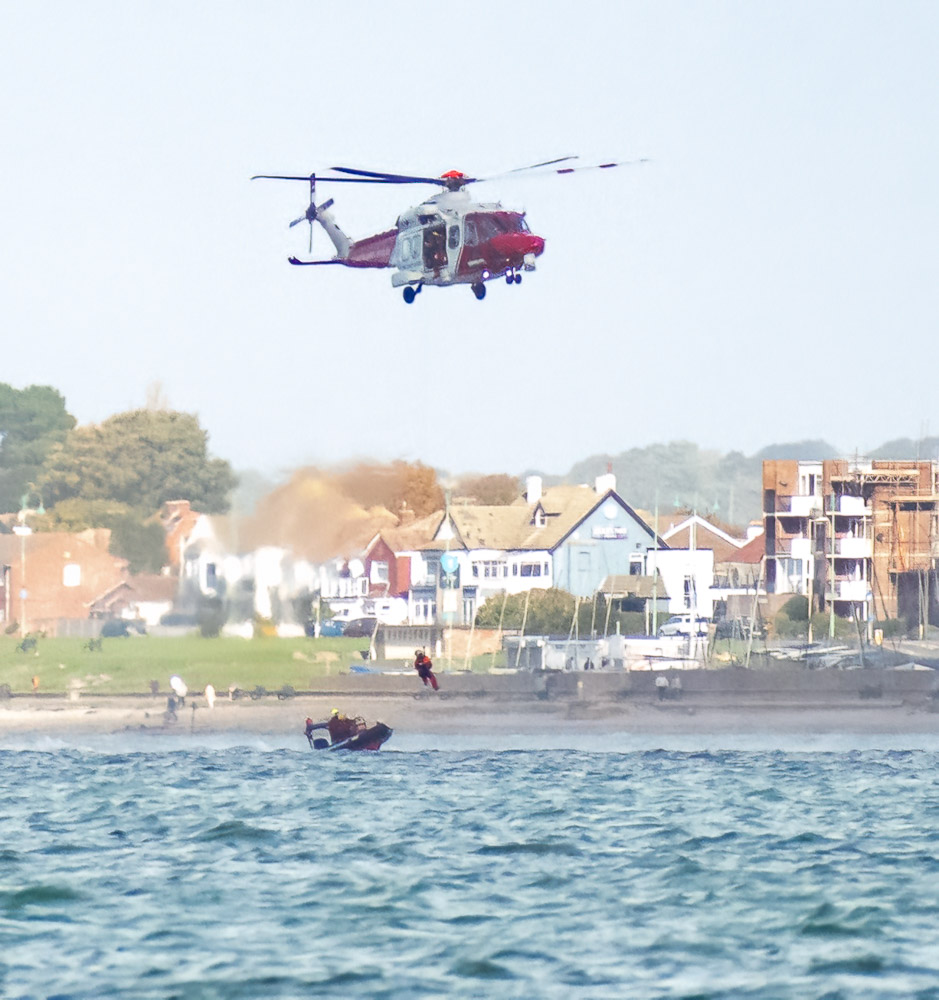
The busy hovercraft heading for SouthseaThe coastguard helicopter lowers a wire to the inshore lifeboat.Crew in the air! First lowered into the lifeboat and later recovered again back into the helicopter.
We had a bright and spirited sail down the Solent from Portsmouth. Having motored out of harbour and along the shore to Gilkicker, with a plan to sail along the northerly shipping lane from Spithead towards Bramble. However, with the SW breeze, the mainland shore of the Solent was pretty choppy. We had a good tide under us, so we put reefed main up and took our first tack across to the island shore. Sure enough, the sea was much smoother when we tacked off, passing close to Cowes. There were plenty of other yachts out, as you might expect on a sunny Saturday and almost no commercial traffic to avoid and the coastguard helicopter provided an interesting display. We needed only one more adverse tack to bring us outside the entrance to Newtown Creek and had averaged about 6kt.
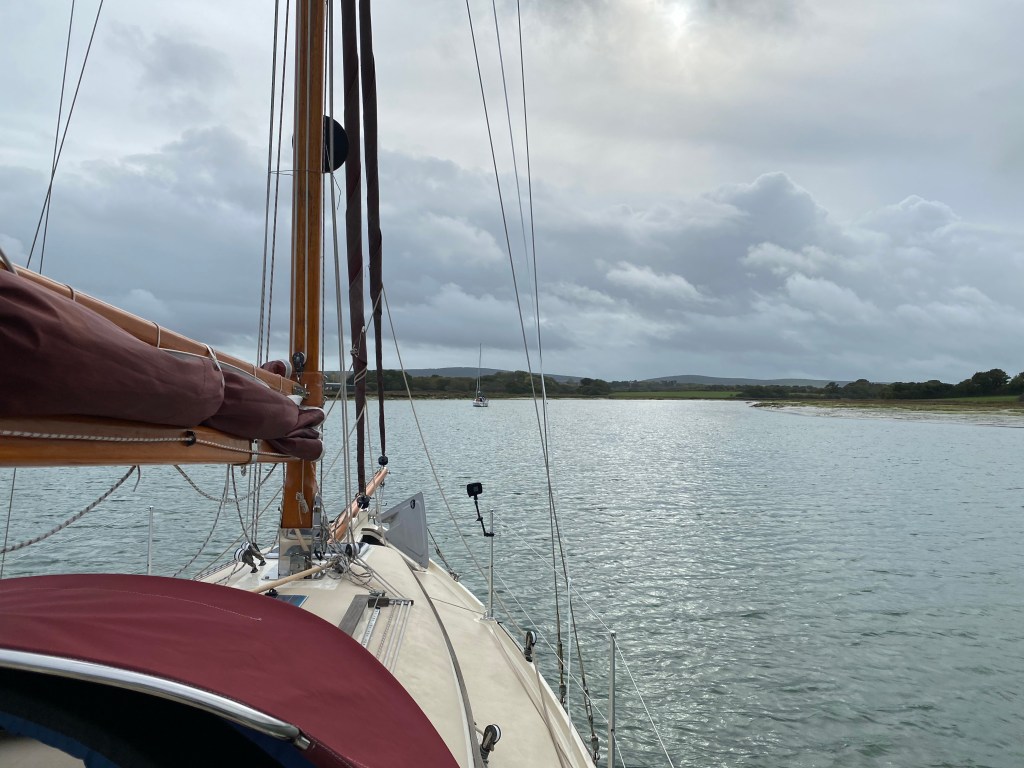
I have anchored at Newtown Creek many times previously, but this was only Niki’s second time. Newtown Creek is where the confluence of several small rivers empty into the Solent. It offers shelter from every wind direction and is a haven for wildlife. Understandably, it’s a very popular anchorage, so best avoided at peak times but at this time in the season was not too busy. Most craft pick up a mooring near the entrance, but we decided to pass West, up past the dinghy sailing club at Hamstead and dropped our anchor just past where the moorings end. We had the birds and just one other yacht for company and passed a relaxing afternoon. The best of the day was behind us and we listened to the showers periodically rattling onto the cabin roof.
Casserole cooking
I’d brought ingredients to make a steak and kidney casserole, prepared in our thermal cooker and accompanied with a nice bottle or red wine. The creek is a very peaceful place and I always love to hear the water chuckling under the boat as the tide gently ebbs and flows, coupled here with the sound of the wind and the curlews. During the night, we had a few thunderstorms pass over and awoke to a rainy Sunday morning. Ideally, we’d have made an early start to use the flood to return to port, but I decided we’d wait till mid-morning when the rain was forecast to have passed.
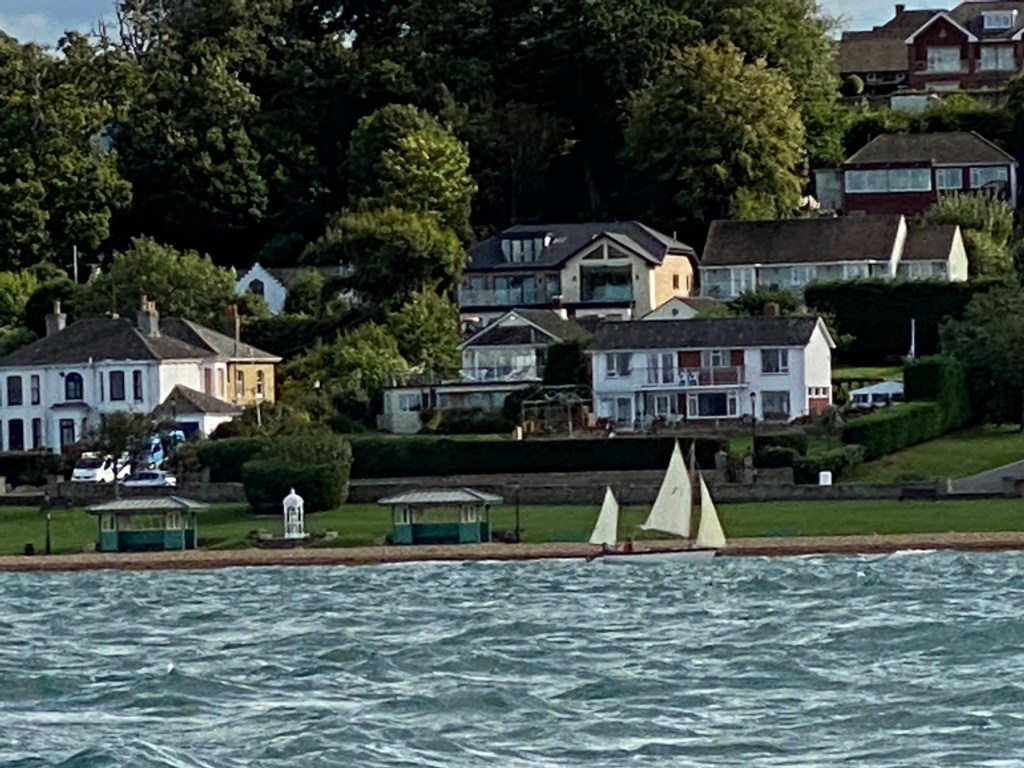
Sailing back up the Solent towards Portsmouth, we had a light sailing breeze and a foul tide. We made good boat speed, but slow progress over the ground. At first, we tried very close inshore to the Island, but the reduction in wind was more than the reduction in tide, so we worked our way further out again. As we passed close inshore to Egpyt Point approaching Cowes, we could see walkers on the promenade moving faster than us, so we put the engine on so we could pass the busy harbour entrance quickly.
Approaching Cowes
The wind backed during the morning and we ended up being headed over towards the Lee-on-Solent shore and needed to tack to pass around Gilkicker Point. Up to this point we had enjoyed bright sun and relished our leisurely sail up the Solent, but I could see the forecast bad weather approaching, so we motorsailed our beat up to the harbour entrance.
Look behind you! Weather on the way…
As we motored into harbour the black clouds overtook us and I hurriedly got the main down and bowsprit raised as we entered (I usually wait until we’re well inside the harbour); it was just as well, because we were battered by a squall of heavy rain and hail, as well as thunder and lightning – just as well that we are familiar with the harbour and were not put out by the 50m visibility. Fortunately, the bad weather was short-lived and we were soon, dripping wet, back on our berth.
When we took on Molly at the beginning of the season, I spent some time doing a bit of winter maintenance and getting to know the systems aboard. I decided that I would not change or add anything during the first season, but would sail her and thoroughly understand how things worked before changing anything. There was one exception to this, and that was a battery monitor – I was uncomfortable not having any means of monitoring the voltage and charging of the leisure and starter batteries, particularly as the previous owner told me that the first time he came to use her, the batteries were flat and needed replacing. Rather than fit another display in the cockpit or cabin, I chose a bluetooth unit, which has been excellent. It tells me the voltages and dis/charge rates at a glance and the bluetooth range is enough for me to read when I am in the car park and Molly is on her berth!
If you’re interested in the details, have a look at this video I made of the installation: https://youtu.be/GZ07bel7T6A
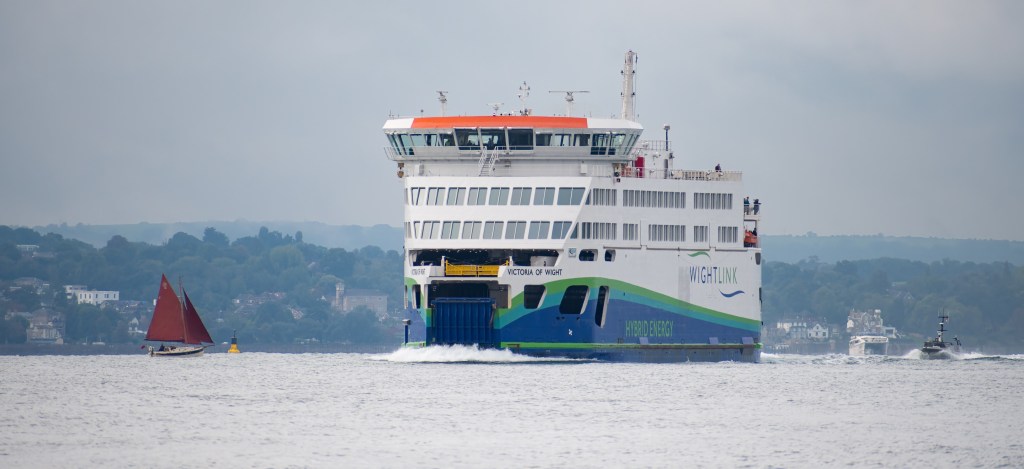
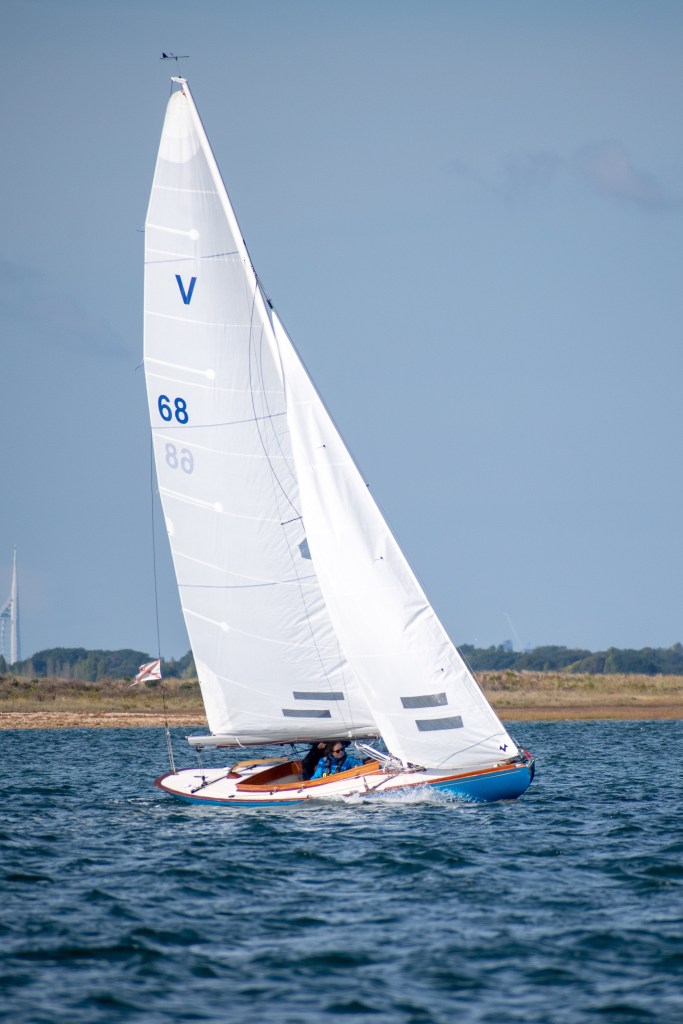
A Crabber 26 (not Molly) dodging the ferries as she passes down the SolentThe transit posts for HMS Queen Elizabeth and Prince of Wales, which stand just outside the entrance to Portsmouth harbour
We’ve been fortunate to experience some really good late September weather and I’ve lately enjoyed two trips with extended family. The first trip was with my parents and the second with my father-in-law.
Niki with my mum at the helm
My dad is an experienced sailor, so my parents were keen to come and see Molly for themselves. Taking advantage of the UK’s unexpected bank holiday for the Queen’s funeral, Niki, myself and my parents set out on an almost windless but wonderfully sunny day. It was a great pleasure to show them our local patch. We put the sails up, despite the lack of wind, drifted on the tide towards the Island and put the anchor down in Priory Bay for some lunch. Later, the wind filled in a little and we blew the chance of getting home early in order to enjoy the breeze and sail a little.
Lunch in the sun!
The next trip, only a few days later with just myself and my father-in-law, Jeff, was an overnighter. A moderate northerly breeze and a mid-morning tide gave us the chance to sail over to Chichester, just as I had done with Niki the previous weekend, but this time staying in a marina.
Dog walkers on the beach at East Head – the West Pole mark visible in the distance Pilot cutter Verano entering Chichester: a larger and more handsome sister ship to MollyVerano Beating into the entrance
In complete contrast to the previous trip, it seemed as though we had the sea and Chichester harbour almost to ourselves and saw only a few others out sailing. We weaved our way into the harbour against the falling tide, past a practically empty East Head, passed through picturesque Itchenor and crept up the shallow straight channel to Chichester marina. I had wanted to visit Birdham Pool, but we were too late for the tide (on the list for another time!).
Molly moored before entering the marina
Chichester marina is nestled far up in the tidal reaches of the harbour and is accessed by a lock. I was told my 2.5m draught was too much for the marina, so I lifted the plate. However, this made manoeuvring rather tricky, especially astern, so I compromised on half-plate.
In the lock at Chichester marina
Jeff and I were soon ensconced on our berth and repaired to Chichester Yacht Club for a meal and few well-earned pints of beer.
Low tide outside Chichester YC, looking towards Birdham Pool
The following morning was breezy and we worked our way out against the last of the flood, though the fleets of boats on their moorings and the armadas of dinghies rallying for their Saturday racing.
A Solent Sunbeam racing in Chichester harbourPreparing for their start
It was a reach through the harbour and a dead run out of the mouth. As it was high tide, we did not run all way out to West Pole but bore away west after we had passed the bar. I had a reef in, to make sure things were relaxed and Molly swept along beautifully with the ebb under her and the wind on her beam.
Jeff at the helm, before the loss of “Peaky”
As we passed Langstone entrance. Jeff lost his cap. I immediately decided to practice man overboard. I started the engine, threw off the sheets and we reversed course. We made it back to the hat, but the jib was flogging and I could not furl it. I took my eyes off the hat for only a moment and then sadly we could not find it again I went forward to sort out the tangled lines and got smacked in the face by a sheet for my troubles. Now we had lost a hat and my glasses were smashed!
I finally managed to furl the jib, sort out the lines and we resumed our course. A few important lessons learned. On the positive side, I was pleased to be able to start engine and reverse course accurately back to the casualty. However, I’m not sure how we would have recovered the hat – Jeff is not too nimble and has no sea experience. I hadn’t had time to grab a boat hook and I don’t think I’d have had time to fetch it before the hat sank. The hat disappeared from view quite quickly, but a human casualty would at least have a life jacket to keep them afloat. I have a sling available but getting a human casualty aboard would be a daunting prospect. The experience also showed the importance of at least one crew having the sole job of keeping eyes locked on the casualty. It would have been much less dramatic if I had been able to furl the foresails, probably it would have helped if I furled the jib whilst turning through the wind, but there is an enormous amount of friction on the jib furling line – I need to look at ways to improve this situation.
The track tells it all. I’m quite pleased with the two neat circles. You can also see the track when we motored head to wind as I got to grips with the jib Approaching Southsea beach
On the recommendation of a comment to my previous post, which mentioned passing through the boat channel off Southsea, Jeff and I made for the tiny gap of the small boat channel, which is much closer inshore.
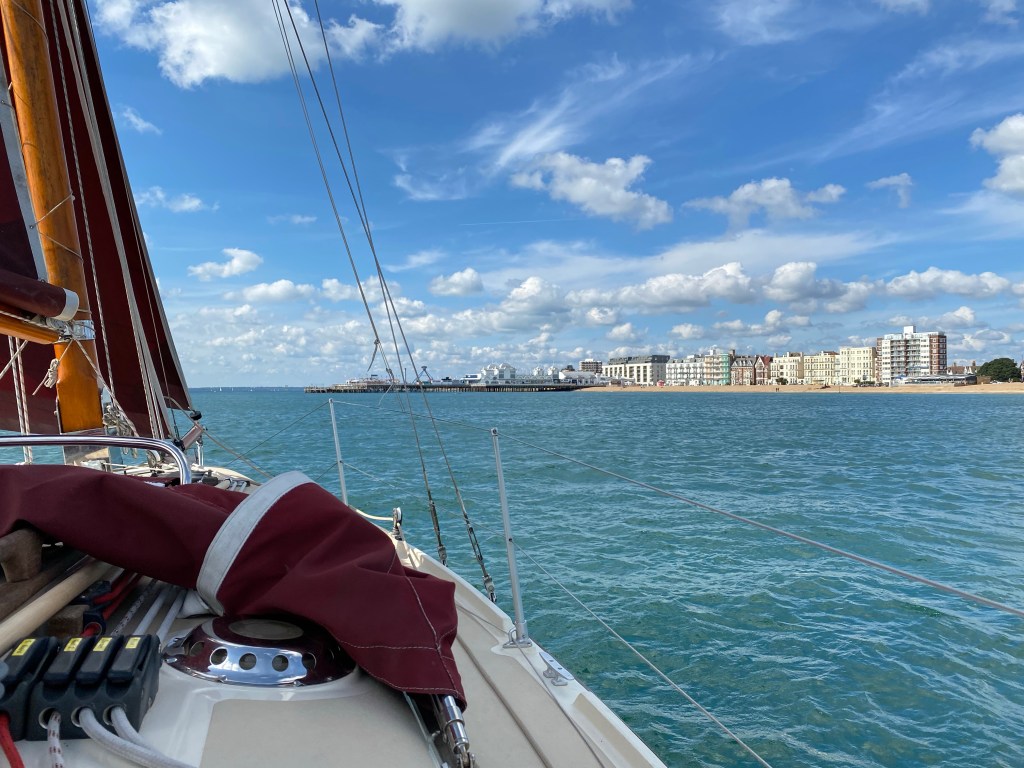
“Steer towards the shore, aim at the shore end of the pier”, I told Jeff. “Are you sure it’s deep enough? – there’s only 5m here!”, he replied. In fact, as we approached the beach, the depth changed little, and we bore away to pass through the narrow gate, only a biscuit toss from the shore. Our course took us close by the end of the pier and along the shore to the head below Southsea Castle, where the shore turns north into Portsmouth harbour. We carried straight on though, so as to cross the shipping channel at right angles and have space to drop our sails.
It was an interesting passage – I always enjoy passing close to the shore and seeing the goings on, but there is little navigational benefit going that way and the wind was more fluky that close to the shore. I’ll save it to amuse guests on the boat in future.
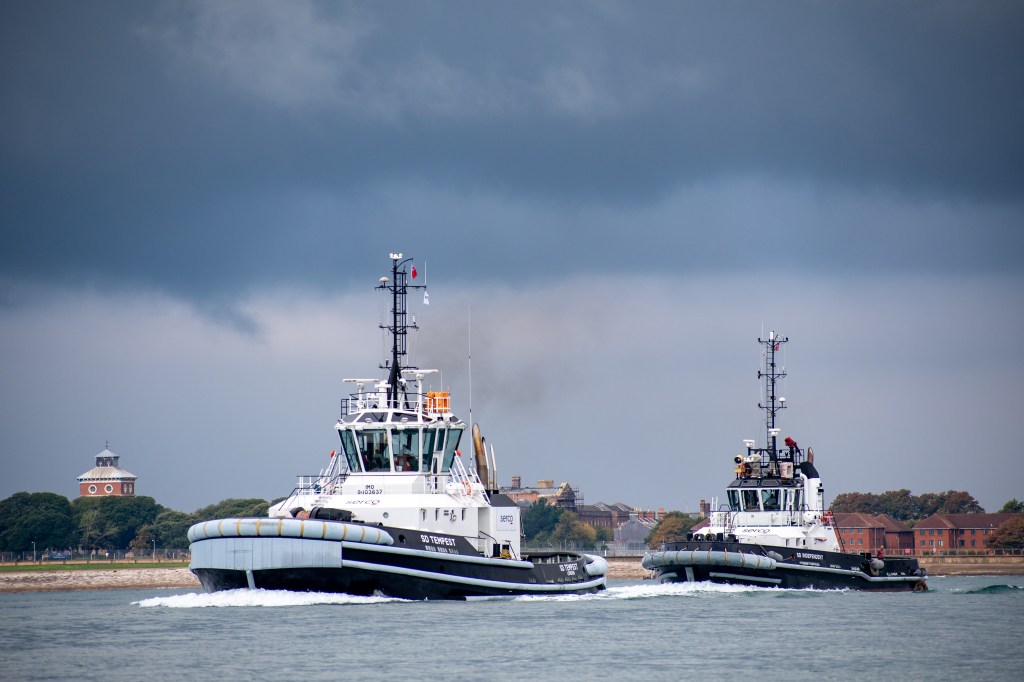
A pair of rugs going out to sea, in this case to guide a warship into Portsmouth harbour
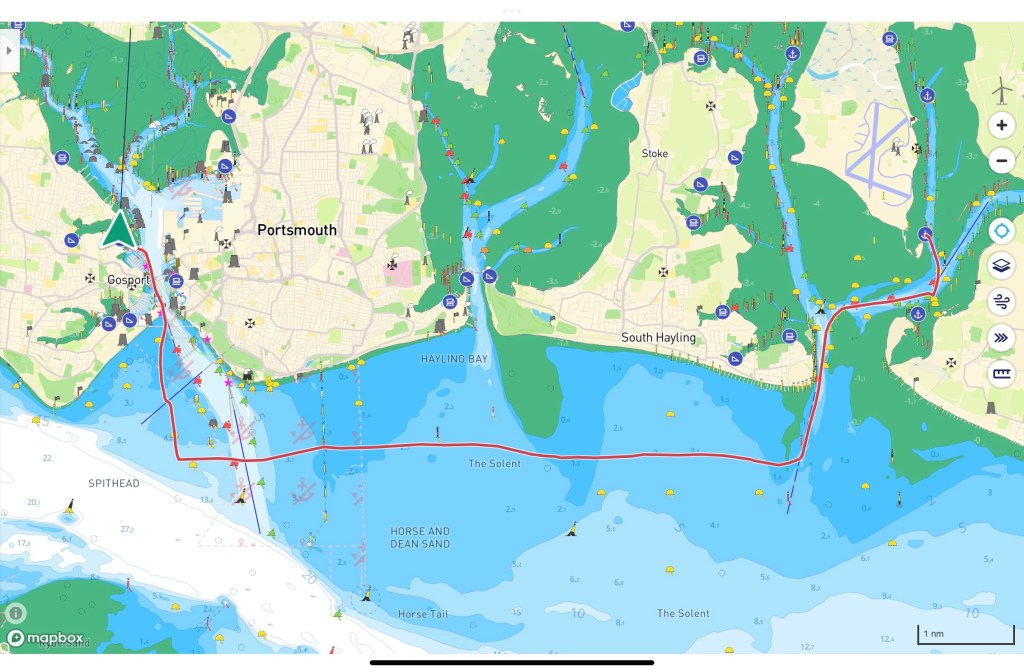
Having recently travelled down to the western Solent, I thought a trip in the opposite direction was called for. The tide and wind were good for a day trip, so we slipped our warps and took a left turn out of Portsmouth harbour. With the wind behind us and a fair tide under us, we passed through the small boat channel off Southsea and set a course directly for West Pole, outside Chichester harbour. There were plenty of others with the same idea and as we approached, we could see the entrance was also thick with dinghies – evidently a big race meeting was in progress.
A large fleet of Laser dinghies crossing the start line outside Chichester harbour A 20′ wooden sloop leaving Chichester harbour
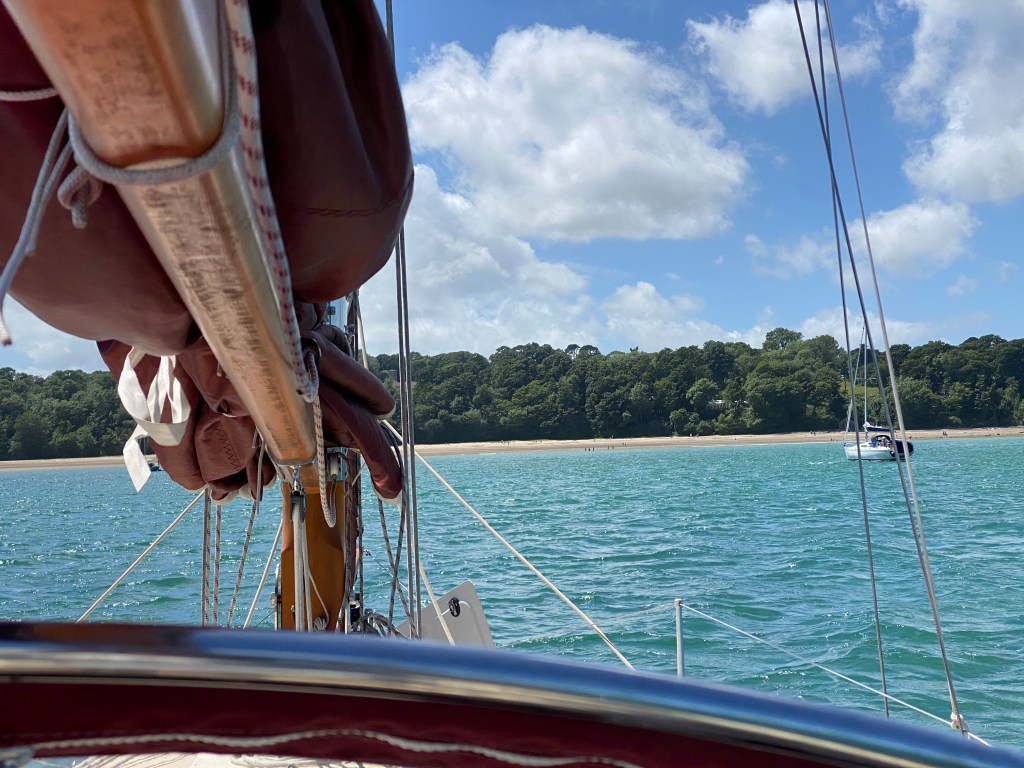
Last time I went to Chichester harbour, I took the easy option and anchored at East Head, among the crowds. It hadn’t been a particularly comfortable spot, owing to the amount of passing traffic and someone had suggested a different spot. The inner harbour had surprisingly few anchored boats as we passed by East Head and turned north up the Thorney channel, into the lee of Pilsey Island and dropped anchor.
Kite surfer flying past
We had a very comfortable lunch stop before slinging our. hook just before high tide, to ride the ebb back to Portsmouth. The wind had backed a little towards the west and I thought we’d have to beat, but Molly was able to fetch directly back the way we came.
It was a gloriously sunny late summer afternoon and we arrived back at Portsmouth in a most beautiful golden glow, having had another very satisfying leg. No sooner were we secured on our berth, than we pottered down to the Castle tavern in Gosport for a well-earned meal to round off the day.
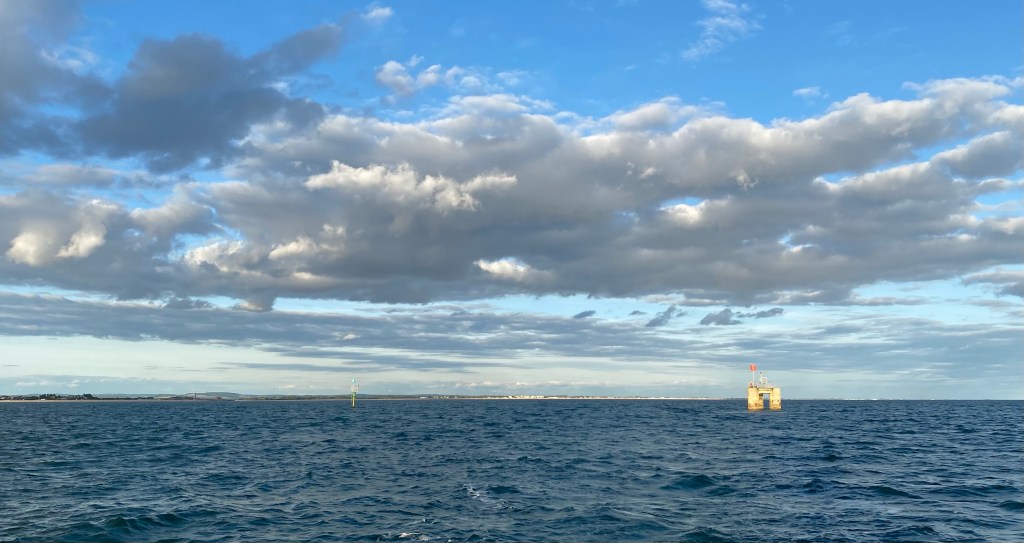
This mark, seemingly amid open sea, called Dolphin, marks the southern edge of a 50m wide passage through an underwater barrier which extends from the Southsea shore to the Horse Sand FortThe Southsea hovercraft and two car ferries plying their way in the golden hour of a late summer afternoon Ploughing a straight(ish) furrow….
As the season draws to an end, there was one more rally to attend. The gathering was in Yarmouth, which is always a lovely place to visit. There was to be an informal OGA gathering on the Friday night, followed by a race and formal dinner on Saturday, organised by Royal Solent YC. I couldn’t attend the Saturday events, as I needed to return to Gosport to pick Niki up, but I was treated to a magnificent sail down on Friday afternoon. The ebb was in full swing, so I had almost 2kt of fair tide. The unusual NW direction of the wind gave a fast point of sail on a single tack the whole way – a broad reach most of the time. This was my first long sail since I re-stepped the mast (more on that later) and I was hoping the heavy weatherhelm had been improved. I set out with 2 reefs in, as I was solo and wanted to check the reefing, but shook one of the reefs out as soon as I was out of the lee of Gilkicker point and could feel the breeze that would carry me to the other end of the Solent.
Molly didn’t dip below 8kt between Cowes and Yarmouth!Alva, a 170ft 1939 Swedish luxury yacht, at anchor off Lee-on-Solent
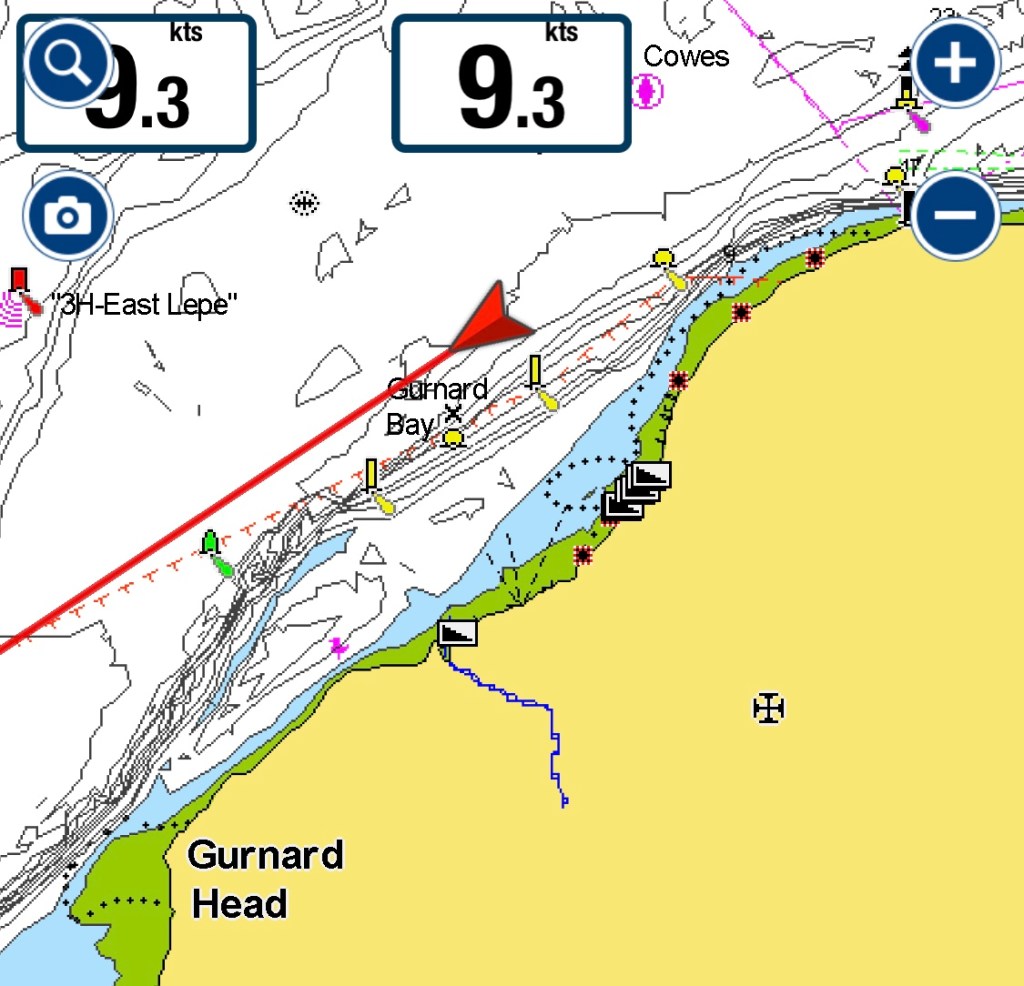
As usual it there was plenty to see – not much commercial shipping, but pleasure craft of all sizes, including many interesting boats (see photos). The trip was completed in very quick time; Molly was making between eight and nine knots from Cowes to Yarmouth! She handled beautifully – the helm was almost completely neutral with single reefed main, staysail and jib, the weatherhelm only pulling in the bigger gusts.
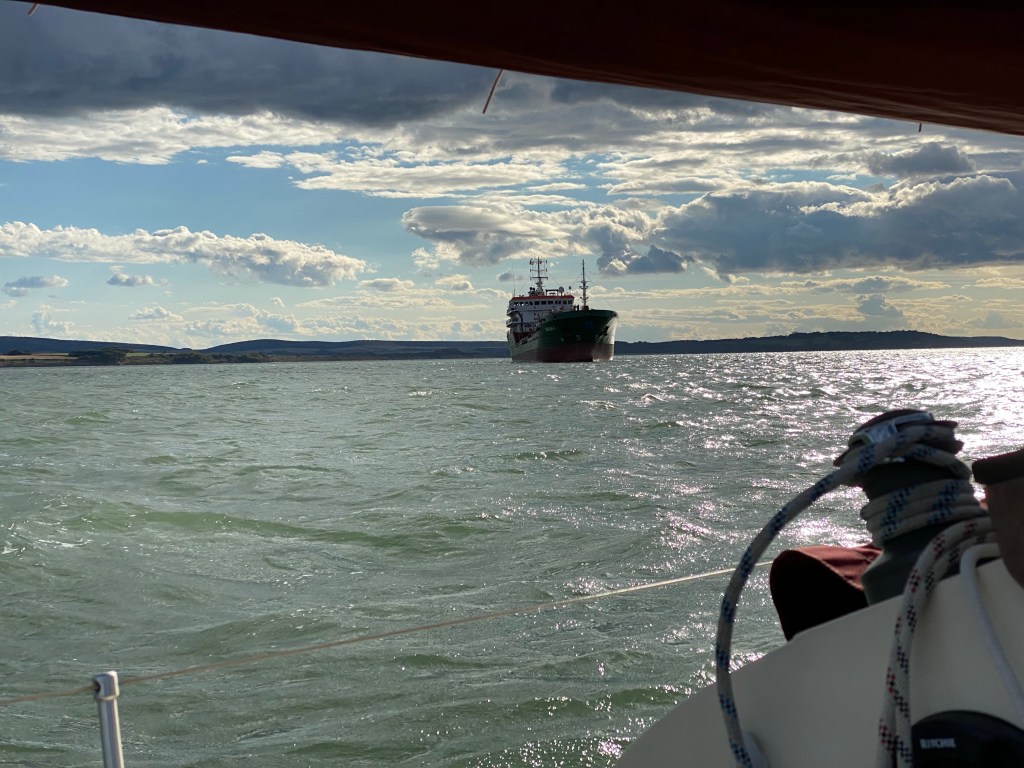
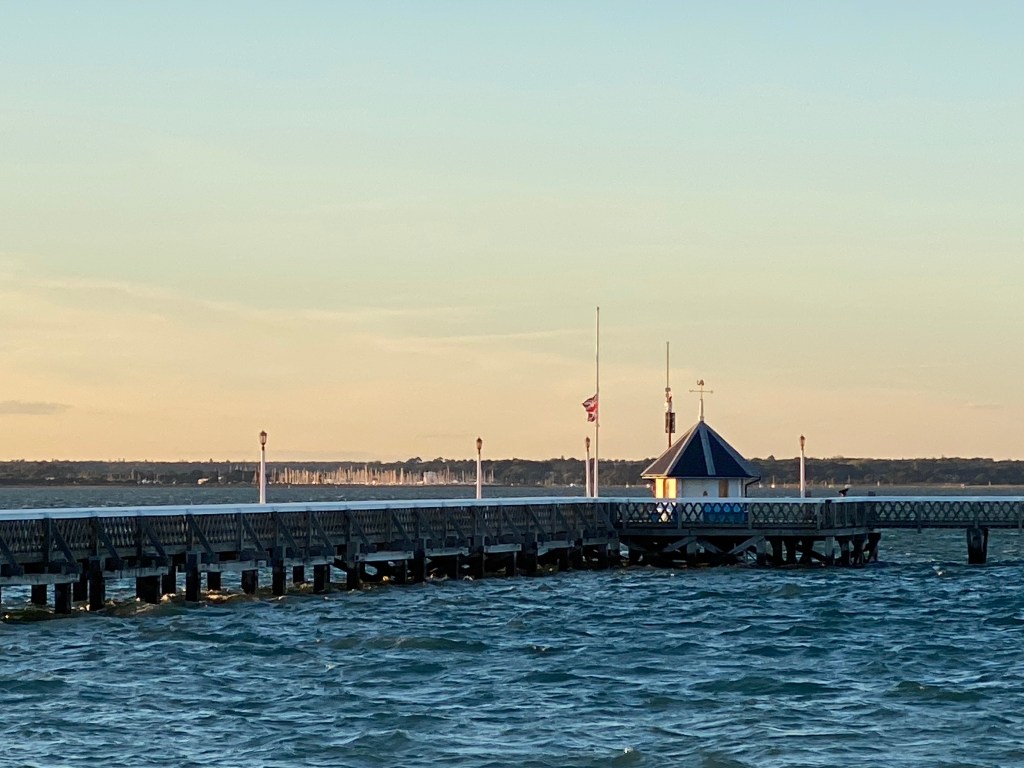
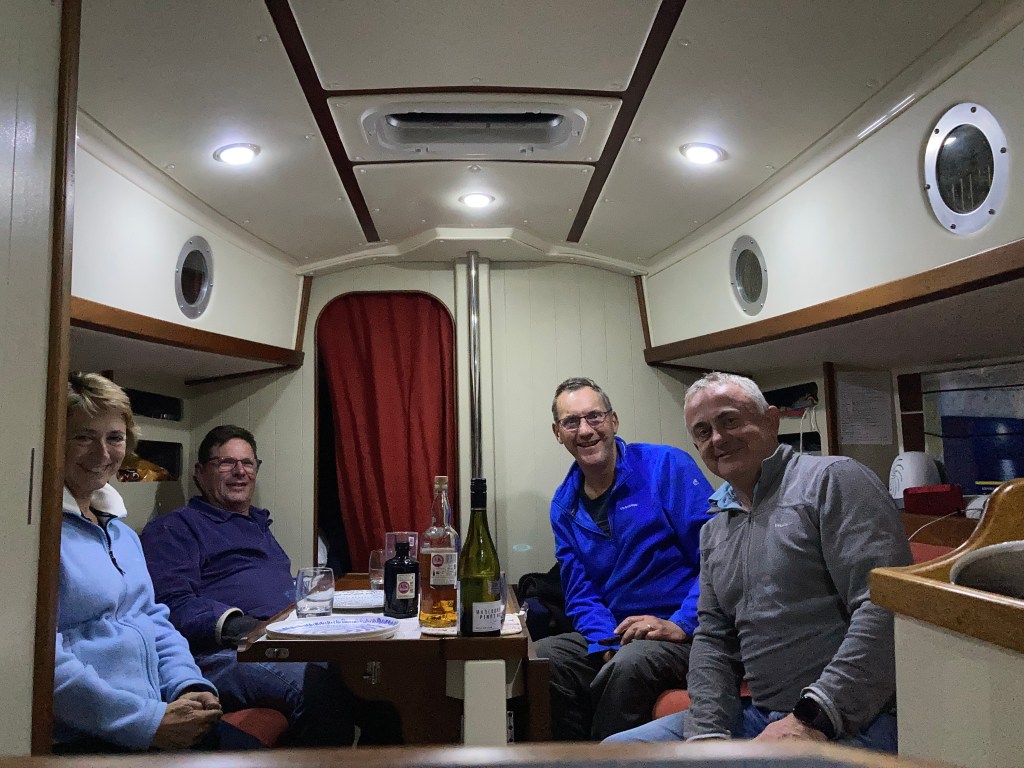
Marjorie, a Shilling Yawl going great guns past CowesColregs? Normally you don’t want to see a cargo ship from that angle, but fortunately this one is anchored!Yarmouth pier in the evening, with flag at half mast for Queen Elizabeth, and the forest of sails at Lymington in the distance on the mainland. A lovely evening on Molly with Maggie and Huw of Minarlo (nearest the camera) and Tom of Marjorie and myself.
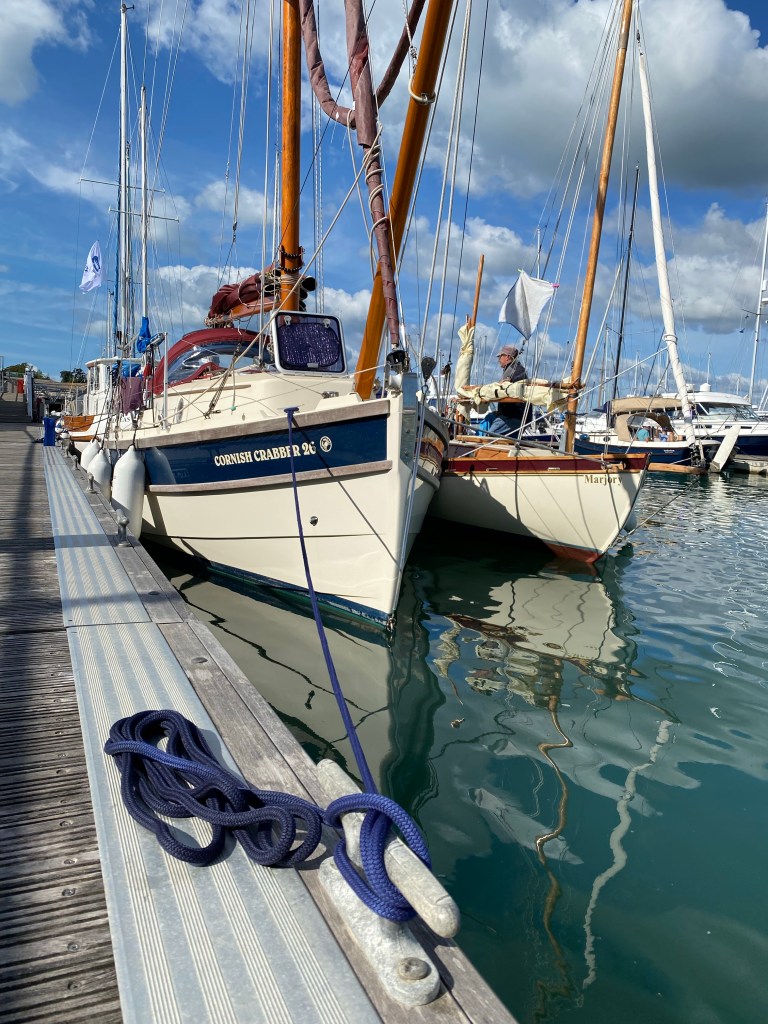
Yarmouth harbour had not been able to put all the gaffers together, so we were a little dispersed. I ended up on a pontoon with Marjorie, who I had sailed alongside down the Solent, rafted to me. Nearby was Mincarlo, a Norfolk Gypsy, whose Maggie and Huw we’d met several times at events this season. We enjoyed some excellent fish and chips from the Blue Crab (highly recommended- they have a booking system so you can be sure it’s been cooked to order!
The following day was much lighter, but still a NW breeze. I had to leave at midday, in order to catch the flood tide and was expecting to motor for at least some of the way, but ended up sailing the whole time in the sun, varying between a relaxed amble and a brisk trot. All in all, quite a treat!
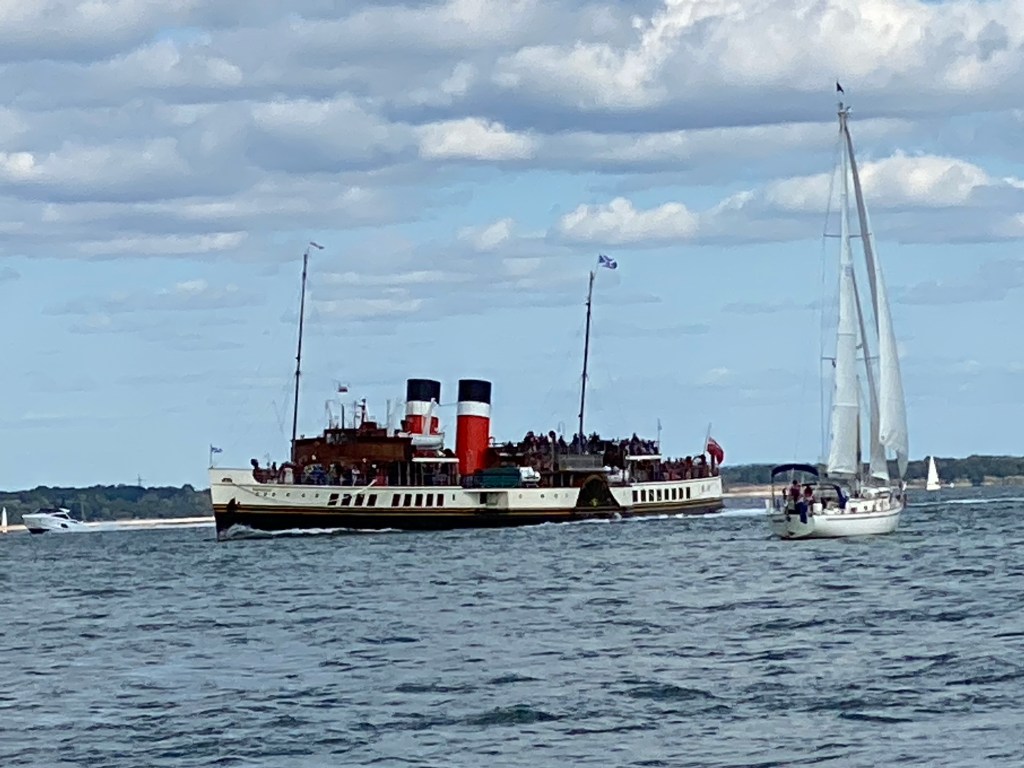
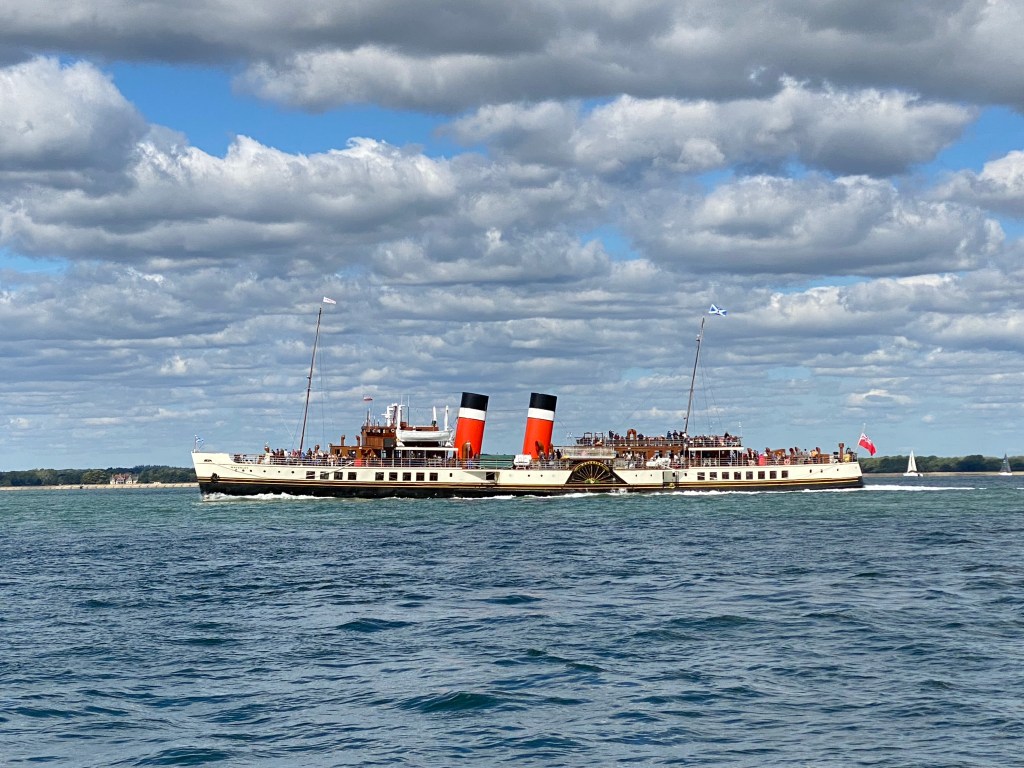
Molly and MarjorieMincarlo slipping her warps to return homePaddle steamer Waverley, seen on both legs of this journey
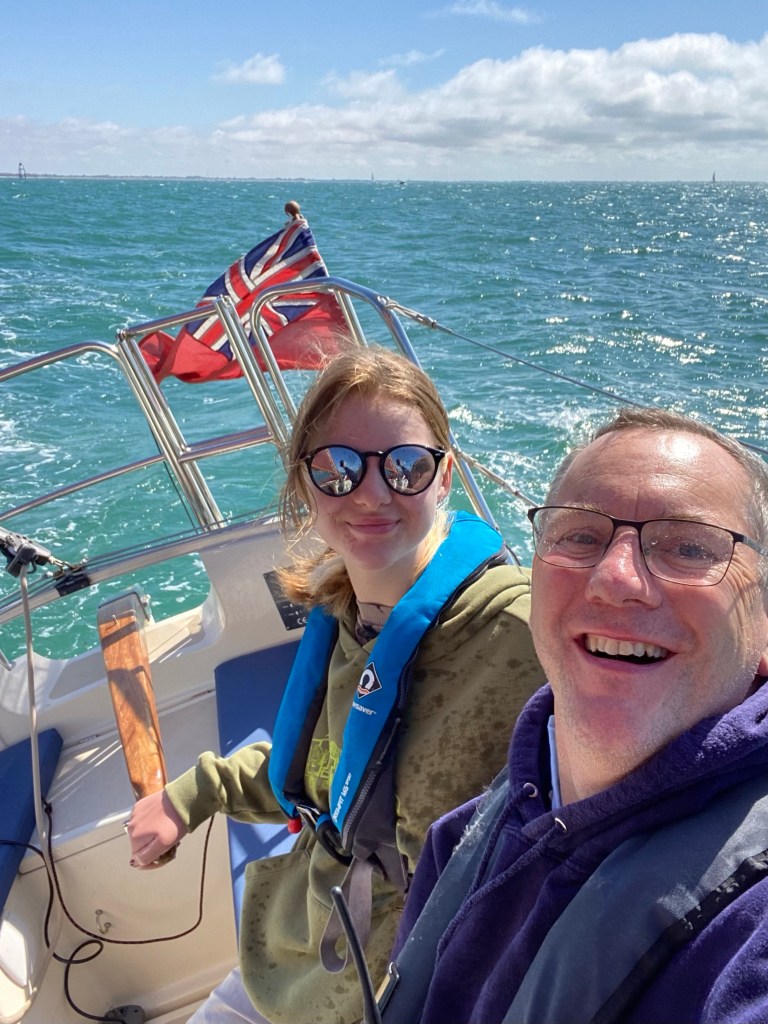
This was Alice’s first sailing trip since we took over Molly, and she was very pleasantly surprised with the accommodation; as it was just me and her, I gave her the forepeak, much to her satisfaction. The weather was ideal, with warm sun and a nice SW sailing breeze. We had a leisurely start and enjoyed the hustle and bustle of Portsmouth harbour as we followed the steady stream of boats leaving harbour on the falling tide.
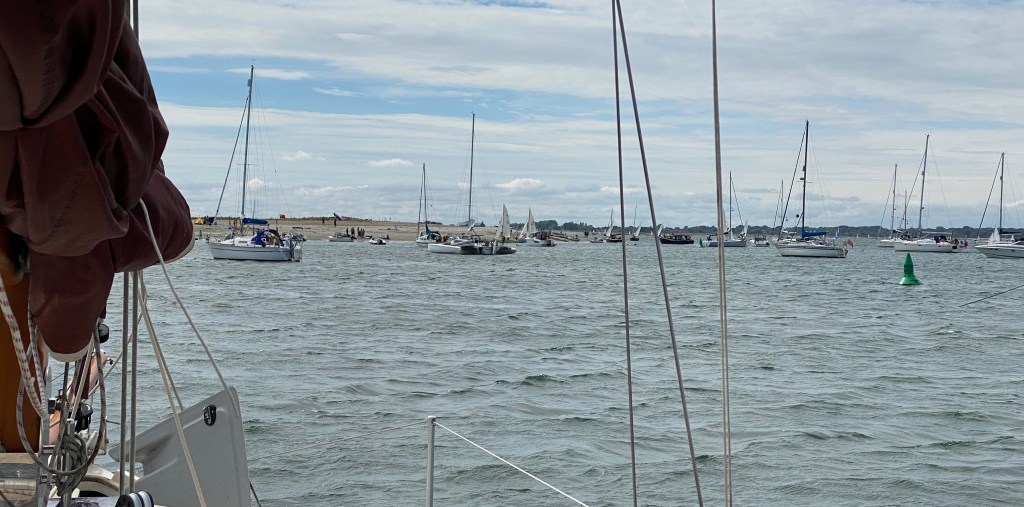
Once we were clear of the Isle of Wight ferry and hovercraft tracks, we turned to port and made for the boat passage through the old submarine barrier that stretches south from the shore near Southsea pier out to Horse Sand Fort a mile and a half offshore. From there, it was a spirited run east, past Winner sand at the entrance to Langstone Harbour and on to Chichester. In no time at all, we reached West Pole, marking the southerly extreme of the channel into Chichester harbour, and gybed round to reach up the channel. On previous occasions when I’ve followed this track, I have been in Aurora (our previous boat, a cape cutter 19) and not worried about depth. This time, though on a neap tide, it was nearly low water, and I paid close attention to the depth as we crossed the bar. With the sea flat, there was plenty of water and we soon slipped past Hayling Island sailing club and turned to starboard towards the popular anchorage at East Head. As expected on a sunny Weekend afternoon, the spot was thick with boats at anchor, among which weaved a multitude of sailing dinghies.
Busy East Head
With plate up, Alice motored us into the wind towards the sandy beach, but unfortunately, I underestimated our speed and Molly touched the bottom. I quickly dropped the anchor and ran astern to see if we could motor off, but Alice had already tried this and Molly was firmly aground, so I returned to the bow and heaved on the warp to keep the bow pointing into the F4 breeze. We were secure and I knew the tide was already rising, so there was nothing for it but to have some lunch! With a little more water, I checked the anchor had set and then increased the scope to ensure good holding. I suggested moving up the Thorney Channel to get a little more shelter behind Pilsey Island, but Alice preferred the existing location.
We passed a relaxing afternoon and later made a paella(ish) from ingredients we had bought in Gosport. I say “ish” because the low-cost, German-owned supermarket with a four letter name famously is always short of an ingredient or two, in this case risotto rice and saffron. Nevertheless, we had tasty rice and fish with sugar snap peas, all from the thermal cooker.
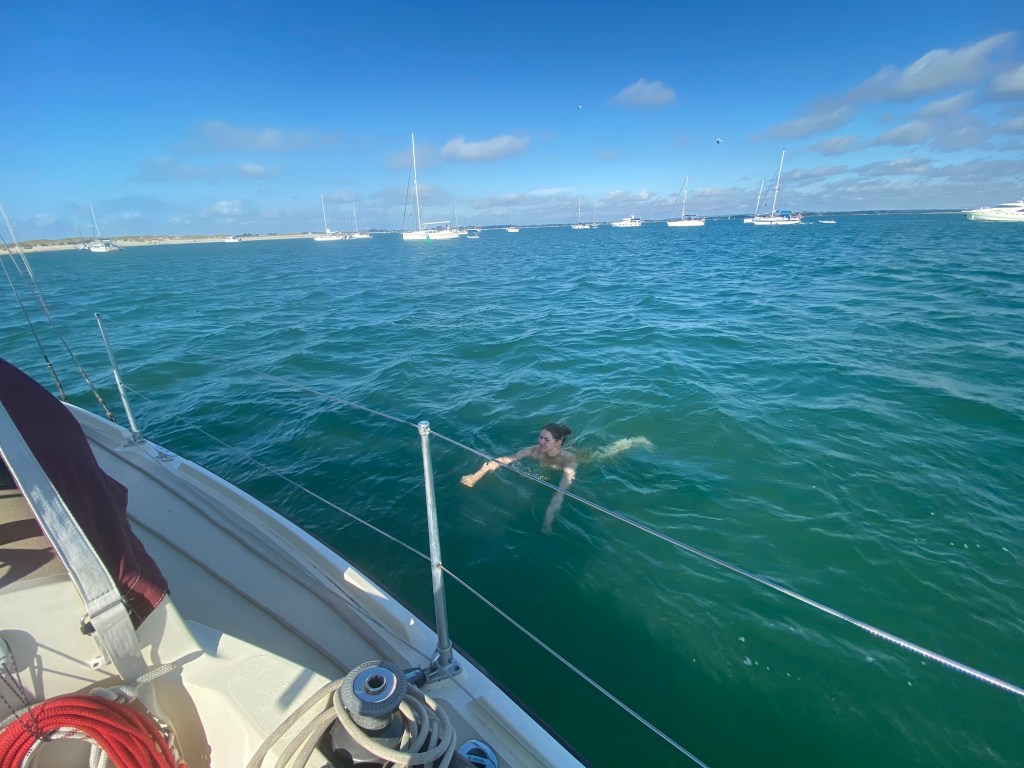
Morning swim
I expected the wind to ease off at nightfall, but it maintained steady 15-20kts all night. This made for a less peaceful night than I had hoped, but further increased my confidence in Spock, our (relatively new) Vulcan anchor. By my reckoning, Spock needs to provide 13 nights at anchor to pay for himself; this was night three.
We awoke to another fine morning with a steady SSW breeze. It was due to veer towards SW, so I was keen to set off and avoid beating if possible. We left in good time, but not before Alice had a refreshing swim.
It was a tad bumpy at the entrance to Chichester, but the sea was quite smooth once we reached deeper water south of west pole. The wind direction was perfect for fetch back across to Portsmouth. Most of the boats in the procession leaving Chichester turned off before this and followed a track closer to the shore, heading for the small boat passage we used yesterday. I had decided that instead we would enjoy the sail and take a longer track to pass outside the Horse Sand Fort.
We had a marvellous sail with both jibs and single-reefed main, with Molly cutting confidently through the small waves. We were making 6kt for much of the time and I was expecting an increase in speed when we bore away onto a reach after the fort, but the wind was noticeably lighter in the shelter of the Island.
Alice helmed for most of the sailing and took Molly into the harbour, as I put out the warps and fenders. We made a very efficient return to harbour, dropping main as we turned off the channel towards the club. However, with the water very low, I could not turn Molly to reverse up the fairway to our berth and ended up going in forwards. This means our next adventure begins by going astern…
One of the things I love about keeping Molly at our club in Gosport, is that there is so much going on. There are craft of all types and ages to watch, and the traffic through the narrow mouth of Portsmouth harbour is something to behold. This weekend was a typical relaxed couple of days aboard. There are plenty of locations to choose, based on the weather. This weekend there was a strong westerly, so I chose Priory Bay outside Bembridge for anchoring on Saturday, and a beat-run towards Cowes on Sunday. Below is a sample of the traffic I passed.
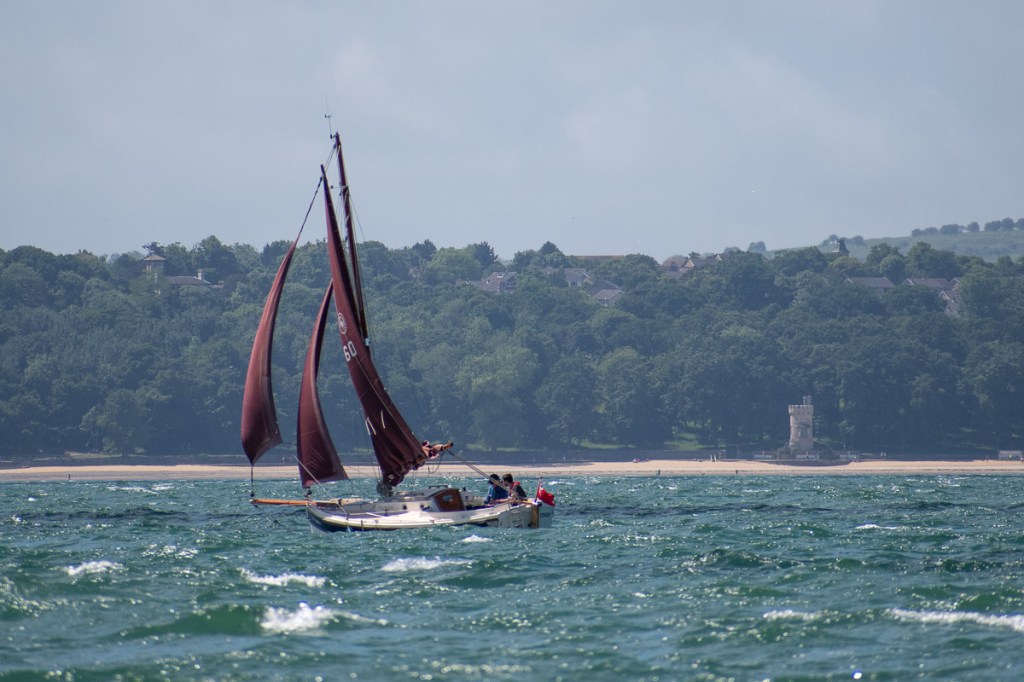
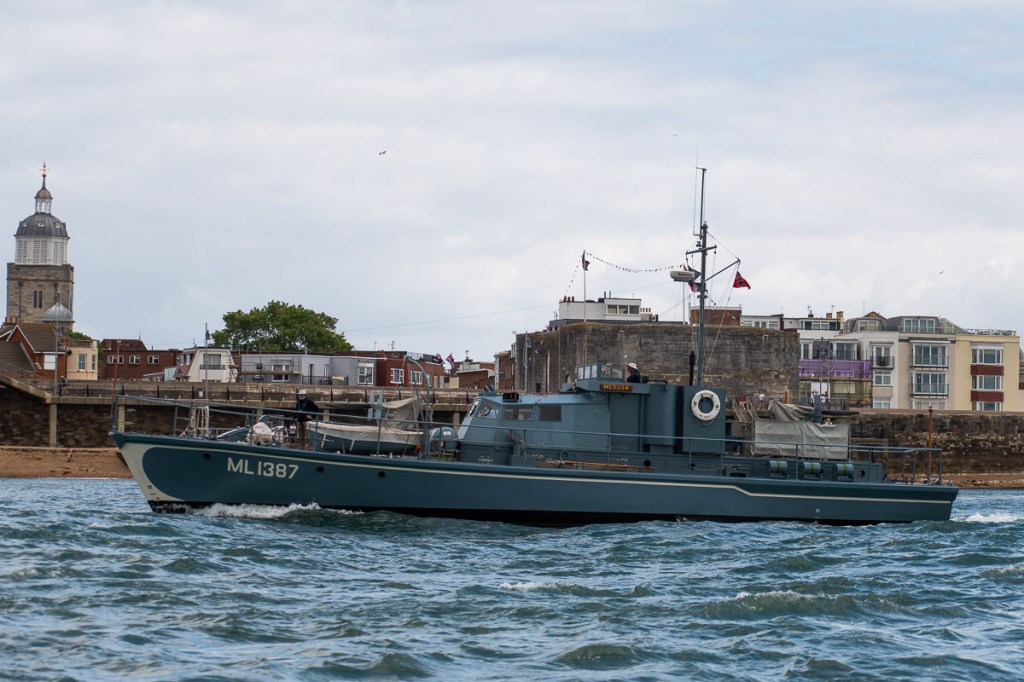
At anchor in Priory Bay. It doesn’t look busy, but behind me….…I had a lot of company. Wind turbine blades on the moveThat’s a lot of rock! Cargo laden……and unladen Cornish Crabber 24 in brisk conditionsHovercraft leaving Ryde HMS Medusa, wooden WWII harbour defence patrol launch returning to her berth in GosportHMS Mersey, offshore patrol vessel, also returning to portUS navy ship leaving Portsmouth





































 Meandering Molly