Tag: anchoring

OGA East Coast Cruise part 1

OGA East Coast Cruise part 1

The first section of Molly’s meander home would be with the OGA East Coast cruise, which had been arranged in part for the benefit of us visitors from further south. The object was to cross the Thames estuary and visit the Medway, after which we were to part ways.

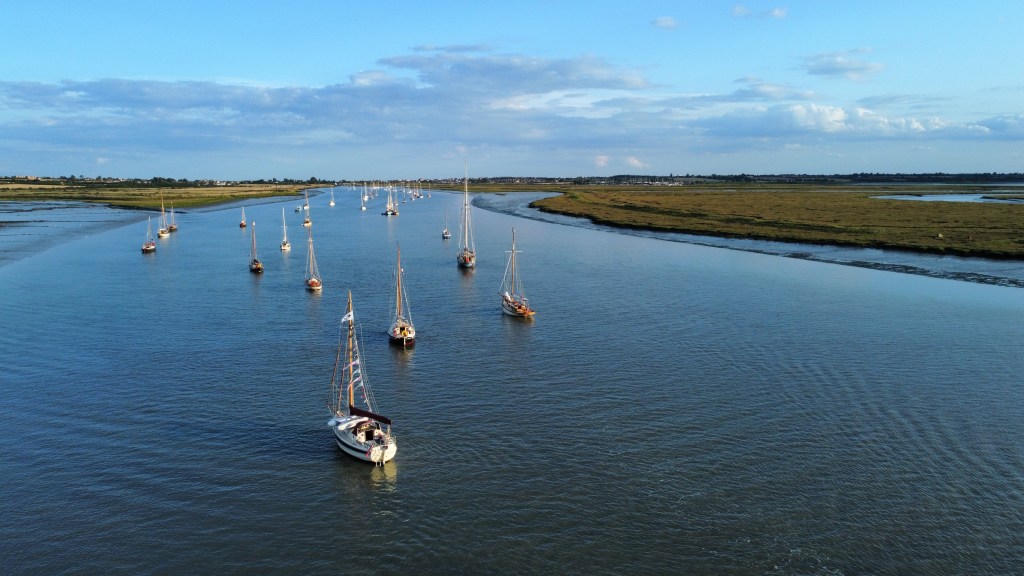
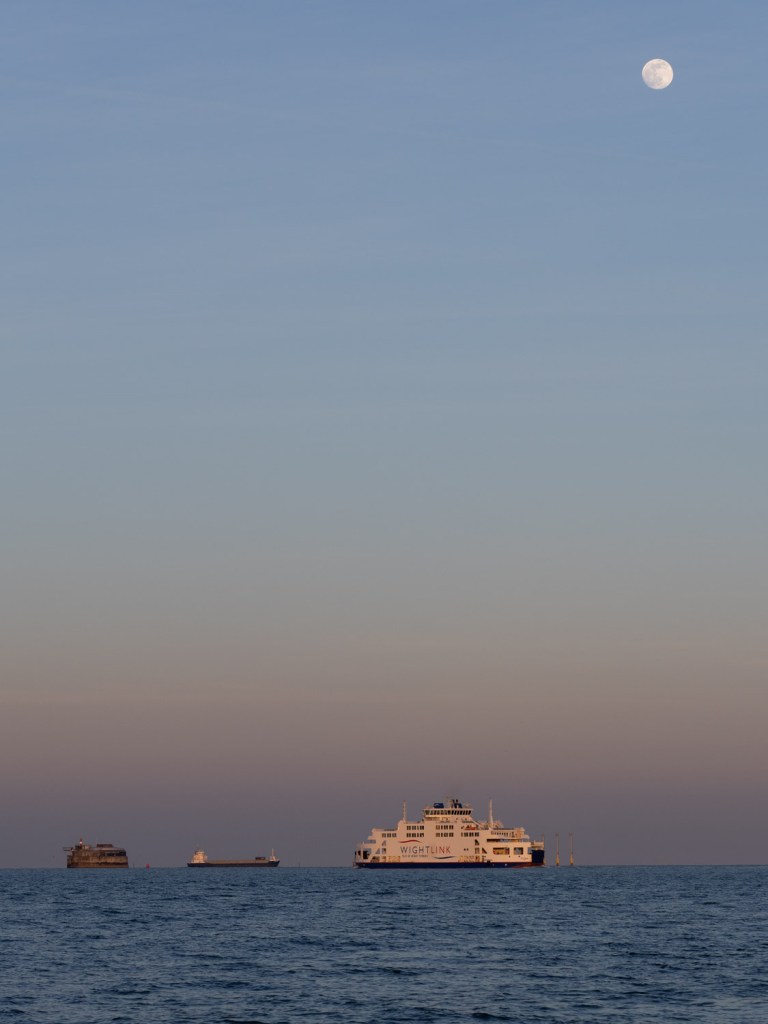
The first day of the cruise was a passage race to the Walton Backwaters. Niki helmed in the light but gusty wind, picking our way out of the Orwell, past Felixstowe docks and across the shallow bay, to the entrance of “Secret Waters”. There was plenty of room in the Walton Channel for the fleet to anchor and the crews gathered on the beach at Stone Point.
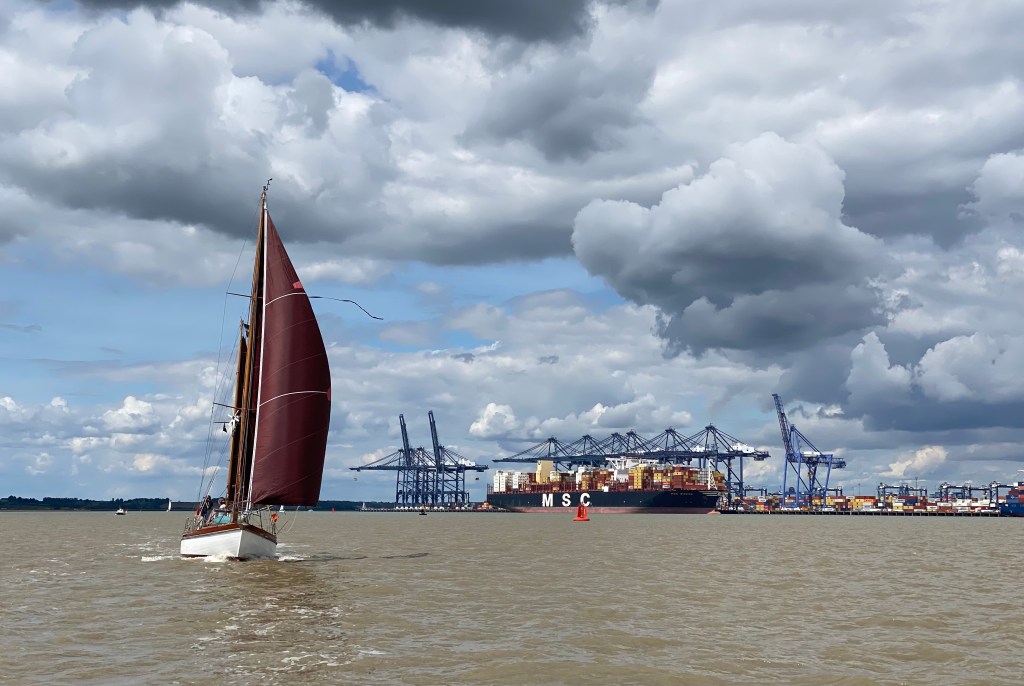
Looking back to Felixstowe docks as we leave the Orwell

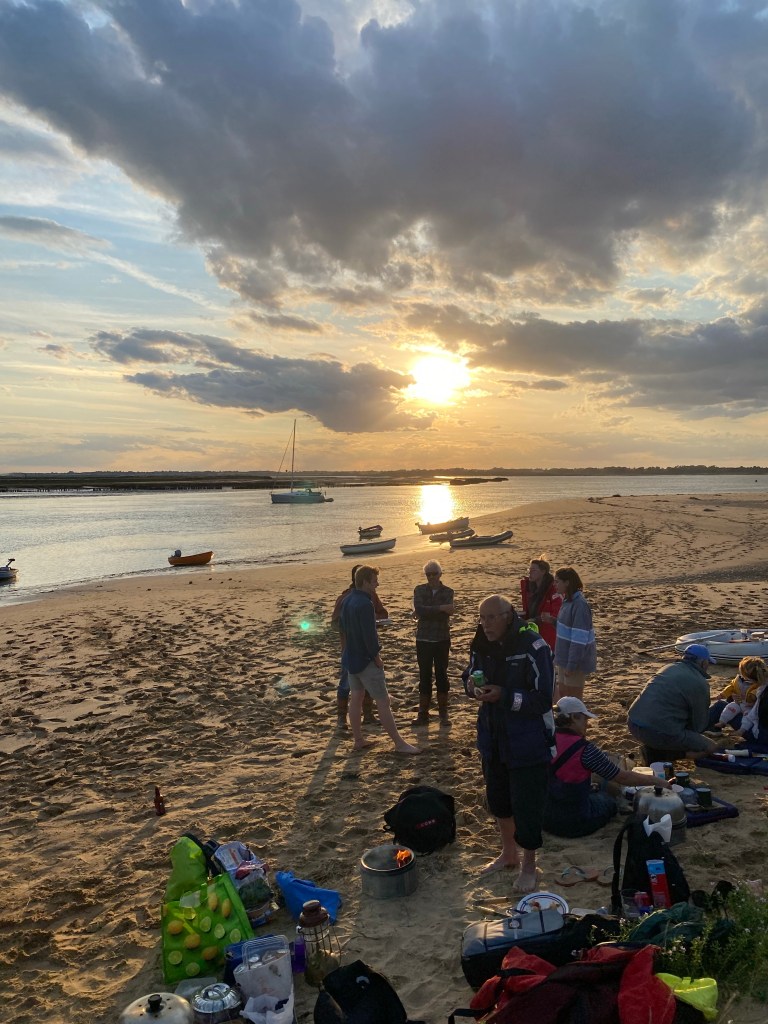
In stark contrast to the weather of the last few days, it was a beautiful golden evening. We had brought barbecue packs prepared by the cafe at Suffolk Marina, as well as bottles of the celebratory “Old Gaffer” beer and we all had stories to share; I was particularly interested to chat to those who had participated in the Round Britain Challenge. Several of these were local and had in effect finished, whereas others still had some way until completion – the furthest being Helford River in Cornwall.

Beach barbecue at Stone Point
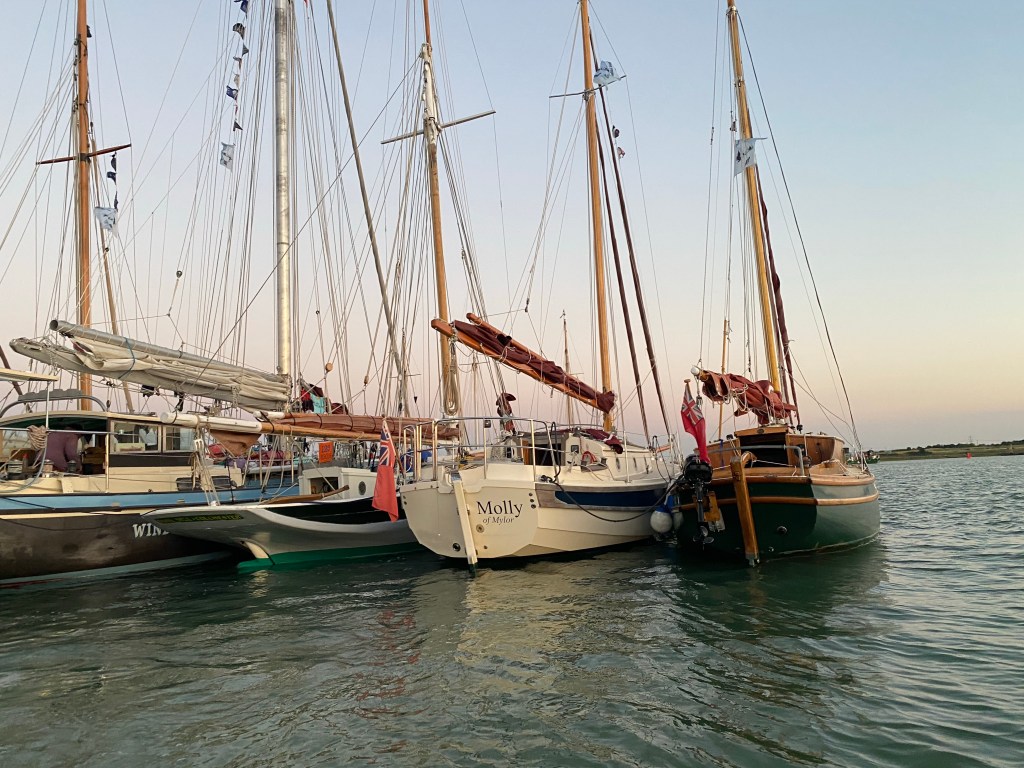
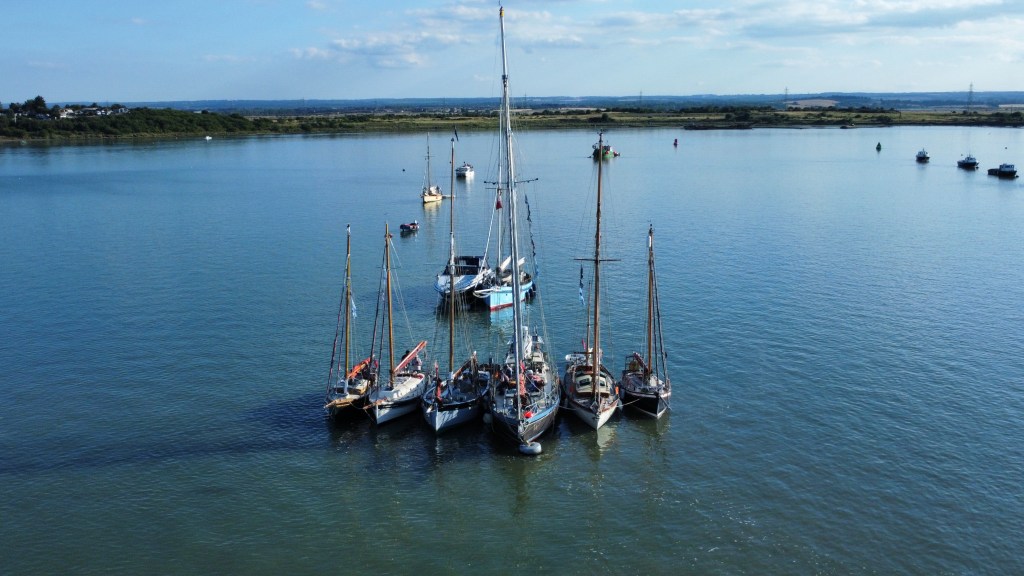
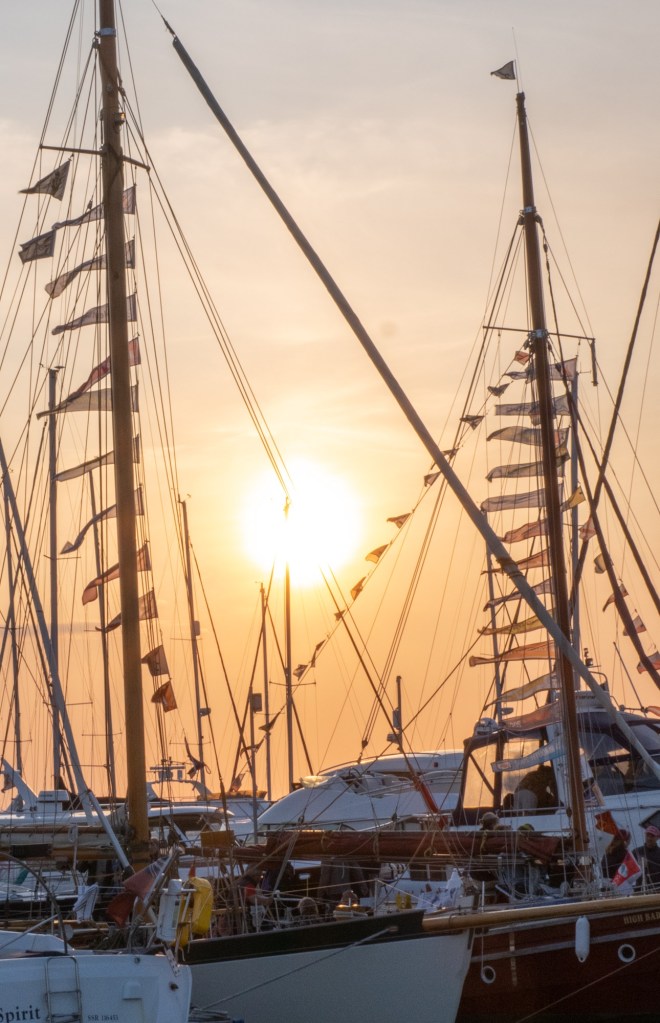
The fleet at anchor

The shore at Stone Point is sandy and ideal for coming ashore, but progressively becomes mud up the channel. Brian noticed that Puffin Bach had been anchored ambitiously shallow and was now aground. He was concerned that if he didn’t make a dash for it, there might not be enough water to even get the tender to it, so he made a swift exit. I helped him carry his dinghy down to the water’s edge, but unfortunately we had not noticed that everyone carried their dinghy to the sandy point to launch and we were soon squelching in the mud. When Brian had been successfully launched, I realised that my feet were firmly held by the mud and I promptly fell over in the black sticky ooze, much to the amusement of the rest of the fleet! The evidence of that slip would take several days to remove from clothes and boat…
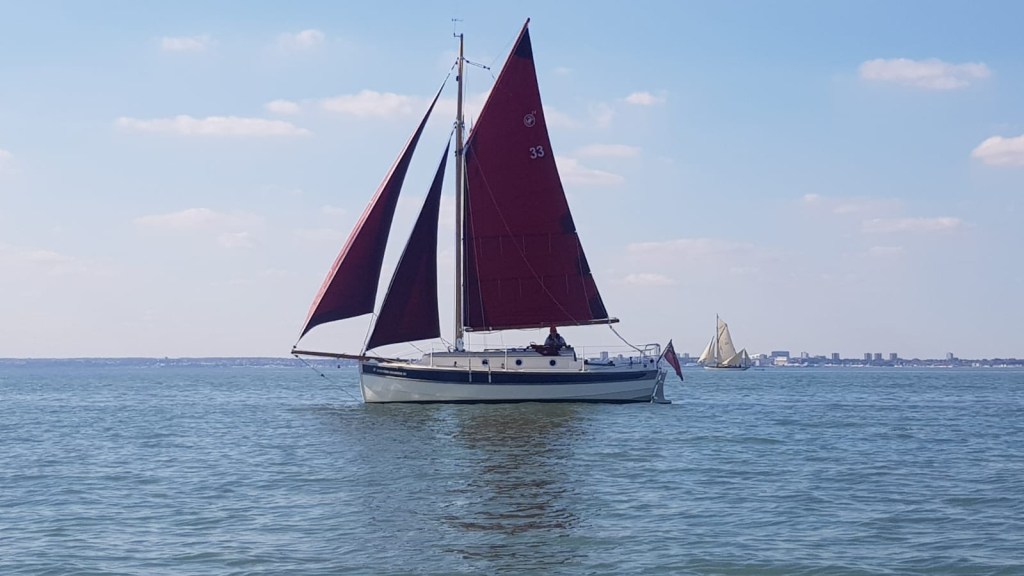
The following day was a passage race to West Mersea, down “The Wallet”. Conditions were brisk and we set out on first reef, making excellent progress. The wind continued to build and as we beat into the mouth of the Blackwater conditions became rather challenging, so in the end we abandoned racing and used the engine to maintain boat speed and enable us to point higher.
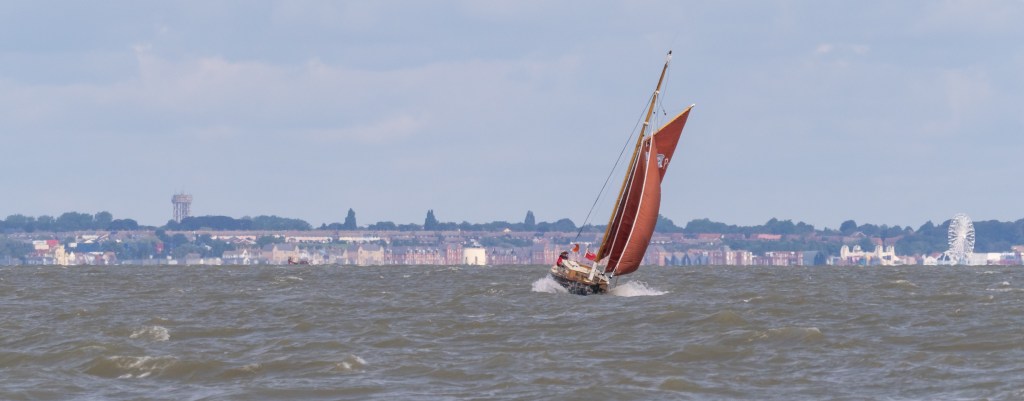
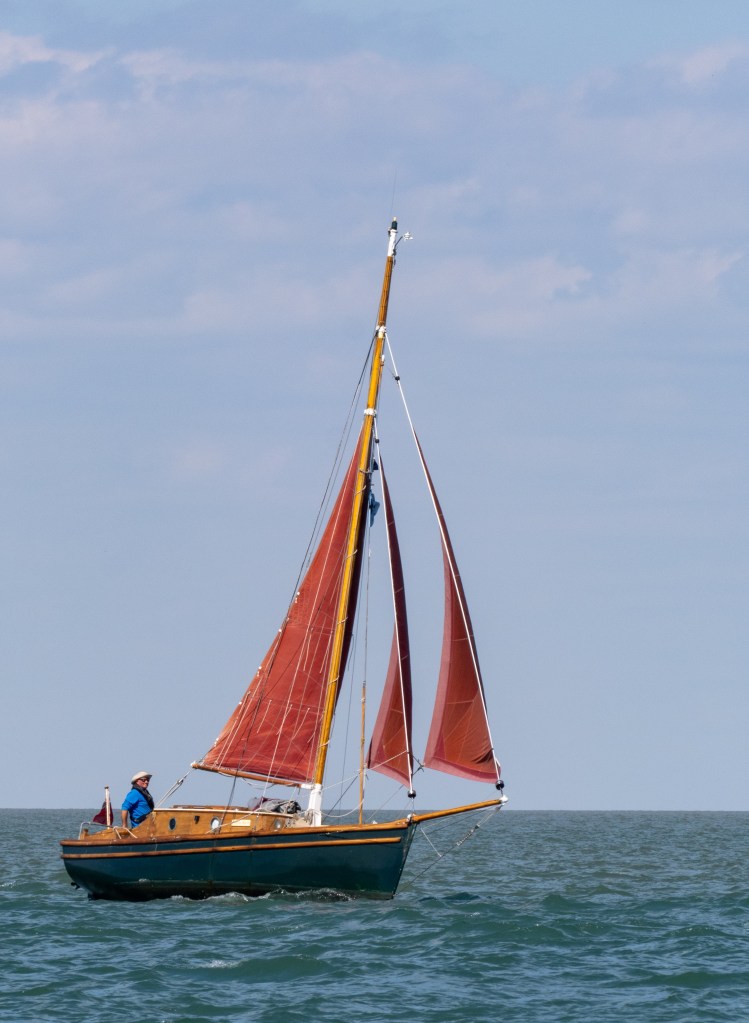
Puffin Bach with Harwich behind
Niki at the helm
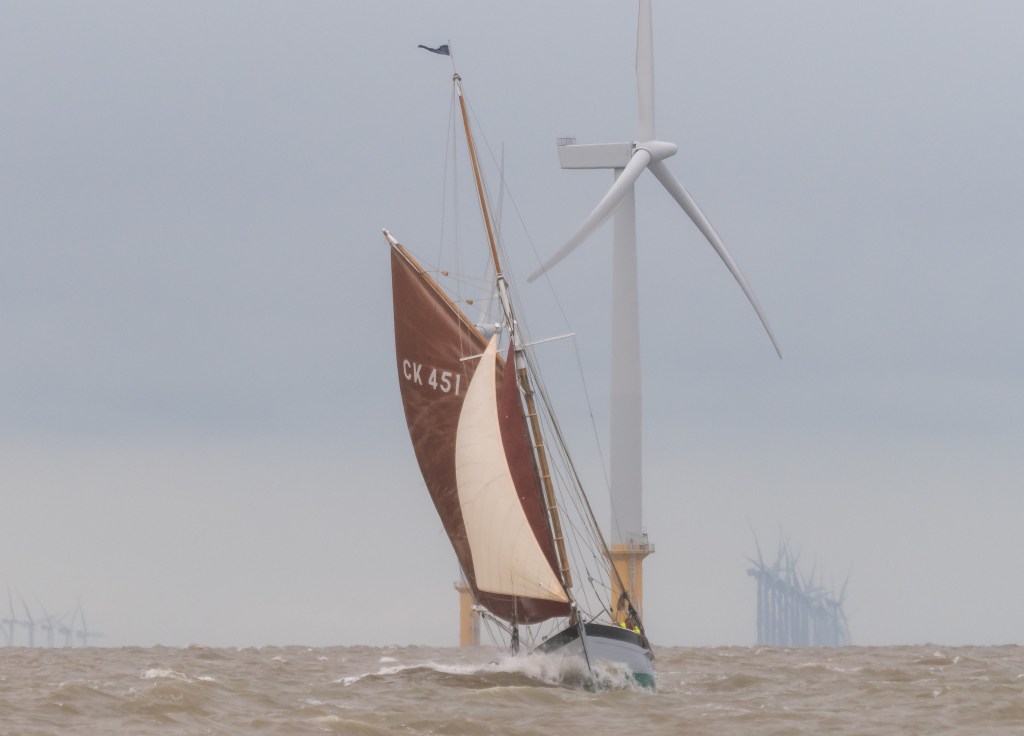
Daisy Belle with Gunfleet wind turbines behind
Jan Blank going well

A number of the fleet found conditions too challenging, turning and running downwind to shelter. Those of us that made it to Mersea were given moorings at West Mersea Yacht Club and ferried ashore for a well-earned chilli ashore.

After the rain. A red sky at night…

The next day had been planned as sailing in the Blackwater, returning to the moorings in the evening. However a decision was taken to grab a weather window of fair winds to cross the Thames estuary and enter the Medway. Unfortunately, Niki was not able to join me on this leg, so I made the journey solo.

I dropped Niki at the yacht club pontoon and took the opportunity to pack the tender up into the locker. Motor-sailing into the Blackwater, although the wind was pretty non-existent, the ebbing tide carried me out.
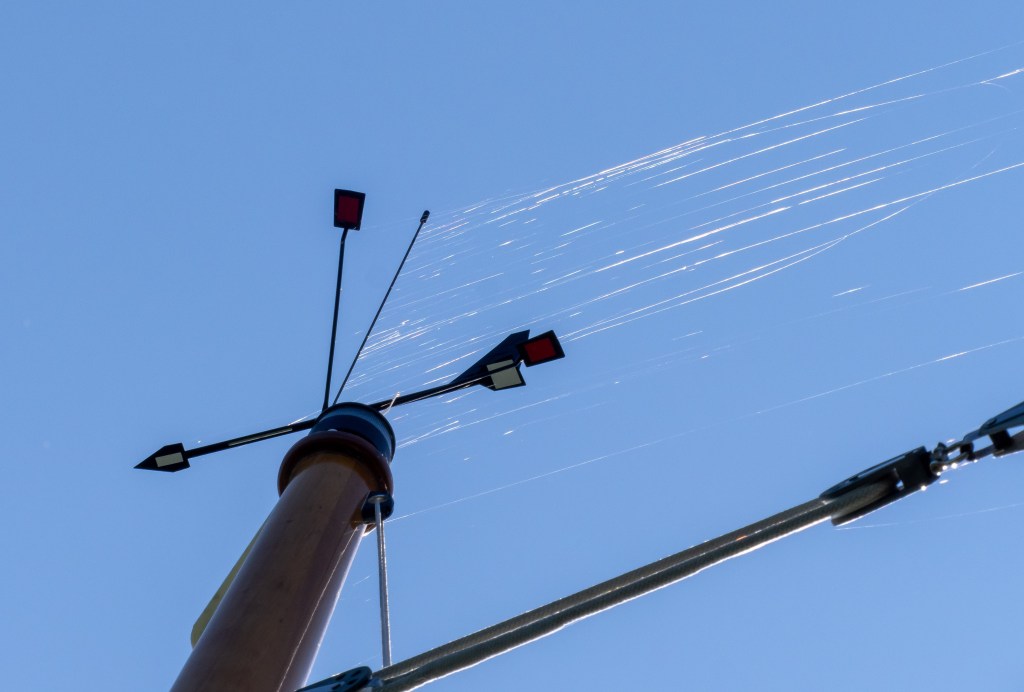
Molly’s rigging was covered in strands of spider silk the night we moored at West Mersea

Looking at a chart of the Thames Estuary, it is littered with obstructions and marks but the experience of being out on it is, of course just a wide expanse of water. I made my way some seven miles out, to take the Wallet Spitway between Buxey and Gunfleet sands.

By this time, the wind was beginning to fill in and I was at last able to switch off the engine. It was a peaceful sail in full sunshine – the sort of summer day which has been in short supply this year. As I progressed passed Foulness Sand, with explosions very much visible and audible from the MoD test centre, the wind continued to fill and it became a beautiful reach. By this time, I had caught up with the fleet (they had not used engine early on), which made a lovely sight spread across water.
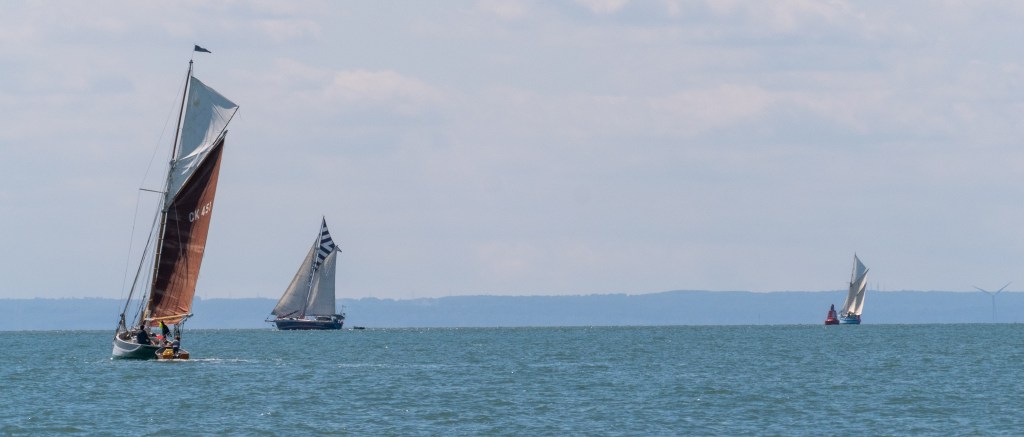
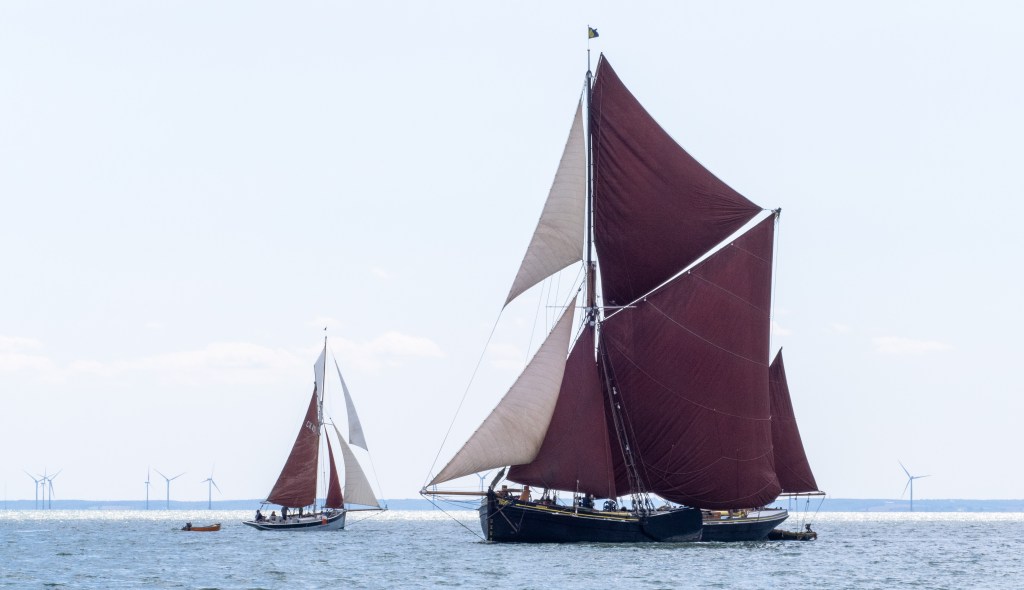
Daisy Belle passing a Thames Barge, both in full sail
Puffin Bach

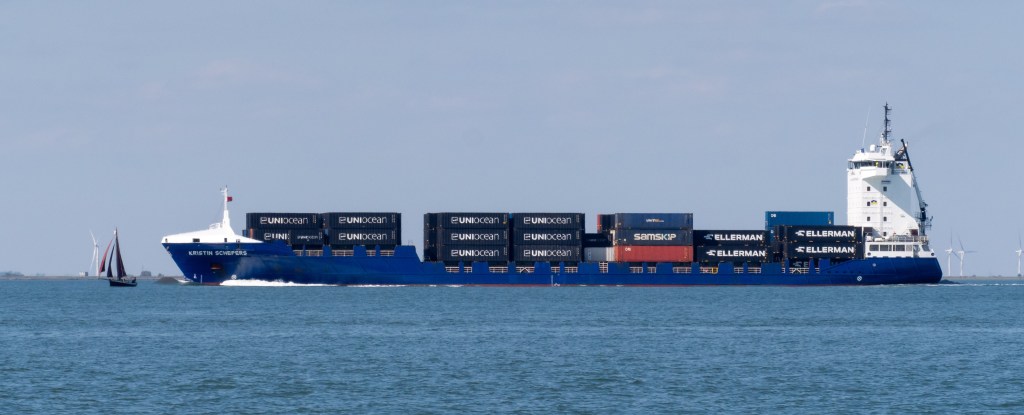
I turned towards our destination down Middle Deep and it was a leisurely beat, but the tide had begun to turn in my favour. The final hurdle was to cross the Thames’ main shipping channel. I was fortunate that there was little traffic as I crossed, bringing us to the Medway river entrance. The wide commercial harbour was devoid of traffic, so there was plenty of space to drop sails before entering our mooring at Queenborough.

Queenborough is on the river Swale, so this was my seventh river of the trip (and I hope to add at least one more before reaching home again). We all rafted onto just two large mooring buoys and made an impressive sight in the afternoon sun. There was time for leisurely drinks and nibbles aboard Daisy Belle and Windbreker; we then cooked our evening meal aboard, before ferrying ashore in tenders, to the pub.
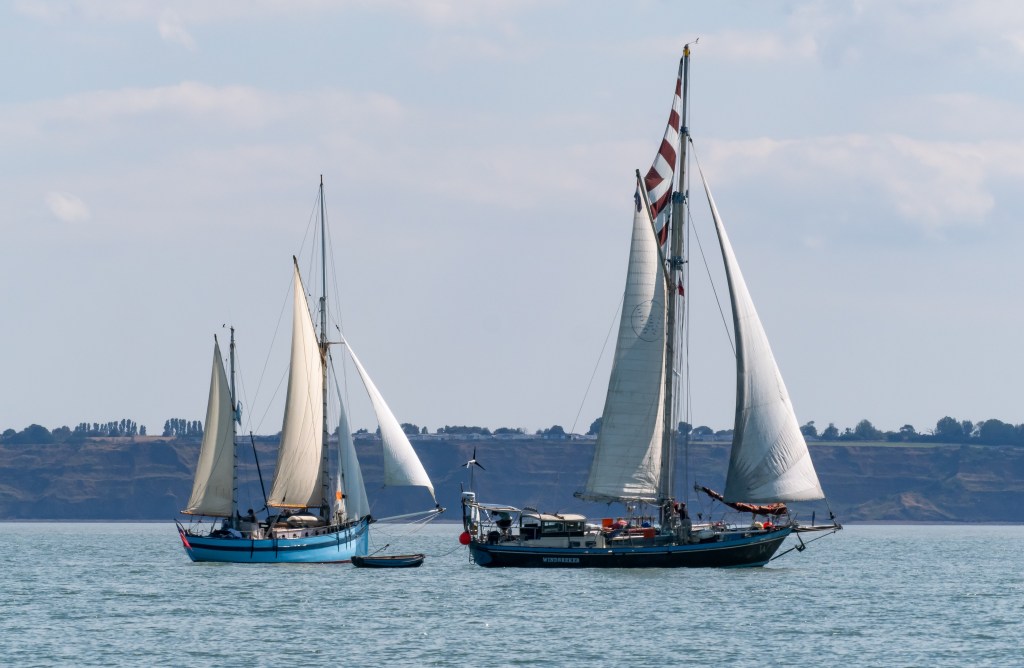
Continues in part 2…

Rely and Windbreker
Look behind you! Plum was not so lucky with the traffic, crossing Princes channel
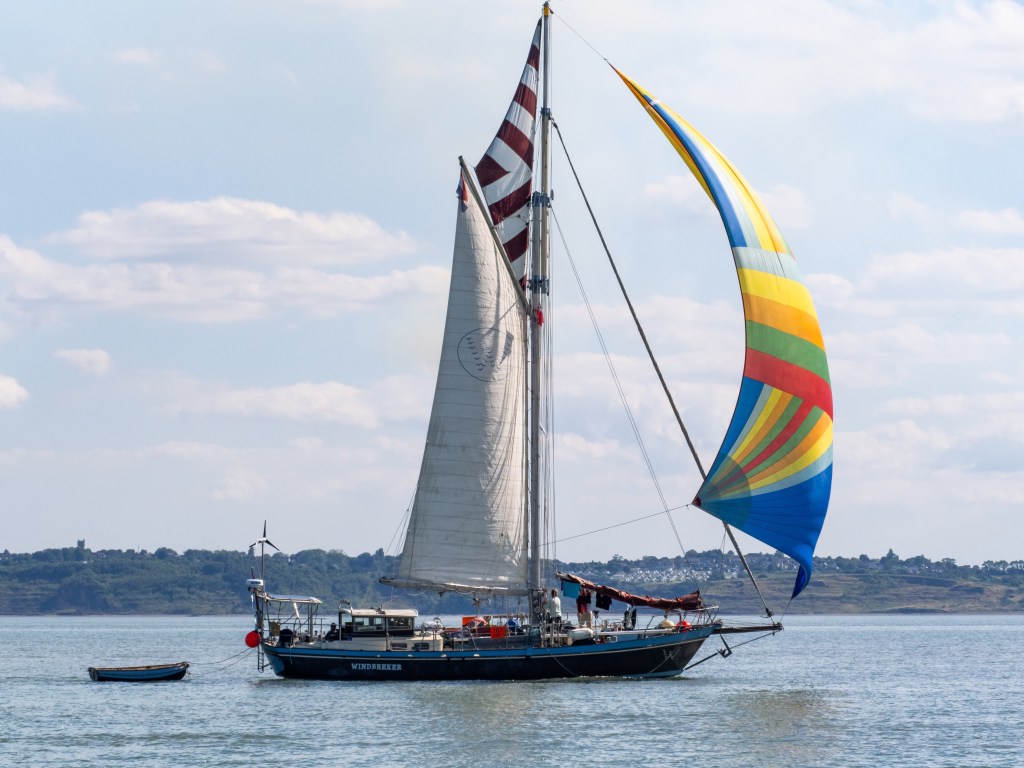
Windbreker and her “hippy” spinnaker
Rafted together
Molly approaching the Medway (thanks to Colin of Plum for the photo)
The rafted fleet at Queenborough

Solent Potter

With warm sunny weather but strong winds forecast, Niki and I decided to enjoy a few lazy days aboard and visit some of our favourite anchorages. Our first stop was in Chichester harbour.

We beat up from Gosport against a lively North Easterly. We had some trouble tacking against the wind and noticed that we did much better on one tack than the other – it was then Niki realised that one of the shrouds had worked loose. I recalled that when I had re-stepped the mast, I had not had time to properly adjust the rig tension and so had not secured the turnbuckles!

There are several popular encourages in Chichester, which offer great protection from the prevailing south westerly wind direction, but there are fewer options when that direction is reversed. East Head looked far from pleasant and conditions at our customary spot under Pilsea Island were not to our liking either.

The chart indicates that there is anchorage in the Bosham channel, so we poked our nose up there. However this was no good for dropping the pin either, as the moorings extend the whole way down the channel. At this point, we admitted defeat and picked up a mooring.

Peaceful mooring in the Bosham channel

The harbour master arrived later in the evening to collect the dues and pointed out that the mooring we had picked up was not for visitors, but told us we could stay out as the resident was away. I was glad of this, as this location was much more sheltered than the visitor moorings near the main Itchenor channel.

We passed a comfortable evening aboard, cooking a delicious steak dinner and slept soundly, after carefully securing halyards to prevent rattling in the strong wind. In the morning I spend some time checking all the shrouds and adjusting them to equal tension and then securing the turnbuckles – a job I should not have left home without doing.

We had decided to stay on for another day, as the strong wind remained steadily in the eastern quadrant. After a leisurely morning, we rowed ashore for a walk. I had noticed that there is a footpath which follows the whole peninsula of Chidham. Niki got rather muddy disembarking the dinghy, but we found a tap at the nearby sailing club and she was able to wash her legs.

Bosham Quay

We were rewarded with a spectacular walk with salt marsh and fields to one side and Bosham Creek on the other. We had beautiful views of the very picturesque Bosham Quay and then turned inland to follow the footpath through lovely farmland to the village of Chidham and its most welcome pub, “The Old House at Home”. This is quite an unusual name and I had thought it a Black Country term, as that is the only other time I had heard it. According to Google, the name comes from the words of an early Victorian song popular with soldiers far from home.

A welcome pint of excellent beer at the halfway point of our walk

The circumnavigation was completed with a walk along the more open western perimeter of Chidham and the last part along a footpath on the flinty foreshore itself, complete with stern warnings about the dangers of the tide. We passed around Cobnor Point to the welcome sight of Molly on her mooring.

Cobnor Point

Having spotted a slipway at the sailing club, I saved Niki more mud and rowed the tender from its muddy landing place to collect her and return aboard. We were a little low on provisions but wanted to spend another night at anchor and decided on Newtown Creek, after some food shopping in Emsworth, for the following day.

We were started awake just after first light by a call of “you’re on my mooring, please move”. I stumbled groggily into the cockpit to find a bright yellow Dragonfly with its solo skipper circling us a little impatiently. It was the work of moments to start the engine and cast off mooring, whilst Niki charmed him with her explanation that we had been given permission.

We thought of setting off then and there, but that was before we looked at our watches and discovered it was but 5am! A (visitor) mooring was picked up and we returned to bed for some more sleep.

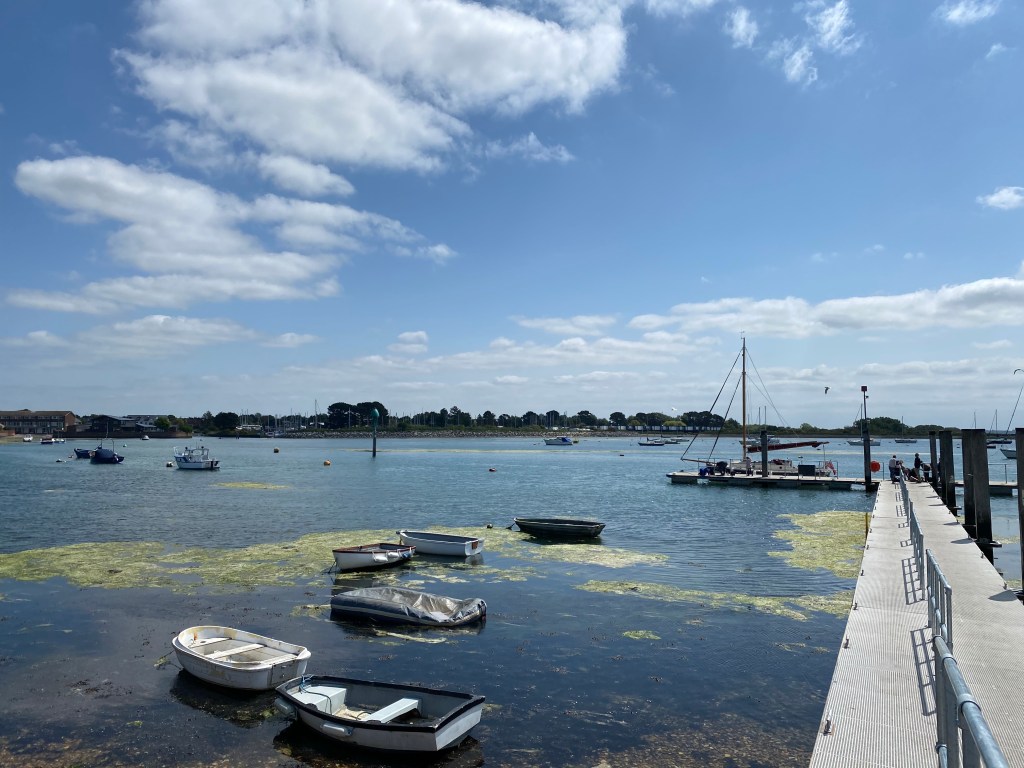
Short stay pontoon at Emsworth

At a rather more civilised hour, we cast off the mooring and sailed into the Emsworth channel, where there is a short stay pontoon. The pontoon was thick with small children and their parents, who seemed oblivious to our shouts but nevertheless moved reluctantly out of our way as we arrived. A prominent sign prohibited crabbing, but was completely ignored; we took this prohibition not to apply to Molly either! Though it was around high tide, there was just 2m of water so, not knowing how long the shopping sortie would take, I stayed aboard Molly whilst Niki strode out.

Under reefed sail in Chichester harbour

I needn’t have worried and Niki was back in half an hour with all our vittals procured. We followed the now-ebbing tide down toward the harbour mouth and ran before the wind down the Solent. As usual, there was a wide variety of craft to occupy our attention. Sadly the wind dropped and our progress was slower than hoped and, as we passed Cowes, the tide turned against us. I took to the shallows to avoid the worst of the tide, but we arrived at Newtown Creek much later than planned.

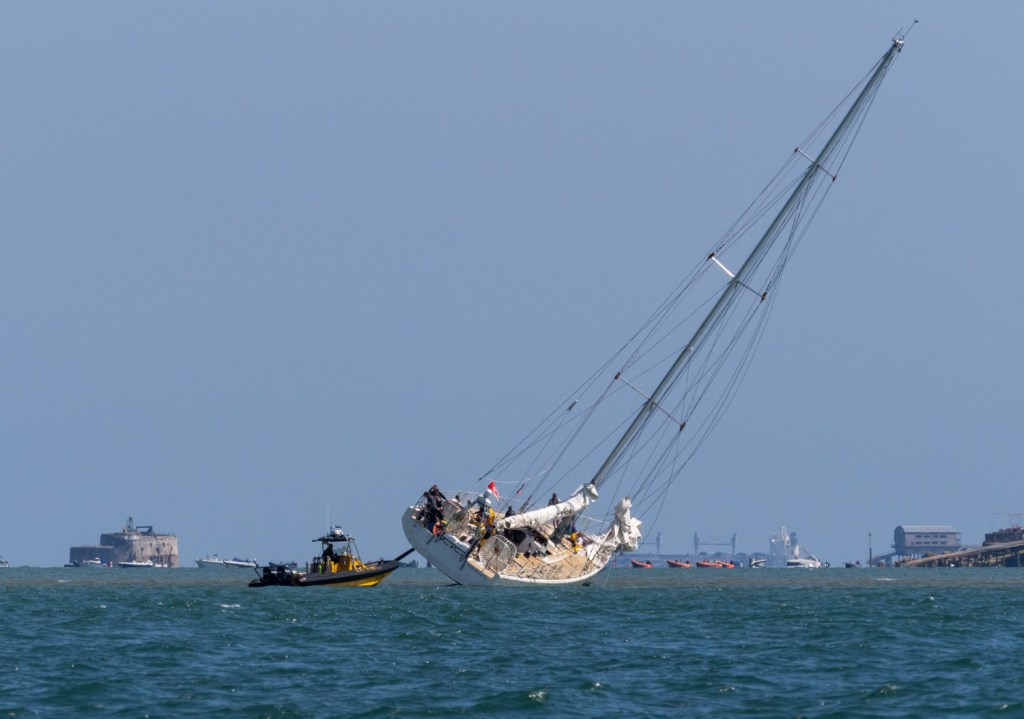
A clipper aground on Ryde sand. There was little aid the Sea Start RIB could render
The shallow water extends a surprisingly long way off shore…
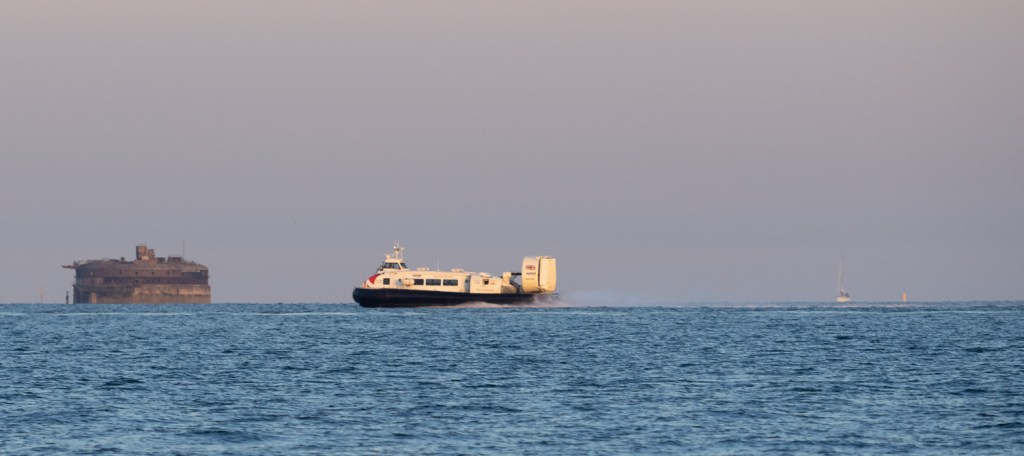
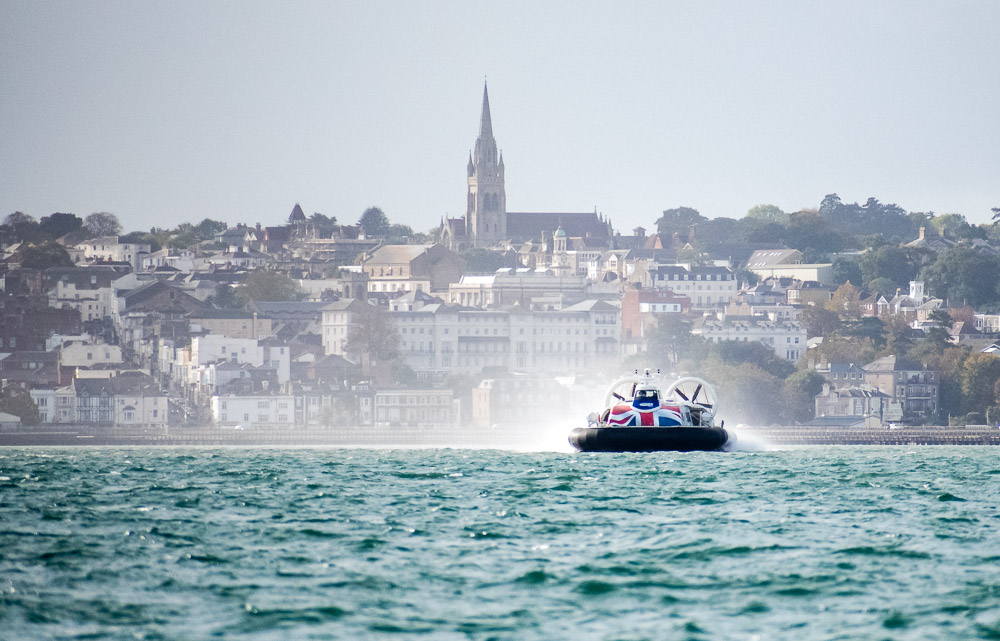
…but the hovercraft has no such trouble with the shallow water off Ryde
Sail training ship Tenacious
I like this hull colour for a Shrimper
“Stealth gas”? I think not, on a ship that colour!
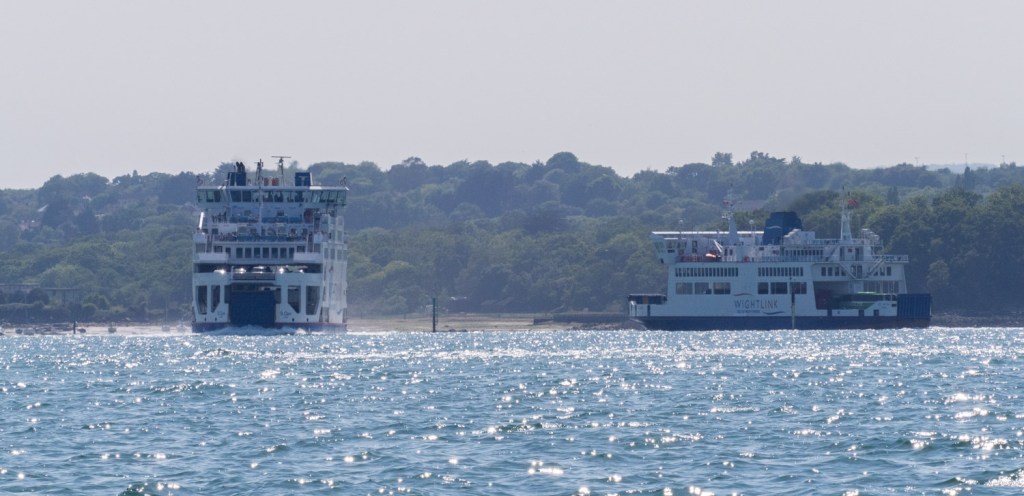
The ferries crossing outside Wootton Creek

I had hoped for another pub walk at Shalfleet, but we arrived too late for this. We crept along, plate up past the moorings in the Western Haven; a boat was already anchored in the shallow water of the upper reaches, but we squeezed in on the end.

Molly at anchor in Newtown Creek

I’d always struggled with getting our tender in and out of the locker, but during this trip discovered how much difference it makes to use the pump to draw out as much air as possible when deflating her. So I quickly had Aurelia out on the coach roof, inflated and in the water. Niki stayed aboard and I had some welcome exercise rowing through the moorings to the tumbledown quay at Shalfleet. In the golden hour, the deserted harbour was a lovely sight and I had a short but pleasant walk around the boats ashore. It did seem like a place boats come to die, but that seems true of many a boatyard. I did spot a more cheerful sight – our friend Julian’s Cape Cutter on her mooring.

Molly in the distance, viewed from ashore in Shalfleet
One of the most beautiful places to spend a night.

Our laying of the anchor had been less than perfect and I realised that we would be on the mud during the night and not be able to get out at the time we wanted, so we lifted the pin and moved to a mooring in deeper water later in the evening.

This was just as well, because when I rose at 0530 for our return passage, there was barely enough water for us to creep towards the mouth of the haven. The early start was called for, as it was a beat back to Gosport and I wanted a fair tide to help us.

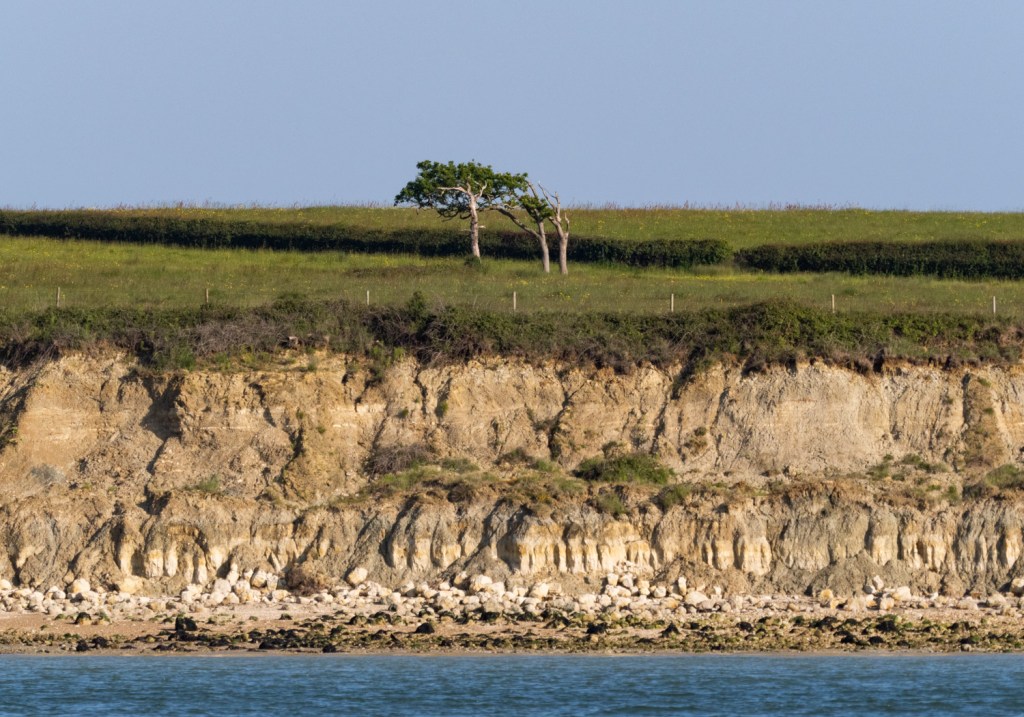
Interesting rock formations on the eroding Isle of Wight shore
A Winkle Brig in Osborne Bay
The lovely Lady Belle also beating up Solent

The wind seemed light and I raised full main, but it quickly became clear that we were overpowered and I had to stop and take in a reef. I beat across the width of the Solent arriving directly outside the mouth of the lovely Beaulieu river. I stood on as long as I could into the shallows before tacking off, hoping to avoid the need for another tack before Cowes. This was indeed how it turned out and in fact a wind shift helped us onto a course directly towards Gilkicker point. At that early hour there was little traffic and I only had the fast ferries out of Cowes to watch for. The wind gradually decreased during the morning and it was not long before I shook out the reef and carried on under full sail. A few tacks were needed to get around Gilkicker but we made surprisingly good time and were soon back on our home berth.

A French gaffer that passed us – I believe she was returning after a classic yacht event in Brixham.
Portsmouth in sight
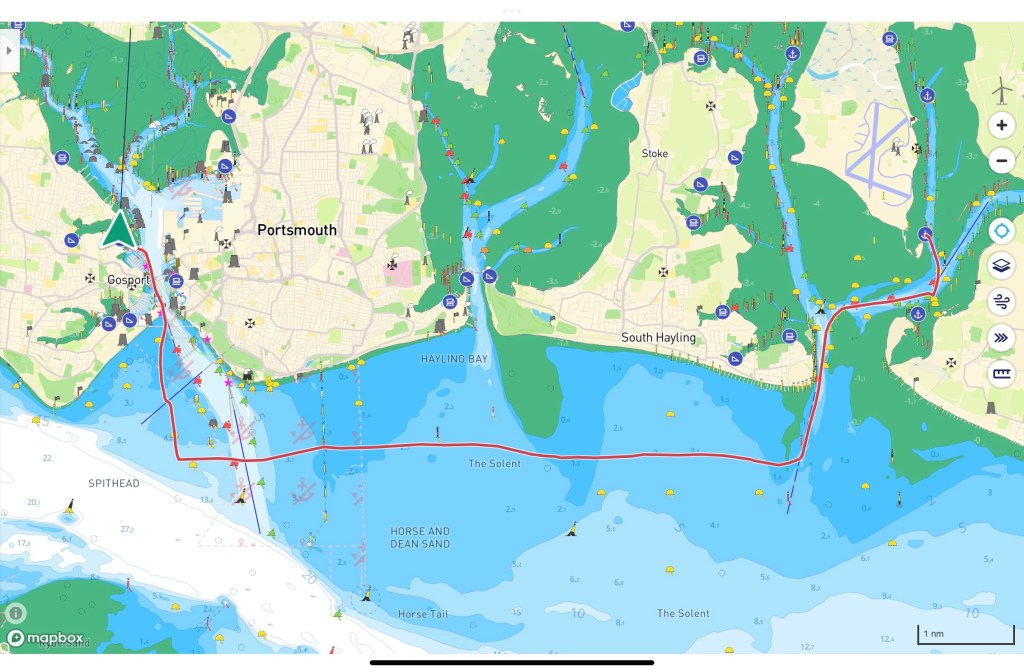
I was quite pleased with this track. You can clearly see how long it took me to sort a reef shortly after we started, but remarkably few tacks were needed to get home. You can also see that Portsmouth is thick with AIS targets!

Poole but not Weymouth

Yarmouth gaffers

Our plan after the Yarmouth regatta was to sail West to Poole, Weymouth and then hopefully Dartmouth. Niki joined me aboard, with Alice and her friend Lauren, hot-foot from their success at the regional volleyball finals. The wind had been in the East or NE for the past week and was forecast to stay that way for the coming week. The fresh or strong wind made for rapid passage westward, but with no letup forecast, did not bode well for the return journey.

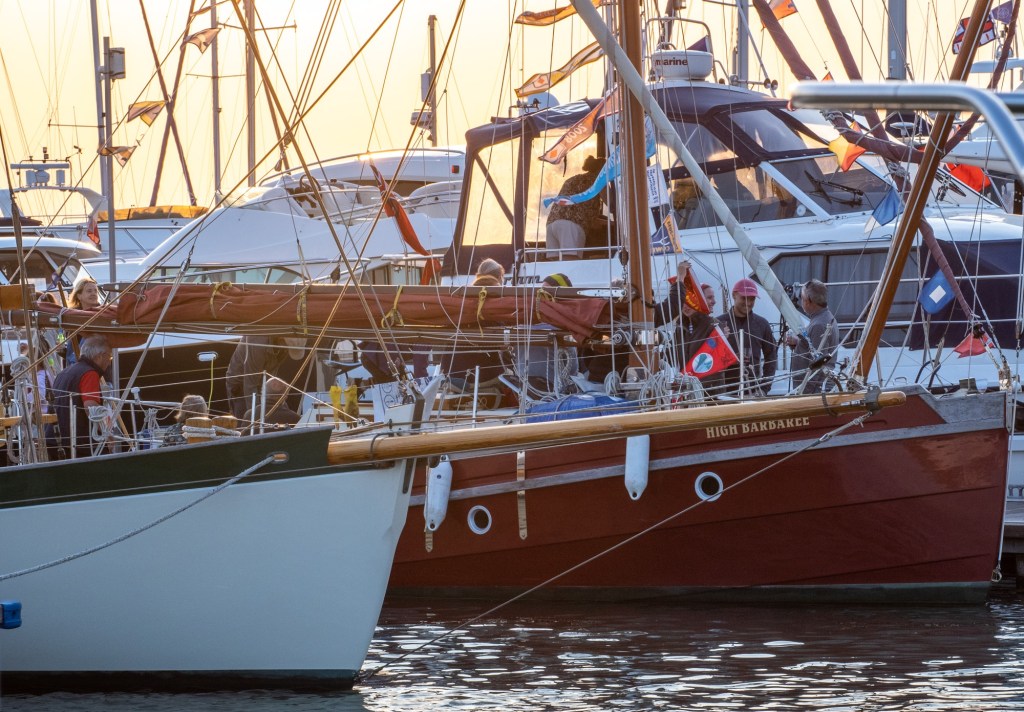
Drinks aboard High Barbaree

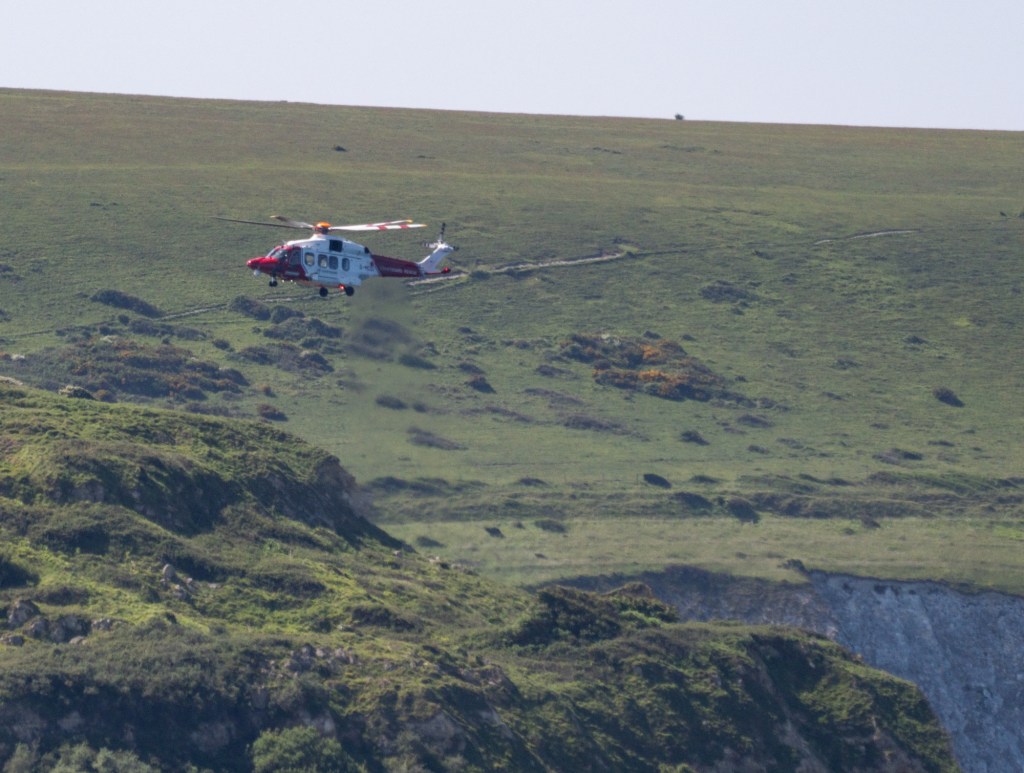
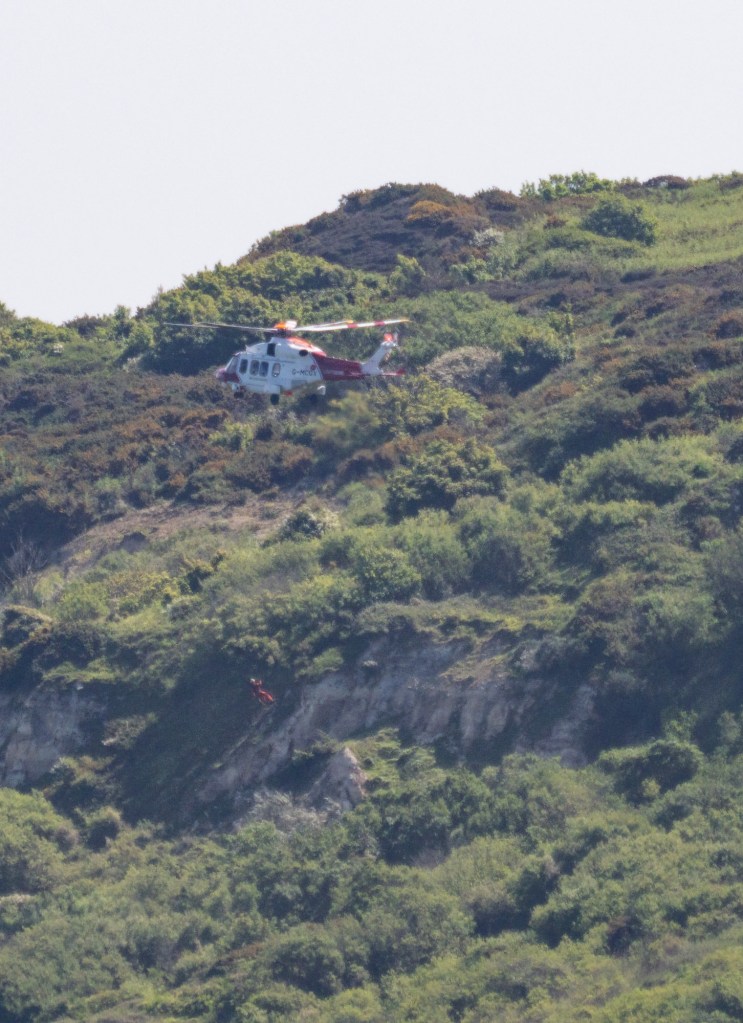
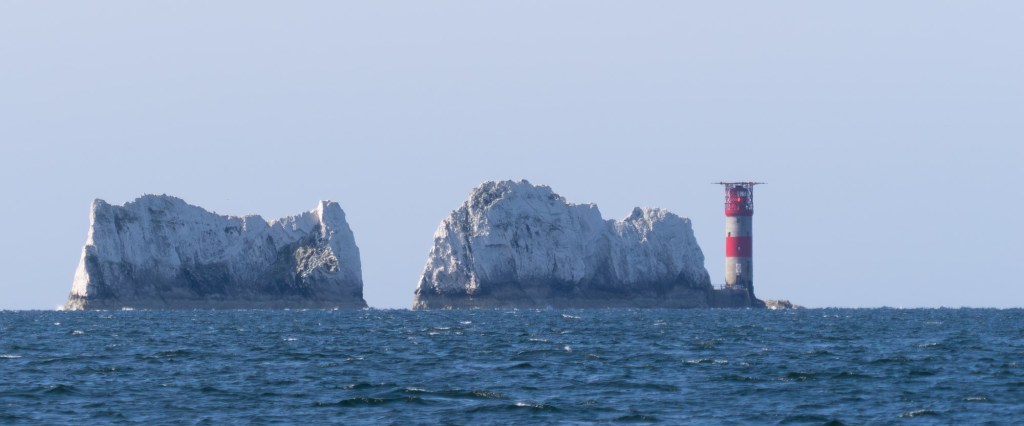
We set off from Yarmouth with the ebb tide, under jib only. The sea state was smooth and we enjoyed a sunny ride past the needles. We could see the coastguard rescue helicopter hovering over Alum Bay and lowering a crew; we later learned that a man had been rescued from the beach having been missing overnight.

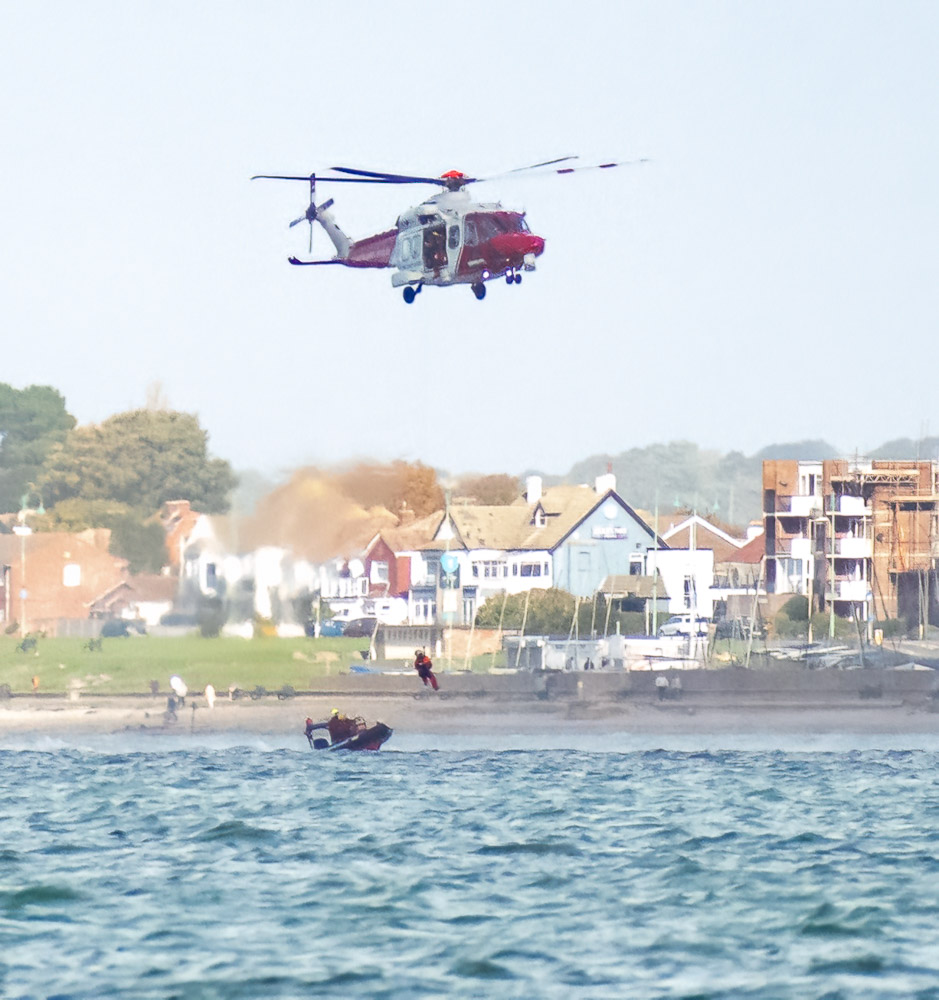
Coastguard helicopter dangling a rescuer from the winch

From there, we ran West with a clear view of the white rocks of Handfast Point, some 12nm distant. We were expecting to move on to Weymouth the next day, treating the girls (both of whom are studying geology at A-level) to a close up view of the Jurassic coast. Old Harry and Harry’s Wife were this intended as aperitifs for this experience, but they were nonetheless impressed.

Iconic view of needles

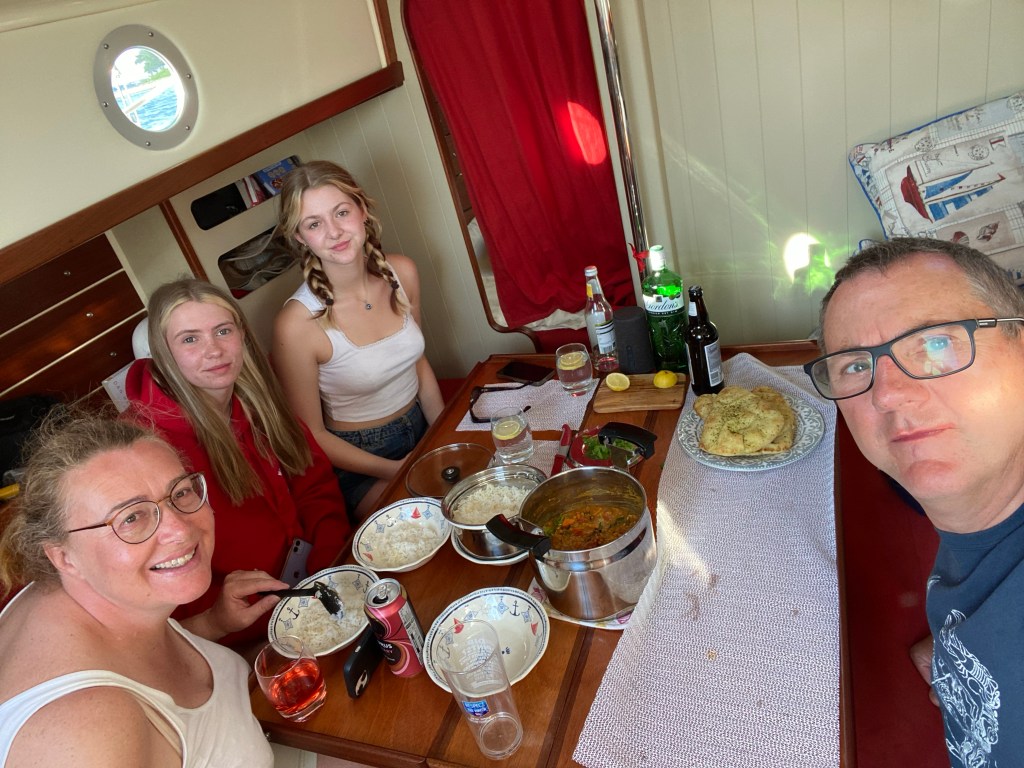
We ran before the wind across the bay and then into Poole harbour. The wind was such that we had to pass around the north of Brownsea Island, to anchor in the shallows near Pottery pier. This gave us the afternoon, in which the girls swam and I made a veggie curry in the thermal cooker. During the dinner time discussion, we reached the conclusion that Weymouth was not a good idea and so determined to return to Gosport the following day.

Dinner aboard

I had not brought so much as a pack of cards, so we had several rounds of “animal, vegetable or mineral?”, much to Lauren’s bemusement.

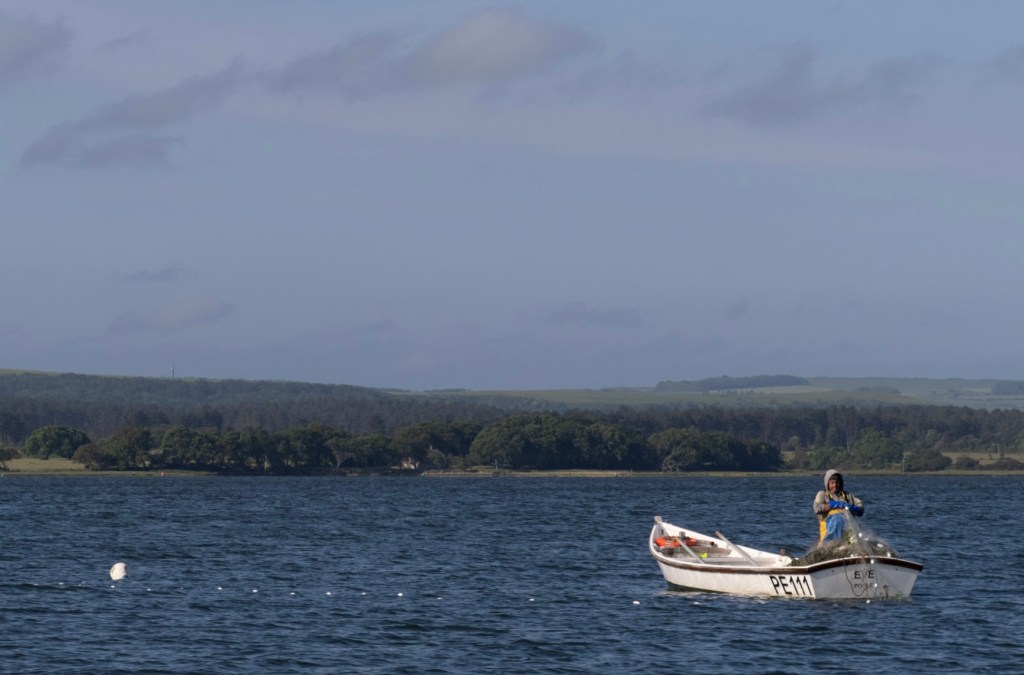
Fisherman at work near our anchorage
At anchor

The following morning, I had the teens inflating Aurelia for the short row ashore and a stroll on Brownsea Island. It was interesting to see the remains of the village and spot a few of the resident red squirrels.

After that, it was time to batten down the hatches and battle back upwind. I was hopi great we would be able to sail, but the wind was thoroughly “on the nose” and this was a longer leg than the girls had bargained for, so I motored. We made great time despite the head wind, with the tide under us and Andy the Autopilot steering an arrow-like course across Bournemouth Bay.

Sweeping into the Solent past Hurst Point

We passed into the Solent via the North Passage and the strong flood ushered us past Gilkicker in great time, arriving back at POG in time for a welcome visit meal at the Castle Tavern prior to the girls’ early bus back to the midlands.

Yacht Lady Belle as she beat up the Solent
Portsmouth again

Newtown for lunch

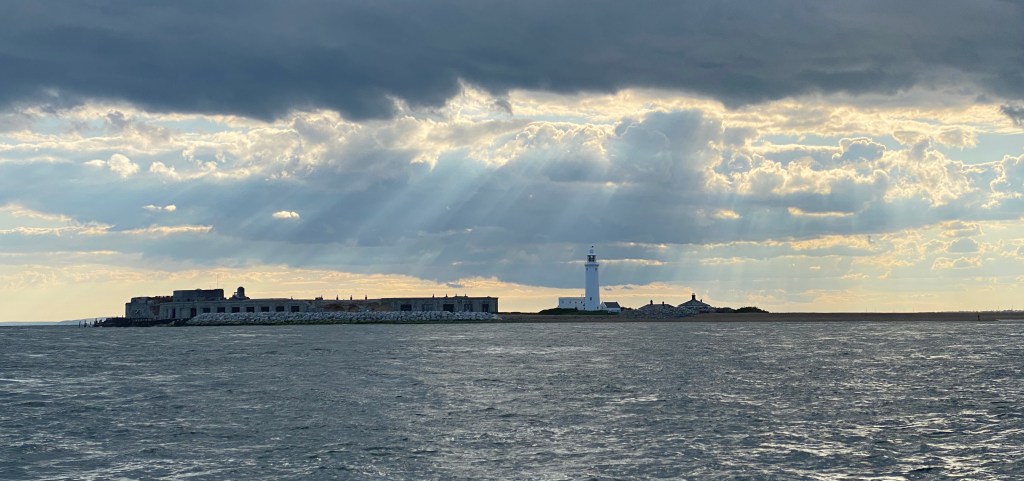
Looking down the western Solent with Newtown on the left and Hurst Point light in the distance

The weather and tides collaborated to provide ideal conditions for a shake down trip down the Solent to one of my favourite spots. Phil and Jo, fellow members of the yacht club were keen to have a sail on Molly, so we set off down wind and down tide in the sun with a picnic lunch.

The sea was smooth, to the extent that we anchored outside the entrance to Newtown Creek to eat our sandwiches and wait for the tide to turn.

Jo and Nick at the helm
The author admiring the view

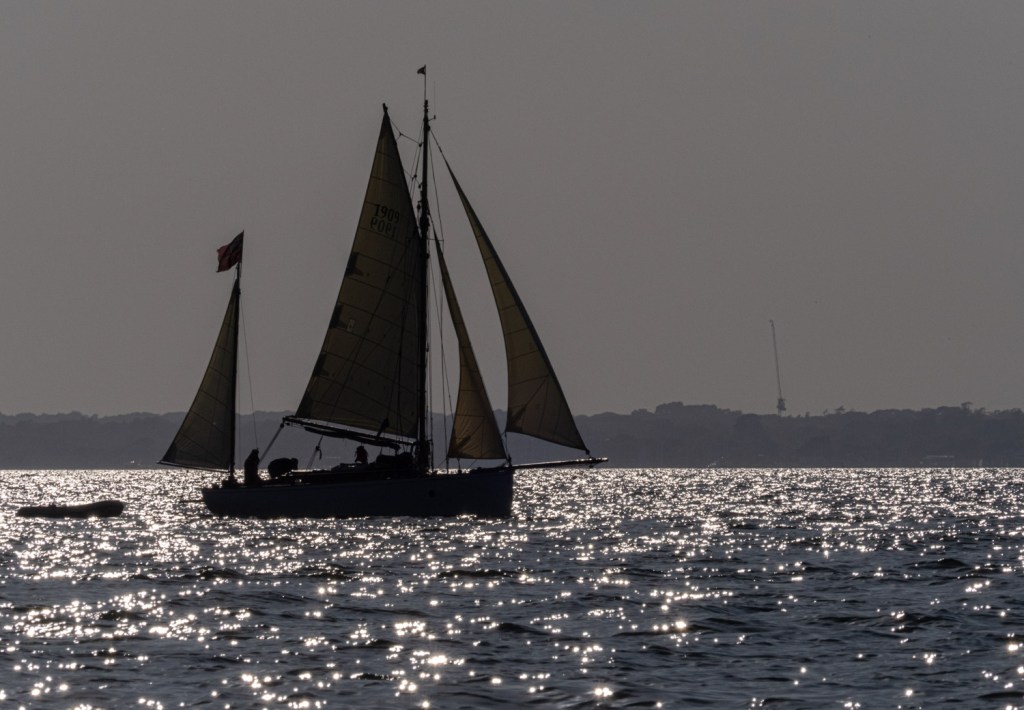
We completed the trip in a series of beats along the flood tide, with the westering golden sun, in the company of Golden Vanity, a 38ft Gaff Cutter, built in 1908 as a yacht for the maritime artist Arthur Briscoe.

Stepping the mast

Mollys mast in the workshop

The fully refurbished mast is ready for stepping! Sporting glossy new varnish, rot fixed and anchor light replaced, it looked absolutely lovely. I had decided that rather than having the mast delivered to the club, I would take Molly to the mast and have a winter weekend away. I had been watching the weather leading up to the proposed date and was delighted to be treated to calm and settled conditions, even sun!

So it was. I slipped the moorings in Gosport and motored out into the Solent, through the dolphin, past Langstone and made Chichester bar beacon in good time across a waveless sea and warm sun. The warmth turned out to be due to the lack of wind; I had been motoring downwind, so the apparent wind was almost nil – as soon as I turned up into Chichester, I noticed the bite even though the breeze was not strong.

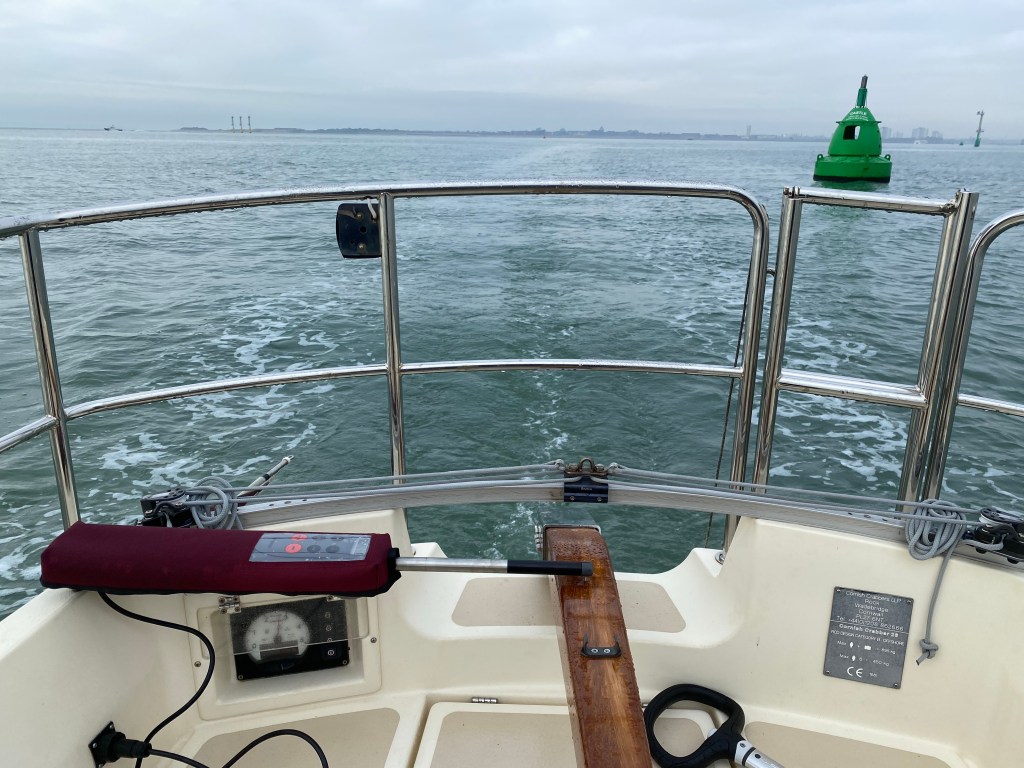
Motoring out of Portsmouth. Andy “the arm” Autohelm was sporting a new rain cover freshly made by Niki. Not really needed on this occasion but very smart!

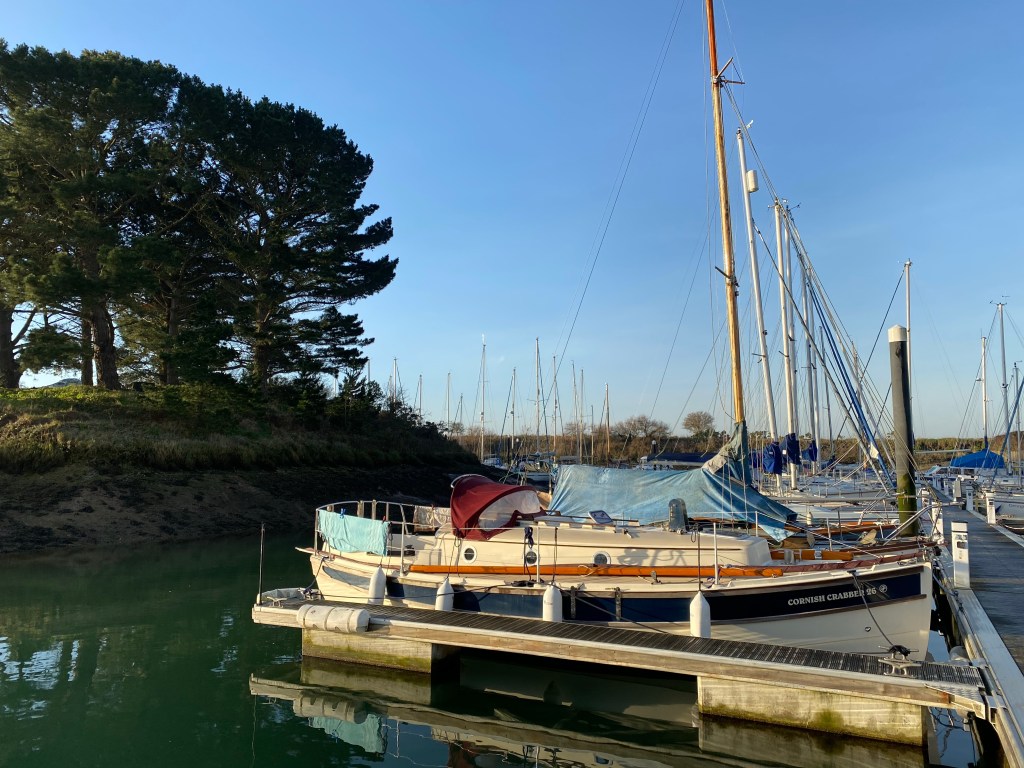
My destination was Emsworth marina, reached by a tidal channel and crossing a cill. Without the moorings to guide, the channel was harder to follow, but I soon slid into my assigned berth.

Doesn’t look like February

I then spent the rest of the afternoon dressing the mast ready for stepping the next day. This took quite some time – the “knitting” needed unravelling and laying out neatly and I wanted to make sure the job was done right, as it would be massively inconvenient to discover a mistake after the mast was raised.

The “knitting”

I completed the task in good time, before taking an early evening walk into the town of Emsworth – very picturesque but not much to see in the dark. I made a mental note to come back in the summer with Niki. Returning to Molly, I was heartily glad of the heating system as the clear day gave way to a cold night.

The following morning, I was greeted by the yard manager who was ready first thing to step the mast, so I chugged over to the crane quay and the mast was very efficiently stood in its proper position. I then had the rest of the day to rig the sails and spars, a task which I completed just after high tide in the early afternoon, with only a few mistakes and “replays”. The task always takes longer than expected!

Lowering the mast into position

Emsworth is a lovely place. It’s very peaceful and there is a lot of wildlife around. I especially love the coots with their comedy party hooter calls. However, there is an ever present rumble of traffic from the nearby main road, which the brain quickly tunes out but is always evident whenever I shot a film clip. The water is also very active and it feels like being moored in a river when the water pours in or out over the two cills.

On the falling tide, water rushing over the cill. It created quite a strong current on my berth.

I made my farewell to the boatyard, and as I motored out, Nick the shipwright noticed that I had left my GoPro bolted to a post on the pontoon and grabbing it, dashed onto the last boat and handed it to me as I passed by. Phew!

Nick ready to hand me my camera back, as I passed

I had Chichester harbour almost to myself, with one or two motor boats and a lone racing dinghy being all I encountered in what is usually a very busy stretch of water. I made for my favoured anchorage at Pilsey Island near Itchenor.

Sunset reflected on the mud

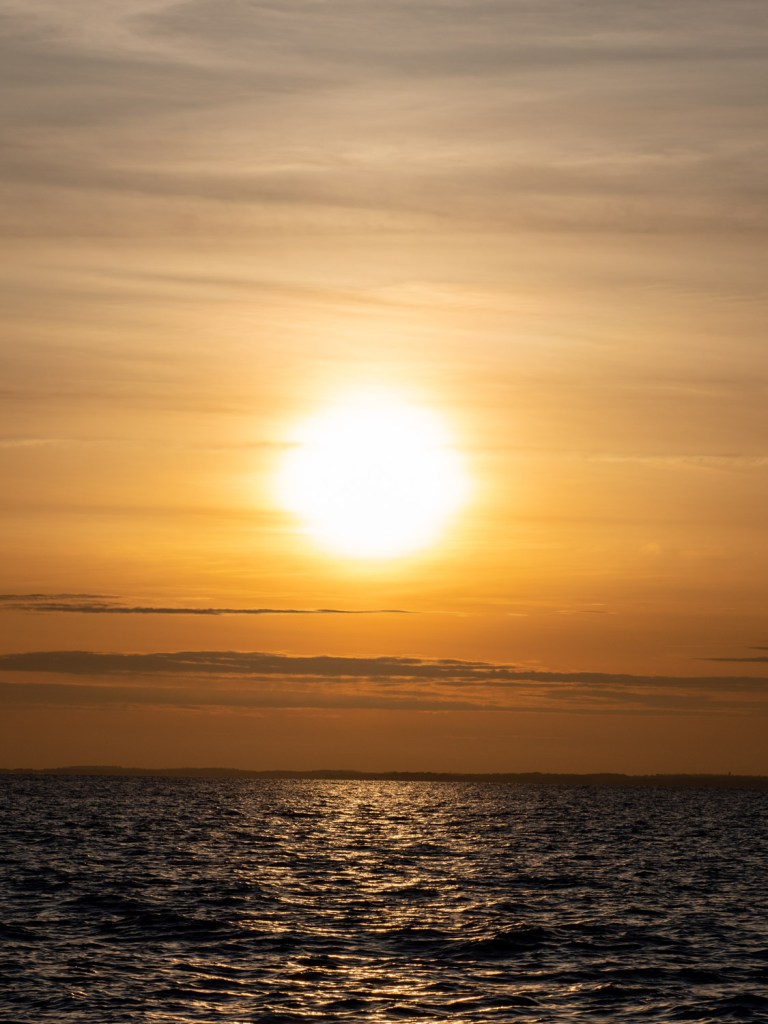
Once securely anchored, I completed the final rigging task, that of bending on the main sail. I had envisioned sitting head to wind at anchor and therefore attaching the main sail would be a breeze. However, I had not taken the tide into account and Molly Sat broadside on to the wind, which made my task much more interesting! Nevertheless, I completed just as the sun made a spectacular sunset. This is always a marvellous place to spend the evening, but was particularly magical tonight as the wind stilled and the sky was filled with pastel colours with the sounds of the wading birds drifting across the waters. I retired to bed after a welcome hot chilli I had brought with, happy that Molly was complete again and ready for the new season.

Newtown night

Anchored in Newtown Creek

Autumn weather is often volatile, but offers lovely opportunities if you pick your moment. This weekend was a case in point. With three days of sailing available, I wanted to travel a little further afield but the forecast showed that that would be a little unwise. Accordingly, our plan was to take advantage of the best weather day and make a shorter trip to the lovely anchorage at Newtown Creek, dodge the showers the following day to return to port and hunker down for the next day of wind and rain.

The busy hovercraft heading for Southsea
The coastguard helicopter lowers a wire to the inshore lifeboat.
Crew in the air! First lowered into the lifeboat and later recovered again back into the helicopter.

We had a bright and spirited sail down the Solent from Portsmouth. Having motored out of harbour and along the shore to Gilkicker, with a plan to sail along the northerly shipping lane from Spithead towards Bramble. However, with the SW breeze, the mainland shore of the Solent was pretty choppy. We had a good tide under us, so we put reefed main up and took our first tack across to the island shore. Sure enough, the sea was much smoother when we tacked off, passing close to Cowes. There were plenty of other yachts out, as you might expect on a sunny Saturday and almost no commercial traffic to avoid and the coastguard helicopter provided an interesting display. We needed only one more adverse tack to bring us outside the entrance to Newtown Creek and had averaged about 6kt.

I have anchored at Newtown Creek many times previously, but this was only Niki’s second time. Newtown Creek is where the confluence of several small rivers empty into the Solent. It offers shelter from every wind direction and is a haven for wildlife. Understandably, it’s a very popular anchorage, so best avoided at peak times but at this time in the season was not too busy. Most craft pick up a mooring near the entrance, but we decided to pass West, up past the dinghy sailing club at Hamstead and dropped our anchor just past where the moorings end. We had the birds and just one other yacht for company and passed a relaxing afternoon. The best of the day was behind us and we listened to the showers periodically rattling onto the cabin roof.

Casserole cooking

I’d brought ingredients to make a steak and kidney casserole, prepared in our thermal cooker and accompanied with a nice bottle or red wine. The creek is a very peaceful place and I always love to hear the water chuckling under the boat as the tide gently ebbs and flows, coupled here with the sound of the wind and the curlews. During the night, we had a few thunderstorms pass over and awoke to a rainy Sunday morning. Ideally, we’d have made an early start to use the flood to return to port, but I decided we’d wait till mid-morning when the rain was forecast to have passed.

Sailing back up the Solent towards Portsmouth, we had a light sailing breeze and a foul tide. We made good boat speed, but slow progress over the ground. At first, we tried very close inshore to the Island, but the reduction in wind was more than the reduction in tide, so we worked our way further out again. As we passed close inshore to Egpyt Point approaching Cowes, we could see walkers on the promenade moving faster than us, so we put the engine on so we could pass the busy harbour entrance quickly.

Approaching Cowes

The wind backed during the morning and we ended up being headed over towards the Lee-on-Solent shore and needed to tack to pass around Gilkicker Point. Up to this point we had enjoyed bright sun and relished our leisurely sail up the Solent, but I could see the forecast bad weather approaching, so we motorsailed our beat up to the harbour entrance.

Look behind you! Weather on the way…

As we motored into harbour the black clouds overtook us and I hurriedly got the main down and bowsprit raised as we entered (I usually wait until we’re well inside the harbour); it was just as well, because we were battered by a squall of heavy rain and hail, as well as thunder and lightning – just as well that we are familiar with the harbour and were not put out by the 50m visibility. Fortunately, the bad weather was short-lived and we were soon, dripping wet, back on our berth.

…the weather arrives with a vengeance!

Chichester day

Having recently travelled down to the western Solent, I thought a trip in the opposite direction was called for. The tide and wind were good for a day trip, so we slipped our warps and took a left turn out of Portsmouth harbour. With the wind behind us and a fair tide under us, we passed through the small boat channel off Southsea and set a course directly for West Pole, outside Chichester harbour. There were plenty of others with the same idea and as we approached, we could see the entrance was also thick with dinghies – evidently a big race meeting was in progress.

A large fleet of Laser dinghies crossing the start line
outside Chichester harbour
A 20′ wooden sloop leaving Chichester harbour

Last time I went to Chichester harbour, I took the easy option and anchored at East Head, among the crowds. It hadn’t been a particularly comfortable spot, owing to the amount of passing traffic and someone had suggested a different spot. The inner harbour had surprisingly few anchored boats as we passed by East Head and turned north up the Thorney channel, into the lee of Pilsey Island and dropped anchor.

Kite surfer flying past

We had a very comfortable lunch stop before slinging our. hook just before high tide, to ride the ebb back to Portsmouth. The wind had backed a little towards the west and I thought we’d have to beat, but Molly was able to fetch directly back the way we came.

It was a gloriously sunny late summer afternoon and we arrived back at Portsmouth in a most beautiful golden glow, having had another very satisfying leg. No sooner were we secured on our berth, than we pottered down to the Castle tavern in Gosport for a well-earned meal to round off the day.

This mark, seemingly amid open sea, called Dolphin, marks the southern edge of a 50m wide passage through an underwater barrier which extends from the Southsea shore to the Horse Sand Fort
The Southsea hovercraft and two car ferries plying their way in the golden hour of a late summer afternoon
Ploughing a straight(ish) furrow….

Chichester expedition

Romping home on Sunday morning

This was Alice’s first sailing trip since we took over Molly, and she was very pleasantly surprised with the accommodation; as it was just me and her, I gave her the forepeak, much to her satisfaction. The weather was ideal, with warm sun and a nice SW sailing breeze. We had a leisurely start and enjoyed the hustle and bustle of Portsmouth harbour as we followed the steady stream of boats leaving harbour on the falling tide.

Once we were clear of the Isle of Wight ferry and hovercraft tracks, we turned to port and made for the boat passage through the old submarine barrier that stretches south from the shore near Southsea pier out to Horse Sand Fort a mile and a half offshore. From there, it was a spirited run east, past Winner sand at the entrance to Langstone Harbour and on to Chichester. In no time at all, we reached West Pole, marking the southerly extreme of the channel into Chichester harbour, and gybed round to reach up the channel. On previous occasions when I’ve followed this track, I have been in Aurora (our previous boat, a cape cutter 19) and not worried about depth. This time, though on a neap tide, it was nearly low water, and I paid close attention to the depth as we crossed the bar. With the sea flat, there was plenty of water and we soon slipped past Hayling Island sailing club and turned to starboard towards the popular anchorage at East Head. As expected on a sunny Weekend afternoon, the spot was thick with boats at anchor, among which weaved a multitude of sailing dinghies.

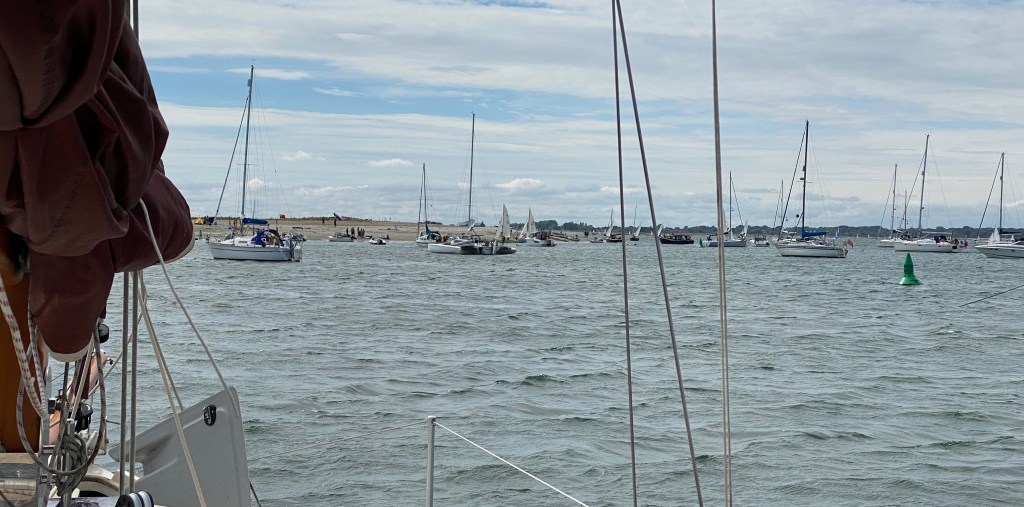
Busy East Head

With plate up, Alice motored us into the wind towards the sandy beach, but unfortunately, I underestimated our speed and Molly touched the bottom. I quickly dropped the anchor and ran astern to see if we could motor off, but Alice had already tried this and Molly was firmly aground, so I returned to the bow and heaved on the warp to keep the bow pointing into the F4 breeze. We were secure and I knew the tide was already rising, so there was nothing for it but to have some lunch! With a little more water, I checked the anchor had set and then increased the scope to ensure good holding. I suggested moving up the Thorney Channel to get a little more shelter behind Pilsey Island, but Alice preferred the existing location.

We passed a relaxing afternoon and later made a paella(ish) from ingredients we had bought in Gosport. I say “ish” because the low-cost, German-owned supermarket with a four letter name famously is always short of an ingredient or two, in this case risotto rice and saffron. Nevertheless, we had tasty rice and fish with sugar snap peas, all from the thermal cooker.

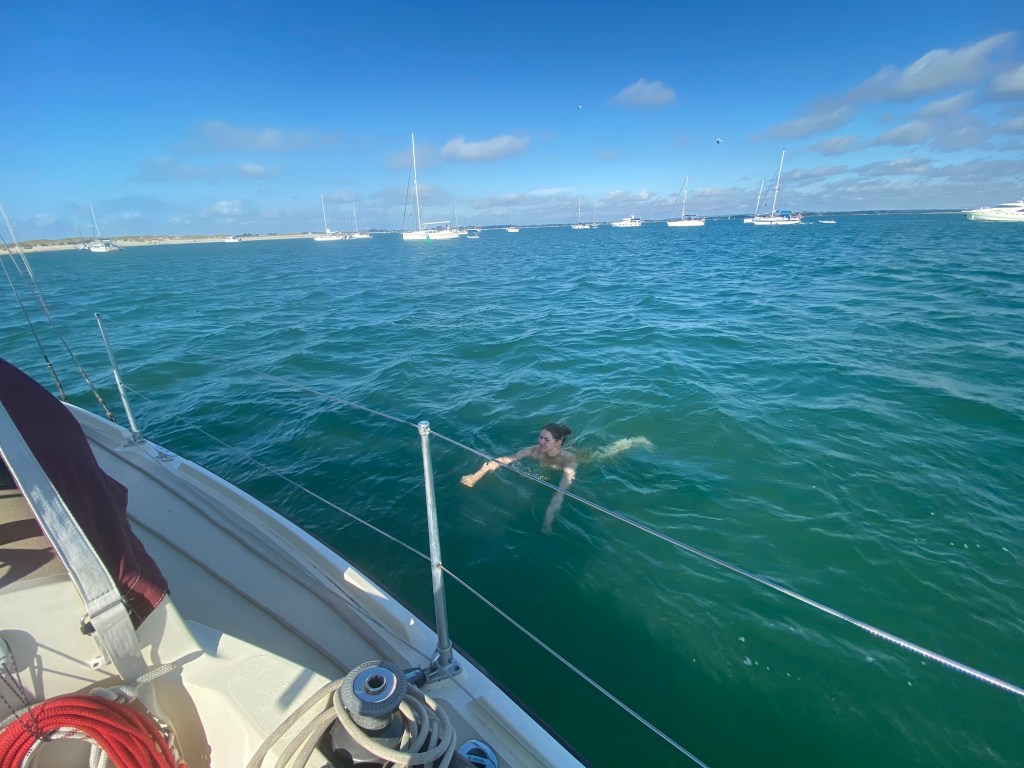
Morning swim

I expected the wind to ease off at nightfall, but it maintained steady 15-20kts all night. This made for a less peaceful night than I had hoped, but further increased my confidence in Spock, our (relatively new) Vulcan anchor. By my reckoning, Spock needs to provide 13 nights at anchor to pay for himself; this was night three.

We awoke to another fine morning with a steady SSW breeze. It was due to veer towards SW, so I was keen to set off and avoid beating if possible. We left in good time, but not before Alice had a refreshing swim.

It was a tad bumpy at the entrance to Chichester, but the sea was quite smooth once we reached deeper water south of west pole. The wind direction was perfect for fetch back across to Portsmouth. Most of the boats in the procession leaving Chichester turned off before this and followed a track closer to the shore, heading for the small boat passage we used yesterday. I had decided that instead we would enjoy the sail and take a longer track to pass outside the Horse Sand Fort.

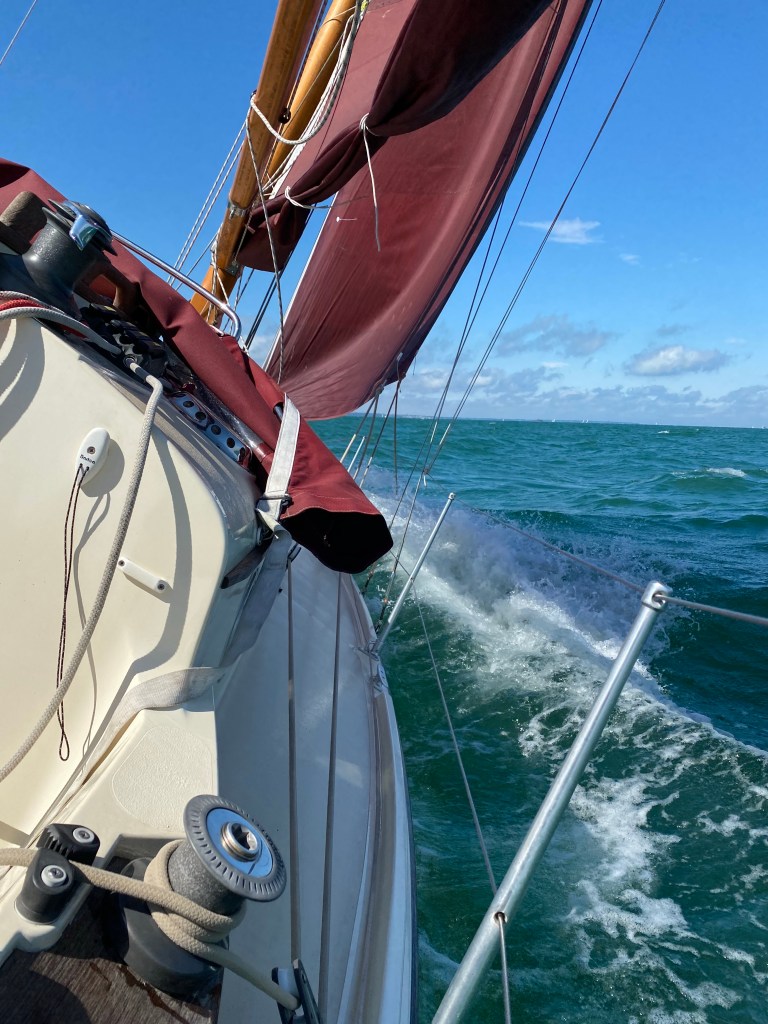
We had a marvellous sail with both jibs and single-reefed main, with Molly cutting confidently through the small waves. We were making 6kt for much of the time and I was expecting an increase in speed when we bore away onto a reach after the fort, but the wind was noticeably lighter in the shelter of the Island.

Alice helmed for most of the sailing and took Molly into the harbour, as I put out the warps and fenders. We made a very efficient return to harbour, dropping main as we turned off the channel towards the club. However, with the water very low, I could not turn Molly to reverse up the fairway to our berth and ended up going in forwards. This means our next adventure begins by going astern…
The smiles say it all!

Into The Solent

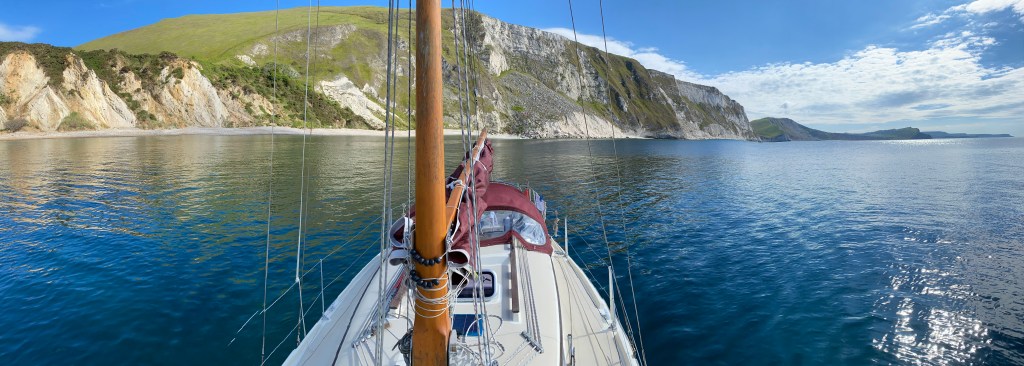
Worbarrow Bay

Wednesday dawned bright and fair. Ben and I had a leisurely breakfast whilst admiring our beautiful anchorage. The anchor alarm showed that we had held firm through the night, which increased my confidence in the holding ability Mr. Spock, our Vulcan anchor, as we had had strong gusts during the night. I wanted to fly my drone, but sadly the anchorage fell within the scope of Lulworth firing range, which prevented takeoff.

Mupe Rocks
Good holding!

Today was expected to be a “no wind” day, but there was a lovely southerly sailing breeze as we lifted anchor and continued our voyage east. With a fair tide under us we passed off St Albans head, turning to follow the coast past Peveril Point, Swanage and finally Old Harry Rocks. The water was very busy with all kinds of pleasure craft, from canoes and small dinghies to large yachts and motor boats, everyone enjoying the sun and sea breeze.

Dorset’s impressive Jurassic coast
Handfast Point and Old Harry Rock
Staysail poles out with a boat hook

At this point, the tide had turned against us, so we angled into Bournemouth Bay to minimise to its adverse effect. There were obvious overfalls at Hengistbury Head, where the ebbing tide was pouring off the shallow water of Christchurch Bay, over a ledge into the deeper water of Bournemouth Bay.

We had time to kill before the tide changed once more and we could enter the Solent. Our hope was to poke our nose into Christchurch h harbour, but it looked like we would be trapped by the falling tide if we had done so. As an alternative, we sailed into the lee of Hengistbury Head and anchored for an hour or so.

The was not a very comfortable experience initially because I had not allowed for the tide. The anchor bit immediately but Molly did not rest head to wind into the waves, but lay almost broadside due to the flow of the tide. I could not believe that just over 0.5kt of tide could beat 15kt of breeze, but the evidence was clear: as the foul tide eased, Molly turned head to wind.

By the time we lifted the anchor, the breeze was a steady F4 SW and we made excellent progress across the bay, keeping fairly close in and shaping our course for North Head buoy. This marked the beginning of our track into the Solent close round Hurst Point. I wanted to show Ben the full effect of Solent tides, he being unused to strong tides in his home waters of Falmouth, but the wind dropped once we were in the shelter of land on both sides and also shifted to dead downwind.

Looking back to Hurst Point

We shook out the reef we had been carrying and moving quickly, despite sailing slowly, soon made Newtown Creek. I had particularly wanted to show Ben this marvellous anchorage; we had a clue how crowded the anchorage would be by the number of boats anchored outside sheltering under the low headland. Crowded through it was, we did not have much trouble finding a place to anchor. Little scope is needed in this shallow water; in fact we had to raise the centreplate within the anchorage.

Sunset at Newtown Creek

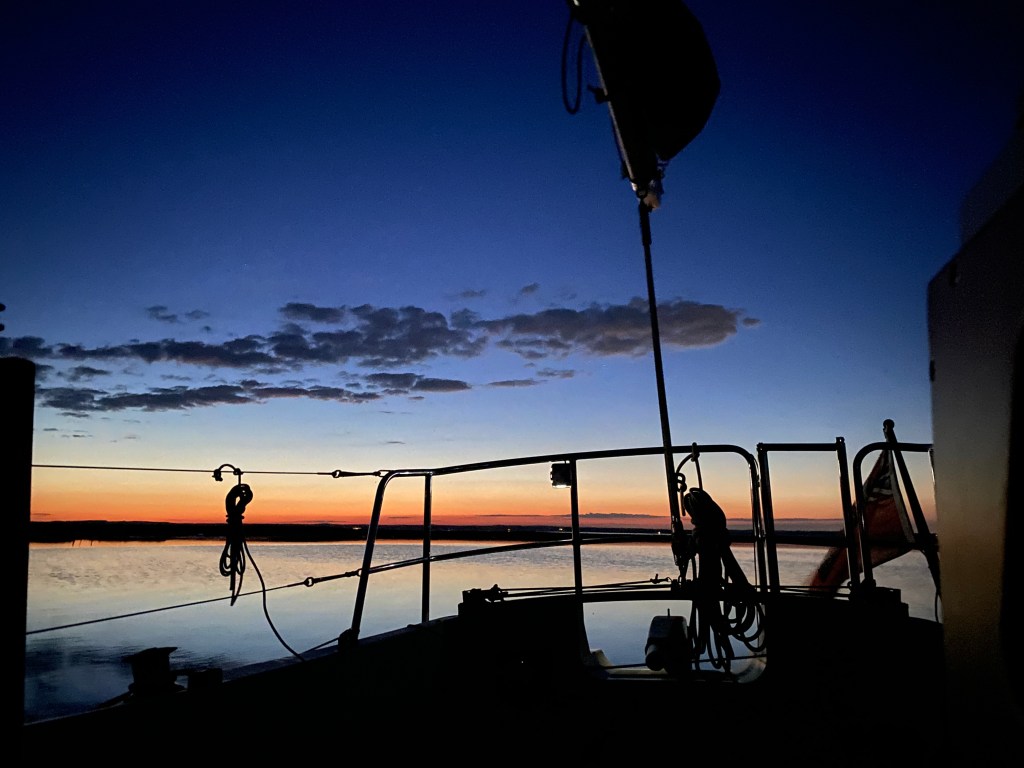
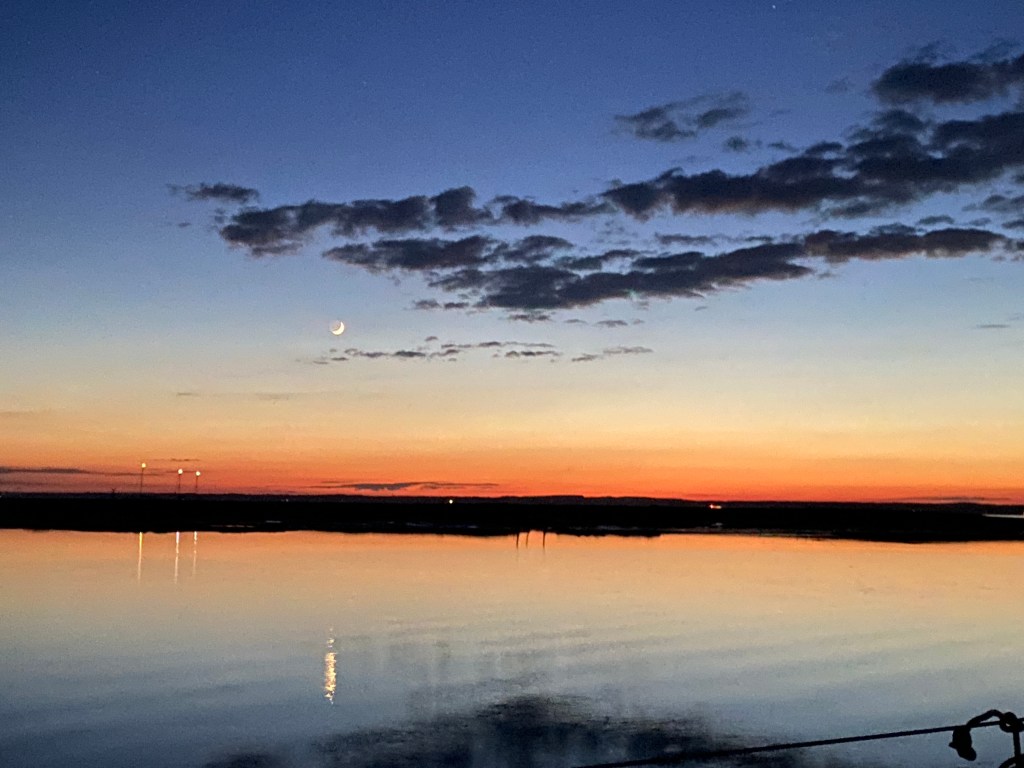
As the sun set, the wind faded and we were treated to a most beautiful sunset and rise of the young crescent moon, to the soundtrack of the calls of oystercatchers, geese and terns.

I was very glad of the oven and had put our tinned pies in as we approached the entrance to the creek, so by the time the tinned vegetables were warmed we had a welcome hot dinner.

We had had an amazing passage, covering almost 40 miles and only using the engine for an hour in total – not bad for a “no wind” day!

Moonrise

Conquering Portland Bill

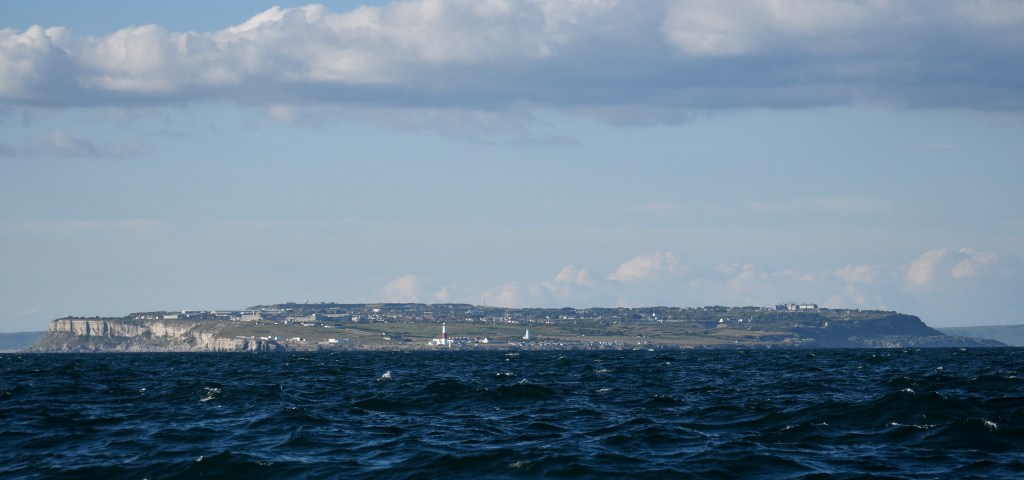
The Bill of Portland

The Bill of Portland is an enormous wedge of eponymous rock sticking out into the channel. The strong tides, overfalls and eddies are very considerable and constitute a significant inconvenience, not to mention hazard to small craft making their way along the coast.

Today was exactly on spring tides, so the currents would be at their strongest and it was important to time our arrival carefully. Travelling east, this is not easy because there is nowhere convenient to wait if one arrives early (as there is when travelling West), but it is also important not to arrive late either.

There is an inshore passage which saves considerable distance, but I considered it too risky for my first passage and on springs. So that dictated that we should pass at least 3nm off, arriving at 6pm, at the turn of the tide when the overfalls were least and then take advantage of a fair tide into Weymouth bay.

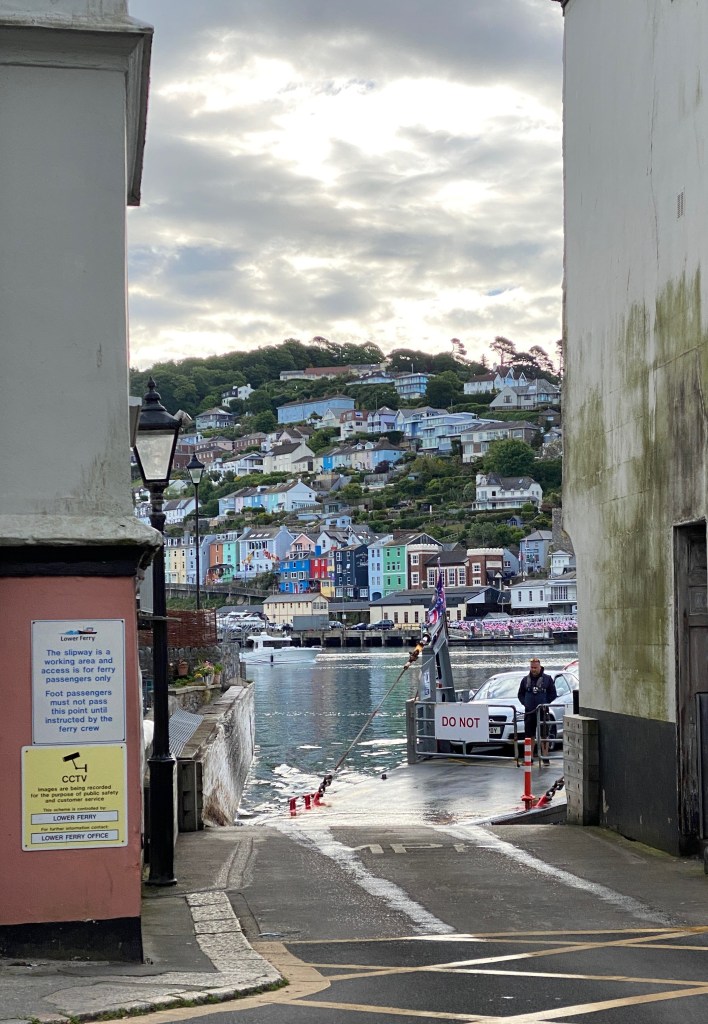
The ferry which runs between Dartmouth and Kingswear
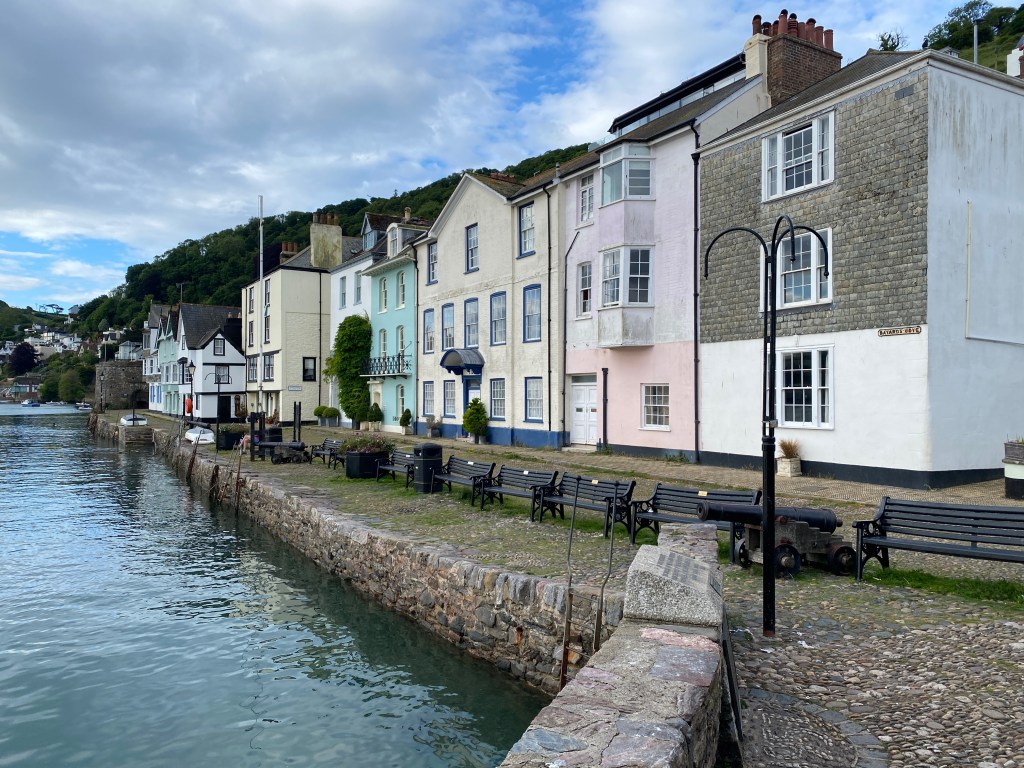
Bayards Cove, where the Mayflower and Speedwell first set off for America, before being forced to return to Plymouth for repairs to the leaking Speedwell

We took an early morning stroll around Dartmouth town, a lovely place with a lot of character and history, before taking on some provisions and departing. The provisions took the form of more pasties, in fact double rations as both Ben and I both bought some. These were definitely Devonish Pasties (as opposed to Cornish pasties) with their wacky flaky pastry!

Devonish Pasty
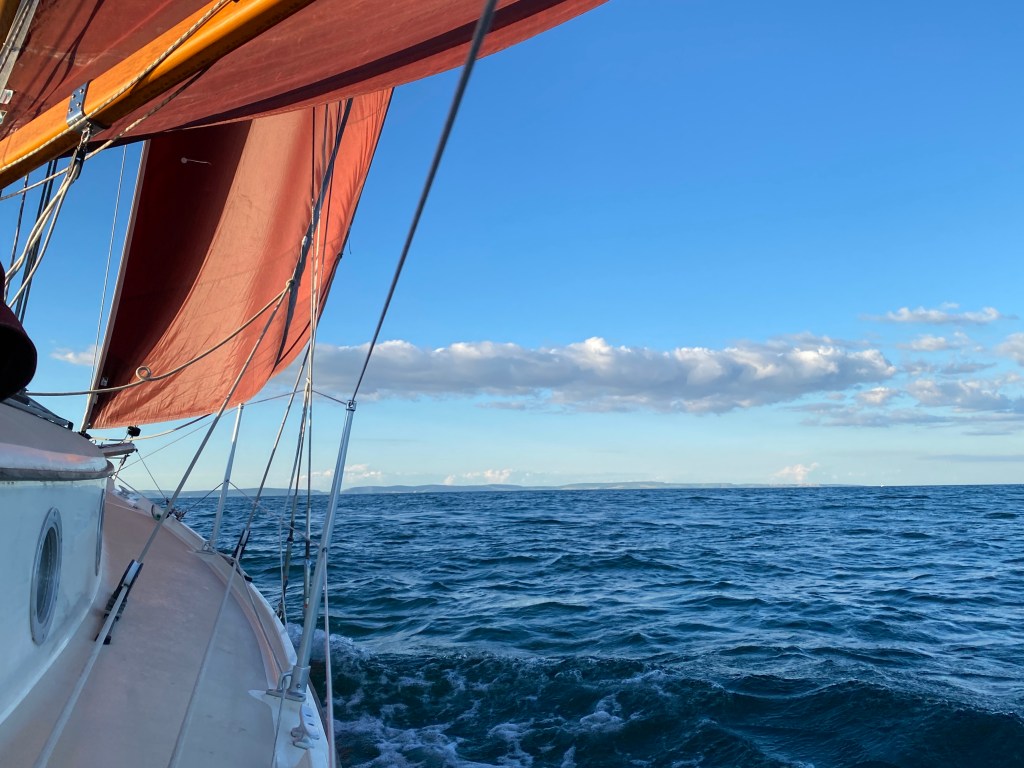
Offshore passage. Note Andy “the arm” Autohelm is wearing his plastic raincoat.

Our track was due East, passing the line of rocks outside Dartmouth and then opening Torbay as we left Berry Head behind. We had main up but there was little wind. As we moved further offshore, towards the invisible Portland Bill, the wind gradually filled in, to give a good training run. However the wind shifted gradually, until we were dead downwind and the jibs were not pulling.

Our track for this passage. The red dot lower right was the centre of the 6nm circle of live firing. At this scale, the chart shows The Shambles as an oval to the east of Portland

We could hear on the VHF two ships warning of live firing. “Warship Westminster” was no concern, being far to the east, but RFA Cardigan Bay was reporting a 6nm radius of live fire in our track.

This forced us to gybe in order to stay on a track which maintained our minimum 3nm offing from Portland, whilst staying out of the radius reported.

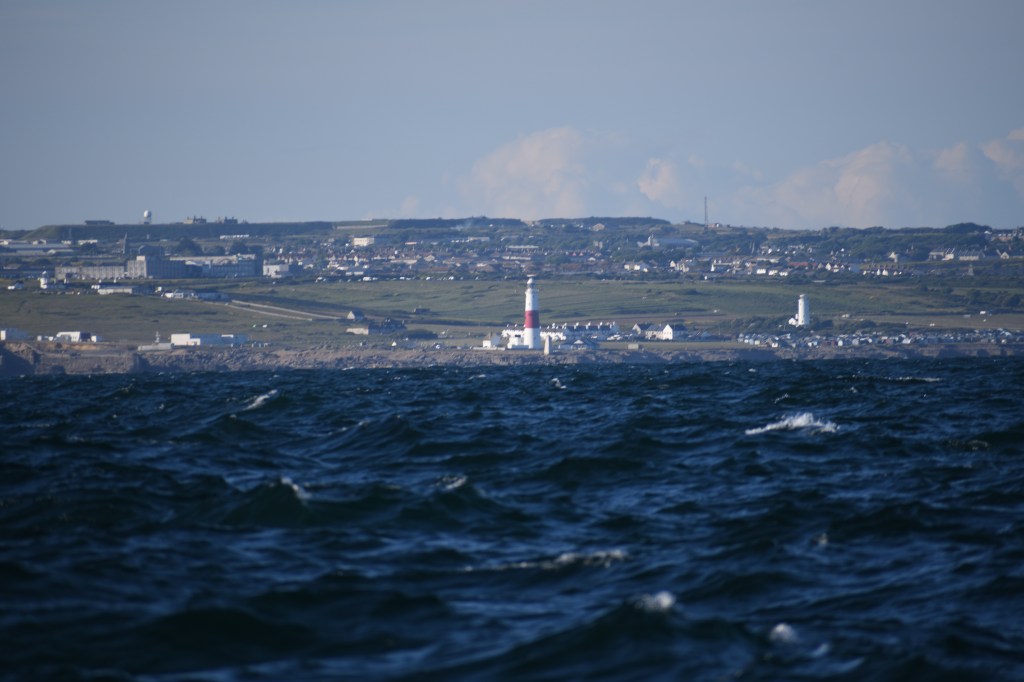
Portland light due North

In the end, the wind strength was too high for main only and we took it down (not easy in the big rollers that were forming) because the helm was too heavy without the balance of a jib sail, which weren’t setting as we were dead downwind. We continued on engine and jib and watched the enormously long wedge of cheese that is Portland Bill take on form and colour as we approached. The tide was against us; progress was slow and we reached the watershed of directly south of Portland Light at 1900. From then on, the tide built in our favour and we were soon skimming along outside Shambles Bank at over 8kt in a joyous reach.

We had decided to try the new anchor in Worbarrow Bay, at Mupe Rocks, where we would be sheltered from the SW breeze. The forecast was for the wind to drop to nothing overnight, so we were not too worried about the swell. The sun was setting as we closed the land, but we made a very efficient main sail drop in time to drop anchor, tucked into the lee of the rocks and shielded by the magnificent chalk cliffs, before twilight faded.

Whoosh!
Fast reach at sunset

Ben and I ate our second pasty of the day with a well-earned glass of beer before retiring to bed. I set an anchor alarm, but I was confident in “Mr Spock” (our Vulcan) – Molly came to a full stop when we had motored full astern during our anchor setting. In any case, the forecast was for the wind to disappear almost completely for the next 24 hours. Well, it did not turn out that way! The wind rose and backed to NW, which gave us the full shelter of the cliffs we were under, and Molly held her ground perfectly as she swung to the shifts and strong gusts. A resounding win for the new anchor! I woke in the night to poke my head out and was greeted by the most fabulously clear star-filled sky. I was too tired to admire it for more than a few moments before returning gratefully to my warm berth.

Starry night at Mupe Bay