Tag: anchor

West Country Meanderings

This season we have managed several rallies and a long trip in the Summer. It kicked off at the end of July when Niki and I set off, accompanied with Brian of Puffin Bach, to deliver Molly to Falmouth.

I had decided that I wanted to push my envelope a bit and cross the channel again, but this time to Alderney and then make a 24-hour passage to Falmouth.

We had an easy crossing from Gosport with an 0300 start delivering us to Braye harbour at 1930. I had planned 3 nights in Braye so we would have two clear days on the island and some good sleep before the long leg to Falmouth.
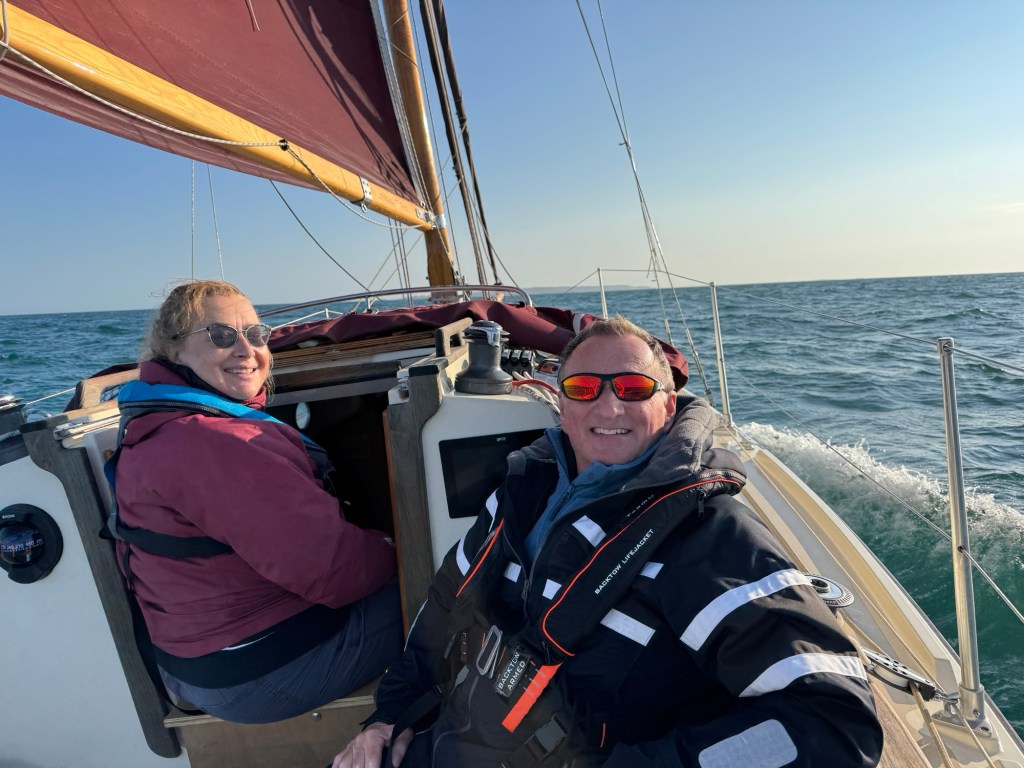
Hooray! We’re nearly there…

We managed the former but not the latter! This summer has been dominated by Easterly winds and this is not a sheltered direction for Braye. The consequence was some of the most rolly nights afloat I’ve spent. Still, the time ashore was most interesting. Braye itself offers little apart from the harbour but there is much to see on this small island.

Braye harbour

On the first day, we enjoyed a walk up to the pretty main town of St Anne’s, culminating in beer and local seafood in the sun. On the second day, we hired bikes and looped around the island. The castle at Longis and the lighthouse were particularly interesting, as was watching the massive tides pour through The Race.

After our third rather restless night, we departed for Falmouth. The first section was wonderful with Molly sailing beautifully past a (suitably distanced) view of the Casquets rocks and lighthouse. To the north of us were the busy shipping lanes and I had been advised to use the Separation Scheme to cross. As we approached, I felt like a mouse trying to run across a motorway, such was the speed and density of traffic. In a CSS, vessels must cross at right angles and this was impossible for us at our modest 5kt.

Watching the other yachts, several were making for the area just outside the CSS, and I realised this meant that the traffic was following a predictable track but we were not obliged to maintain a course at right angles to the shipping. This allowed us to turn and run parallel with the ships until we could turn and dash behind their stern, ahead of the next monster.

Having cleared the shipping lanes, there was far less traffic and the wind was on our nose. At dusk I put the main down and we motored on in the dark. This part was mostly rather dull, as there was nothing to see in the dark. The only excitement was an encounter with a fishing vessel which was behaving as if he could not see us and seemed to be permanently heading us off with his course changes.
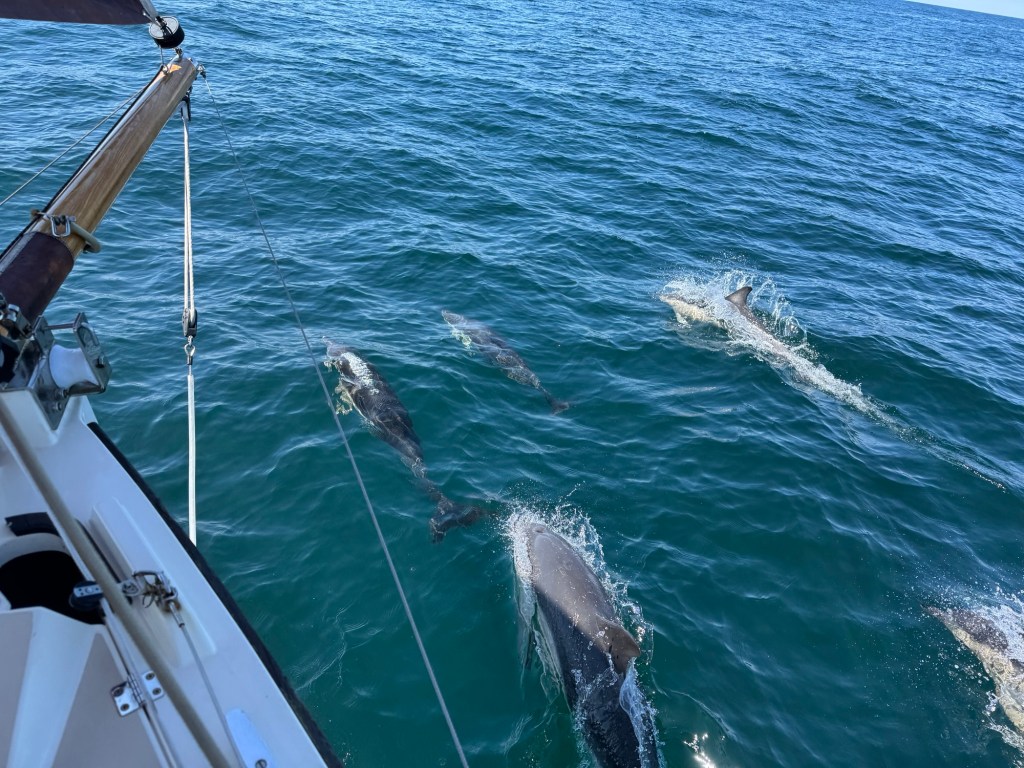
Dolphins at the bow

After 25 hours we steamed gratefully into Falmouth and berthed at Falmouth Yacht Haven. Russell, our friend and skipper of Cornish Yawl Lucy, asked if we were in trouble, as our AIS had us at 16kt some miles off Salcombe. It was then we realised that our AIS was not transmitting properly and explained the erratic behaviour of the fishing boat! I was able to quickly rectify this when I discovered the antenna connection to the unit had worked loose.

We then left Molly on a swinging mooring in the harbour, so we could travel back to the Midlands to attend the excellent Cropredy music festival, where we bumped into some fellow Solent Gaffers. This detour was facilitated by our friend Ben who lives in Falmouth and was attending the festival with us.

On our return to Falmouth, we had some memorable days in the area, anchoring and swimming anchored at lighthouse beach and a wonderful overnight anchor at Turnaware Point.

We then began a slow meander East. The first port of call was a lunch stop at Mevagissey followed by a night at Fowey. From there we moved up to Plymouth with another swim/ice cream at Cawsand before a couple of nights in Sutton Marina.

This gave us a day in Plymouth sightseeing, including a Rolls Royce in the lido (a tribute to Keith Moon, apparently) and the fireworks championships viewed from our pontoon. We were welcomed into the marina by a fellow gaffer, Chris, owner of a a lovely Oysterman 22 .

There were very strong easterlies forecast for the next couple of days and rather than hole up in the eye wateringly expensive marina, we decided to explore the local rivers.
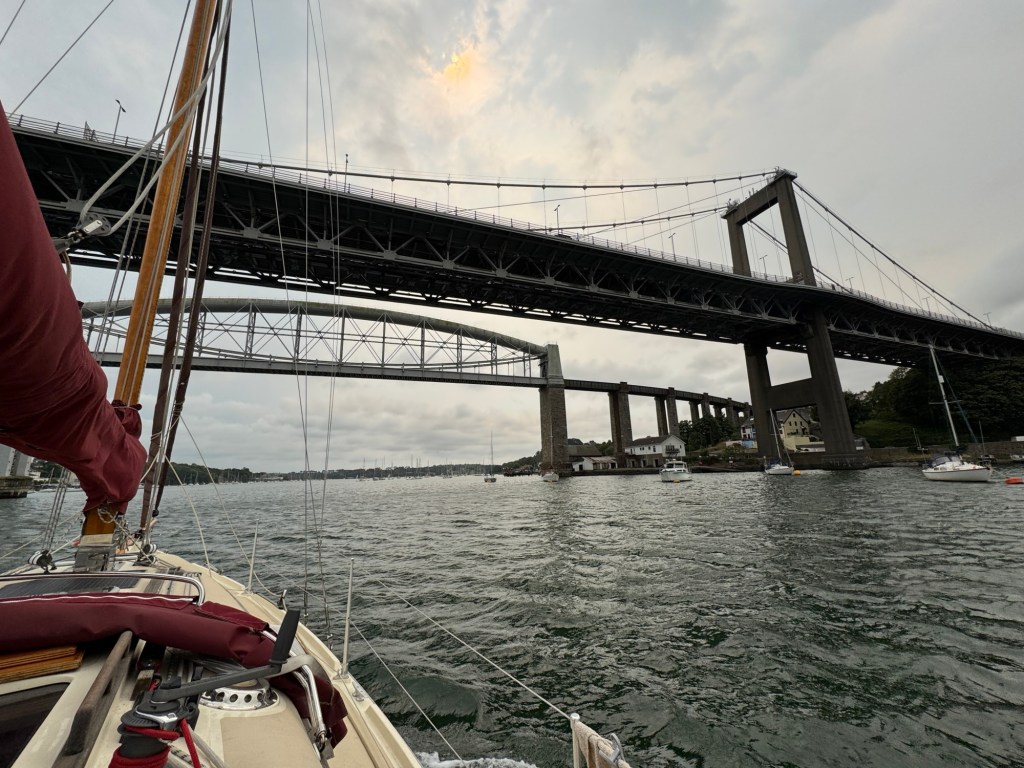
The two Tamar bridges at Saltash

Passing up the lovely Tamar under the impressive bridges at Saltash and past the Lynher and Tavy, we made our way almost 10 miles inland to Calstock, once a centre of industrial activity. The river was an important route for exporting metals and stone in the 19th Century, which dwindled away at the beginning of the 20th with the coming of the railway, illustrated by the impressive viaduct over the river.

Moored on the Tamar at Calstock

We found a vibrant village with traditional music and busy pubs. We also took a trip in the tender a couple of miles upstream to Morwellham Quay.

After two nights, we dropped down the Tamar, through Plymouth sound and into the Yealm. Conditions were very blustery and just as we passed the breakwater, there was a thunder and lightning accompanied by a squall which flipped our dinghy. Nonetheless we arrived in Noss Mayo unharmed and spent two more nights in its shelter, enjoying some lovely walks through Newton Ferrers and a loop along the coast walk.

Upriver in the tender

Our next stop was Salcombe, and we were rejoined by Ben. Salcombe was buzzing and we enjoyed a few beers at the Victoria Inn before returning to Molly for dinner aboard.

Noss Mayo

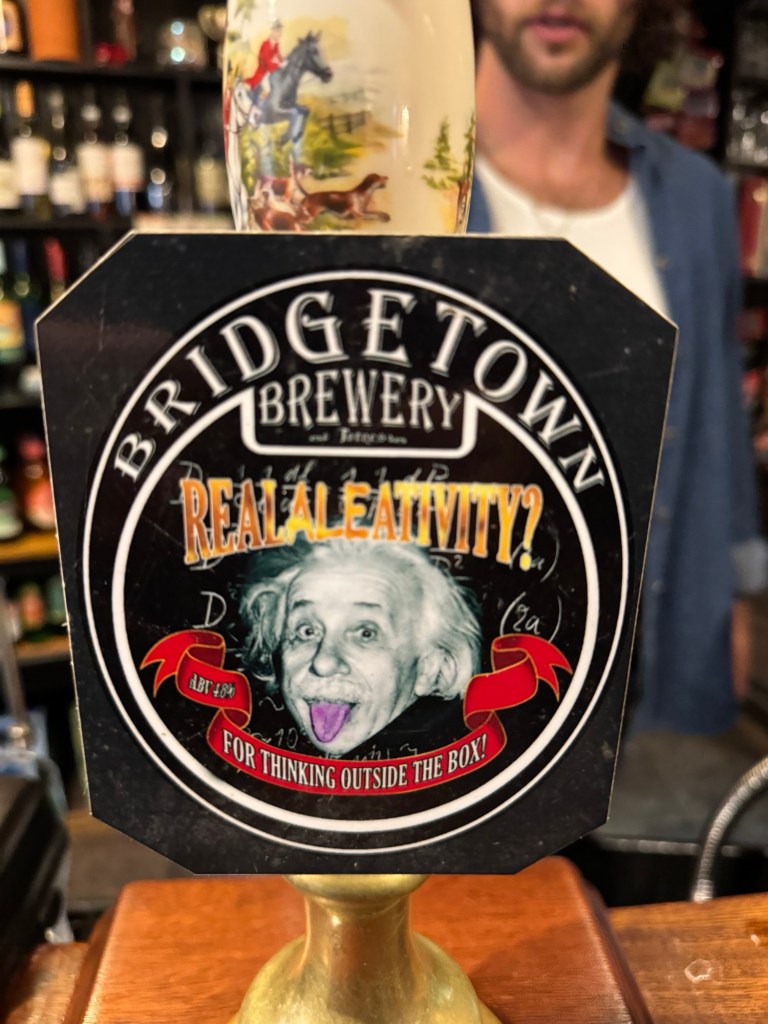
The following day, the three of us set off for Dartmouth but passed straight through the town, heading for Totnes. We wound our way up the lovely Dart arriving at Baltic Wharf just at high tide. We enjoyed excellent beer and a meal at the Old Albert Inn (my favourite was RealAletivity – the pub is named after Einstein rather than Victoria’s consort).
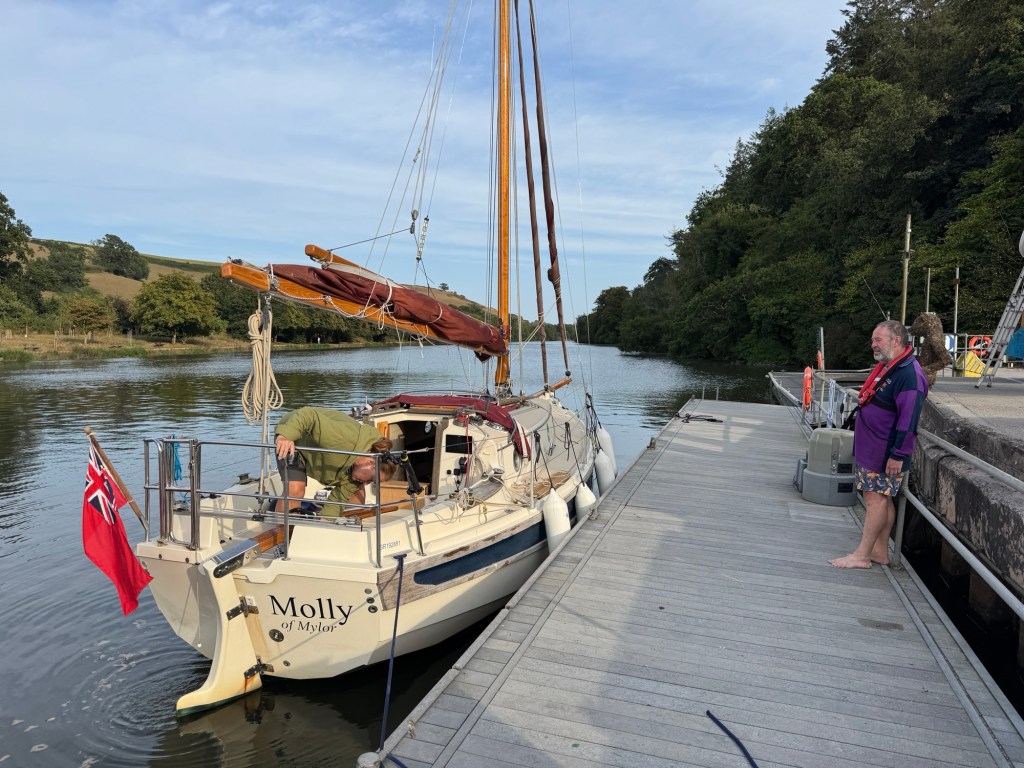
Totnes

We were awoken early next morning to be told we had moored in the wrong place, but were planning to leave on the high tide in any case. We dropped downriver to a pleasant anchorage to enjoy the sun before finding a berth in Dartmouth for the night. The town was very busy, as the annual regatta week was warming up and we had an excellent seafood meal at Rockfish. The following morning, Ben had to return home and, after early provisioning but an agonising wait for our turn on the water pontoon, we departed.

We had missed the tide, but it mattered little because the tide was not strong and there was virtually no wind so we made easy progress across Torbay, anchoring for a swim in the shelter of Anstey’s Cove whilst we waited for the tide to rise.

In the late afternoon, we made a very interesting entrance to Teignmouth. There is a very strong flow into the river mouth between the channel markers and then a hard-to-starboard ferry glide across the current to the part of the channel that loops through the town. Teignmouth is a busy town with a working commercial port and the kiss-me-quick seafront. We turned up just as a music festival was starting and it turned out the visitor berths were very close to the stage on the beach – we were just the right distance to enjoy the music. Whilst we were there, we took a tender trip across to pretty Shaldon on the opposite side of the estuary and which was having its regatta, so we were treated front row seats as the dinghies and rowing gigs raced past.
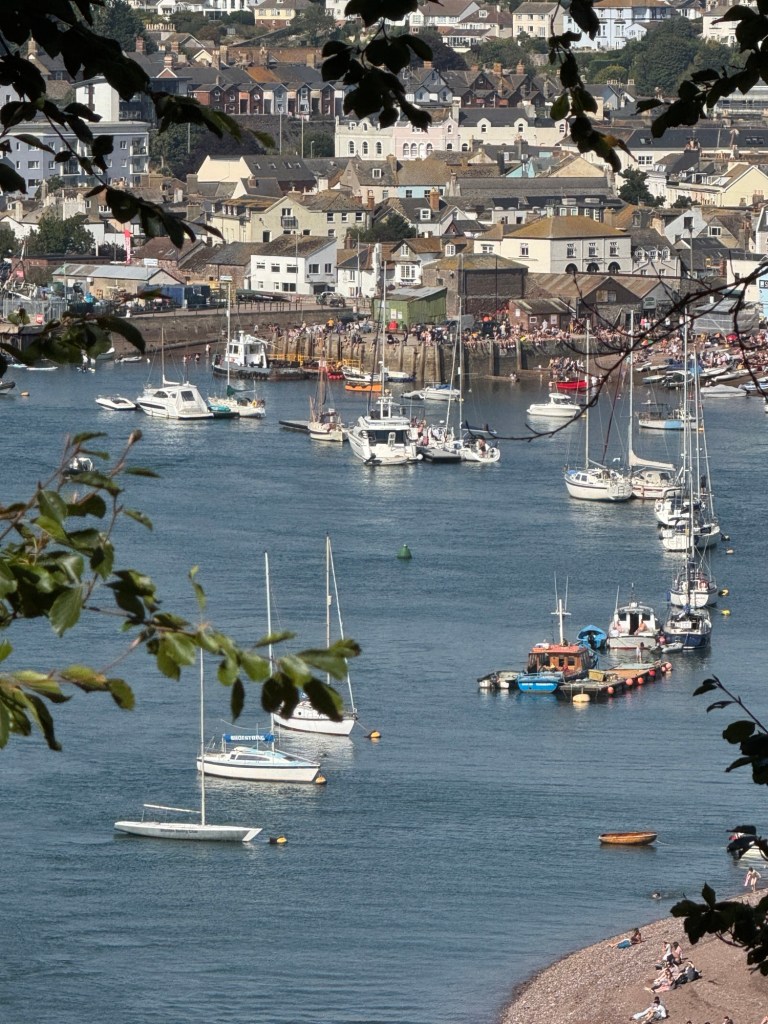
Teignmouth

Feeling we had had full value from the bank holiday weekend, we spent a hot day anchored in Anstey’s cove again. With the weather finally due to swing round to the south west, we would be ready to leave the West Country early the next morning by rounding Portland Bill back into what we think of as “home waters”.

Swimming at Anstey’s Cove

Markermeer

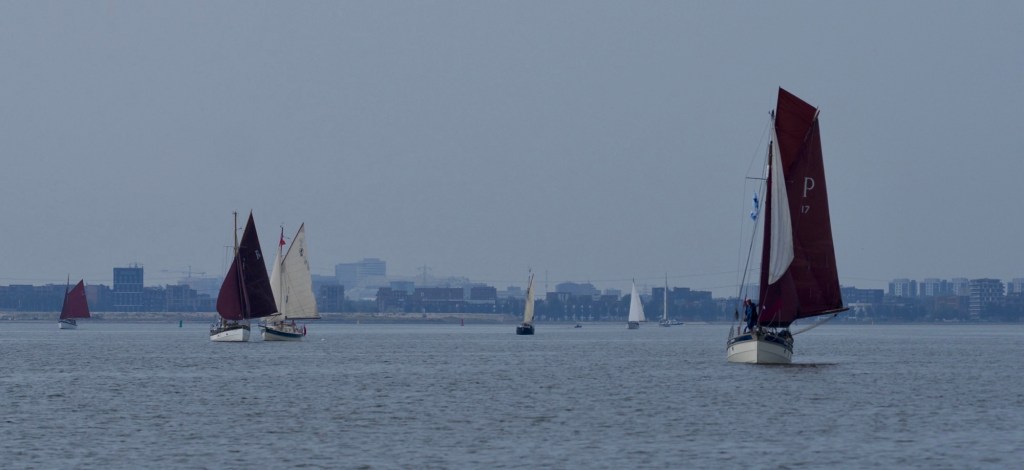
Downwind in light airs on the Markermeer

After two weeks cruising the canals and lakes of Holland along the standing mast route, Molly is now back to more open water.
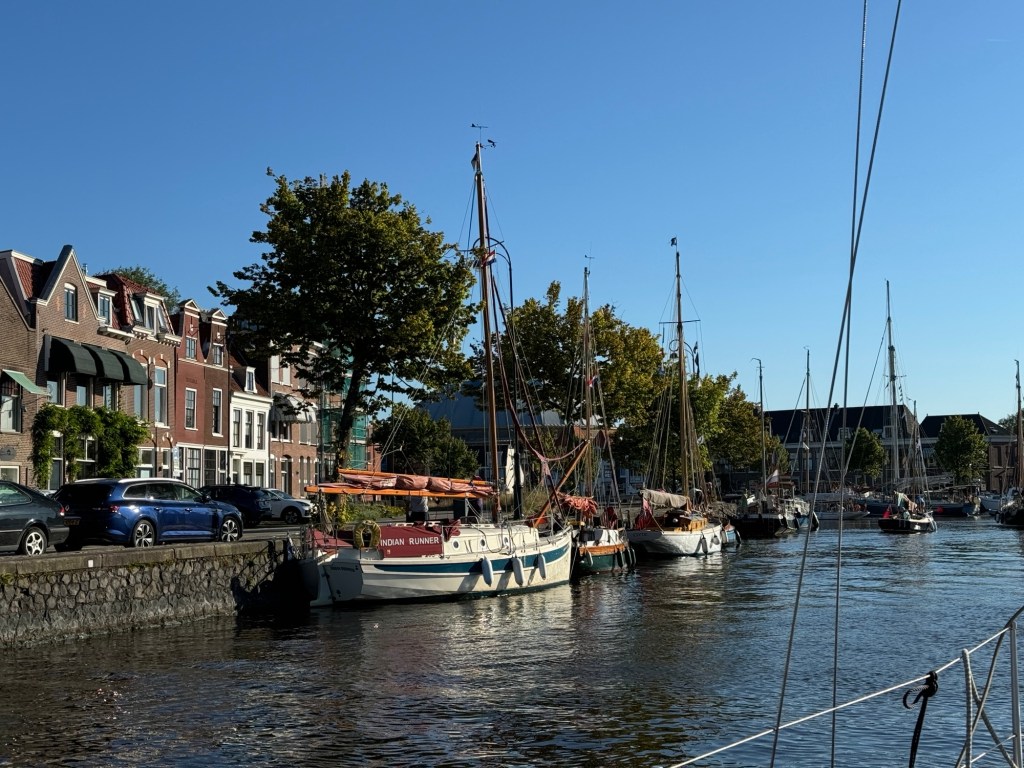
Leaving Haarlem
Niki at the helm
Puffin

From Haarlem, we passed under the Spaarnespoor railway bridge and through the Rijnlsndsluis onto the North Sea canal, passing through the centre of Amsterdam and out of the Oranjesluis onto the Markermeer.

The Markermeer is part of a former inland sea, the Zuiderzee, which has been gradually reclaimed under the Zuiderzee Works. The Markermeer is a body of fresh water, separated by a dyke from the IJsselmeer to the north.

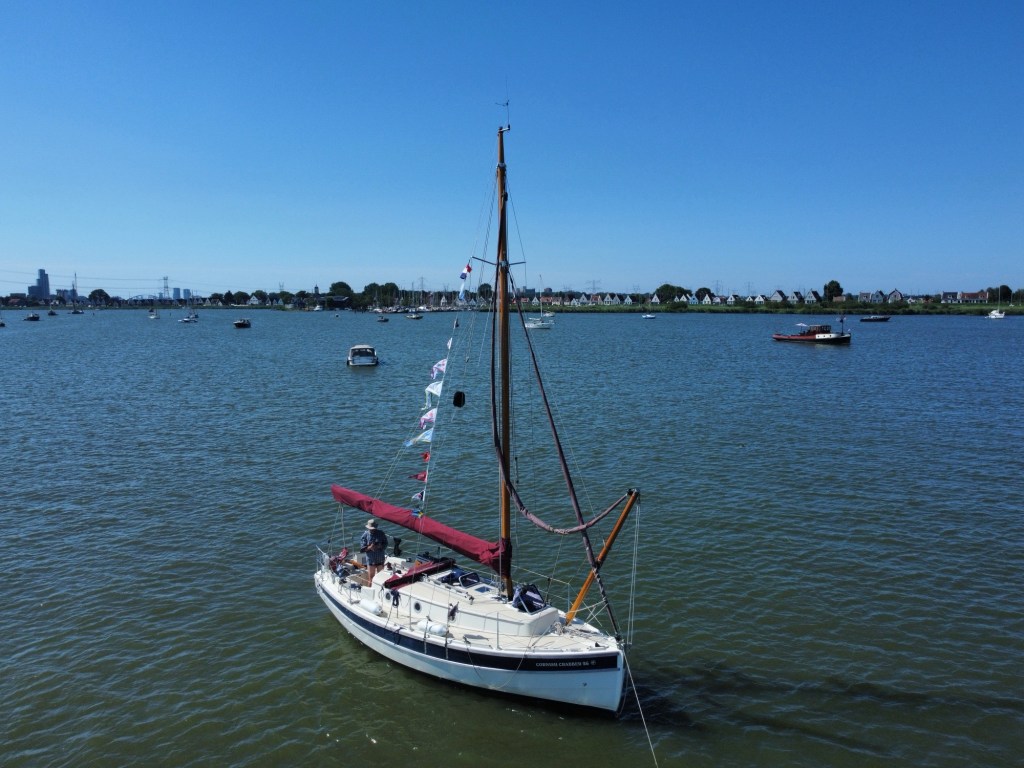
It was incredibly hot as we approached Durgerdam, so chose to anchor in the bay outside the harbour for a swim. Lots of other boats had the same idea and vessels of all sorts were scattered across the bay.

At anchor outside Durgerdam

Refreshed, we entered the Het Y sailing club for the NL OGA 20 party. With formalities and many beers exchanged between the Dutch and English fleets, the rules of engagement for the following day’s Battle of the Zuiderzee were exchanged.

Each boat had been decorating a clog, which was to be towed astern on the passage to Hoorn. The object was to capture the opposing team’s clogs, whilst avoiding losing one’s own.

There was very little wind as we made our way out and it was a case of “death in slow motion” as one boat drew up to another, those with the biggest sails at the advantage. Molly scored an early victory, capturing a Dutch clog early on. She was raided twice, on the first occasion the raiders (Bluebird), having snagged our clog with their boat hook, dropped it and I dived in to retrieve it. On the second raid, our clog was captured by Persis.

Jan Blank was not above sculling up to relieve a victim of her clog
Pilot cutter Persis bearing down to capture our clog
Onward of Ito

The air was hot and still, so after we lost our clog, we started the engine to create a breeze of our own, but before long the true breeze filled in and we had a lovely sail for the last few miles into Hoorn.

During this leg, we encountered the dreaded weed. The Markermeer is an almost uniform 4m deep in this area and there are large patches of water plant in places. This has long fronds which can entangle boats. We could hear the fronds brushing Molly’s underside at times and several times under engine we could hear the revs drop. Clearly we had passed over weed beds and some had caught around the stern. I found that a big burst of astern cleared it, but our centre plate makes us vulnerable. We seem to have escaped unscathed but next time we anchor, I’ll don my mask and take a look for myself.

Clytie
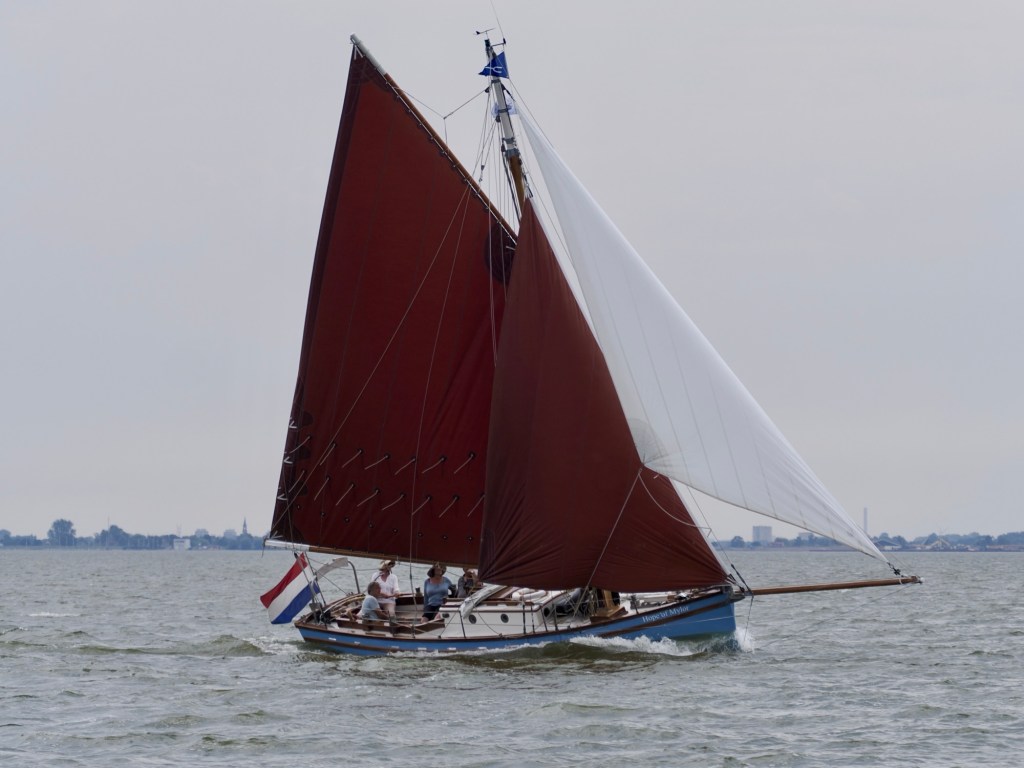
Hope of Mylor
Lahloo
Satellite
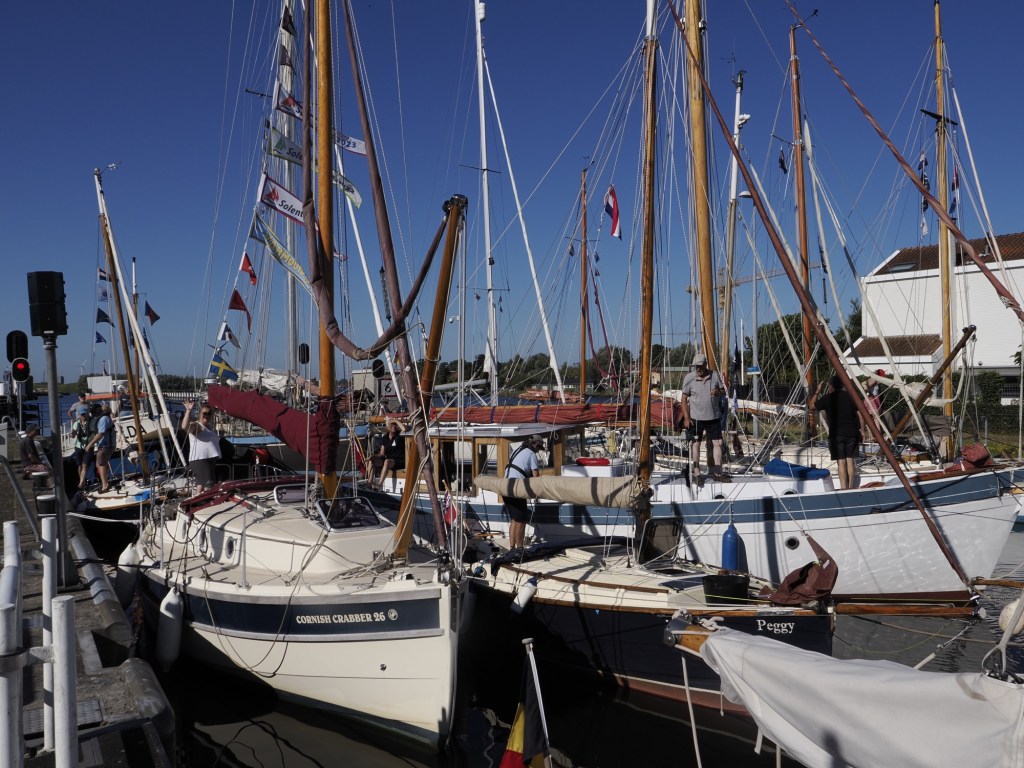
The fleet in Hoorn

Newtown night

Anchored in Newtown Creek

Autumn weather is often volatile, but offers lovely opportunities if you pick your moment. This weekend was a case in point. With three days of sailing available, I wanted to travel a little further afield but the forecast showed that that would be a little unwise. Accordingly, our plan was to take advantage of the best weather day and make a shorter trip to the lovely anchorage at Newtown Creek, dodge the showers the following day to return to port and hunker down for the next day of wind and rain.

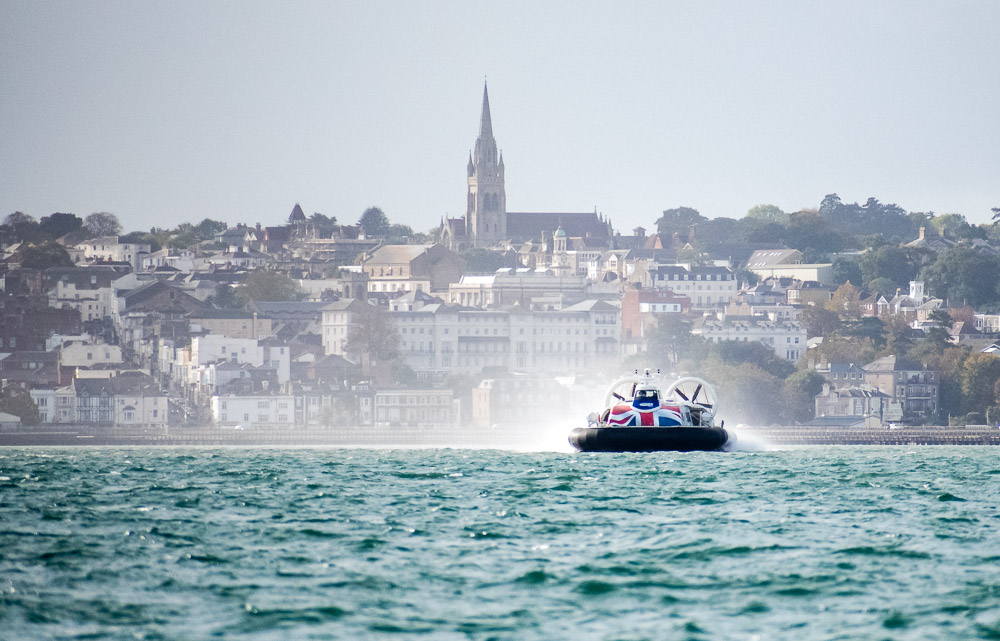
The busy hovercraft heading for Southsea
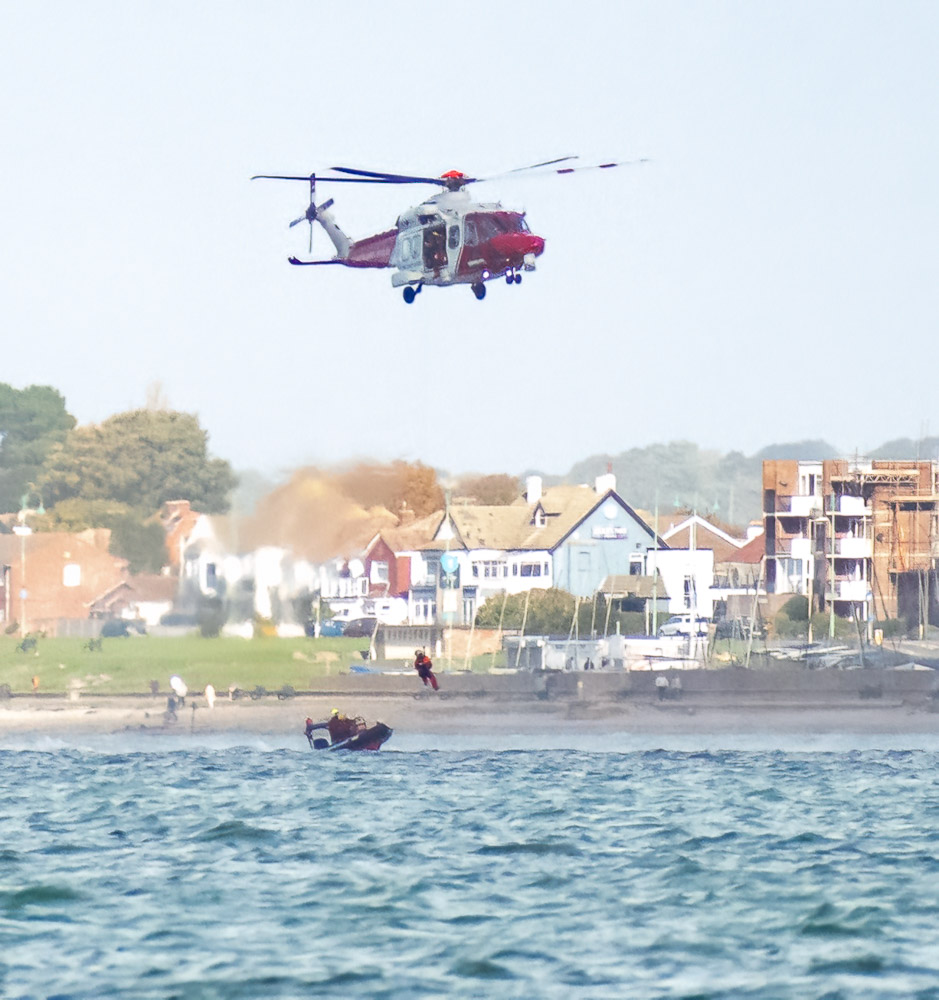
The coastguard helicopter lowers a wire to the inshore lifeboat.
Crew in the air! First lowered into the lifeboat and later recovered again back into the helicopter.

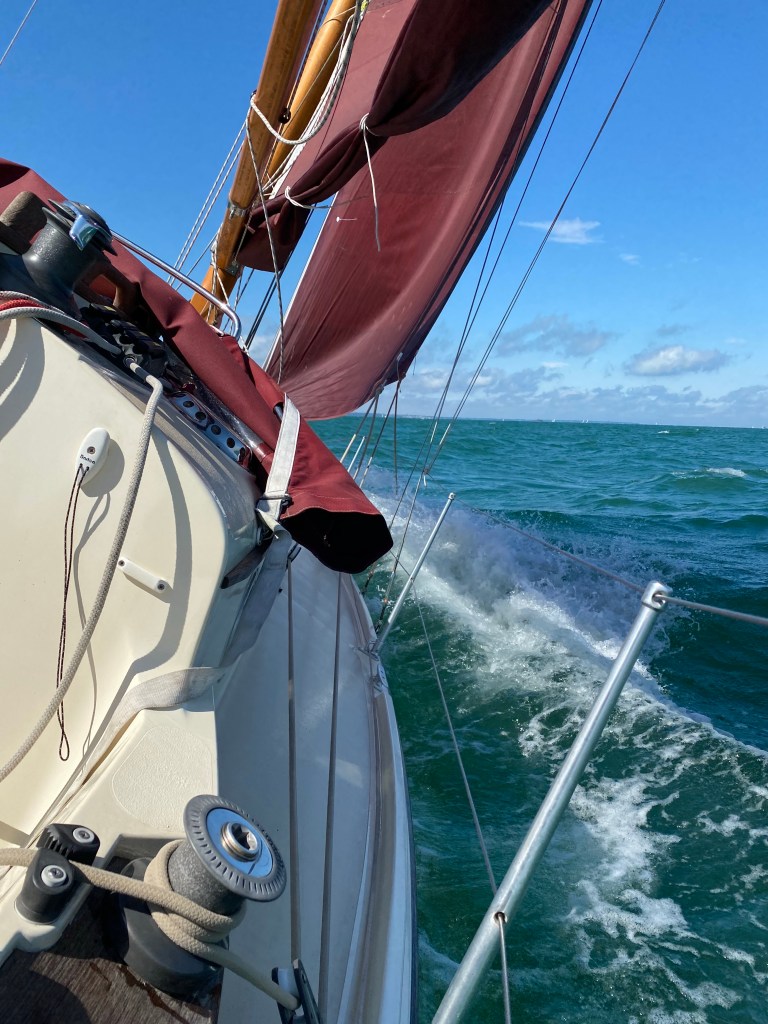
We had a bright and spirited sail down the Solent from Portsmouth. Having motored out of harbour and along the shore to Gilkicker, with a plan to sail along the northerly shipping lane from Spithead towards Bramble. However, with the SW breeze, the mainland shore of the Solent was pretty choppy. We had a good tide under us, so we put reefed main up and took our first tack across to the island shore. Sure enough, the sea was much smoother when we tacked off, passing close to Cowes. There were plenty of other yachts out, as you might expect on a sunny Saturday and almost no commercial traffic to avoid and the coastguard helicopter provided an interesting display. We needed only one more adverse tack to bring us outside the entrance to Newtown Creek and had averaged about 6kt.

I have anchored at Newtown Creek many times previously, but this was only Niki’s second time. Newtown Creek is where the confluence of several small rivers empty into the Solent. It offers shelter from every wind direction and is a haven for wildlife. Understandably, it’s a very popular anchorage, so best avoided at peak times but at this time in the season was not too busy. Most craft pick up a mooring near the entrance, but we decided to pass West, up past the dinghy sailing club at Hamstead and dropped our anchor just past where the moorings end. We had the birds and just one other yacht for company and passed a relaxing afternoon. The best of the day was behind us and we listened to the showers periodically rattling onto the cabin roof.

Casserole cooking

I’d brought ingredients to make a steak and kidney casserole, prepared in our thermal cooker and accompanied with a nice bottle or red wine. The creek is a very peaceful place and I always love to hear the water chuckling under the boat as the tide gently ebbs and flows, coupled here with the sound of the wind and the curlews. During the night, we had a few thunderstorms pass over and awoke to a rainy Sunday morning. Ideally, we’d have made an early start to use the flood to return to port, but I decided we’d wait till mid-morning when the rain was forecast to have passed.

Sailing back up the Solent towards Portsmouth, we had a light sailing breeze and a foul tide. We made good boat speed, but slow progress over the ground. At first, we tried very close inshore to the Island, but the reduction in wind was more than the reduction in tide, so we worked our way further out again. As we passed close inshore to Egpyt Point approaching Cowes, we could see walkers on the promenade moving faster than us, so we put the engine on so we could pass the busy harbour entrance quickly.

Approaching Cowes

The wind backed during the morning and we ended up being headed over towards the Lee-on-Solent shore and needed to tack to pass around Gilkicker Point. Up to this point we had enjoyed bright sun and relished our leisurely sail up the Solent, but I could see the forecast bad weather approaching, so we motorsailed our beat up to the harbour entrance.

Look behind you! Weather on the way…

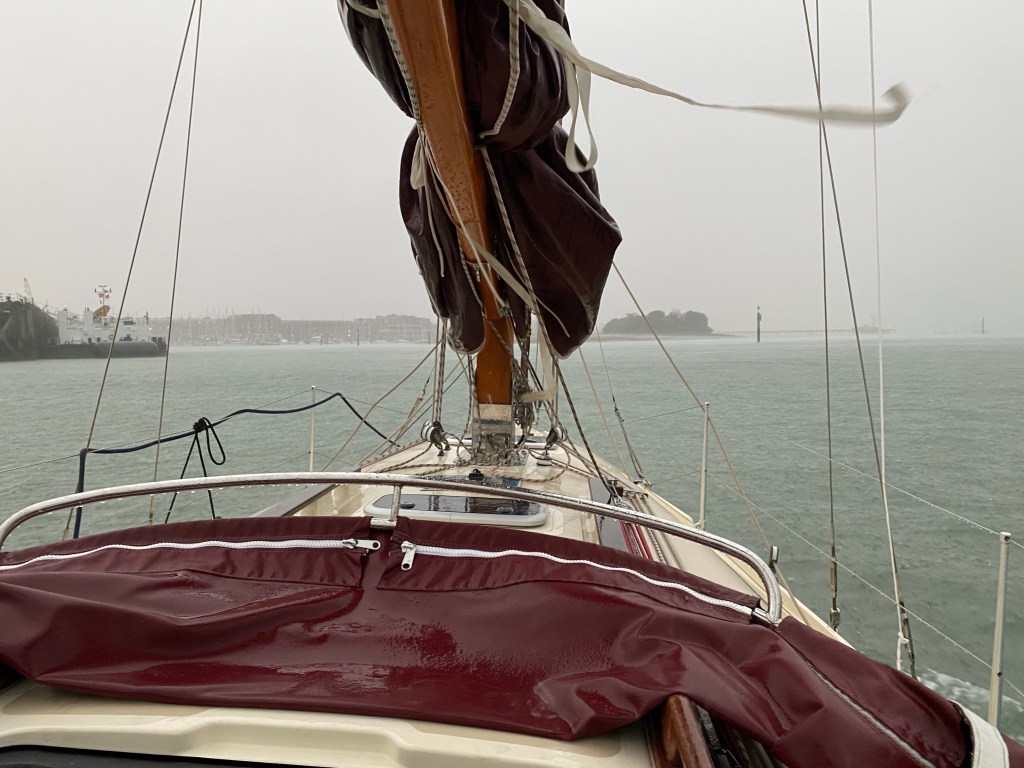
As we motored into harbour the black clouds overtook us and I hurriedly got the main down and bowsprit raised as we entered (I usually wait until we’re well inside the harbour); it was just as well, because we were battered by a squall of heavy rain and hail, as well as thunder and lightning – just as well that we are familiar with the harbour and were not put out by the 50m visibility. Fortunately, the bad weather was short-lived and we were soon, dripping wet, back on our berth.

…the weather arrives with a vengeance!

Chichester expedition

Romping home on Sunday morning

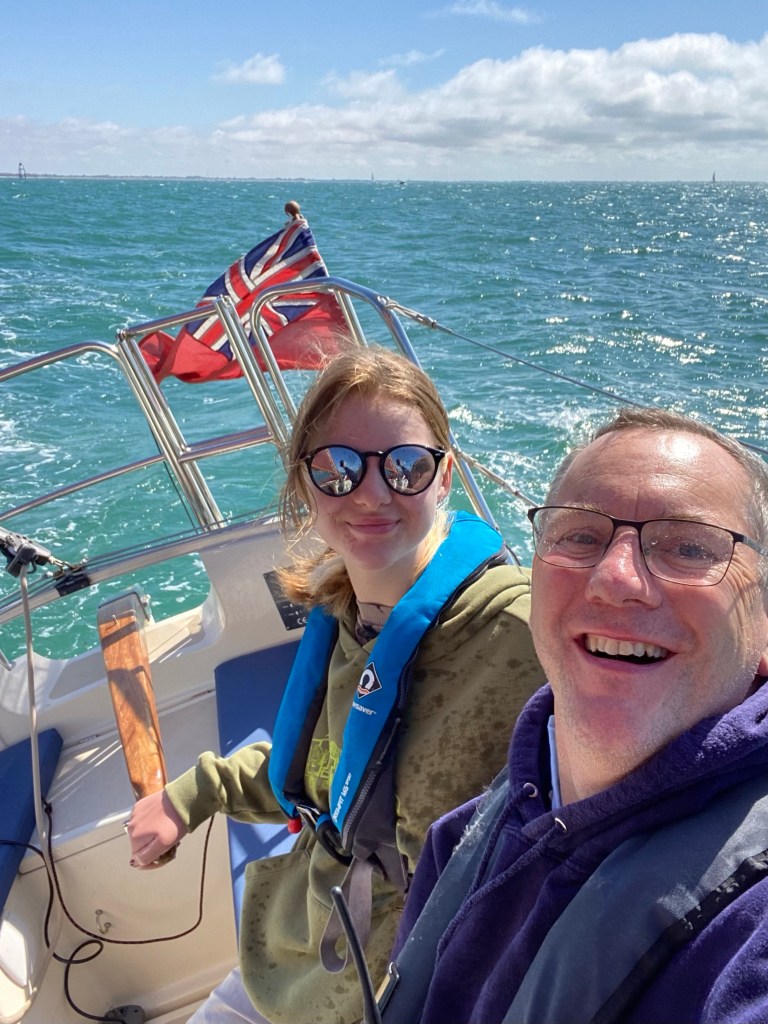
This was Alice’s first sailing trip since we took over Molly, and she was very pleasantly surprised with the accommodation; as it was just me and her, I gave her the forepeak, much to her satisfaction. The weather was ideal, with warm sun and a nice SW sailing breeze. We had a leisurely start and enjoyed the hustle and bustle of Portsmouth harbour as we followed the steady stream of boats leaving harbour on the falling tide.

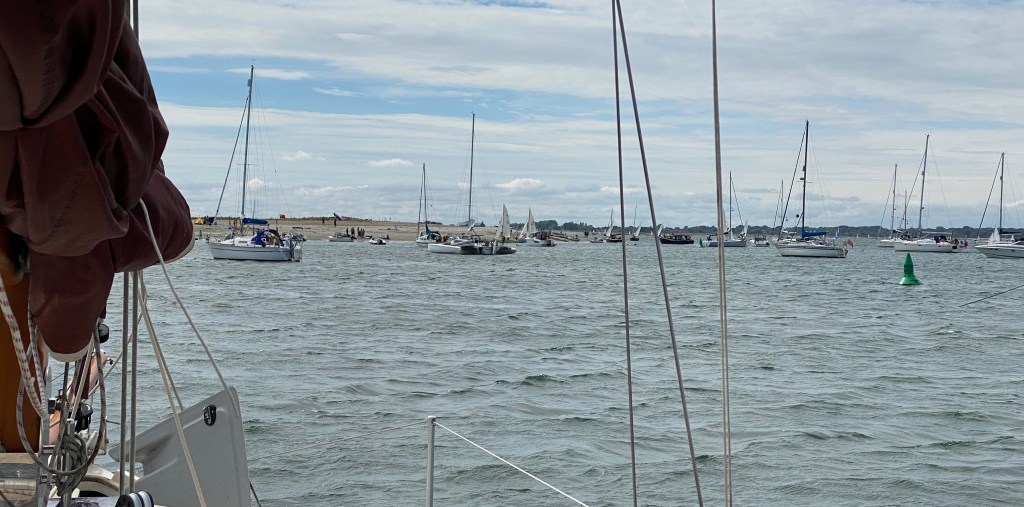
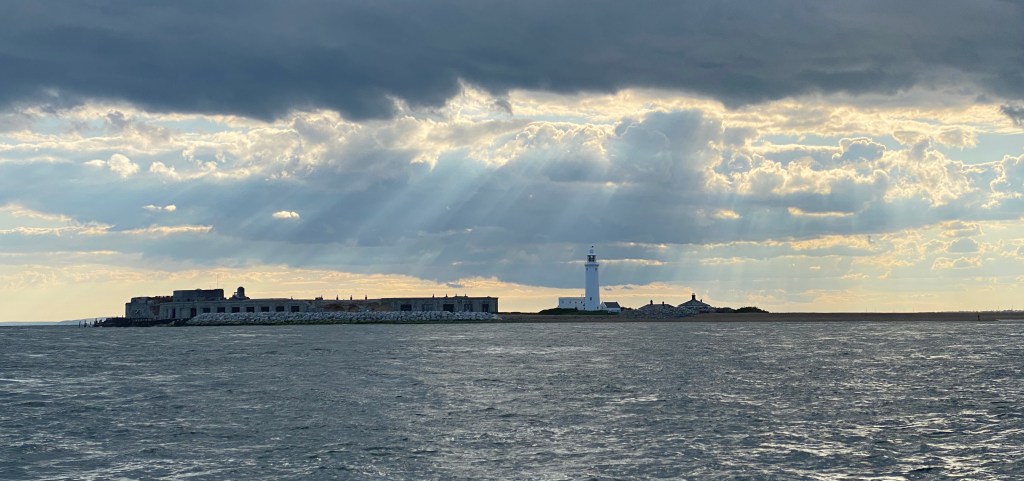
Once we were clear of the Isle of Wight ferry and hovercraft tracks, we turned to port and made for the boat passage through the old submarine barrier that stretches south from the shore near Southsea pier out to Horse Sand Fort a mile and a half offshore. From there, it was a spirited run east, past Winner sand at the entrance to Langstone Harbour and on to Chichester. In no time at all, we reached West Pole, marking the southerly extreme of the channel into Chichester harbour, and gybed round to reach up the channel. On previous occasions when I’ve followed this track, I have been in Aurora (our previous boat, a cape cutter 19) and not worried about depth. This time, though on a neap tide, it was nearly low water, and I paid close attention to the depth as we crossed the bar. With the sea flat, there was plenty of water and we soon slipped past Hayling Island sailing club and turned to starboard towards the popular anchorage at East Head. As expected on a sunny Weekend afternoon, the spot was thick with boats at anchor, among which weaved a multitude of sailing dinghies.

Busy East Head

With plate up, Alice motored us into the wind towards the sandy beach, but unfortunately, I underestimated our speed and Molly touched the bottom. I quickly dropped the anchor and ran astern to see if we could motor off, but Alice had already tried this and Molly was firmly aground, so I returned to the bow and heaved on the warp to keep the bow pointing into the F4 breeze. We were secure and I knew the tide was already rising, so there was nothing for it but to have some lunch! With a little more water, I checked the anchor had set and then increased the scope to ensure good holding. I suggested moving up the Thorney Channel to get a little more shelter behind Pilsey Island, but Alice preferred the existing location.

We passed a relaxing afternoon and later made a paella(ish) from ingredients we had bought in Gosport. I say “ish” because the low-cost, German-owned supermarket with a four letter name famously is always short of an ingredient or two, in this case risotto rice and saffron. Nevertheless, we had tasty rice and fish with sugar snap peas, all from the thermal cooker.

Morning swim

I expected the wind to ease off at nightfall, but it maintained steady 15-20kts all night. This made for a less peaceful night than I had hoped, but further increased my confidence in Spock, our (relatively new) Vulcan anchor. By my reckoning, Spock needs to provide 13 nights at anchor to pay for himself; this was night three.

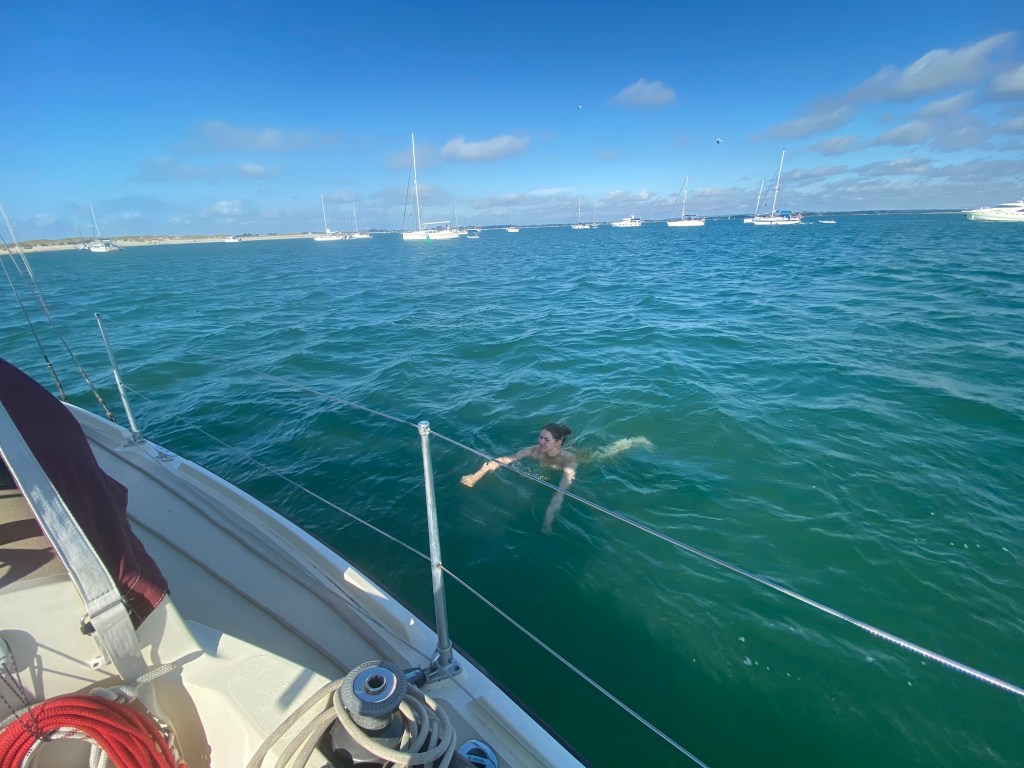
We awoke to another fine morning with a steady SSW breeze. It was due to veer towards SW, so I was keen to set off and avoid beating if possible. We left in good time, but not before Alice had a refreshing swim.

It was a tad bumpy at the entrance to Chichester, but the sea was quite smooth once we reached deeper water south of west pole. The wind direction was perfect for fetch back across to Portsmouth. Most of the boats in the procession leaving Chichester turned off before this and followed a track closer to the shore, heading for the small boat passage we used yesterday. I had decided that instead we would enjoy the sail and take a longer track to pass outside the Horse Sand Fort.

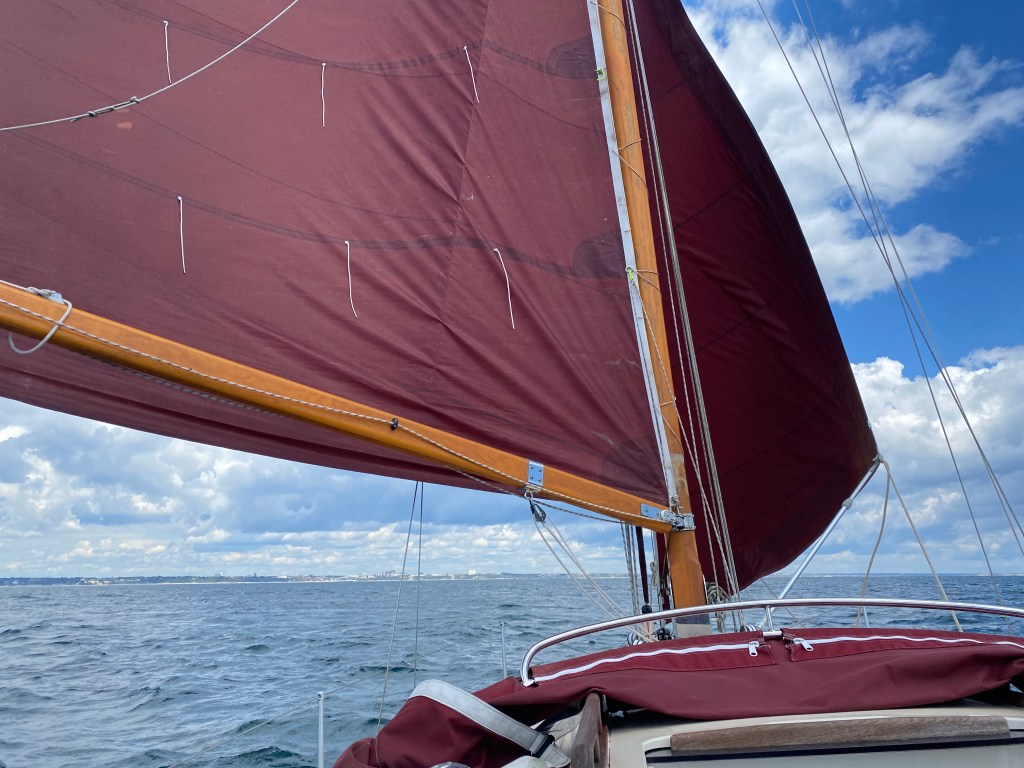
We had a marvellous sail with both jibs and single-reefed main, with Molly cutting confidently through the small waves. We were making 6kt for much of the time and I was expecting an increase in speed when we bore away onto a reach after the fort, but the wind was noticeably lighter in the shelter of the Island.

Alice helmed for most of the sailing and took Molly into the harbour, as I put out the warps and fenders. We made a very efficient return to harbour, dropping main as we turned off the channel towards the club. However, with the water very low, I could not turn Molly to reverse up the fairway to our berth and ended up going in forwards. This means our next adventure begins by going astern…

The smiles say it all!

Into The Solent

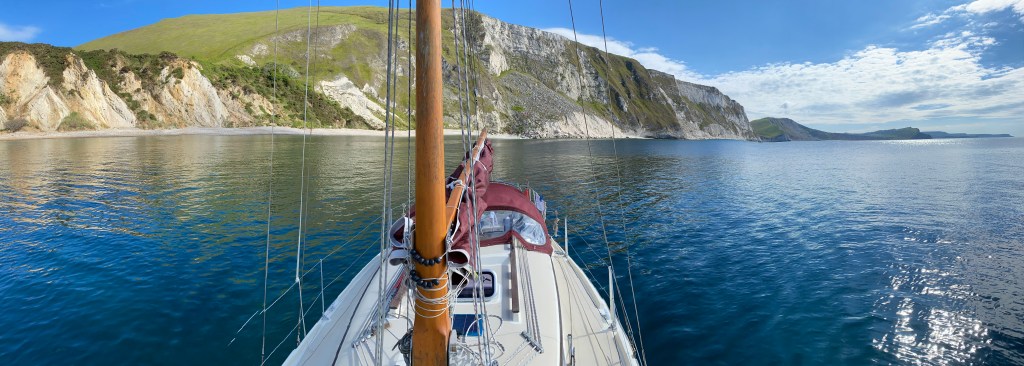
Worbarrow Bay

Wednesday dawned bright and fair. Ben and I had a leisurely breakfast whilst admiring our beautiful anchorage. The anchor alarm showed that we had held firm through the night, which increased my confidence in the holding ability Mr. Spock, our Vulcan anchor, as we had had strong gusts during the night. I wanted to fly my drone, but sadly the anchorage fell within the scope of Lulworth firing range, which prevented takeoff.

Mupe Rocks
Good holding!

Today was expected to be a “no wind” day, but there was a lovely southerly sailing breeze as we lifted anchor and continued our voyage east. With a fair tide under us we passed off St Albans head, turning to follow the coast past Peveril Point, Swanage and finally Old Harry Rocks. The water was very busy with all kinds of pleasure craft, from canoes and small dinghies to large yachts and motor boats, everyone enjoying the sun and sea breeze.

Dorset’s impressive Jurassic coast
Handfast Point and Old Harry Rock
Staysail poles out with a boat hook

At this point, the tide had turned against us, so we angled into Bournemouth Bay to minimise to its adverse effect. There were obvious overfalls at Hengistbury Head, where the ebbing tide was pouring off the shallow water of Christchurch Bay, over a ledge into the deeper water of Bournemouth Bay.

We had time to kill before the tide changed once more and we could enter the Solent. Our hope was to poke our nose into Christchurch h harbour, but it looked like we would be trapped by the falling tide if we had done so. As an alternative, we sailed into the lee of Hengistbury Head and anchored for an hour or so.

The was not a very comfortable experience initially because I had not allowed for the tide. The anchor bit immediately but Molly did not rest head to wind into the waves, but lay almost broadside due to the flow of the tide. I could not believe that just over 0.5kt of tide could beat 15kt of breeze, but the evidence was clear: as the foul tide eased, Molly turned head to wind.

By the time we lifted the anchor, the breeze was a steady F4 SW and we made excellent progress across the bay, keeping fairly close in and shaping our course for North Head buoy. This marked the beginning of our track into the Solent close round Hurst Point. I wanted to show Ben the full effect of Solent tides, he being unused to strong tides in his home waters of Falmouth, but the wind dropped once we were in the shelter of land on both sides and also shifted to dead downwind.

Looking back to Hurst Point

We shook out the reef we had been carrying and moving quickly, despite sailing slowly, soon made Newtown Creek. I had particularly wanted to show Ben this marvellous anchorage; we had a clue how crowded the anchorage would be by the number of boats anchored outside sheltering under the low headland. Crowded through it was, we did not have much trouble finding a place to anchor. Little scope is needed in this shallow water; in fact we had to raise the centreplate within the anchorage.

Sunset at Newtown Creek

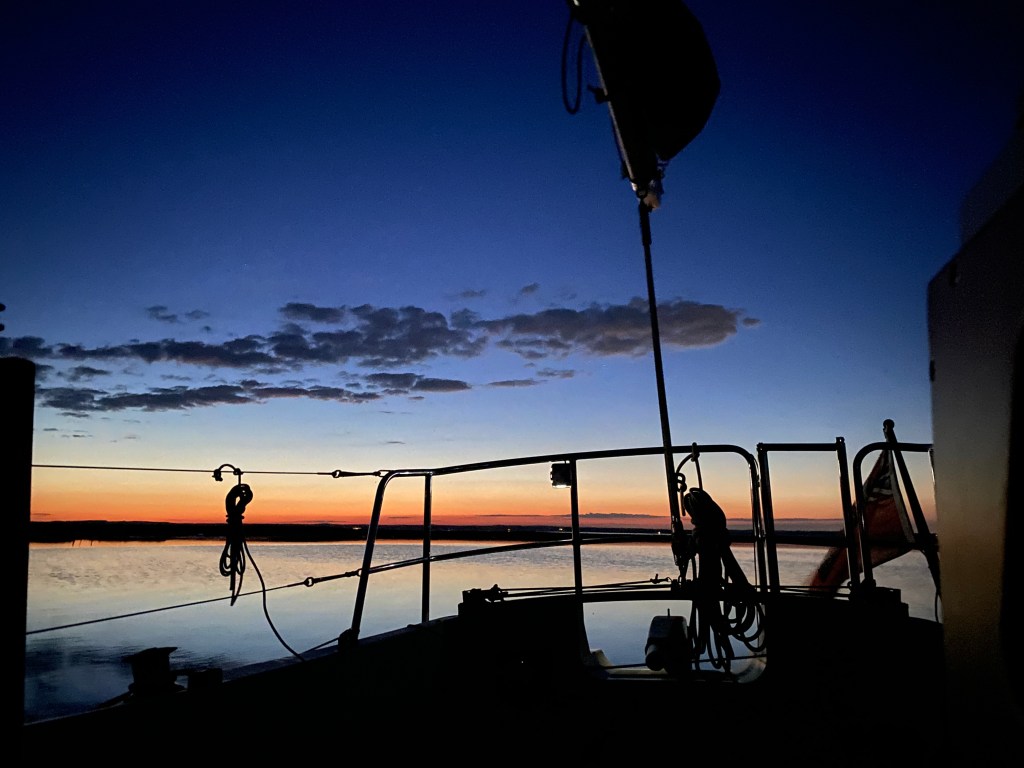
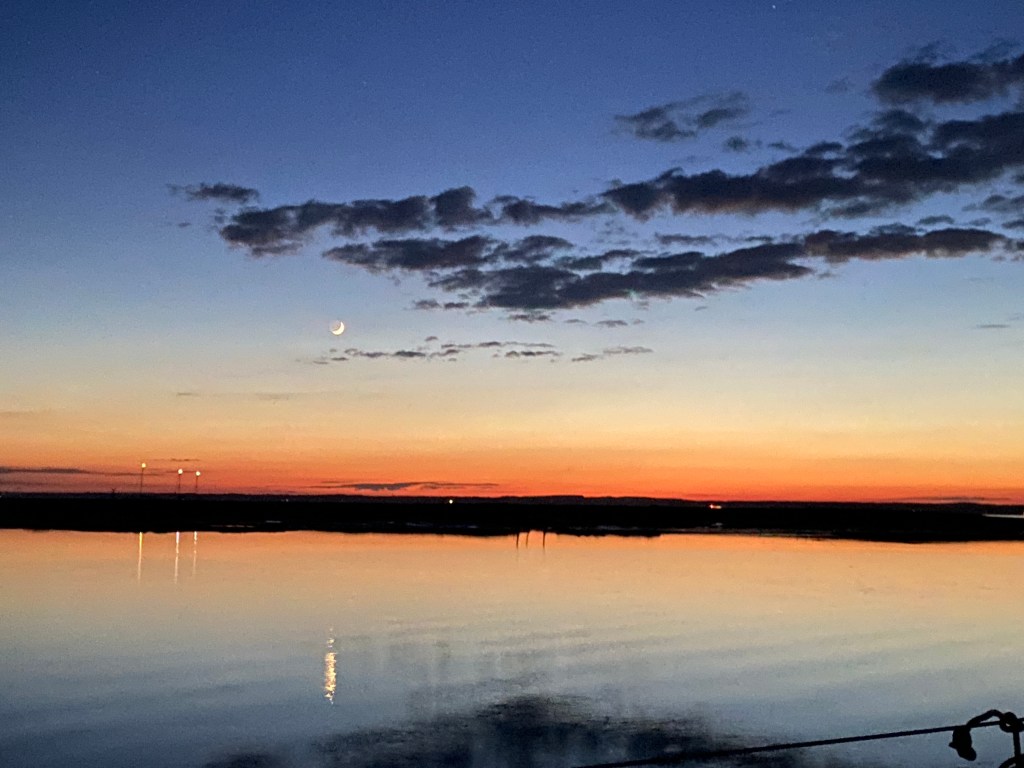
As the sun set, the wind faded and we were treated to a most beautiful sunset and rise of the young crescent moon, to the soundtrack of the calls of oystercatchers, geese and terns.

I was very glad of the oven and had put our tinned pies in as we approached the entrance to the creek, so by the time the tinned vegetables were warmed we had a welcome hot dinner.

We had had an amazing passage, covering almost 40 miles and only using the engine for an hour in total – not bad for a “no wind” day!

Moonrise

Dartmouth

We had an early start and made full use of the excellent facilities at Sutton Marina in Plymouth. Niki left us for the train back to Falmouth, pausing in Plymouth again on her way back for brunch with Aimee, who was in the midst of her uni exams, before driving home. Our passage plan was to move Molly another good hop towards her new home, and make for Dartmouth.

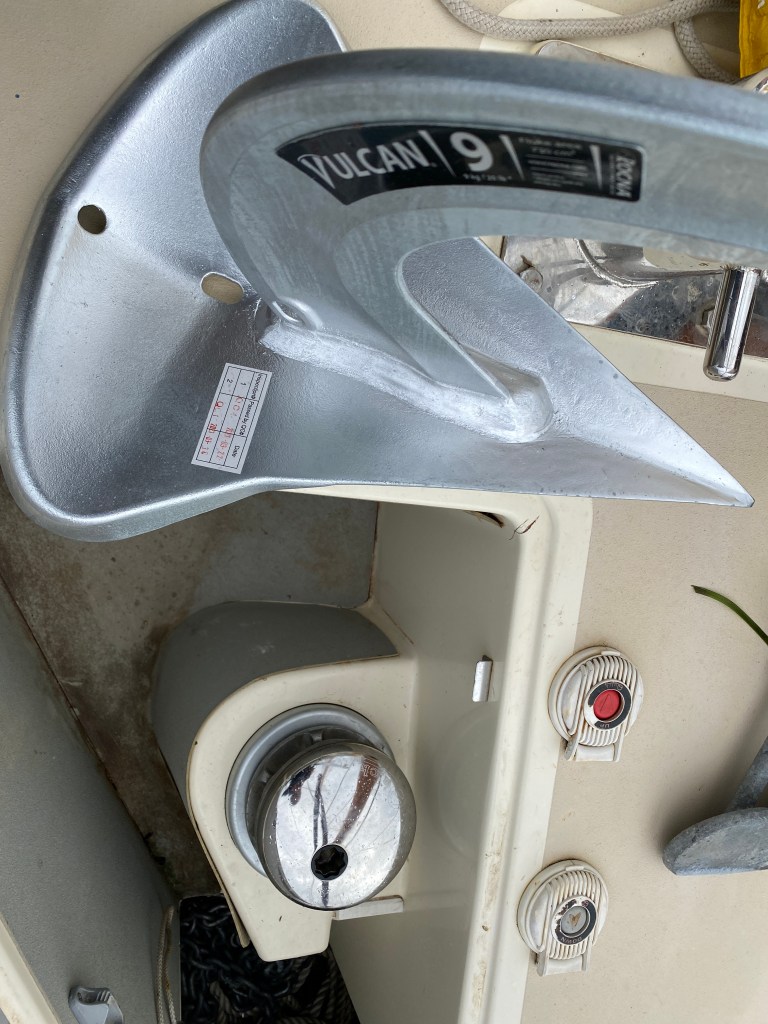
My main order of the day, following yesterday’s experience was to replace my anchor for something more grippy before departing. After reading around, the ground tackle of choice seemed to be either a Rocna or its later development, the slightly more compact Vulcan. It was reassuring to know that not only had others testified to its holding but importantly also reported that it fitted the anchor locker of the Crabber 26.

Plymouth ought to be a good place to procure boat equipment, but most of the chandleries didn’t have my anchor of choice. Fortunately the excellent chandlery at Mountbatten had a 9kg Vulcan in stock, so Ben and I took the foot ferry across the harbour. Pausing only to restock with pasties for our voyage, we returned to Molly and fitted her shiny new pin, made our way through the lock and motored out into the sound.

Anchor well and prosper! Mr Spock, the 9kg Vulcan

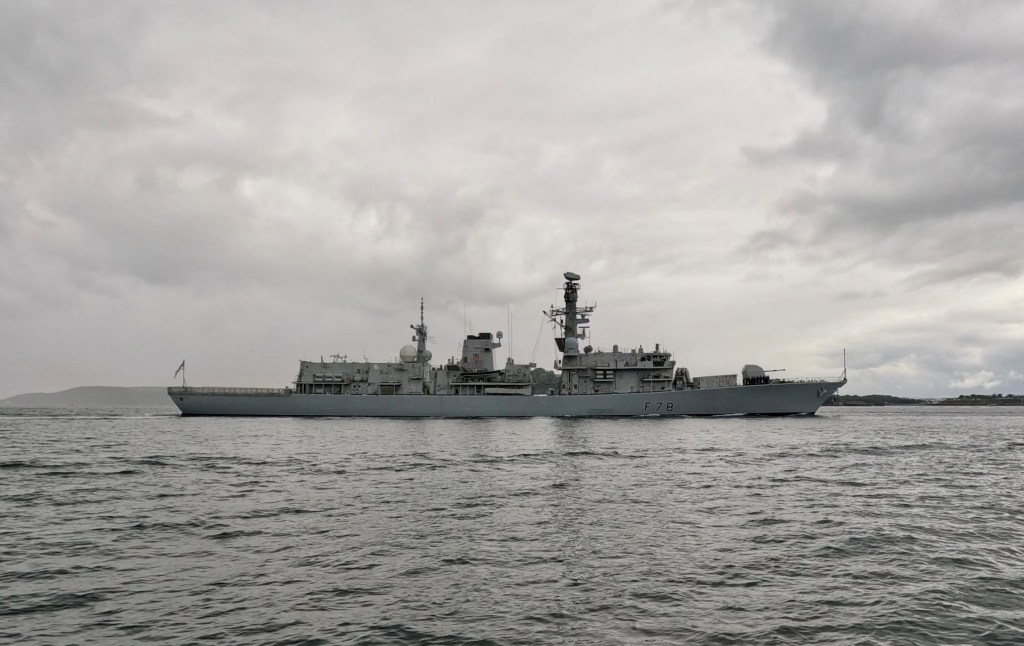
Just as we were hoisting the main, a military RIB asked us to move out of the channel, and moments later the frigate HMS Kent came steaming up the East channel at speed.

HMS Kent

Although we had the main up, it was not working at all and it was not a very peaceful passage down the Devon coast; although there was little swell, the sea felt confused without the drive of the sails and gave us an uncomfortable motion. We passed by some of my favourite diving sites at Hilsea point and the Persier wreck in Bigbury Bay, where we could see the mouths of the Erme and Avon from afar. I thought, not for the first time, that I wished there was time to explore these places.

Eventually Molly passed Bolt Tail and we travelled along that forbidding four miles of cliff, until we reached Bolt Head and the entrance to Salcombe. We had discussed this as an alternative place to overnight, but Ben and I both agreed we should carry on.

The sea was much flatter now and a fair tide was increasing; we quickly passed Prawle Point and approached the prominent outcrop of Start Point with its conspicuous lighthouse. By this time we were scooting along at over 7kt and were rapidly covering the remaining ground.

Rain approaching

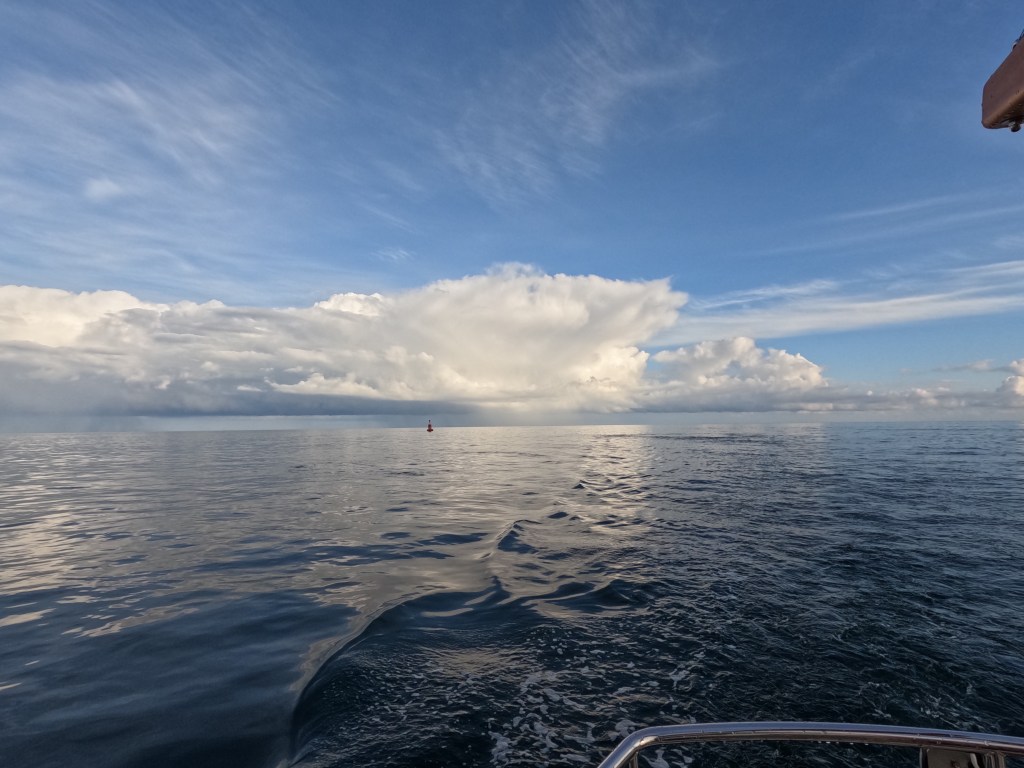
We were treated to some spectacular meteorology, with banks of dark grey cumulus approaching. We could see a lovely pilot cutter in the distance turning across our track. The heavens opened and a massive downpour began with the rain cascading down onto glassy water. It was so quiet that could the strange hiss of the drops on the surface of the sea as we sped along. We watched the pilot cutter pass in front of us and follow the shore of Start Bay; we took a route outside the Skerries Bank, though there the only evidence of overfalls were occasional patches of boiling water on the glassy water surface.

Hetty entering Start Bay

The cloud passed away as we entered the mouth of Dart River and Ben and I were treated to the sight of Dartmouth and Kingswear in the early evening sun. We treated ourselves to a berth on the town quay, ready for some well-earned fish and chips. It was only when we were tied up that I noticed that as this was the ferry quay, we needed to be away by 0845 the following morning. The helpful harbour master pointed out that we were welcome to move to one of the pontoon berths in the morning if we wished, so we decided to stay put.

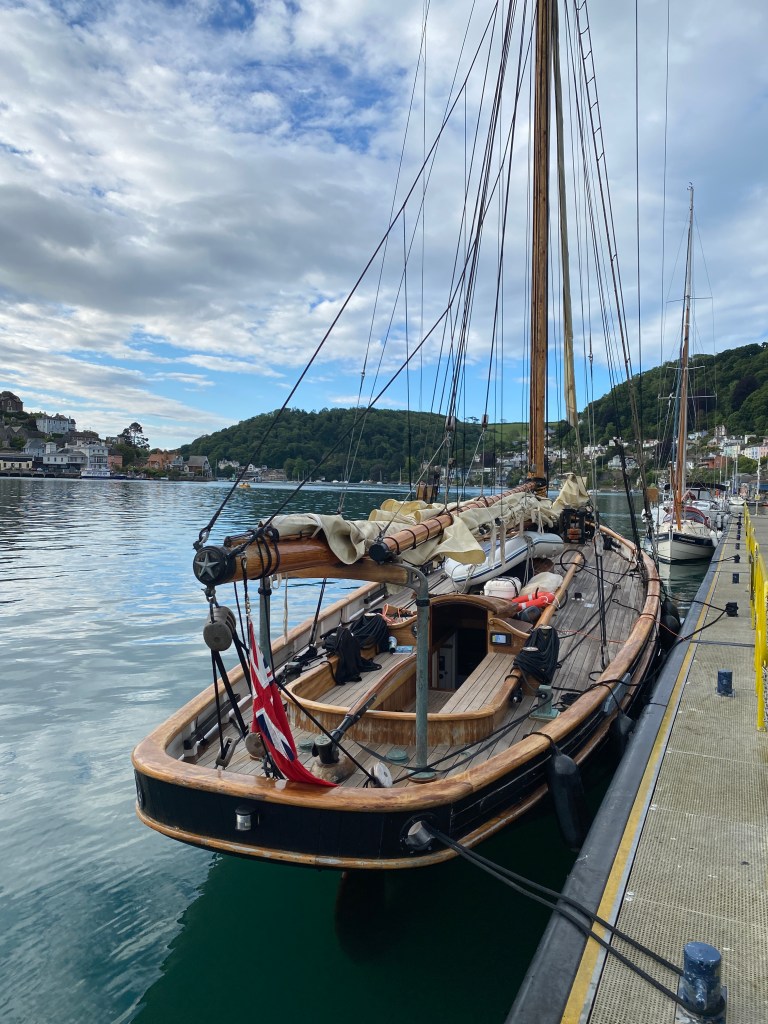
We were joined just after by the gaffer we had seen in the bay, which turned out to be Hetty, a 1906 pilot cutter, who was travelling in the opposite direction to us, from Weymouth on her way to Cornwall for a pilot cutter rally.

Hetty alongside in Dartmouth

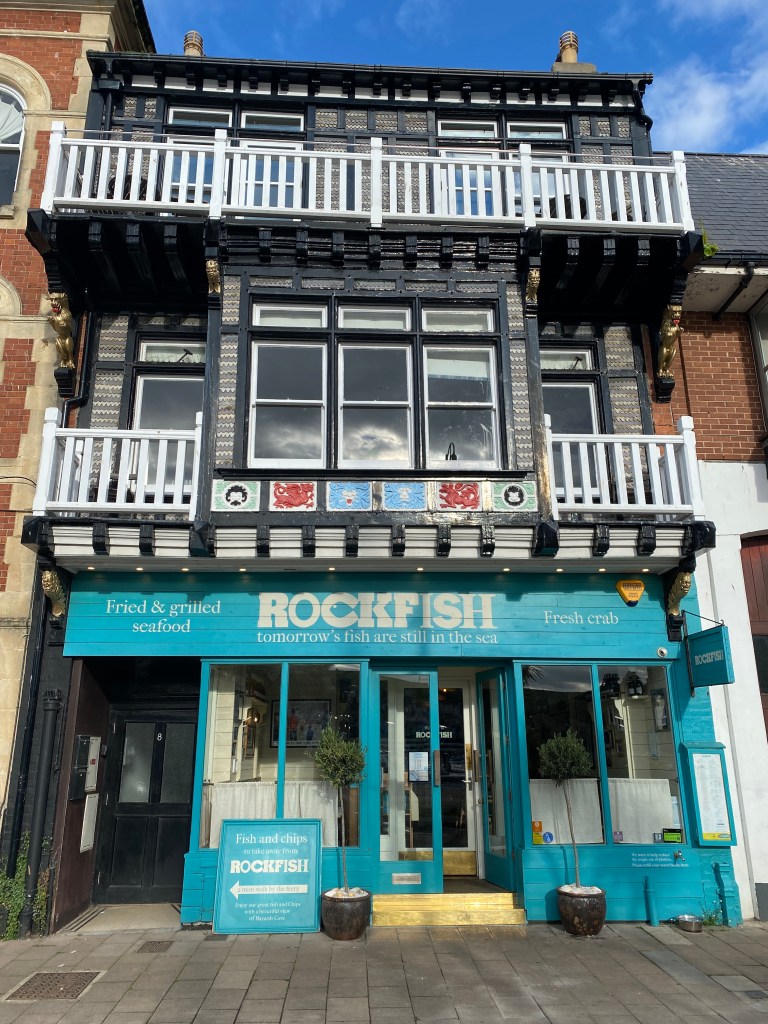
We enjoyed Rockfish fillet and chips aboard Molly with the fine Shropshire bitter I had brought with me from home. The meal was provided by the chip shop of the same name and was excellent.

We spent the rest of the evening discussing our next move. The wind had been favourable but very light for the past several days. We had one more day of favourable wind forecast, followed by a day of no wind and then adverse winds. The forecasts had not been accurate, but I really did want to end the week with Molly on her berth in Gosport and I also did not want to plod upwind on the motor if I could avoid it.

Ben and I considered many options, but in the end decided that we’d make an early start in the morning, pass off well off Portland with a favourable spring tide in the early evening and see where we got to, with the option of going overnight all the way into the Solent or, more likely, anchoring somewhere before Swanage to avoid sailing through the whole night and allowing us to time our Solent entrance to a fair tide.

Excellent fish and chips!