Category: Rallies

Winding through Zeeland

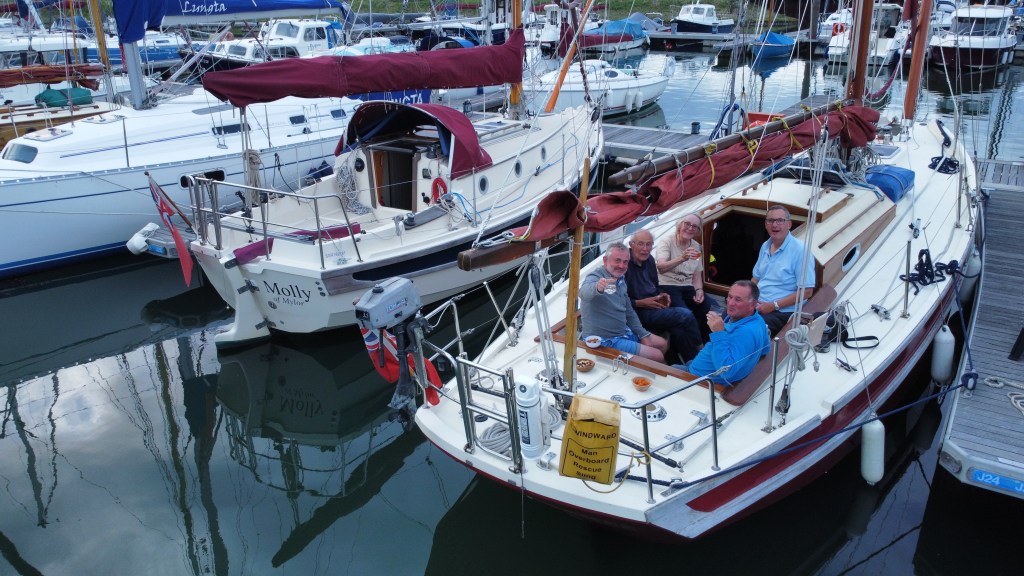
Molly berthed in Middleburg

Having entered the canals and reached Middleburg, our next task was to cross the Zeeland region to reach the pre-rally gathering in Wemeldinge.

After fuelling up, we motored down the wide straight canal to the lock at Veere which opens onto the Verse Meere. This is a brackish lagoon created as part of the system to control water levels. It’s evidently very popular for all kinds of water sports and is bordered by beaches, camp sites and sailing clubs. The buoyed channel is quite narrow and winding and it’s necessary to stay within its path as we found out to our cost!

We threaded our way under sail – our course always seemed to be a beat, despite the twists and turns of the channel. Every time we thought we could sail straight to the next mark, the wind would shift to head us off! After an hour or two of short tacking back and forth in the narrow channel, we gave up and motored, as we’d been warned not to turn up late to our destination that night, Goes (pronounced like a Scot might refer to his home: “hoose”).

We needn’t have worried, when we reached the lock to leave the Verse Meer, we discovered it was broken and quite a few boats were waiting. We rafted onto the waiting pontoon and, er, waited. It was no hardship in the sun!

After something over an hour, the lock was fixed and disgorged its waiting flotilla of boats. I had been worried that we might not get into the lock as so many boats were waiting. However, the lock was huge and after over 30 boats had emerged, we were cleared to enter – all the waiting boats fitted easily.
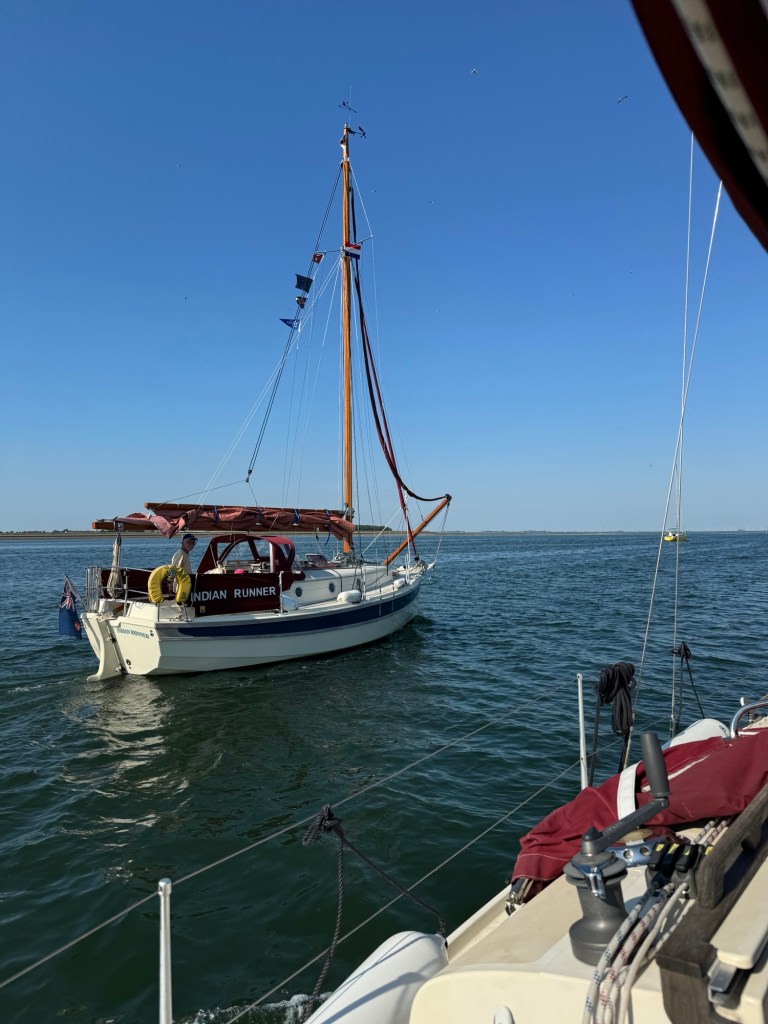
Indian Runner and Molly on the Oosterschelde

Even though it was now late, we were still determined to reach Goes, so motored a short distance along the tidal Eastern Scheldt to our final lock and the short canal to Goes. As we entered that lock we were told there was a problem with one of the bridges ahead but we went ahead anyway. It was early evening by then but engineers were working to fix it and, by the time reached it, it was opened. We passed up to the town, moored and walked to the town square for our evening meal.
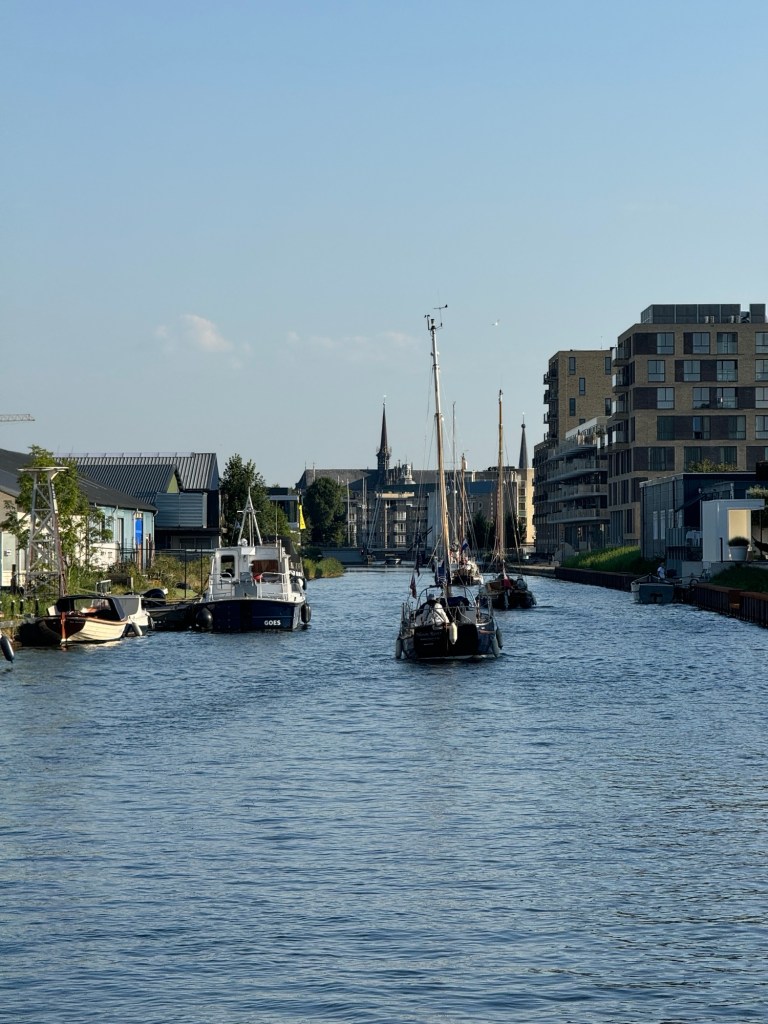
Approaching Goes
The Mary Magdalen church in the centre of Goes
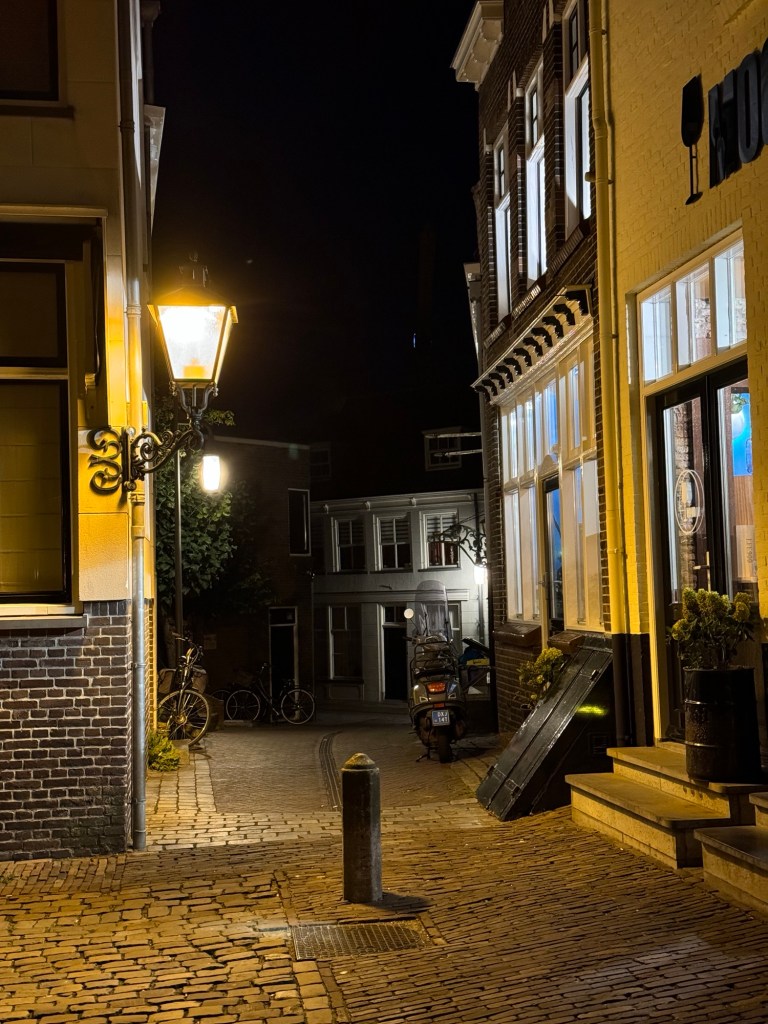
Night view of Goes

The following day our target was to travel the six miles or so to Wemeldinge, for the “pre-rally rally”. Many of the boats travelling to Hellevoetsluis for the main rally were to gather at Wemeldinge and travel onward in convoy.

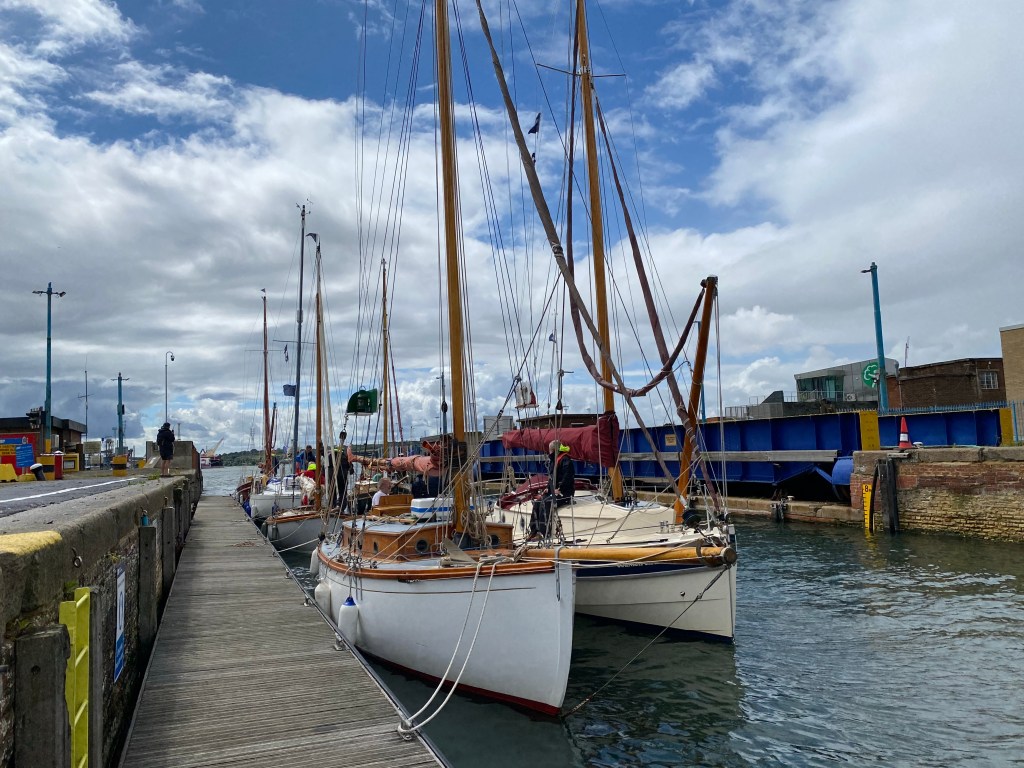
We left our moorings in Goes and made our way along the short canal to the sea lock, only to be stopped at a bridge in the small village of Wilheminasdorf. We had two red lights, indicating a delay and we received local information that the bridge was broken and it would be several hours until it opened, so we made fast as best we could. It was a very hot day but I could think of worse places to be trapped!

Plum, Moon River, Molly, Indian Runner and Puffin Bach trapped in Wilhelminasdorf

After a while, we we visited by local fellow gaffer owner Rik who offered us a lift to the bar whilst we waited. As I knew we had a couple more hours to wait, I inflated our tender and ferried some of our party ashore. Rik very kindly drove us to the sailing club bar, where we bought ice creams back for everyone.

Just before the engineer was due to arrive, a large fleet of boats arrived behind us from Goes. The bridge was lifted as soon as the engineer arrived and there was a general jostle to reach the lock. It took two lock cycles to pass all the waiting boats through, but we were soon in Wemeldinge.
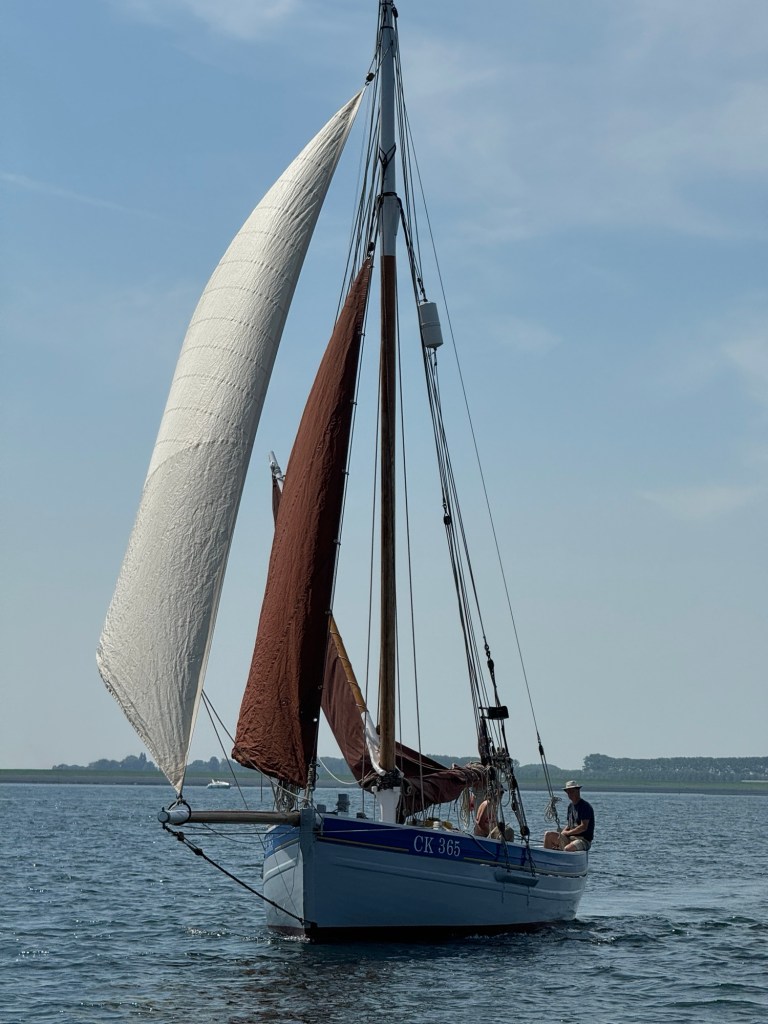
Transcur en route to Wemeldinge

We took the next day as a rest day, hired bikes for a tour of the local area and sampled the excellent seafood in nearby Yerseke. Later, a reception had been arranged to welcome all the travellers and we spent the evening getting to know our travelling companions.
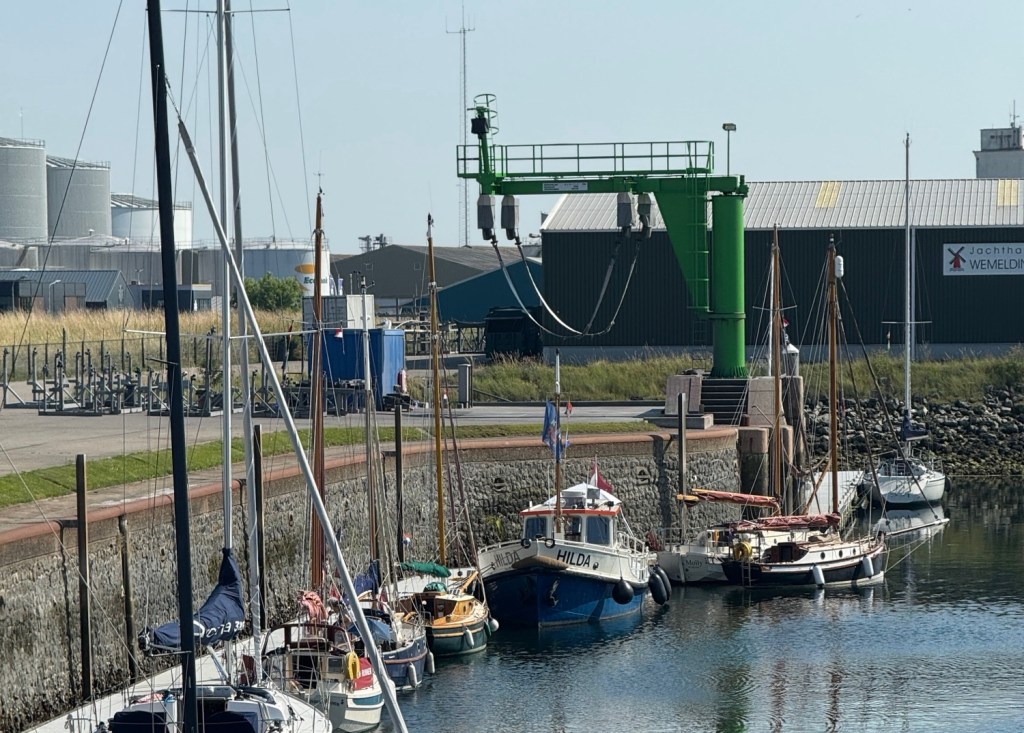
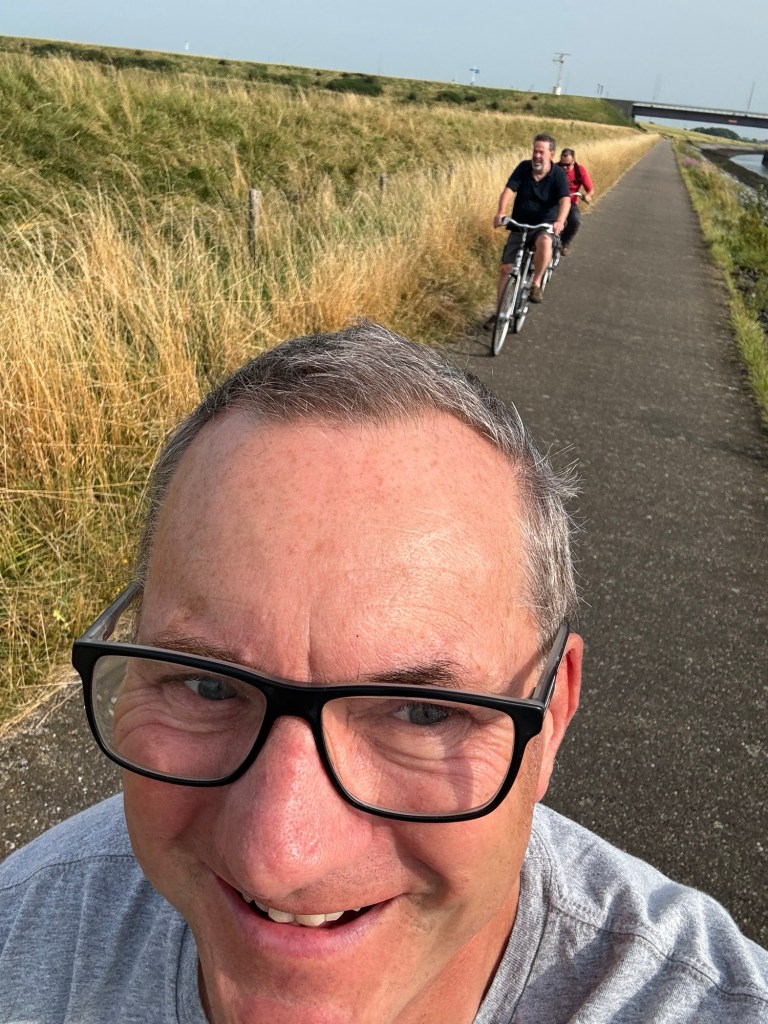
Cycling along the canal
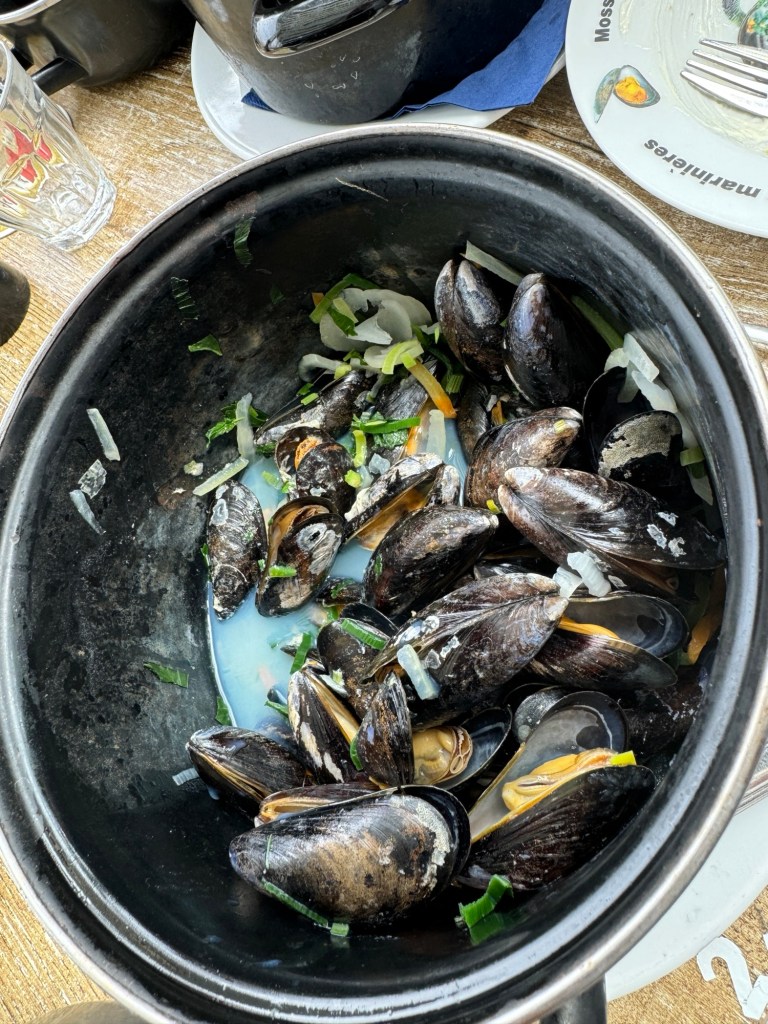
Seafood in Yerseke
Excellent mussels cooked local style
Welcoming reception

Into the canals

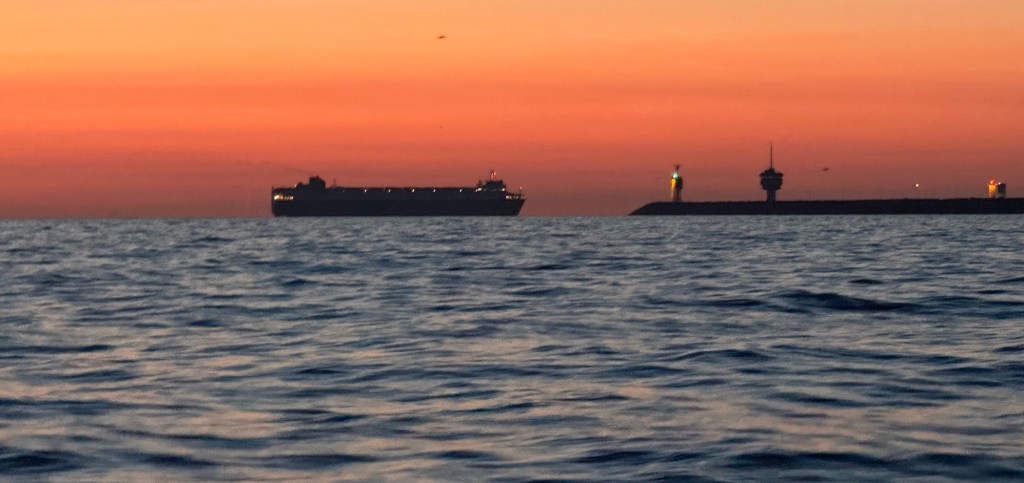
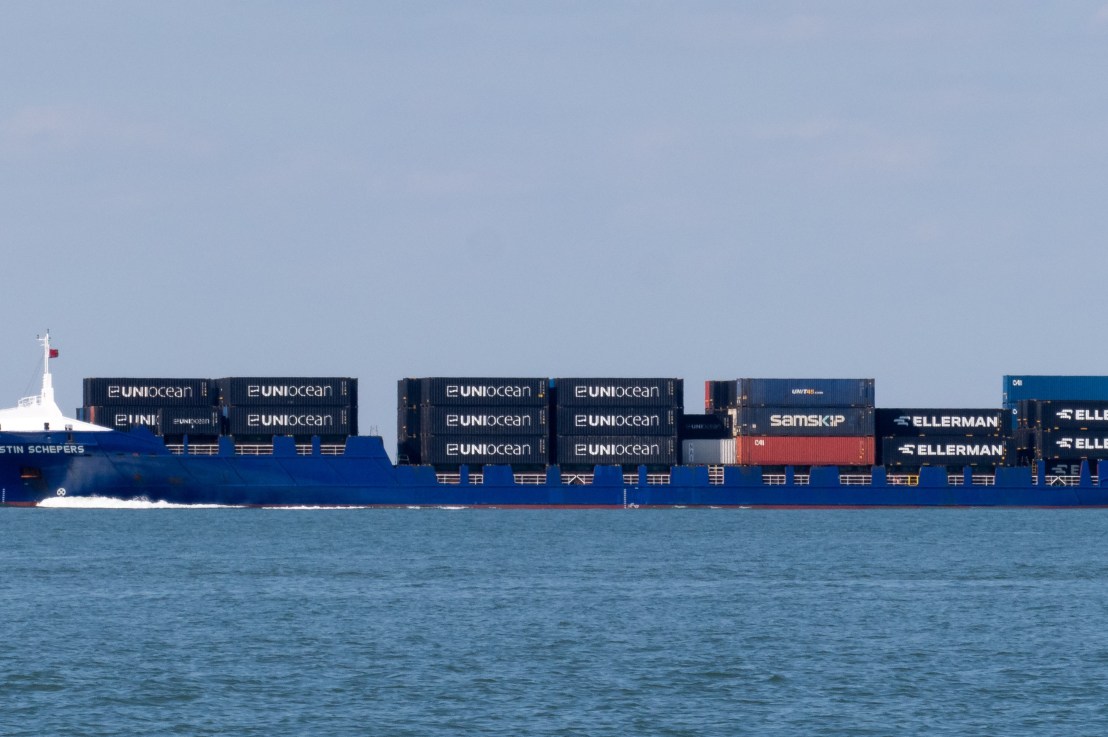
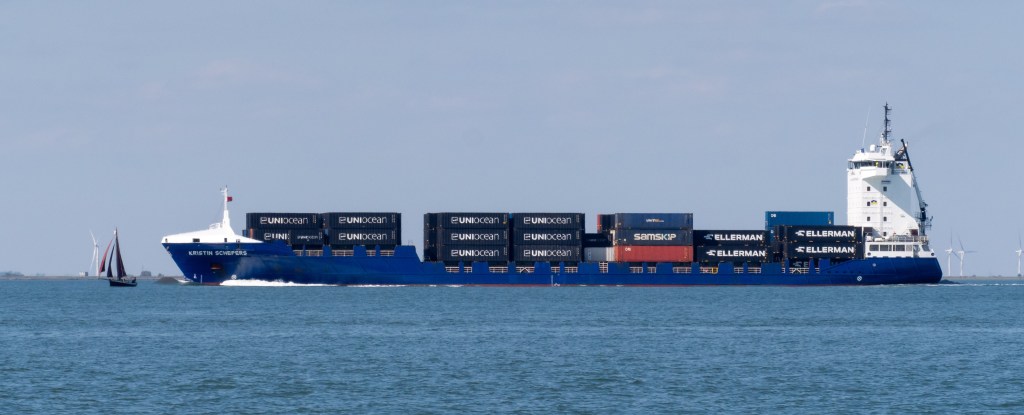
We made a 4.30am start from Blankenburg, leaving the port in the darkness with the bright lights of Zeebrugge port ahead. It was a very calm morning and we motored down tied with just the staysail to stabilise us. Despite being a neap tide, the current was very strong and we were making over 6kt as Zeeland hove into view. We had to wait for a large container ship to pass before turning across the Westerschelde to enter Vlissingen. There were a number of other boats waiting for the ship lock into the canal, as apparently there had been a problem with the lock. We passed through a few minutes after the time for the “blue wave”, where a convoy of boats passes through the bridges opening in sequence.
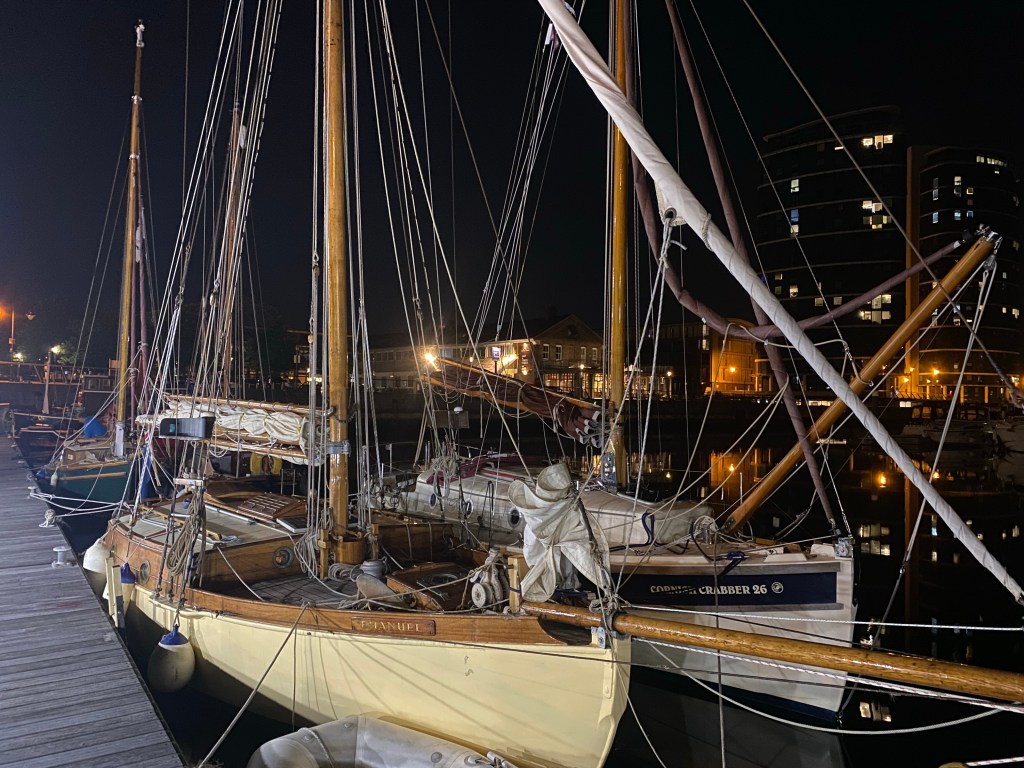
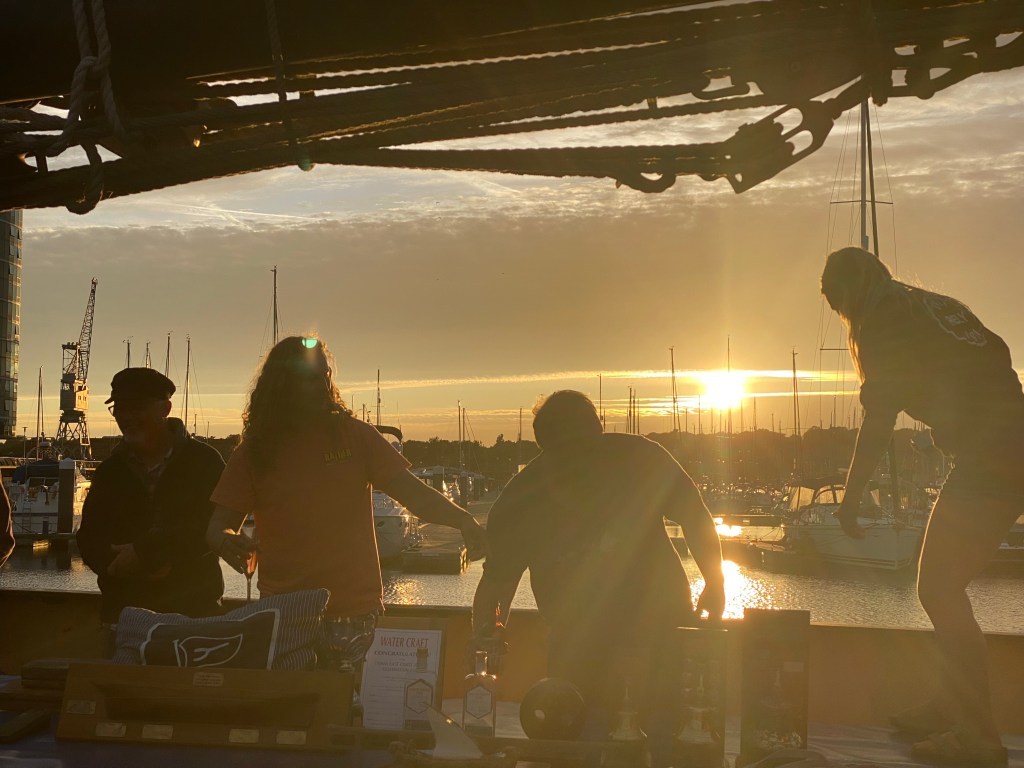
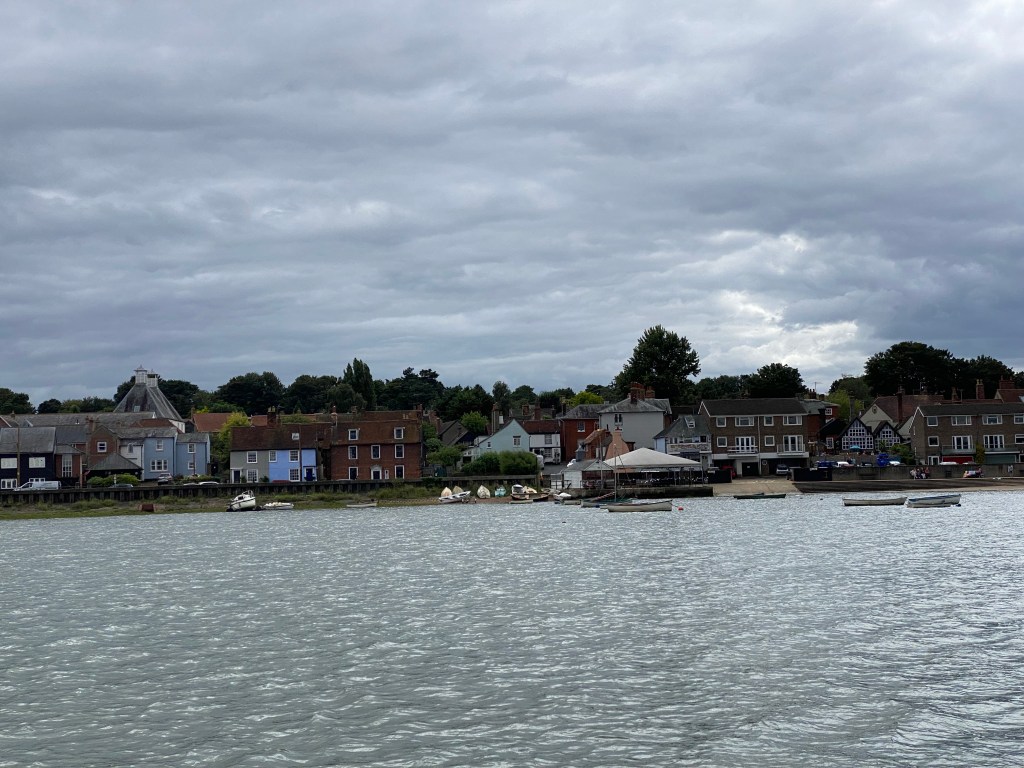
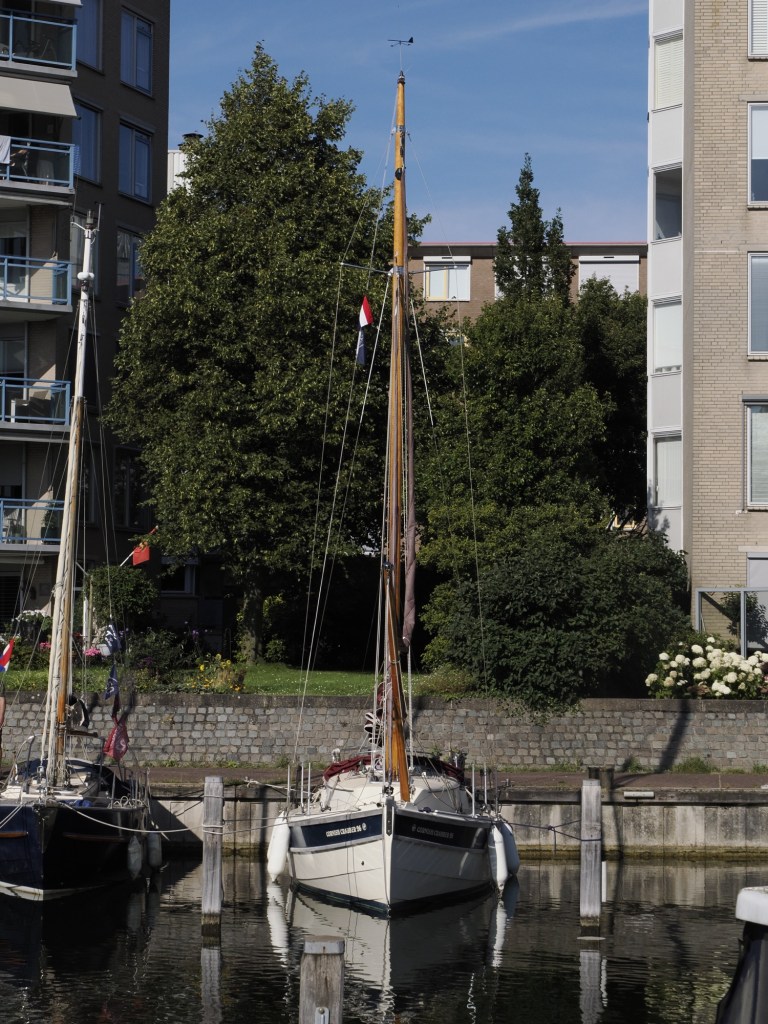
Our destination was just a few miles up in the historic city of Middleburg. Before we could relax and have a kip after our early start, we were introduced to box moorings. I’m sure we entertained the onlookers but with help, managed to get settled.

Predawn departure
Approaching Zeebrugge
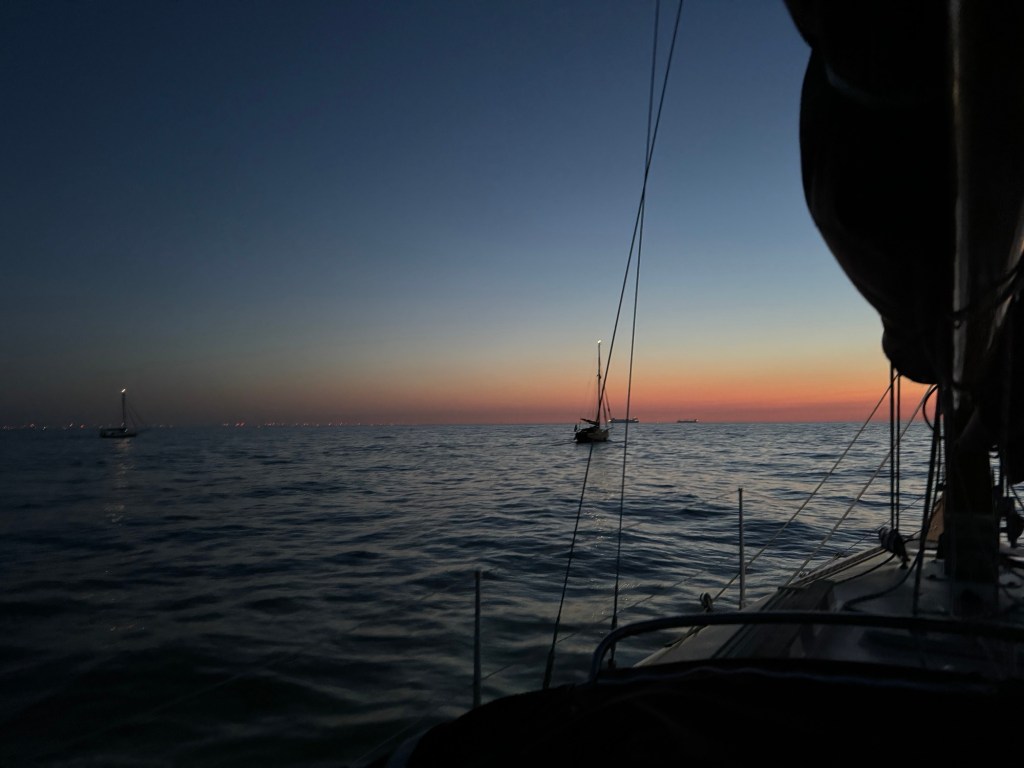
Sunrise over Zeeland
Raising the NL courtesy flag
Into the canal
Keeping up with the Blue Wave
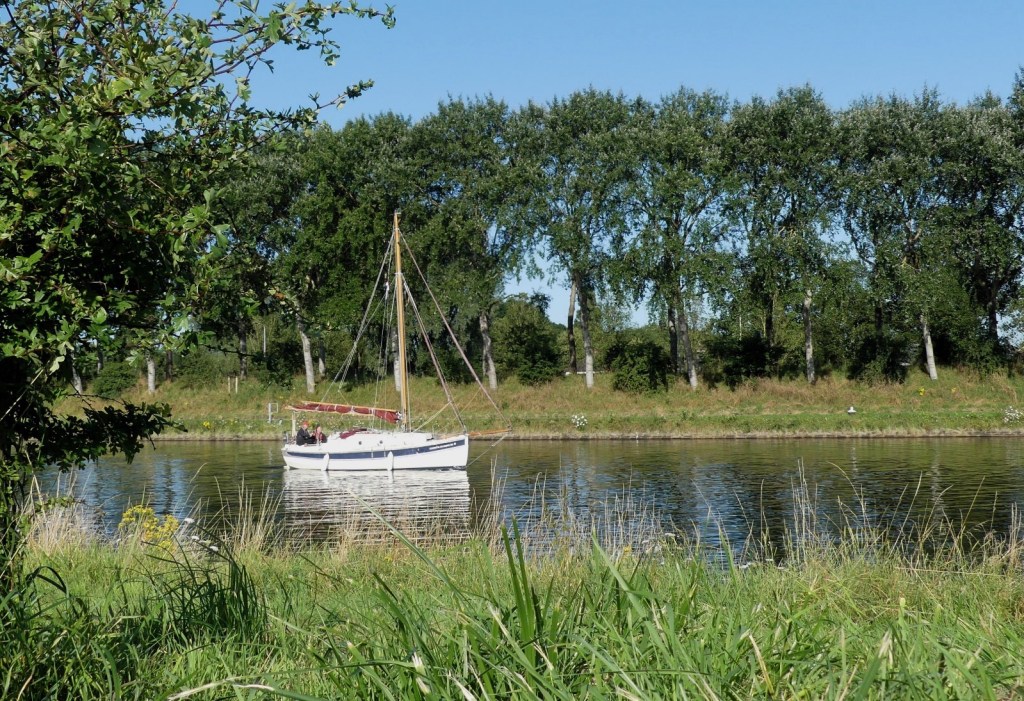
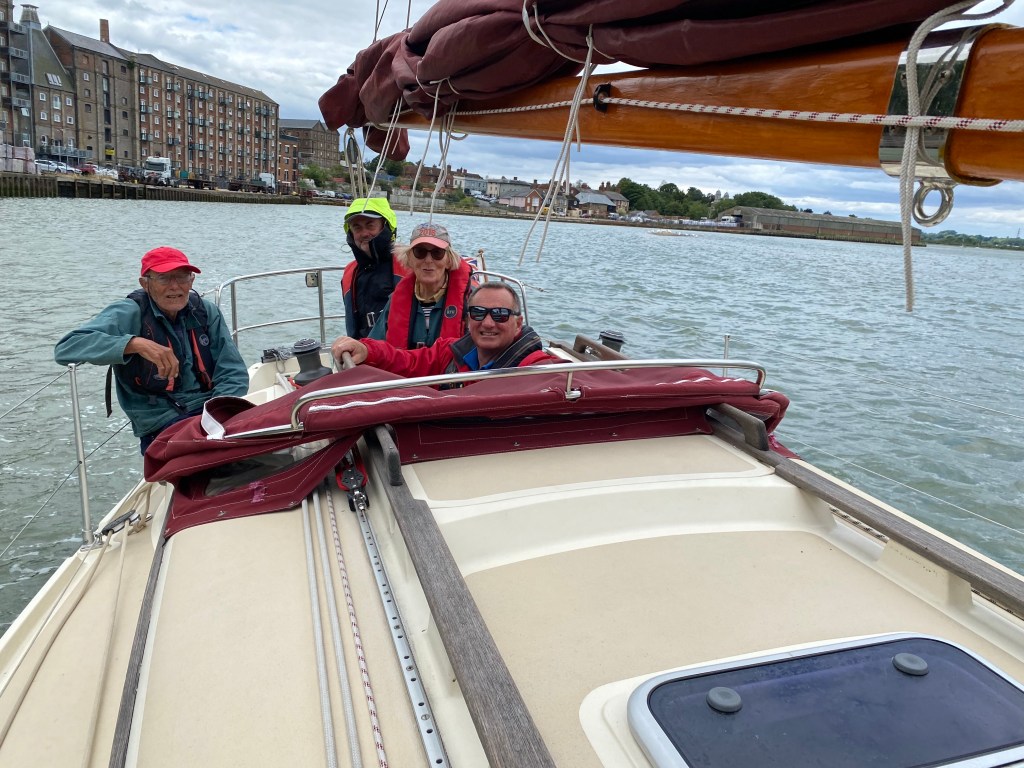
Molly motoring up to Middleburg (photo courtesy of E. Frenks)
Arrived in Middleburg
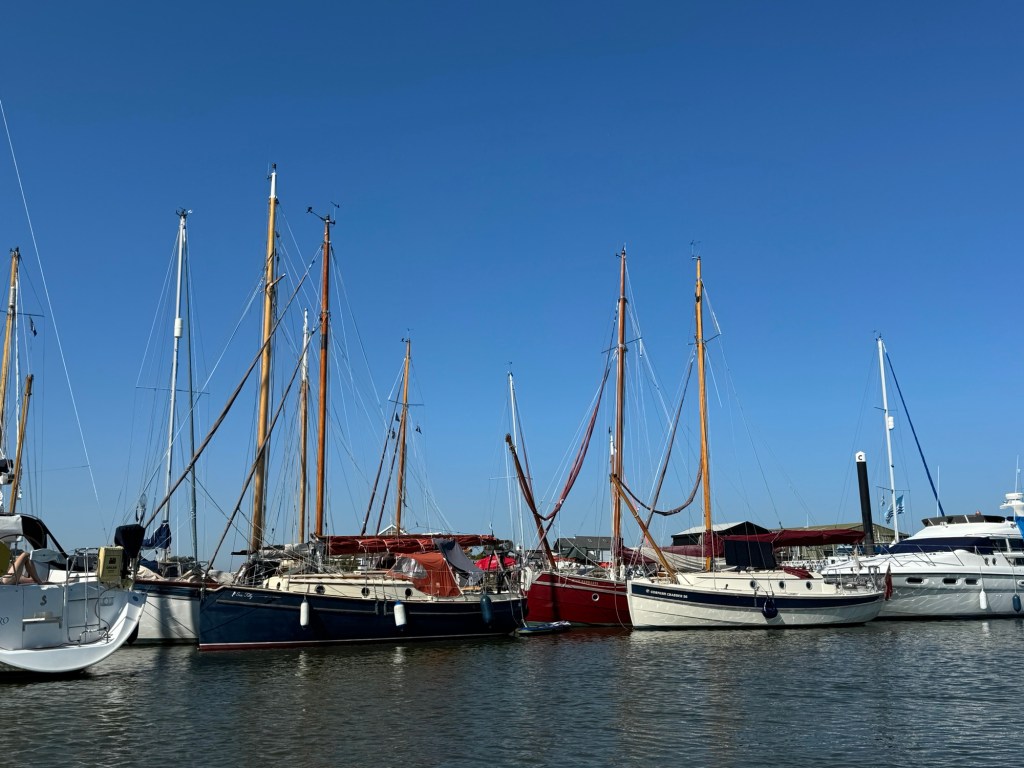
Moored stern to

Cruising along Belgium

Saturday sound Molly of Mylor, Puffin Bach, Plum and Moon River in Nieuwport. We had a morning to available to explore before moving on to Blankenburg with the afternoon tide.

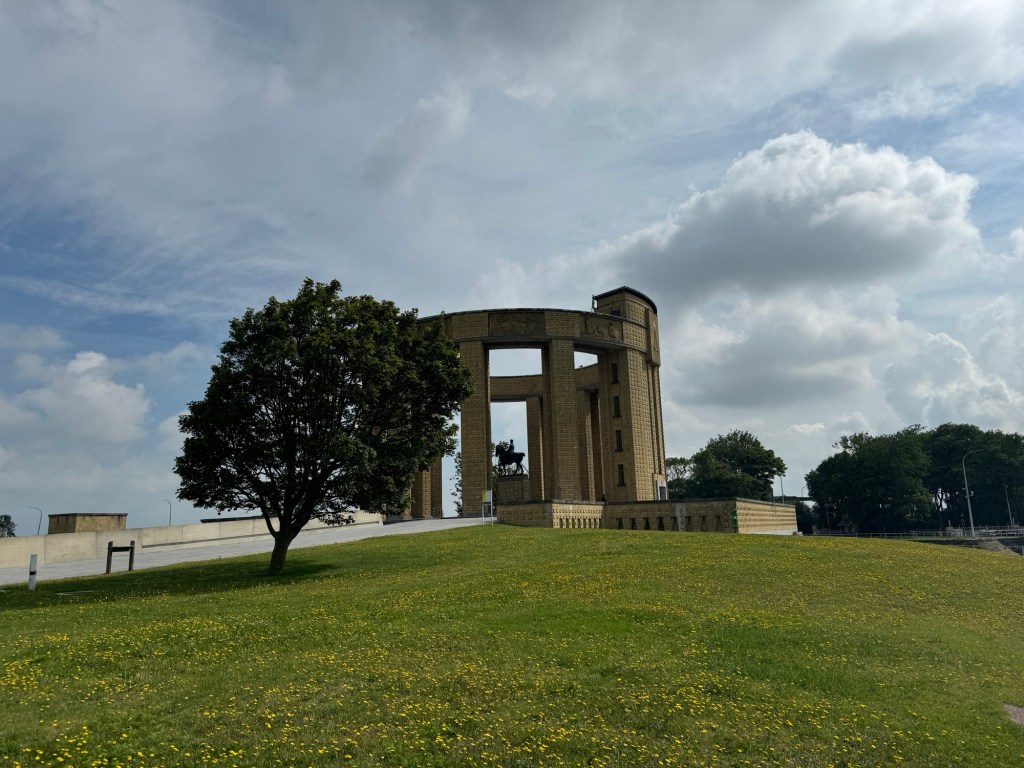
The impressive West Front museum. Nieuwpoort was totally destroyed during the Great War and this museum has many artefacts from that time and focusses on the regeneration of the town after the conflict. The walkway around the top of the museum provides and excellent view of the old town.
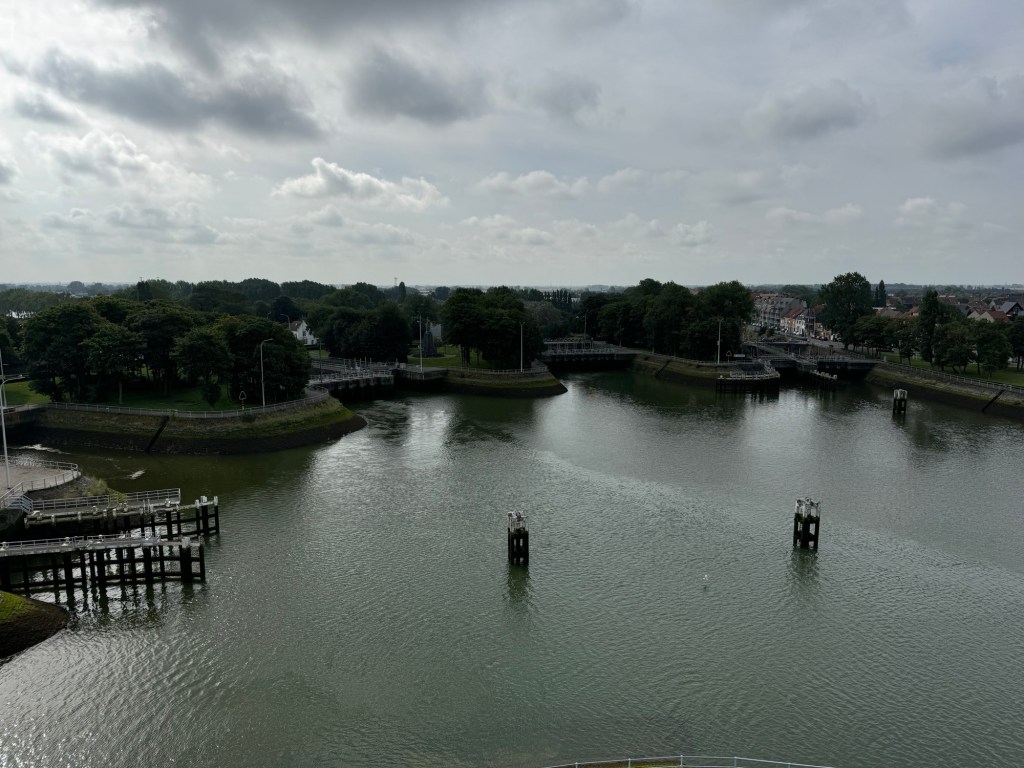
The “Goose’s Foot” – the river feeds six canals. Early in WW1, and attempt was made to stop the advancing Germans by opening all the gates and flooding the land with seawater. This was only partially successful. The largest canal has a lock which leads to Bruges and beyond.
Market square in the old town
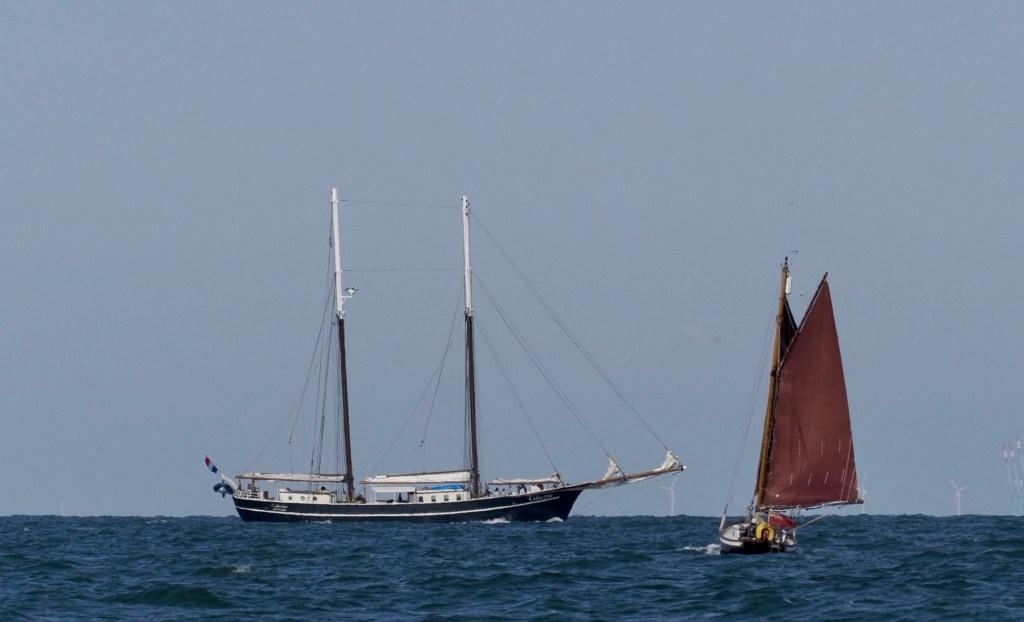
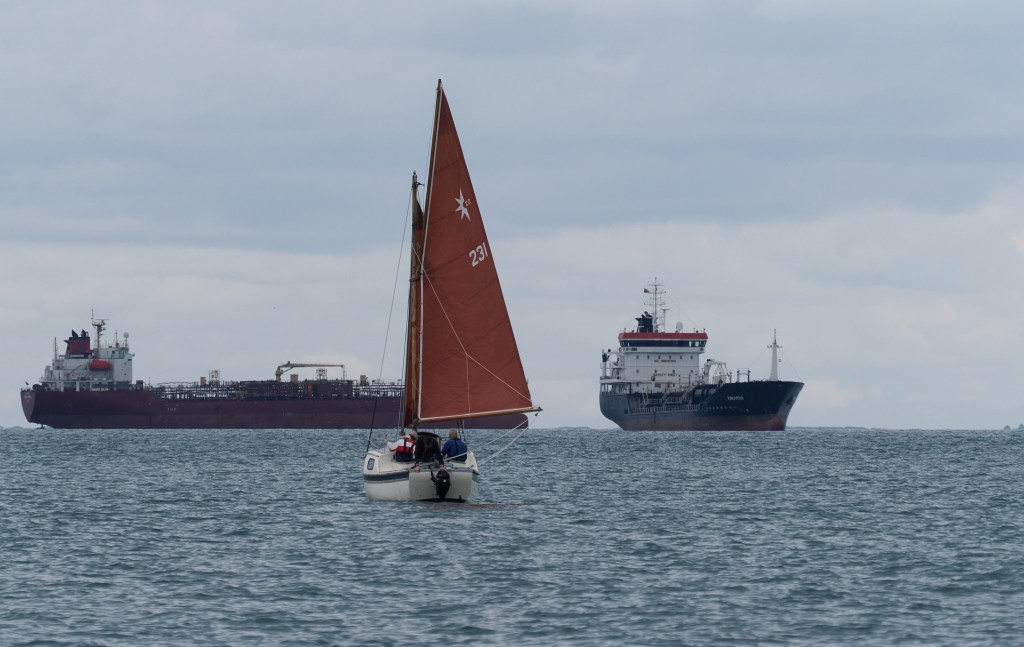
The ketch Catherina crossing the bows of Plum off Oostende
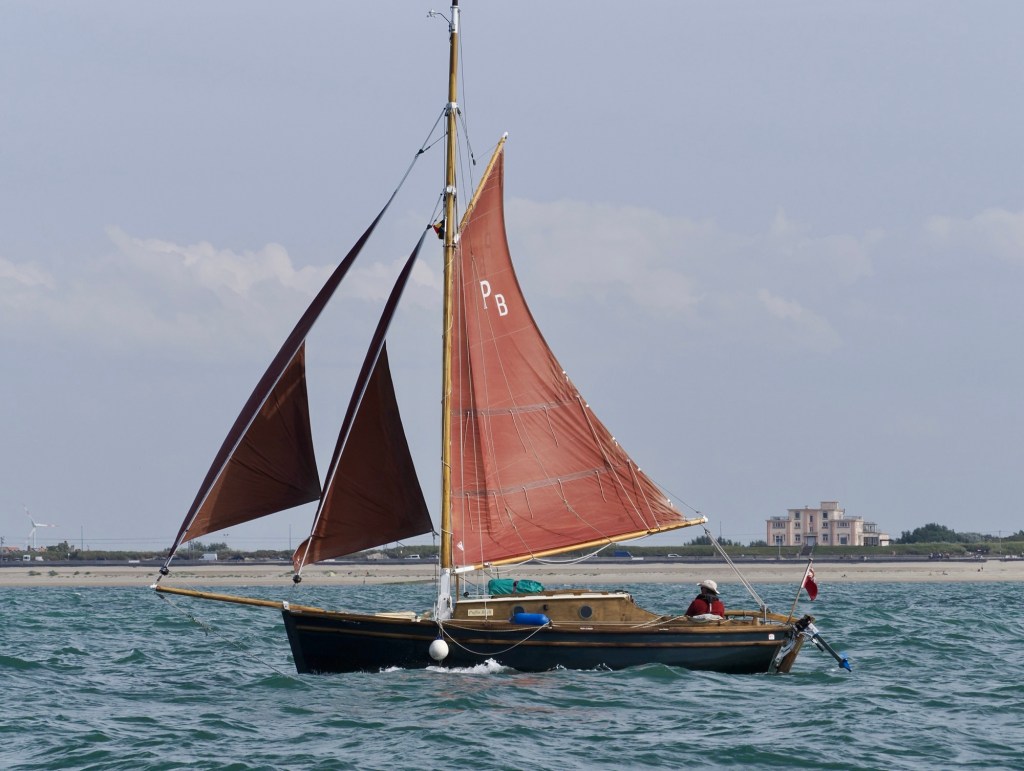
Puffin Bach sailing large
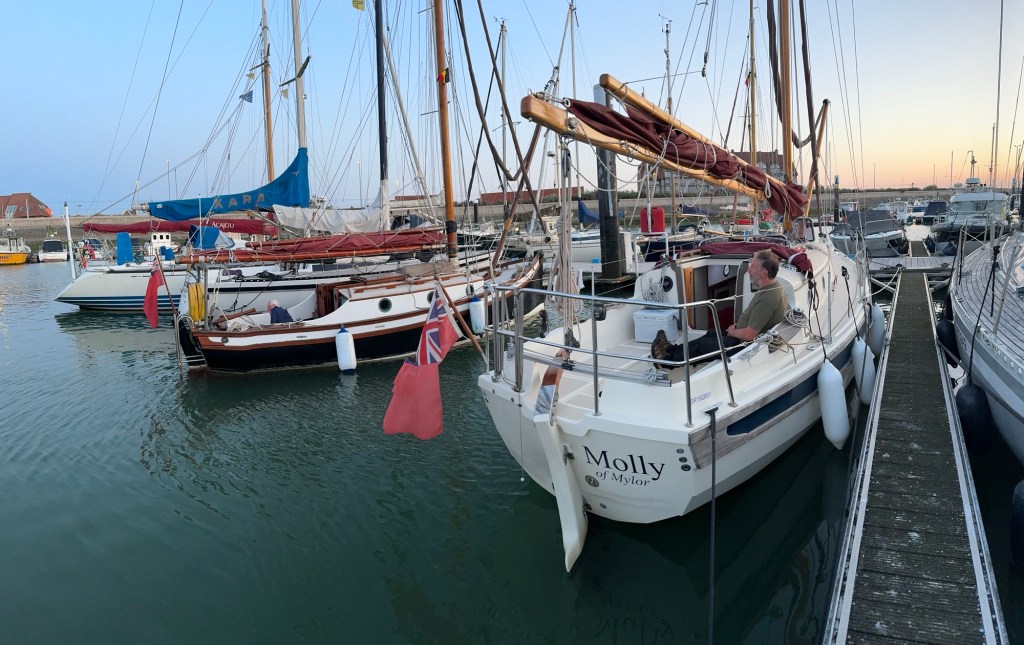
Molly and Plum moored at Blankenburg with Puffin and Moon river behind
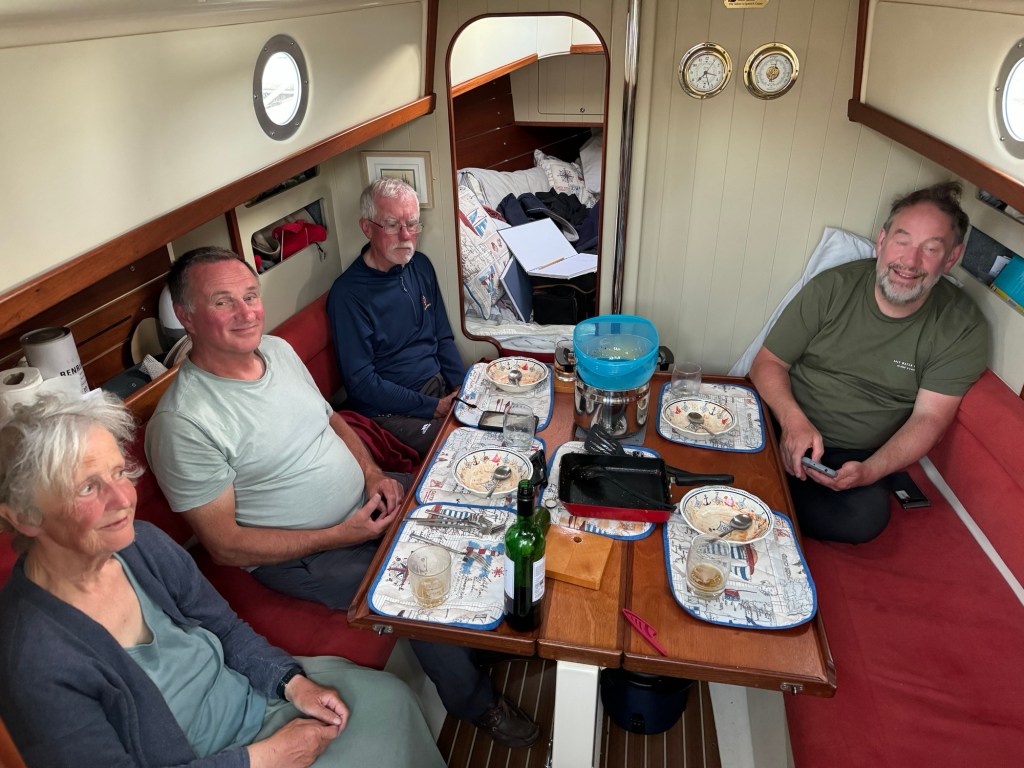
Dinner and planning for the next day’s entry to the Zeeland canals aboard Molly

Bembridge Rally

The weekend of July 20-21st saw Molly attend a gathering of gaffers at Duver marina in Bembridge. Niki and I had a lovely sail across to the Island and rafted up with the fleet. This was our first rally of the season and it was most enjoyable to catch up with friends.

Rafted in Duver marina
Pontoon party
Afternoon tea at Mark and Rosy Hickman’s boat workshop
Sailing round the Nab in company
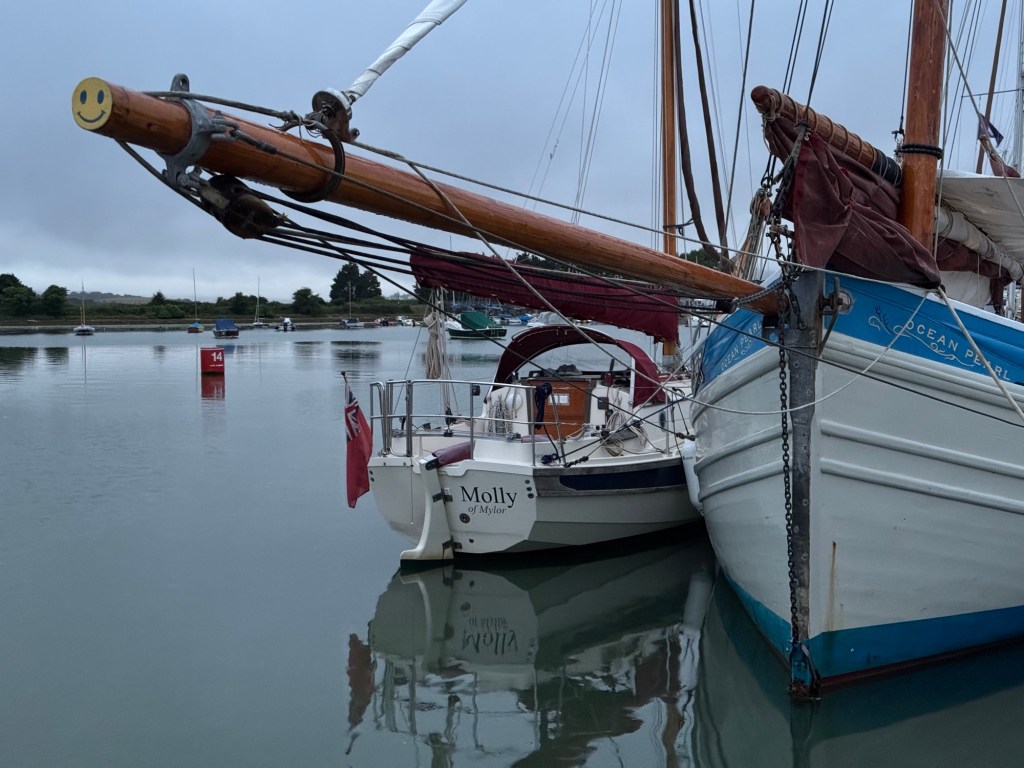
Molly moored to Ocean Pearl
Ocean Pearl returning to Chichester
Molly crossing the Solent back to Portsmouth (picture by Huw Hallebone)

OGA East Coast Cruise Part 2

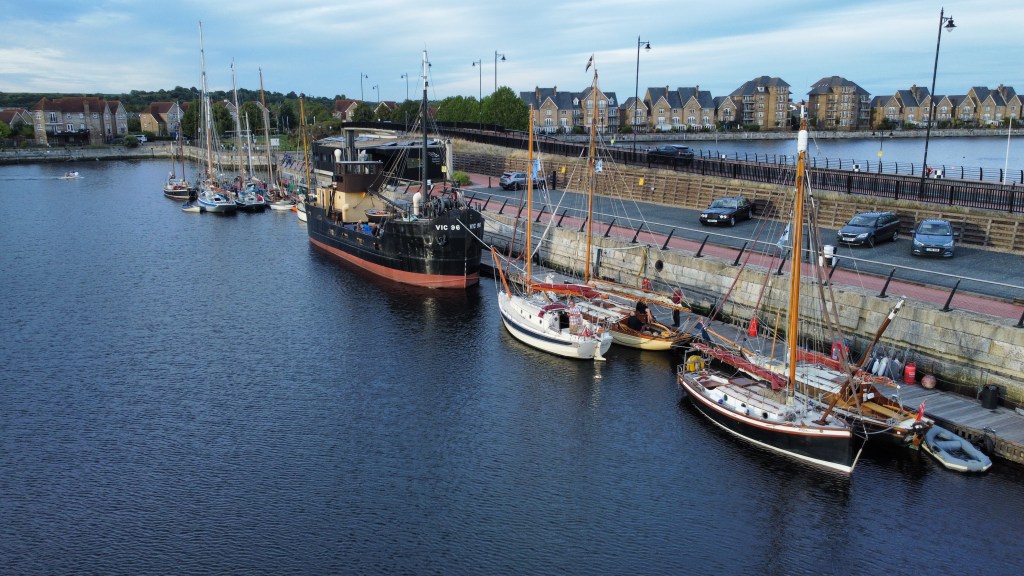
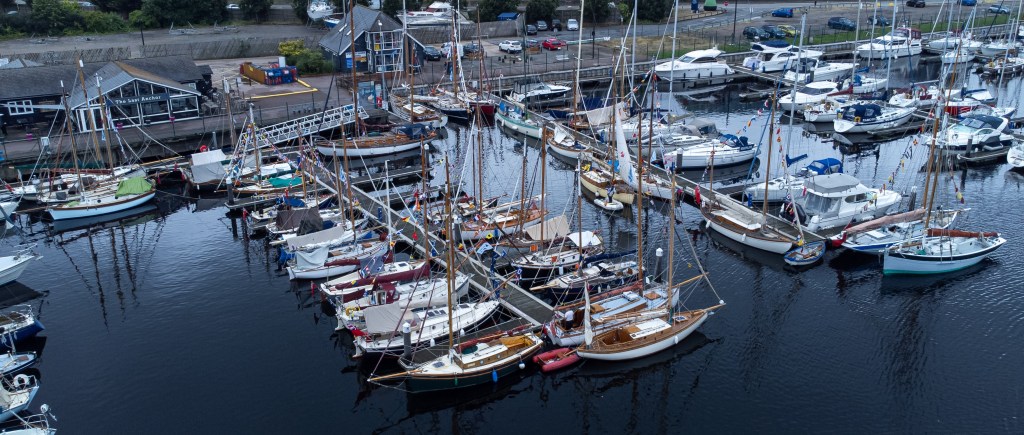
Molly rafted in Chatham to Emmanuel, between VIC96 on one side and Puffin Bach and Plum of Mylor on the other

Continuing our cruise from the Orwell to the Medway, taking in the Essex coast…

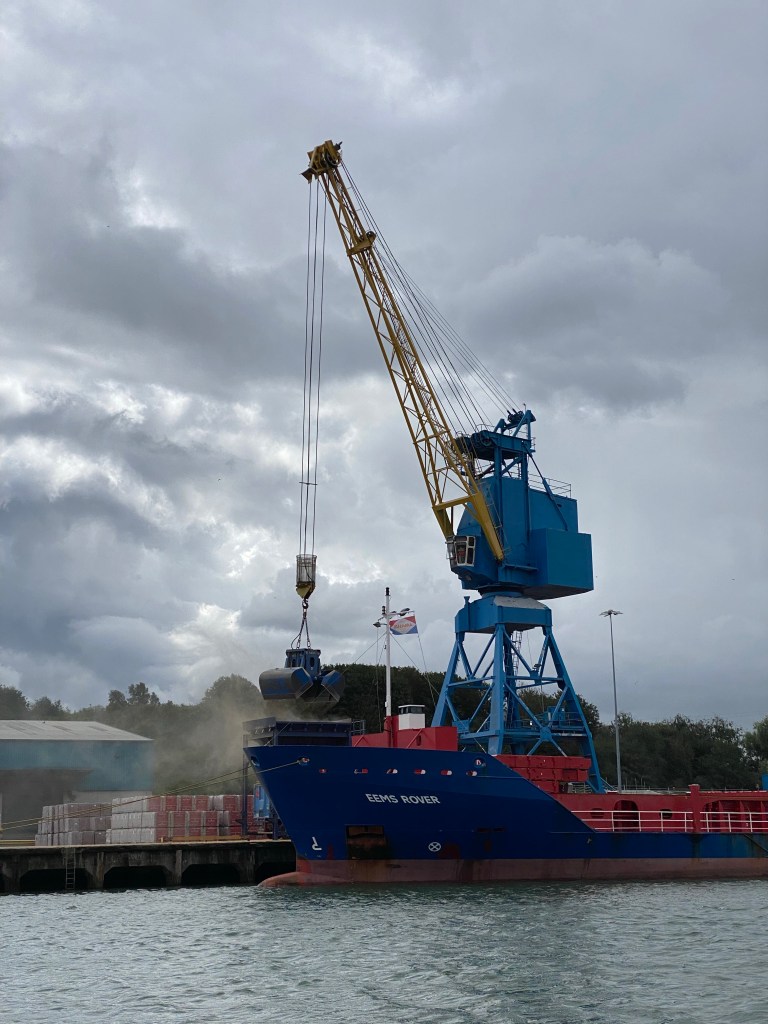
Wednesday night found us in the Swale, at Queenborough, a day earlier than expected. For the final leg of the cruise we had an interesting passage up the Medway to Chatham. The river is very industrial at the mouth, with many working (and some apparently derelict) commercial berths, mostly loading bulk goods. The river has a series of meandering bends and after the first, the river becomes much more rural.

The wind was very light and fluky, but I was determined to sail as much as possible. It was a very peaceful sail and sailing solo, I certainly had plenty of practice of single handed tacking of the foresails!

Eventually, we drew into Chatham which is approached around a large oxbow. We passed first a double commercial lock, and once around the bend the second, newer single lock into the marina on the opposite side of the loop. There are three connecting basins between these two sets of locks, though they are no longer navigable. This creates an “island” which is now a modern housing estate. The yacht marina within the eastern side is large and, as now seems to customary, lined with residential developments.

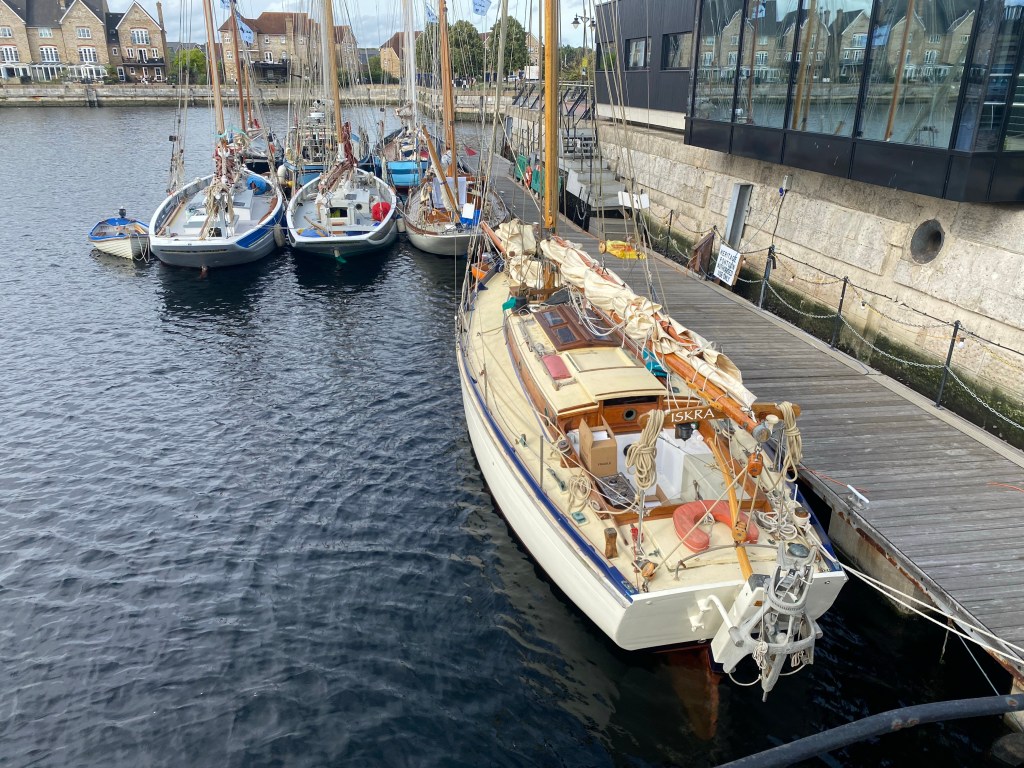
Nestling at the back of the marina, is the “heritage pier”, which predates the marina and is home to our host, the Chatham Maritime Trust. During our stay here, we were given tours of their restored wartime steam tug VIC 96, which was originally a victualling craft and, having languished as a display exhibit in Cumbria, has been restored to full working order and returned to its home.

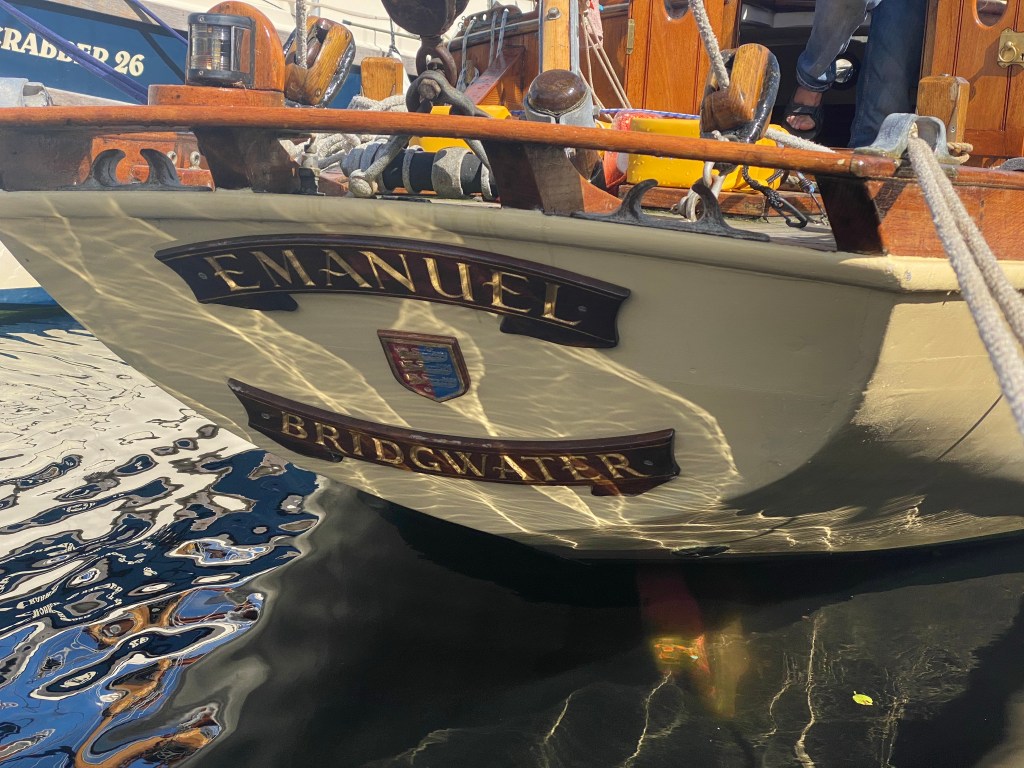
Molly was rafted alongside a lovely 1924 30’ gaff cutter, Emanuel, fully restored by owners Jan and Robert Holden. This boat, whose mooring I had passed on my outbound visit to Sandwich, has made several historic voyages including a single handed passage to the Faeroes and Newfoundland in the 1930s. Her current custodians are understandably proud of her, and Jan was delighted to show us the immaculate interior which has been restored faithfully to the condition for those famous voyages.

Robert telling us Emanuel’s story. Note the cinque ports crest on her stern
The coat of arms of King George III at the entrance to the historic dockyard at Chatham
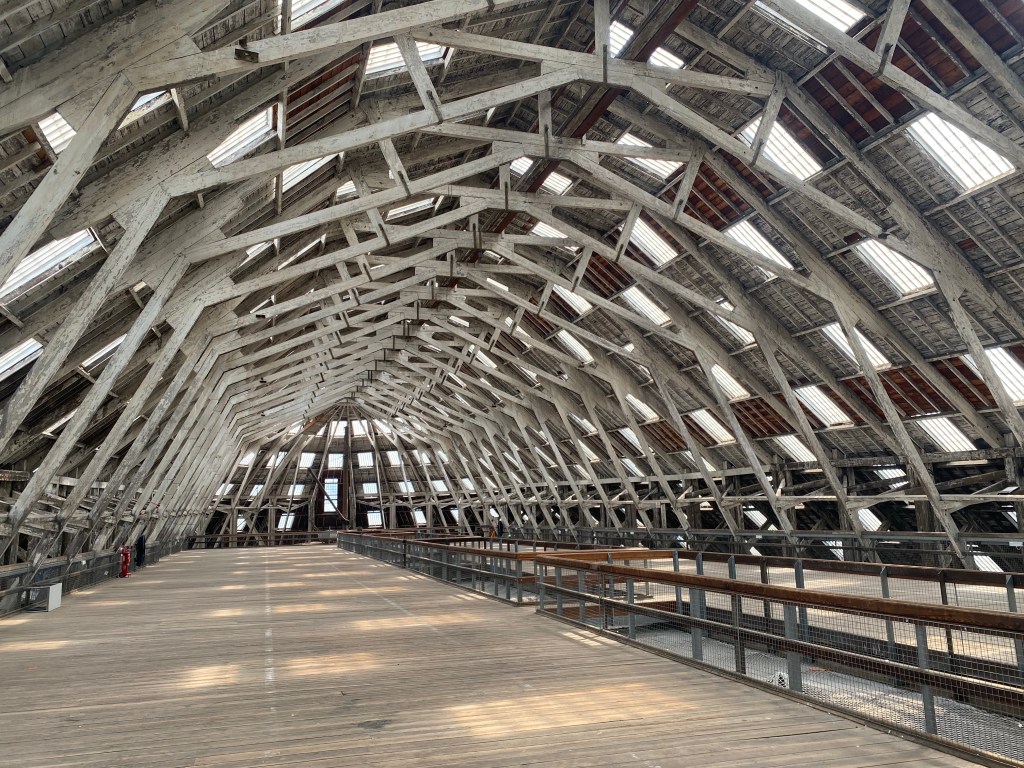
3 Slip, “the Big Space”, an amazing wooden building designed to be large enough to cover a ship in construction

During our stay, there were also tours of a local gin distillery available, though a few of us chose to visit the fascinating Historic Dockyard. This has amazingly well preserved architecture, including the last intact example of a rope walk (a building a quarter of a mile long), still working.

Emanuel and Molly

That evening marked the conclusion of the official rally, spent on deck of VIC 96, with a fish and chip supper.

Our last evening, aboard VIC96

I had been joined for the final section of the trip by fellow Solent sailor, John, who owns a shrimper 21 and was keen to sail a Crabber 26.

The forecast was not ideal, but we dropped our warps promptly at 0730, for our passage to Ramsgate, but I was struck dumb when I radioed for a lock out and was told tbd lock was broken! It transpired that the lock had malfunctioned the previous day and the marina told us it was due to be fixed that day. However, we heard different stories at different times and it emerged that this was not the first breakdown.

I found it unbelievable that a large marina (part of the MDL chain) would be rendered inoperable on a summer weekend and a complete lack of urgency to the repairs! Frustrating though this was, the Chatham Maritime Trust were very happy to accommodate us for the duration of our enforced stay, for which we were most grateful. Many owners had to leave their boats and return the following weekend to get them home.

We made the best of the waiting time, visiting each others’ boats and also returning to see more of the historic dockyard (the ticket is valid for a year). John and I enjoyed dinner aboard Windbreker courtesy of Else and Edgar, who have lived aboard for all 25 years of their marriage.

OGA East Coast Cruise part 1

OGA East Coast Cruise part 1

The first section of Molly’s meander home would be with the OGA East Coast cruise, which had been arranged in part for the benefit of us visitors from further south. The object was to cross the Thames estuary and visit the Medway, after which we were to part ways.

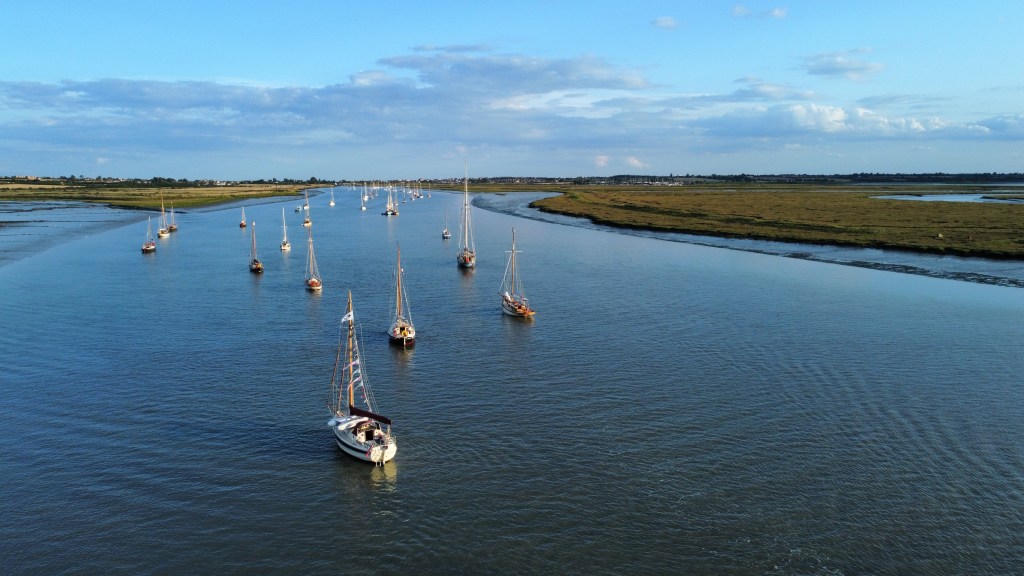
The first day of the cruise was a passage race to the Walton Backwaters. Niki helmed in the light but gusty wind, picking our way out of the Orwell, past Felixstowe docks and across the shallow bay, to the entrance of “Secret Waters”. There was plenty of room in the Walton Channel for the fleet to anchor and the crews gathered on the beach at Stone Point.

Looking back to Felixstowe docks as we leave the Orwell

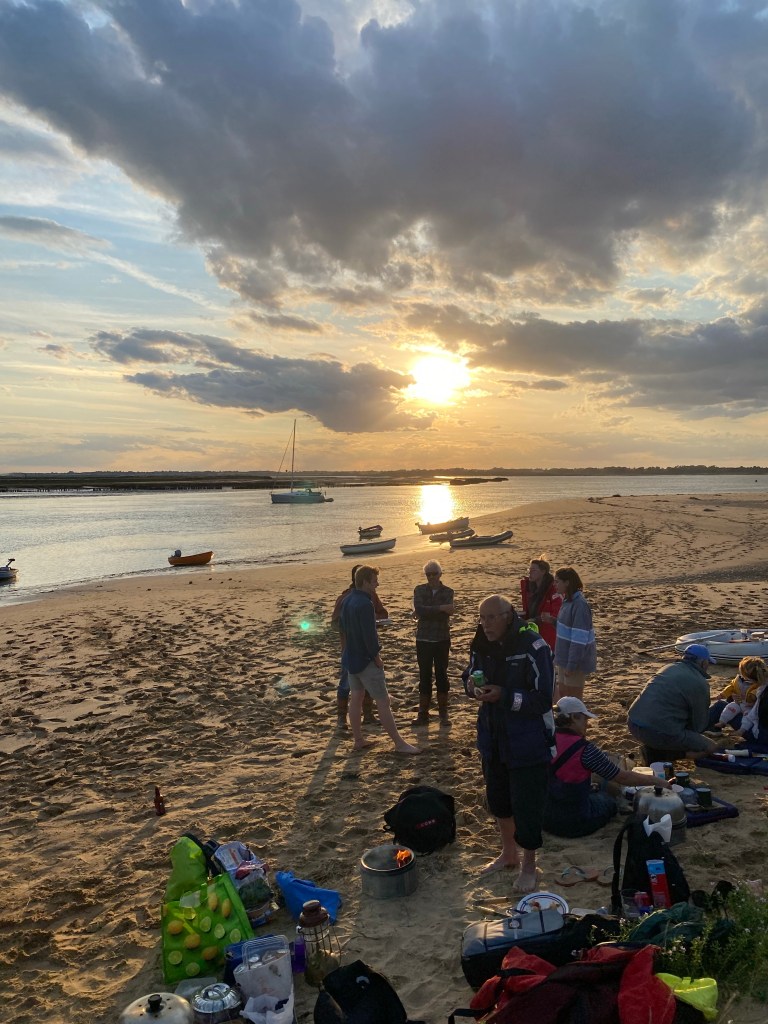
In stark contrast to the weather of the last few days, it was a beautiful golden evening. We had brought barbecue packs prepared by the cafe at Suffolk Marina, as well as bottles of the celebratory “Old Gaffer” beer and we all had stories to share; I was particularly interested to chat to those who had participated in the Round Britain Challenge. Several of these were local and had in effect finished, whereas others still had some way until completion – the furthest being Helford River in Cornwall.

Beach barbecue at Stone Point
The fleet at anchor

The shore at Stone Point is sandy and ideal for coming ashore, but progressively becomes mud up the channel. Brian noticed that Puffin Bach had been anchored ambitiously shallow and was now aground. He was concerned that if he didn’t make a dash for it, there might not be enough water to even get the tender to it, so he made a swift exit. I helped him carry his dinghy down to the water’s edge, but unfortunately we had not noticed that everyone carried their dinghy to the sandy point to launch and we were soon squelching in the mud. When Brian had been successfully launched, I realised that my feet were firmly held by the mud and I promptly fell over in the black sticky ooze, much to the amusement of the rest of the fleet! The evidence of that slip would take several days to remove from clothes and boat…

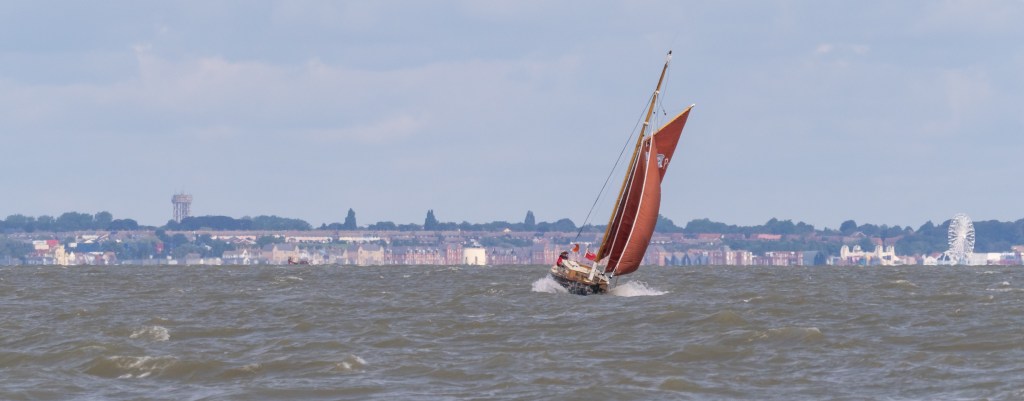
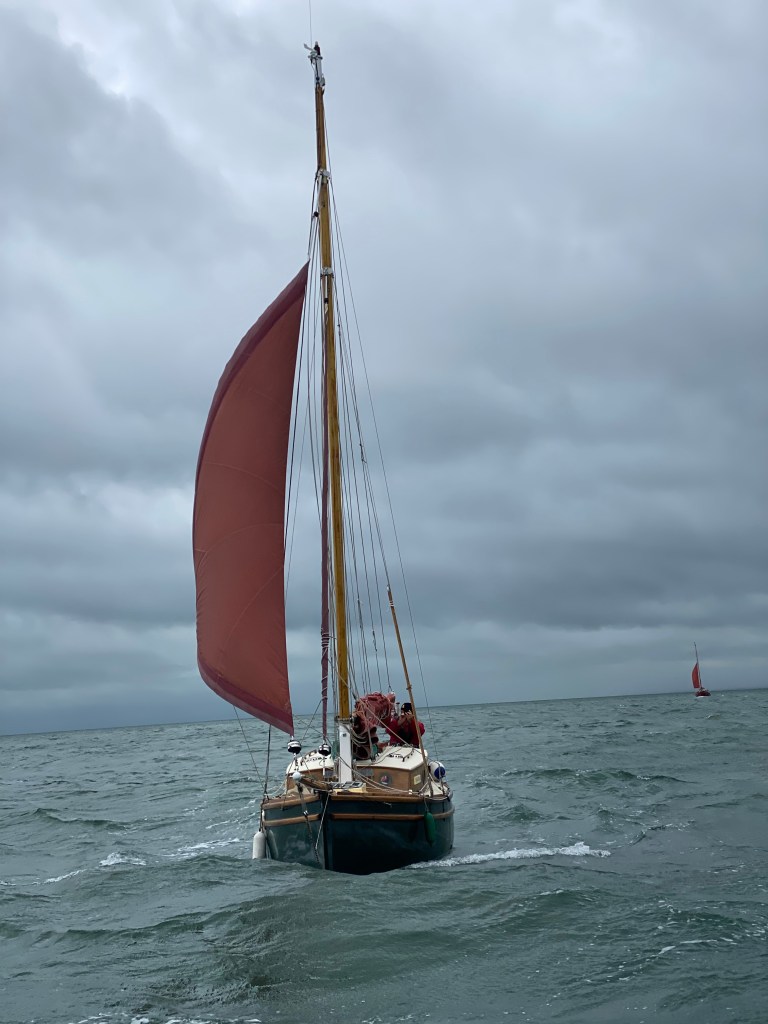
The following day was a passage race to West Mersea, down “The Wallet”. Conditions were brisk and we set out on first reef, making excellent progress. The wind continued to build and as we beat into the mouth of the Blackwater conditions became rather challenging, so in the end we abandoned racing and used the engine to maintain boat speed and enable us to point higher.

Puffin Bach with Harwich behind
Niki at the helm
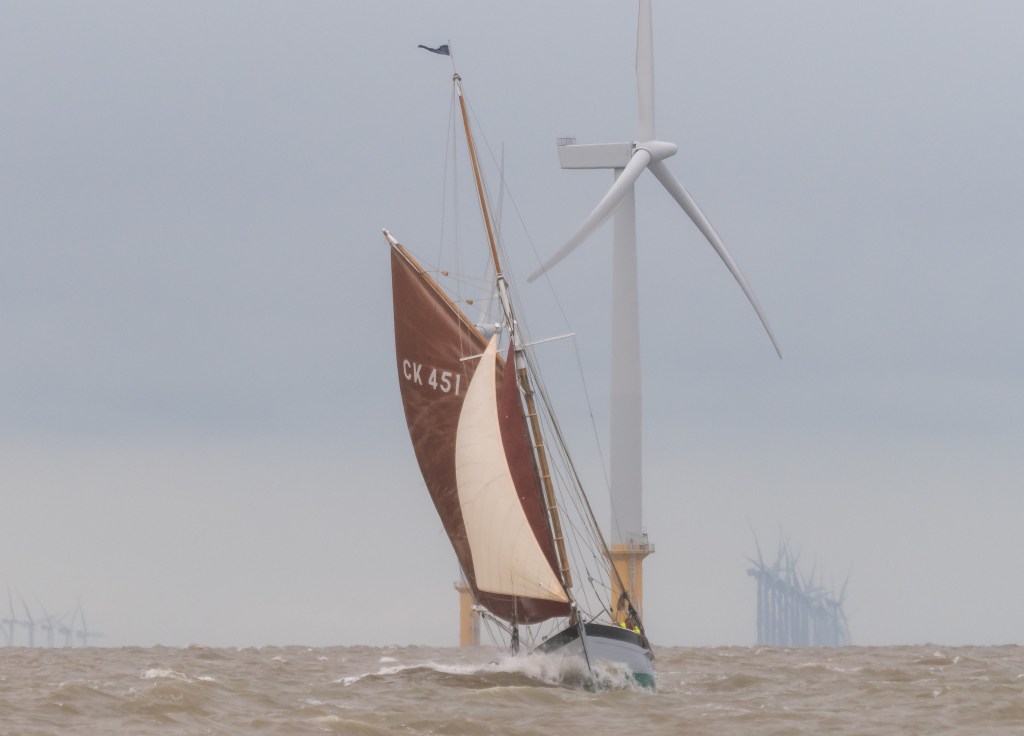
Daisy Belle with Gunfleet wind turbines behind
Jan Blank going well

A number of the fleet found conditions too challenging, turning and running downwind to shelter. Those of us that made it to Mersea were given moorings at West Mersea Yacht Club and ferried ashore for a well-earned chilli ashore.

After the rain. A red sky at night…

The next day had been planned as sailing in the Blackwater, returning to the moorings in the evening. However a decision was taken to grab a weather window of fair winds to cross the Thames estuary and enter the Medway. Unfortunately, Niki was not able to join me on this leg, so I made the journey solo.

I dropped Niki at the yacht club pontoon and took the opportunity to pack the tender up into the locker. Motor-sailing into the Blackwater, although the wind was pretty non-existent, the ebbing tide carried me out.

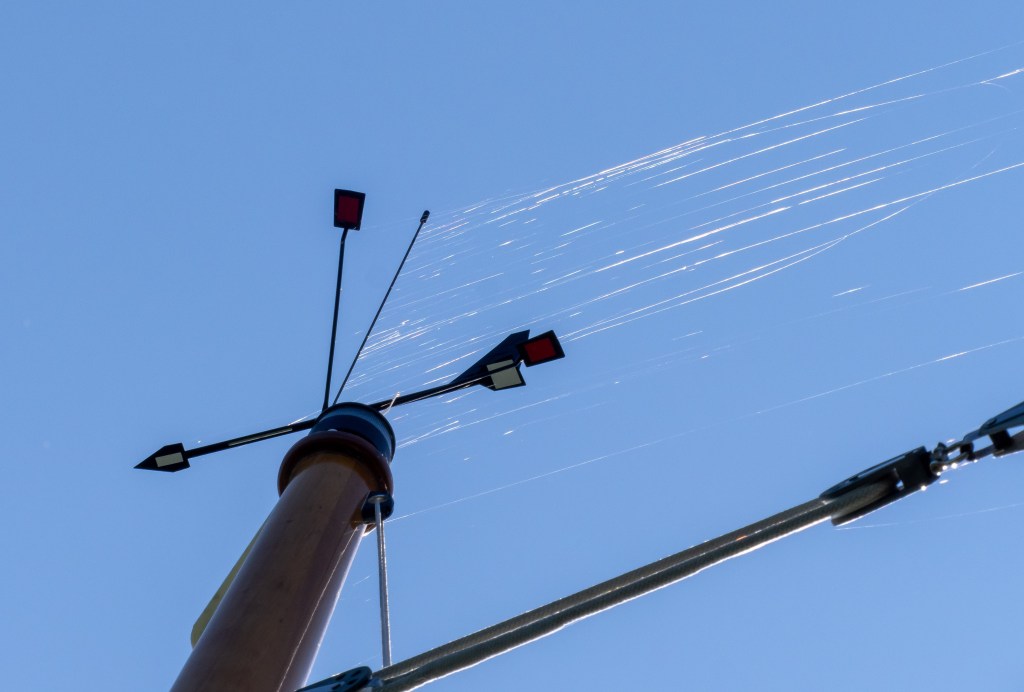
Molly’s rigging was covered in strands of spider silk the night we moored at West Mersea

Looking at a chart of the Thames Estuary, it is littered with obstructions and marks but the experience of being out on it is, of course just a wide expanse of water. I made my way some seven miles out, to take the Wallet Spitway between Buxey and Gunfleet sands.

By this time, the wind was beginning to fill in and I was at last able to switch off the engine. It was a peaceful sail in full sunshine – the sort of summer day which has been in short supply this year. As I progressed passed Foulness Sand, with explosions very much visible and audible from the MoD test centre, the wind continued to fill and it became a beautiful reach. By this time, I had caught up with the fleet (they had not used engine early on), which made a lovely sight spread across water.

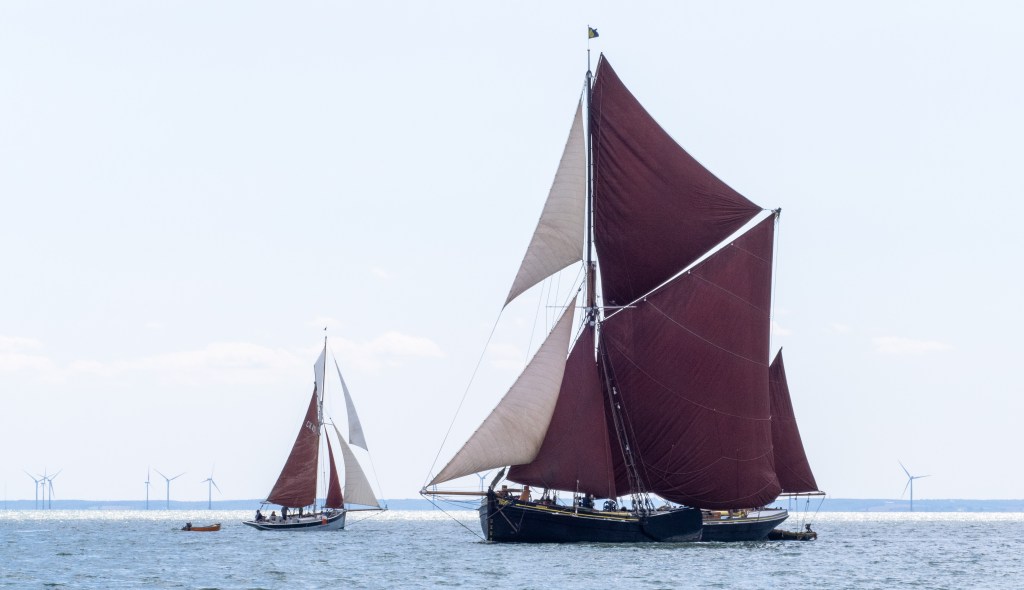
Daisy Belle passing a Thames Barge, both in full sail
Puffin Bach

I turned towards our destination down Middle Deep and it was a leisurely beat, but the tide had begun to turn in my favour. The final hurdle was to cross the Thames’ main shipping channel. I was fortunate that there was little traffic as I crossed, bringing us to the Medway river entrance. The wide commercial harbour was devoid of traffic, so there was plenty of space to drop sails before entering our mooring at Queenborough.

Queenborough is on the river Swale, so this was my seventh river of the trip (and I hope to add at least one more before reaching home again). We all rafted onto just two large mooring buoys and made an impressive sight in the afternoon sun. There was time for leisurely drinks and nibbles aboard Daisy Belle and Windbreker; we then cooked our evening meal aboard, before ferrying ashore in tenders, to the pub.

Continues in part 2…

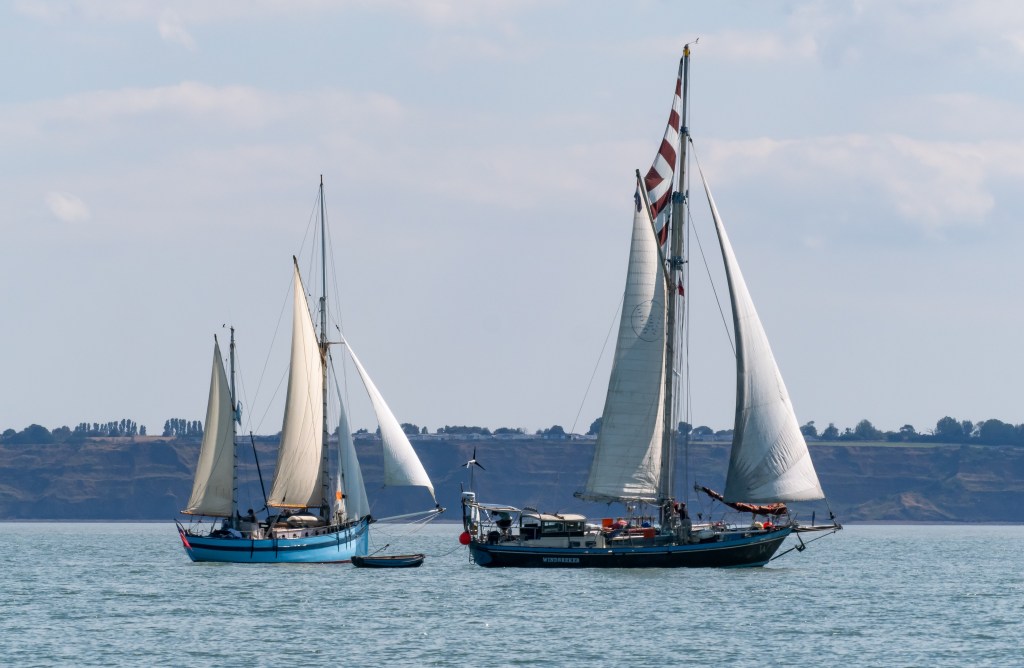
Rely and Windbreker
Look behind you! Plum was not so lucky with the traffic, crossing Princes channel
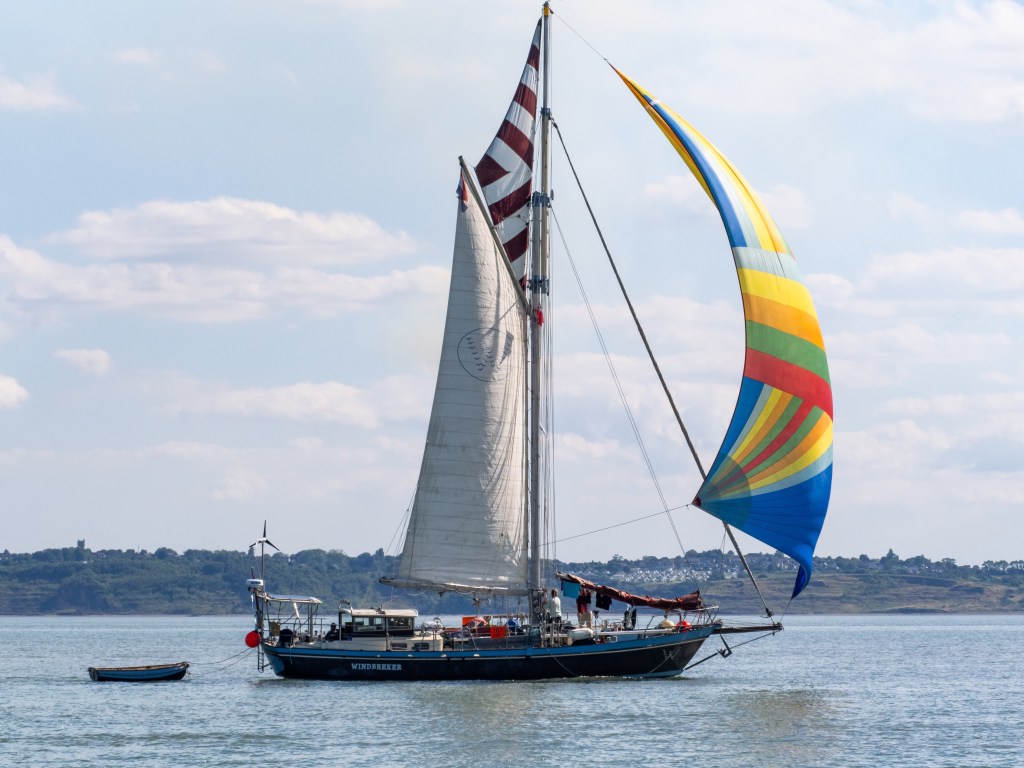
Windbreker and her “hippy” spinnaker
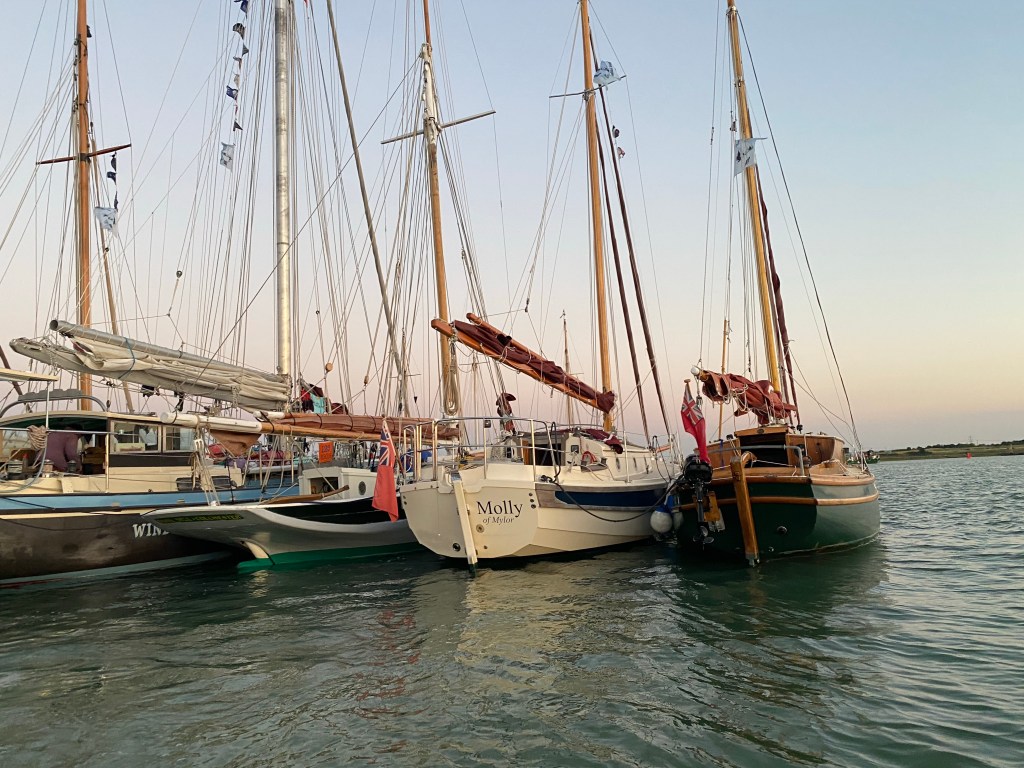
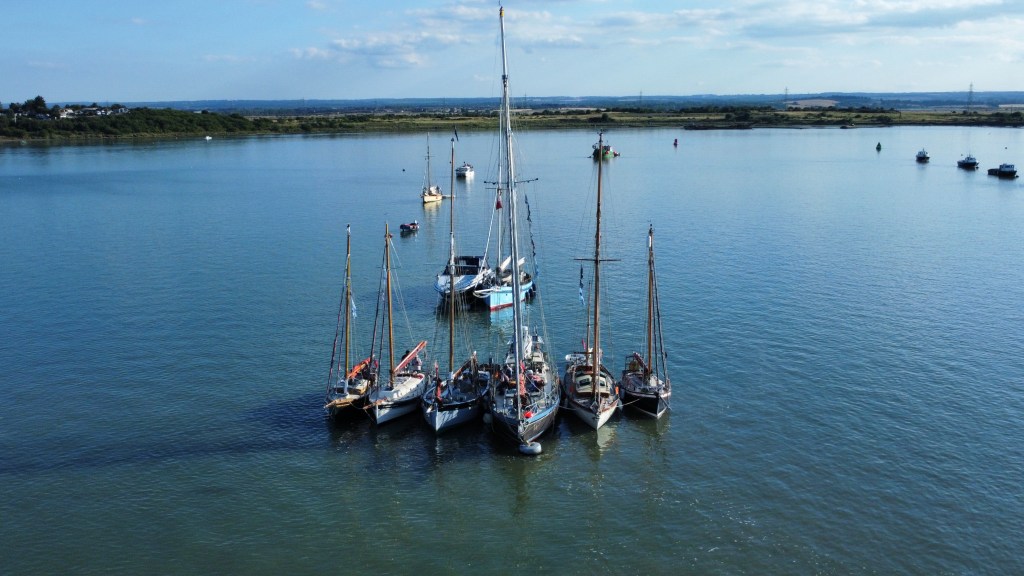
Rafted together
Molly approaching the Medway (thanks to Colin of Plum for the photo)
The rafted fleet at Queenborough

OGA diamond jubilee party

The party to mark 60 years of the OGA (association for gaff rigged sailing) took place in two halves. Celebrations kicked off right in the centre of Ipswich with all the cruising boats moored together at Ipswich Haven Marina. A series of organised events were available but Huw (who had sailed with me from Ramsgate), joined by his wife Maggie, and I enjoyed a sunny sail down the Orwell to the docks and back.

Rafted in Suffolk Yacht Haven
Huw and Maggie at the helm
Rafted to Nancy Blackett, locking in to Ipswich marina
Ipswich commercial port

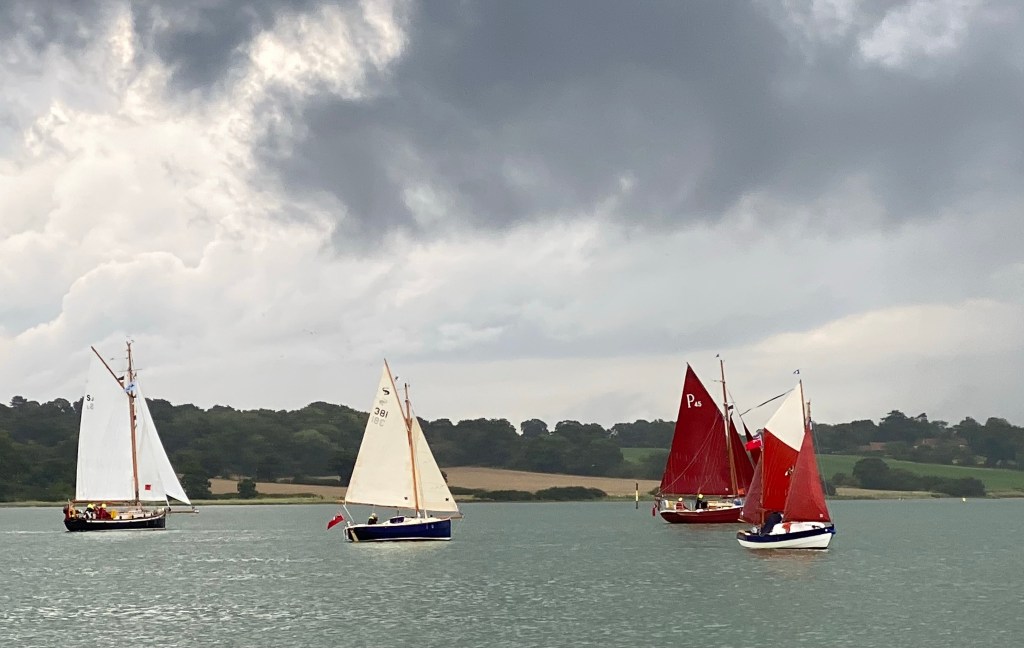
The two evening gatherings were lively affairs in a local deconsecrated church. Gaffers are an unruly lot and the briefing was very much a “herding cats” scenario. The main event of the second day was a parade of sail, in which all of the cruising boats were to process down the Orwell to Suffolk Yacht Harbour at Levington, joined by all the trailer sailers who would sail up from Suffolk Yacht Harbour to meet us for the second half of the party.

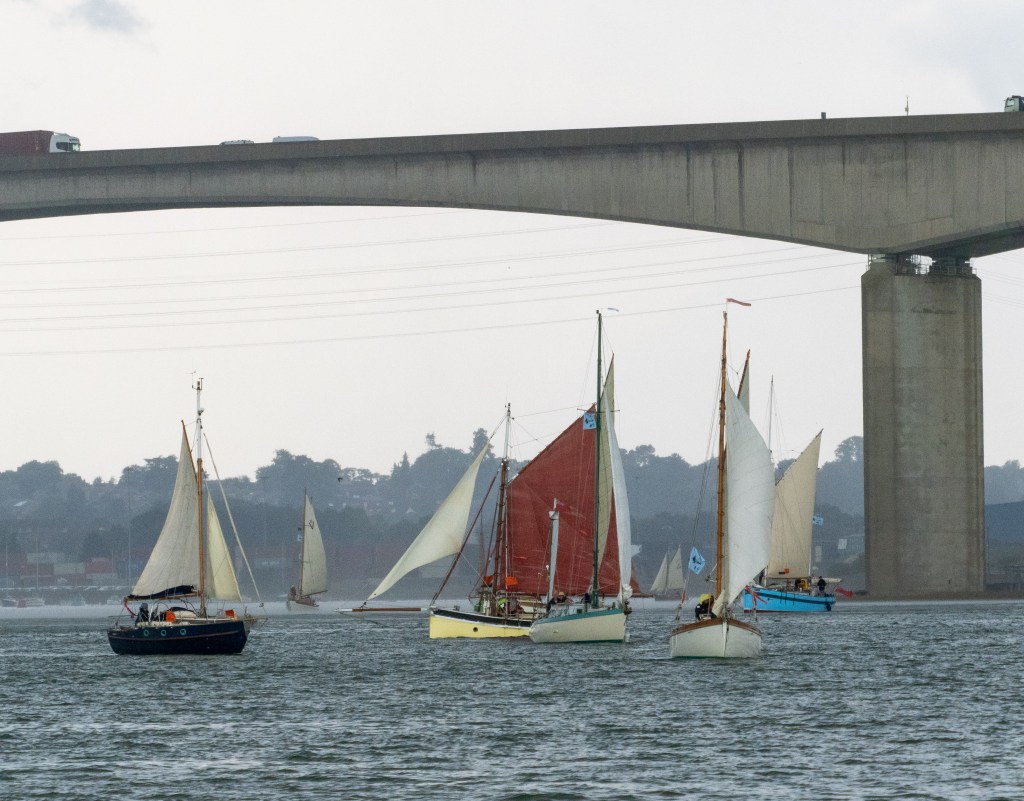
Ipswich lock was opened on free flow, after a large cargo vessel had turned about in the narrow commercial port, and we all made our way down to the Orwell road bridge. The fleet was divided up into a number of “squadrons” in order to help the boats, which varied enormously in size and type, to stay in some sort of formation.

Parade forming up under the Orwell Bridge
Molly on a mooring as the procession forms up
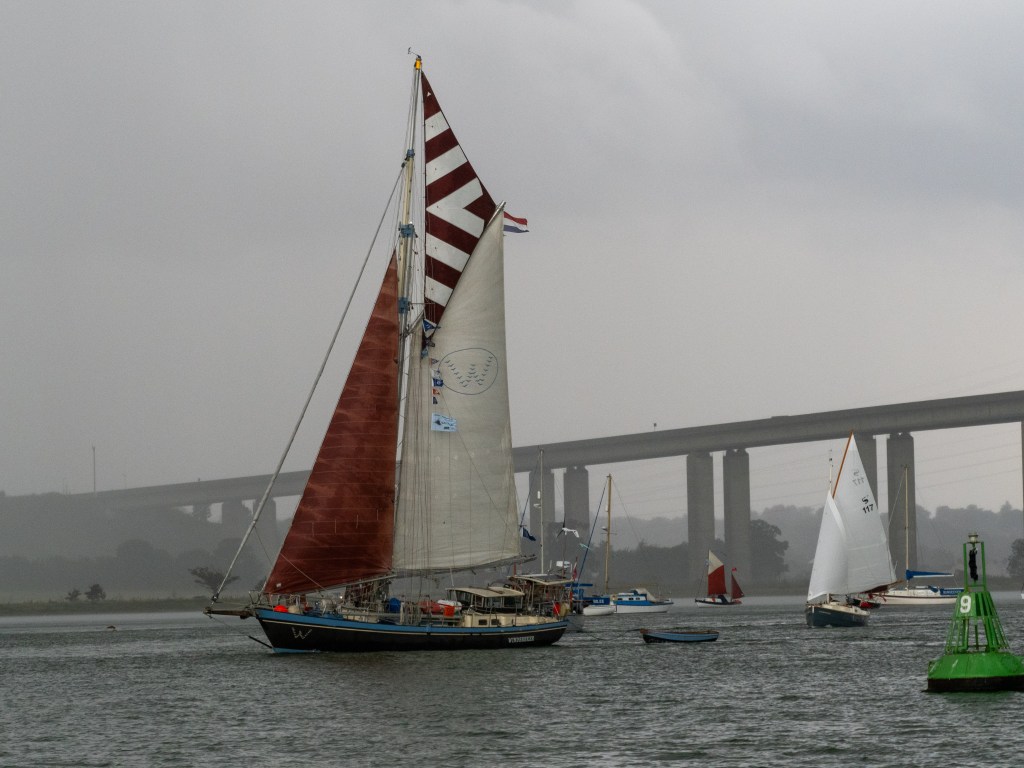
The grand parade
The thunderstorm approaches…
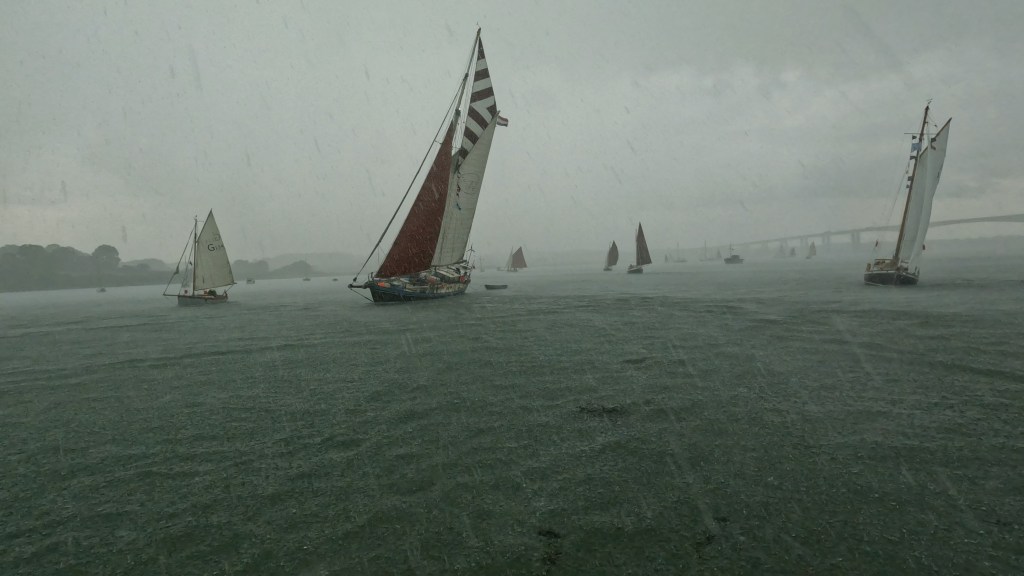
The rain closing in
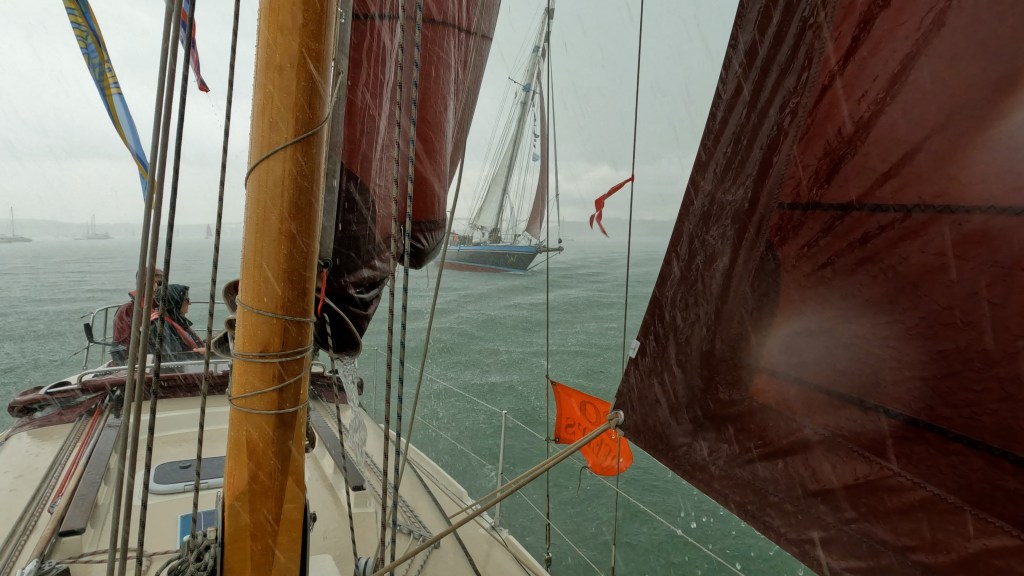
In the deluge! (you can see a torrent of water pouring off our reef)

Molly was among the early boats to leave harbour, with Niki and Alice aboard as well as Solent friends Grant and Amanda. We picked up a mooring below the bridge and watched the procession forming, before taking our own place. The day started as a lovely summer day with light winds and a few puffy clouds drifting by.

The weather changed though; as the procession got going, a bank of ominous cloud approached. We could clearly see a line of rain advancing towards us. However we were unprepared for the intensity of the deluge that arrived, complete with thunder and lightning, though fortunately no strong winds. The fleet continued undaunted and eventually the rain eased for the protracted process of getting all the boats squeezed into the Suffolk Yacht Harbour for the second half of the party.

Sadly, the next day was filled with heavy rain and very light winds, followed by strong winds the day after. Molly’s crew skipped the racing and we all had a pleasant day in Woodbridge. The evening entertainments were not dampened by the weather, with live music, an open mic and several interesting talks. By this time, the crews from boats small or large and from all regions were well-mixed, and swapping stories.

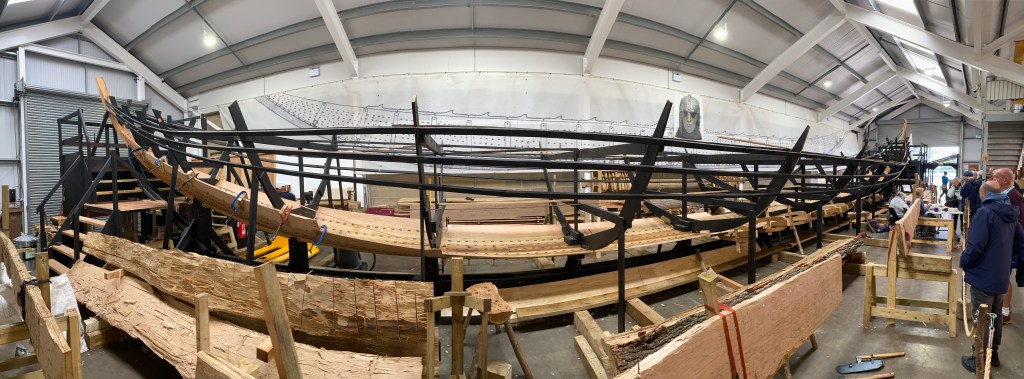
Replica Saxon longboat made, using measurements from the Sutton Hoo dig, as well as period correct (as far as known) techniques and materials
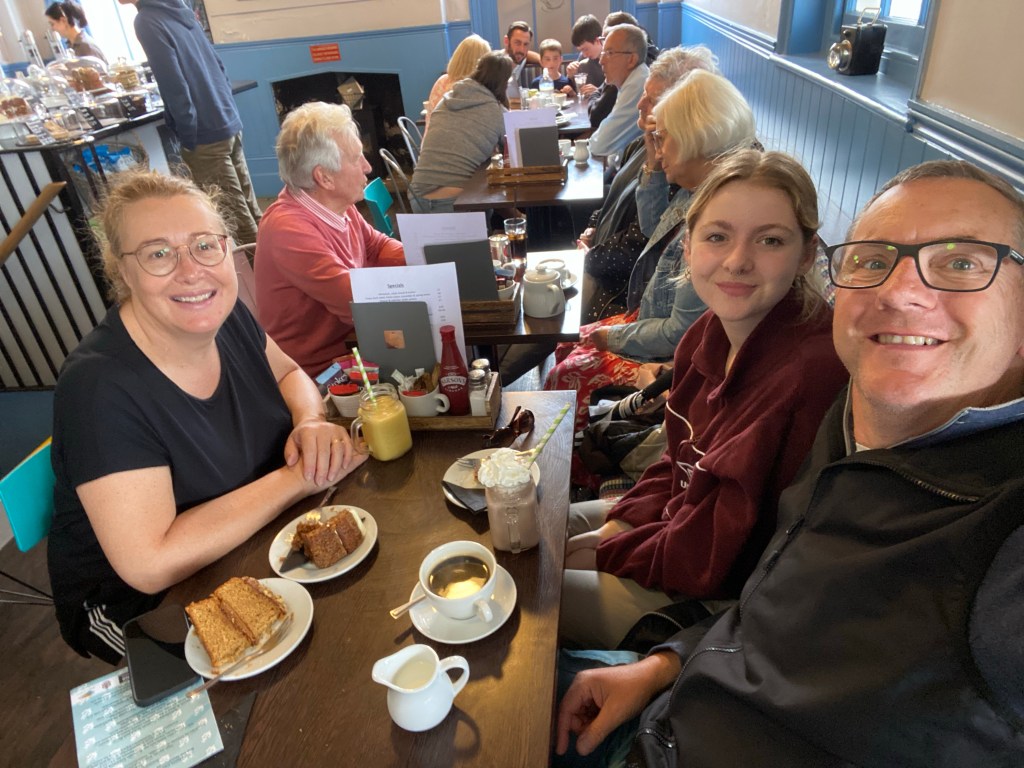
Afternoon tea!
Sailing to the East coast 3: Crossing the Thames estuary

Sailing to the East coast 3: Crossing the Thames estuary

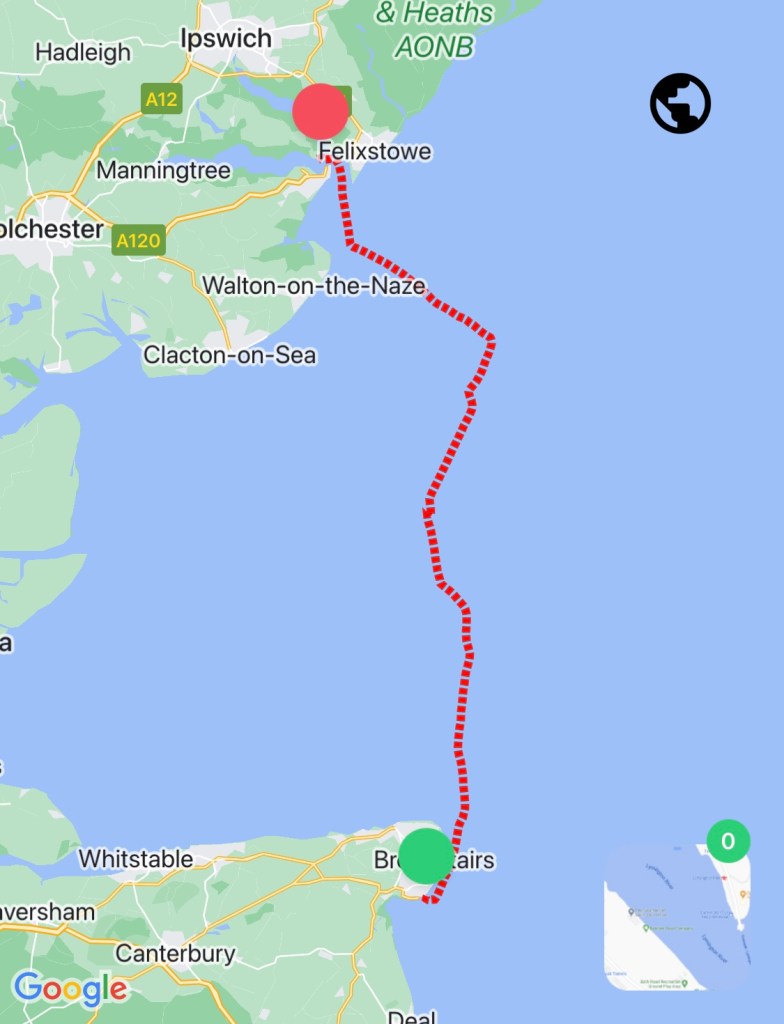
The wavy jet stream has been bowling low pressure systems at us one after another and we three boats from the Solent have been obsessively poring over weather forecasts, waiting for a gap to allow us to complete the final leg of our journey, from Ramsgate in Kent across the Thames estuary to Suffolk. My plan had been to spend some time on the Suffolk rivers, but these plans were now abandoned and I was just hoping for a suitable day to cross before our party in Ipswich.

The three boats in question were Huw and myself on Molly, Liz and Tim on High Barbaree (Cornish Crabbers Pilot Cutter 30) and Brian on Puffin Bach (Tamarisk 24). We decided our window had come after two very windy days in Ramsgate and set off determined to stay together in a gusty SW F5.

Passing Broadstairs
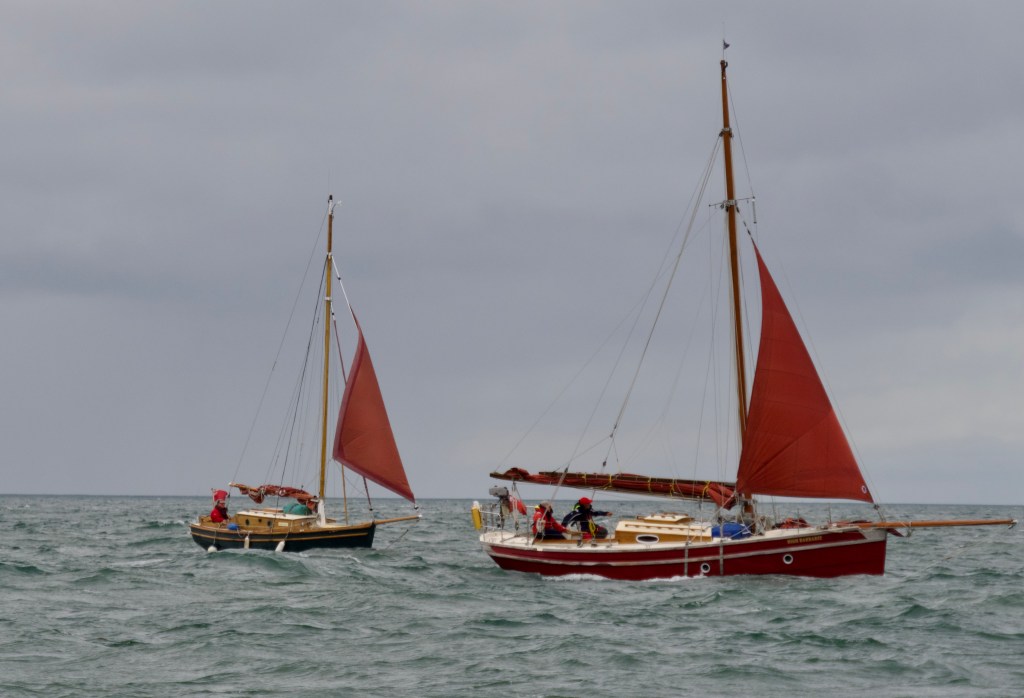
Puffin Bach and High Barbaree making for North Foreland under jib and engine

We initially had jib only with engine and ran north along the chalky coast past Broadstairs and the iconic North Foreland, into the wide mouth of the Thames. The main landmarks were the huge Thanet wind farm close by, with the London array visible in the distance. The latter was our target and pass through this grid of turbines to cross Foulgers Gat, a passage between one of many sand banks in the Thames estuary.

We had been promised a decreasing wind by the forecast, but that was not to be. Huw and I decided that raising the main would ease the uncomfortable motion of that confused water. What a difference it made! We cut much more easily through the chop between the turbines on double reefed main and jib. As we emerged into Black Deep, the main shipping channel, it was clear we were leaving behind Puffin Bach, sailed solo by Brian. On a broad reach at that point, we tacked back round to him then tacked once more onto to our original course.

Huw at the helm, as we sailed through London array wind farm

We switched from jib to staysail, in order to match pace with the smaller boat and continued north. However the gusty wind increased in strength and veered to NE, right on the nose. This forced us to drop our sails and motor right into it. Thus ensued a quite uncomfortable period with some very steep chop right on our beam.

High Barbaree and Puffin Bach

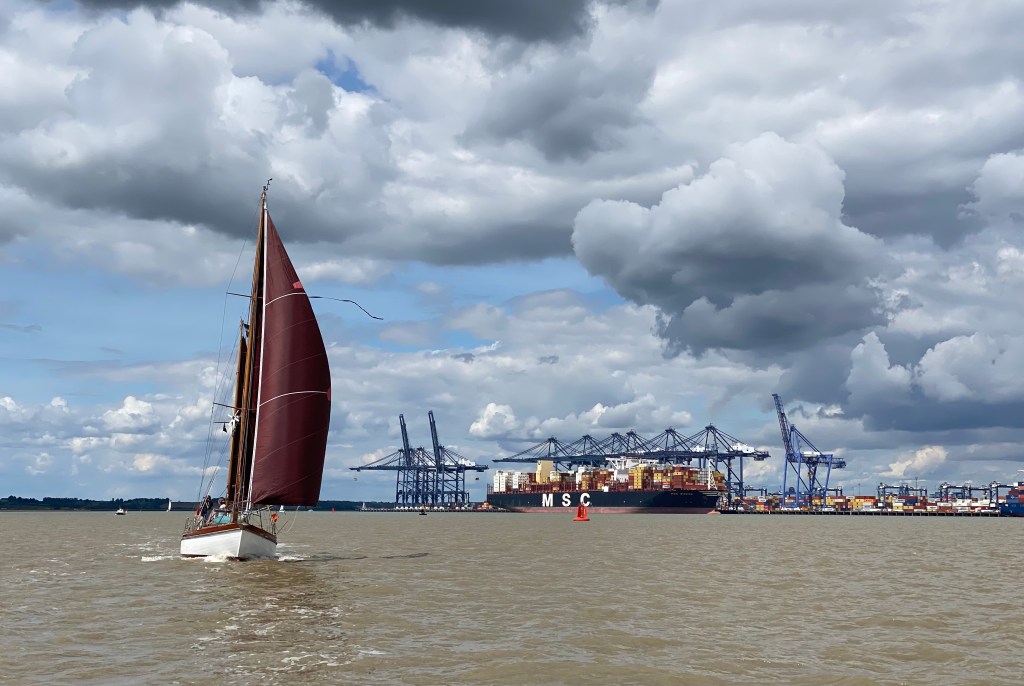
The first sign of the Suffolk shore was the distinctive silhouette of the cranes at Felixstowe, long before we could make out the actual land. At long last we closed with the shore, crossed the Medusa shallows and entered the mouth of the Orwell. Conditions were still pretty lively so Huw and I dropped our plans to anchor for the night and chose the shelter of Shotley marina.

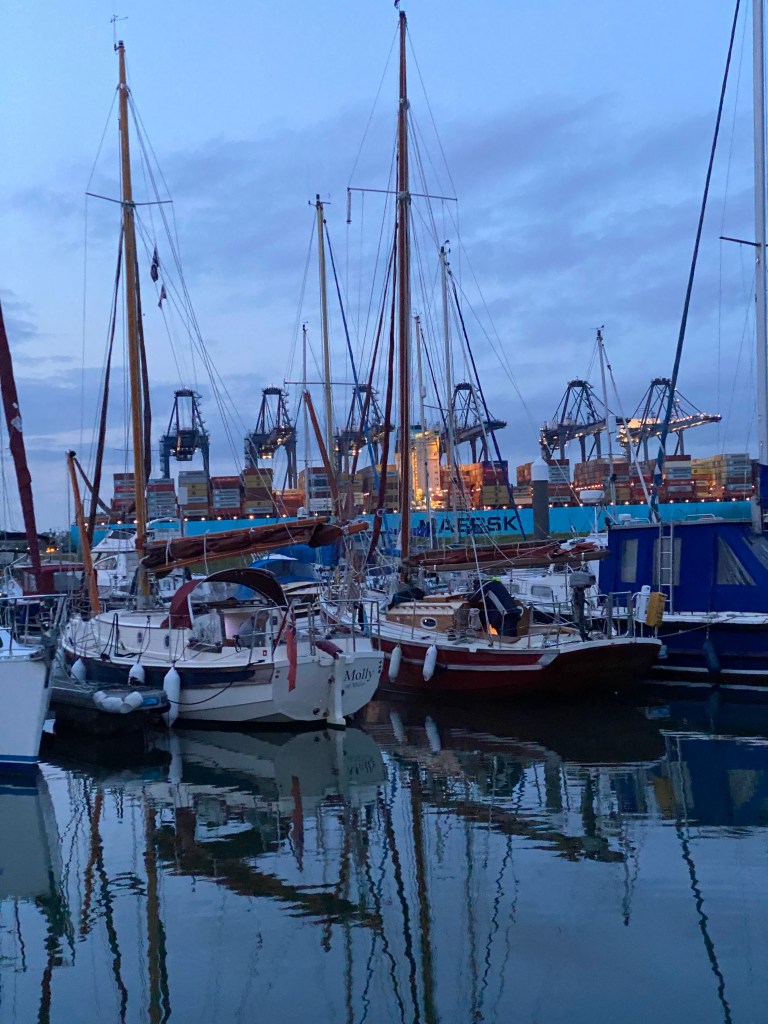
Locking in to the serenity of this harbour in the shadow of great container ships in Felixstowe, we enjoyed corned beef hash aboard High Barbaree for dinner, after which we returned aboard Molly and our heads barely touched the pillows before our eyes closed.

Molly and High Barbaree in Shotley
OGA60: prologue

OGA60: prologue

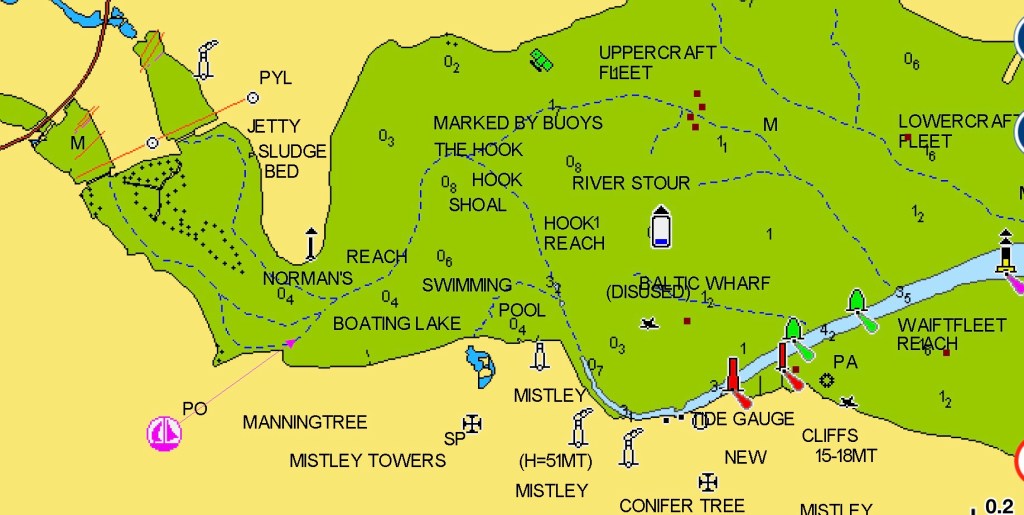
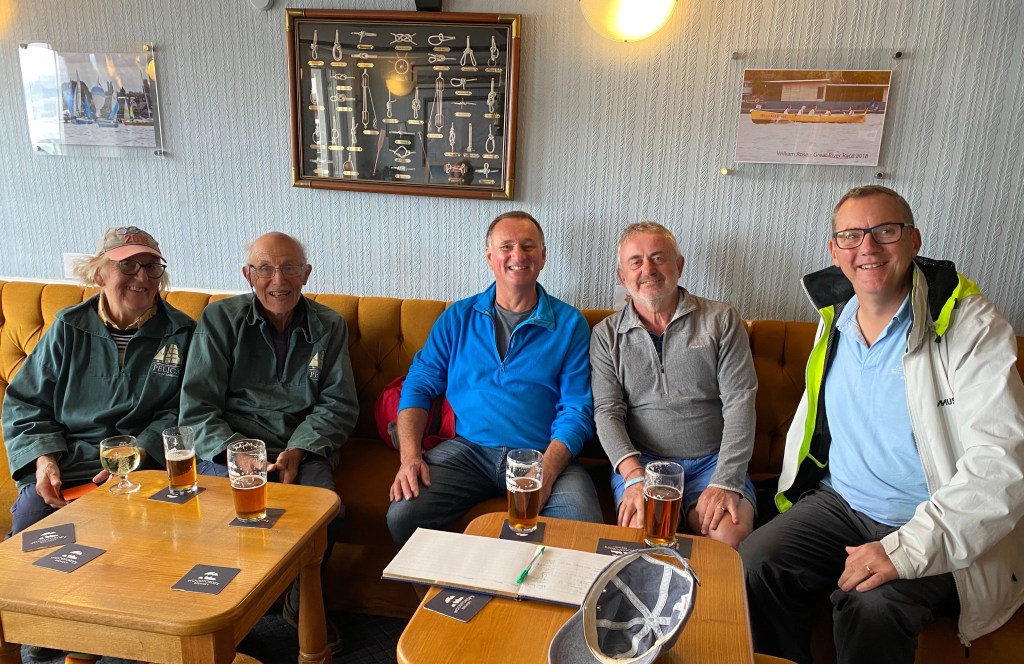
I have explored the Stour in our previous boat Aurora, a Cape Cutter 19 and I wanted to repeat a passage I had made to the navigable limit at Manningtree. The crews of the three boat that sailed from the Solent congregated on Molly with an objective to visit Stour Sailing Club for a pint.

A barge leaving Mistley

It was surprisingly rough at Harwich as we left the shelter of the marina and motored into the teeth of the wind. “It’s a shame we didn’t come in summer”, Brian commented ironically.

As we progressed up river, it gradually became less choppy. We were crossed by a yacht beating up river and also admired a number of sail boarders. We also passed a large barge on its way downstream shortly before we reached its departure point at Mistley, the point where the river shows all drying green on the chart.

Manningtree is the navigable limit of the river Stour

At this point it was necessary to weave more slowly, seeking out the channel of deeper waters. Guided by the line of moored boats and a few channel buoys we approached quay at Manningtree. At first there seemed no room, but the sailing dinghies and their rescue boats were moved aside for our benefit and we moored up behind another visiting yacht.

Hesitating outside the Stour SC clubhouse, the door opened and we were beckoned in by a member, clearly used to visitors “on the clock”. We had arrived at high tide, but our stay would be brief!

Departing Manningtree

We quickly signed in and had a round of drinks, made very welcome guests in the club, before I had to usher the crew back to Molly. Not a moment too soon, we reversed our course and gingerly retraced our steps back to Mistley. I’m sure if we had stayed only 10 minutes more, we could have been trapped by the falling tide.

Cruising back past Mistley

Once in the deeper water, we could dispense with the engine and ran back on jib only. After a much calmer trip back, we locked back into Shotley marina before another pleasant evening aboard High Barbaree.

Cockpit drinks aboard High Barbaree

Southsea Rally

It’s a pleasure to visit somewhere new and what better way than in company! I was very happy to join a rally in Langstone harbour with the Solent OGA group. Langstone is a place I had never previously visited, sandwiched between our home patch of Portsmouth harbour and the ever-popular Chichester harbour.

Tom Cunliffe describes Langstone as a piece of wilderness, between these two high developed and much manicured areas of water. Southsea harbour is accessed over a cill which open at about half tide. Since this window of opportunity was centred on mid-afternoon, Niki and I set off as soon as the sea breeze kicked in.

Rather than sailing the quickest route (only 5M), we reached out to sea past the forts and then tacked back inshore towards Langstone harbour mouth. The pilot warns of strong tides and that was exactly what we got – we swept in at about 6kt, but others who had arrived on full flood made more than 9kt over the ground!

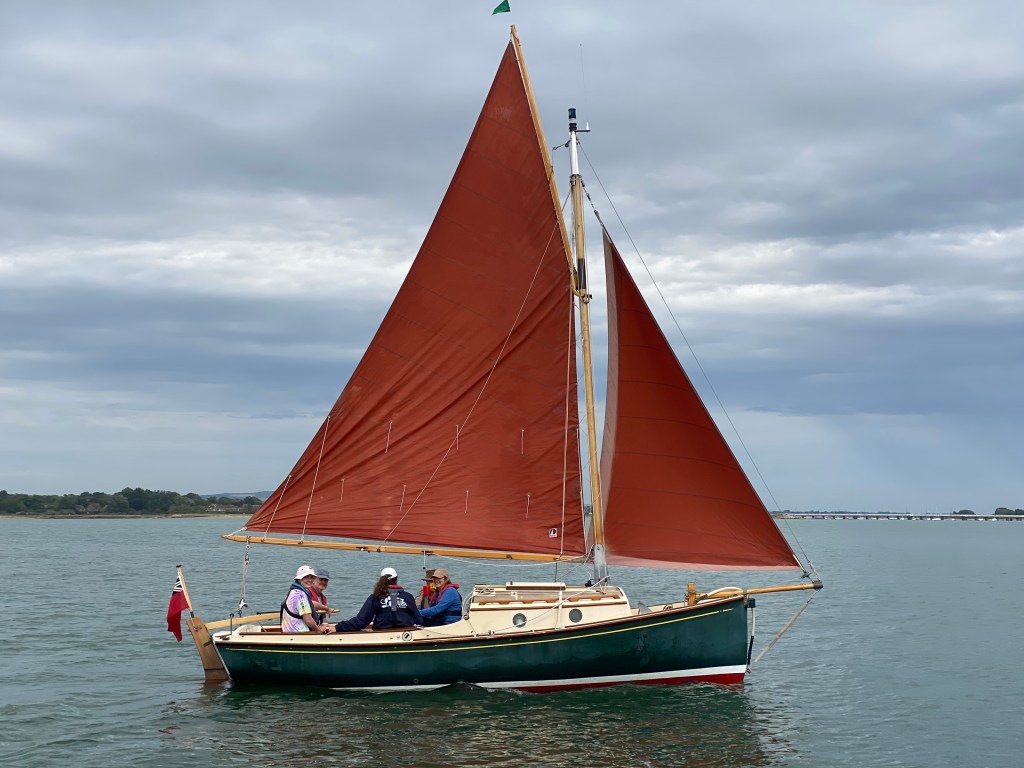
The weekend was a pleasant mix of good food and enjoyable company, with an afternoon cruise on Saturday. We’d had blistering weather for the arrival day, but Saturday morning was grey and some rain, but as our flotilla passed out into the harbour for a cruise, the weather brightened up and the gentle breeze made for a very relaxed trip.

I was surprised by the scarcity of boats (or moorings) in the main part of the water (unlike Chichester) and it’s clear this is a great place to anchor. Our local guides agreed, but I got the impression they’d rather it remained off the list of popular anchorages!

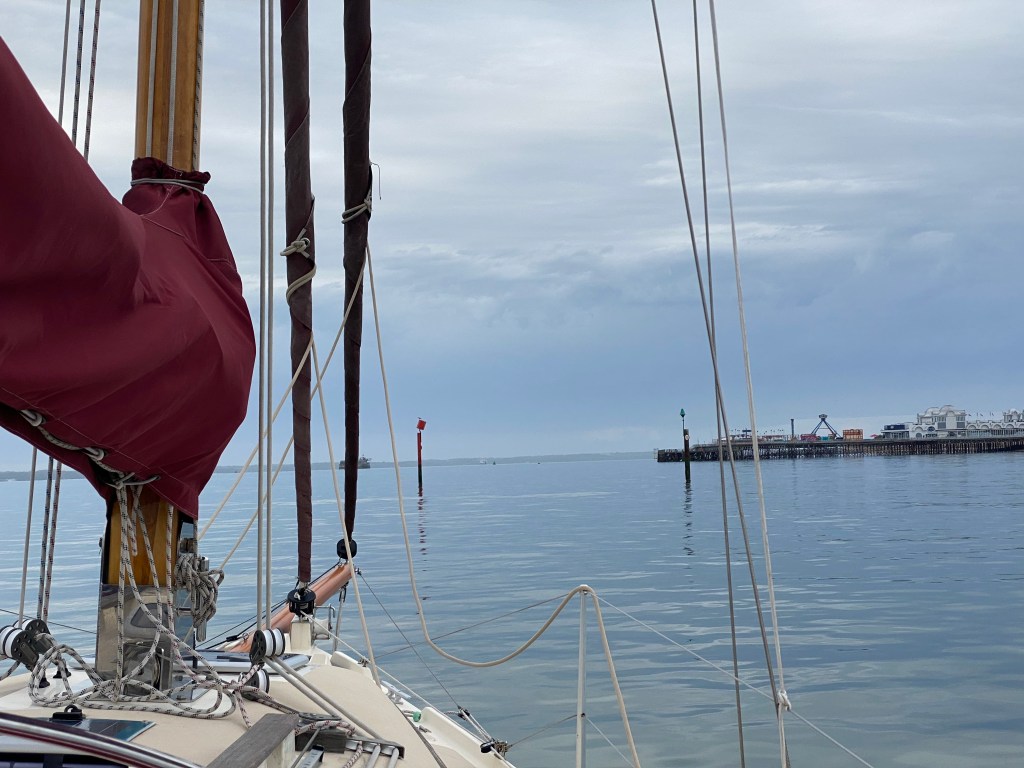
Sunday morning was an early start and we crossed the cill at 7am before the falling tide confined all to the marina for the morning. There was no wind at all, so I motored along the 4m contour, close enough to the shore to watch the early morning swimmers, joggers and dog-walkers on the beach. I passed through the inshore small boat passage, past Southsea pier and back into Portsmouth, leaving us plenty of time to tidy the boat before returning home in plenty of time.

Tied up alongside Nancy Blackett, once owned by Arthur Ransome, bought from the proceeds of Swallows and Amazons and the model for the boat in his book We Didn’t Mean to Go to Sea
It’s not often I get an excuse to pass through this small boat passage very close inshore
Huw, the rally organiser, on his Norfolk Gypsy, Mincarlo
Exiting Southsea marina
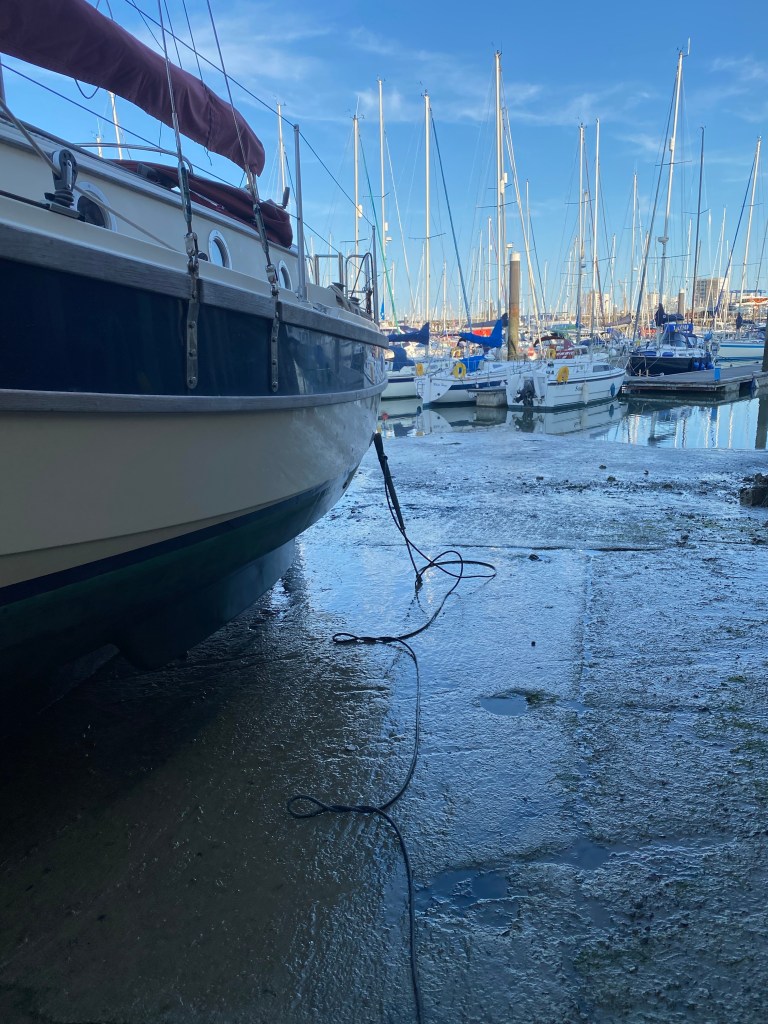
Giving Molly’s hull a clean prior to the rally, ready for her summer voyages